

Via Stitching
What Is Via Stitching in PCB Design?
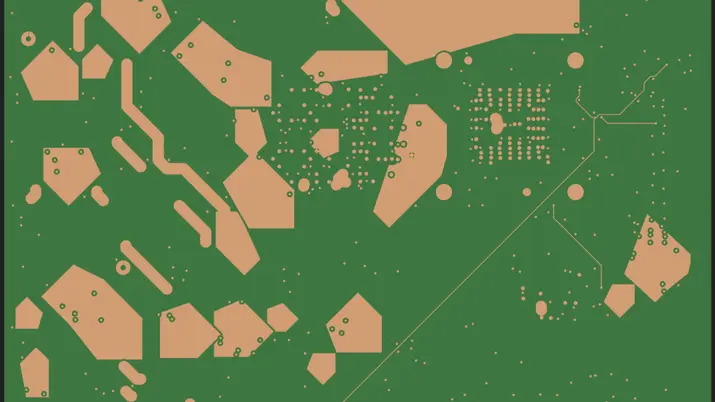
Via stitching is a technique used in PCB layout where arrays of vias are placed to connect ground (or power) planes across multiple layers of the board. These stitching vias serve several important purposes: they reduce the impedance of the ground plane structure, provide low-inductance return paths for high-speed signals transitioning between layers, create electromagnetic shielding fences around sensitive circuits, and improve thermal conductivity between layers.
In high-speed and RF PCB designs, via stitching is particularly important around the perimeter of the board to control edge radiation and near signal vias to maintain return path continuity. Without adequate stitching, signals changing layers may encounter high-impedance return paths that degrade signal integrity and increase electromagnetic emissions. The spacing and placement of stitching vias must be carefully planned relative to the signal frequencies involved — as a general rule, via spacing should be less than one-tenth of the wavelength at the highest frequency of concern.
Via Strategies in Automated PCB Layout
In manual layout workflows, via stitching is often one of the last steps, added after all signal routing is complete. This means stitching patterns must work around existing trace routes, sometimes resulting in suboptimal coverage. AI-driven layout engines can incorporate via stitching strategy as part of the overall generation process, coordinating stitching placement with signal routing and ground plane design to ensure comprehensive coverage without conflicts. This integrated approach produces designs with better EMC performance and more reliable return paths from the start.