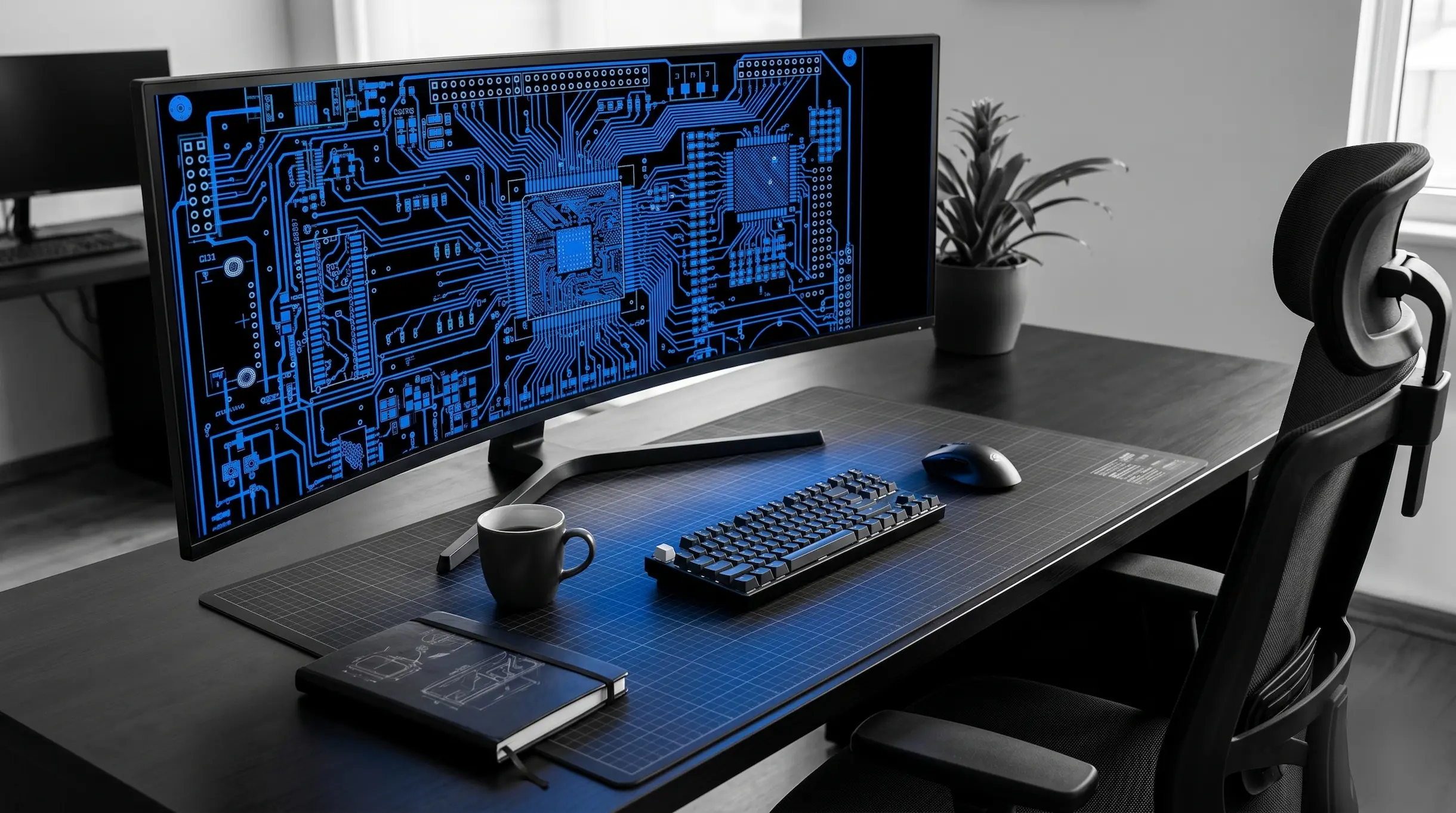



Thermal Management in PCB Design

Why Thermal Management Matters in PCB Layout

Thermal management is a critical aspect of PCB design that addresses how heat generated by electronic components is distributed and dissipated across the board. Power regulators, processors, FPGAs, and high-current drivers all produce significant heat during operation. If this thermal energy is not effectively managed through the PCB layout, component junction temperatures can exceed safe operating limits — leading to reduced reliability, degraded electrical performance, thermal runaway, or permanent damage.

Effective thermal management starts at the PCB layout stage. Key techniques include strategic placement of heat-generating components to maximize airflow exposure, the use of thermal vias to conduct heat from component pads to internal copper planes, copper pours that act as heat spreaders, and adequate clearances between high-power components. The stackup design also plays a role, as thicker copper layers and continuous ground planes improve thermal conductivity.

Enforcing Thermal Clearances During Automated Layout

One of the challenges with manual PCB layout is that thermal considerations are often addressed late in the design process, after placement and routing decisions have already been made. Physics-driven AI layout tools enforce thermal clearance constraints during the generation phase, ensuring that heat-generating components are placed with adequate spacing and that thermal relief structures are incorporated from the start. This proactive approach reduces the risk of thermal issues discovered during prototyping or production testing.

Other glossary terms

Thank you! Your submission has been received!
Oops! Something went wrong while submitting the form.
There are no available glossary items matching the current filters.
Reset