
PCB Stackup

What Is a PCB Stackup?

A PCB stackup is the cross-sectional arrangement of copper layers and dielectric (insulating) materials that make up a printed circuit board. The stackup defines how many signal layers, ground planes, and power planes the board contains, along with the thickness and material properties of each layer. Common configurations range from simple 2-layer boards for basic designs to 16-layer or higher stackups for complex high-speed digital systems like servers, networking equipment, and aerospace electronics.

The stackup is one of the most consequential decisions in PCB design because it determines impedance control, signal routing density, power delivery network performance, thermal dissipation, and total board cost. Choosing the wrong stackup can force compromises throughout the entire layout — from trace widths to via structures to component placement.

Designing for Multiple Stackups Simultaneously

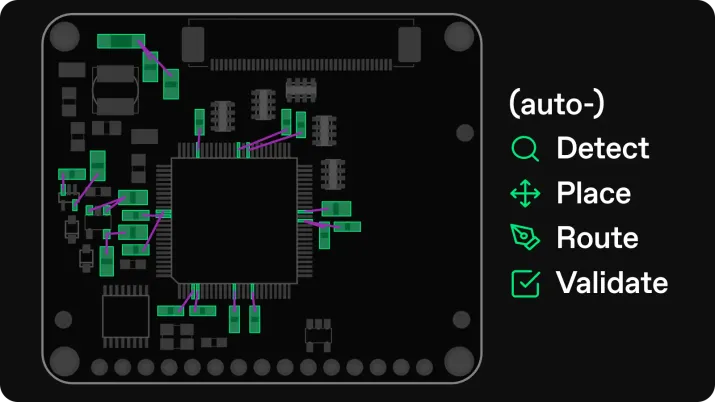
One of the biggest limitations of traditional PCB layout is that engineers must commit to a single stackup before routing begins. If the chosen stackup proves suboptimal, changing it means redoing much of the layout work. AI-powered layout tools now enable engineers to generate fully routed designs across all viable stackups simultaneously, then compare actual routed results — not estimates — to choose the best configuration. This parallel exploration eliminates guesswork and ensures the final stackup decision is informed by real design data.

Other glossary terms

Thank you! Your submission has been received!
Oops! Something went wrong while submitting the form.
There are no available glossary items matching the current filters.
Reset