
Workbench

Published

Written by

Workbench

Bring-up begins!

Published

September 30, 2024

Try Quilter for Yourself

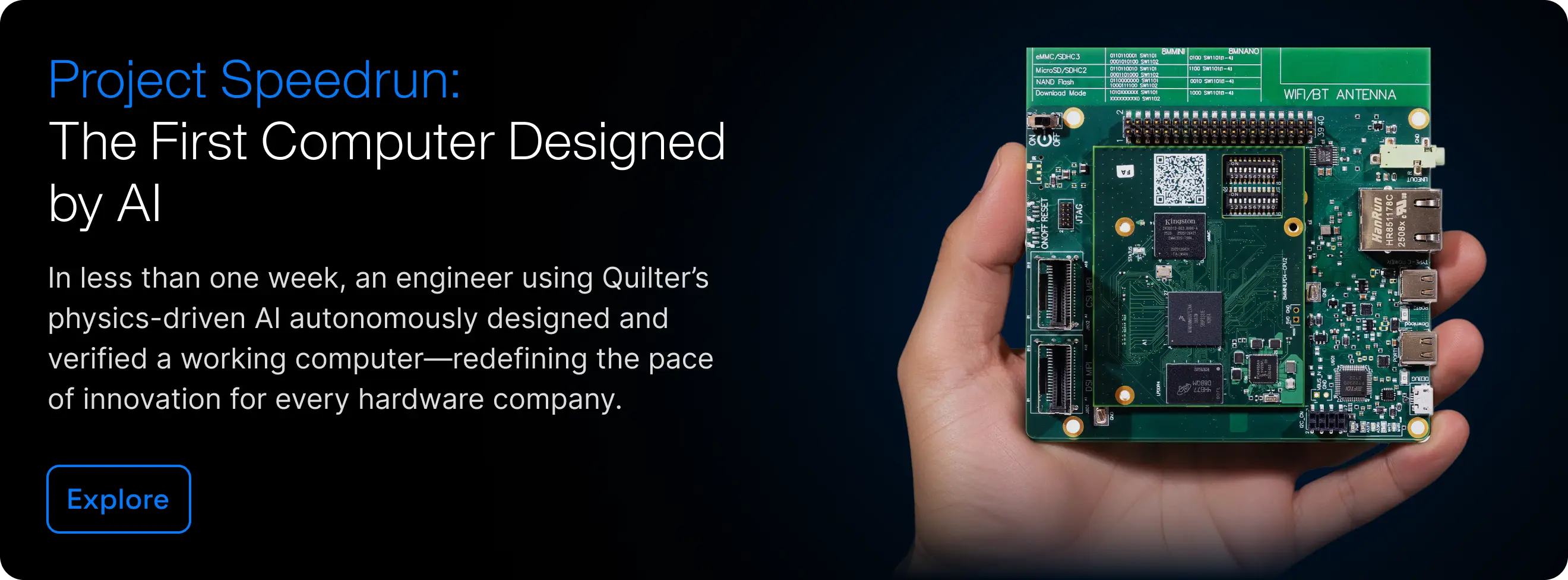
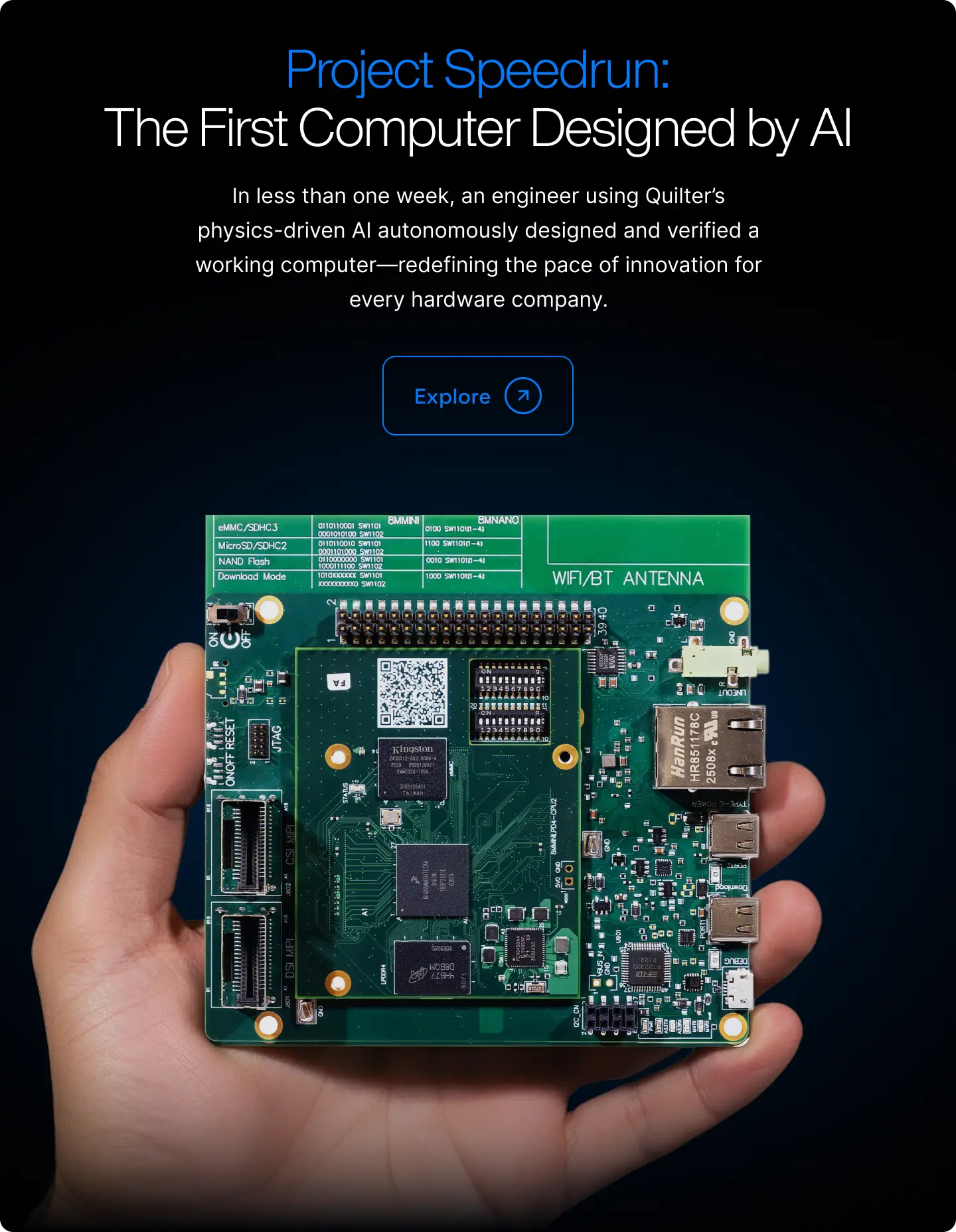
Project Speedrun demonstrated what autonomous layout looks like in practice and the time compression Quilter enables. Now, see it on your own hardware.

Get Started

Validating the Design

With cleanup complete, the final question is whether the hardware works. Power-on is where most electrical mistakes reveal themselves, and it’s the moment engineers are both nervous and excited about.

Continue to Part 4

Cleaning Up the Design

Autonomous layout produces a complete, DRC'd design; cleanup is a brief precision pass to finalize it for fabrication.

Continue to Part 3

Compiling the Design

Once the design is prepared, the next step is handing it off to Quilter. In traditional workflows, this is where an engineer meets with a layout specialist to clarify intent. Quilter replaces that meeting with circuit comprehension: you upload the project, review how constraints are interpreted, and submit the job.

Continue to Part 2

Bring-up begins!

September 30, 2024
by
Sergiy Nesterenko
and

Quilter did the layout without human intervention (!) for the QSP32 Solar Boost, a 43 x 28mm ESP32-C3-based board! It charges a battery through a solar panel and has a tiny Bosch sensor BME280 that measures temperature, humidity, and pressure. Follow along as we bring the board up.

Step 1: validate the board by programming a Hello World "blink" over USB-C to UART.