


Copper Pour

What Is a Copper Pour in PCB Design?

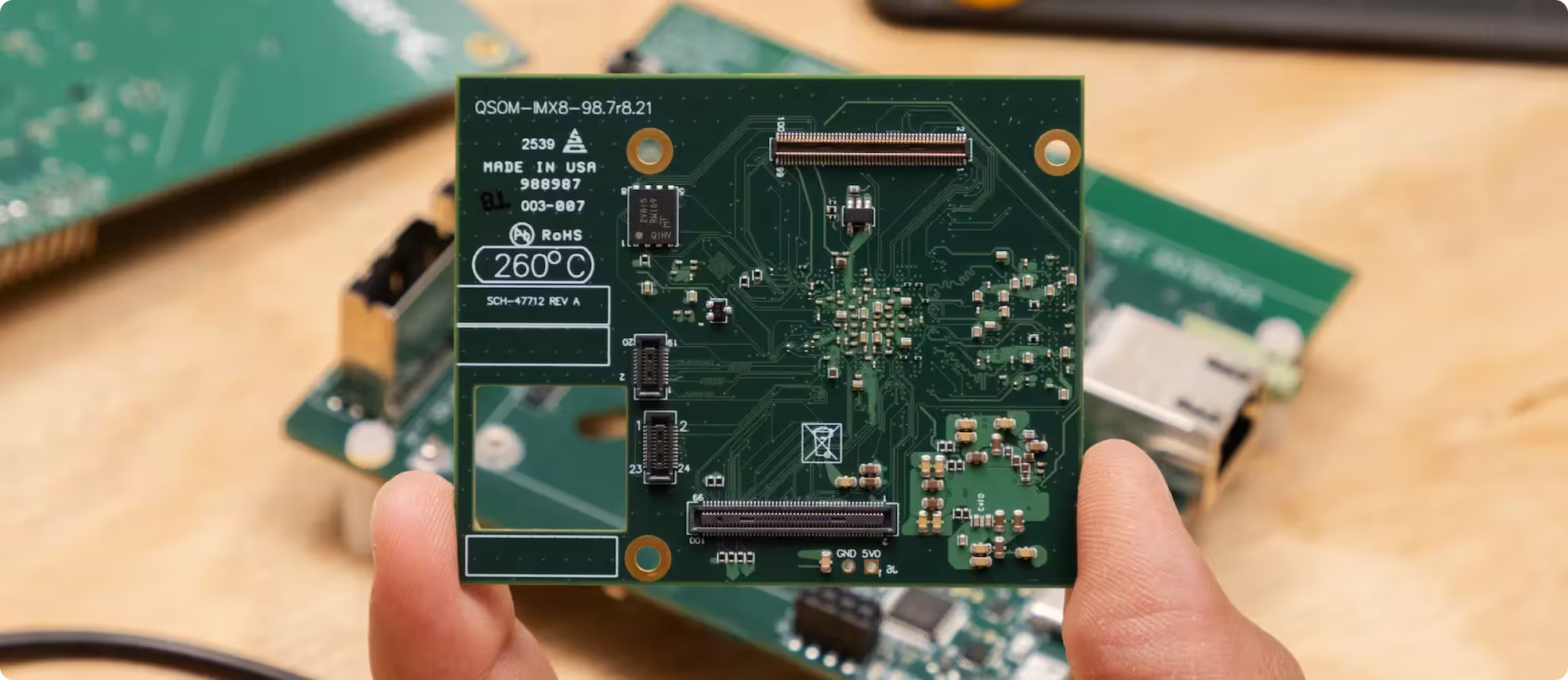
A copper pour — also known as a copper fill or flood — is a large, continuous area of copper on one or more layers of a PCB. Copper pours most commonly serve as ground planes or power planes, but they can also be used as thermal relief areas or shielding structures. By filling unused board area with copper connected to ground, designers improve return path quality for high-speed signals, enhance electromagnetic shielding, increase thermal dissipation capacity, and create a more uniform copper distribution that helps prevent warping during the manufacturing process.

The implementation of copper pours requires careful attention to clearance rules, ensuring that the fill maintains proper isolation from signal traces and component pads. Designers must also manage thermal relief connections to through-hole pads to balance solderability with electrical and thermal connectivity. Isolated copper islands — fragments of pour that are not connected to any net — should be removed as they can act as unintended antennas or create manufacturing defects.

Power Pours in Automated PCB Layout

Copper pour generation is a key capability in modern automated layout tools. Physics-driven AI engines can create power pours as an integral part of the layout process, ensuring that ground and power planes are properly constructed with appropriate clearances, thermal reliefs, and stitching via patterns. This integrated approach ensures that the benefits of copper pours — improved signal integrity, thermal performance, and EMC characteristics — are realized consistently across all generated design candidates.

Other glossary terms

Thank you! Your submission has been received!
Oops! Something went wrong while submitting the form.
There are no available glossary items matching the current filters.
Reset