

PCB Prototyping

What Is PCB Prototyping?

PCB prototyping is the stage in hardware development where a small number of boards are manufactured and assembled to validate the electrical design, mechanical fit, thermal performance, and overall functionality before committing to volume production. Prototyping catches design errors that simulation alone cannot predict — such as assembly process issues, real-world EMI behavior, and thermal performance under actual operating conditions. It is an essential step for de-risking a hardware program and building confidence in the design.

The prototyping cycle includes finalizing the PCB layout, generating fabrication files (Gerber, drill, and stackup specifications), ordering boards from a fabrication house, procuring components, assembling the boards (often through a contract manufacturer or in-house lab), and then running bring-up testing and validation. Each iteration of this cycle typically takes two to six weeks depending on board complexity and supply chain factors — making it one of the most time-constrained phases of product development.

Faster Prototyping Through Rapid Design Iteration

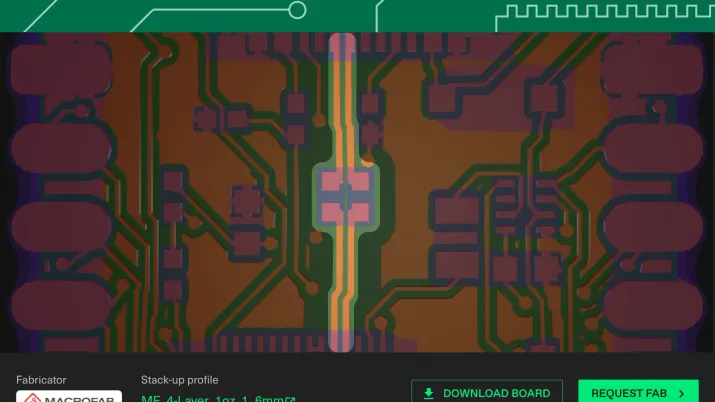
The bottleneck in PCB prototyping is rarely fabrication or assembly — it's the layout phase that precedes it. When layout takes weeks, the number of prototype iterations a team can complete within a development window is severely limited. AI-powered layout tools that produce fab-ready designs in hours fundamentally change this equation, enabling teams to run more prototype cycles in the same timeframe. More iterations mean more learning, faster convergence on the optimal design, and earlier identification of issues that would otherwise surface late in the program.

Other glossary terms

Thank you! Your submission has been received!
Oops! Something went wrong while submitting the form.
There are no available glossary items matching the current filters.
Reset