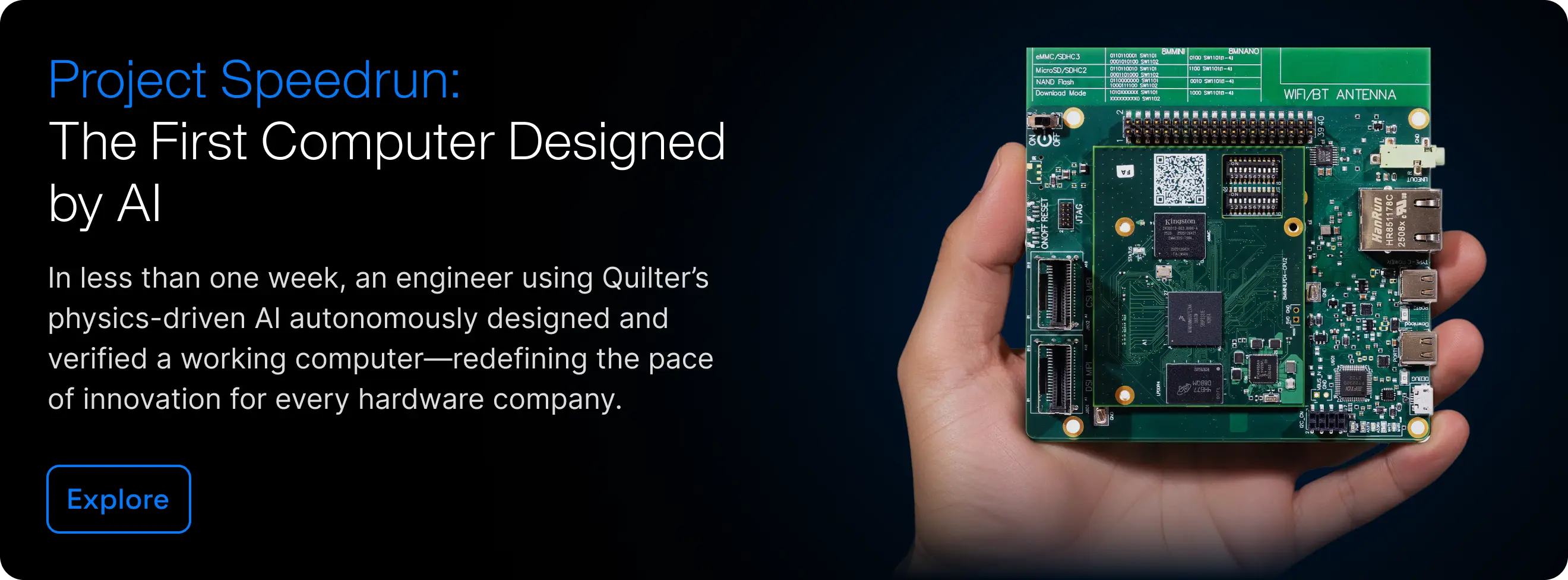
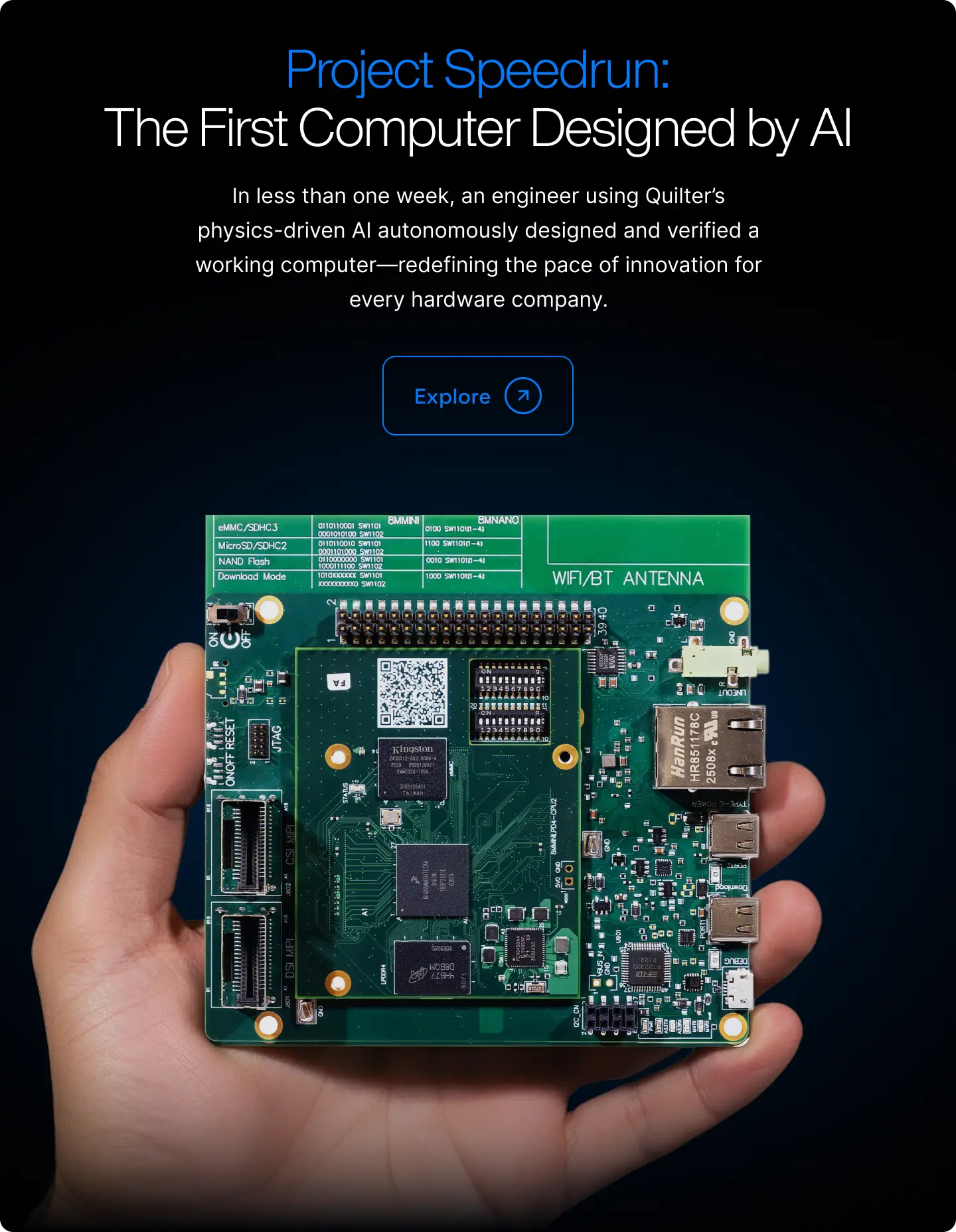




PCB Layout
What Is PCB Layout and Why Does It Matter?
PCB layout is the critical design stage where engineers translate an electronic schematic into a physical board design. This process involves placing components on the board surface and routing copper traces to create the electrical connections defined in the schematic. The quality of a PCB layout directly impacts signal integrity, thermal performance, manufacturability, and overall product reliability.
Every hardware program depends on PCB layout, and it often sits on the critical path of development timelines. Traditional PCB layout is a manual, time-intensive process that requires specialized expertise in placement strategy, routing techniques, and physics-based constraint management. A single board can take days or weeks to complete by hand, creating bottlenecks that delay prototyping, testing, and time to market.
How Modern AI Is Transforming PCB Layout
Physics-driven AI tools are fundamentally changing how PCB layout is performed. Instead of manually placing each component and routing every trace, engineers can now upload schematics and constraints to autonomous layout engines that generate multiple fully routed design candidates in hours. These tools enforce differential pairs, DDR timing, thermal clearances, and other physics-based constraints during generation — not as an afterthought during design review. The result is faster iteration cycles, more design exploration, and hardware teams that can test ideas at a pace previously impossible.