
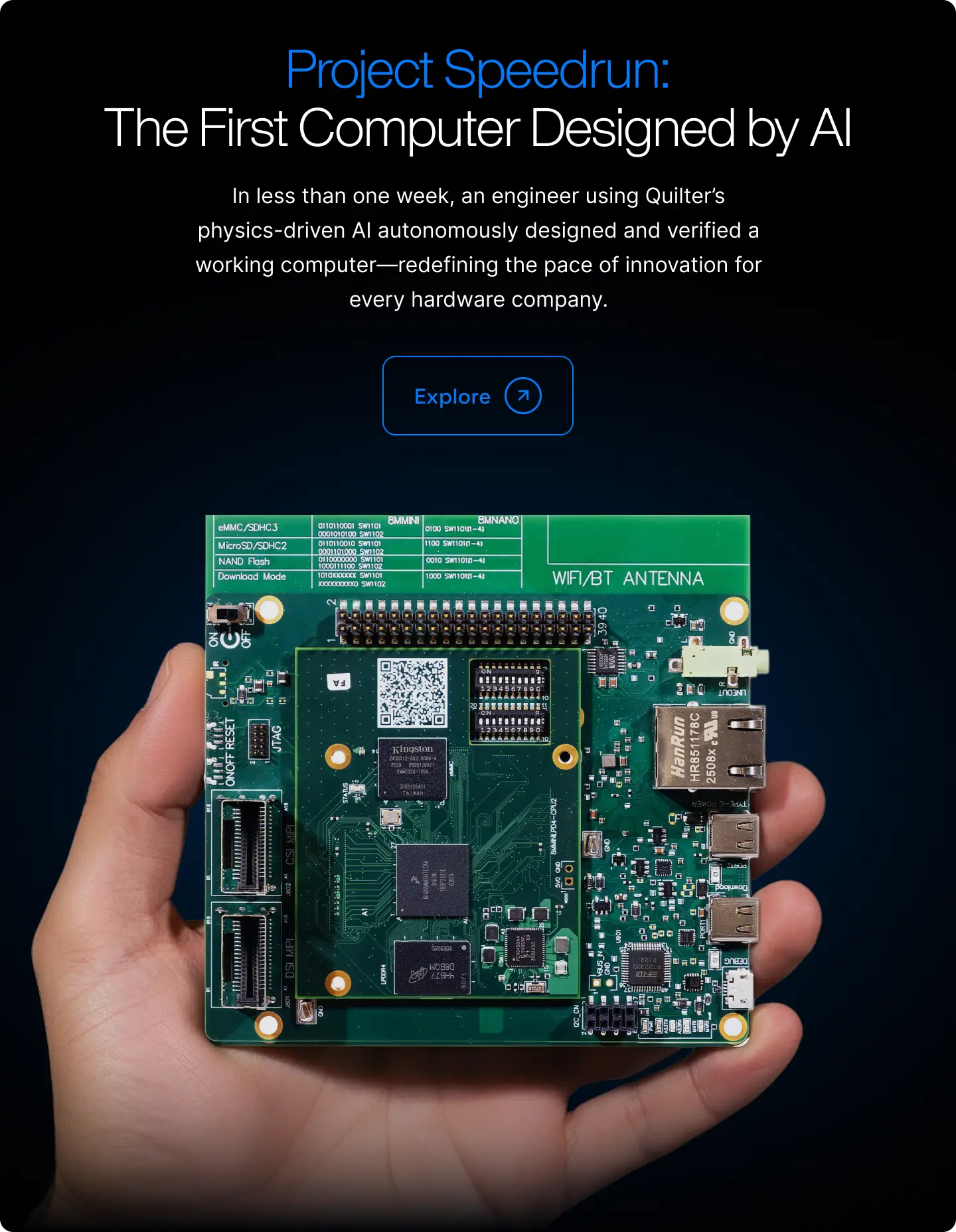




Component Placement
The Role of Component Placement in PCB Design
Component placement is the foundational step in PCB layout that determines where every resistor, capacitor, IC, connector, and mechanical part sits on the board. While it may seem straightforward, placement quality has an outsized impact on every downstream aspect of the design — from trace routing complexity and signal integrity to thermal distribution, electromagnetic compatibility, and ease of manufacturing and assembly.
Skilled PCB designers consider dozens of competing factors during placement: signal flow from input to output, separation between analog and digital domains, decoupling capacitor proximity to power pins, mechanical mounting constraints, connector accessibility, thermal zones, test point access, and assembly process requirements. Getting placement right upfront saves enormous time during routing; getting it wrong creates problems that no amount of routing skill can fully overcome.
AI-Driven Component Placement for Optimal Layouts
Traditional component placement is an iterative manual process where engineers rely on experience and intuition to make tradeoff decisions. Physics-driven AI layout engines use reinforcement learning to explore thousands of placement configurations, evaluating each against the full set of electrical, thermal, and mechanical constraints. This generates multiple optimized placement options in parallel, allowing engineers to compare tradeoffs and select the configuration that best serves their design priorities — without spending days or weeks on manual iteration.