

Hardware Rich Development

Published

Written by

Workbench

Stelios Stavroulakis: Learning What Not to Do, and Building What Comes Next

Published

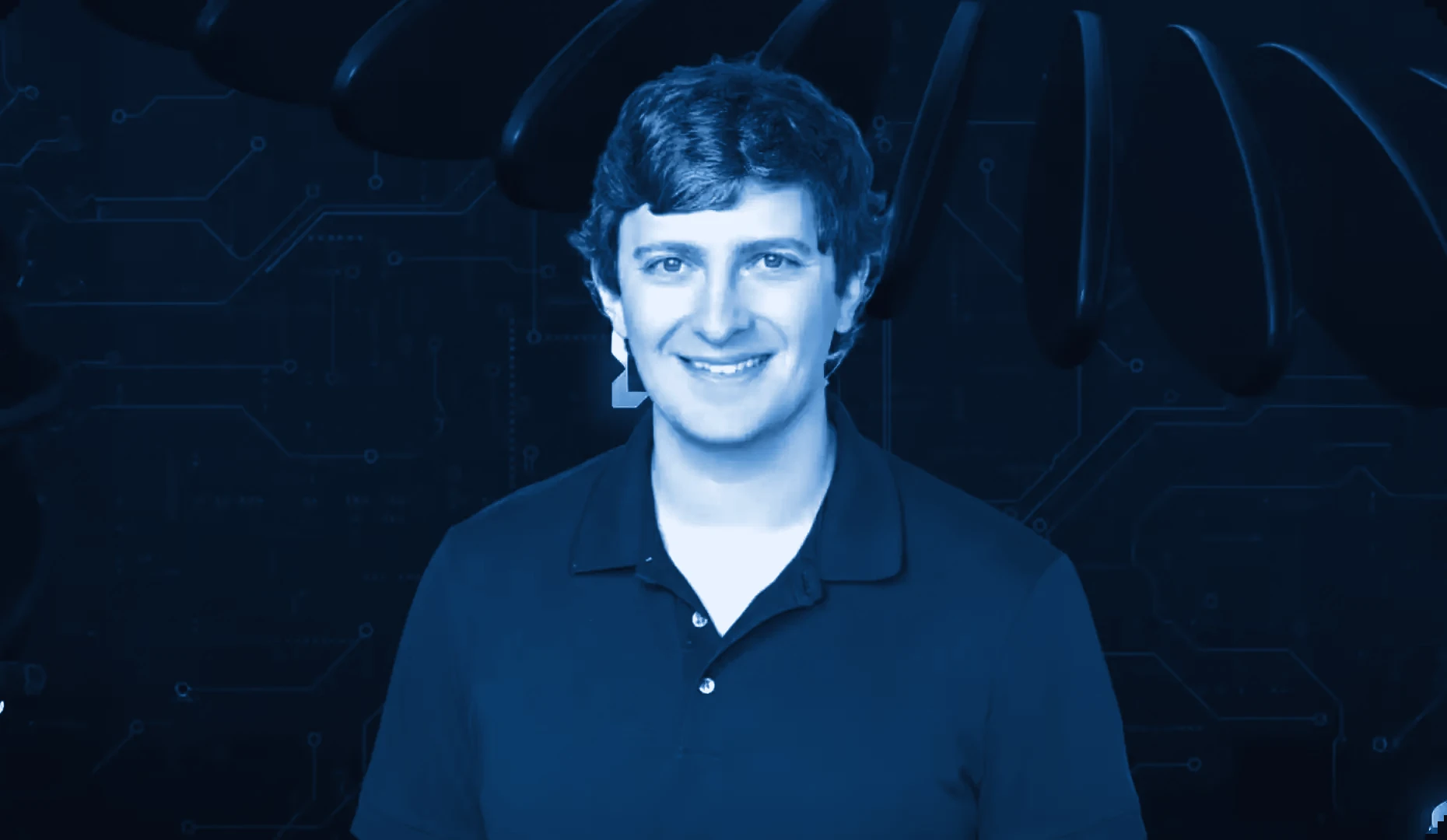
In Quilter’s Humans in the Loop series, certain conversations feel like they trace a straight line through time. Not because the path was easy, but because it was intentional from the very beginning. Stelios Stavroulakis is one of those rare people whose present work looks uncannily like what he set out to do decades ago. He did not stumble into engineering, nor drift toward artificial intelligence through trend or convenience. He pursued it deliberately, rigorously, and with an unusually holistic view of how systems behave over time.

Stelios holds a PhD in Computer Science from the University of California, Irvine, where he focused on reinforcement learning and multi-agent collaboration. Before that, he studied electrical engineering at the National Technical University of Athens, often described as “the MIT of Greece.” At Quilter, he brings those two disciplines together to tackle one of the hardest problems in modern hardware design: how to explore enormous combinatorial spaces while respecting the unforgiving constraints of physical systems.

But credentials alone do not explain why Stelios fits Quilter so precisely. What matters more is how he thinks, how he learns, and how he frames complexity as something to be explored rather than avoided.

Origins: Engineering as a Foregone Conclusion

For Stelios, engineering was never a late discovery. “I always knew I was going to be an engineer,” he says. “I have videos of me when I was six years old speaking to the camera and saying, ‘Oh, I want to become a scientist when I grow up.’” That early certainty did not harden into rigidity. Instead, it became a quiet confidence that allowed him to go deep rather than wide, to commit fully without wondering what else he might have been.

He grew up in a family steeped in electrical engineering. His father is a professor who teaches control theory, and three of four brothers followed similar paths. Sequential systems, feedback, and stability were part of the background noise of his childhood. Long before he had the formal language for it, he was absorbing the idea that systems evolve, that actions have delayed consequences, and that control is as much about restraint as it is about power.

Even as a child, his relationship with geometry and structure was tactile. He remembers carrying a small right-angle ruler with him before kindergarten, drawing shapes and thinking through problems for the sheer pleasure of it. “I always used to draw stuff, always used to think about problems,” he recalls. “I enjoy learning so much that I could not see myself doing something different.”

That enjoyment never left him. Unlike many people who later question their professional trajectory, Stelios describes no midlife crisis, no curiosity about alternate careers. “It feels like I have been doing this for so long that it feels natural,” he says. Engineering is not a role he inhabits. It is simply how he engages with the world.

Journeys in Engineering: From Signals to Learning Systems

At the National Technical University of Athens, Stelios pursued a five-year diploma equivalent to a master’s degree, with deep exposure to analog and digital electronics. He built PCBs the old-fashioned way, using photolithography processes that required patience and precision. That hands-on grounding in physical artifacts mattered. It taught him that design is never abstract for long. Eventually, electrons have to move.

At the same time, his romantic fascination with music pulled him toward signal processing. A summer workshop at Stanford on music information retrieval introduced him to machine learning, and something clicked. Signals were no longer just to be analyzed. They could be learned from. His diploma thesis applied reinforcement learning to solving the Rubik’s Cube, an early indication of his attraction to sequential decision-making problems where brute force fails and strategy emerges over time.

That thread carried him to UC Irvine, where he immersed himself in reinforcement learning research and completed five internships during his PhD. Each explored a different vertical, expanding his sense of what learning systems could do.

At the Pacific Northwest National Laboratory, he worked on reinforcement learning for industrial power control. At Zebra Technologies, a company he describes as “the biggest company you’ve ever heard of because they are the creators of the barcode that everyone uses but nobody knows about,” he encountered the full complexity of multi-agent reinforcement learning. Warehouse scheduling forced him to confront non-stationary environments, where “all your convergence guarantees go out the window,” and success depends on coordinating many rational agents with limited local objectives.

Later, at Qualcomm, Stelios worked on large language models, applying reinforcement learning to issues like temperature control to reduce hallucinations. He was also selected from over 400 applicants for the Reinforcement Learning Open Source Festival, collaborating with Microsoft researchers on optimizing context injection for language models. Across these experiences, one theme persisted: learning systems only work when you respect the structure of the environment they inhabit.

Why Quilter: Constraints as Opportunity

After years of academic research and industry experimentation, Quilter felt inevitable. “It just felt like a match from heaven,” Stelios says, pointing to the rare convergence of his electrical engineering background and his reinforcement learning expertise.

At Quilter, he is energized by the core challenge: solving a profoundly difficult combinatorial problem. “We are trying to solve a problem where we need to explore a huge space in order to come up with good solutions,” he explains. Placement and routing are one expression of this, but for him the problem is universal. “These combinatorial problems, they’re all really difficult. There is no clear solution. And the way you approach and model your problem is mostly what is going to define your success.”

What distinguishes his thinking is an insistence on humility. Stelios is wary of framing optimization as the search for a single best answer. “There is no optimal board,” he says plainly. “Boards have… there’s just the board that does not break.” The real question is how to navigate among many viable solutions and decide which trade-offs matter.

This philosophy extends to how learning systems improve. Reflecting on Quilter’s work, he notes, “When you want to learn something, you got to learn what to not do as well as what to do somehow.” Constraints are not obstacles. They are the boundaries that make superhuman performance meaningful.

Looking ahead, Stelios is excited by the prospect of unifying placement and routing as “two players in the same game,” bringing them closer together rather than treating them as separate stages. It is an ambition rooted not in spectacle, but in coherence: fewer disjoint rules, more integrated reasoning.

Culture and Collaboration: Learning Together

Despite his deep technical focus, Stelios did not expect to join a startup. What surprised him most about Quilter was the culture. “I have been positively surprised with the amount of care,” he says, emphasizing how trust and attentiveness shape daily work. With a small team, collaboration becomes personal. Ideas circulate freely, and everyone is heard.

“I also love the freedom of ideas that flows between the teams,” he explains. “Whenever someone has an idea, he can bring it up, we can discuss it. We can all see it from different lenses.” For Stelios, this exchange is not just pleasant. It is educational. “I learned so much from this exchange of ideas that we have on a regular basis with the team.”

That openness mirrors his broader worldview. He delights in mapping technical concepts onto non-technical domains, seeing garbage collection in legal systems or memory fragmentation in parking regulations. “Something extremely satisfying lights up in my brain when I map two things that seem disconnected,” he says. It is the same impulse that drives innovation in complex systems: pattern recognition across boundaries.

Beyond the Workbench: Structure, Chaos, and Play

Outside of Quilter, Stelios’s interests echo his professional philosophy. He plays “foot volley,” a handless form of beach volleyball that demands creativity within strict rules. He loves salsa dancing, especially improvisation. “If it were to be ultimately chaotic, it wouldn’t be fun,” he observes. “If it would be ultimately structured, would it be fun?” The joy lives in the balance.

He also practices drone photography and has a long-standing fascination with audio signal processing. In 2013, he even founded a startup focused on polyphonic music decomposition and transcription, working with frequency maps and harmonics long before modern machine learning made such tasks routine.

Food and coffee connect him back to Greece. His ideal meal is simple and deeply personal: Greek souvlaki, paired with a Greek iced coffee. The ritual matters as much as the taste. It is comfort, culture, and memory in one.

A Line to Remember

Asked to distill his thinking, Stelios returns to learning itself. “Within the constraints that we live, how can we make it superhuman?” he asks. It is a question that captures both his ambition and his restraint. At Quilter, that mindset shapes how tools are built, how teams collaborate, and how progress is measured.

Stelios Stavroulakis embodies a rare synthesis: deep technical rigor paired with philosophical curiosity, confidence balanced by humility. His story reinforces what Humans in the Loop exists to show. Advanced technology does not emerge from abstraction alone. It is built by people who understand systems, respect limits, and find joy in learning what not to do.

Try Quilter for Yourself

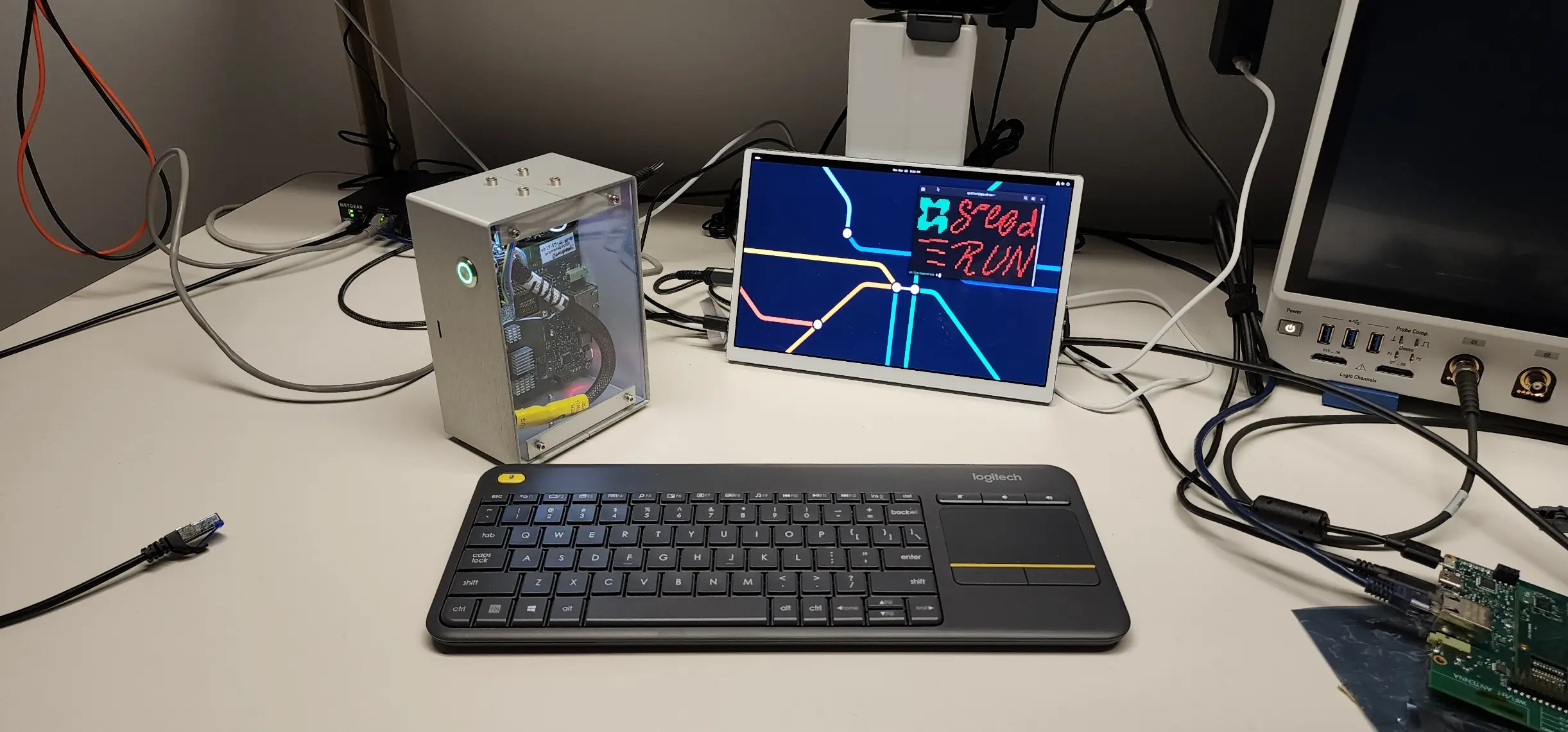
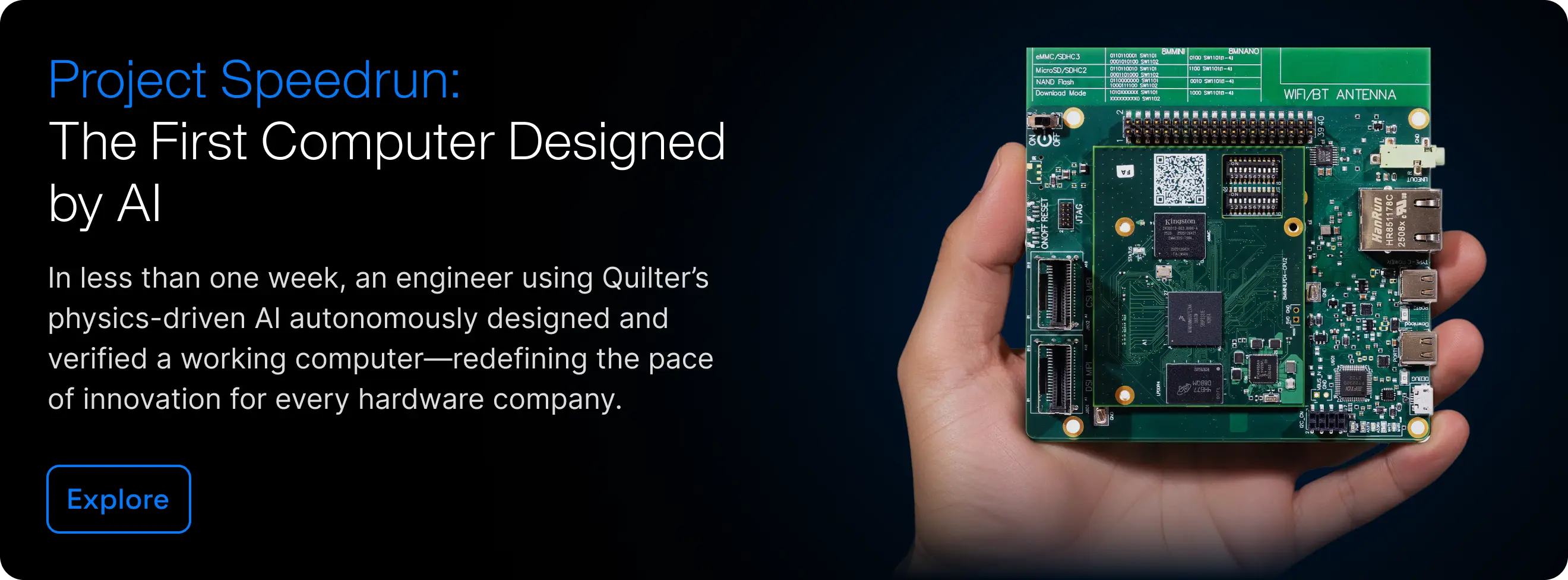
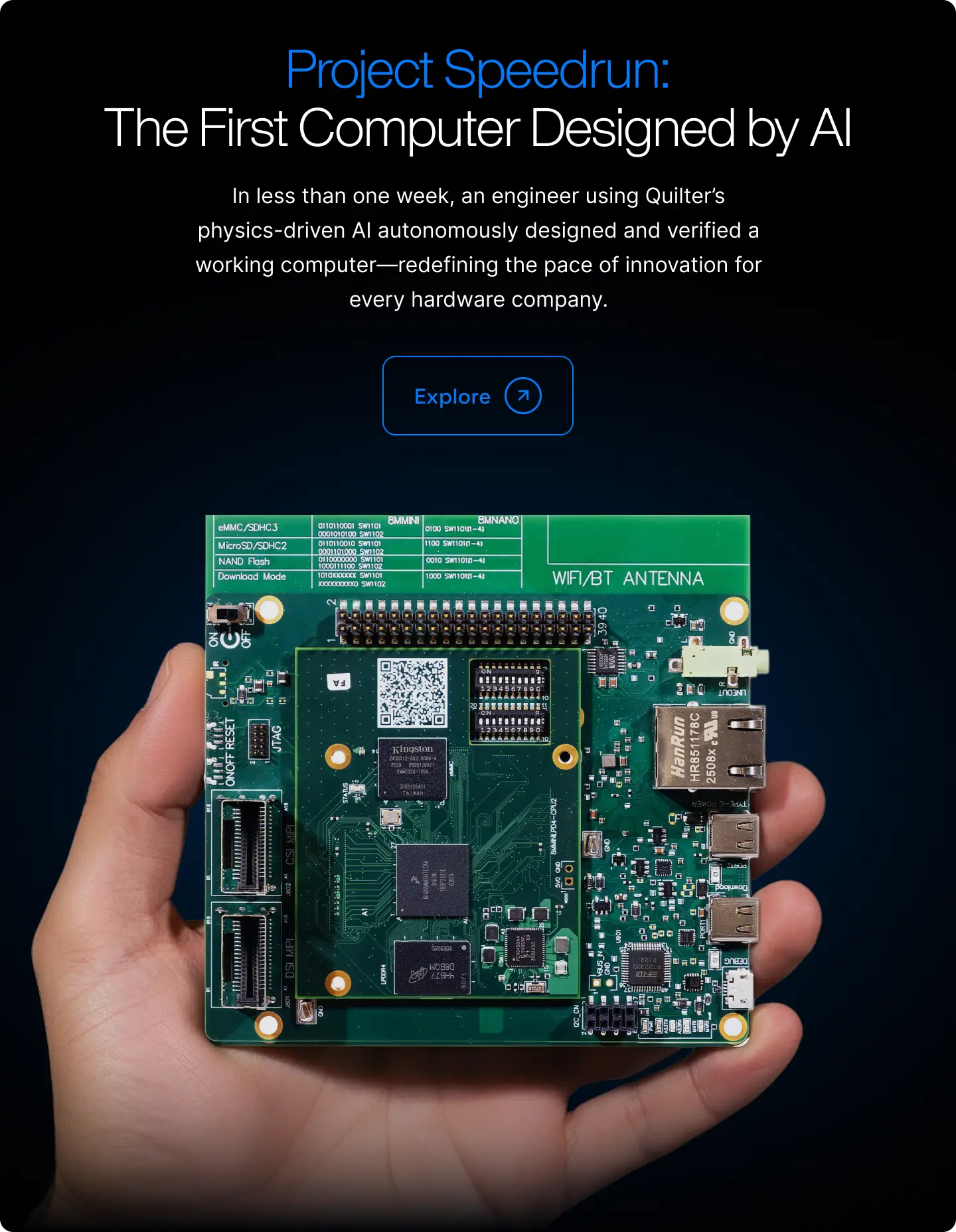
Project Speedrun demonstrated what autonomous layout looks like in practice and the time compression Quilter enables. Now, see it on your own hardware.

Get Started

Validating the Design

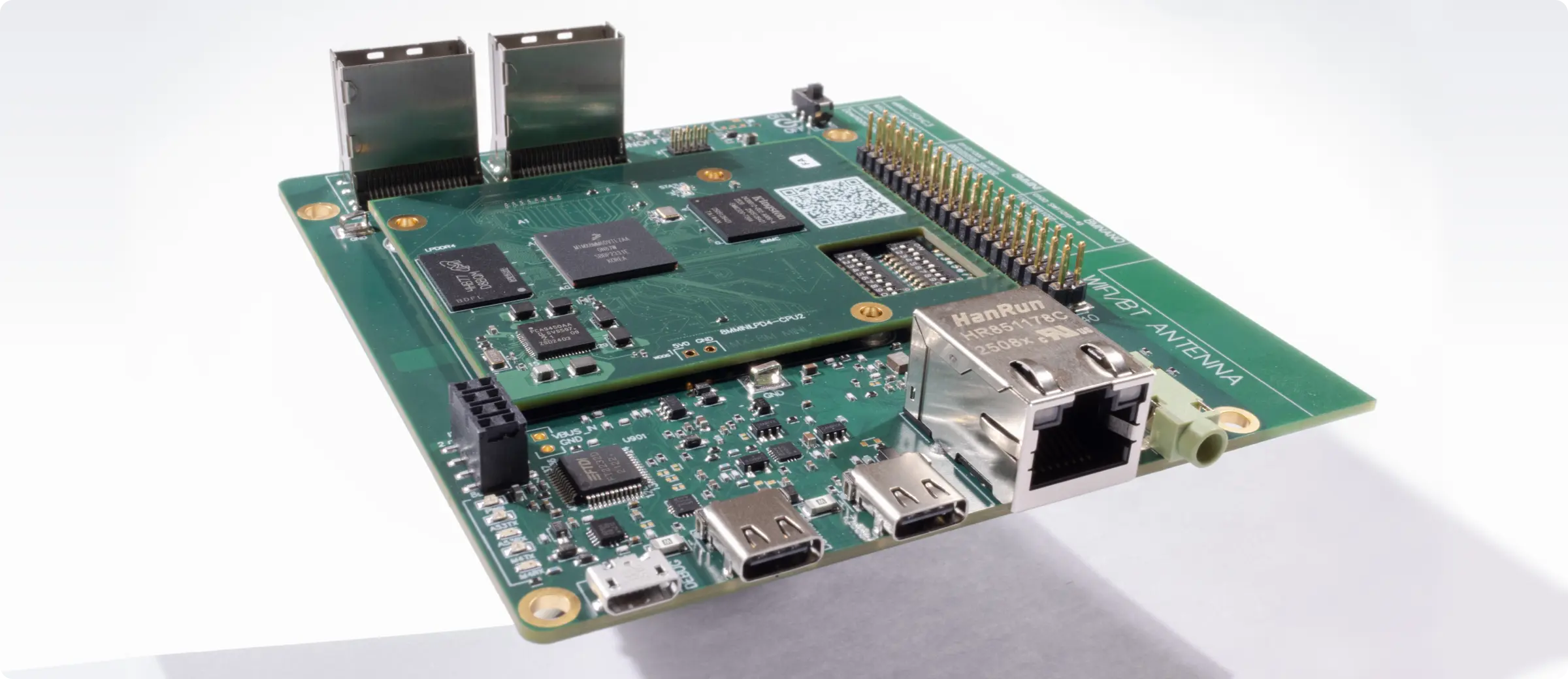
With cleanup complete, the final question is whether the hardware works. Power-on is where most electrical mistakes reveal themselves, and it’s the moment engineers are both nervous and excited about.

Continue to Part 4

Cleaning Up the Design

Autonomous layout produces a complete, DRC'd design; cleanup is a brief precision pass to finalize it for fabrication.

Continue to Part 3

Compiling the Design

Once the design is prepared, the next step is handing it off to Quilter. In traditional workflows, this is where an engineer meets with a layout specialist to clarify intent. Quilter replaces that meeting with circuit comprehension: you upload the project, review how constraints are interpreted, and submit the job.

Continue to Part 2

Stelios Stavroulakis: Learning What Not to Do, and Building What Comes Next

by
Cody Stetzel
and

In Quilter’s Humans in the Loop series, certain conversations feel like they trace a straight line through time. Not because the path was easy, but because it was intentional from the very beginning. Stelios Stavroulakis is one of those rare people whose present work looks uncannily like what he set out to do decades ago. He did not stumble into engineering, nor drift toward artificial intelligence through trend or convenience. He pursued it deliberately, rigorously, and with an unusually holistic view of how systems behave over time.

Stelios holds a PhD in Computer Science from the University of California, Irvine, where he focused on reinforcement learning and multi-agent collaboration. Before that, he studied electrical engineering at the National Technical University of Athens, often described as “the MIT of Greece.” At Quilter, he brings those two disciplines together to tackle one of the hardest problems in modern hardware design: how to explore enormous combinatorial spaces while respecting the unforgiving constraints of physical systems.

But credentials alone do not explain why Stelios fits Quilter so precisely. What matters more is how he thinks, how he learns, and how he frames complexity as something to be explored rather than avoided.

Origins: Engineering as a Foregone Conclusion

For Stelios, engineering was never a late discovery. “I always knew I was going to be an engineer,” he says. “I have videos of me when I was six years old speaking to the camera and saying, ‘Oh, I want to become a scientist when I grow up.’” That early certainty did not harden into rigidity. Instead, it became a quiet confidence that allowed him to go deep rather than wide, to commit fully without wondering what else he might have been.

He grew up in a family steeped in electrical engineering. His father is a professor who teaches control theory, and three of four brothers followed similar paths. Sequential systems, feedback, and stability were part of the background noise of his childhood. Long before he had the formal language for it, he was absorbing the idea that systems evolve, that actions have delayed consequences, and that control is as much about restraint as it is about power.

Even as a child, his relationship with geometry and structure was tactile. He remembers carrying a small right-angle ruler with him before kindergarten, drawing shapes and thinking through problems for the sheer pleasure of it. “I always used to draw stuff, always used to think about problems,” he recalls. “I enjoy learning so much that I could not see myself doing something different.”

That enjoyment never left him. Unlike many people who later question their professional trajectory, Stelios describes no midlife crisis, no curiosity about alternate careers. “It feels like I have been doing this for so long that it feels natural,” he says. Engineering is not a role he inhabits. It is simply how he engages with the world.

Journeys in Engineering: From Signals to Learning Systems

At the National Technical University of Athens, Stelios pursued a five-year diploma equivalent to a master’s degree, with deep exposure to analog and digital electronics. He built PCBs the old-fashioned way, using photolithography processes that required patience and precision. That hands-on grounding in physical artifacts mattered. It taught him that design is never abstract for long. Eventually, electrons have to move.

At the same time, his romantic fascination with music pulled him toward signal processing. A summer workshop at Stanford on music information retrieval introduced him to machine learning, and something clicked. Signals were no longer just to be analyzed. They could be learned from. His diploma thesis applied reinforcement learning to solving the Rubik’s Cube, an early indication of his attraction to sequential decision-making problems where brute force fails and strategy emerges over time.

That thread carried him to UC Irvine, where he immersed himself in reinforcement learning research and completed five internships during his PhD. Each explored a different vertical, expanding his sense of what learning systems could do.

At the Pacific Northwest National Laboratory, he worked on reinforcement learning for industrial power control. At Zebra Technologies, a company he describes as “the biggest company you’ve ever heard of because they are the creators of the barcode that everyone uses but nobody knows about,” he encountered the full complexity of multi-agent reinforcement learning. Warehouse scheduling forced him to confront non-stationary environments, where “all your convergence guarantees go out the window,” and success depends on coordinating many rational agents with limited local objectives.

Later, at Qualcomm, Stelios worked on large language models, applying reinforcement learning to issues like temperature control to reduce hallucinations. He was also selected from over 400 applicants for the Reinforcement Learning Open Source Festival, collaborating with Microsoft researchers on optimizing context injection for language models. Across these experiences, one theme persisted: learning systems only work when you respect the structure of the environment they inhabit.

Why Quilter: Constraints as Opportunity

After years of academic research and industry experimentation, Quilter felt inevitable. “It just felt like a match from heaven,” Stelios says, pointing to the rare convergence of his electrical engineering background and his reinforcement learning expertise.

At Quilter, he is energized by the core challenge: solving a profoundly difficult combinatorial problem. “We are trying to solve a problem where we need to explore a huge space in order to come up with good solutions,” he explains. Placement and routing are one expression of this, but for him the problem is universal. “These combinatorial problems, they’re all really difficult. There is no clear solution. And the way you approach and model your problem is mostly what is going to define your success.”

What distinguishes his thinking is an insistence on humility. Stelios is wary of framing optimization as the search for a single best answer. “There is no optimal board,” he says plainly. “Boards have… there’s just the board that does not break.” The real question is how to navigate among many viable solutions and decide which trade-offs matter.

This philosophy extends to how learning systems improve. Reflecting on Quilter’s work, he notes, “When you want to learn something, you got to learn what to not do as well as what to do somehow.” Constraints are not obstacles. They are the boundaries that make superhuman performance meaningful.

Looking ahead, Stelios is excited by the prospect of unifying placement and routing as “two players in the same game,” bringing them closer together rather than treating them as separate stages. It is an ambition rooted not in spectacle, but in coherence: fewer disjoint rules, more integrated reasoning.

Culture and Collaboration: Learning Together

Despite his deep technical focus, Stelios did not expect to join a startup. What surprised him most about Quilter was the culture. “I have been positively surprised with the amount of care,” he says, emphasizing how trust and attentiveness shape daily work. With a small team, collaboration becomes personal. Ideas circulate freely, and everyone is heard.

“I also love the freedom of ideas that flows between the teams,” he explains. “Whenever someone has an idea, he can bring it up, we can discuss it. We can all see it from different lenses.” For Stelios, this exchange is not just pleasant. It is educational. “I learned so much from this exchange of ideas that we have on a regular basis with the team.”

That openness mirrors his broader worldview. He delights in mapping technical concepts onto non-technical domains, seeing garbage collection in legal systems or memory fragmentation in parking regulations. “Something extremely satisfying lights up in my brain when I map two things that seem disconnected,” he says. It is the same impulse that drives innovation in complex systems: pattern recognition across boundaries.

Beyond the Workbench: Structure, Chaos, and Play

Outside of Quilter, Stelios’s interests echo his professional philosophy. He plays “foot volley,” a handless form of beach volleyball that demands creativity within strict rules. He loves salsa dancing, especially improvisation. “If it were to be ultimately chaotic, it wouldn’t be fun,” he observes. “If it would be ultimately structured, would it be fun?” The joy lives in the balance.

He also practices drone photography and has a long-standing fascination with audio signal processing. In 2013, he even founded a startup focused on polyphonic music decomposition and transcription, working with frequency maps and harmonics long before modern machine learning made such tasks routine.

Food and coffee connect him back to Greece. His ideal meal is simple and deeply personal: Greek souvlaki, paired with a Greek iced coffee. The ritual matters as much as the taste. It is comfort, culture, and memory in one.

A Line to Remember

Asked to distill his thinking, Stelios returns to learning itself. “Within the constraints that we live, how can we make it superhuman?” he asks. It is a question that captures both his ambition and his restraint. At Quilter, that mindset shapes how tools are built, how teams collaborate, and how progress is measured.

Stelios Stavroulakis embodies a rare synthesis: deep technical rigor paired with philosophical curiosity, confidence balanced by humility. His story reinforces what Humans in the Loop exists to show. Advanced technology does not emerge from abstraction alone. It is built by people who understand systems, respect limits, and find joy in learning what not to do.