


Hardware Rich Development

Published

Written by

Workbench

No Magic, Just Structure: Katie Scholl on Logic, Responsibility, and Building Things That Matter

Published

February 24, 2026

Katie Scholl does not romanticize engineering. She does not talk about “disruption,” nor does she describe technology as destiny. Instead, she returns again and again to something quieter and far more demanding: understanding. Understanding how systems work, why they work, and what responsibility comes with touching them.

“I really loved the idea of no magic,” she says, reflecting on the computer science course that redirected her path early on. “The idea that you know exactly what’s going on here, you can figure out what makes this work and we’re going to go from the basics.”

That sensibility runs through everything Katie does. It is present in her academic background, her five years at SpaceX, and now in her work at Quilter. In a company building optimization systems for hardware design, her presence reinforces something essential: progress only happens when curiosity is paired with rigor, and ambition is grounded in care.

This is the ethos behind Humans in the Loop, Quilter’s internal interview series highlighting the people who build the technology by thinking deeply about its consequences. Katie’s story matters not because it is flashy, but because it demonstrates how serious systems get built by people who refuse shortcuts.
Origins: Curiosity Without Borders

Katie grew up in Los Angeles and describes her early interests as expansive rather than linear. “I’ve always had interests all over the place,” she says plainly. As a student, she gravitated toward whatever discipline she encountered last. Physics. Chemistry. Biology. “Whatever my last science class was, that’s what I thought I was going to be doing for the rest of my life.”

That openness followed her to Brown University, where she initially imagined herself heading toward biotech. She worked in a lab studying animal physiology, helping record gait and bite force in reptiles. At the same time, she was reading scientific magazines for pleasure and chasing questions that spanned domains.

Computer science entered her life not as a calling, but as an experiment. “I liked math and I liked logic,” she explains. “I’d heard from people that, oh, if you like logic, you like math, coding school, you should maybe try that out.”

The experiment stuck. Introductory computer science at Brown emphasized functional programming and recursion. What appealed was not power, but transparency. “You know exactly what’s going on here,” she says. “Recursion is really fun.”

This was not a rejection of science so much as a reframing of it. Katie didn’t abandon biology or physics. She carried them with her, embedding scientific thinking into software systems that demanded the same discipline.

Learning Through Responsibility

At Brown, Katie became deeply involved in the computer science department’s teaching assistant program. Undergraduate TAs were not peripheral helpers; they shaped curricula, authored assignments, and supported instruction at scale. Katie thrived in that environment.

“I was the head teaching assistant for a few courses,” she says. “Really great community there. Really lovely place to be and to learn about things.”

Teaching mattered to her not as performance, but as structure. Helping others understand a system required understanding it herself. That same instinct later guided her decision to pursue a fifth-year master’s degree. Rather than a thesis-driven track, she chose a course-based path to explore graphics, computer vision, machine learning, and deep learning. “There was enough stuff in the department I was really excited about and had never really gotten a chance to poke at.”

That pattern repeated throughout her career. Katie gravitates toward environments where learning is not abstract but operational, where new tools are learned in service of real problems.

Five Years at SpaceX: Software in the Presence of Consequence

After graduate school, Katie joined SpaceX and stayed for five years. She describes the work with affection, but never mythologizes it. “I really loved the people,” she says. “Had a really good time learning things.”

Her work spanned multiple teams. She helped build Starlink’s early customer-facing infrastructure, developed ordering and authentication systems for SpaceX’s satellite rideshare program, and later moved into manufacturing software used daily by engineers assembling rockets.

That last role mattered most to her. “This is all software engineering stuff,” she explains, “working specifically on software that the engineers at SpaceX were using every day to actually assemble the rocket and make sure they’re doing things properly.”

She worked on the safety sub-team, where software decisions intersected directly with human wellbeing. Responsibility was not theoretical. It was embodied.

Katie also experienced SpaceX during the pandemic, when the company remained largely in-person due to defense work. Masks, long hours, and proximity reinforced the seriousness of the environment. At the same time, she was fortunate to work under leaders who resisted burnout. “I was very lucky to have leaders who were careful to make sure that their engineers were feeling well cared for.”

The experience sharpened her sense of what sustainable ambition looks like.

Why Quilter: Grounded Intelligence

Katie’s transition to Quilter was initiated through personal trust. A former colleague joined first and encouraged her to take a look. Still, she hesitated. After five years in-person, the idea of remote work raised questions about connection and motivation.

Those doubts dissolved during the interview process. “I was really impressed by just how kind and curious and motivated and full of energy everyone was on the team.”

The final round presentation sealed it. “The second that I saw people’s faces start to pop up on the meeting, I was just like, oh, this is fantastic. I’m so excited to get to know these people.”

What drew her in technically was Quilter’s approach to AI. She is curious about artificial intelligence but skeptical of abstraction without grounding. “I think I’ve been curious about AI and its uses and implications,” she says, noting how careful SpaceX had been around adoption. At Quilter, the reinforcement-learning foundation resonated.

“This is very grounded,” she says. “This is stuff that I can really sink my teeth into. This is stuff that I can get behind.”

For Katie, Quilter represents a convergence of her interests: software that supports hardware, optimization rooted in physics, and a team culture that values responsibility over hype.

Day to Day: Learning in Public

Katie is candid about being early in her Quilter journey. “I’m still carving out my own space,” she says. Her days are filled with reviewing merge requests, cutting tickets, running releases, and deliberately exploring unfamiliar parts of the codebase.

She treats every review as an opportunity to build mental models. “Taking those change sets as an opportunity to kind of learn about that particular part of the code and what’s going on there.”

When complexity overwhelms intuition, she reaches for structure. Recently, she created diagrams to understand system logic. “The process of getting it laid out, it just helped me a whole bunch figuring it out.”

She hopes those artifacts will help others too. Visibility, for her, is not self-promotion. It is shared understanding.

What she looks forward to most is ownership. “The idea that you can directly own the problems that you’re working on,” she says, “talking with the people that you want to develop something for… defining those requirements.”

Giving someone what they actually need, rather than what they asked for, is where she finds satisfaction.

Culture, Gender, and Ambition Without Burnout

Katie does not frame herself as exceptional for being one of few women in engineering spaces. She is matter-of-fact. “I’m used to being one of not that many women in a sciencey or techie field.”

What mattered to her at Quilter was transparency. During her interview, she was told directly that she would be the first woman engineer at the company. “That immediately earned him points in my book,” she recalls. “Okay, this guy’s got my back.”

She emphasizes collaboration over comfort. “The comfort from which you can work towards something really difficult.” Ambition matters, but not at the expense of people.

She is explicit about what she values: “In order to build something truly good and sustainably, you need to make sure that you don’t burn out your engineers in the process.”

This perspective aligns with Quilter’s culture of experienced builders. People who have “seen things,” as she puts it, and know what they want their work lives to look like.

Beyond the Code

Outside of work, Katie’s life is full. She practices wushu and recently began learning sword forms. She reads extensively across comics, fantasy, and science fiction. She studies languages, with experience in Japanese, Spanish, and German.

“The same part of my brain that does things for computer science,” she reflects, “adores learning about actual human languages and different cultures.”

It is not a contradiction. It is the same impulse expressed through different systems.

A Line to Remember

Near the end of the conversation, Katie articulates a goal that feels quietly definitive: “I’m really looking forward to building up my own foundation so that I can have my own peak from which I can shout and yell at the other people around me.”

It is not about volume or dominance. It is about perspective. Building something solid enough that others can see it, engage with it, and build alongside it.

That is the kind of engineer Quilter is made of.

Try Quilter for Yourself

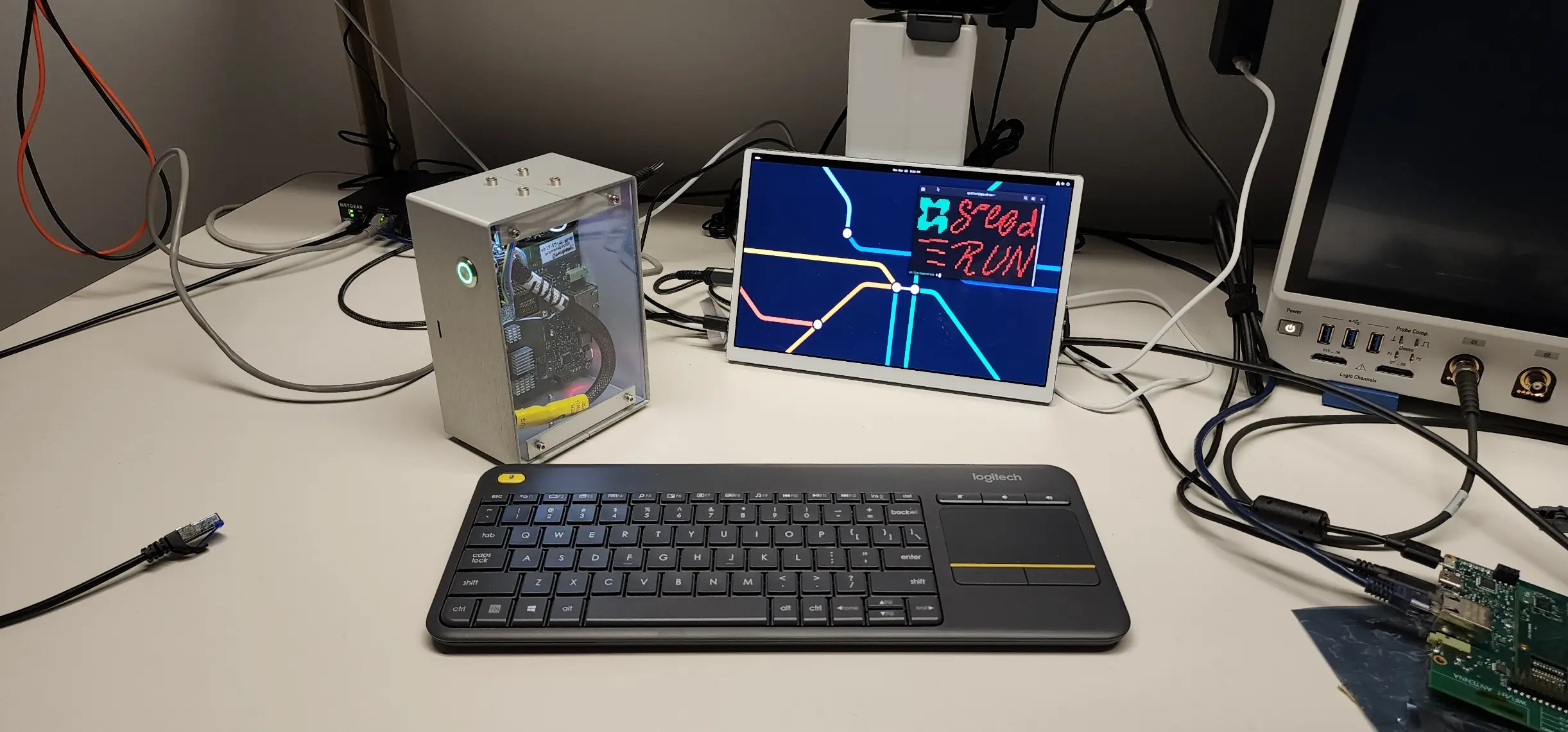
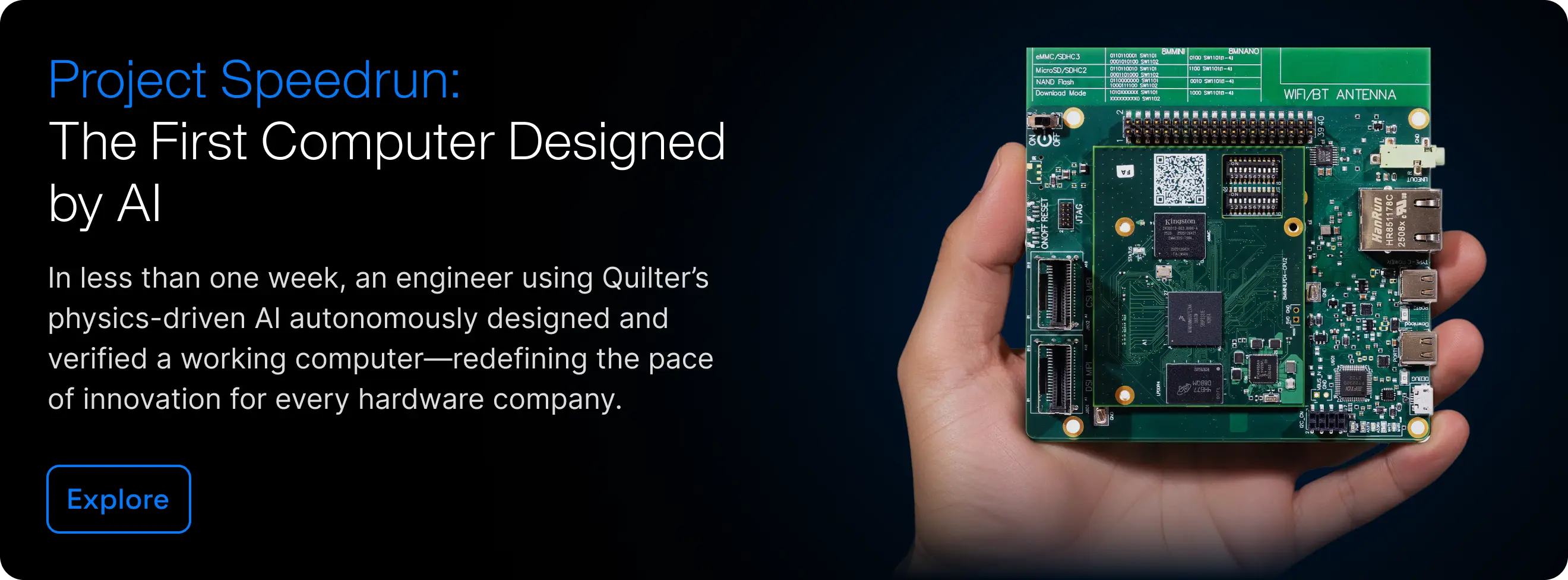
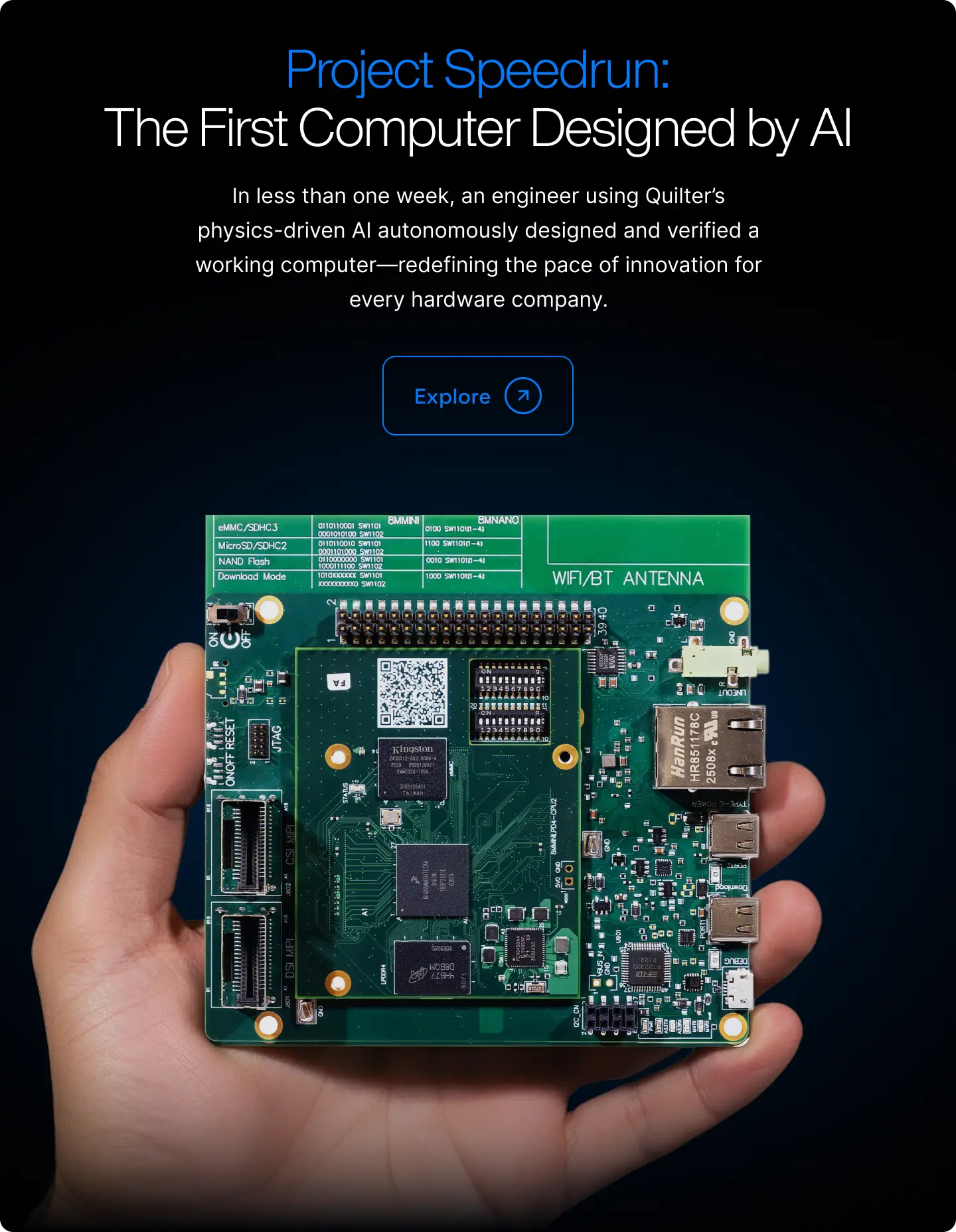
Project Speedrun demonstrated what autonomous layout looks like in practice and the time compression Quilter enables. Now, see it on your own hardware.

Get Started

Validating the Design

With cleanup complete, the final question is whether the hardware works. Power-on is where most electrical mistakes reveal themselves, and it’s the moment engineers are both nervous and excited about.

Continue to Part 4

Cleaning Up the Design

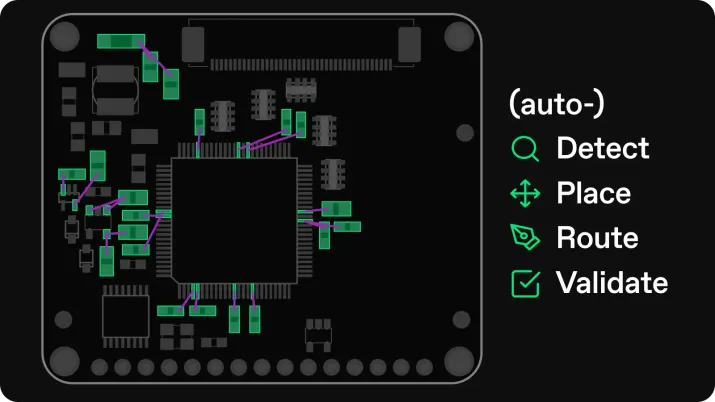
Autonomous layout produces a complete, DRC'd design; cleanup is a brief precision pass to finalize it for fabrication.

Continue to Part 3

Compiling the Design

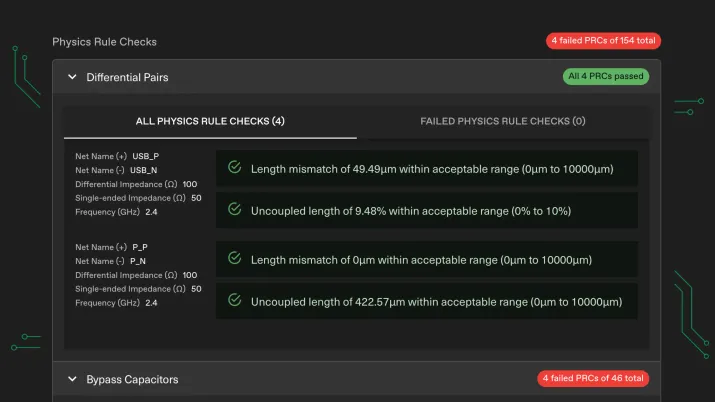
Once the design is prepared, the next step is handing it off to Quilter. In traditional workflows, this is where an engineer meets with a layout specialist to clarify intent. Quilter replaces that meeting with circuit comprehension: you upload the project, review how constraints are interpreted, and submit the job.

Continue to Part 2

No Magic, Just Structure: Katie Scholl on Logic, Responsibility, and Building Things That Matter

February 24, 2026
by
Cody Stetzel
and

Katie Scholl does not romanticize engineering. She does not talk about “disruption,” nor does she describe technology as destiny. Instead, she returns again and again to something quieter and far more demanding: understanding. Understanding how systems work, why they work, and what responsibility comes with touching them.

“I really loved the idea of no magic,” she says, reflecting on the computer science course that redirected her path early on. “The idea that you know exactly what’s going on here, you can figure out what makes this work and we’re going to go from the basics.”

That sensibility runs through everything Katie does. It is present in her academic background, her five years at SpaceX, and now in her work at Quilter. In a company building optimization systems for hardware design, her presence reinforces something essential: progress only happens when curiosity is paired with rigor, and ambition is grounded in care.

This is the ethos behind Humans in the Loop, Quilter’s internal interview series highlighting the people who build the technology by thinking deeply about its consequences. Katie’s story matters not because it is flashy, but because it demonstrates how serious systems get built by people who refuse shortcuts.

Origins: Curiosity Without Borders

Katie grew up in Los Angeles and describes her early interests as expansive rather than linear. “I’ve always had interests all over the place,” she says plainly. As a student, she gravitated toward whatever discipline she encountered last. Physics. Chemistry. Biology. “Whatever my last science class was, that’s what I thought I was going to be doing for the rest of my life.”

That openness followed her to Brown University, where she initially imagined herself heading toward biotech. She worked in a lab studying animal physiology, helping record gait and bite force in reptiles. At the same time, she was reading scientific magazines for pleasure and chasing questions that spanned domains.

Computer science entered her life not as a calling, but as an experiment. “I liked math and I liked logic,” she explains. “I’d heard from people that, oh, if you like logic, you like math, coding school, you should maybe try that out.”

The experiment stuck. Introductory computer science at Brown emphasized functional programming and recursion. What appealed was not power, but transparency. “You know exactly what’s going on here,” she says. “Recursion is really fun.”

This was not a rejection of science so much as a reframing of it. Katie didn’t abandon biology or physics. She carried them with her, embedding scientific thinking into software systems that demanded the same discipline.

Learning Through Responsibility

At Brown, Katie became deeply involved in the computer science department’s teaching assistant program. Undergraduate TAs were not peripheral helpers; they shaped curricula, authored assignments, and supported instruction at scale. Katie thrived in that environment.

“I was the head teaching assistant for a few courses,” she says. “Really great community there. Really lovely place to be and to learn about things.”

Teaching mattered to her not as performance, but as structure. Helping others understand a system required understanding it herself. That same instinct later guided her decision to pursue a fifth-year master’s degree. Rather than a thesis-driven track, she chose a course-based path to explore graphics, computer vision, machine learning, and deep learning. “There was enough stuff in the department I was really excited about and had never really gotten a chance to poke at.”

That pattern repeated throughout her career. Katie gravitates toward environments where learning is not abstract but operational, where new tools are learned in service of real problems.

Five Years at SpaceX: Software in the Presence of Consequence

After graduate school, Katie joined SpaceX and stayed for five years. She describes the work with affection, but never mythologizes it. “I really loved the people,” she says. “Had a really good time learning things.”

Her work spanned multiple teams. She helped build Starlink’s early customer-facing infrastructure, developed ordering and authentication systems for SpaceX’s satellite rideshare program, and later moved into manufacturing software used daily by engineers assembling rockets.

That last role mattered most to her. “This is all software engineering stuff,” she explains, “working specifically on software that the engineers at SpaceX were using every day to actually assemble the rocket and make sure they’re doing things properly.”

She worked on the safety sub-team, where software decisions intersected directly with human wellbeing. Responsibility was not theoretical. It was embodied.

Katie also experienced SpaceX during the pandemic, when the company remained largely in-person due to defense work. Masks, long hours, and proximity reinforced the seriousness of the environment. At the same time, she was fortunate to work under leaders who resisted burnout. “I was very lucky to have leaders who were careful to make sure that their engineers were feeling well cared for.”

The experience sharpened her sense of what sustainable ambition looks like.

Why Quilter: Grounded Intelligence

Katie’s transition to Quilter was initiated through personal trust. A former colleague joined first and encouraged her to take a look. Still, she hesitated. After five years in-person, the idea of remote work raised questions about connection and motivation.

Those doubts dissolved during the interview process. “I was really impressed by just how kind and curious and motivated and full of energy everyone was on the team.”

The final round presentation sealed it. “The second that I saw people’s faces start to pop up on the meeting, I was just like, oh, this is fantastic. I’m so excited to get to know these people.”

What drew her in technically was Quilter’s approach to AI. She is curious about artificial intelligence but skeptical of abstraction without grounding. “I think I’ve been curious about AI and its uses and implications,” she says, noting how careful SpaceX had been around adoption. At Quilter, the reinforcement-learning foundation resonated.

“This is very grounded,” she says. “This is stuff that I can really sink my teeth into. This is stuff that I can get behind.”

For Katie, Quilter represents a convergence of her interests: software that supports hardware, optimization rooted in physics, and a team culture that values responsibility over hype.

Day to Day: Learning in Public

Katie is candid about being early in her Quilter journey. “I’m still carving out my own space,” she says. Her days are filled with reviewing merge requests, cutting tickets, running releases, and deliberately exploring unfamiliar parts of the codebase.

She treats every review as an opportunity to build mental models. “Taking those change sets as an opportunity to kind of learn about that particular part of the code and what’s going on there.”

When complexity overwhelms intuition, she reaches for structure. Recently, she created diagrams to understand system logic. “The process of getting it laid out, it just helped me a whole bunch figuring it out.”

She hopes those artifacts will help others too. Visibility, for her, is not self-promotion. It is shared understanding.

What she looks forward to most is ownership. “The idea that you can directly own the problems that you’re working on,” she says, “talking with the people that you want to develop something for… defining those requirements.”

Giving someone what they actually need, rather than what they asked for, is where she finds satisfaction.

Culture, Gender, and Ambition Without Burnout

Katie does not frame herself as exceptional for being one of few women in engineering spaces. She is matter-of-fact. “I’m used to being one of not that many women in a sciencey or techie field.”

What mattered to her at Quilter was transparency. During her interview, she was told directly that she would be the first woman engineer at the company. “That immediately earned him points in my book,” she recalls. “Okay, this guy’s got my back.”

She emphasizes collaboration over comfort. “The comfort from which you can work towards something really difficult.” Ambition matters, but not at the expense of people.

She is explicit about what she values: “In order to build something truly good and sustainably, you need to make sure that you don’t burn out your engineers in the process.”

This perspective aligns with Quilter’s culture of experienced builders. People who have “seen things,” as she puts it, and know what they want their work lives to look like.

Beyond the Code

Outside of work, Katie’s life is full. She practices wushu and recently began learning sword forms. She reads extensively across comics, fantasy, and science fiction. She studies languages, with experience in Japanese, Spanish, and German.

“The same part of my brain that does things for computer science,” she reflects, “adores learning about actual human languages and different cultures.”

It is not a contradiction. It is the same impulse expressed through different systems.

A Line to Remember

Near the end of the conversation, Katie articulates a goal that feels quietly definitive: “I’m really looking forward to building up my own foundation so that I can have my own peak from which I can shout and yell at the other people around me.”

It is not about volume or dominance. It is about perspective. Building something solid enough that others can see it, engage with it, and build alongside it.

That is the kind of engineer Quilter is made of.