




Read the Full Series
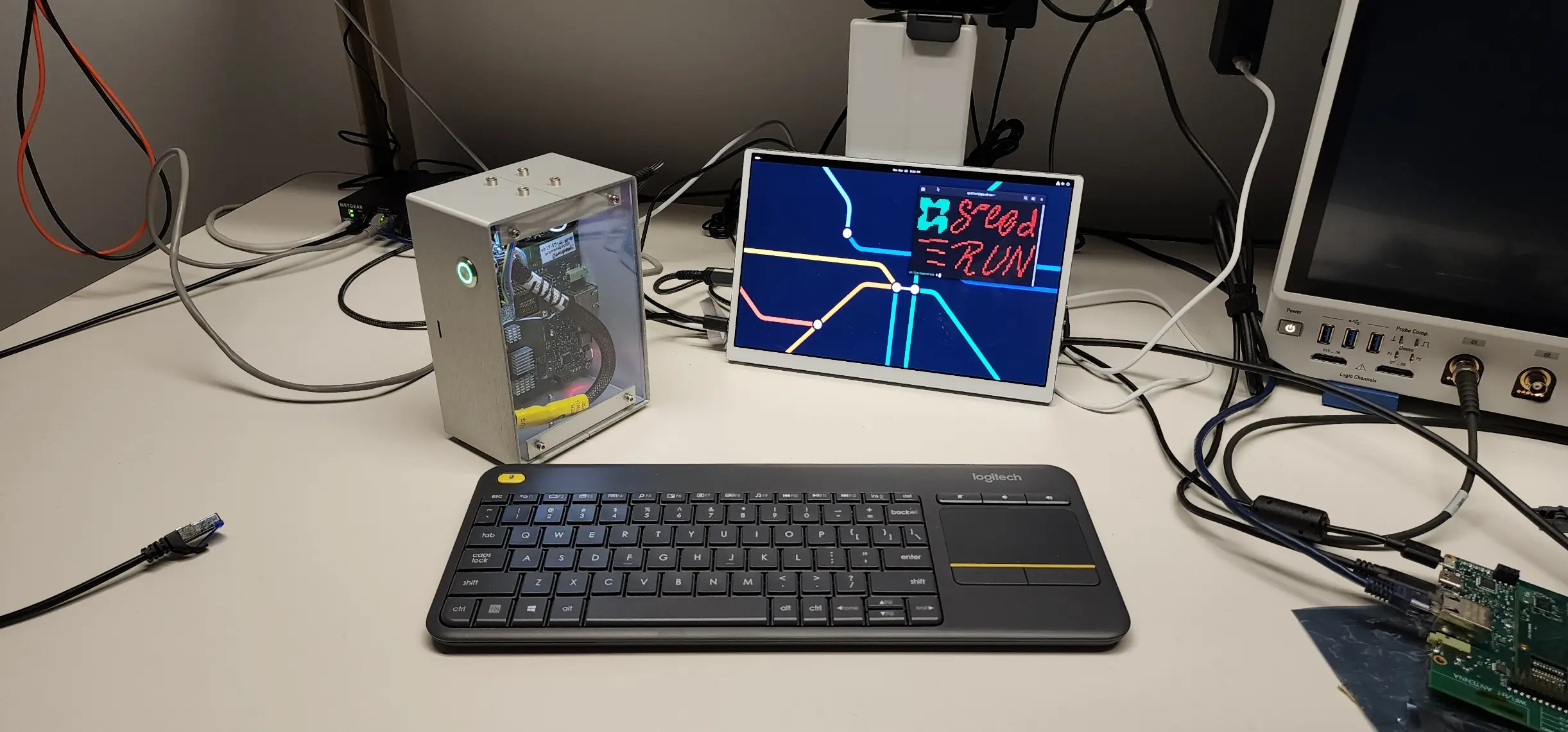
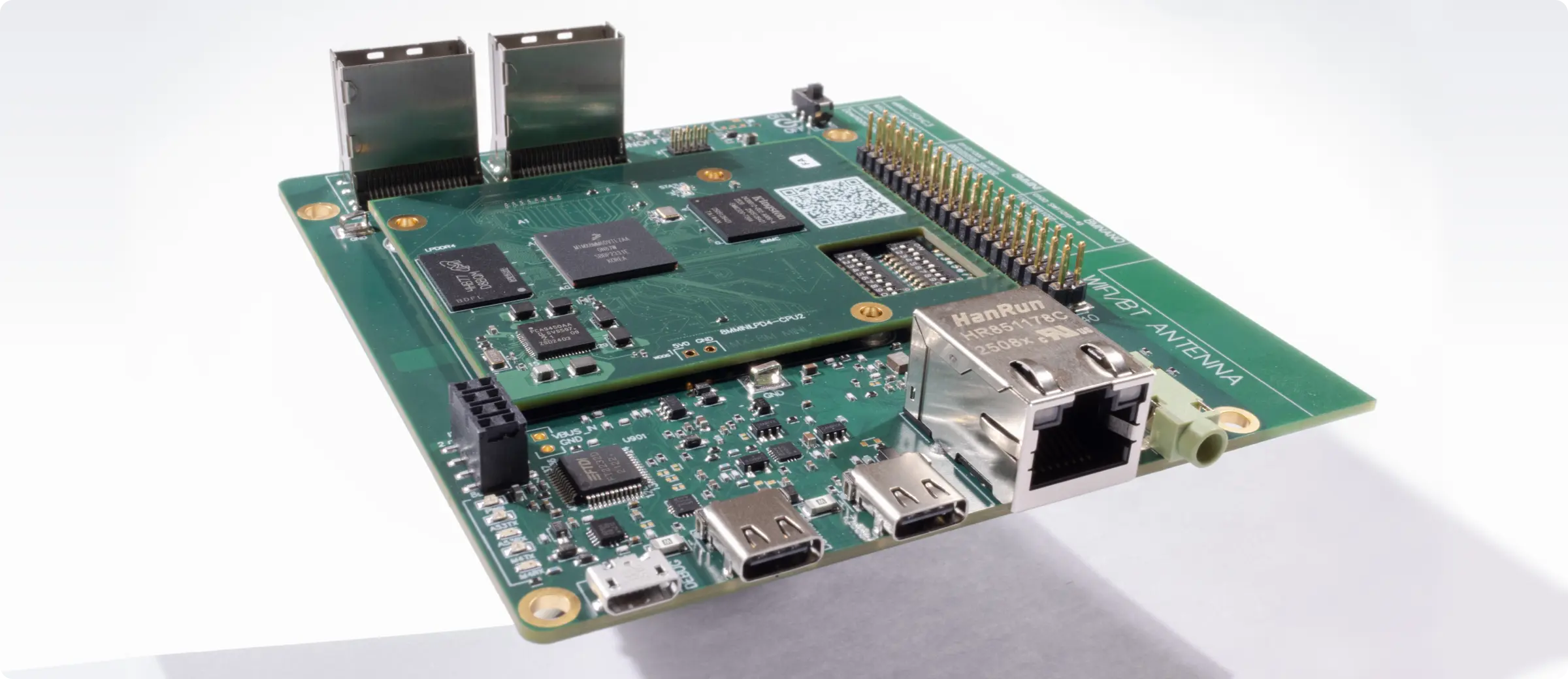
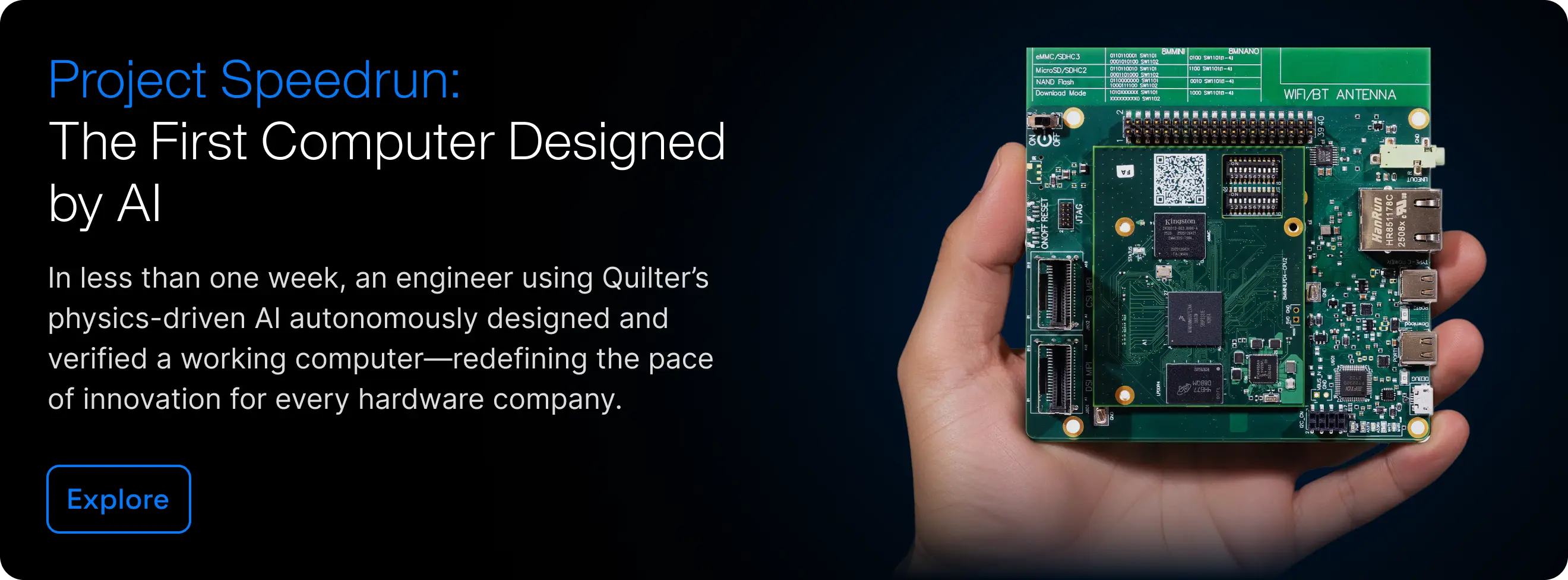
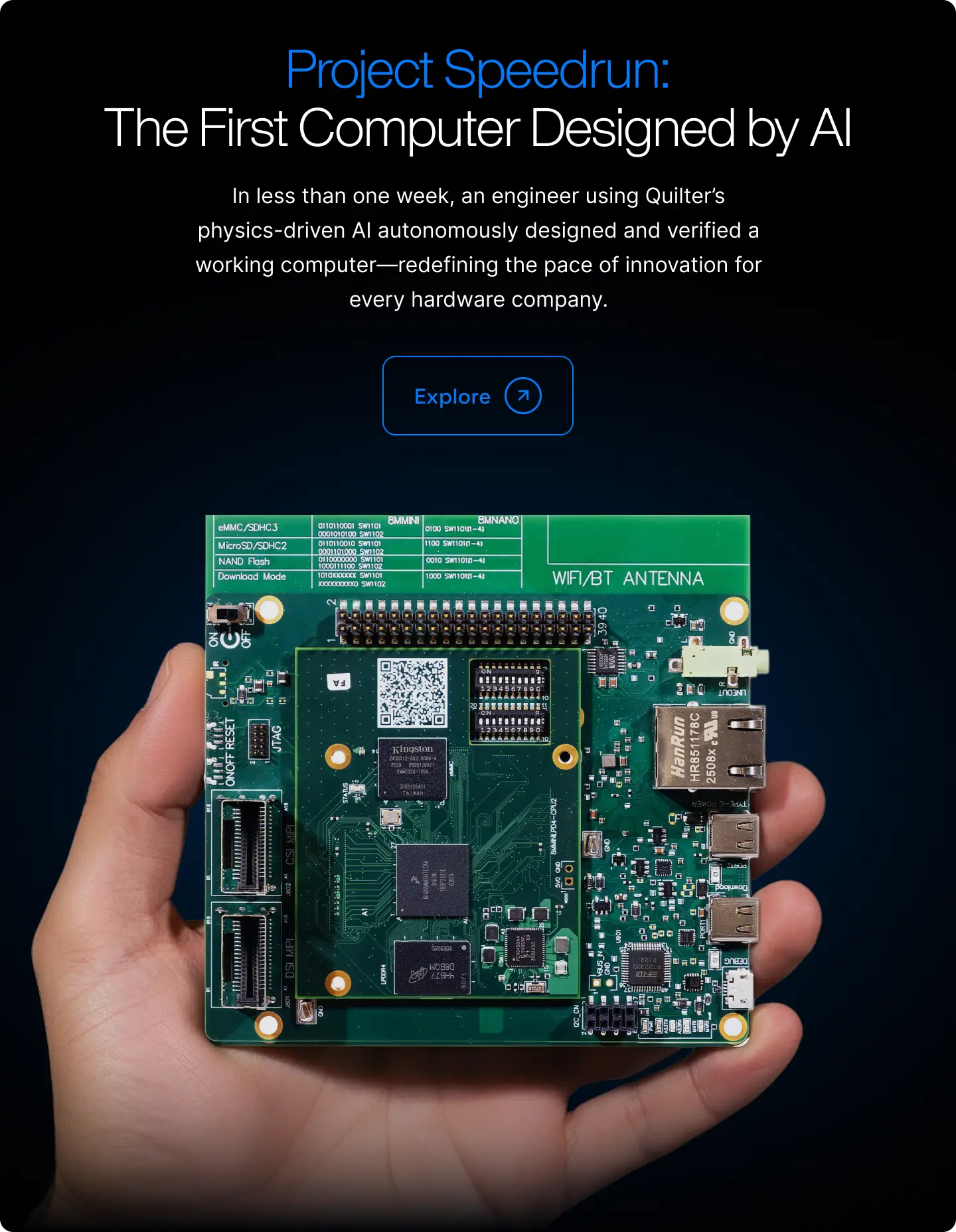
This article is one part of a walkthrough detailing how we recreated an NXP i.MX 8M Mini–based computer using Quilter’s physics-driven layout automation.
How Quilter’s acting Head of Product thinks about complexity, coherence, and why faster is always better.
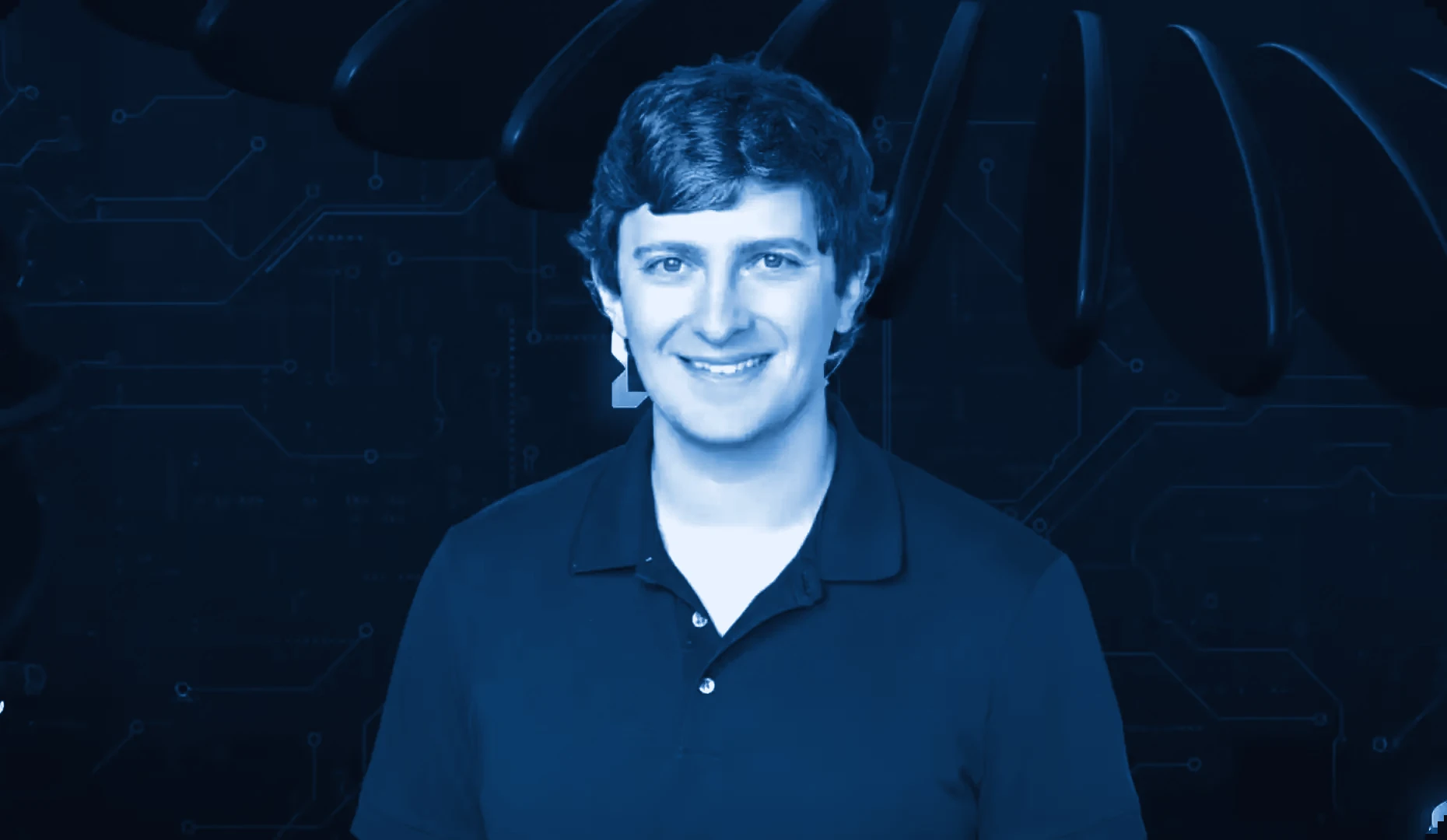
When Richard Whitney talks about his career, he does not present it as a straight line. It reads more like a series of deliberate experiments, each one motivated by curiosity, discomfort with stagnation, and a desire to work on problems that resist simple answers. Today, Richard is acting as Head of Product at Quilter, a role he stepped into organically after years of resisting conventional tech trajectories and then mastering them anyway.
In this Humans in the Loop profile, Richard’s story matters because it mirrors Quilter’s own ethos. He has built software, hardware, interfaces, and companies. He has moved between academia and industry, between moonshots and manufacturable reality. What unites these chapters is not a job title, but a way of thinking: favoring gradients over endpoints, coherence over chaos, and deep technical craft over superficial optimization. Quilter is a company built on those same instincts.
Origins: Avoiding the Cubicle Farm
Richard’s origin story begins with an early and visceral reaction to where software careers seemed to be heading. “By the time I was going to college I decided I didn’t really want to be in a dark cubicle farm, which is what it looked like at the time,” he recalls. That aversion pushed him into biomedical engineering as an undergraduate, where the problems were tangible, embodied, and occasionally extreme.
During that period, he worked on projects ranging from “micro helicopters for NASA” to “open heart surgery on live pigs.” These were not résumé-padding exercises. They were formative encounters with systems where failure had real consequences. Yet even there, Richard sensed a mismatch between the work he enjoyed and the career paths available. Without an MD or PhD, he saw futures he did not want. “I did not want to do that much more school,” he says plainly.
Graduate school at the MIT Media Lab offered a different axis entirely. There, Richard studied tangible interfaces, a discipline focused on “how do you allow people to interact with information in a way that makes sense to you as a sort of physical 3D person.” The goal was to make “information and the interface to the information coincident.” That sensitivity to how humans encounter complexity would resurface again and again in his later work.
Journeys in Engineering: From Moonshots to Manufacturability
After MIT, Richard’s career accelerated across domains without losing coherence. He briefly did UI/UX work at Samsung, then went on to lead the blue-sky R&D group of a company that “makes companies.” The mandate was broad by design. With capital and freedom, his team explored grid-scale solar, energy storage, 3D printers, electric cars, and even “designs for ground based space launch.”
That period taught him how ambition can thrive when constraints are explicit rather than imagined. Later, running his own product development company sharpened this further. He focused on consumer electronics, taking products “from concept all the way through to manufacture in really really short timescales.” He describes doing “all of the engineering, mechanical, electrical, software, industrial design, design for manufacture” and flipping a product “in three months to six months… from day one to being able to like turn the factory on.”
This obsession with velocity did not mean cutting corners. It meant understanding where effort mattered most. That mindset carried into executive roles, including Chief Product Officer at a smart lock company and later VP of Product at Particle, where he spent three years scaling IoT products and manufacturing pipelines.
Eventually, he wanted a change of scenery. “Finally got tired of living in San Francisco,” he says, choosing sun, space, and culture in Los Angeles and later Monterey. He attempted semi-retirement, but instead started 2 businesses and a nonprofit, and served as interim CPO for several companies. Quilter entered the picture not as a calculated move, but as a pull from people he trusted.
Why Quilter: Complex Enough to Be Interesting
“What attracted me to Quilter,” Richard explains, starts with people. “There are always people where you’re like, oh, I would work with them again.” When an old colleague reached out, the answer felt obvious. What keeps him at Quilter is the problem itself. “There are only a few problems that are really complex enough to be interesting,” he says. Quilter, in his view, touches “enough surface area of some very complex problems to make it interesting to think about separately.” This is not complexity for its own sake. Quilter is also, critically, “a viable business.” The product meets “an actual need that people understand is an actual need and are happy to pay for.”
That clarity matters to Richard. He contrasts it with companies where you must first convince the market that a problem exists. At Quilter, the need is already there. The challenge is execution.
Day to day, his role revolves around prioritization without thrash. “It’s a lot of looking at all the possibilities of what we could be working on and trying to determine what is the most valuable at the time.” The danger, he notes, is being “overly agile,” where priorities shift weekly. “That’s unacceptable, especially if you want to get things really delivered, especially complex things.”
Instead, he focuses on “creating a coherent flow of work,” ensuring efforts “dovetail together beautifully,” and extracting “strong results out of the minimum effort required.” This is not about doing less. It is about applying effort where it compounds.
His broader philosophy rejects fixed endpoints in favor of directional truths. “The way you get to interesting places is generally by having gradients rather than end points,” he explains. Numerical KPIs can motivate, but they are limited. Gradients like “faster is always better” give teams agency and a shared rubric for decision-making. At Quilter, where physics, geometry, and computation intertwine, those gradients become essential.
Beyond the Workbench: Microscopes, Plankton, and Light
Outside of Quilter, Richard is anything but idle. “I have innumerable hobbies,” he says, almost apologetically. Many revolve around imaging, particularly at microscopic scales. One recent idea involved building “a system for automatically discovering new species in the planktonic column.” The technology already exists, he notes. “I just need to write some software for it.”
That impulse captures him well. Discover new microorganisms “because why not?” Name them creatively. Turn science into play. He jokes about a retirement plan as a submarine captain in Monterey Bay, offering tours beneath the surface. He grows bioluminescent dinoflagellates and hands them out as “living glow sticks.” He facets solid sapphire, runs 3D printers in his bathroom, and maintains both a “clean shop” and a truly unusable “dirty shop” in the garage.
He has also adopted civic creativity, taking over holiday and concert lighting for his small town. “Let’s make all the lights in downtown addressable so I can run everything from my phone,” he says, delight evident. These projects are not escapes from engineering. They are extensions of it, applied wherever curiosity lands.
A Line to Remember
Perhaps the most revealing insight Richard offers is deceptively simple: “There are only a few problems that are really complex enough to be interesting.” Quilter, for him, qualifies not because it is fashionable or hyped, but because it demands sustained thinking, respect for physics, and disciplined execution. His insistence on gradients over endpoints, coherence over chaos, and speed as a lived principle captures both his personal arc and the culture Quilter is intentionally building.
Closing Note
Talking with Richard reinforces why Humans in the Loop exists. Quilter is not defined only by algorithms or solvers, but by people who are restless in the best sense. Richard’s career shows what happens when curiosity is paired with accountability, and when complex problems are treated not as obstacles, but as invitations.


.webp)