




Power Distribution Network (PDN)
What Is a Power Distribution Network (PDN)?
The Power Distribution Network (PDN) encompasses every element in the path between the voltage regulators on a PCB and the power pins of every component: copper planes and traces that carry current, vias that connect power structures across layers, decoupling capacitors that filter noise and provide local charge storage, and the regulators themselves. The PDN's primary function is to deliver stable, clean voltage to all components within their specified tolerance — typically ±5% or tighter — across the full range of operating conditions from idle to maximum transient load.
PDN performance is characterized by its impedance across frequency. At DC, the regulator's output impedance dominates. At low frequencies (kHz range), bulk capacitors provide the primary impedance reduction. At mid frequencies (MHz range), ceramic decoupling capacitors take over. At high frequencies (hundreds of MHz and above), the PCB planes and their associated parasitic inductance and capacitance determine the PDN impedance. A well-designed PDN maintains impedance below the target threshold across this entire frequency range, ensuring that voltage ripple stays within specification regardless of load transient frequency.
PDN-Aware Layout Generation
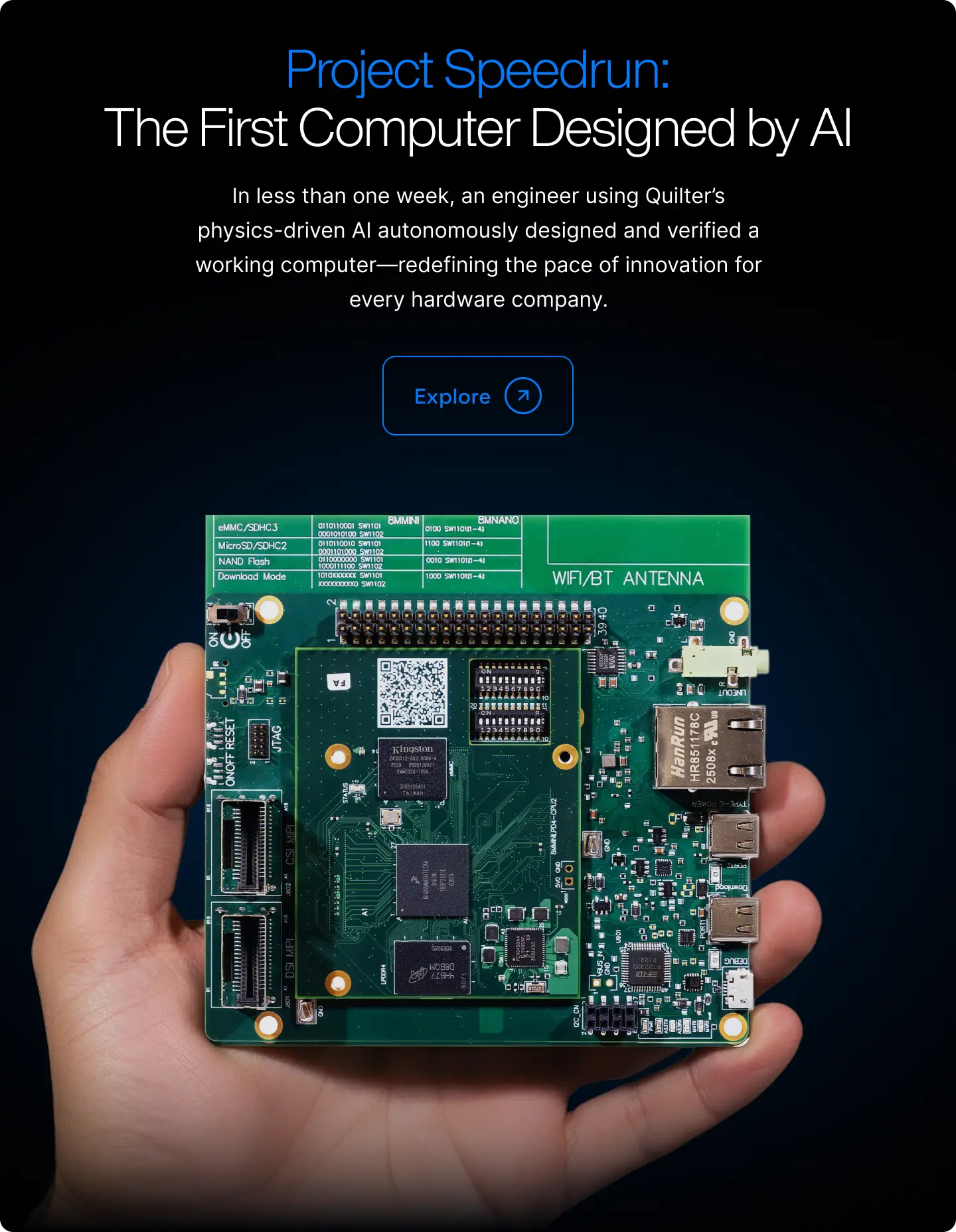
PDN design represents a holistic challenge that touches every aspect of the PCB layout: stackup (plane layer allocation), placement (decoupling capacitor positioning), routing (power trace sizing and via connectivity), and manufacturing (copper weight and via reliability). Physics-driven AI layout tools that evaluate PDN impedance as part of their optimization process can co-optimize all these factors simultaneously, producing designs where the power delivery infrastructure is tuned to meet the specific needs of the components on the board. This integrated PDN approach is fundamentally different from the traditional workflow where PDN analysis occurs after layout is complete and remediation options are limited.