




EDA Software
What Is EDA Software?
Electronic Design Automation (EDA) software encompasses the suite of tools that engineers use to design, analyze, and verify electronic systems — from integrated circuits to printed circuit boards to complete systems. In the PCB domain, EDA tools provide schematic capture, component library management, PCB layout and routing, design rule checking, signal integrity simulation, power integrity analysis, and manufacturing output generation. Major EDA platforms include Altium Designer, Cadence Allegro and OrCAD, Siemens Mentor (now Siemens EDA), and the open-source KiCad.
The EDA industry has evolved significantly since its origins in the 1980s, with tools becoming increasingly sophisticated in their ability to handle complex, multi-layer, high-speed designs. Modern EDA platforms integrate 3D visualization, MCAD collaboration, supply chain intelligence, and version control. However, the core PCB layout workflow — manual placement followed by manual or semi-automated routing — has remained largely unchanged for decades, creating a bottleneck as board complexity continues to increase.
The Next Evolution: AI-Native PCB Design Tools
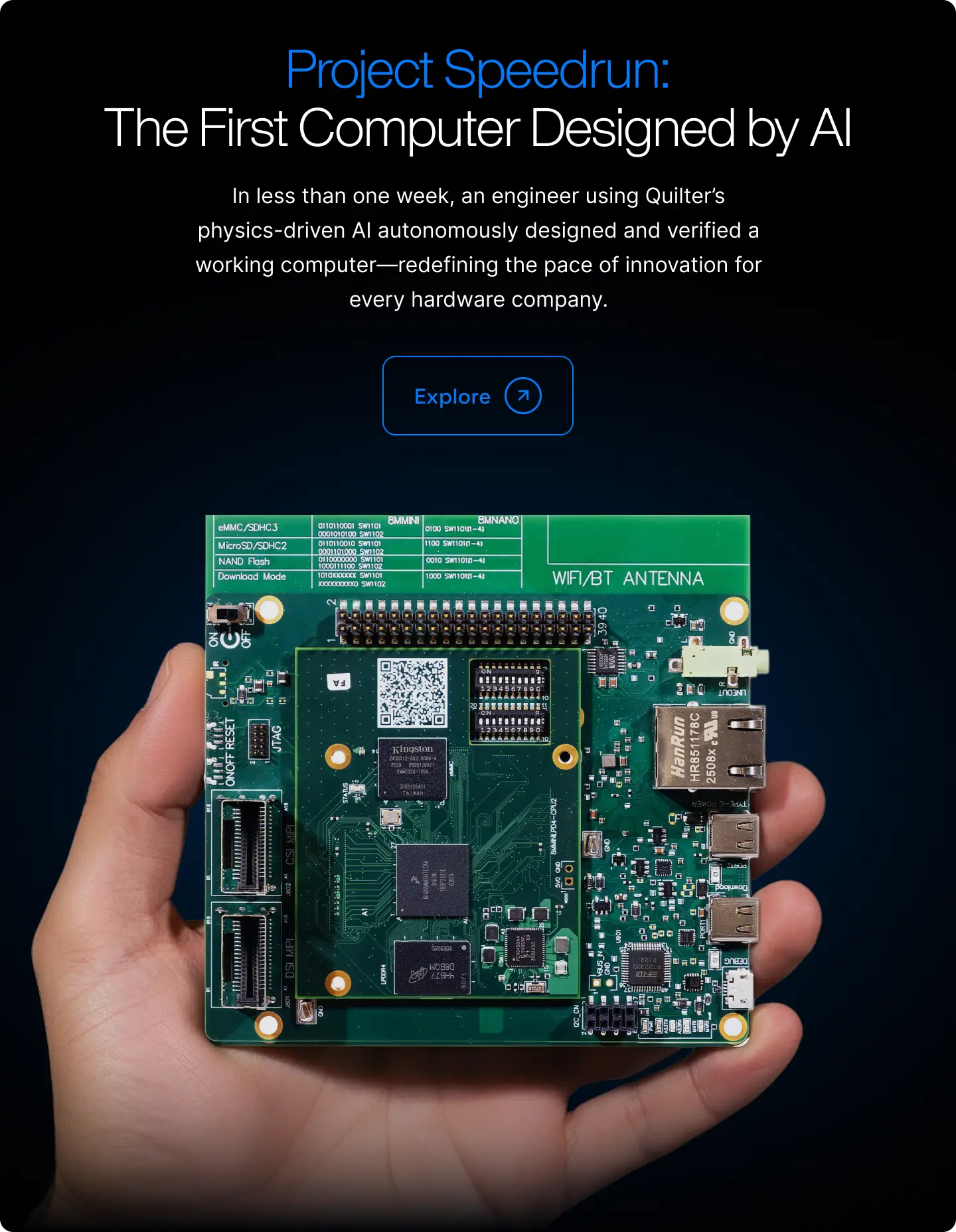
While traditional EDA tools provide powerful editing and verification capabilities, they fundamentally rely on human operators to make every placement and routing decision. A new generation of AI-native design tools is emerging that complements existing EDA workflows. Rather than replacing the EDA platforms engineers already use, physics-driven layout engines integrate with them — importing designs from tools like Altium, Cadence, and KiCad, generating optimized layouts autonomously, and exporting results back into the engineer's preferred environment. This approach preserves existing tool investments while removing the manual layout bottleneck.