




Read the Full Series
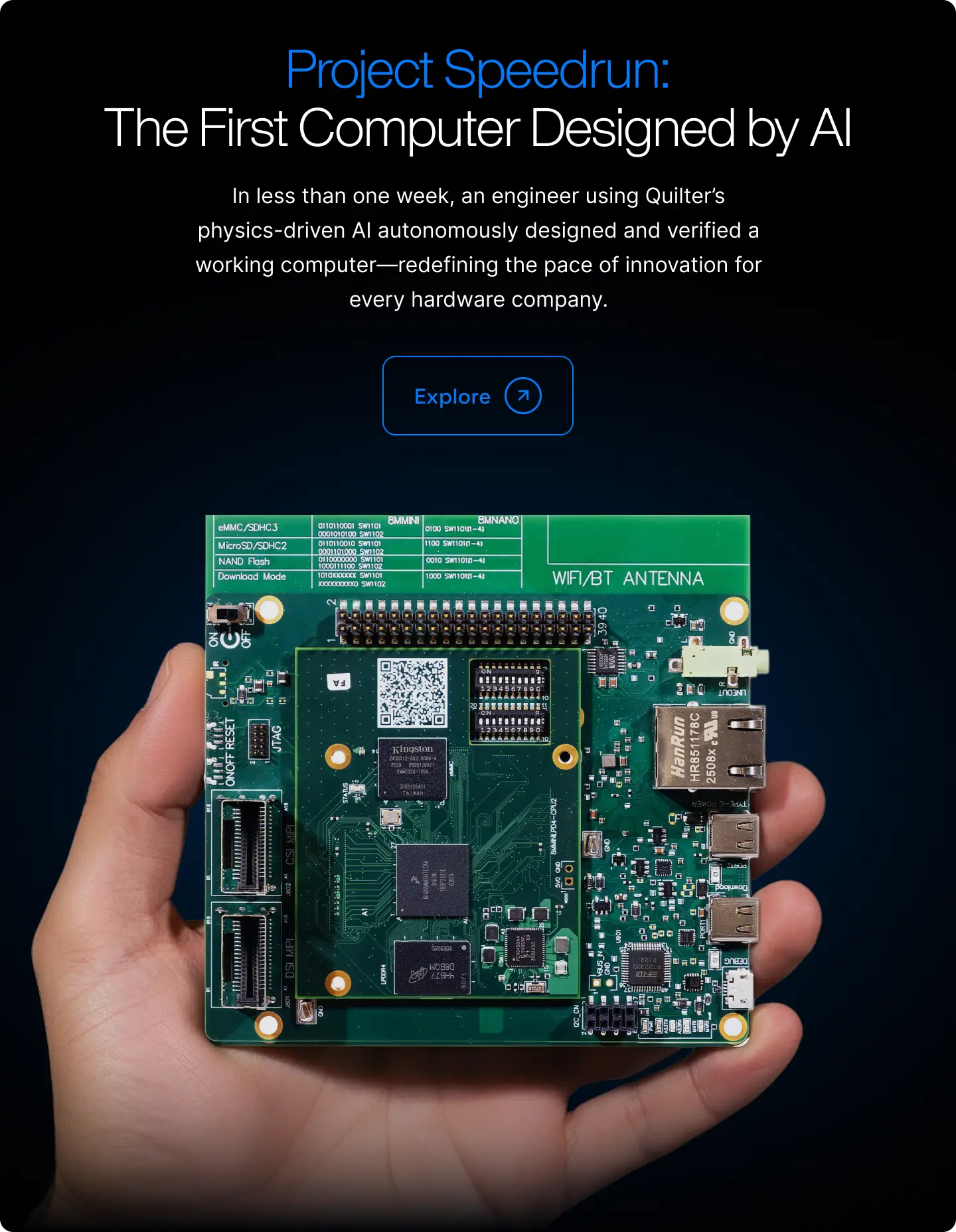
This article is one part of a walkthrough detailing how we recreated an NXP i.MX 8M Mini–based computer using Quilter’s physics-driven layout automation.
Modern signal integrity work requires cross-functional engineering
The best signal integrity engineers stop thinking in silos because modern PCB design, high-speed design, and hardware system development are no longer purely electrical problems. They are multi-domain engineering problems shaped by signal integrity, thermal behavior, mechanical constraints, layout decisions, manufacturability, and system-level tradeoffs. Engineers who understand only one layer of that stack can still do valuable work, but they are increasingly less likely to produce the best possible design.
That is the core lesson running through Kalyan Vaddagiri’s interview. His argument is not that specialization no longer matters. It is that specialization without permeability has become a liability. Signal integrity expertise remains essential. What changes is the environment around it. Modern hardware design now demands broader technical awareness, better communication across teams, and a willingness to let adjacent disciplines reshape what “good design” means.
What is a siloed engineering mindset?
A siloed engineering mindset is the belief that success inside one technical discipline is enough to guarantee success for the overall design. In practice, that often sounds like this: the electrical work is done, the board passes the local check, the assigned task is complete, and everything outside that narrow frame belongs to someone else.
Vaddagiri names the danger directly. Without interdisciplinary engagement, the mentality becomes, “I did my job, I got my salary.” The line is memorable because it captures a widespread organizational problem. A locally correct design can still be globally weak. A decision that works for one domain may create rework, inefficiency, or failure in another.
Why signal integrity alone is not enough in high-speed PCB design
Signal integrity remains one of the central disciplines in high-speed hardware. It shapes performance, timing, noise behavior, and interface quality. Yet many boards and systems fail not because the SI work was careless, but because SI alone could not fully account for what the system required.
A design can look electrically clean and still suffer from thermal or mechanical weaknesses. A stackup or plane decision can satisfy one target and quietly degrade another. Once data rates rise, packaging gets denser, and system constraints multiply, no single discipline can safely assume it owns the whole truth of the design.
Multi-physics PCB design is now a practical requirement
Multi-physics design means evaluating a board or hardware system across interacting physical domains rather than treating electrical, thermal, and mechanical issues as separate sequential problems. In practical terms, that means engineers must account for how routing, power distribution, thermal performance, warpage, enclosure constraints, and manufacturability influence one another.
Vaddagiri points to warpage analysis as one clear example. A thermal expert may see a problem with the way a power plane was handled even when the design appears electrically sound. That does not invalidate the electrical work. It reveals that the actual design question was larger than the electrical frame used to evaluate it.
Thermal, mechanical, and ECAD teams see design risk differently
Each engineering team sees a design through its own operating logic. Signal integrity engineers watch noise, loss, coupling, and performance margins. Thermal teams care about heat flow, hotspots, and reliability. Mechanical teams care about physical fit, stress, warpage, and enclosure realities. ECAD specialists often see layout patterns, design intent, and implementation details that do not register the same way for others.
The value of cross-functional engineering is not that everyone becomes interchangeable. The value is that each team detects a different class of risk. When those views are combined earlier, the design improves sooner.
T-shaped engineers are more useful in modern hardware development
The “T-shaped engineer” idea is often presented in shallow corporate language. In real engineering work, it means something more demanding. It means preserving depth in a core specialty while expanding enough into adjacent domains to ask better questions, understand dependencies, and prevent weak assumptions from surviving too long.
That is how Vaddagiri describes his own development: deep in signal integrity, broader across thermal and mechanical concerns, and increasingly interested in the system behavior that sits between disciplines. This is not generalism for its own sake. It is a way of making more robust engineering decisions.
Cross-functional engineering improves diagnosis, not just teamwork
Many discussions of collaboration focus on culture. Communicate better. Respect other teams. Break down silos. All worthwhile. The more important point, though, is diagnostic. Cross-functional work helps engineers understand why products fail, why tradeoffs were missed, and why a design that looked acceptable inside one domain turned out to be suboptimal overall.
When engineers speak across physics domains, they surface hidden assumptions. They find friction earlier. They identify system-level weaknesses before those weaknesses harden into expensive problems.
Why interdisciplinary engineering is socially difficult
Interdisciplinary engineering is not just technically hard. It is also socially hard. Experts trust their own methods. Simulation approaches differ. Measurement preferences differ. Teams distributed across locations and organizations often bring different habits, vocabularies, and standards of proof. Vaddagiri is candid about the role of ego in these exchanges and about how difficult persuasion can become.
That difficulty does not weaken the argument for cross-functional work. It strengthens it. If complex systems were easy to reason about from one point of view, collaboration would be optional. It is precisely because they are not that better interdisciplinary habits matter.
AI, simulation, and broader design context
As AI, machine learning, and automation enter hardware design workflows, the limits of siloed thinking become even more obvious. Optimization models are only as good as the constraints and objectives they are given. A narrow electrical model cannot magically account for thermal or mechanical realities that were excluded from the frame.
That is why broader engineering context matters so much. The future of better design is not simply faster tools. It is tools shaped by richer system understanding.
Key takeaways for signal integrity teams
- Signal integrity is necessary, but not sufficient, for strong modern hardware design.
- Multi-physics thinking improves board quality by revealing tradeoffs across electrical, thermal, and mechanical domains.
- T-shaped engineers are better positioned to identify system-level risk.
- Cross-functional collaboration is not just cultural. It materially improves diagnosis and design outcomes.
- AI-assisted engineering works best when teams widen the design context, not when they shrink it.
FAQ: Signal integrity, silos, and multi-physics engineering
Why are engineering silos a problem in PCB design?
Engineering silos are a problem because boards and systems do not behave according to departmental boundaries. A layout that looks fine in one discipline may create hidden risk in another. Strong design requires interaction across those domains.
What does multi-physics mean in hardware design?
Multi-physics refers to engineering work that considers the interaction of multiple physical domains, such as electrical, thermal, and mechanical behavior, rather than evaluating each one in isolation.
What is a T-shaped engineer in signal integrity?
A T-shaped engineer has deep expertise in a core area like signal integrity and enough working knowledge of adjacent domains to collaborate effectively, understand tradeoffs, and ask better system-level questions.
Can AI solve siloed engineering problems on its own?
No. AI can accelerate workflows, analysis, and optimization, but it cannot compensate for missing design context. Teams still need to define broader constraints and understand the interacting physics of the system.
Conclusion: the best signal integrity engineers widen the frame
The strongest signal integrity engineers do not abandon specialization. They abandon the illusion that specialization alone is enough. As hardware systems become denser, faster, and more interdependent, design quality increasingly depends on engineers who can move across boundaries without losing technical rigor. The future belongs to those who can widen the frame of the problem and still keep hold of the signal.


.webp)