





Read the Full Series
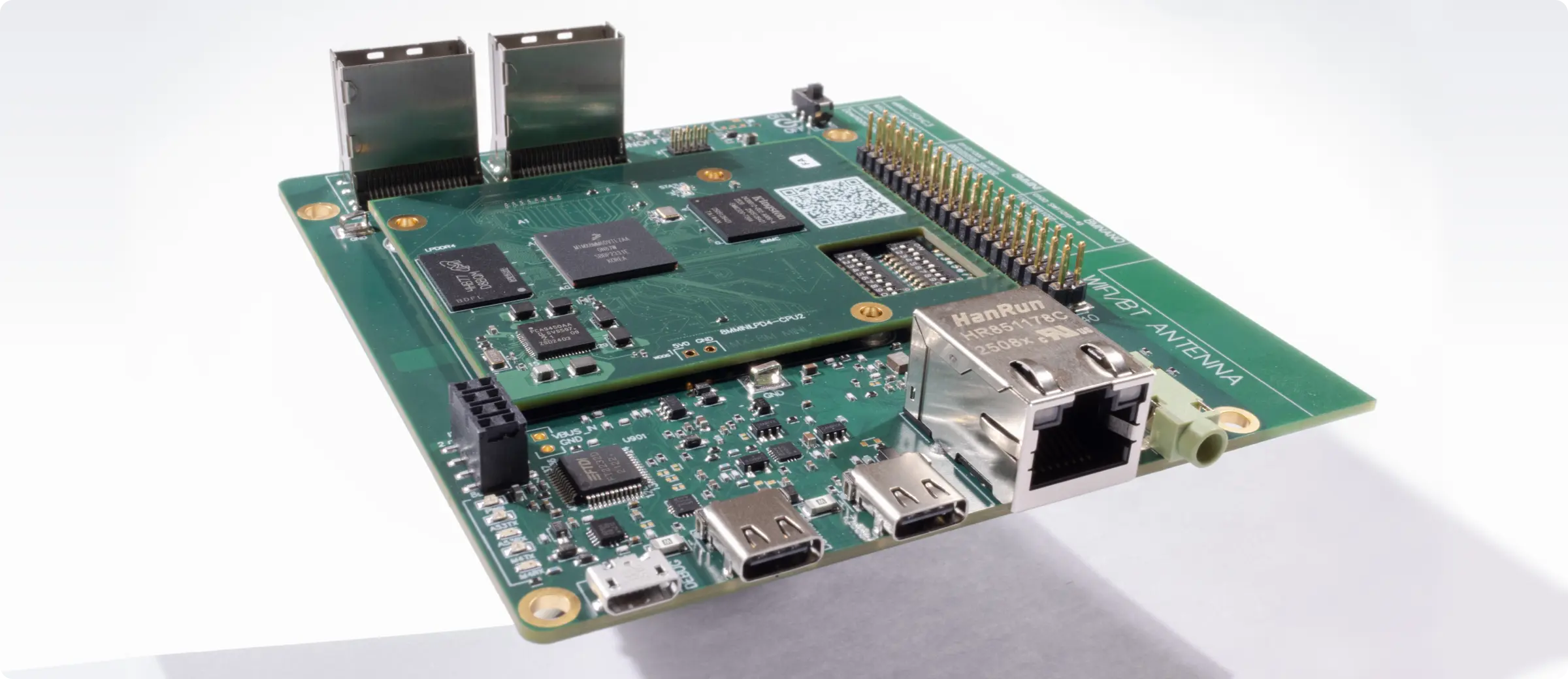
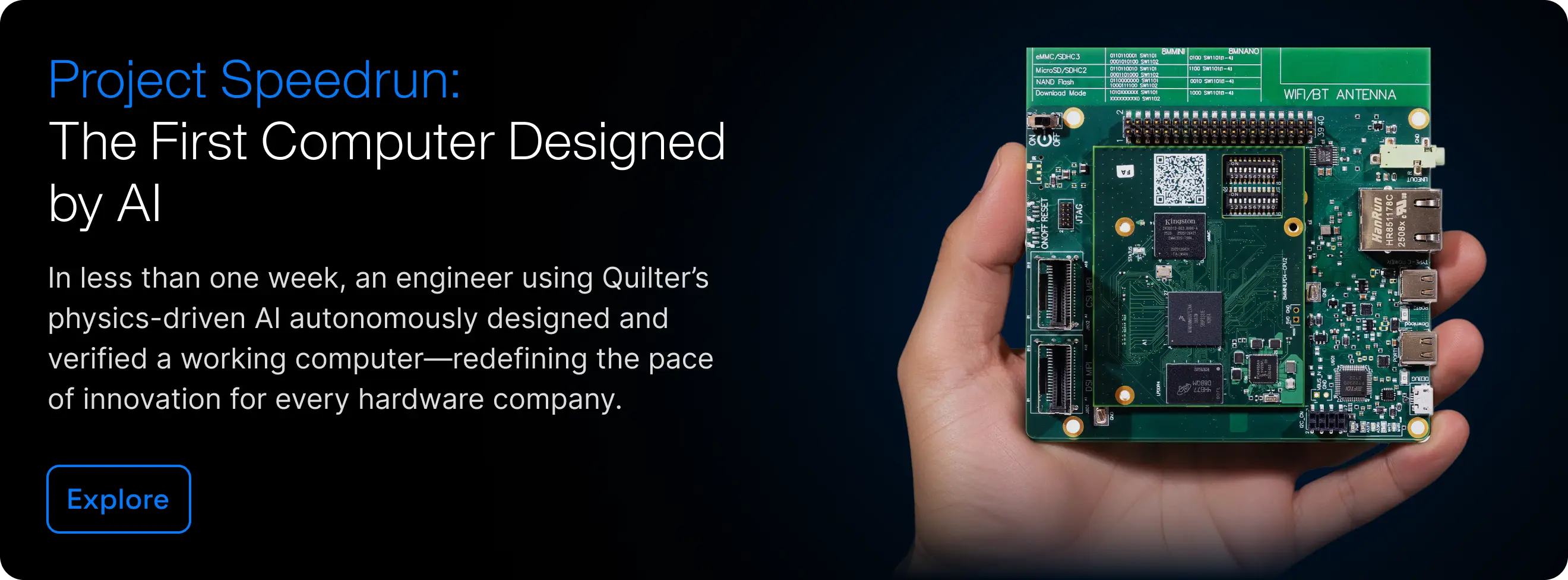
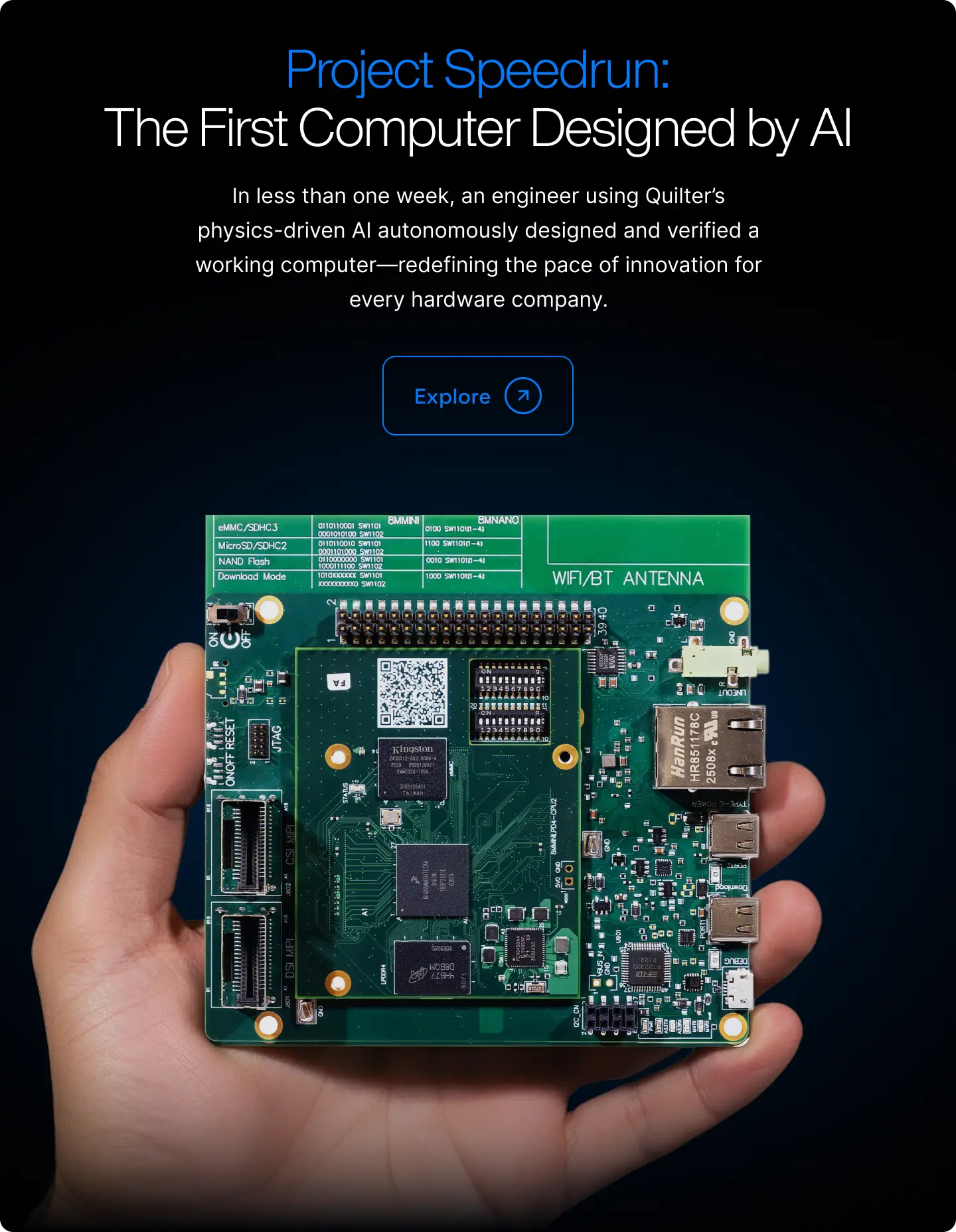
This article is one part of a walkthrough detailing how we recreated an NXP i.MX 8M Mini–based computer using Quilter’s physics-driven layout automation.
Some engineers inherit a polished story. They loved circuits early, found their niche fast, and moved through the discipline in a straight line.
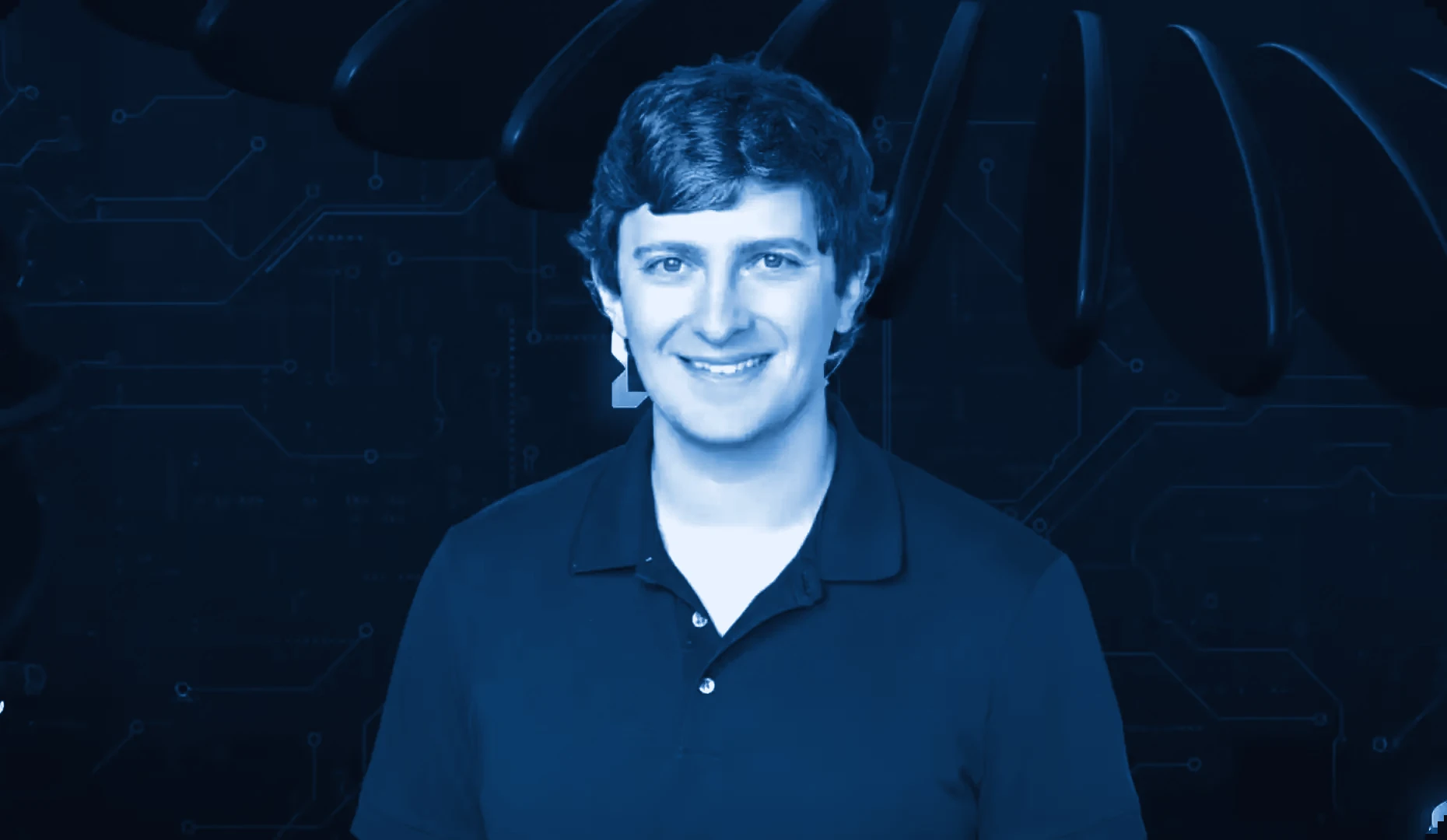
Collin Ruzvidzo offers something more useful than that. He offers a theory of how engineering judgment is actually built.
He did not begin with a myth of natural genius. He began with constraint, repair, repetition, and a willingness to keep learning long after the comfortable part of the job stopped teaching him anything new. In that sense, Collin is not just an interesting interview subject for Hardware Rich Development. He is a credible voice on one of its deepest themes: how real technical intuition forms in the first place.
“I think intuition is built on seeing patterns… by solving smaller problems and then solving bigger problems.”
That line is more than a good pull quote. It is the core of his thought leadership here. Collin’s contribution is not simply that he has repaired boards or taught himself new skills. It is that he gives a grounded account of how engineers become capable. Intuition, in his telling, is not magic. It is accumulated contact with real systems, real failures, and real constraints.
An engineer shaped by opportunity, not mythology
Collin says he originally wanted to be an accountant. Engineering entered the picture because it offered more opportunity. He studied mechatronics, took a maintenance engineering job in mining, and then hit a point that many strong engineers recognize: competence had become routine. He knew the breakdowns too quickly. The work no longer stretched him. So he left.
“I felt like I wasn’t growing as a person… Every breakdown I knew what was wrong.”
That decision gives this story its real force. Collin did not move into design through a neatly managed ladder. He moved into it because he refused stagnation. After leaving mining maintenance, he began doing phone and laptop repairs at motherboard level, taught himself through online resources, and kept taking on technical work that deepened his practical electronics experience. That eventually led him to industrial PCB repair for a diamond-mining client, where the demands of the job pushed him into analog electronics and design concepts he had not previously used in practice.
“That’s how I ended up learning from scratch how to get into design.”
That is a powerful framing for Quilter’s audience because it positions Collin as more than a practitioner. He becomes a witness to a specific truth about hardware: repair is not downstream of design. Very often, repair is what teaches design to become serious.
What intuition really is
When engineers talk about intuition, they often talk around it. They describe instinct, experience, or talent. Collin is more precise. He roots intuition in repeated pattern recognition.
Growing up in Zimbabwe, he says, many everyday objects were scarce. Toys were hard to come by. Repair shops were not always close. If something broke, people opened it up and tried to understand it themselves. That environment mattered. It created a habit of direct engagement with things that failed. It taught him to move from smaller problems to larger ones.
“If you are not interested in figuring out how something works, then normally you don’t learn.”
That is where Collin begins to feel like a thought leader rather than simply a skilled technician. He is articulating a philosophy of technical growth. Curiosity matters, yes, but curiosity alone is not enough. What matters is curiosity paired with friction. Curiosity paired with objects that resist you. Curiosity paired with the patience to see the same class of failure enough times that recognition becomes fast.
That view also aligns with broader engineering-education thinking. ABET’s 2025–2026 criteria frame engineering education as a process of continuous improvement and emphasize the need for programs to demonstrate meaningful design and applied competence, not just abstract knowledge. A longstanding engineering-education model from the University of Colorado’s Integrated Teaching and Learning program similarly argues for active learning, project-based design, and hands-on reinforcement of theory across the curriculum. Collin’s account feels credible in part because it arrives at that same conclusion from lived experience rather than pedagogy.
Repair teaches design judgment
The technical center of this interview is what Collin says about troubleshooting. He does not speak in vague praise of electronics. He describes how he works.
In one example, he walks through a board section that steps 18 volts up to roughly 1500 volts using a transformer and multiplier circuitry. Components like the TL494, MOSFETs, and diodes can fail in that chain. Elsewhere, op-amp stages convert tiny current signals into voltage, amplify them, and filter them. When those stages fail, expected signals disappear or distort. His method is to follow the signal path and inspect each section in order.
“What I normally do is follow the flow of the signal… I check each and every section to see if this part is functioning properly.”
That sentence carries more than technical detail. It expresses a mindset. Good hardware engineers are not just people who know facts about circuits. They are people who can preserve sequence under pressure. They can reason through a chain of dependencies without panicking and without leaping too early to the wrong answer.
This is one reason Collin deserves to be positioned as a thought leader in the piece. He is not offering generic inspiration. He is describing a repeatable epistemology for engineering work: observe behavior, isolate stages, follow the signal, and let the board tell you where the truth is.
Humility is part of the method
Collin is also good on failure.
When I spoke with him, he told a story about his first PCB using a PIC controller. The board worked only when connected to the programmer. Detached, it failed. He checked the oscillator and other likely culprits before returning to the datasheet and realizing he had missed the pull-up resistor on the reset path. It is a small story, but it lands because it captures the emotional reality of hardware work so well.
“One day while reading the datasheet… I saw I had not put a pull-up resistor.”
Then he gives the cleanest line in the interview:
“The problem with hardware is it’s not so forgiving as software.”
That is not just a good quote. It is a worldview. Hardware creates consequence. It makes omission expensive. It turns rigor into necessity. In a field crowded with easy abstractions, Collin speaks from the side of engineering that still has to ship, fail, get reworked, and ship again.
Learning as discipline
Another reason to elevate Collin as a leader in this piece is that he has a clear model for self-development. He is not waiting passively to become better. He has turned learning into a structure.
He says he arrives at work early to study PLC programming, continues learning at lunch, and works on projects or tutorials at home depending on the skill gap he wants to close. He wants breadth, but not empty breadth. He wants enough range to understand how systems generally work while still mastering specific areas like PCB design and power electronics.
“I want to have a broad understanding of how things generally work.”
Just as important, he is thoughtful about where he learns from. He says he increasingly prefers company-authored articles and videos over random individuals because he is trying to avoid misinformation and get direction from credible sources.
“I try to get information from credible sources.”
That matters because modern engineering is not just a problem of knowledge acquisition. It is a problem of filtration. There is more technical content available than ever, but not all of it deserves trust. Collin’s seriousness shows up here too. He is not merely consuming information. He is curating his own education.
A serious voice on AI and PCB design
The interview’s final section is where Collin becomes especially valuable for Quilter’s broader positioning.
He does not approach AI as a slogan. He approaches it as a practitioner who understands why engineers are skeptical. He acknowledges the resistance to autorouting and AI in PCB work. But he also argues that resistance will not be permanent, especially as tools improve and begin solving bounded classes of problems reliably.
His strongest metaphor comes from chess.
“Engines have the ability to find the best moves, but they are not intuitive… a human cannot see them. So I feel like maybe AI will be able to route boards or design PCBs in ways that are counterintuitive, but still implement the best practices.”
That is a very strong thought-leadership idea because it reframes the debate. The question is not whether a solution “looks human.” The question is whether it works inside real constraints. Collin gives Quilter a grounded way to talk about AI-assisted hardware without sounding mystical or defensive. He opens the door to a more mature conversation, one in which non-intuitive solutions can still be physically valid.
He also makes the adoption argument clearly:
“Eventually people are going to start accepting and even integrating it more into their designs.”
That line works because it is not evangelism. It is an observation from someone whose whole career has been built on the hard edge between theory and physical consequence.
Why Collin belongs in Hardware Rich Development
Collin Ruzvidzo is a strong subject for Hardware Rich Development because he represents something the series should continue to value: engineers who think from the material outward.
He is credible on repair. He is credible on learning. He is credible on technical humility. He is credible on the future of AI because he is not dazzled by it. He is asking the right question instead: can the solution survive contact with reality?
That makes him more than a profile subject. It makes him a useful voice for engineers trying to understand how judgment is formed. In Collin’s telling, intuition is built, rigor is earned, and the future belongs to people who can keep learning without losing respect for the stubbornness of hardware.


.webp)