






Clock Distribution
What Is Clock Distribution in PCB Design?
Clock distribution refers to the network of traces, buffers, and termination components that deliver clock signals from their source (oscillator or clock generator) to all components on the PCB that require a timing reference. Clock signals are among the most critical nets in any digital design because they synchronize data transfers, state transitions, and communication interfaces across the entire board. Any degradation in clock quality — jitter, skew, ringing, or duty cycle distortion — directly impacts the performance and reliability of every circuit that depends on that clock.
Clock distribution layout requires strict attention to trace impedance, length matching between multiple clock loads, minimization of stub lengths at each receiver, proper termination to prevent reflections, and isolation from noisy signals that could inject jitter. High-frequency clocks must be routed as controlled-impedance transmission lines with continuous return paths, and the routing should avoid layer transitions that introduce via discontinuities. For source-synchronous interfaces like DDR, the clock routing must be precisely matched in length to the associated data and address groups.
Precision Clock Routing in AI-Generated Layouts
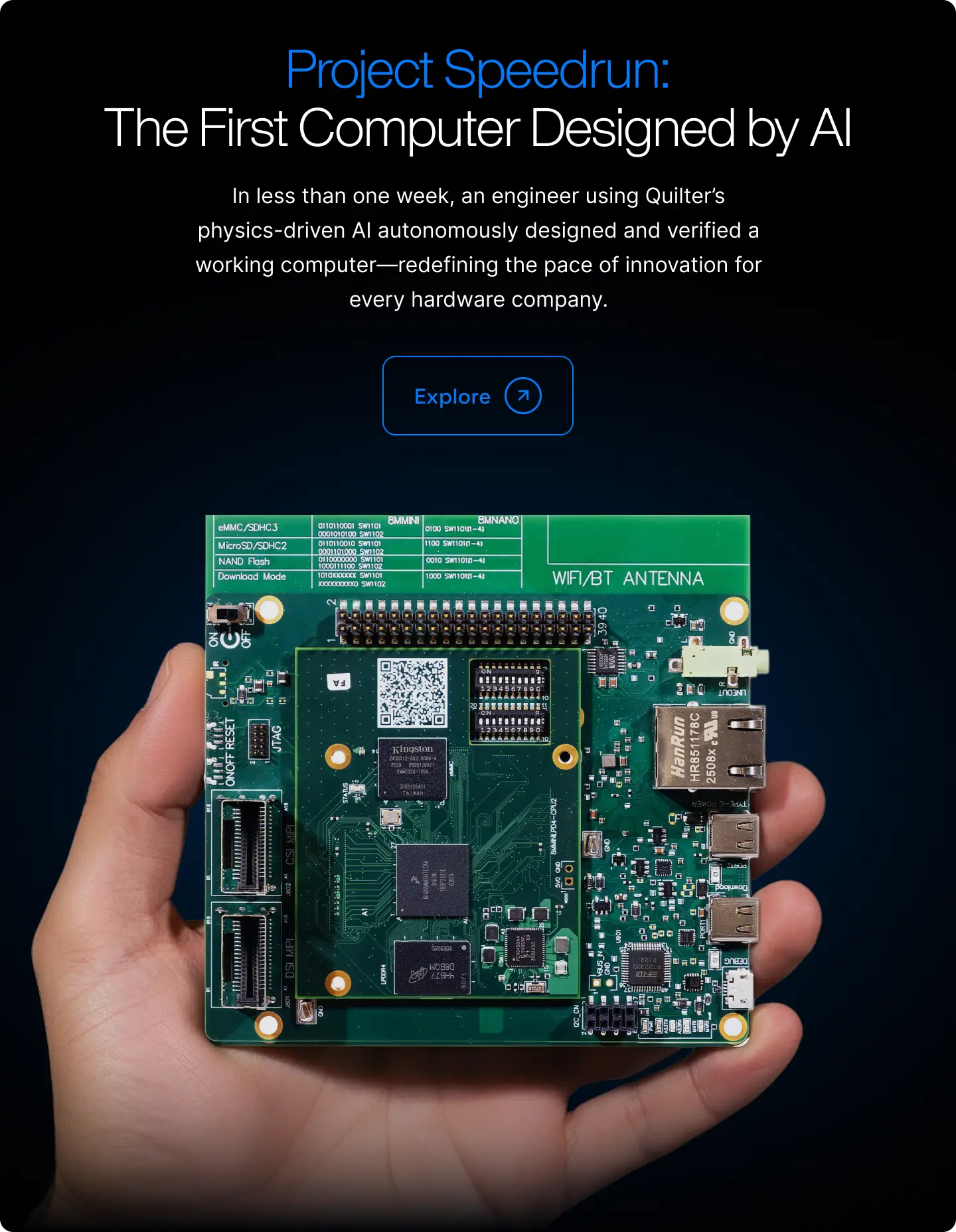
Clock distribution quality has a cascading effect on system performance — a poorly routed clock affects every circuit it feeds. Physics-driven AI layout tools can prioritize clock routing as a top-level constraint, ensuring that clock traces receive optimal layer assignments, impedance-controlled geometries, and proper length matching before other signals compete for routing resources. This priority-aware approach produces clock distribution networks with lower jitter and better signal quality than layouts where clock routing must compete on equal footing with all other nets in a manual routing queue.


