



Thermal Via
What Is a Thermal Via?
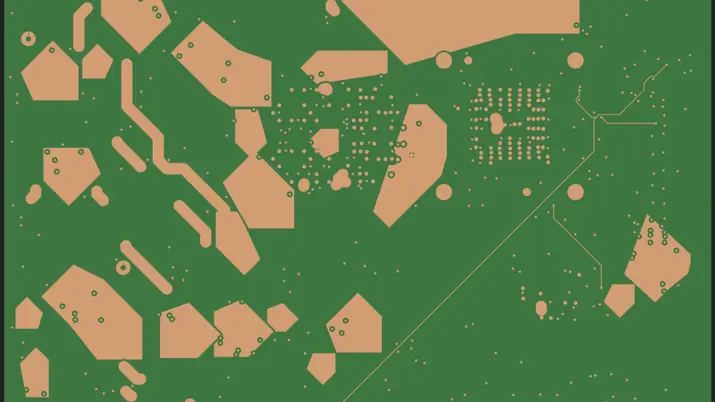
A thermal via is a plated through-hole placed directly beneath or adjacent to a heat-generating component's thermal pad to conduct heat away from the component through the PCB to internal copper layers or the opposite board surface. Many modern ICs — including voltage regulators, power management chips, processors, and LED drivers — use an exposed thermal pad on their underside as the primary heat dissipation path. Without thermal vias connecting this pad to larger copper areas inside or on the back of the board, the component cannot effectively dissipate its heat and may overheat during operation.
Thermal via design involves balancing thermal conductivity with manufacturing reliability. More vias provide better thermal transfer, but too many vias under a pad can cause solder to wick through the holes during reflow, starving the solder joint and creating voids that actually increase thermal resistance. Common practice is to use an array of vias with diameters of 8-12 mils on a regular pitch, either plugged with epoxy before assembly or using tented vias with solder mask covering the back side. The number and placement of thermal vias must be calculated based on the component's power dissipation and thermal resistance requirements.
Optimized Thermal Via Arrays in AI Layout
Thermal via array design requires balancing thermal performance against manufacturing constraints — a tradeoff that physics-driven AI layout tools can optimize during the placement and routing phase. By analyzing each component's thermal dissipation requirements and the available copper in the stackup, AI engines can automatically generate thermal via patterns that provide adequate heat transfer while respecting the fabrication and assembly rules that prevent solder wicking and via reliability issues. This integrated thermal management ensures that every power component in the design has appropriate thermal relief without requiring separate thermal analysis and manual via placement as a post-routing step.