



DDR Routing
What Is DDR Routing in PCB Design?
DDR (Double Data Rate) routing refers to the specialized PCB layout techniques required to connect DDR memory components — such as DDR4 and DDR5 SDRAM — to their host processor or memory controller. DDR interfaces transfer data on both the rising and falling edges of the clock signal, which means timing precision is critical. Even small length mismatches or impedance inconsistencies between data, address, and clock traces can cause memory initialization failures, data corruption, or reduced operating frequency.
DDR routing involves managing multiple signal groups with strict length matching requirements. Data byte lanes must be matched within tight tolerances to their associated data strobe (DQS) signals. Address and command lines have separate matching requirements relative to the clock. The complexity increases with each DDR generation, as data rates climb and timing margins shrink.
Automating DDR Timing Constraints in PCB Layout
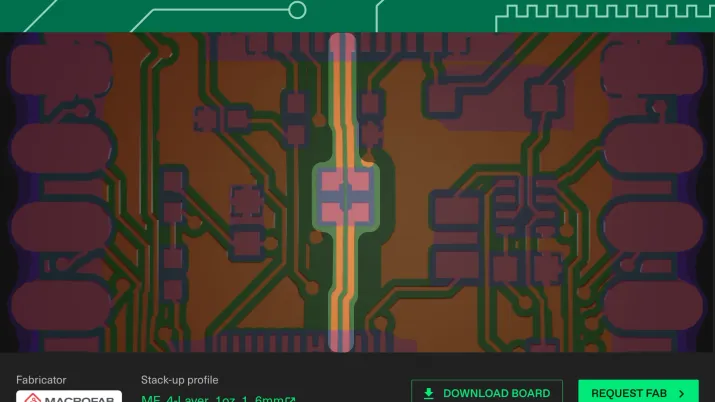
DDR routing is one of the most time-consuming aspects of manual PCB layout. Engineers spend hours or days tuning serpentine delay structures and adjusting trace lengths to meet timing specifications. Physics-driven layout tools now enforce DDR timing constraints during the automated generation process, producing length-matched, impedance-controlled DDR interfaces without manual intervention. This allows engineers to evaluate multiple DDR layout approaches in parallel and select the option that best balances timing performance, board area, and stackup utilization.