






Read the Full Series
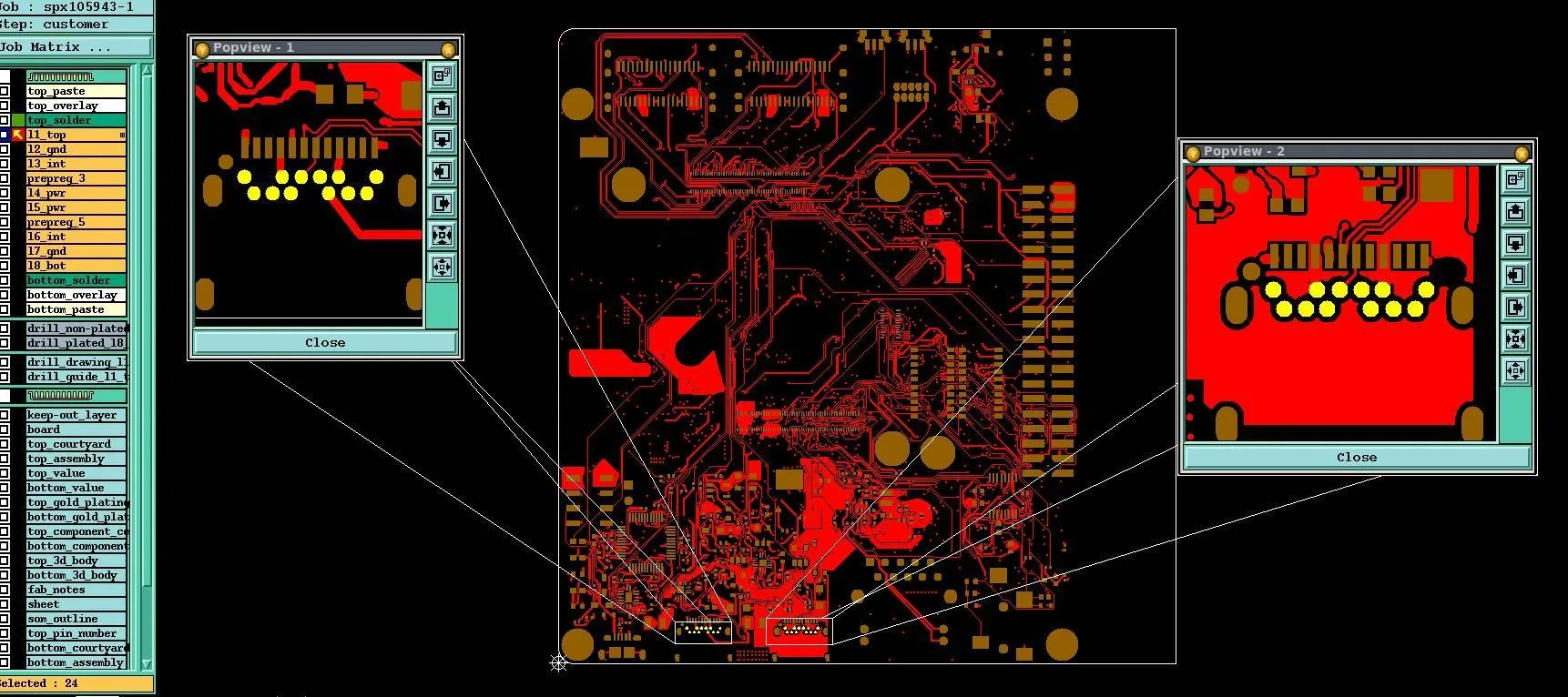
This article is one part of a walkthrough detailing how we recreated an NXP i.MX 8M Mini–based computer using Quilter’s physics-driven layout automation.
What serious hardware AI requires beyond the model
A finished PCB layout can look like a simple output: components placed, traces routed, constraints satisfied, files ready for review. For hardware startups, that visible result hides the deeper system required to produce it. Infrastructure has to scale suddenly, evaluate many design candidates, and return to zero without wasting compute. Engineering leadership has to decide where automation should act, where human judgment should intervene, and how much evidence a tool must provide before a skeptical team trusts it.
Quilter sits inside one of the most demanding corners of the PCB industry: AI-assisted layout automation for real electrical systems. Product claims in this category cannot rely on vague promises about intelligence, speed, or productivity. Boards have to work after fabrication, not merely look plausible in a demo. Every automated decision touches physical constraints, manufacturing realities, signal behavior, power delivery, and the professional judgment of engineers who know how expensive late mistakes become.
Across conversations with Nick Faughey, Stephanie Ngo, and Darin Tenbruggencate, a more useful picture of Quilter emerges. Autonomous PCB design is not only a machine learning problem or a routing problem. Hardware AI also depends on burst-capable infrastructure, disciplined communication, operational context, and human in the loop AI workflows that preserve expert control. Leading AI startups in hardware will earn authority by building those invisible systems, not by treating the model as the entire product.
For hardware founders and engineering leaders, that distinction matters. A software recommendation can often be rolled back after a bad click or poor ranking. A PCB layout error can create a failed prototype, a delayed launch, a noisy rail, an electromagnetic compatibility issue, or a board spin that burns weeks. Serious automation has to respect the difference between generating an answer and helping a team make a physical product.
Why hardware startups do not scale like ordinary SaaS companies
Nick Faughey describes Quilter’s compute environment in terms that should feel familiar to hardware engineers: long quiet periods interrupted by sudden bursts of intensity. “As soon as you submit a board to route,” he explains, “we spin up like hundreds of servers in the background to run for anywhere from like 30 seconds each to like a couple hours, and then they spin all the way back down to zero.” His description captures a workload shaped by combinatorial search rather than steady user traffic. PCB layout automation is not a dashboard refreshing at predictable intervals.
A conventional SaaS platform might scale around page loads, API requests, database reads, scheduled jobs, and recurring user behavior. Quilter’s workload behaves more like a transient event in an electrical system. One board submission can trigger a large parallel search process where candidate layouts are generated, evaluated, compared, scored, and cleaned up. Compute demand does not rise smoothly; it spikes, branches, and then collapses.
Nick rejects the simplistic answer of making every part of the system bigger. Quilter cannot simply “make everything 4x more powerful and give 4x more quantity to everything.” Engineers building the platform have to think carefully about how a system moves “from zero to a bajillion back to zero.” His phrase sounds playful, but the underlying infrastructure problem is serious: design automation needs elasticity, cleanup, observability, and cost discipline at the same time.
Power delivery offers a useful analogy because hardware engineers already understand the danger of averages. A PDN is not judged only by typical load; transient behavior, impedance, recovery, and noise matter just as much. Quilter’s infrastructure carries a similar burden at the software layer. A routing system that performs under calm conditions but fails during bursts is not production-ready; it is merely under-stressed.
For engineering leadership inside hardware startups, this lesson is easy to miss. AI capability cannot be separated from the infrastructure that delivers it reliably to customers. A model that works in research but cannot be served repeatedly, economically, and predictably under real workloads remains a promising component rather than a dependable product. PCB teams do not pay for demos; they pay for workflows that survive constraint, revision, pressure, and physical consequence.
Pattern libraries create credibility for AI PCB layout
Startup mythology often celebrates originality, yet durable engineering depends on knowing when not to invent. Nick describes infrastructure work as disciplined pattern selection rather than heroic improvisation. “There are patterns for stuff that kind of just like need to be followed,” he says. “There’s a stack of 20 different patterns for solving problems and here’s our stack of 20 different problems.” Mature engineering leadership begins with that kind of restraint.
Good technical teams separate genuinely novel problems from problems that already have reliable solution patterns. Hardware startups lose time when every challenge becomes a blank-canvas exercise. Infrastructure, deployment, observability, data movement, and cleanup often reward proven approaches. Novelty belongs where the domain demands it, not where impatience or ego makes reinvention attractive.
Nick’s sharper formulation is that creative work often means learning “how to creatively apply an established pattern to some Quilter specific problem.” That sentence belongs near the center of any serious discussion of AI PCB design. PCB layout itself follows known principles while every board presents a unique constraint set. Engineers do not reinvent electromagnetic theory for each design; they adapt physical laws, layout practices, manufacturing rules, and design intent to a specific board.
Quilter’s category works the same way. A credible hardware AI system has to combine established software patterns with domain-specific search, scoring, validation, and workflow design. Generic AI wrappers can survive by sounding impressive for a short period. Leading AI startups in PCB design need deeper fluency: where established patterns are sufficient, where physics changes the problem, where engineers need control, and where the tool must produce evidence instead of confident language.
That balance creates authority. Discipline keeps a company from rebuilding solved systems poorly. Imagination helps a company adapt those systems to physical design problems that ordinary software tools never encounter. Hardware startups that understand both sides will move faster without turning speed into fragility.
Human in the loop AI must mean expert control, not decorative approval
Human in the loop AI often appears in marketing as reassurance. A vendor says a person remains involved, and the phrase is meant to calm fears about automation. Hardware design requires a more rigorous definition. Human involvement cannot be a ceremonial checkpoint after the machine has already made opaque decisions.
Engineering judgment is how real-world context enters the design system. A PCB engineer understands why a constraint matters, which tradeoffs are acceptable, which manufacturing risks are tolerable, and which technically valid layout still feels dangerous. Customer requirements, assembly concerns, thermal behavior, power integrity, signal integrity, cost pressure, and schedule pressure all shape the meaning of a good board. Automation becomes useful only when it can operate inside that human-defined context.
Quilter’s product direction points toward a stronger interpretation of human in the loop AI. The goal is not to remove engineering leadership from PCB layout. Better automation moves expert judgment into higher-leverage parts of the workflow: constraint definition, candidate evaluation, design intent, validation, review, and iteration. Engineers should gain more design-space visibility, not less responsibility.
A serious PCB layout system therefore needs humility in its interface and its claims. A tool that simply says “trust me” will fail with experienced engineers. A tool that shows candidates, respects constraints, clarifies tradeoffs, and lets engineers steer intent can become part of the design process. Automation earns trust when it expands search while preserving accountability.
Nick’s infrastructure comments help explain why this matters. Quilter is not merely generating one answer; the system supports exploration across many possible boards. Some candidates will fail constraints, some will over-optimize one objective, and some will reveal useful design tradeoffs. Human in the loop AI becomes meaningful when engineers can use that search process to make better decisions faster.
Engineering markets punish hype because the board still has to work
Darin Tenbruggencate gives Quilter’s story its trust anchor. “The audience for our tools is pretty adverse to clever campaigns,” he says. His observation is not a dismissal of marketing; it is a precise description of technical buying behavior. Engineers respond poorly when language outruns proof.
PCB industry news is increasingly crowded with AI claims, automation announcements, copilots, generative design language, and productivity promises. Some tools will become important; others will remain shallow wrappers or narrow demos. Engineering leaders have to separate durable capability from category noise. In that environment, Quilter’s authority depends on clarity, evidence, and restraint.
A tagline cannot fix a bad layout. A campaign cannot quiet a noisy power rail. A launch video cannot make an unmanufacturable board ready for production. Technical markets punish hype because the consequences of exaggeration eventually become physical.
Darin describes the buying motion as fundamentally rational. No one is “at the checkout line” casually adding an enterprise engineering tool for “a million bucks for five years.” Large purchasing decisions require confidence, evidence, stakeholder alignment, and a clear understanding of risk. Marketing has to support that process rather than bypass it.
His plainest statement may be the most important one: “We’re purely just making information available… It’s on the product to succeed.” That posture fits Quilter’s category. For a serious engineering tool, marketing should behave closer to documentation than persuasion. Useful content reduces uncertainty by explaining what the system does, where it works, where human review remains necessary, how candidates are evaluated, how constraints are handled, and how the workflow connects to existing ECAD environments.
PCB labor constraints change the meaning of automation
Darin also identifies one of the most important business realities in PCB design: skilled layout talent is scarce. “There is nobody on planet Earth who has PCB design skills that is want for work,” he says. “We do not have enough.” Scarcity changes the emotional and strategic frame around automation.
Many AI conversations begin with replacement anxiety. PCB design often begins with bottleneck anxiety instead. Skilled layout designers, signal integrity specialists, hardware engineers, and manufacturing-aware reviewers already carry heavy demand. Board complexity keeps increasing, while tolerance for late-stage physical design mistakes remains low.
Hardware startups feel this pressure acutely. A small team may have excellent product insight, strong firmware talent, a capable mechanical design function, and clear market timing, yet still lose speed around PCB layout capacity. External layout support can help, but communication overhead and revision cycles often slow the program. Engineering leadership has to manage the gap between product urgency and layout reality.
AI PCB layout matters differently in a labor-constrained industry. The strongest argument is not that engineers become unnecessary. Better automation helps scarce engineering attention reach farther. Teams can explore more candidates, reduce repetitive routing work, compress waiting time, and bring layout iteration closer to the speed of product development.
That framing gives Quilter a more credible position among leading AI startups. Automation should increase the reach of expert judgment rather than erase the need for it. Hardware teams need systems that amplify layout capability, preserve review, and let experienced engineers focus on the decisions where their judgment creates the most value.
Operational context is part of the technical system
Stephanie Ngo’s interview reveals a different kind of infrastructure problem: information flow. Her role may appear less technical than compute orchestration or product marketing, but fast hardware startups often fail through coordination debt before they fail through lack of talent. Decisions move through people, meetings, customer reactions, calendars, demos, and partially documented context. Without deliberate information flow, valuable signals decay before they reach the right team.
Stephanie describes joining an organization without a formal onboarding process. “There wasn’t an onboarding process,” she says. “It was like, you’re here… figure it out.” Many early-stage technical companies operate this way because speed comes before documentation. For a while, tribal knowledge fills the gaps; eventually, growth makes informal context expensive.
A founder may know why a customer question matters, while the broader team sees only another request. An engineer may understand why a constraint deserves urgency, while the business team hears another technical detail. A product demo may produce a customer reaction that should affect roadmap priorities, yet nobody captures it in a useful form. Organizational signal can disappear unless someone treats context as infrastructure.
Stephanie’s response is active curiosity rather than passive coordination. “If I don’t understand something,” she says, “then I’ll ask you directly… I don’t understand this. I want to understand this. Can you help me?” That behavior protects the company because clear questions improve routing. Better understanding helps executive attention, customer feedback, and technical priorities move with less distortion.
Inside a hardware startup, operational judgment protects engineering capacity. Someone has to identify which demo matters, which executive conversation is urgent, which ambiguity needs clarification, and which fire should not consume the company. Stephanie describes the goal as making sure “the company has a well oiled ecosystem,” even while “there’s fires going out everywhere.” In a company building AI for PCB design, that work is not administrative background; it is organizational signal integrity.
Small teams win when engineering leadership reduces decision latency
Nick’s comments about company scale add another layer to Quilter’s operating philosophy. “I want to stay under Dunbar’s number always,” he says. “I want to know everybody’s name.” His preference is not nostalgia for smallness. It reflects a view about ownership, speed, trust, and decision latency.
Large organizations often accumulate approval layers around technical work. An engineer has an idea, then watches it move through managers, committees, quarterly plans, roadmap negotiations, and resourcing discussions. Nick describes the frustrating result: “Six months later maybe my idea is a thing.” Slow decision paths can bury good technical instincts before a customer ever benefits from them.
His preferred alternative is much faster: “To be able to have a thought and tomorrow it is done.” For hardware startups, that speed is one of the few structural advantages available against incumbents. Larger EDA companies have distribution, existing accounts, broad portfolios, and institutional trust. Smaller teams have to win through focus, urgency, product learning, and technical clarity.
Speed alone does not create authority. Undisciplined speed creates broken systems, vague claims, and avoidable rework. Quilter’s interviews repeatedly pair velocity with constraint: infrastructure has to clean up after itself, marketing has to remain factual, operations has to preserve context, and engineers have to trust the tool without surrendering judgment. A hardware AI company must move quickly in a domain that punishes sloppiness.
Engineering leadership turns that tension into an operating system. Leaders decide which constraints are non-negotiable, which experiments deserve compute, which claims can be made publicly, which workflows need human review, and which shortcuts will become liabilities later. Hardware startups that reduce decision latency without reducing rigor can learn faster than larger competitors while still respecting the physics of the category.
What leading AI startups in hardware will have in common
Leading AI startups in hardware will not look like thin software companies with a model attached. PCB design automation requires infrastructure capable of burst search, domain fluency around physical constraints, transparent workflows for human review, and communication that survives technical scrutiny. A useful model is necessary, but the surrounding system determines whether customers can rely on it. Product authority comes from the full stack of capability, not a single impressive demo.
Hardware AI also requires a different relationship with evidence. Generic AI products can sometimes survive ambiguity because the cost of a wrong answer is low. PCB layout tools cannot rely on ambiguity because someone will eventually fabricate the board. Candidate generation, constraint handling, scoring, validation, and review have to connect back to physical reality.
Quilter’s internal story therefore matters beyond company culture. Nick’s burst compute problem, Darin’s anti-hype philosophy, and Stephanie’s information-flow discipline all point toward the same conclusion. Autonomous PCB design is an organizational challenge as much as a technical one. The company has to build the machinery, trust language, and context pathways that let engineering teams use automation without abandoning judgment.
Hardware startups following this space should watch for those signals in any AI vendor. Does the company explain how automation fits into existing workflows? Does it show where engineers remain in control? Does it acknowledge constraints and failure modes? Does it offer evidence instead of spectacle? Durable PCB industry news will increasingly separate companies that can answer those questions from companies that only announce AI capability.
Automation changes where engineering judgment lives
Quilter’s interviews point toward a grounded way to discuss AI in the PCB industry. Automation is not magic, and it is not a substitute for physics. Better tools do not remove manufacturing constraints, signal integrity, power behavior, layout intent, or design review. Strong automation changes the scale at which engineers can search, compare, validate, and improve.
Nick’s infrastructure work reveals the hidden machinery behind faster AI PCB layout. Darin’s communication philosophy shows how trust has to be earned in technical markets. Stephanie’s operational discipline shows why fast companies need people who keep information moving before small misunderstandings become expensive delays. Together, their perspectives create a richer story than a standard startup narrative about speed and intelligence.
Hardware startups do not win by claiming that models will replace engineering. Stronger companies build systems that help engineers do more of the work only engineers can do: define constraints, recognize risk, make tradeoffs, validate outcomes, and decide when a design is ready to become physical. Human in the loop AI should mean that expert judgment becomes more visible, more scalable, and more connected to the design process.
Future PCB design workflows will involve more automation, more search, more candidate generation, and more AI-assisted iteration. Trustworthy companies will remain honest about the human, operational, and technical systems underneath. A finished board may look like the output. The real achievement is everything that had to work before the board appeared.


.webp)