


Media

Published

Written by

Workbench

The Gradient: Automating Circuit Board Design

Published

June 20, 2024

Sergiy joins Daniel Bashir on the Gradient, a podcast about AI and technology, to discuss automating PCB design with reinforcement learning, difficulties in PCB design automation, and dealing with skepticism.

Check it out

Outline:

  • (00:00) Intro
  • (00:45) Quilter origins and difficulties in designing PCBs
  • (04:12) PCBs and schematic implementations
  • (06:40) Iteration cycles and simulations
  • (08:35) Octilinear traces and first-principles design for PCBs
  • (12:38) The design space of PCBs
  • (15:27) Benchmarks for PCB design
  • (20:05) RL and PCB design
  • (22:48) PCB details, track widths
  • (25:09) Board functionality and aesthetics
  • (27:53) PCB designers and automation
  • (30:24) Quilter as a compiler
  • (33:56) Gluing social worlds and bringing together expertise
  • (36:00) Process knowledge vs. first-principles thinking
  • (42:05) Example boards
  • (44:45) Auto-routers for PCBs
  • (48:43) Difficulties for scaling to larger boards
  • (50:42) Customers and skepticism
  • (53:42) On experiencing negative feedback
  • (56:42) Maintaining stamina while building Quilter
  • (1:00:00) Endgame for Quilter and future directions
  • (1:03:24) Outro

Try Quilter for Yourself

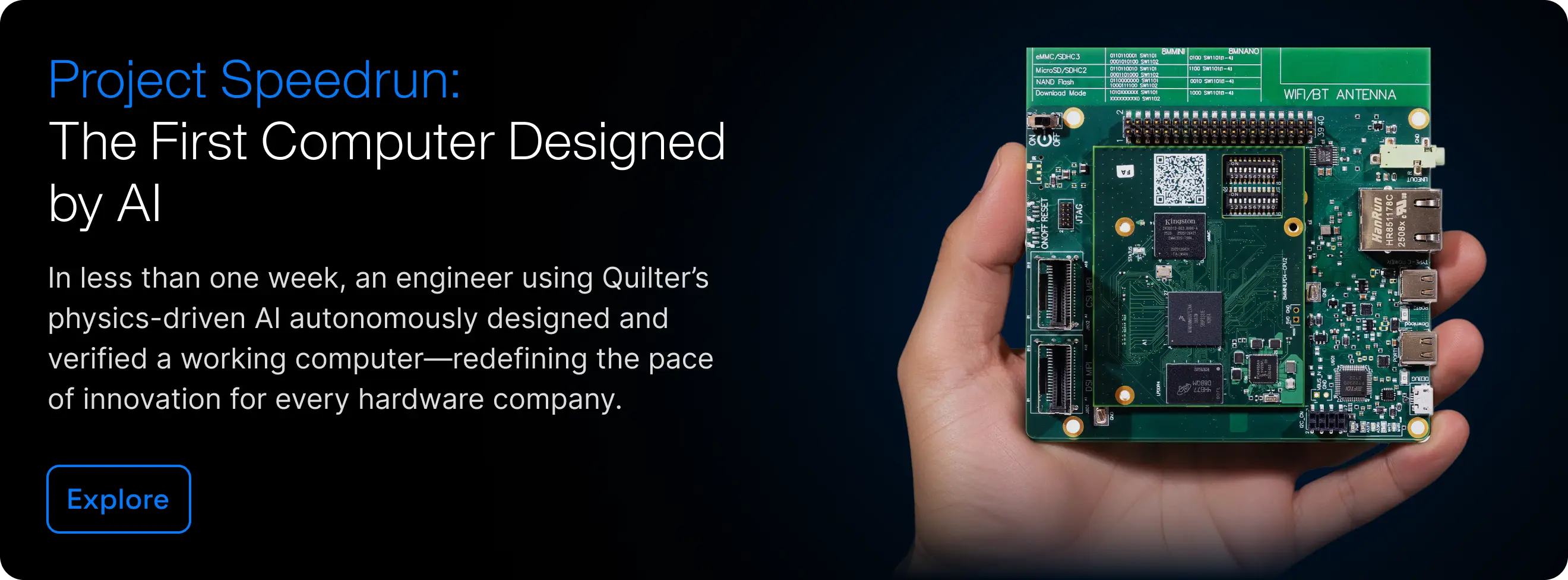
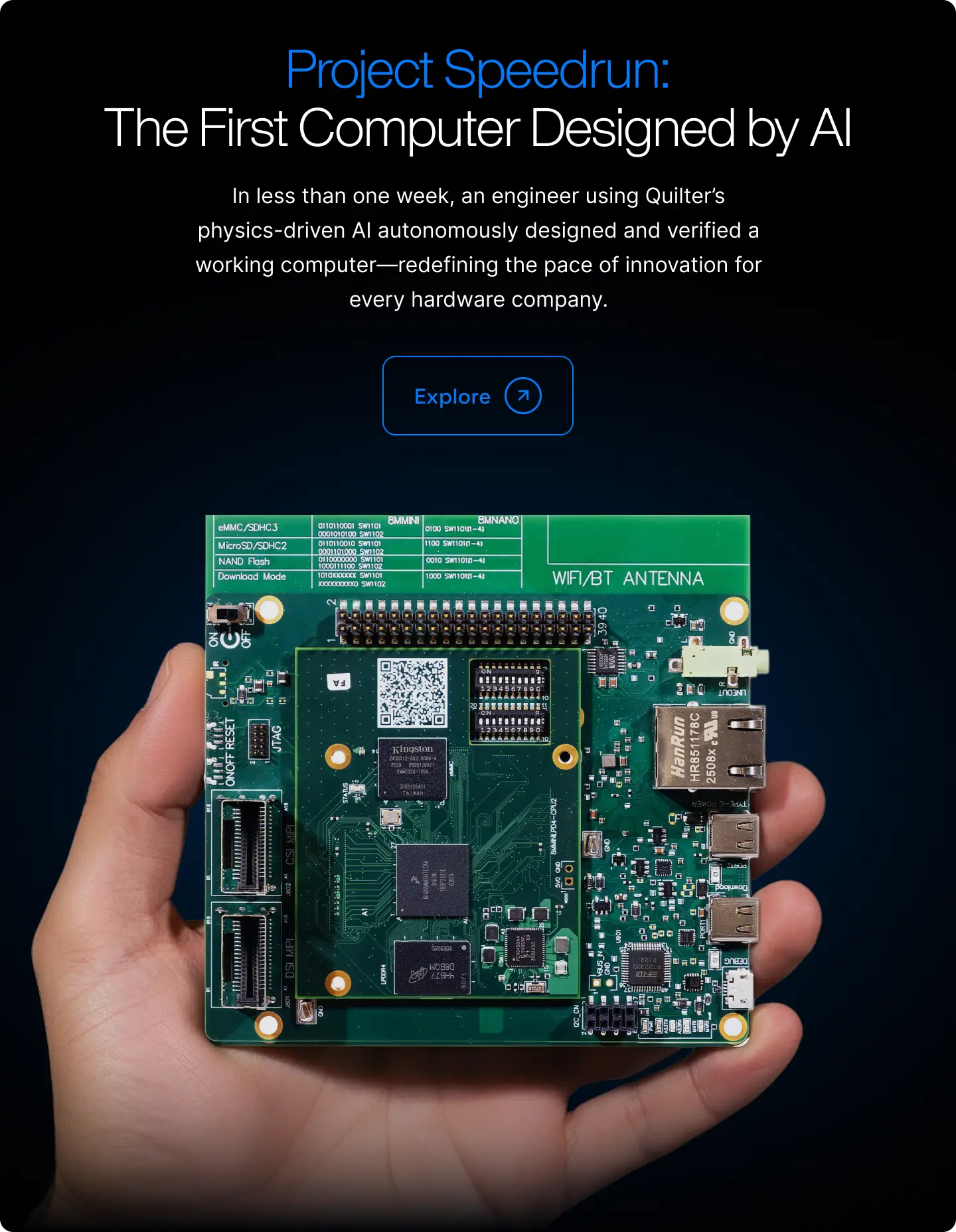
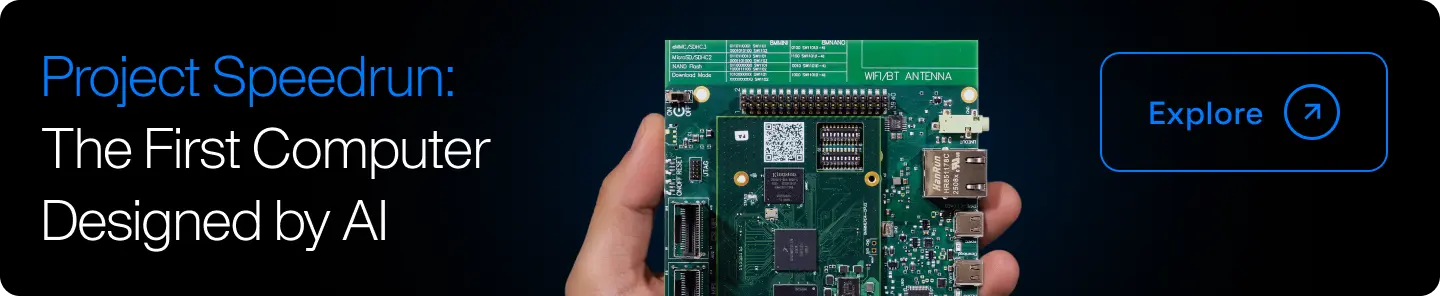
Project Speedrun demonstrated what autonomous layout looks like in practice and the time compression Quilter enables. Now, see it on your own hardware.

Get Started

Validating the Design

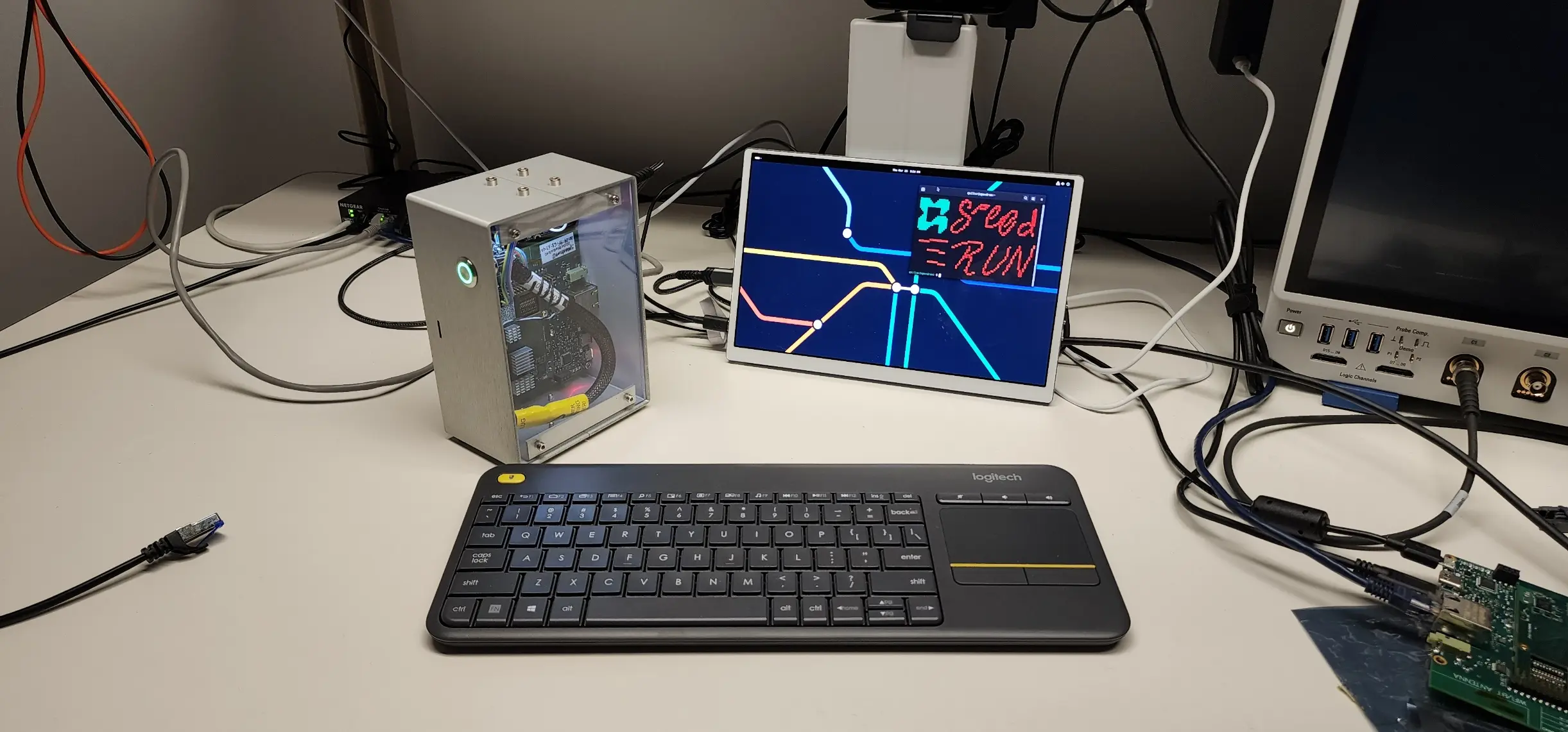
With cleanup complete, the final question is whether the hardware works. Power-on is where most electrical mistakes reveal themselves, and it’s the moment engineers are both nervous and excited about.

Continue to Part 4

Cleaning Up the Design

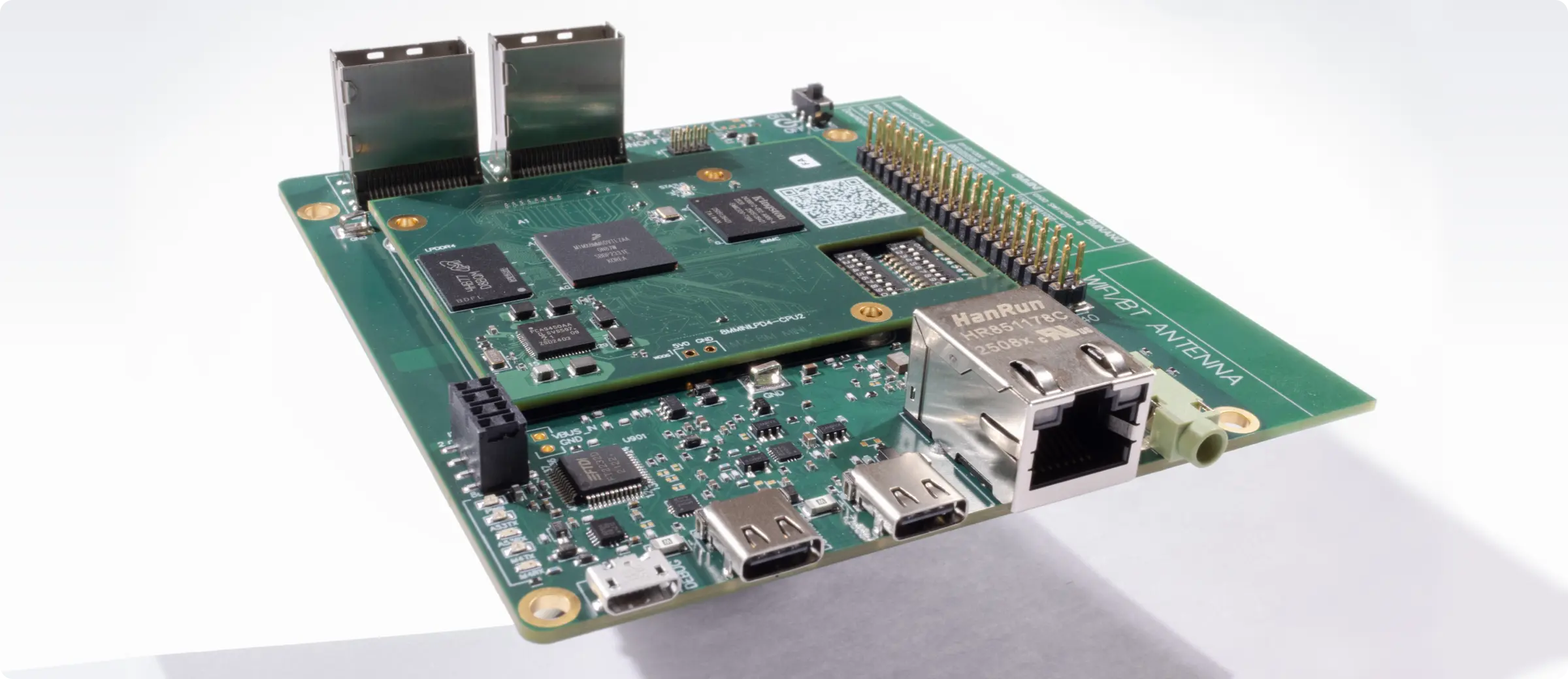
Autonomous layout produces a complete, DRC'd design; cleanup is a brief precision pass to finalize it for fabrication.

Continue to Part 3

Compiling the Design

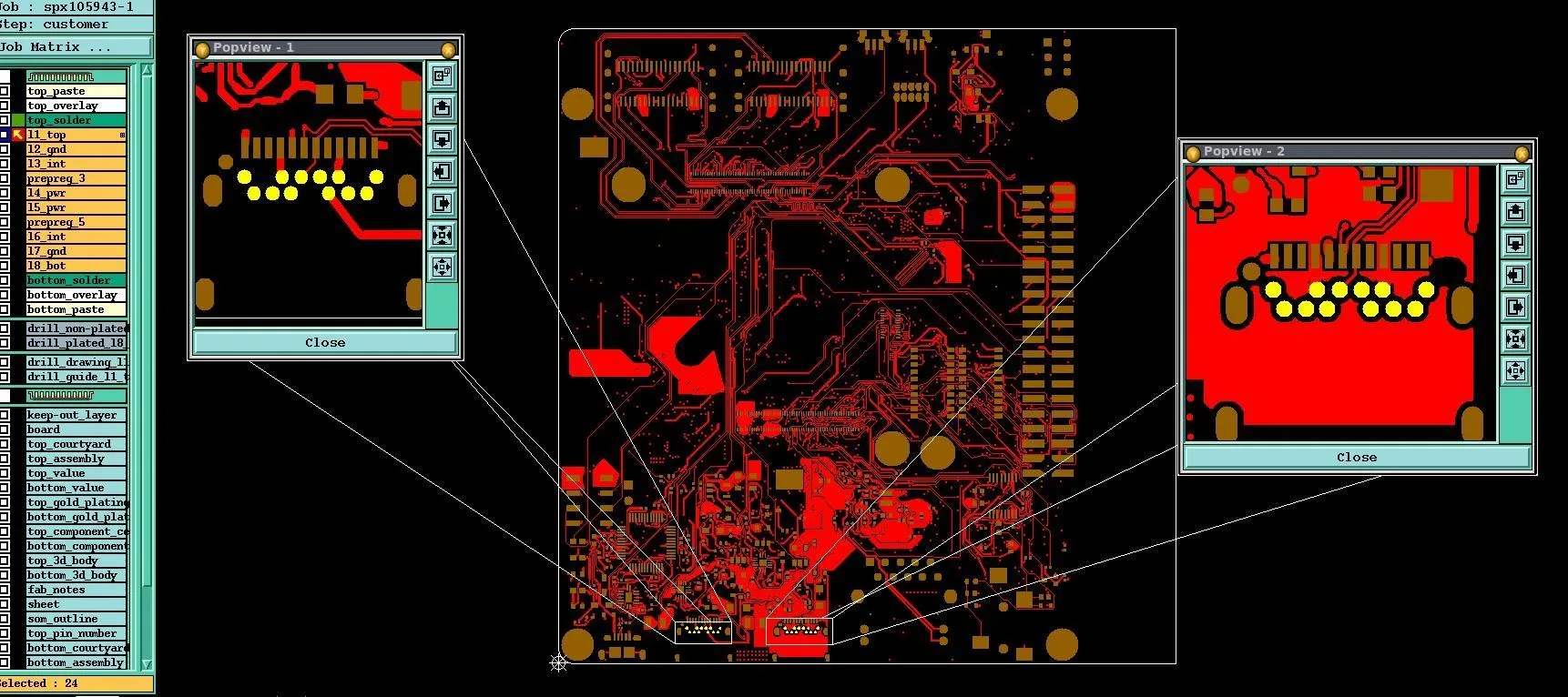
Once the design is prepared, the next step is handing it off to Quilter. In traditional workflows, this is where an engineer meets with a layout specialist to clarify intent. Quilter replaces that meeting with circuit comprehension: you upload the project, review how constraints are interpreted, and submit the job.

Continue to Part 2

The Gradient: Automating Circuit Board Design

June 20, 2024
by
Sergiy Nesterenko
and

Sergiy joins Daniel Bashir on the Gradient, a podcast about AI and technology, to discuss automating PCB design with reinforcement learning, difficulties in PCB design automation, and dealing with skepticism.

Check it out

Outline:

  • (00:00) Intro
  • (00:45) Quilter origins and difficulties in designing PCBs
  • (04:12) PCBs and schematic implementations
  • (06:40) Iteration cycles and simulations
  • (08:35) Octilinear traces and first-principles design for PCBs
  • (12:38) The design space of PCBs
  • (15:27) Benchmarks for PCB design
  • (20:05) RL and PCB design
  • (22:48) PCB details, track widths
  • (25:09) Board functionality and aesthetics
  • (27:53) PCB designers and automation
  • (30:24) Quilter as a compiler
  • (33:56) Gluing social worlds and bringing together expertise
  • (36:00) Process knowledge vs. first-principles thinking
  • (42:05) Example boards
  • (44:45) Auto-routers for PCBs
  • (48:43) Difficulties for scaling to larger boards
  • (50:42) Customers and skepticism
  • (53:42) On experiencing negative feedback
  • (56:42) Maintaining stamina while building Quilter
  • (1:00:00) Endgame for Quilter and future directions
  • (1:03:24) Outro