




Workbench

Published

Written by

Workbench

Energy harvesting

Published

October 14, 2024

Energy harvesting happens through the BQ25504: a boost converter designed to acquire and manage micro or milliwatts generated from devices like a solar panel. I validated functionality with a small (~1.25” x 2”) solar panel with an open circuit rating of 3.4V and 2.2V maximum power point (V @pmpp) and a 470uF polarized capacitor rated for 6.3V.

I placed the probes on the capacitor to demonstrate charging via a solar panel through an energy harvesting chip. This is a simple setup for capturing solar energy.

The capacitor charges and discharges rapidly and although this video is sped up by 1000X you can see the functionality clearly.

Next up: I2C communication

Try Quilter for Yourself

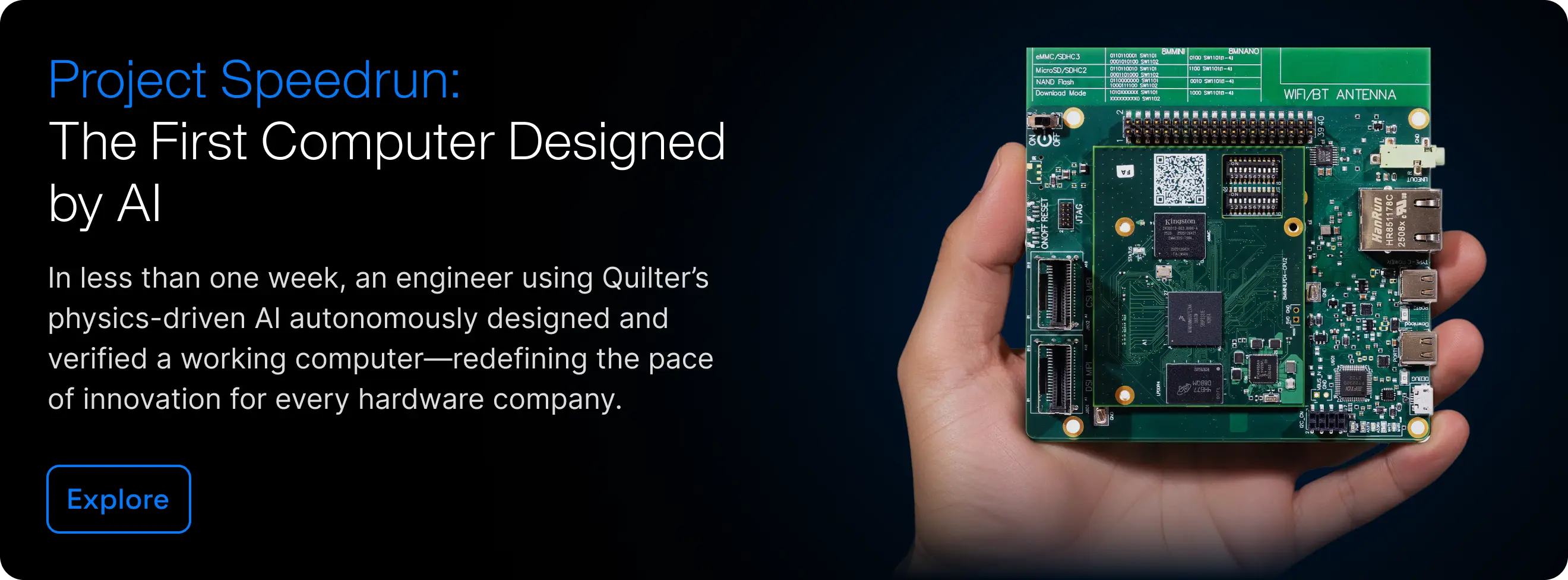
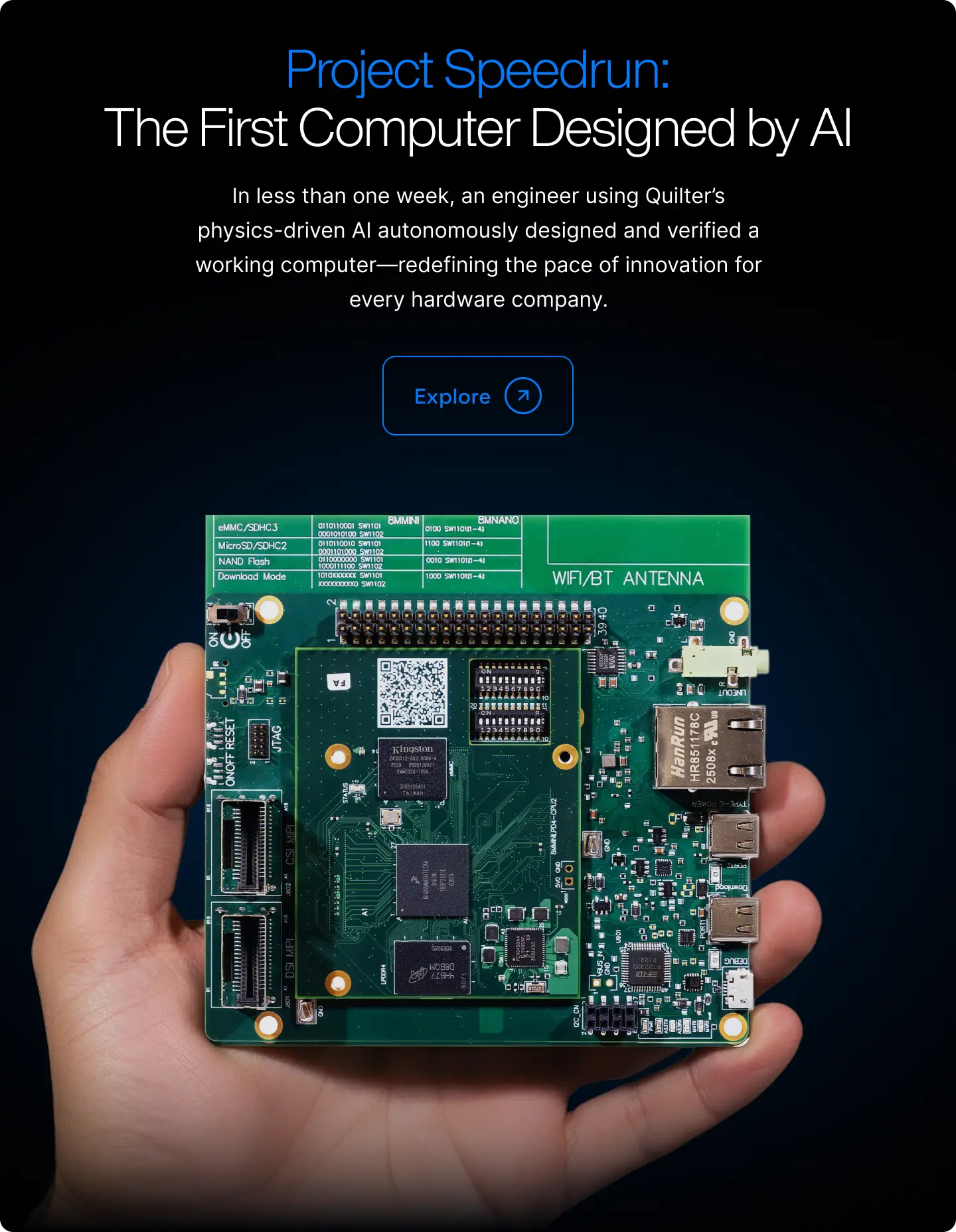
Project Speedrun demonstrated what autonomous layout looks like in practice and the time compression Quilter enables. Now, see it on your own hardware.

Get Started

Validating the Design

With cleanup complete, the final question is whether the hardware works. Power-on is where most electrical mistakes reveal themselves, and it’s the moment engineers are both nervous and excited about.

Continue to Part 4

Cleaning Up the Design

Autonomous layout produces a complete, DRC'd design; cleanup is a brief precision pass to finalize it for fabrication.

Continue to Part 3

Compiling the Design

Once the design is prepared, the next step is handing it off to Quilter. In traditional workflows, this is where an engineer meets with a layout specialist to clarify intent. Quilter replaces that meeting with circuit comprehension: you upload the project, review how constraints are interpreted, and submit the job.

Continue to Part 2

Energy harvesting

October 14, 2024
by
Sergiy Nesterenko
and

Energy harvesting happens through the BQ25504: a boost converter designed to acquire and manage micro or milliwatts generated from devices like a solar panel. I validated functionality with a small (~1.25” x 2”) solar panel with an open circuit rating of 3.4V and 2.2V maximum power point (V @pmpp) and a 470uF polarized capacitor rated for 6.3V.

I placed the probes on the capacitor to demonstrate charging via a solar panel through an energy harvesting chip. This is a simple setup for capturing solar energy.

The capacitor charges and discharges rapidly and although this video is sped up by 1000X you can see the functionality clearly.

Next up: I2C communication