



Workbench

Published

Written by

Workbench

Differential pairs!

Published

October 10, 2024

We recently added support to Quilter for differential pairs and I could not wait to try the feature out on the QSP32 Solar Boost!

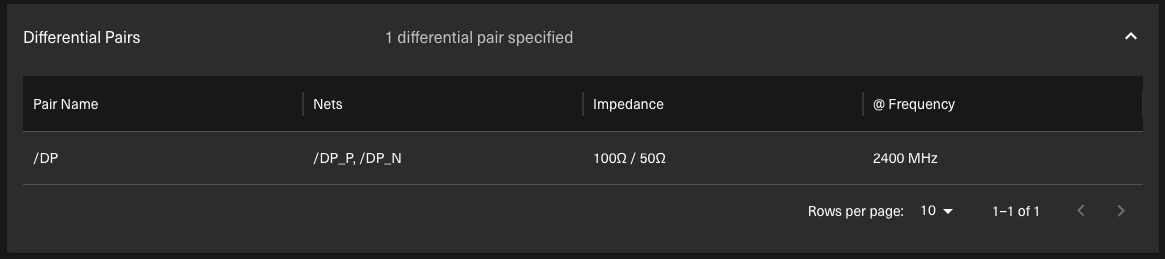
When I uploaded my schematic, Quilter automagically detected the pairs between USB and UART.

Schematic clip showing where a set of differential pairs are located.
Quilter's UI automatically detects differential pairs

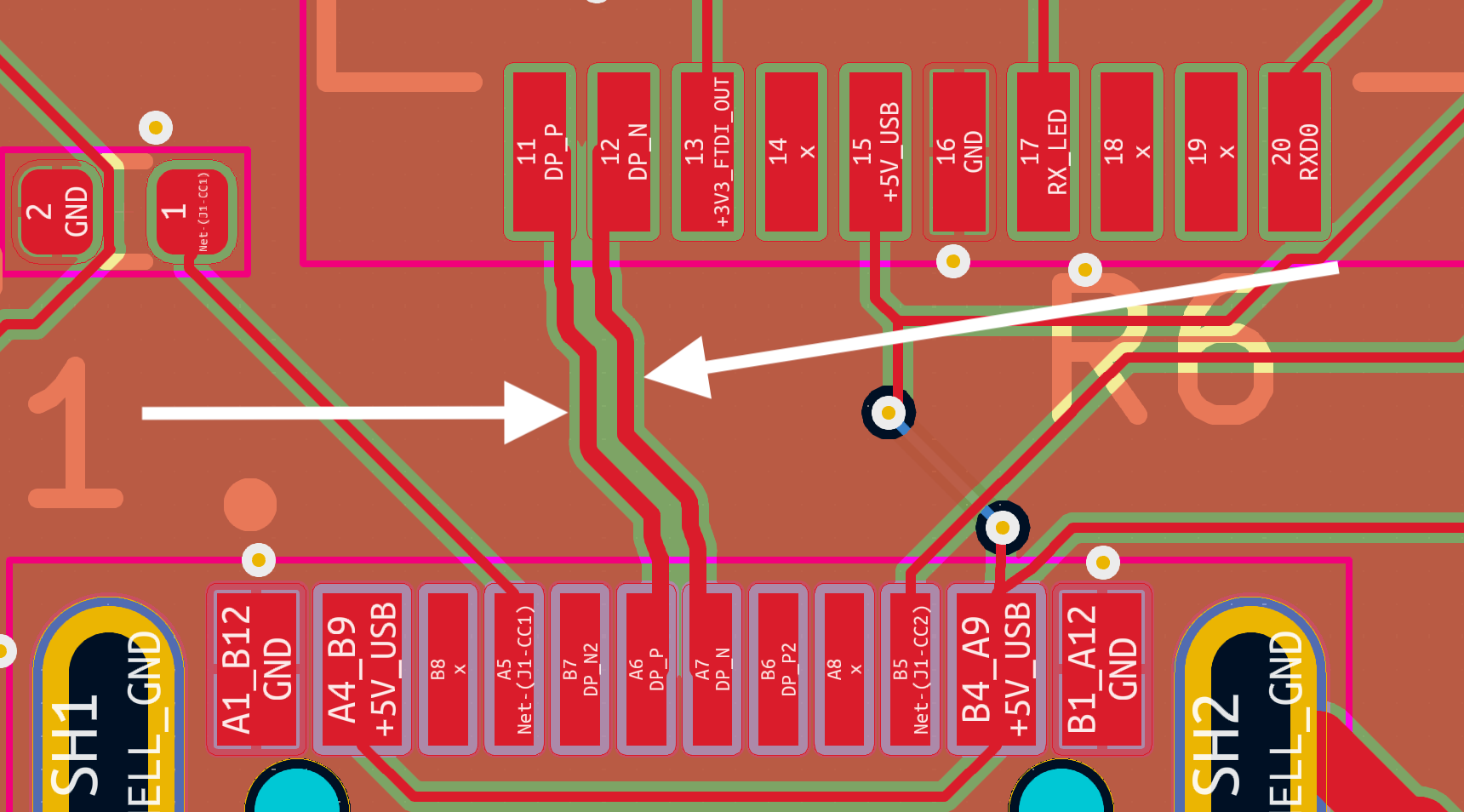
Quilter did a great job of placing the FTDI chip close to the USB-C connector.

I put probes on DP_P and DP_N (white arrows). These traces go between a UART chip (top) and a USB-C connector (bottom). The layout of the differential pairs have precise length matching for good signal integrity.

White arrows pointing to where probes are on DP and DN

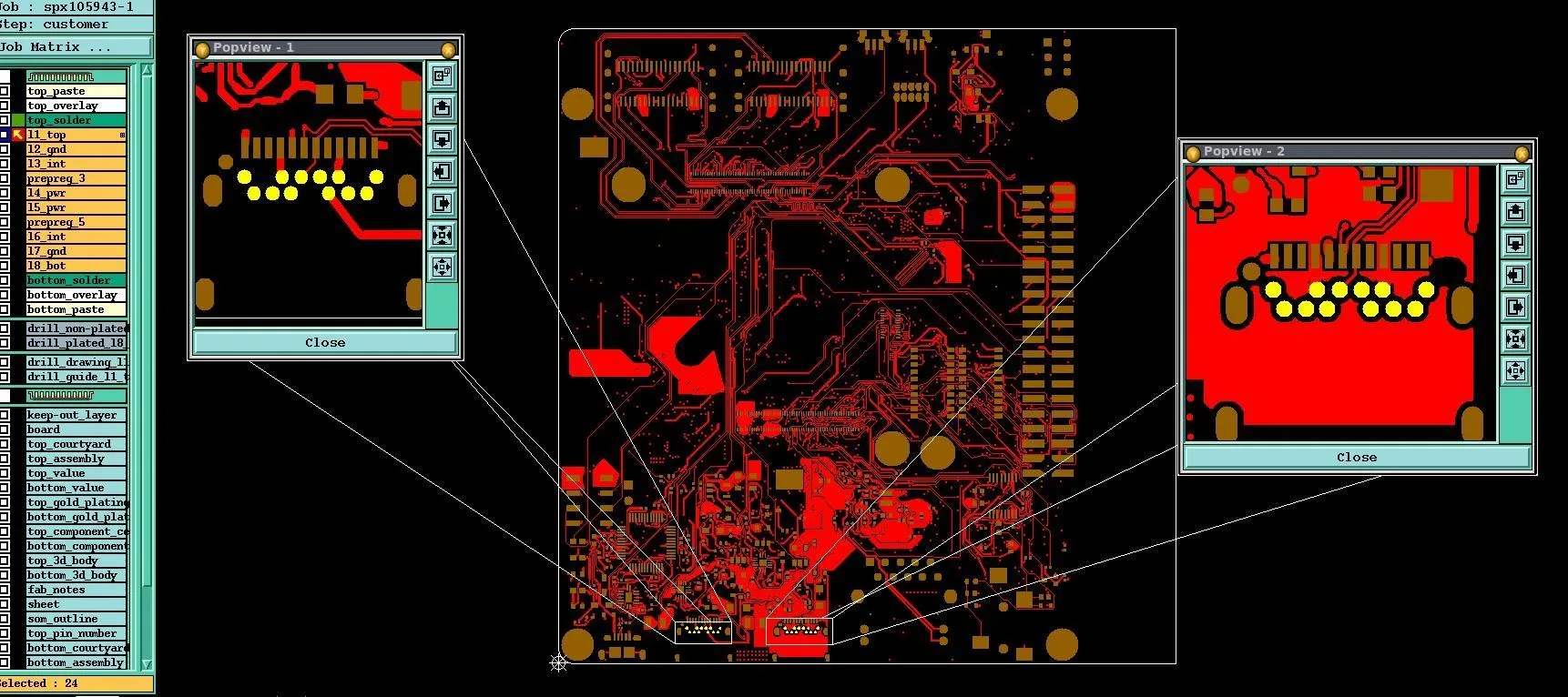
Take a look at these perfectly mirrored signals! This feature works perfectly, I had three boards fabbed and each one connects instantly to upload sketches.

Differential Pairs signals at DP and DN

Next up: energy harvesting from a tiny solar panel

Try Quilter for Yourself

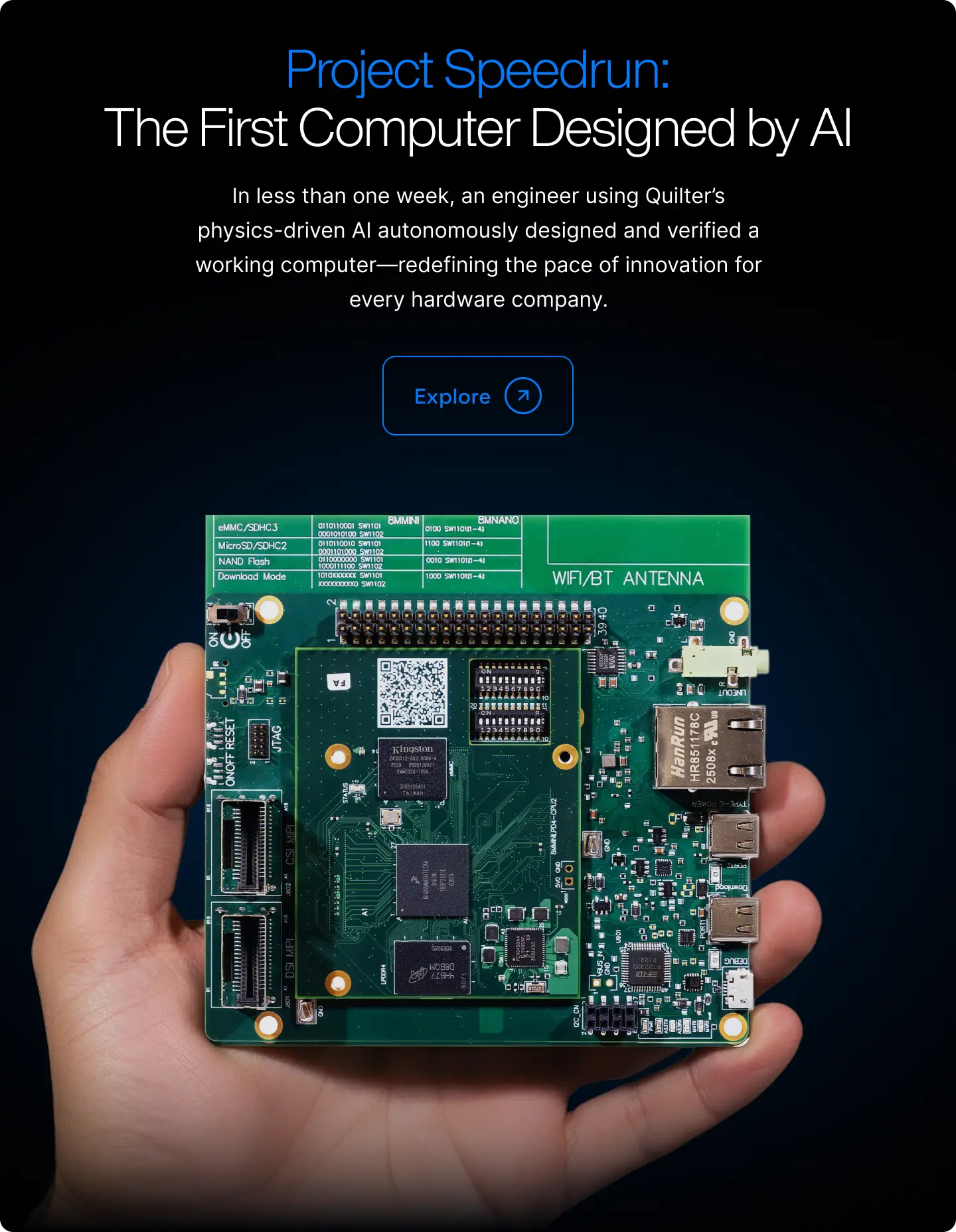
Project Speedrun demonstrated what autonomous layout looks like in practice and the time compression Quilter enables. Now, see it on your own hardware.

Get Started

Validating the Design

With cleanup complete, the final question is whether the hardware works. Power-on is where most electrical mistakes reveal themselves, and it’s the moment engineers are both nervous and excited about.

Continue to Part 4

Cleaning Up the Design

Autonomous layout produces a complete, DRC'd design; cleanup is a brief precision pass to finalize it for fabrication.

Continue to Part 3

Compiling the Design

Once the design is prepared, the next step is handing it off to Quilter. In traditional workflows, this is where an engineer meets with a layout specialist to clarify intent. Quilter replaces that meeting with circuit comprehension: you upload the project, review how constraints are interpreted, and submit the job.

Continue to Part 2

Differential pairs!

October 10, 2024
by
Sergiy Nesterenko
and

We recently added support to Quilter for differential pairs and I could not wait to try the feature out on the QSP32 Solar Boost!

When I uploaded my schematic, Quilter automagically detected the pairs between USB and UART.

Schematic clip showing where a set of differential pairs are located.
Quilter's UI automatically detects differential pairs

Quilter did a great job of placing the FTDI chip close to the USB-C connector.

I put probes on DP_P and DP_N (white arrows). These traces go between a UART chip (top) and a USB-C connector (bottom). The layout of the differential pairs have precise length matching for good signal integrity.

White arrows pointing to where probes are on DP and DN

Take a look at these perfectly mirrored signals! This feature works perfectly, I had three boards fabbed and each one connects instantly to upload sketches.

Differential Pairs signals at DP and DN

Next up: energy harvesting from a tiny solar panel