



Product Updates

Published

Written by

Workbench

Octilinear trace routing

Published

October 23, 2023

Early in our closed beta, we started asking users how they felt about the visual aesthetics of Quilter designs. Here's what they told us:

"Aesthetically, these traces look very different than my layout, and my client may not like this."
"It just strikes me as looking messier, you know? Like just kind of how the lines go all over isn't pleasing to my eye."
"It would be nice if there was an option to use isotropic routing style or the orthogonal routing style."

You asked, and we listened!

Quilter now utilizes octilinear trace routing (45 and 135 deg angles) for all generic traces routed by our design agent. Here are some photos of the same board mid-progress – both before and after applying our trace shortener and new octilinear trace routing cleanups.

Before trace shortening + octilinearization (top) and after (bottom).

While it's generally a myth that curvy traces are more "manufacturable" than octilinear ones, it's hard to argue that they don't look nicer and perhaps a bit more...human?

Have other ideas for how we could improve our circuit board designs? Let us know by sharing and voting on suggestions in the "Ideas" category of our community forums.

Try Quilter for Yourself

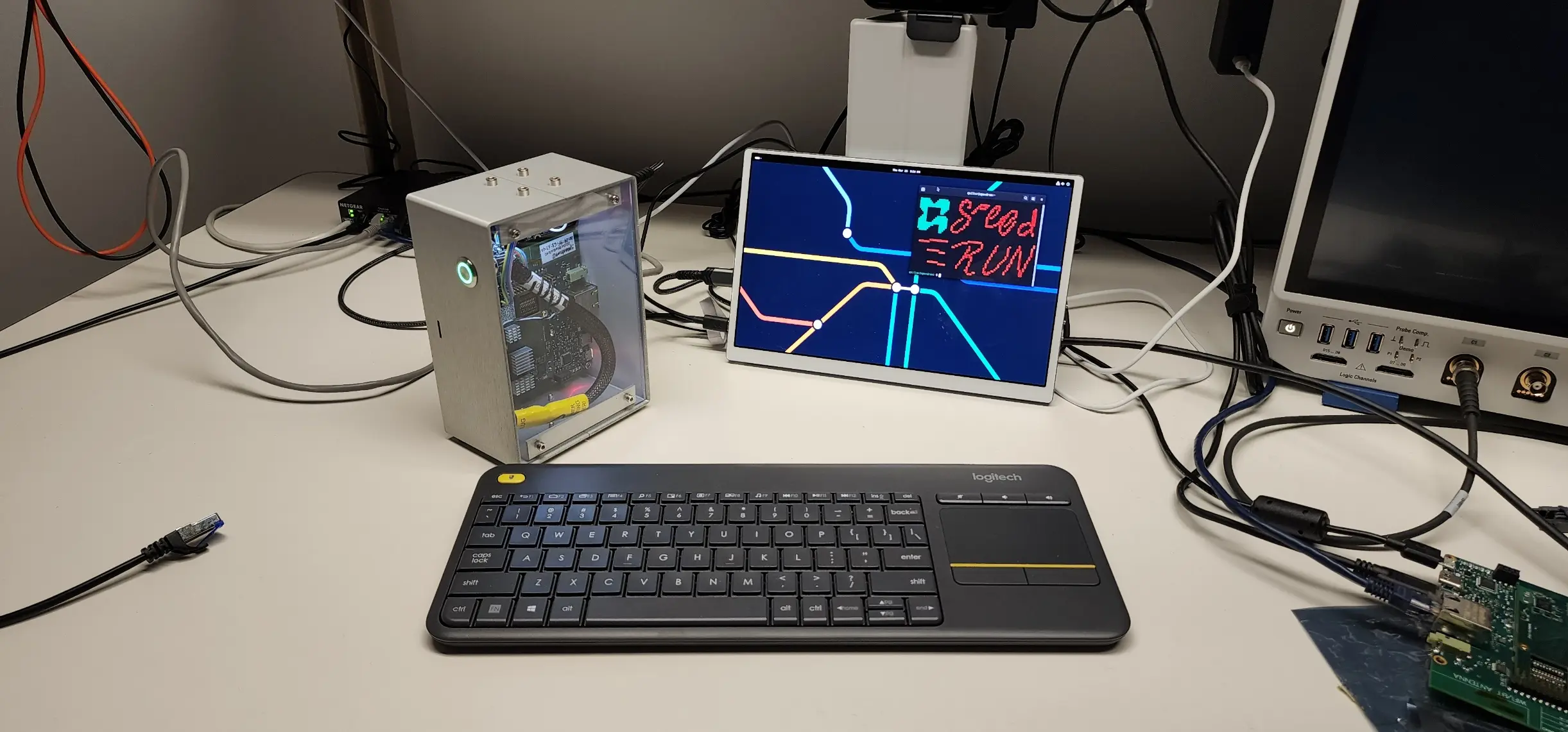
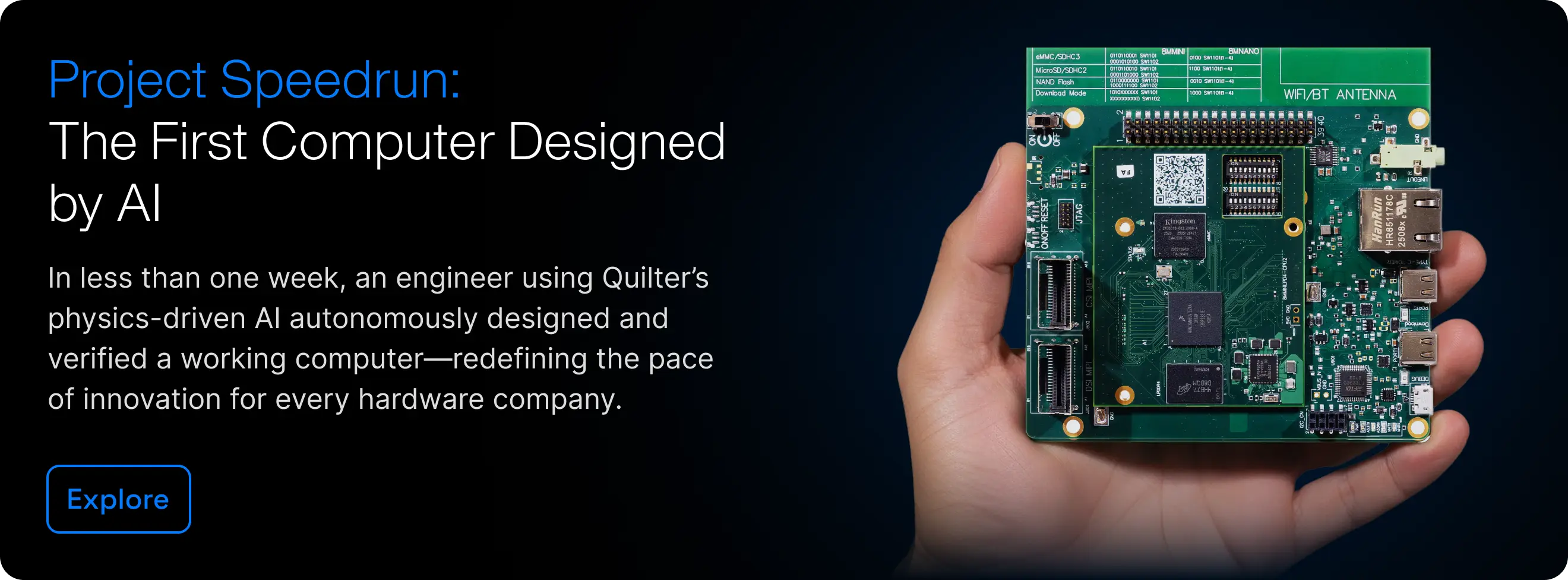
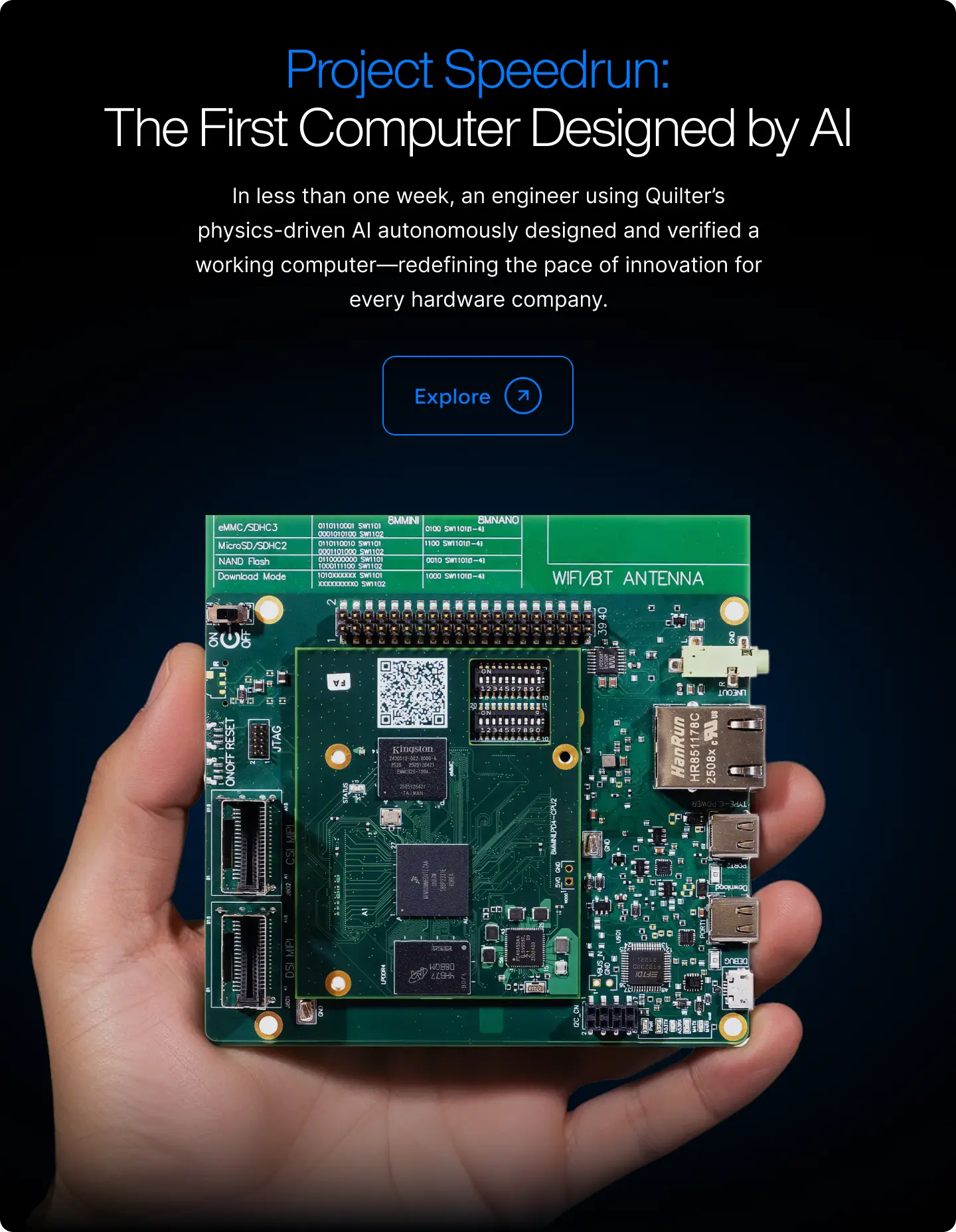
Project Speedrun demonstrated what autonomous layout looks like in practice and the time compression Quilter enables. Now, see it on your own hardware.

Get Started

Validating the Design

With cleanup complete, the final question is whether the hardware works. Power-on is where most electrical mistakes reveal themselves, and it’s the moment engineers are both nervous and excited about.

Continue to Part 4

Cleaning Up the Design

Autonomous layout produces a complete, DRC'd design; cleanup is a brief precision pass to finalize it for fabrication.

Continue to Part 3

Compiling the Design

Once the design is prepared, the next step is handing it off to Quilter. In traditional workflows, this is where an engineer meets with a layout specialist to clarify intent. Quilter replaces that meeting with circuit comprehension: you upload the project, review how constraints are interpreted, and submit the job.

Continue to Part 2

Octilinear trace routing

October 23, 2023
by
Sergiy Nesterenko
and

Early in our closed beta, we started asking users how they felt about the visual aesthetics of Quilter designs. Here's what they told us:

"Aesthetically, these traces look very different than my layout, and my client may not like this."
"It just strikes me as looking messier, you know? Like just kind of how the lines go all over isn't pleasing to my eye."
"It would be nice if there was an option to use isotropic routing style or the orthogonal routing style."

You asked, and we listened!

Quilter now utilizes octilinear trace routing (45 and 135 deg angles) for all generic traces routed by our design agent. Here are some photos of the same board mid-progress – both before and after applying our trace shortener and new octilinear trace routing cleanups.

Before trace shortening + octilinearization (top) and after (bottom).

While it's generally a myth that curvy traces are more "manufacturable" than octilinear ones, it's hard to argue that they don't look nicer and perhaps a bit more...human?

Have other ideas for how we could improve our circuit board designs? Let us know by sharing and voting on suggestions in the "Ideas" category of our community forums.