






Die gesamte Serie lesen
Dieser Artikel ist Teil einer ausführlichen Anleitung dazu, wie wir mit Quilters physikgestützter Layout-Automatisierung einen Computer auf Basis des NXP i.MX 8M Mini nachgebaut haben.
Zusammenfassung
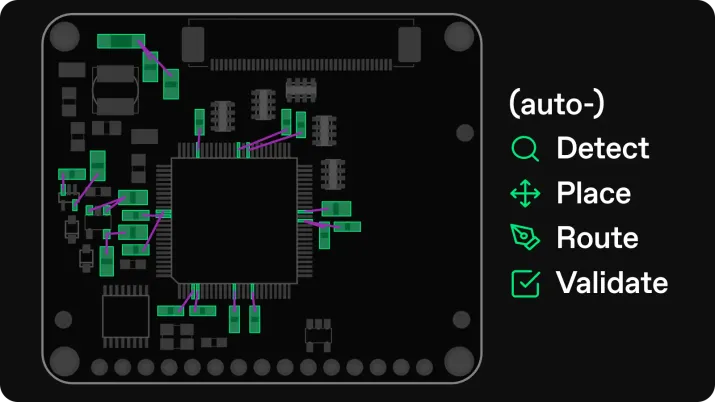
Quilter und Cadence Allegro X AI gehen dasselbe Problem an, wählen dafür aber grundverschiedene Ansätze. Allegro X AI automatisiert Platzierung, Kupferflächen und Routing und prüft das Ergebnis anschließend gegen Design Rule Checks (DRC). Dieser Ansatz ähnelt klassischen Autoroutern: Er richtet sich auf die Geometrie der Leiterplatte, nicht auf ihre Physik. Quilter will eine vollständige, funktionierende Leiterplatte kompilieren. Unsere Engine nimmt Designabsicht, Randbedingungen und Lagenaufbau und erzeugt Kandidaten, die die Physik der Leiterplatte erfüllen und dabei ihre Geometrie und Vorgaben einhalten. Dazu prüft Quilter gezieltes elektrisches Verhalten schon während der Kandidatenerzeugung, nicht erst nachgelagert.
Quilter arbeitet mit nativen Allegro- und OrCAD-Dateien. Sie können beide Werkzeuge auf derselben Leiterplatte laufen lassen und sehen, welcher Ansatz besser zu Ihren Anforderungen passt.
Wie Cadence Allegro X AI funktioniert
Cadence stellte Allegro X AI im April 2023 vor, als generative KI-Fähigkeit innerhalb der Allegro X Design Platform, ausgerichtet auf kleine bis mittlere Designs. Sie automatisiert Bauteilplatzierung, Kupferflächen (Versorgungs- und Masselagen) sowie das Routing kritischer Netze und läuft auf Cadences Cloud-Infrastruktur (Cadence OnCloud), um eine große Zahl von Platzierungsstrategien zu bewerten. Cadences eigener veröffentlichter Benchmark: Eine Platzierungs- und Routingaufgabe, für die eine erfahrene Person drei Tage brauchte, war in 75 Minuten erledigt, bei 12 % kürzerer Leitungslänge.
Eine Fallstudie von EMA Design Automation aus dem Jahr 2025 nennt für Allegro X AI derzeit Leiterplatten unter rund 5.100 Bauteilen und Pindichten unter 100 Pins/cm². In derselben Fallstudie ließ das EMA-Team eine 4-lagige Leiterplatte mit 80 Bauteilen durch Allegro X AI laufen und erhielt die Platzierung in 2 Minuten gegenüber geschätzten 60 Minuten von Hand, insgesamt eine Verkürzung der Entwurfszeit um fast zwei Drittel. Das Team bewertete die Platzierungsqualität mit 4 von 5 und merkte an, dass einige Bauteile auf der falschen Lage landeten und von Hand nachgebessert werden mussten.
Der eigentliche Vorteil von Allegro X AI ist seine Verfügbarkeit für Cadence-Kunden. Wenn Ihr Team ohnehin OrCAD oder Allegro nutzt, ist es eine Fähigkeit innerhalb der bereits lizenzierten Plattform.
Wie Quilter funktioniert
Quilter ist ein Werkzeug zur PCB-Layout-Automatisierung, das mit Ihren vorhandenen CAD-Werkzeugen zusammenarbeitet, statt sie zu ersetzen. Es ist eine Einreichungs- und Review-Oberfläche, kein CAD-Werkzeug: Sie laden native Designdaten hoch, Quilter erzeugt mit Reinforcement Learning Tausende von Layout-Kandidaten und bewertet sie gegen physikbewusste Randbedingungen – Platzierung, Routing und Kupferflächen für Versorgungs- und Massenetze eingeschlossen – und gibt fertige Layouts in genau dem nativen Format zurück, in dem es sie erhalten hat. Weniger eine neue Software, die man lernen muss, als eine junge Layout-Fachkraft, der Sie einen Schaltplan in die Hand drücken.
Wir denken darüber so: Quilter kompiliert Leiterplatten, statt Netze zu routen. Jeder Layout-Kandidat wird mit Physics Rule Checks (PRCs) geprüft: automatisierte Tests, die fragen, ob ein bestimmtes differenzielles Paar sein Impedanzziel hält, ob ein Lagenwechsel die Durchgängigkeit des Rückstrompfades bewahrt oder ob die Kopplung im Kupfer innerhalb der Toleranz bleibt – nicht nur, ob die Geometrie einen Design Rule Check (DRC) besteht. PRCs laufen während der Kandidatenerzeugung, nicht erst nach dem Routing, sodass Quilter einen schlechten Kandidaten verwerfen kann, bevor er Ihnen überhaupt gezeigt wird.
Quilter ist CAD-unabhängig: Laden Sie native Dateien aus Altium, Cadence Allegro, Siemens Xpedition oder KiCad hoch und erhalten Sie native Dateien zurück, bereit für den finalen DRC und den Fertigungsexport in dem Werkzeug, das Sie ohnehin nutzen.
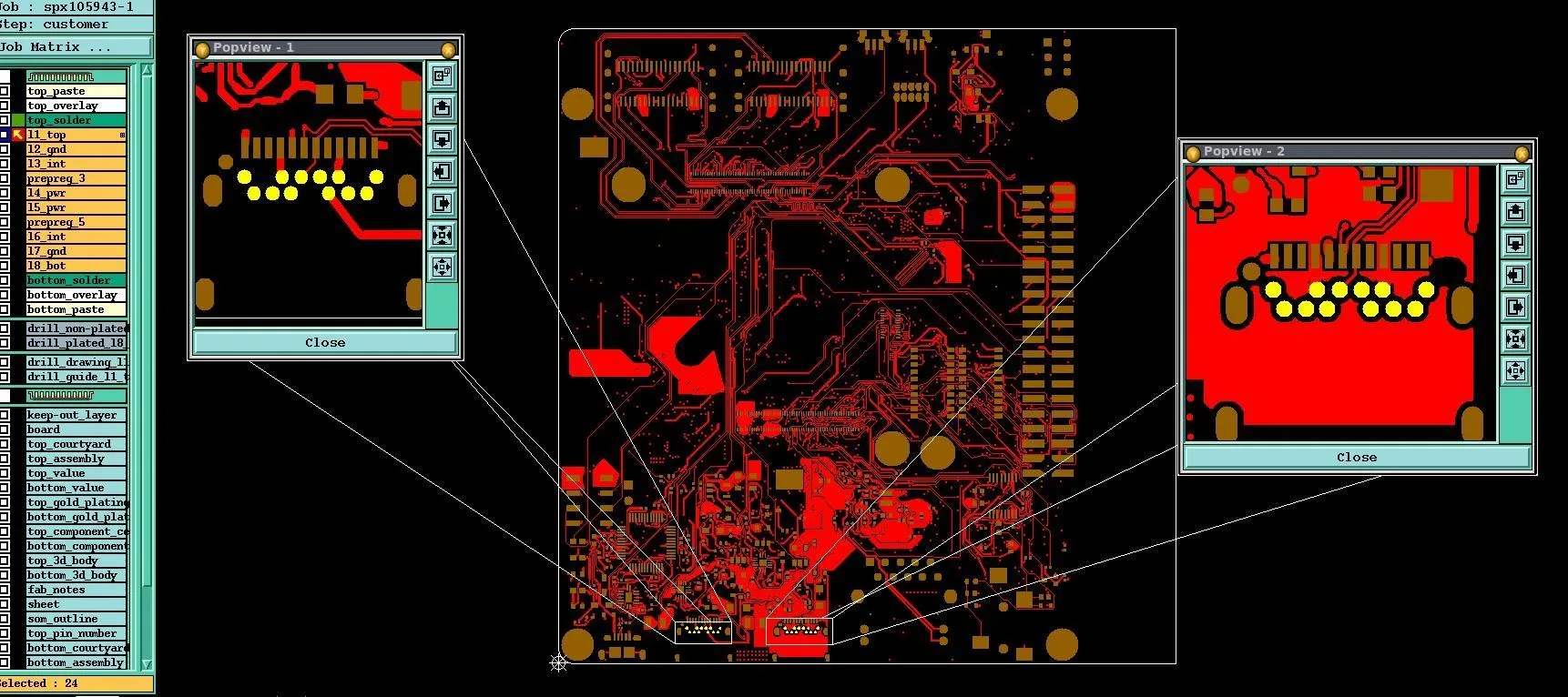
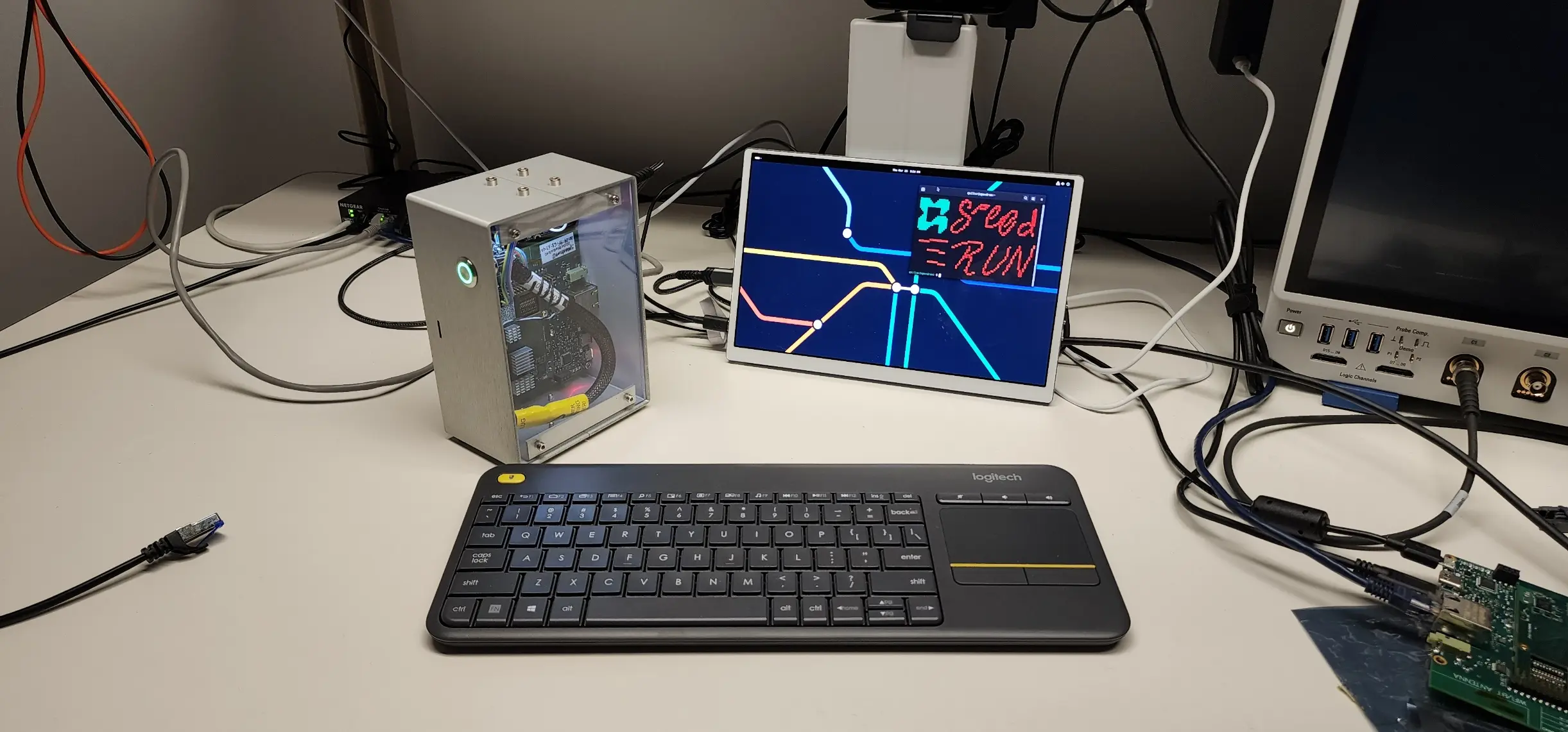
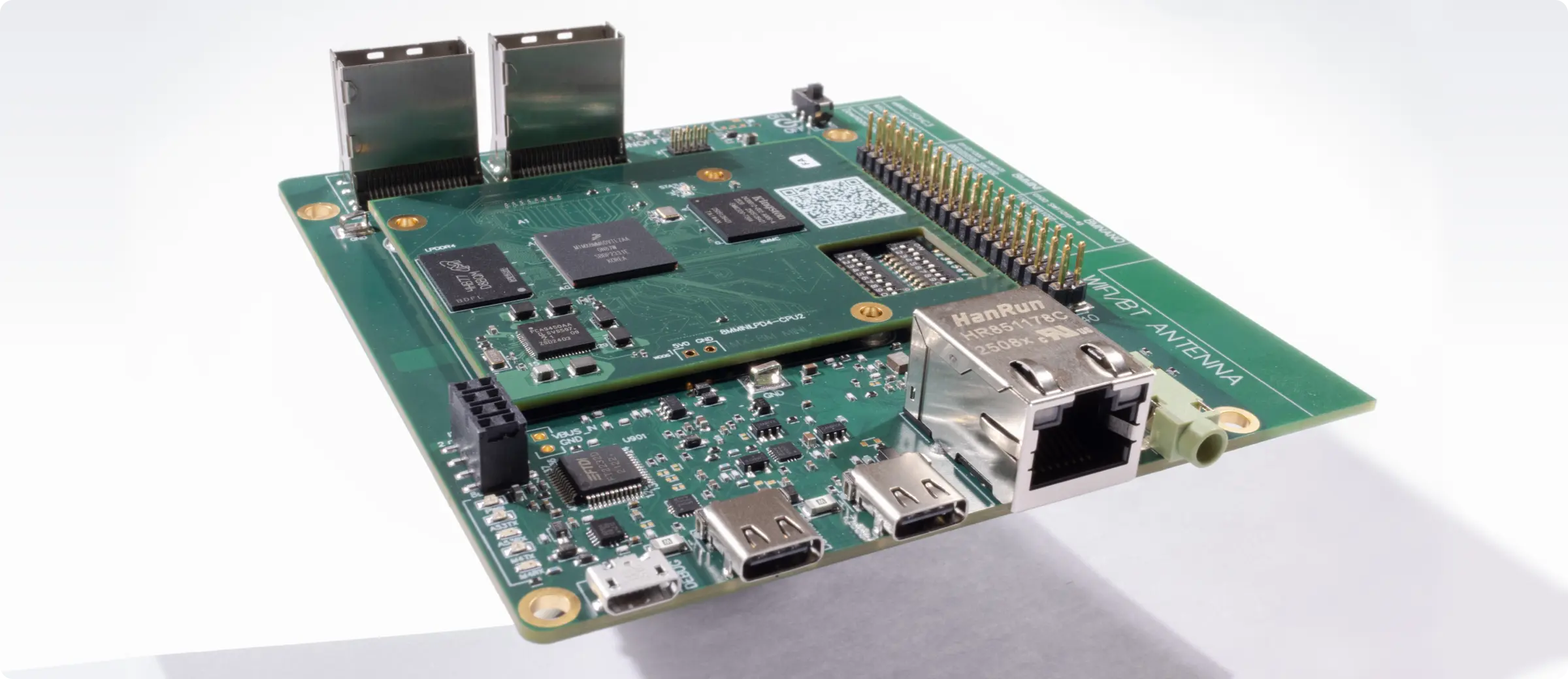
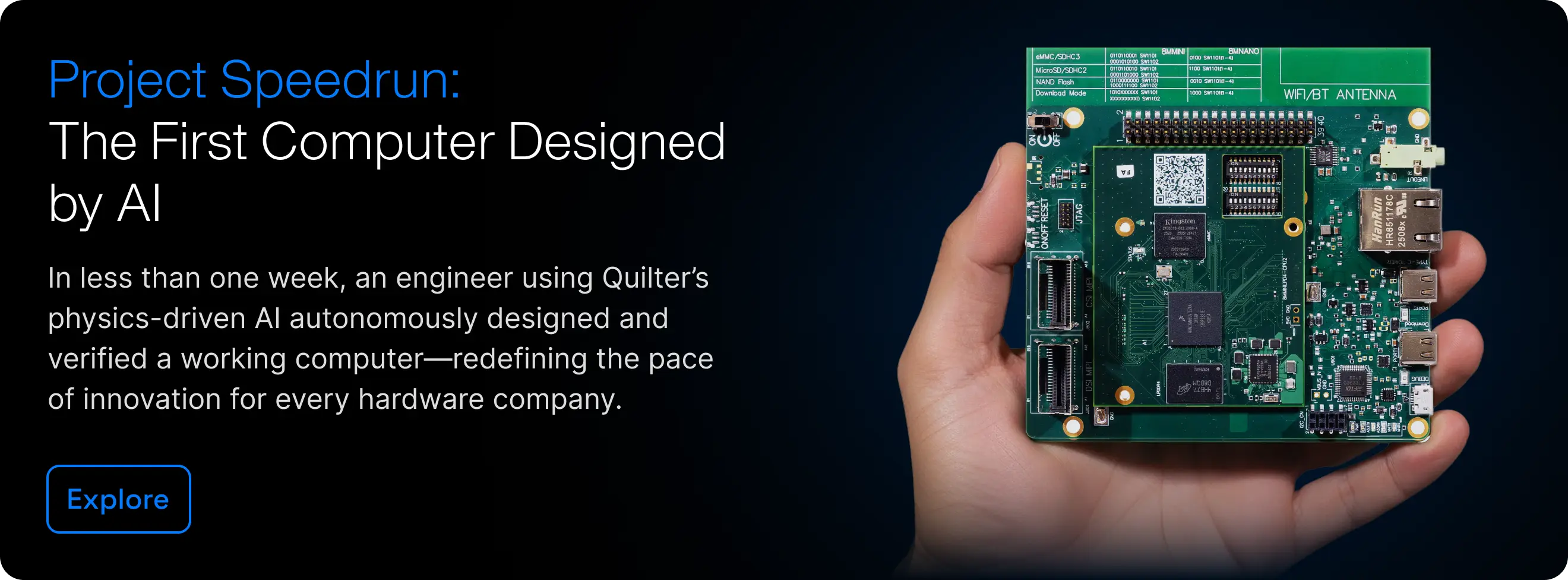
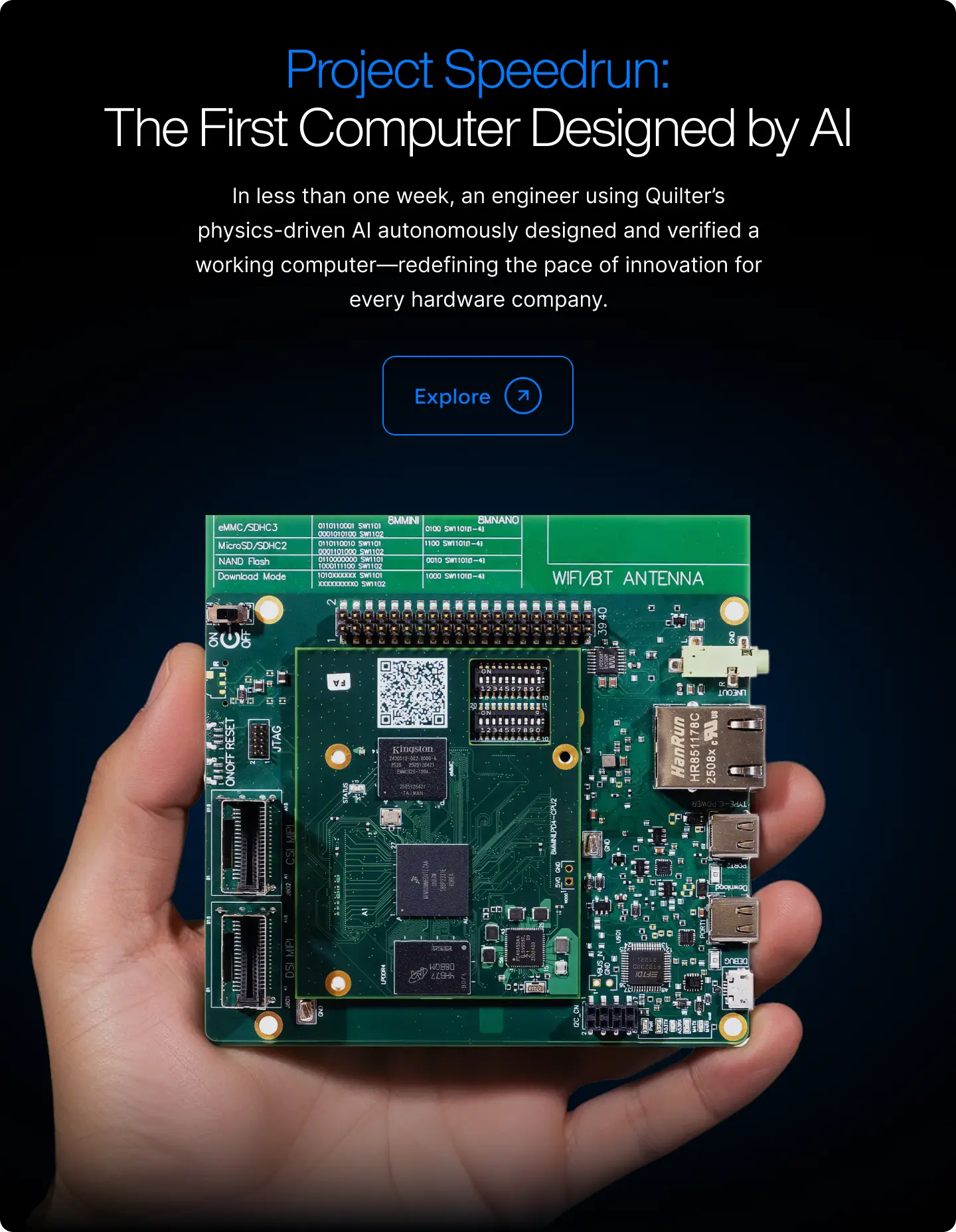
Der deutlichste öffentliche Beleg ist Project Speedrun: Eine Ingenieurin oder ein Ingenieur entwarf mit Quilter ein Zweiplatinen-Computersystem, ein System-on-Module und ein Baseboard rund um den NXP i.MX 8M Mini, mit 2 GB LPDDR4-Speicher, 843 Bauteilen, 5.141 Pins und einem 8-lagigen HDI-Aufbau, gefertigt von Sierra Circuits (Quilter, o. J. b). Quilters Laufzeit betrug 27 Stunden für Platzierung, Routing und physikalische Validierung, bei 98 % Routing-Vollständigkeit. Die gesamte menschliche Nacharbeit lag bei 38,5 Stunden (12 auf dem SOM, 26,5 auf dem Baseboard) gegenüber angebotenen 428 Stunden für ein gleichwertiges manuelles Layout (190 beziehungsweise 238). Beide Leiterplatten waren beim ersten Einschalten voll funktionsfähig, ohne Respin, mit LPDDR4-Speicherzugriff, Ethernet, USB, HDMI und hardwarebeschleunigter Grafik.
Benchmark-Vergleich: was tatsächlich gemessen wird
Eine Einschränkung, bevor Sie Zahlen vergleichen: Die veröffentlichten Benchmarks beider Unternehmen messen Unterschiedliches. Cadences Beispiele messen Platzierungs- und Routinggeschwindigkeit isoliert. Quilters Kennzahl misst die gesamte menschliche Nacharbeitszeit über eine vollständige Kette vom Schaltplan bis zur gefertigten und getesteten Leiterplatte.
| Quelle | Gemessene Aufgabe | Kontext der Leiterplatte | Berichtetes Ergebnis | Einschränkung |
|---|---|---|---|---|
| Beispiel aus dem Cadence-Blog | Beschleunigung von Platzierung und Routing | In der Quelle nicht vollständig angegeben | 3 Tage auf 75 Minuten; 12 % kürzere Leitungslänge | Misst eine P&R-Aufgabe isoliert, nicht den vollen Weg vom Schaltplan bis zum Labortisch |
| EMA-Fallstudie zu Allegro X AI | Arbeitsablauf der Bauteilplatzierung | 80 Bauteile, 4 Lagen, geringe Dichte | Platzierung in 2 Minuten statt 60 Minuten von Hand; 25 Minuten insgesamt statt 70 Minuten | Auf Platzierung fokussiert; die Ergebnisse erforderten weiterhin Prüfung und Nacharbeit |
| Quilter Project Speedrun | Vollständiges KI-gestütztes Layout plus menschliche Nacharbeit, an einem gefertigten und getesteten Design | 843 Bauteile, 5.141 Pins, 8-lagiges HDI, Zweiplatinensystem | 38,5 Personenstunden gegenüber 428 angebotenen Stunden für manuelles Layout | Benchmark aus erster Hand; am aussagekräftigsten zusammen mit einem eigenen Test auf Ihrer Leiterplatte |
Preise und Bereitstellung
Quilters Preismethodik ist öffentlich, auch wenn der Satz auf Anfrage ermittelt wird: Die Kosten richten sich nach den ungerouteten Pins beim Upload, vorab geroutete Abschnitte zählen nicht, und jedes Projekt umfasst unbegrenzte Iterationen, parallele Jobs und bis zu 10 % BOM-Spielraum, bevor es als neues Projekt gilt. Sie müssen weiterhin mit Quilters Team sprechen, um eine konkrete Zahl zu bekommen, wissen aber vorher genau, was diese Zahl treibt. Keine der für diesen Artikel gesichteten Cadence-Quellen nannte einen öffentlichen Preis oder ein Preismodell für Allegro X AI. Cadence nutzt klassische Unternehmenslizenzierung, was in der Regel bedeutet, dass Sie für die Kosten mit dem Vertrieb oder einem Partner sprechen.
Auch die Bereitstellung unterscheidet sich. Cadence beschreibt Allegro X AI als auf Cadences eigener Cloud-Infrastruktur laufend. Das Unternehmen gab an, dass eine selbst gehostete Bereitstellung 2026 verfügbar werden soll, angekündigt haben wir sie aber noch nicht gesehen. Quilter bietet verwaltete Cloud (SOC 2 Type 2, auf AWS) oder Selbsthosting in der eigenen Umgebung des Kunden.
Gegenüberstellung
| Cadence Allegro X AI | Quilter | |
|---|---|---|
| Was automatisiert wird | Bauteilplatzierung, Kupferflächen, Routing kritischer Netze | Platzierung, Routing und Erzeugung der Versorgungs- und Masseflächen, während der Erzeugung gegen physikalische Randbedingungen bewertet |
| Prüfmodell | DRC-basiert, mit getrennten Werkzeugen für elektrische und thermische Analyse innerhalb der Plattform | DRC plus Physics Rule Checks, auf jedem Kandidaten während der Erzeugung bewertet |
| CAD-Kompatibilität | Nur Allegro X Design Platform | Native Ausgabe für Altium, Cadence Allegro, Siemens Xpedition, KiCad |
| Angegebener Einsatzbereich | Zielt auf kleine bis mittlere Designs; unter ~5.100 Bauteilen, Dichte <100 Pins/cm² | ≤5.000 Pins, <6 GHz, ≤50 V, ≤10 A, geringe bis mittlere Dichte; siehe aktuelle Parameter |
| Via-Unterstützung | Öffentlich nicht im Detail beschrieben | Heute nur Durchkontaktierungen; Blind und Buried in Entwicklung, siehe Changelog |
| Bereitstellung | Cloud | Verwaltete Cloud (SOC 2 Type 2) oder selbst gehostet |
| Preisgestaltung | Unternehmenslizenzierung; Metrik und Satz nicht öffentlich gelistet | Pro Projekt, nach Zahl der ungerouteten Pins |
| Iterationsmodell | Öffentlich nicht im Detail beschrieben | Unbegrenzte Iterationen und parallele Jobs pro Projekt, bis zu 10 % BOM-Spielraum |
Welches Werkzeug Ihr Team zuerst testen sollte
Beginnen Sie nur dann mit Cadence Allegro X AI, wenn Ihre Organisation ausschließlich mit Cadence-Werkzeugen arbeitet und Ihre Leiterplatten vergleichsweise wenig komplex sind. Beginnen Sie mit Quilter, wenn Ihre Organisation über mehrere ECAD-Werkzeuge hinweg arbeitet, native Ausgaben statt eines proprietären Formats braucht, ein Preismodell will, das sie vor dem Vertriebsgespräch versteht, oder eine Flexibilität bei der Bereitstellung benötigt, die ein Cloud-Werkzeug eines einzelnen Anbieters nicht bietet. Das trifft auf viele Teams zu, auch auf solche, die mit Cadence ansonsten zufrieden sind.
Testen Sie beide, wenn Sie eine Leiterplatte haben, die in den angegebenen Bereich beider Werkzeuge fällt, und Einrichtungszeit, Layoutqualität, Physik- beziehungsweise SI/PI-Befunde, Nacharbeitszeit und Gesamtkosten am selben Design vergleichen können. Da Quilter native Allegro-Dateien liest, müssen Sie dazu Cadence nicht verlassen, und es ist der Vergleich, der Ihnen tatsächlich sagt, was zu Ihrer Leiterplatte passt – und nicht die Schlagzeilenzahl des einen oder anderen Unternehmens.
Fazit
Cadence und Quilter arbeiten beide am selben Flaschenhals: der Zeit zwischen der Absicht im Schaltplan und einem brauchbaren PCB-Layout.
Cadence erweitert eine etablierte Enterprise-EDA-Plattform um KI-gestützte Platzierung und Routing. Quilter zielt weiter: nicht nur auf schnellere Platzierung und schnelleres Routing, sondern auf einen physikalisch validierten Compiler für die gesamte Leiterplatte, der gezieltes elektrisches Verhalten auf jedem Kandidaten schon bei der Erzeugung prüft, statt das als getrennte, nachgelagerte Analyse zu behandeln. Quilter kann heute nur bestimmte Arten von Leiterplatten gut bearbeiten, aber wir haben eine klare Vorstellung davon, diese Lücke Platinenklasse für Platinenklasse zu schließen – so wie Software-Compiler nach und nach Arbeit übernommen haben, die Entwicklerinnen und Entwickler früher von Hand in Assembler erledigten, statt auf Dauer eine schnellere Hilfsschicht über einem ansonsten manuellen Ablauf zu bleiben.
Anders betrachtet: Quilter ist mit voller Kraft auf ein einziges Problem gerichtet, die Automatisierung des PCB-Layouts. Allegro X AI dagegen ist eine von vielen Lösungen im Portfolio von Cadence. Es ist die klassische Wahl zwischen Best-of-Breed-Werkzeugen und einem Portfolio von Werkzeugen eines großen Anbieters. Beides hat seine Berechtigung; die Wahl hängt von den Bedürfnissen und Prioritäten Ihres Teams ab.
Häufig gestellte Fragen
Was ist der wesentliche Unterschied zwischen Quilter und Cadence Allegro X AI?
Der größte Unterschied ist architektonisch. Quilter prüft gezieltes elektrisches Verhalten, nicht nur Geometrie, und zwar auf jedem Layout-Kandidaten während der Erzeugung selbst – wir nennen das Physics Rule Checks. Cadences eigene Unterlagen beschreiben die Automatisierung von Platzierung, Routing und Kupferflächen in Allegro X AI als Fähigkeiten, die neben getrennten Werkzeugen für elektrische und thermische Analyse innerhalb der Allegro X Design Platform stehen. Quilter ist zudem CAD-unabhängig und liefert native Ausgaben für Altium, Cadence Allegro, Siemens Xpedition und KiCad, während Allegro X AI innerhalb von Cadences eigener Plattform arbeitet.
Funktioniert Allegro X AI außerhalb des Cadence-Ökosystems?
Nach den für diesen Artikel gesichteten öffentlichen Quellen nicht. Cadence beschreibt es als auf der Allegro X Design Platform aufbauend und über sie zugänglich.
Kann eines der beiden Werkzeuge eine PCB-Layout-Fachkraft vollständig ersetzen?
Nein. Beide sind Automatisierungswerkzeuge, die den Layout-Prozess beschleunigen können, aber keines ersetzt eine Ingenieurin oder einen Ingenieur.
Quellen
Cadence Design Systems. 2023. „Cadence Introduces Allegro X AI, Accelerating PCB Design with More Than 10X Reduction in Turnaround Time.“ Pressemitteilung, 6. April 2023. https://www.businesswire.com/news/home/20230406005098/en/Cadence-Introduces-Allegro-X-AI-Accelerating-PCB-Design-with-More-Than-10X-Reduction-in-Turnaround-Time.
Cadence PCB Solutions. 2025. „Generative AI for PCB Design with Allegro X AI.“ Cadence PCB Design & Analysis Blog, 8. Januar 2025. https://resources.pcb.cadence.com/blog/2024-generative-ai-for-pcb-design-with-allegro-x-ai.
EMA Design Automation. 2025. „Accelerating Component Placement with Allegro X AI.“ Fallstudie, 26. September 2025. https://www.ema-eda.com/ema-resources/case-study/case-study-accelerating-component-placement-with-allegro-x-ai/.
Quilter. „Design Capacity That Grows with You.“ Preisseite. Abgerufen im Juni 2026. https://www.quilter.ai/pricing.
Quilter. „Project Speedrun: The First Computer Designed by AI.“ Abgerufen im Juni 2026. https://www.quilter.ai/project-speedrun.
Quilter. „What Quilter Does Well.“ Produktdokumentation. Abgerufen im Juni 2026. https://docs.quilter.ai/about-quilter/what-quilter-does-well.
Quilter. „What Quilter Isn't.“ Produktdokumentation. Abgerufen im Juni 2026. https://docs.quilter.ai/about-quilter/what-quilter-isnt.
Quilter. „Changelog.“ Abgerufen im Juni 2026. https://www.quilter.ai/changelog.
Quilter. „How Does Quilter Work?“ Produktdokumentation. Abgerufen im Juni 2026. https://docs.quilter.ai/about-quilter/how-does-quilter-work.
Quilter. „Introducing: Physics Rule Checks.“ Quilter Blog, 18. November 2024. https://www.quilter.ai/blog/physics-rule-checks.
Quilter. „The PCB Autorouter Was the Right Idea. Completion Rate Was the Wrong Target.“ Quilter Blog. Ursprünglich veröffentlicht am 3. Juni 2026; aktualisiert am 4. Juni 2026. https://www.quilter.ai/blog/pcb-autorouter-was-the-right-idea.