







Read the Full Series
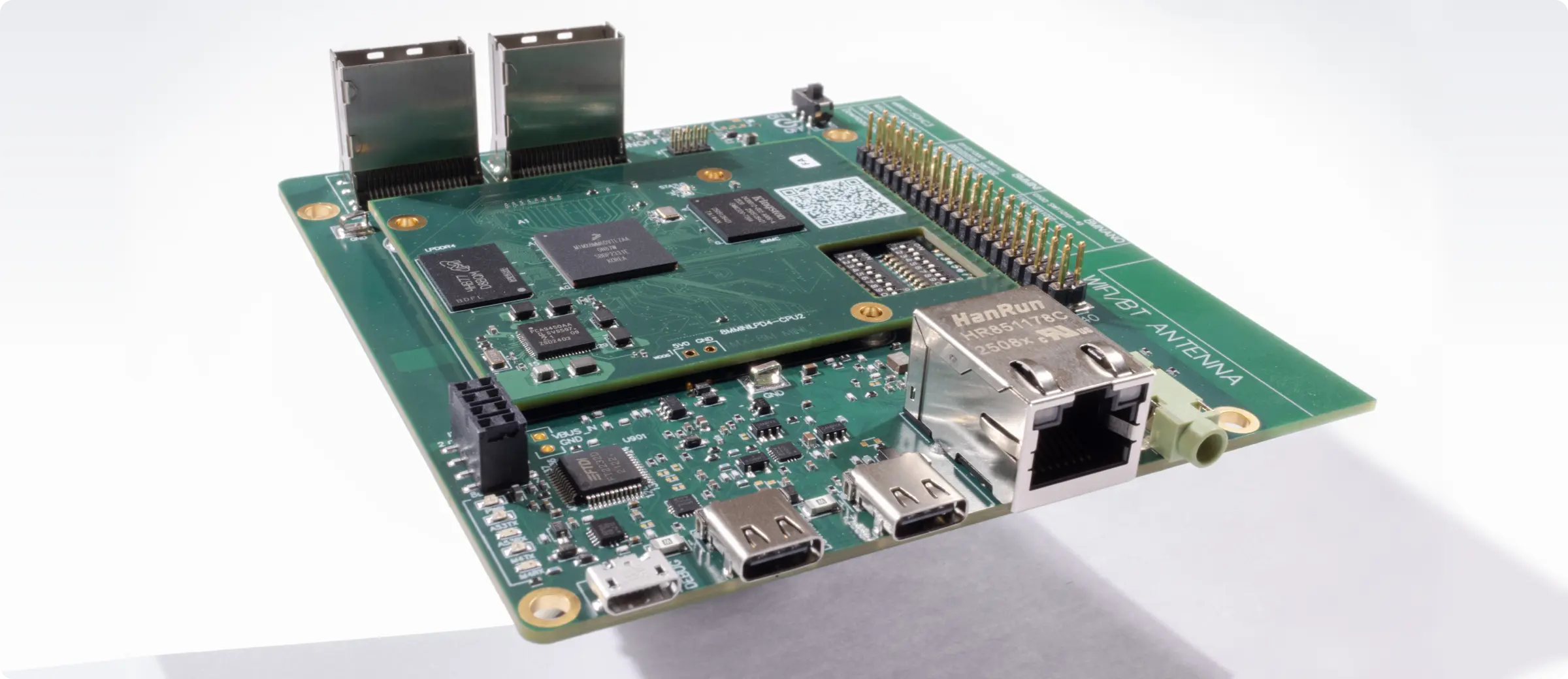
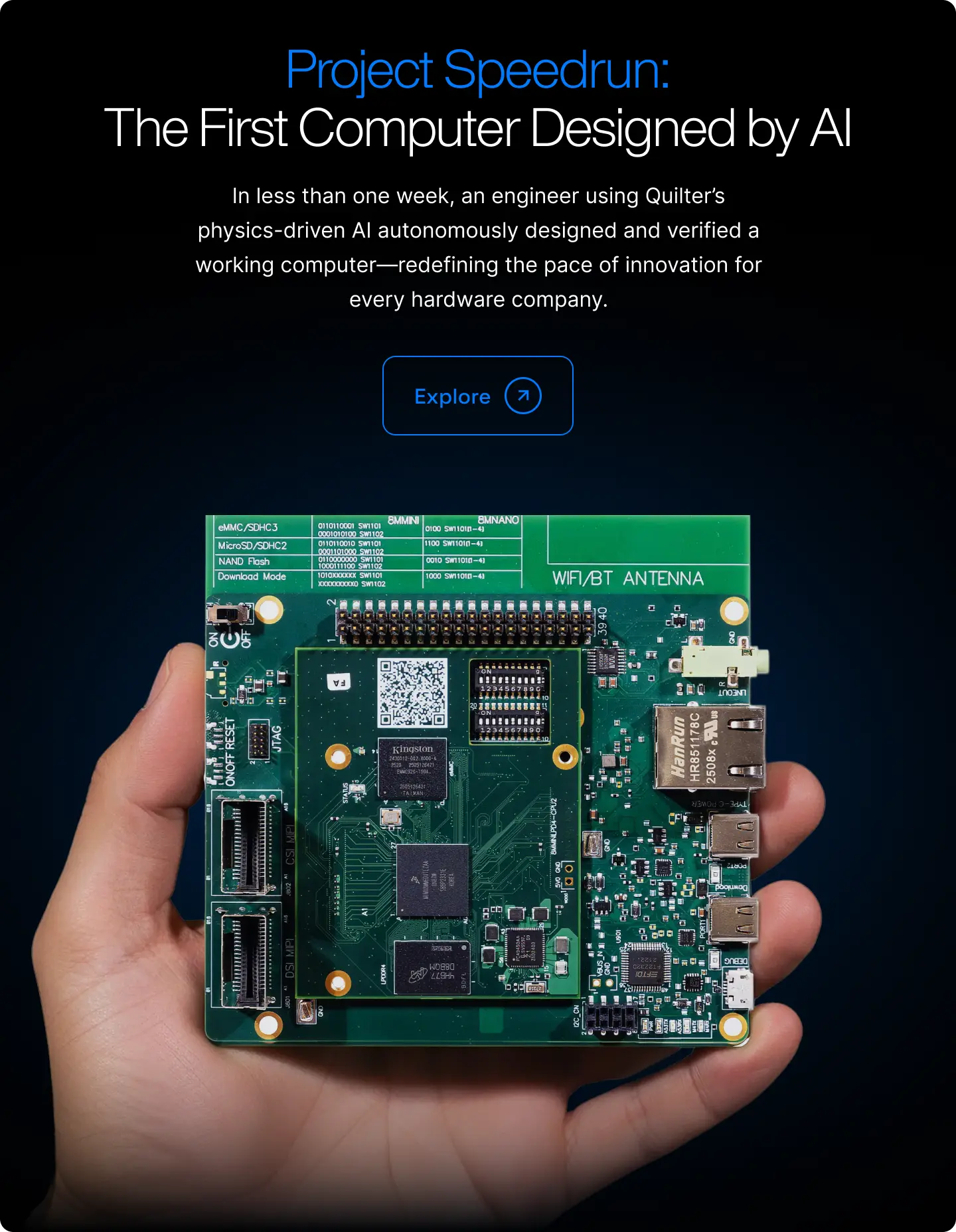
This article is one part of a walkthrough detailing how we recreated an NXP i.MX 8M Mini–based computer using Quilter’s physics-driven layout automation.
Our webinar panel described one problem with hiring and training hardware engineers. You can find recent graduates for hire relatively easily. More senior engineers who can move between circuit design, PCB layout, debugging, and product integration are much harder to find, and turning a graduate into that engineer takes time from senior engineers who are already stretched thin.
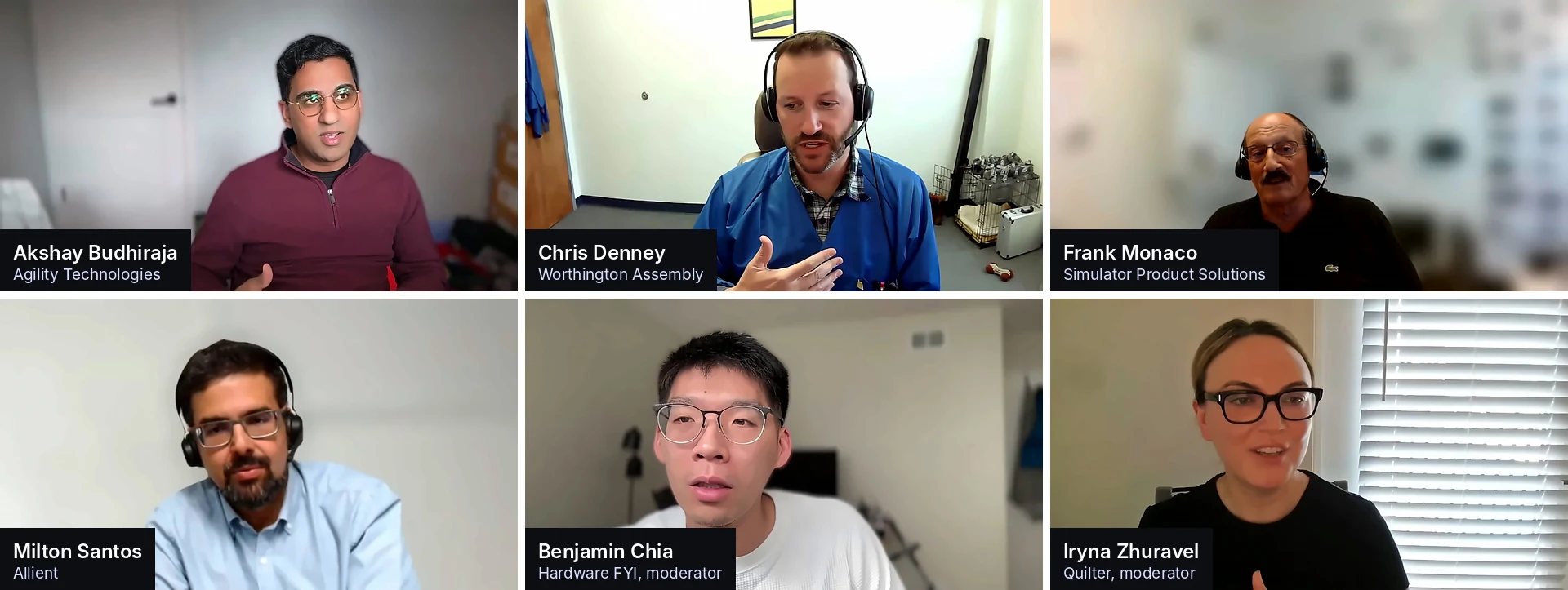
On October 8, 2026, Quilter and Hardware FYI hosted a live webinar, "Is There Really a Shortage of Electrical Engineers?", with four engineering and manufacturing leaders from the U.S., Canada, and Europe.
This recap covers what the panel looks for in a hire, interview questions we drew from the discussion, and how their teams train junior engineers. You can watch the full recording on YouTube. For the labor-market and enrollment numbers, including our analysis of Quilter’s own customer conversations, see our companion post, Are Electrical Engineers in Demand? The Engineering Talent Shortage in 2026.
Key Takeaways
These are our takeaways from the discussion:
- Decide what the new hire must already know. Frank and Milton found recent graduates easier to hire than engineers with years of board experience. Akshay's small team struggled to find one engineer with enough breadth to cover several disciplines.
- Interview for how candidates reason through a design. The panel valued engineers who understand why a design works and who can work with firmware, mechanical, and manufacturing colleagues. Our interview questions below include what a strong answer shows.
- Plan senior time for teaching before you hire juniors. Frank reorganized his engineering group so new engineers learn directly from senior ones. Chris suspects that avoidable problems in the designs he builds often come from engineers whose senior colleagues didn't have time to explain a better choice.
- Use test failures and manufacturer feedback as training, with someone to interpret them. Milton's junior engineers redesign after failed tests, using the contract manufacturer's list of layout problems as part of the feedback.
Meet the Panel
- Akshay Budhiraja is head engineer at Agility Technologies near Vancouver, which makes imaging products for fire and emergency services, including a 360-degree camera that rescue teams use to find people trapped under rubble.
- Chris Denney is CTO of Worthington Assembly, a contract manufacturer in Massachusetts, and co-hosts the Pick Place Podcast.
- Frank Monaco is vice president of engineering at Simulator Product Solutions in Carson, California, which builds simulated parts for air defense, fixed-wing, rotary-wing, and ground defense training systems.
- Milton Santos leads the team at Allient in Portugal that designs electronics for brushless DC motor drives used across Allient's European plants.
Benjamin Chia of Hardware FYI and Iryna Zhuravel of Quilter moderated. All four panelists hire engineers or work closely with the people who do, so this recap reflects the employer's side of the question. Most of the webinar audience were hardware engineers, and we'd like to hear their side in the comments on our social media channels.
About the Webinar
The webinar followed our April post, The Electrical Engineer Shortage Is Structural, which argued that hardware teams can't hire their way out of the shortage. Many engineers and hiring managers told us it matched what they see when they try to hire. Others disagreed and pointed to wages, expectations, and how teams are built. The panel added qualifications to the April argument, especially about consulting terms, how roles are defined, and the senior time that training requires. Of the 46 attendees who answered our poll, 27 were hardware engineers, eight were students or early-career engineers, six were engineering or hiring managers, and five were PCB designers.
Thank you to Akshay, Chris, Frank, and Milton for their time, to Hardware FYI for co-hosting, and to everyone who sent in questions.
Watch the Full Webinar
The recording includes the full panel discussion and the live audience Q&A.
Why Experienced Hardware Engineers Are Hard to Hire
Frank Monaco of Simulator Product Solutions and Milton Santos of Allient said it is easier to find recent graduates than engineers with substantial board-level experience. Frank said the shortage is real in Southern California, "but its flavors change depending on your product portfolio and where you are." His products combine electronics, firmware, software, mechanical design, and safety features, and he finds firmware engineers easier to hire than "a pure hardware engineer." Milton set out this year to hire engineers who could "pick up a layout and design some power circuits," found that "this was not possible," and hired recent graduates to train instead. Akshay Budhiraja's small team at Agility Technologies needed one engineer to cover circuit design, layout, and debugging problems from the factory floor, and the search took patience and quite some time. From his perspective, "it looked like a shortage."
The panel described four different problems, and a team can have more than one:
- Finding particular experience. Frank's team can find engineers with basic skills. The gap opens at the mid and senior level, where someone has to solve integrated problems on the factory floor.
- Attracting that experience on the terms offered. During one recent search, Milton heard from about ten experienced consultants while permanent hires stayed hard to find. Frank sometimes brings retired engineers back on contract. Frank said pay in his market is competitive and "not the limiting factor," but whether more of these engineers would take permanent roles on better terms is a question this panel didn’t quite settle.
- Finding one person who covers several disciplines. Small teams like Akshay's have no separate specialist for signal integrity or layout, so one hire covers all of it.
- Finding senior time to develop junior hires. Graduates are "brilliant, but they really need a lot to get up to speed" in an industrial environment, Frank said, and Milton's power and safety work takes substantial training. Both depend on time from the senior engineers who are hardest to hire.
Chris Denney of Worthington Assembly sees the results from the manufacturing side. His company builds boards for customers, and many of the designs come from people working outside their training: "We work with a ton of mechanical engineers trying to do circuit board design." When a layout makes manufacturing very difficult, his team can usually still build it, but by his estimate it can take "twice as long and be 10 times as expensive" as a board from a designer who knows what makes boards easy to build. He also described boards that arrive, don't work, and send his team through hours of replacing chips before someone finds the problem was in the firmware.
What to Assess When Hiring Hardware Engineers
Frank Monaco's advice is to define what the work needs before writing the job title, with engineering leads and hiring managers working closely together. "We're looking not for an engineer, we're looking for a figure that can fill a role," he said. For his team, that often means someone who can integrate electronics with firmware and mechanical design.
One way to apply this, which is our suggestion, is to split the role into two lists: what the person must do without help in the first months, and what the team can teach. The first list sets the experience you need to pay for. The second list sets the training the team has to plan.
For early-career candidates, the panel looked for foundations and potential. Akshay Budhiraja said that the challenge is "establishing their areas of promise and interest early on in the interview process so we can explore how deep that knowledge goes." Once his team sees "that the foundations are there in the areas we're looking to hire," it can "choose to invest the time and effort to bring them up to speed." Frank mentioned that it is important to understand how adaptable a candidate is to the specific environment or project.
The panelists also look at what candidates have built and how they work with others. Akshay weighs a candidate's projects and whether they'll work well with mechanical engineers, product designers, and software engineers, which a résumé rarely shows. Milton Santos looks for creative people who want to build things, and some of his good hardware engineers came to the work from hobbies such as woodcrafting. Chris Denney hires manufacturing and process engineers, a different pool with the same problem. He rarely sees candidates with IPC-A-610 or Six Sigma training, so he asks about hobbies and looks for people tackling complex problems on their own, such as rebuilding a car or remodeling a kitchen.
Electrical and Hardware Engineer Interview Questions and What to Listen For
These questions are ours, based on what the panel said, and they work for electrical and hardware engineering roles. The criteria in the last column are our interpretation of the discussion.
Candidates can answer from a job, an internship, coursework, a team project, or personal work. For candidates without a fitting example, give them a short schematic or layout to review during the interview and ask the same questions about it.
| Question | What it shows | What a strong answer includes |
|---|---|---|
| "Walk me through a board or subsystem you helped bring up, at work or school. What failed, and how did you find the cause?" | Diagnostic reasoning and ownership. Small teams need one engineer across design, layout, and debugging (Akshay). | Separates what they observed from what they guessed, names the measurements they took, and connects the fix to the result. |
| "Pick a design you've studied or modified. Why do you think it was designed that way, and what would you change?" | Reading design intent (Akshay). | Ties design choices to requirements and constraints, and says where they are unsure. |
| "Why did you choose this component value and placement? What alternative did you consider?" | Understanding the reasons behind a design choice (Milton). | Names the requirement driving the choice, the trade-off against the alternative, and how they checked it. |
| "Tell me about a problem you solved with someone from firmware, mechanical, or manufacturing." | Working across disciplines (Frank, Akshay). | Explains the other person's constraint in that person's terms and describes what each side changed. |
| "Tell me about something you built or fixed that was harder than you expected. What went wrong?" | Practical problem solving and persistence (Chris, Milton). | Describes specific obstacles and what they tried. The project can come from work, school, or home. |
| "Describe feedback that changed one of your designs, from a reviewer, a test, or a manufacturer." | Learning from feedback (Milton). | Explains what the feedback said, why they agreed or disagreed, and how they checked the revised design. |
How Teams Train Junior Hardware Engineers
The panelists' teams build experience intentionally, using real projects and senior engineers' time. Frank Monaco reorganized his engineering group at Simulator Product Solutions from the usual hardware and software split into cross-functional areas, so new engineers learn through "the transfer of the craft from a senior." Many of his senior engineers are close to retirement, and he expects them to keep teaching as consultants. "That is one approach that, for us, is working," he said.
Milton Santos's team at Allient lets junior engineers learn from real failures. "The best way to learn is failing. And nobody wants to have a failed project," he said. His juniors design real boards, test them, and redesign after a failure. Feedback from the contract manufacturer is part of it: a list of layout problems that says, in Milton's words, "you need to improve this, this, and this, otherwise will be too expensive."
One Junior Engineer's EMI Failures
Milton described one junior engineer’s experience in detail. His first project at Allient failed electromagnetic interference (EMI) testing. He studied the standards, worked out how to solve the issues, and went through three rounds of EMI problems. Just two years after graduation but with this experience under his belt, Milton considers him "almost senior." The boards are demanding: Milton's team designs drives for motors with 300-amp current peaks, including an eight-layer board that mixes analog, digital, and power circuits, and designs fail on inrush current as well as EMI. In Milton's view, once engineers understand "why the board is failing" and how to solve it, they are "prepared to be considered as a good engineer."
How Do Junior Engineers Learn Design for Manufacturing (DFM)?
Feedback on real builds is one way juniors learn design for manufacturing (DFM), and it depends on someone explaining what went wrong. Contract manufacturers don't always have time to explain every design problem, Chris Denney said, though most will try if a customer asks. He suspects that avoidable choices he sees, such as tiny 01005 parts on a board with plenty of space, often come from engineers whose senior colleagues didn't have time to explain the alternative. For safety-critical products, where "the cost of failure is so extremely high," Akshay Budhiraja's team picks contract manufacturers that flag tolerances and other problems before they build.
A Training Plan for Junior Engineers (Our Suggestion)
None of the panelists described a formal mentoring schedule, and every approach they described depends on senior time. This table is our suggestion for planning that time, based on what the panel described and some of our conversations with Quilter’s customers.
| Decision | What to define |
|---|---|
| First assignment | A bounded design task or subsystem the junior engineer can own, with a real test at the end. |
| Reviewer | The senior engineer who reviews the work, with review time counted in that person's schedule. |
| Review points | Which decisions need a senior check before fabrication, before testing, and before release. |
| What the junior explains | The reasoning behind key choices, and what test results or manufacturer feedback showed. |
| Signs of independence | Problems the engineer can now diagnose or fix with less help, such as finding the cause of a failed test. |
For a structured example, the Global Electronics Association runs a 12-month, Department of Labor registered PCB design apprenticeship that combines online courses with mentoring inside the employer. Companies can assign one mentor to each apprentice or use "a pool of mentors, each assigned to specific skills and available to all apprentices."
How Junior Engineers Learn When AI Does Part of the Layout
The panel expects AI tools to change hardware work. "For the longest time, I think, as hardware engineers, we were able to ignore almost what was going on with LLMs and AI," Akshay Budhiraja said. "But now, with frontier models, that's not the case anymore." Chris Denney tried one on a personal FM radio project. He gave Claude transcripts of his podcast episodes on design for manufacturing (DFM) and asked it to help with his layout. "And sure enough, it did," he said.
Akshay named the difficulty for anyone relying on these tools: "figuring out what those edges are where their understanding falls off," and how long you might keep working before you notice you've passed them. Milton Santos said AI tools can explain what to do and how, but often fall short on why. Akshay's advice to engineers is to use them "not just to take shortcuts, but also just understand things at a deeper level."
That raises a question for any team that trains juniors through hands-on practice: if a tool does more of the layout, how does a junior engineer develop the judgment to review it? Quilter builds physics-driven AI for PCB layout, so we have a stake in the answer. The biggest problem we see is someone submitting a schematic and expecting "a magic button that would just do a layout." With Quilter, the engineer defines the board outline, stack-up, keepouts, pre-placed parts, and constraints such as impedance targets and current per net, then reviews the layout candidates and signs off. Checks such as EMI testing remain the engineer's job, the same kind of work Milton's junior engineer learned from.
Here is how we would apply the panel's advice when juniors use layout automation. This is our suggestion, and we don't yet have evidence that it trains engineers better than working without automation:
- Before running the tool, the junior writes down what the board must do and which constraints matter most.
- Before reviewing the result, the junior predicts where the layout could go wrong, such as a return path, a hot component, or a connector location.
- During review, the junior explains why the layout meets each requirement and where it doesn't.
- After testing, the junior compares those predictions with test results and manufacturer feedback, and a senior engineer reviews the comparison.
Advice for Engineers Looking for Work
The advice for job seekers centered on building things and understanding why they work. Akshay suggested a concrete exercise: "Take an open source hardware project and make it do something else." Milton said graduates who understand why a component value or placement is right are "so many steps ahead." Frank told engineers to "look into AI seriously. It's not the oracle, but it's going to be the future," and to round out their hardware skills with integration and some firmware.
More Questions From the Webinar
Attendees sent in questions through the Zoom Q&A and the chat. These are the ones not covered above, answered live or by the panel afterward.
Wouldn't Higher Salaries Solve the Problem?
The panel didn’t quite settle this, and all four panelists are employers, so this is the employers’ view. The three who spoke to pay each described a different situation. Chris, whose company hires software and mechanical engineers across North America and Europe, said those engineers in the U.S. are "far more expensive than they are even in England." A salary his engineers in England consider very good would be an average salary in Massachusetts. Frank said pay in Southern California is competitive and "not the limiting factor." Milton said hardware and software engineers at Allient earn similar salaries, though software salaries in Europe tend to grow faster. The risk he sees is that "the good hardware engineers can start becoming consultants to many other companies anytime."
Milton's point about consulting might be indicative of a growing trend. During one search he heard from about ten experienced consultants, so some of the senior engineers employers want are working on consulting terms. Whether that reflects a shortage of engineers or a shortage of engineers willing to take permanent roles at the pay on offer is a fair question. Our companion post covers what employer surveys show about pay.
Are You Open to Hiring Engineers From Other Countries?
This came up twice, and the answers depended on each team's situation. Akshay's small team works together in the office, so engineers abroad usually work with them as consultants or contractors for a specific expertise. Chris's company already has software and mechanical engineers across North America and Europe. Frank said his company will consider anyone it can hire: "We're looking for gray matter. We don't care where it comes from." Because the company works for the U.S. government, International Traffic in Arms Regulations (ITAR), export-control, and clearance rules apply, and he said some of them "can get quite nasty for certain areas and certain types of profiles." Milton said international candidates are "not my first option" in Portugal, partly because his team works in Portuguese, but "if the profile is really good, if the person is a really good match, we can consider."
What Would You Do Differently If You Were Starting Your Career Today?
Akshay started in software and wishes he had moved into hardware sooner. He would tell new engineers to learn how electronics interact with the thermal and mechanical design around them.
Chris started in electronics manufacturing at 16 and spent years envying friends who went into computer science. "In 2026, I'm really, really glad I went into manufacturing," he said. "Get into something physical, because I don't know where this is going."
Milton would drop the choice between hardware and software. For him, the appeal of embedded engineering is the relationship between the two.
Is There Newer Enrollment Data, and Are Students Moving to Hardware Because of AI?
Electrical engineering enrollment at four-year colleges rose in fall 2025 while computer science fell, according to a Washington Post analysis of National Student Clearinghouse data. The Clearinghouse's preliminary fall 2026 data, released October 29, shows undergraduate computer science enrollment at four-year colleges down another 12.4%. The preliminary release doesn't report electrical engineering separately, and final figures are due in January 2027. Totals don't show why students chose their majors, so the size of any AI effect is unknown. Our companion post covers the analysis of the latest enrollment trends.
In Software, AI Is the Latest Layer of Abstraction. How Will It Play Out in Hardware?
Akshay and Frank answered different parts of this question. Akshay described how engineering work may change, with "a focus on a systems-level approach, more iterations, whether through new forms of trial and error or simulations where previously prohibitive." Frank described the hardware that AI itself will need: "I see it returning to core hardware design as systems move towards larger, denser computing platforms to support AI and more parallel processes."
Related Reading
- The Electrical Engineer Shortage Is Structural: Why Hiring Can't Fix It (2026 Data)
- Are Electrical Engineers in Demand? The Engineering Talent Shortage in 2026
- Glossary: EMI and EMC in PCB Design
Frequently Asked Questions
How Long Does It Take to Train a Junior Hardware Engineer?
It depends on the engineer and the work. Milton Santos considers one junior engineer on his team at Allient "almost senior" two years after graduation, after the engineer's first project failed electromagnetic interference (EMI) testing and he worked through three rounds of EMI problems. Frank Monaco said graduates "really need a lot to get up to speed" in an industrial environment, and both teams depend on time from senior engineers.
Do Hardware Engineers Need Firmware Skills?
On the teams our panel described, firmware helps. Frank Monaco's products combine electronics, firmware, software, mechanical design, and safety features, and he often needs someone who can integrate electronics with firmware and mechanical design. His advice to engineers looking for work was to round out their hardware skills with integration and some firmware.
Is There a PCB Design Apprenticeship Program?
Yes. The Global Electronics Association runs a 12-month, Department of Labor registered PCB design apprenticeship that combines online courses with mentoring inside the employer. Companies can assign one mentor to each apprentice or use "a pool of mentors, each assigned to specific skills and available to all apprentices."
How Does Poor Design for Manufacturing Affect Board Cost?
Chris Denney of Worthington Assembly, a contract manufacturer, said his team can usually still build a layout that makes manufacturing very difficult, but by his estimate it can take "twice as long and be 10 times as expensive" as a board from a designer who knows what makes boards easy to build. He suspects avoidable choices often come from engineers whose senior colleagues didn't have time to explain the alternative.
Sources
Global Electronics Association. "PCB Design Engineer Employer-based Apprenticeship." June 9, 2026. https://www.electronics.org/pcb-design-engineer-employer-based-apprenticeship.
National Student Clearinghouse Research Center. "Preliminary Fall Enrollment Trends." October 29, 2026. https://nscresearchcenter.org/prelim-fall-enrollment-trends/.
Ovide, Shira, and Andrew Van Dam. "The Hottest College Major Hit a Wall. What Happened?" Washington Post, April 13, 2026. https://www.washingtonpost.com/technology/2026/04/13/computer-science-major-ai/.
Quilter. "Are Electrical Engineers in Demand? The Engineering Talent Shortage in 2026." Quilter, November 2026. https://www.quilter.ai/blog/engineering-talent-shortage.
Quilter and Hardware FYI. "Is There Really a Shortage of Electrical Engineers?" Webinar, October 8, 2026. YouTube video, 56:33. https://www.youtube.com/watch?v=Yv7kyuwIag4.
Zhuravel, Iryna. "The Electrical Engineer Shortage Is Structural: Why Hiring Can't Fix It (2026 Data)." Quilter, April 27, 2026. https://www.quilter.ai/blog/hardware-engineers-shortage-2026.