






Read the Full Series
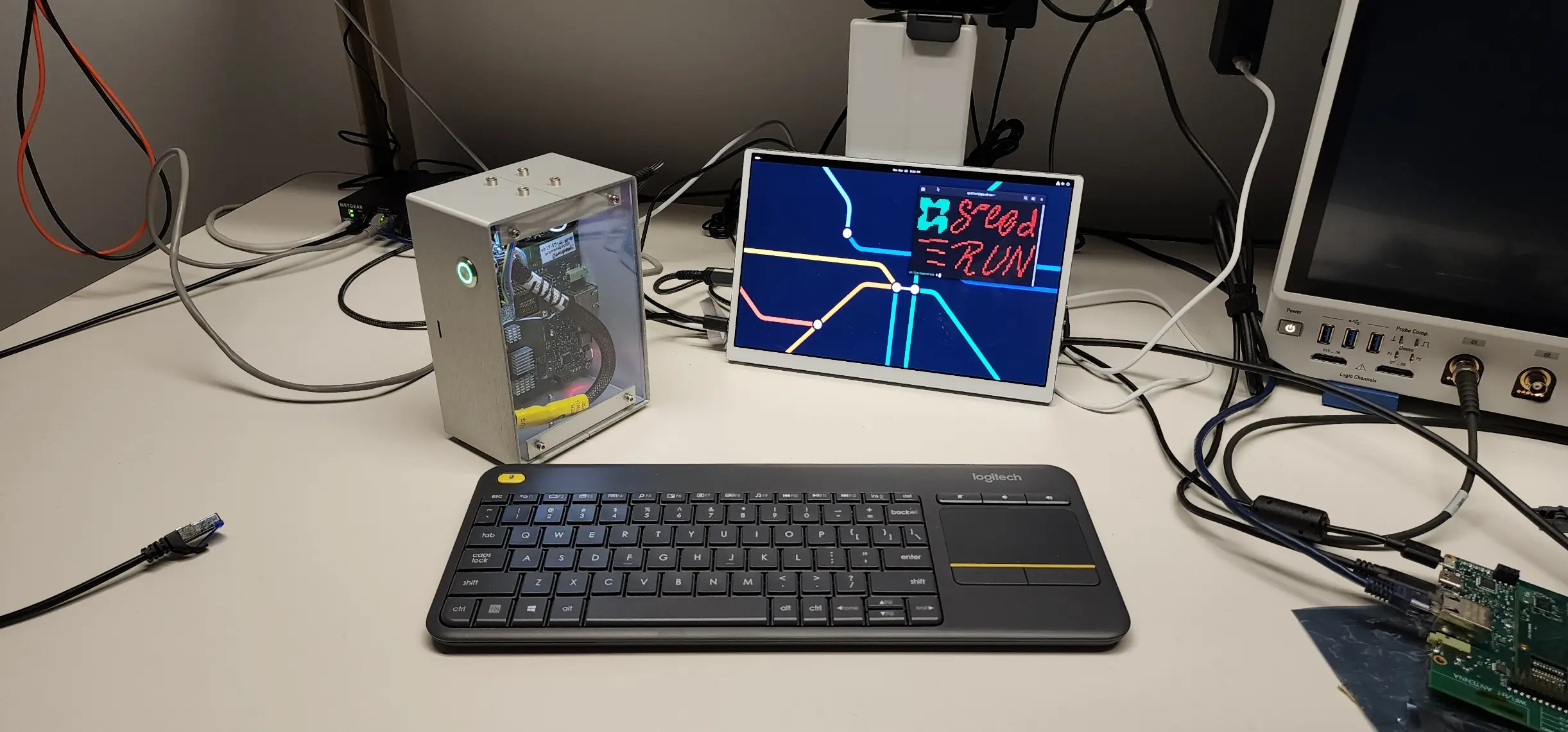
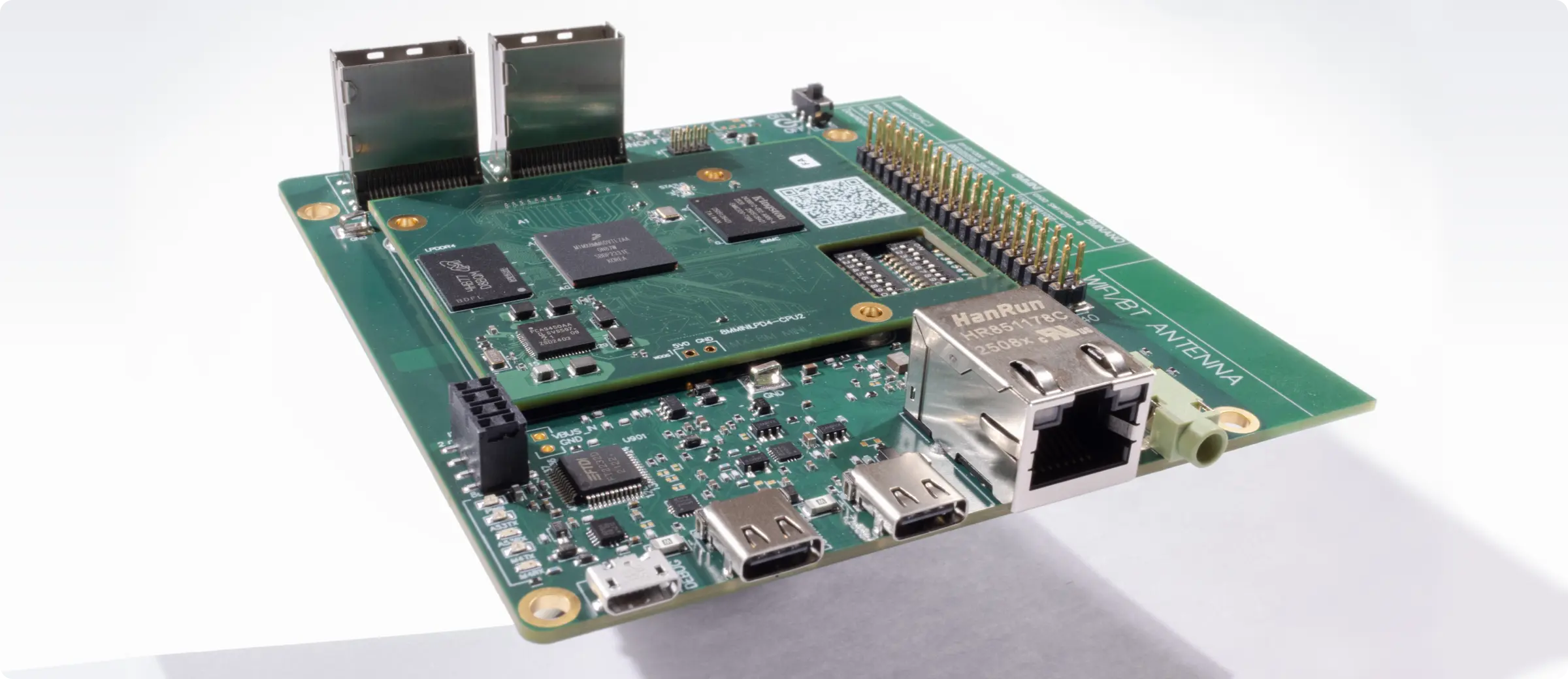
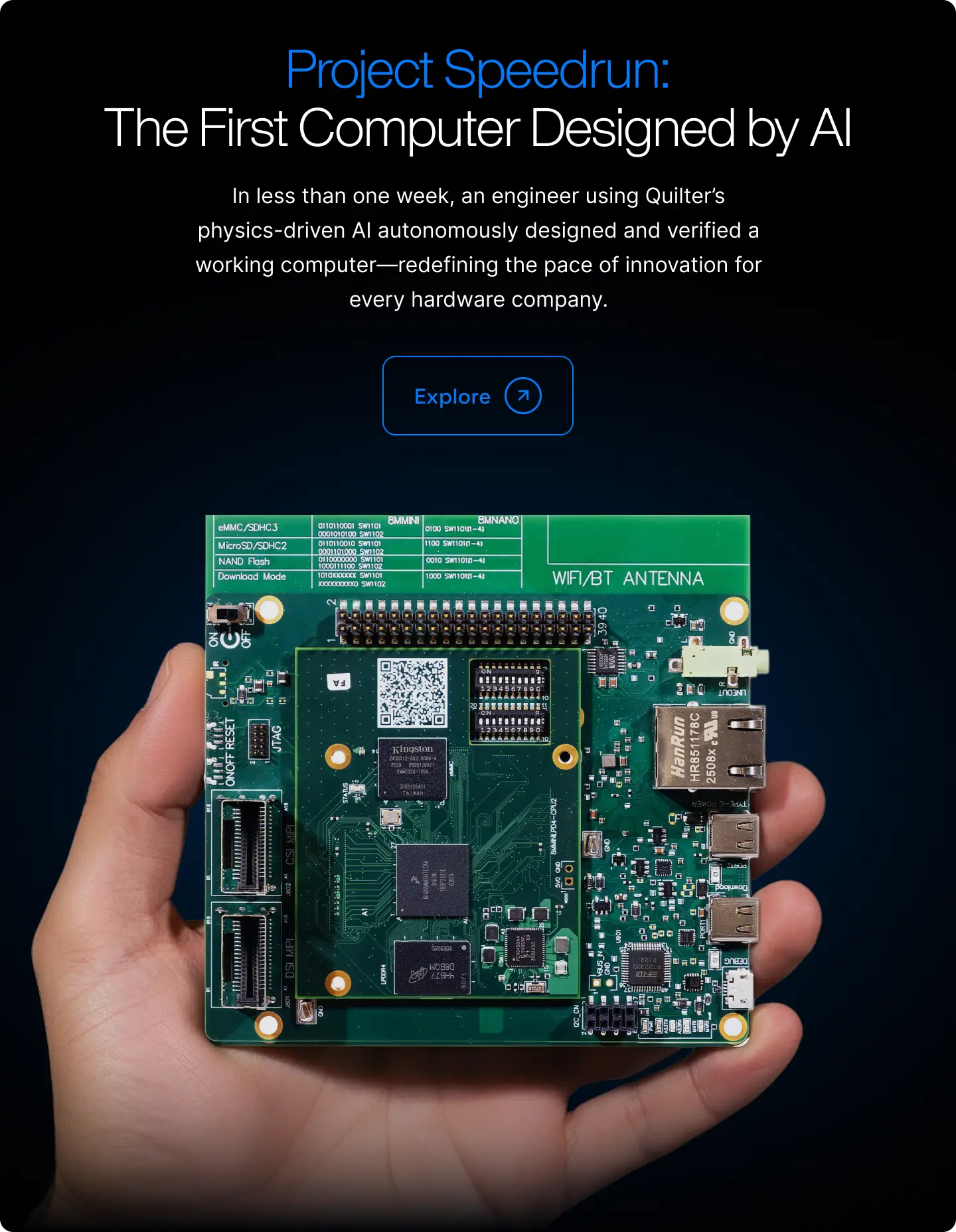
This article is one part of a walkthrough detailing how we recreated an NXP i.MX 8M Mini–based computer using Quilter’s physics-driven layout automation.
Mac hardware teams are shipping faster than ever, but PCB layout is still where schedules go to die. In 2026, the good news is you no longer have to choose between “Mac-friendly” and “industry-grade.” You can mix native tools, browser-based EDA, and AI automation based on what you are building and how fast you need to iterate.
This guide breaks down the best PCB design options for macOS today, where they fit, where they fall short, and why an AI-first layout approach is becoming the default for teams that cannot afford a layout queue.
Let's define what matters most for Mac-based PCB design
The Mac pain is not that you “cannot do PCB design.” It’s that many enterprise EDA stacks are still Windows-first, which forces you into workarounds: virtual machines, remote desktops, license servers, and fragile IT setups. Altium Designer, for example, is formally validated on Windows 10/11, and Mac usage typically relies on virtualization rather than a native macOS release. (Altium)
So if you are choosing a toolchain for 2026, the real requirements are usually these:
- You want performance and stability on Apple silicon, not a tool that feels like it’s fighting the OS. (KiCad’s current stable macOS builds support macOS 12+ and recent releases include native Apple silicon support, which matters for responsiveness on M-series Macs.) (KiCad)
- You want collaboration that matches modern hardware cadence, meaning fast reviews, easy sharing, and fewer “it works on my machine” problems.
- You want to avoid Windows VMs unless you truly need them, because the VM tax is real: cost, setup time, and occasional compatibility edge cases. (Parallels)
TL;DR: On a Mac in 2026, the best “default” is a native tool (KiCad or Fusion) for schematic capture and day-to-day edits, plus a browser or AI layer when you need speed, iteration, or easier cross-team access.
How do the top PCB tools stack up on macOS?
Mac-based PCB teams typically end up in one of three execution models:
- Native macOS apps (best feel, best offline reliability)
- Browser-based tools (fast onboarding, simplest sharing) (EasyEDA)
- Windows tools via VM (maximum enterprise compatibility, maximum overhead) (Altium)
Here’s the practical comparison.
Mac PCB tool comparison: Native app vs VM vs browser
Tool
How it runs on Mac
Where it shines
Mac-specific tradeoffs
KiCad
Native macOS app (macOS 12+) (KiCad)
Serious capability at $0 cost, strong community, good long-term ownership
More DIY library/process work than some commercial stacks
Autodesk Fusion (Electronics / PCB)
Native macOS app (Autodesk)
ECAD + MCAD in one place, great for enclosure-fit workflows
Heavier platform, subscription dynamics, not always the fastest for pure PCB-only work
DipTrace
Native macOS installer available (diptrace.com)
Polished UI, commercial support, straightforward learning curve
Smaller ecosystem than KiCad/Fusion
EasyEDA
Browser-based (plus optional desktop client) (EasyEDA)
Fast start, simple sharing, strong prototyping flow
Cloud-first workflow, limits for higher complexity, and sensitive IP depending on your needs
Altium Designer
Windows-only validation; run via VM on Mac (Altium)
Industry standard in many orgs, strong enterprise flows
VM friction, licensing complexity, performance variability
Cadence OrCAD/Allegro
Windows-focused requirements (VM on Mac) (Cadence Community)
High-end constraints and enterprise ecosystems
Set up overhead and toolchain weight
Quilter
Web-first workflow (no Mac install) plus export back to CAD (docs.quilter.ai)
AI-generated placement and routing candidates, fast iteration, and avoids VM for layout cycles
You still need a supported CAD format for input and final edits (docs.quilter.ai)
A few “2026 reality checks” that matter more than feature lists:
- KiCad is the strongest native “pure PCB” default on Mac if you want control, portability, and no vendor lock-in. It is actively maintained, and current macOS downloads support macOS 12 and newer. (KiCad)
- Fusion is the best choice when mechanics matter as much as electronics, because it is explicitly positioned as an integrated CAD + electronics platform. (Autodesk)
- EasyEDA is unbeatable for speed-to-first-board for simpler projects, and it runs in the browser by design. (EasyEDA)
- VM tools are still common, but they should be intentional, not your default. Altium explicitly frames Mac usage as running Windows via virtualization rather than a native macOS version. (Altium)
Try this if you’re stuck: If your employer mandates Altium or Cadence but you want to stay on Mac hardware, treat the VM as an access layer, not your whole workflow. Keep files and reviews lightweight, and push heavy layout iteration into a pipeline that does not require you to “live” inside the VM all day. (Parallels)
What’s different about browser-based and AI-powered PCB design?
Browser-based EDA is not just “EDA in a tab.” It changes how teams collaborate: fewer installs, fewer version mismatches, and faster sharing. EasyEDA is explicit about the browser-first model and positioning as an online PCB design. (EasyEDA)
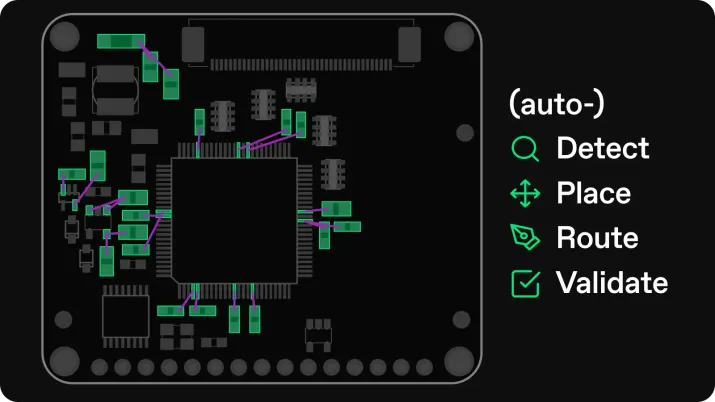
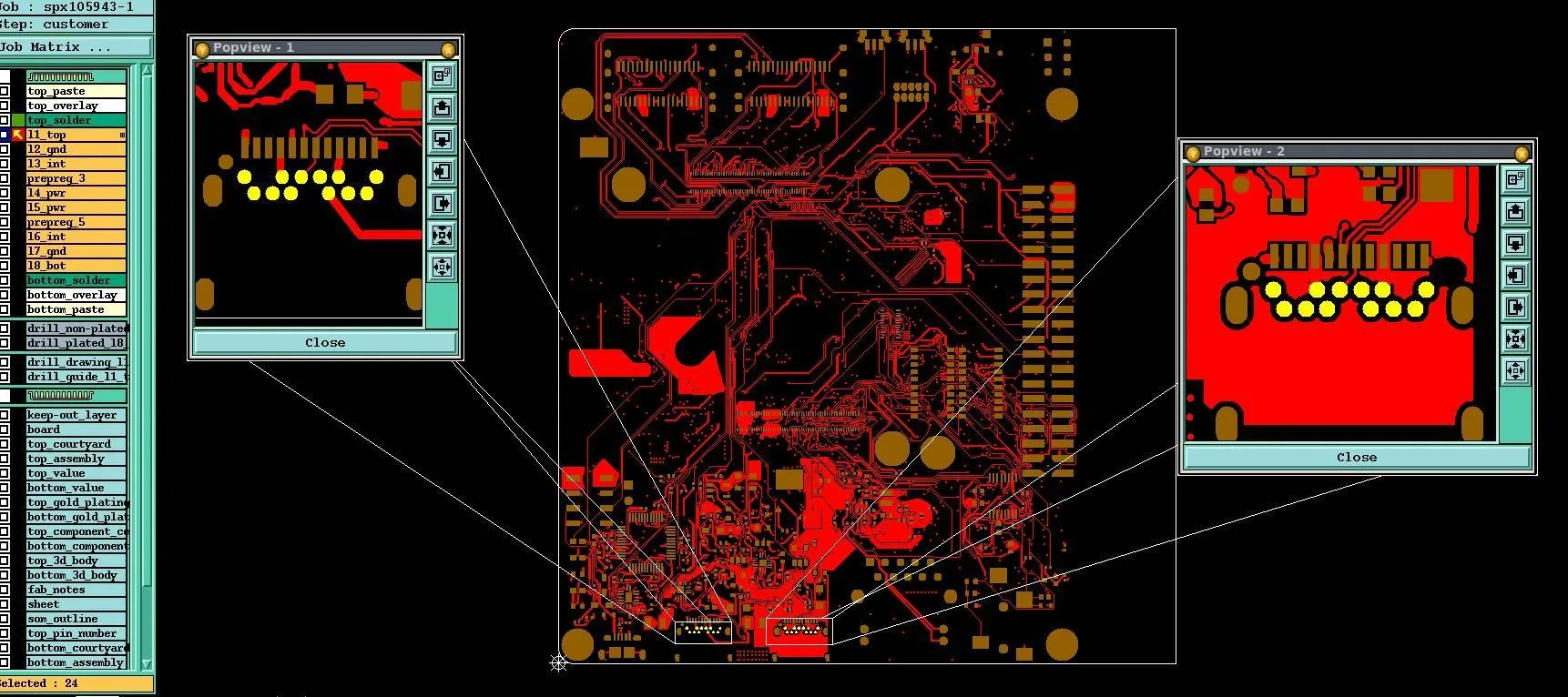
AI-powered PCB layout is a bigger jump. The difference is not that it draws traces for you. The difference is that it can generate multiple complete layout candidates, quickly explore trade-offs, and help you converge faster than a human routing loop.
Quilter’s positioning is that it generates complete layouts using a physics-driven approach, including reinforcement learning, and is designed to output fabrication-ready boards in hours rather than weeks. (Quilter)
Three categories, three very different workflows
Native macOS EDA
Browser-based EDA
AI-powered automation (Quilter)
You do most placement and routing manually, using local compute
You design in a browser-first editor, often optimized for onboarding and sharing (EasyEDA)
You submit a layout job, review multiple candidates, then download/export when you are satisfied (docs.quilter.ai)
The tradeoff question most Mac teams should ask is simple:
Do you need a full-time layout cockpit, or do you need layout throughput?
If you need deep manual control all day, native tools (or enterprise tools) make sense. If you need to unblock a program, hit a demo, or iterate weekly, the AI workflow starts to look less like a “nice-to-have” and more like the only scalable option.
Here's how Quilter changes the game for Mac users
The most “Mac-friendly” thing about Quilter is not a Mac app. It’s the ability to run the core layout cycle without installing a heavyweight Windows EDA suite locally, then export the results to your preferred environment for final edits and sign-off. Quilter’s docs describe a workflow in which you prepare a supported CAD input, submit a layout job, review candidates, and pay only when you download them. (docs.quilter.ai)
What you actually do in Quilter (workflow diagram)
- Finish your schematic in your CAD tool (Quilter does layout, not schematic capture). (docs.quilter.ai)
- Generate the linked board/project files Quilter needs as input. (docs.quilter.ai)
- Upload the project and create a layout job in Quilter. (docs.quilter.ai)
- Set constraints and design parameters (fabrication intent, placement preferences, constraints). (docs.quilter.ai)
- Let Quilter generate multiple candidates (parallel exploration is part of their product narrative). (Quilter)
- Review candidates using built-in filtering and sorting to find the best options faster. (docs.quilter.ai)
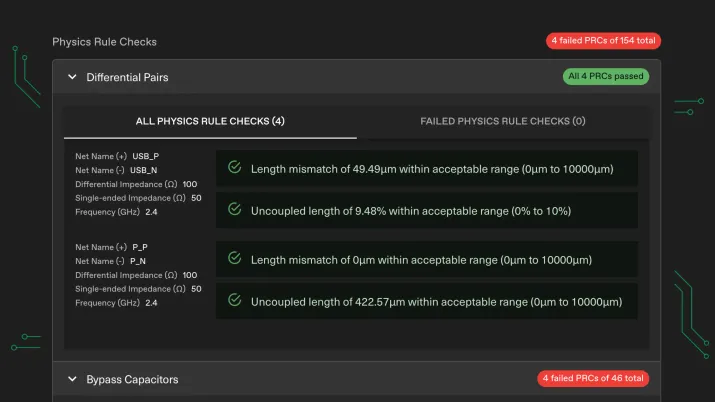
- Review physics reports (PRCs) to understand constraint results and associated risks before downloading. (docs.quilter.ai)
- Download/export the candidate back into your CAD flow for final signoff and manufacturing handoff. (docs.quilter.ai)
Try this if you’re stuck: For your first Quilter job, aim for a “boring” success. Start with a completed schematic, a clean constraint set, and a realistic fab target. Then use candidate filtering to narrow the list to a few top boards before you review the details in depth. (docs.quilter.ai)
File compatibility, without pretending file formats do not matter
One of the biggest blockers for Mac teams is a mismatch in file ecosystems. Quilter tries to reduce that by working with industry CAD inputs and returning candidates that you can open in downstream tools. Their documentation explicitly calls out supported formats: “currently Altium, KiCad, with Cadence coming soon,” which is the most reliable place to validate current support. (docs.quilter.ai)
At the same time, Quilter’s content also describes workflows that feel familiar to enterprise teams, including uploading native projects and retrieving native files. (Quilter)
Practical takeaway: treat the docs as the source of truth for what is supported today, and treat broader claims as directional if you are planning a migration.
Security and support, in plain language
If you are building real products, “web-based” immediately triggers IP anxiety. Quilter’s positioning across solutions pages includes security-focused deployment options (dedicated hosted instances or on-prem/private cloud) and enterprise support with SLAs. (Quilter)
Their privacy policy also explicitly describes the handling of uploaded “Input,” such as board and CAD files, as part of service operations. (Quilter)
Which PCB design tool is right for you?
You do not need one tool to rule them all. You need the smallest set of tools that keeps you moving.
Quick decision checklist (Mac edition)
- I need free and capable, and I am OK learning a serious tool → KiCad (KiCad)
- I need ECAD + MCAD integration for enclosure-fit and product design → Fusion Electronics (Autodesk)
- I need fast browser onboarding for simpler boards and quick protos → EasyEDA (EasyEDA)
- My company requires an enterprise standard (Altium, Cadence) → Run Windows tools via VM and optimize the workflow around that constraint (Altium)
- I need layout throughput and fast iteration without living in a VM → Quilter as the layout accelerator, then export back to your CAD tool (docs.quilter.ai)
If you want it as a simple decision tree:
- If your project is regulated or locked to an enterprise toolchain, accept the VM and standardize it.
- If your project is startup-speed or demo-speed, minimize tool overhead and maximize iteration.
- If your project is mechanically constrained, prioritize ECAD/MCAD co-design.
- If your bottleneck is routing capacity, don't solve it by adding more late nights.
What results can you expect with an AI-first approach?
The most honest expectation-setting is this: AI-first PCB layout does not magically erase engineering work. It shifts engineering time from repetitive routing to higher-leverage decisions: constraints, architecture, review, and validation.
Quilter’s own solutions pages and announcements anchor the value in time compression. For example, their semiconductor solution page states “typical jobs return a fully routed candidate in ≈ 4 hours” and frames the impact as cutting weeks off bring-up cycles. (Quilter)
Their aerospace and defense messaging makes similarly explicit time and respin claims, including “4–6 weeks saved” and “80% fewer re-spins.” (Quilter)
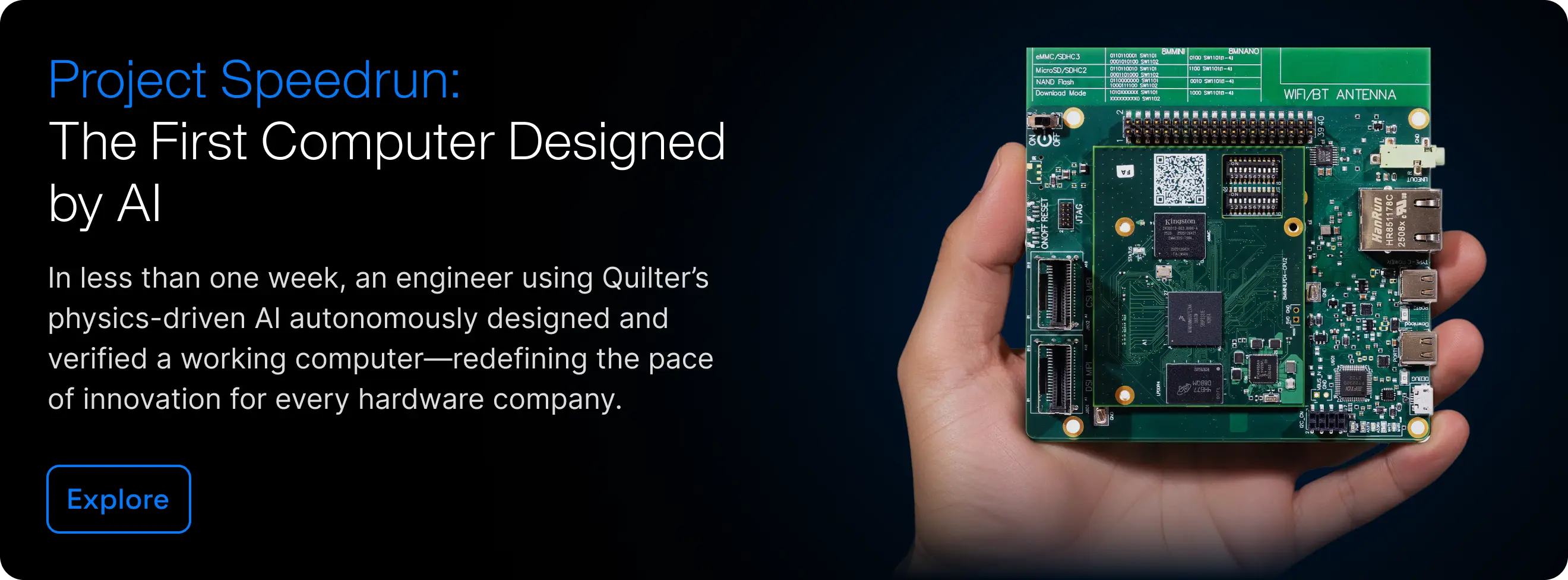
In December 2025, Quilter publicly claimed a “computer designed by AI” effort in which a single engineer went from schematic to manufacturing-ready files in less than a week. (Business Wire)
One more practical indicator: Quilter’s billing model, described in docs, encourages iteration because submitting, reviewing, and revising jobs is free, and charges occur when you download candidates. That model tends to generate more experiments, which is exactly what most hardware teams lack. (docs.quilter.ai)
A short on-the-ground sentiment from Quilter’s own contact page captures the vibe many teams care about:
“It passed the checks, got built, and saved me days.” (Quilter)
TL;DR: The AI-first win is not “one perfect board instantly.” It’s getting to a buildable candidate faster, exploring more variants, and catching issues earlier through constraint-driven review and physics reporting. (docs.quilter.ai)
Ready to try professional PCB design on your Mac?
If you want the fastest path to “serious PCB output on a Mac” in 2026, start with a simple rule:
- Use native tools for what they do best (schematics, edits, ownership).
- Use AI automation for tasks humans should not spend weeks on (layout throughput and iteration loops).
You can start with Quilter’s Free Version if you are eligible, and then move into the Startup Program if you are a funded team that needs commercial access and speed. (Quilter)
For onboarding help, use Quilter Documentation and the Quickstart first, then reach out to Support if you are deploying in a mission-critical environment. (docs.quilter.ai)


.webp)