






Read the Full Series
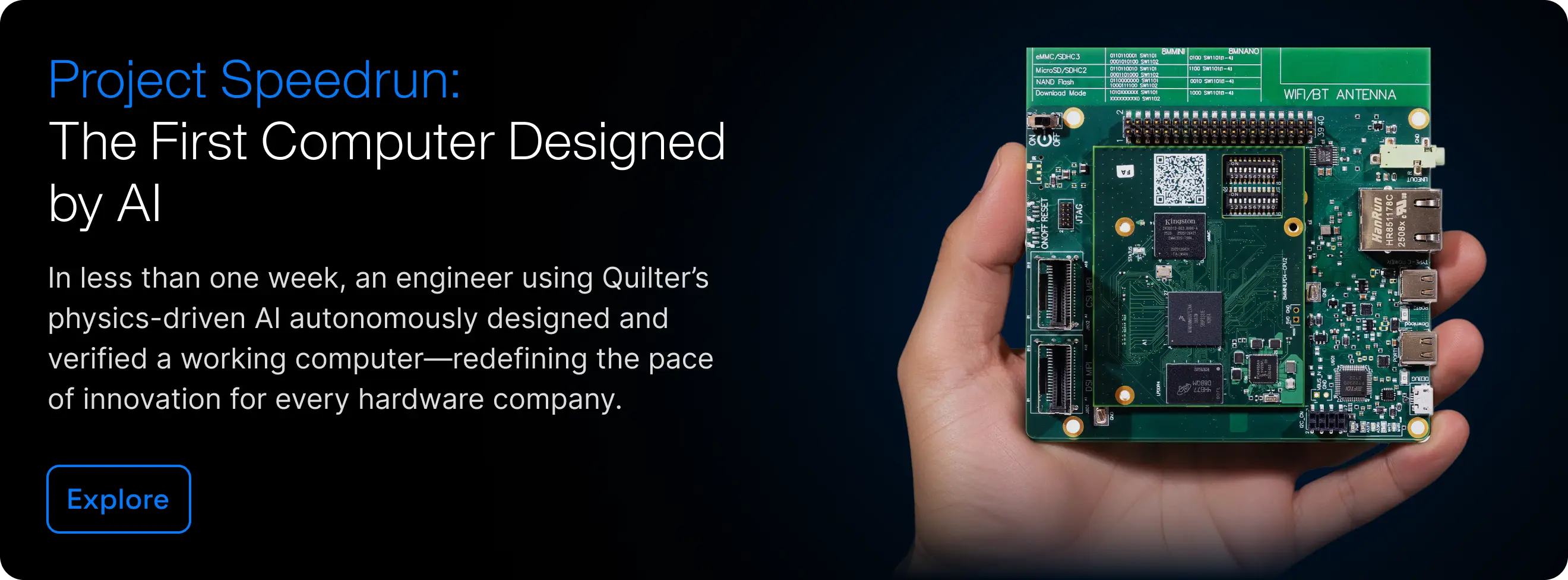
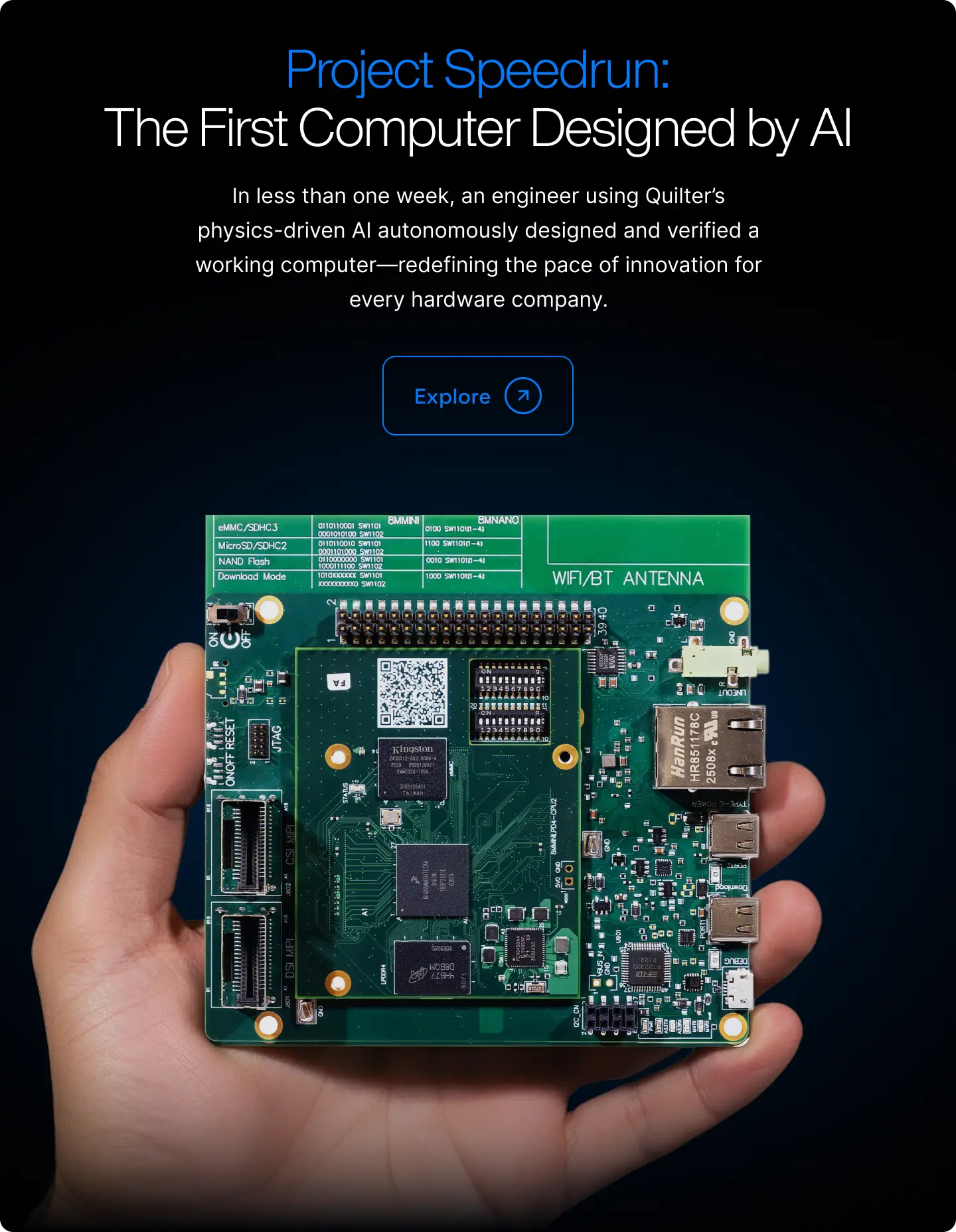
This article is one part of a walkthrough detailing how we recreated an NXP i.MX 8M Mini–based computer using Quilter’s physics-driven layout automation.
If you are shopping for PCB design software in 2026, the sticker price is still the easiest part to find, and still the least predictive of what you will actually spend. The real cost shows up later, in engineer-hours, re-spins, missed schedules, and the quiet tax of slow iteration. That is why this post continues our 2025 TCO breakdown, updated to reflect how teams actually build boards today. (quilter.ai)
In 2026, the core decision is no longer just “which CAD tool has the best features?” It is, “what is my throughput per engineering dollar?” Traditional EDA tools still matter, but automated PCB layout tools and AI PCB design software have changed the economics: you can now buy back weeks of layout time, and that time is often your most expensive line item.
This guide compares Altium, KiCad, and Quilter through a practical lens: what you pay, what you do not see on the invoice, and how each choice affects board cycle time.
Why the sticker price of PCB tools is misleading
Most teams price-compare PCB tools like a procurement checklist:
- License or subscription per seat
- Optional collaboration add-ons
- Support and maintenance
That is “visible cost.” The problem is that the PCB layout is labor-intensive, and labor costs compound with each iteration. If a tool choice adds 30 hours per board across six boards a year, that is not a rounding error; it is a headcount. Even Quilter’s own 2025 TCO write-up calls out that hidden costs like manual revision cycles, library overhead, and onboarding can quietly double or triple spend once you include engineering time. (quilter.ai)
In 2026, the “pricing for automated PCB design tools” question is shorthand for: how quickly can your team deliver a fab-ready layout that survives bring-up without issues?
What changed since 2025, and why 2026 is a different comparison
Three shifts matter:
1) Perpetual licensing is less of a safety net.
Altium has made it explicit in documentation that subscription renewals are no longer available for perpetual licenses, which changes long-run cost planning for teams that used to “buy once, maintain lightly.” (Altium)
2) Collaboration models got more productized.
For smaller teams, Altium Develop publicly lists pricing built around a workspace subscription plus “Author” seats (concurrent), with unlimited free collaborators. (Altium) That makes cost modeling easier than older quote-only dynamics, but it also encourages teams to bundle platforms, which can introduce new line items as you scale.
3) AI-assisted layout moved from novelty to workflow.
Quilter positions itself as a physics-driven layout engine that sits alongside existing EDA tools, generating multiple layout candidates quickly and delivering results in the same formats you already use. (quilter.ai) In other words, AI is no longer just “autorouting”; it is a different way to allocate engineering time.
Quilter also announced a $25M Series B (October 2025), which is less about funding gossip and more about signal: AI PCB layout is being built as a category, not a plugin. (quilter.ai)
What you actually pay for with Altium, KiCad, and Quilter
Altium: productivity tooling with real seat economics
Altium’s newer packaging for small teams (Altium Develop) is clear on its structure: a paid workspace plus paid author seats, with unlimited collaborators who can participate in reviews and BOM workflows. (Altium)
For “full Altium Designer” pricing in the wild, you will see published ranges rather than one canonical number. For example, one long-standing comparison cites annual per-seat pricing in the several-thousand-dollar range, and recent community reports cite higher figures for “Pro.” Treat these as reference points, not guarantees, because plan, region, and bundling vary. (Cirexx International)
Where Altium often gets expensive in practice: add-ons, integrations, and the cost of standardizing libraries, templates, and governance across many projects. (Even Altium’s own store lists add-on integrations in the thousands of dollars.) (store.altium.com)
KiCad: zero license cost, non-zero operating cost
KiCad is free software distributed under GPL (with third-party components under other licenses). That matters because you can deploy it without procurement friction, including in commercial contexts, as long as you comply with the license terms. (KiCad)
But “free” does not mean “no cost.” Teams commonly pay in:
- Engineer time spent building and curating libraries
- Workflow glue: scripts, plugins, external tools, conventions
- Training time, especially when moving from an enterprise toolchain
KiCad’s documentation is comprehensive and improving (for example, the PCB editor docs detail built-in workflows such as library tables, scripting, and UI controls). (docs.kicad.org)
Quilter: usage-based, seat-free economics
Quilter’s pricing pitch is structurally different: it scales by pin count, not seats, and “unlimited iterations are free; costs apply only when you download fab-ready designs.” (quilter.ai) That is a different mental model: instead of paying for the right to work, you pay when you select output worth manufacturing.
Quilter also offers a free tier for eligible hobbyists, students, and small qualifying professionals, and promotes “unlimited iterations” as part of that approach. (quilter.ai)
The hidden cost drivers most teams ignore
Here is what silently dominates TCO, regardless of which logo is on the desktop:
1) Manual layout hours and iteration loops
PCB layout is not just “routing.” It is placement tradeoffs, return paths, keep-outs, constraints, and all the little fixes that happen after the first DRC pass. If your typical board needs 2 to 4 layout spins before release, your real cost is often “how many engineer-hours per spin.”
Quilter’s 2025 TCO analysis frames the change bluntly: if initial layout drops from weeks to hours, revision loops become “constraint updates plus new candidate runs.” (quilter.ai)
2) Library overhead and onboarding drag
Libraries are a long-term asset, but also a long-term tax. When a new engineer joins, they do not just learn menus. They learn your naming, your footprints, your rules, and your review process. Every tool choice has an onboarding curve; the difference is whether onboarding buys leverage or just enables survival.
3) Re-spins and the real cost of “almost right”
A re-spin includes hard costs (fab, assembly) and soft costs (engineer time, delayed validation, missed windows). Quilter’s Series B post leans heavily on this idea: the bottleneck remains the weeks-to-months cycle of manual placement and routing. (quilter.ai)
Even if your fab invoice is only a few thousand dollars, the delay can be vastly more expensive than the build itself.
What happens when you automate PCB layout with AI?
Most engineers have (rightly) been skeptical of “autorouters” for decades. Quilter argues that traditional autorouting is bolt-on geometry. In contrast, their approach is a “physics-first” generation that evaluates candidates and learns from physical side effects rather than relying on human heuristics. (quilter.ai)
Here is the plain-language workflow difference:
- You still create the schematic and constraints in your normal ECAD flow.
- You upload the design plus constraints.
- The system generates multiple candidates, ranked for manufacturability and constraint coverage. (quilter.ai)
- You do a focused cleanup pass, then hand the design back into your existing toolchain for your normal DRC and fab outputs. (quilter.ai)
This is why “automated PCB layout tools” can significantly impact TCO. If you remove large chunks of manual layout time, you free engineering bandwidth for firmware, testing, and the parts of product development that actually differentiate you.
Quilter’s free-tier page explicitly markets “physics-driven, autonomous AI PCB design” and emphasizes faster movement, earlier testing, and routine layout work coming off your plate. (quilter.ai)
Here’s a side-by-side cost breakdown: Altium vs. KiCad vs. Quilter
Below is a simple, realistic model you can adjust. It assumes a small hardware team shipping 6 boards per year, with a fully loaded engineering cost of $120/hour. The goal is not to “declare a winner,” but to make cost drivers visible.
Example assumptions (you can change these)
- 3 engineers active in the toolchain
- Baseline: 120 to 140 layout hours per board in traditional flow
- AI flow: 35 hours per board (setup + cleanup + iterations)
- Re-spin probability: 12% to 25%, with both engineering and fab costs
Side-by-side table (example numbers)
Cost driver (annual) | Altium (example) | KiCad (example) | Quilter (example) |
Software and add-ons | $17,500 | $500 | $15,000 |
Training and onboarding time | $7,200 | $9,600 | $2,400 |
Layout labor (boards * hours * rate) | $86,400 | $100,800 | $25,200 |
Expected re-spin cost (labor + fab) | $15,840 | $21,600 | $7,776 |
Total annual TCO | $126,940 | $132,500 | $50,376 |
TCO per board | $21,157 | $22,083 | $8,396 |
What this table is really saying: in many teams, labor dominates. That is why KiCad can be “free” and still cost as much as a paid tool if cycle time expands. It is also why a usage-based AI model can win even if you pay per design, as Quilter describes (free iterations, cost on download). (quilter.ai)
Which tool wins for which kind of team?
There is no universal best tool, but there is a best fit for your constraints.
Choose Altium if…
You need a mature enterprise workflow with broad industry adoption, and you can justify paid seats with predictable throughput. Altium Develop’s packaging can be attractive for smaller groups because it combines a workspace with concurrent author seats and unlimited collaborators. (Altium)
Choose KiCad if…
You have strong internal process discipline, you can invest in libraries and conventions, and your bottleneck is not layout throughput. KiCad’s licensing cost is not the barrier; the question is whether your team can maintain high iteration speed as complexity increases. (KiCad)
Choose Quilter if…
Your bottleneck is layout time and iteration count, especially for dense boards, fixtures, evaluation boards, and fast-turn validation. Quilter’s pitch is explicitly “seat-free,” with free iterations and cost applied when you download fab-ready designs, plus the ability to run alongside your existing tools. (quilter.ai)
The bottom line
If you only remember one thing from this comparison, make it this: your PCB tool TCO in 2026 is mostly an iteration-speed problem.
- If your workflow forces weeks of manual layout per spin, you will pay for it in labor and schedule risk.
- If your workflow reduces layout to hours of setup and cleanup while exploring many candidates, your costs shift from “time” to “throughput.”
That is why AI PCB design software is now in the same conversation as Altium and KiCad. Even Quilter’s own 2025 TCO framing puts the magnitude on the table: for enterprise teams, total costs can land in the hundreds of thousands once you include engineering time, and reducing manual layout and rework can meaningfully cut that effective TCO. (quilter.ai)
If you want to sanity-check your numbers, start with the downloadable calculator above, then run a simple exercise: pick one recent board, estimate total layout and re-spin hours, and ask yourself a blunt question. If you could cut those hours in half, what would you ship next?
FAQ
Is KiCad really free for commercial use?
KiCad is free software, and the project states the majority of source code is distributed under GPL v3 or later (with some third-party licenses). You still need to comply with the license terms, but there is no per-seat fee. (KiCad)
Why does “free” software still show up as expensive in TCO?
Because your highest cost is usually engineering time, if a tool increases layout hours, library maintenance, or re-spin frequency, it can quickly erode license savings.
Is Quilter “just an autorouter”?
Quilter explicitly differentiates itself from bolt-on autorouters, describing a physics-first system that generates and evaluates multiple candidate layouts and integrates results into existing EDA flows. (quilter.ai)
How does Quilter pricing work?
Quilter states pricing is based on pin count rather than seats, iterations are free, and charges apply when you download fab-ready designs. (quilter.ai)


.webp)