







Read the Full Series
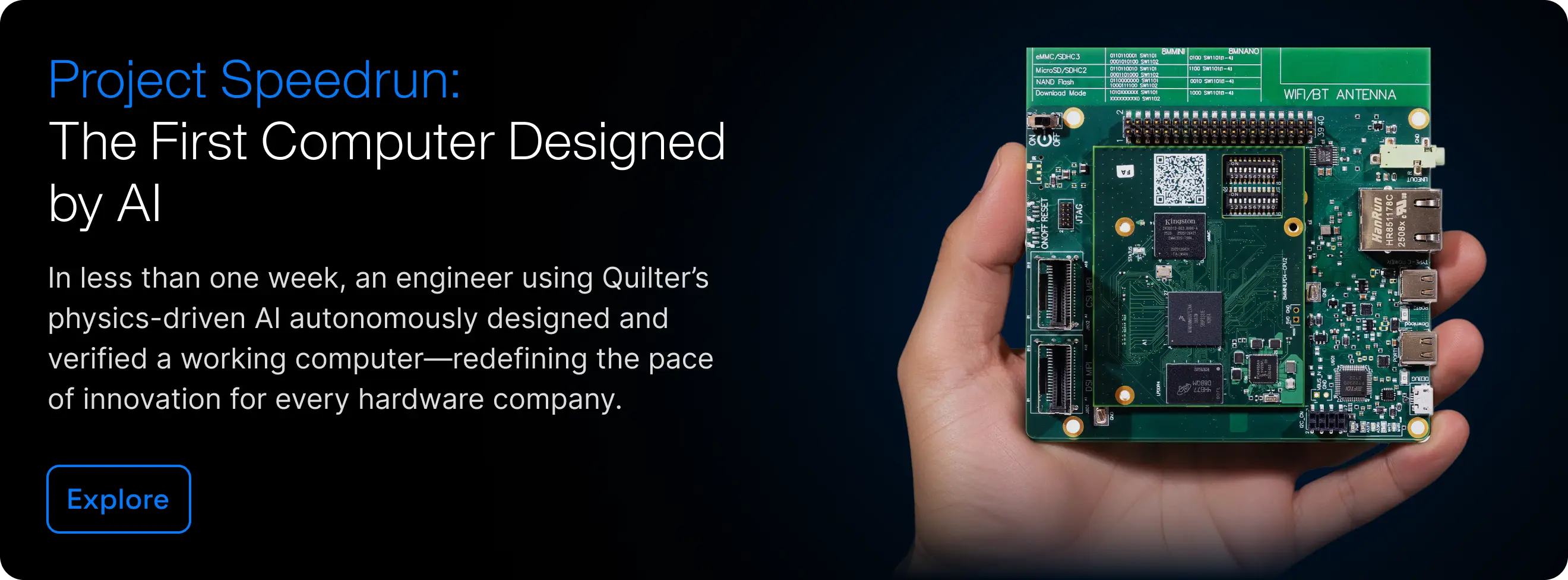
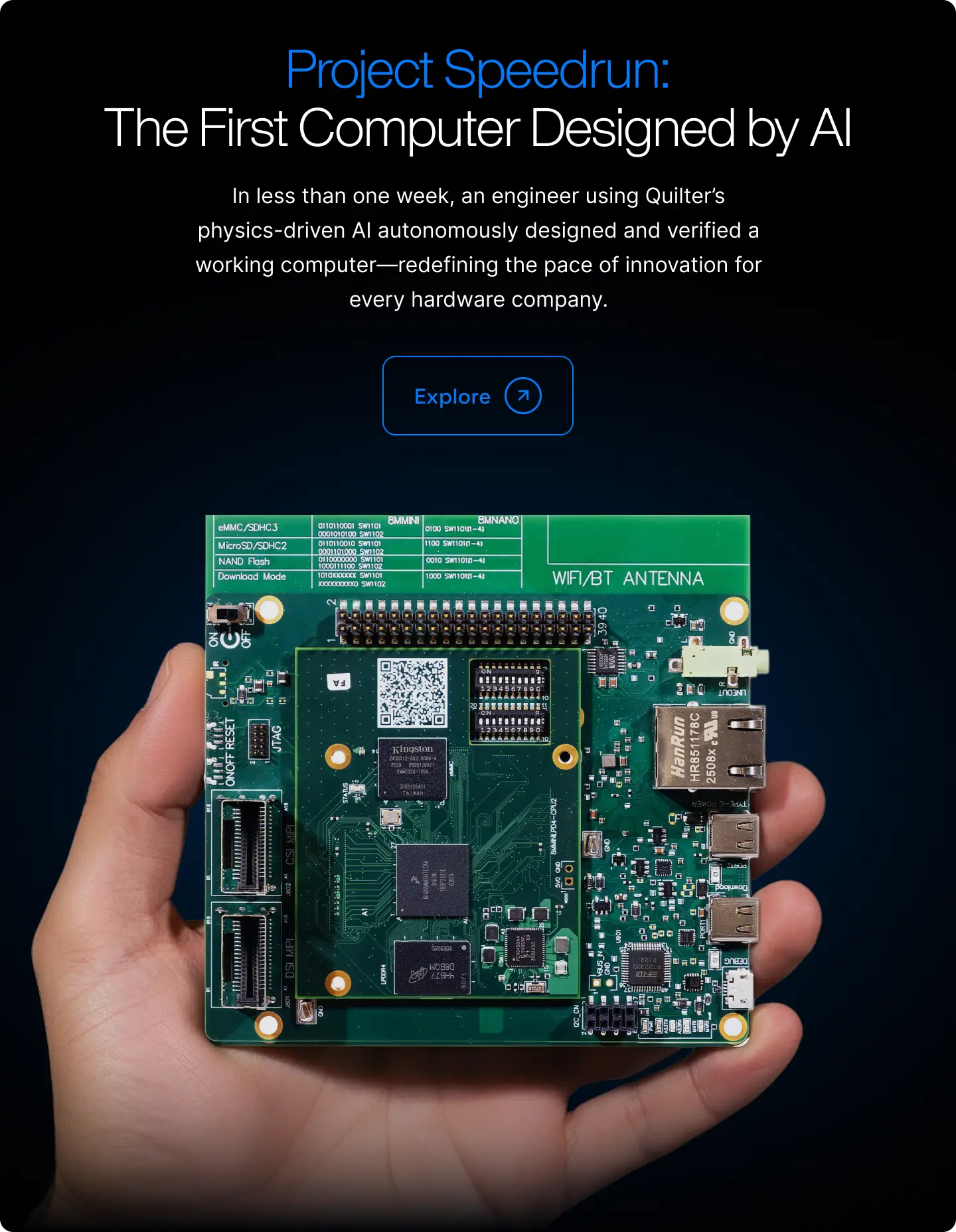
This article is one part of a walkthrough detailing how we recreated an NXP i.MX 8M Mini–based computer using Quilter’s physics-driven layout automation.
Most teams compare PCB design platforms by looking at one number: the annual license fee. But in 2026, the real money rarely moves there. It moves in engineer hours, board respins, and schedule slips that never show up on a pricing page. This article breaks down the true cost of PCB design and shows how physics-driven AI like Quilter can turn weeks of layout into hours, reshaping your cost per working board.
Let’s define what “cost” really means in PCB layout today
If you are evaluating a PCB platform only by seat price, you are looking at the smallest line item and calling it the whole budget.
The real PCB design cost includes at least two layers. The first is visible: software subscriptions, support plans, add-on modules, cloud workspaces, local hardware, and admin overhead. The second is where budgets actually get distorted: layout labor, waiting on scarce design bandwidth, missed validation windows, extra lab cycles, and the cost of finding out too late that the board needs another spin.
That is why a better metric is not cost per seat. It is the cost per successful, production-ready board.
That shift matters because hardware teams do not ship subscriptions. They ship working boards on time with an acceptable level of risk. An R&D manager cares about schedule confidence, engineering throughput, and how many opportunities get lost while a board is still in layout or rework. A staff EE cares about whether senior technical time is being spent on architecture and constraints, or getting pulled into repetitive routing and cleanup.
In other words, the true cost of PCB design is the total cost to get from schematic to a board you can trust, not the annual price of the editor sitting on someone’s desktop.
Quick baseline: visible platform costs in 2026
Platform
Typical pricing model
Rough visible cost range
Notes
KiCad
Open source
Free
No seat fee; support and process overhead are on the team.
EasyEDA
Freemium / cloud workflow
Low to very low
Entry point is low, but workflow choices can affect lock-in and review process.
Autodesk Fusion
Subscription
About $684/year per user
Fusion is listed at $57/month billed annually and includes PCB capabilities.
Altium Designer
Subscription
Starts around $4,235/year per user
Additional workspace and collaboration costs can sit on top.
OrCAD / Allegro / PADS / Xpedition
Subscription or quote-driven
Roughly low thousands to enterprise quote
Configuration matters a lot; higher tiers typically require a quote.
Quilter
Per approved design, priced by pin count
Usage-based, not seat-based
Explore freely, pay only for approved designs.
Here’s how traditional PCB tools stack up on visible costs
There is a reason most cost comparison pages look similar. Readers expect a familiar ladder.
At the low end, KiCad remains the cleanest example of a zero-license option because it is open source and free to use. Fusion sits in a mid-range category, with Autodesk currently listing Fusion at $57 per month billed annually. Autodesk has also made clear that EAGLE will no longer be sold or supported after June 7, 2026, pushing electronics users toward Fusion as the supported path.
Above that, Altium Designer starts in the low $4,000s per user annually on its public pricing page, while Cadence and Siemens products often become increasingly quote-driven as teams move into more advanced capabilities, collaboration, and enterprise deployment. Public reseller and buyer-facing references suggest OrCAD can begin in the low thousands annually, while higher-end Allegro, PADS, and Xpedition configurations scale upward from there depending on modules, licensing scope, and analysis needs.
That visible-cost ladder is useful, but it also creates the wrong instinct. It trains teams to ask, “Which editor is cheapest?” when the better question is, “Which workflow gets us to a correct board fastest, with the least expensive engineering drag?”
That is where Quilter changes the comparison. Quilter does not price like a traditional seat-licensed CAD stack. On Quilter’s pricing page, the company positions pricing as pay only for approved designs, with pricing that scales by pin count rather than seats. That means the economic unit shifts from named users to outputs, which is far closer to how hardware leaders actually think about program cost.
What hidden costs do teams miss when they compare tools by price?
The highest costs are usually not on a pricing page because they are not software costs. They are coordination costs.
A board enters the layout. The PCB designer is busy. The EE is awaiting validation of a power tree decision. Mechanical wants the connector placement confirmed. Firmware needs to bring up hardware. Test engineering is blocked until something physical exists. Nobody logs that delay as “EDA spend,” but the program absolutely pays for it.
Then there is context switching. Senior engineers bounce from schematic review to layout guidance to DFM cleanup to supplier questions. A principal-level person who should be making system decisions ends up spending hours on necessary but low-leverage work. That is not just expensive labor. It is misallocated labor.
And then there is schedule risk, which is often discussed vaguely even though everyone knows it is real. If the layout becomes the bottleneck, the entire program inherits its pace. Validation slips. Customer samples slip. Internal milestones slip. The organization starts paying expedite fees and opportunity costs long before anybody notices the original “cheap” tool decision was attached to an expensive workflow.
Here’s how layout time and engineer salaries quietly dominate your budget
This is where the math gets uncomfortable, because labor can dwarf licensing very quickly.
The U.S. Bureau of Labor Statistics lists median annual wages of $111,910 for electrical engineers and $127,590 for electronics engineers (excluding computer), based on May 2024 data. That is, before fully loaded burden, benefits, overhead, management time, and the reality that senior hardware talent often costs more than the median wage.
So take a simple example.
Assume one representative board takes 3 weeks of layout effort at 40 hours per week. That is 120 hours. At a fully loaded cost of $95 to $150 per hour, which is a practical planning range once you account for total employer cost rather than base salary, that board carries roughly $11,400 to $18,000 in layout labor alone. That is before respins. Before the delay. Before debug. Before the time other teams spend waiting.
Now multiply that across a modest portfolio:
- 10 boards per year at $12,000 to $18,000 each in layout labor is already about $120,000 to $180,000
- 25 boards per year pushes that to roughly $300,000 to $450,000
- 50 boards per year turns routine layout labor into a mid-six-figure to low-seven-figure budget issue
That is why license debates can become misleading. Whether your visible software cost is $0, $700, or $4,000 per seat may matter. But if your actual flow burns hundreds of engineering hours per board, labor dominates the economics.
Backplane program
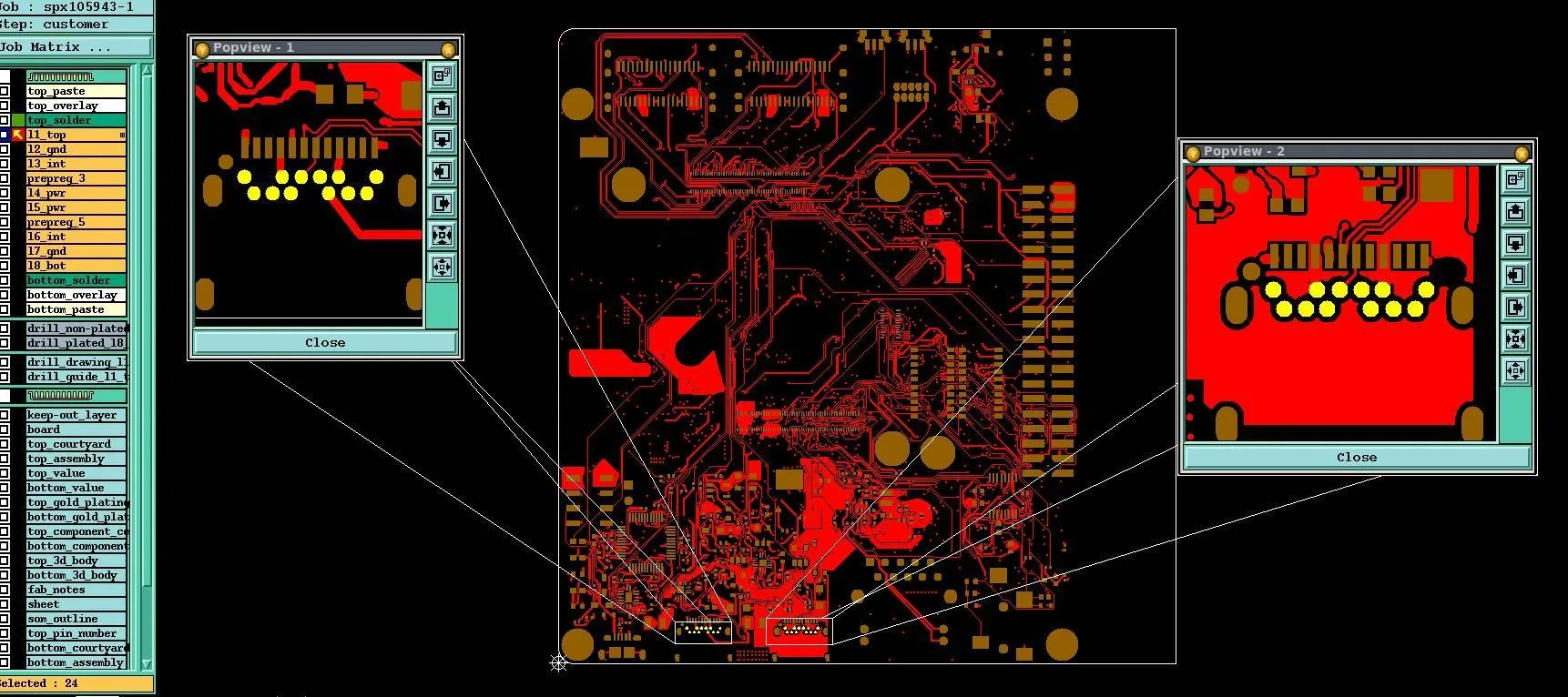
Moving from 30+ days to under 24 hours for initial layout turnaround changes the effective cost story immediately. The win is not only fewer labor hours. It is faster validation sequencing, earlier review, and more attempts within the same quarter. Quilter cites backplane and interconnect boards moving from 30+ days to under 24 hours.
How much do board respins really cost in 2026?
A respin is one of the easiest ways to prove that the true cost of PCB design is not the license fee.
Many teams still think about a respin as “the fab bill again.” That is far too small a frame.
A realistic respin cost can include new bare boards, reassembly, expedited component handling, bench time, engineering debug, revised documentation, procurement friction, and the schedule cost of a blocked milestone. For a simple board, that may be a manageable nuisance. For a dense validation board, interconnect board, or schedule-critical program, one respin can blow through tens of thousands of dollars surprisingly
Example: One respin can easily exceed $ 50,000 when you include fabrication, assembly, debug time, lab occupancy, and downstream schedule impacts.
That number is not a universal benchmark. It is a planning example. But it is a useful one because it forces teams to price the entire event, not just the invoice from the board house.
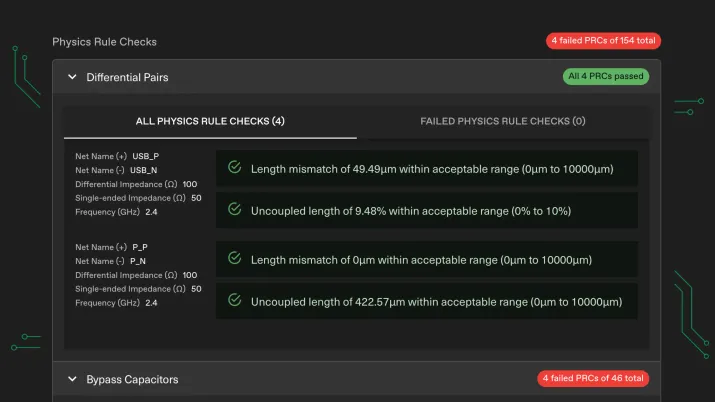
The cost of a respin is also nonlinear. If a respin delays silicon characterization, a customer demo, a regulatory milestone, or revenue recognition, the business consequence can be much larger than the direct engineering cost. And that is exactly why physics-aware, constraint-driven layout matters. The more design issues you can surface and account for before handoff and fabrication, the lower your risk of paying for defects later when every day is more expensive.
Cadence, Siemens, and Altium all emphasize advanced rule management, collaboration, and DFM capabilities in different ways, because the industry already understands this: late design errors are expensive. Quilter’s angle is that layout generation itself can be accelerated and physics-checked earlier, shifting the economics before those delays accumulate.
Here’s why “free” tools can become your most expensive choice
Free is real. It is also incomplete.
KiCad can be a strong choice for many teams and use cases, especially when budgets are tight and complexity is manageable. But free software does not mean free workflow. The team still pays for library work, manual routing time, review overhead, process patching, and self-support. That is fine when the board is simple or the schedule is forgiving. It gets riskier when the board is dense, the team is small, or the milestone is expensive to miss.
This is the trap in many cost-comparison articles about PCB design platforms. They compare seat prices across tools that were never intended to solve the same organizational problem. A zero-dollar editor may be optimal for one team and very costly for another if it slows hardware development throughput or concentrates too much risk in a small number of human experts.
So the right conclusion is not “free is bad.” It is “free is only cheap if the rest of your process is cheap too.”
What changes when layout is done by physics-driven AI instead of humans?
Quilter is not trying to replace your existing CAD system. The company says it supports Altium, Cadence, Siemens, and KiCad project files, returns files in the same format, and lets engineers define board outline, floorplan, connectors, and constraints within their existing workflow.
That matters because the point is not to rip and replace your stack. The point is to remove layout as a chronic bottleneck.
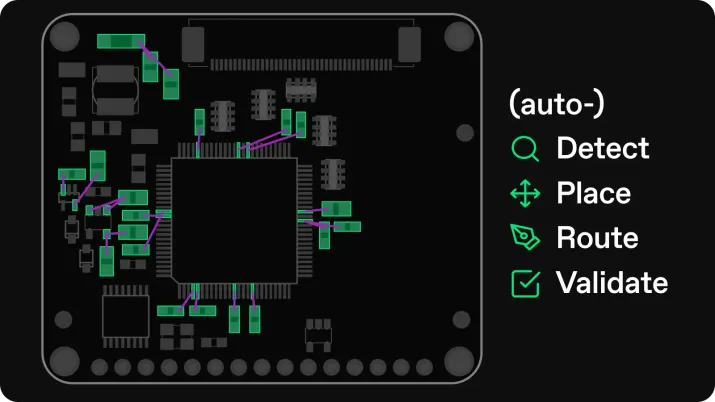
Quilter describes its system as reinforcement learning for electronics hardware, generating multiple candidate boards in hours and using physics-aware evaluation to validate each layout against physical constraints. On the site, Quilter positions itself around rapid iteration, transparent review, and seamless handoff back into the CAD tools teams already use.
Economically, that changes the shape of cost.
Instead of paying mostly in human routing time and queue delay, teams shift toward a usage-based model where the expensive part is not exploration. The expensive part is approval. Engineers stay focused on schematic intent, constraints, review judgment, and final polish. The AI handles the repetitive, time-intensive layout search problem.
That is why the value proposition is bigger than “faster routing.” It is a different cost structure for ai pcb layout and pcb layout automation. Less waiting. More parallel exploration. Fewer weeks where high-cost engineers are trapped in low-leverage tasks.
Here’s how to run a simple ROI model for Quilter vs your current flow
You do not need a complicated spreadsheet to estimate payback. You need a few honest variables:
- Boards per year
- Average current layout weeks per board
- Fully loaded hourly cost of layout-capable engineering labor
- Current respin rate
- Estimated cost per respin
- Estimated Quilter cost per approved board
- Estimated Quilter review hours and expected respin improvement
The logic is simple:
Traditional annual cost
= (boards/year × layout hours/board × hourly labor cost) + (boards/year × respin rate × respin cost)
Quilter annual cost
= (boards/year × Quilter review hours × hourly labor cost) + (boards/year × Quilter respin rate × respin cost) + Quilter approved-board spend
Worked example:
- 24 boards/year
- 3 weeks of layout per board
- 40 hours/week
- $95/hour fully loaded labor
- 20% respin rate
- $50,000 expected cost per respin
- Quilter review time of 4 hours/board
- Quilter respin rate improved to 10%
- Placeholder Quilter cost of $4,500 per approved board
That yields:
- Traditional labor: 24 × 120 × $95 = $273,600
- Traditional expected respin cost: 24 × 20% × $50,000 = $240,000
- Traditional modeled annual cost: $513,600
Against:
- Quilter labor: 24 × 4 × $95 = $9,120
- Quilter expected respin cost: 24 × 10% × $50,000 = $120,000
- Quilter approved-board spend: 24 × $4,500 = $108,000
- Quilter modeled annual cost: $237,120
Modeled annual savings: $276,480
That is illustrative, not a quote. But it shows why Quilter pricing should be evaluated against total program cost, not against a seat fee.
Request Your True Cost Analysis
Send Quilter 5 inputs: boards/year, average layers, current respin rate, current tool stack, and average layout turnaround. Get a tailored cost comparison based on your portfolio and a single candidate pilot board.
Quilter True Cost ROI Calculator
What results can you expect in year one with Quilter?
The realistic answer depends on board type and process maturity, but Quilter’s public positioning gives a useful range. The company says first candidates often appear within the first hour, full fab-ready designs can be delivered in under 4 hours for PCB designers and electrical engineers, and some design categories, such as backplane and interconnect boards, move from 30+ days to under 24 hours. It also highlights test fixtures and harnesses, cutting 4 to 6 weeks from bring-up and validation boards, shrinking validation cycles from months to days.
For startups, that usually means more shots on goal. More design iterations per quarter. Faster learning. Less time stalled between schematic intent and physical validation.
For larger enterprises, the value often shows up as throughput and de-bottlenecking. The organization can explore more variants without adding equivalent headcount, and senior engineers can stay focused on architecture, constraints, and signoff rather than absorbing routine layout load.
So the first-year outcome to look for is not magic. It is a lower effective cost per board, shorter time-to-fab, and more program capacity without proportionally more labor.
Let’s talk about next steps if you want a tailored cost comparison
If you want this analysis to be decision-useful, do not stop at a generic pricing page.
Start with one current or upcoming board. Share a few simple metrics: boards per year, average layers, current tool stack, average layout turnaround, and respin rate. Quilter can then map your current flow against a pilot and turn the abstract “true cost of PCB design” conversation into board-specific math.
That is the right way to evaluate ai pcb layout. Not by asking whether it is cheaper than a seat license. By asking whether it gives your team a lower cost per successful board, faster time to validation, and more engineering bandwidth where it actually matters.
Quilter offers Free, Startup, and Enterprise options, and its public pricing language emphasizes paying only for approved designs rather than paying by seat. That makes a pilot a practical next step for teams that want evidence on their own hardware rather than another general-market comparison.
FAQ
Does Quilter replace my existing CAD?
No. Quilter says it works with Altium, Cadence, Siemens, and KiCad files and returns files in the same format, so it fits into existing CAD workflows rather than replacing them.
How does pin-count pricing work?
Quilter’s public pricing language says customers can explore freely and pay only for approved designs, with pricing that scales by pin count rather than seats. Exact pricing depends on the design and program context.
Is a free PCB tool always the lowest-cost option?
Not necessarily. Free tools can minimize license spend, but labor, support burden, verification effort, and schedule drag can make them more expensive at the program level.
What should I compare when evaluating PCB design cost?
Compare the total cost per production-ready board, including labor hours, respin risk, time-to-fab, blocked validation, collaboration overhead, and visible platform spend.



.webp)