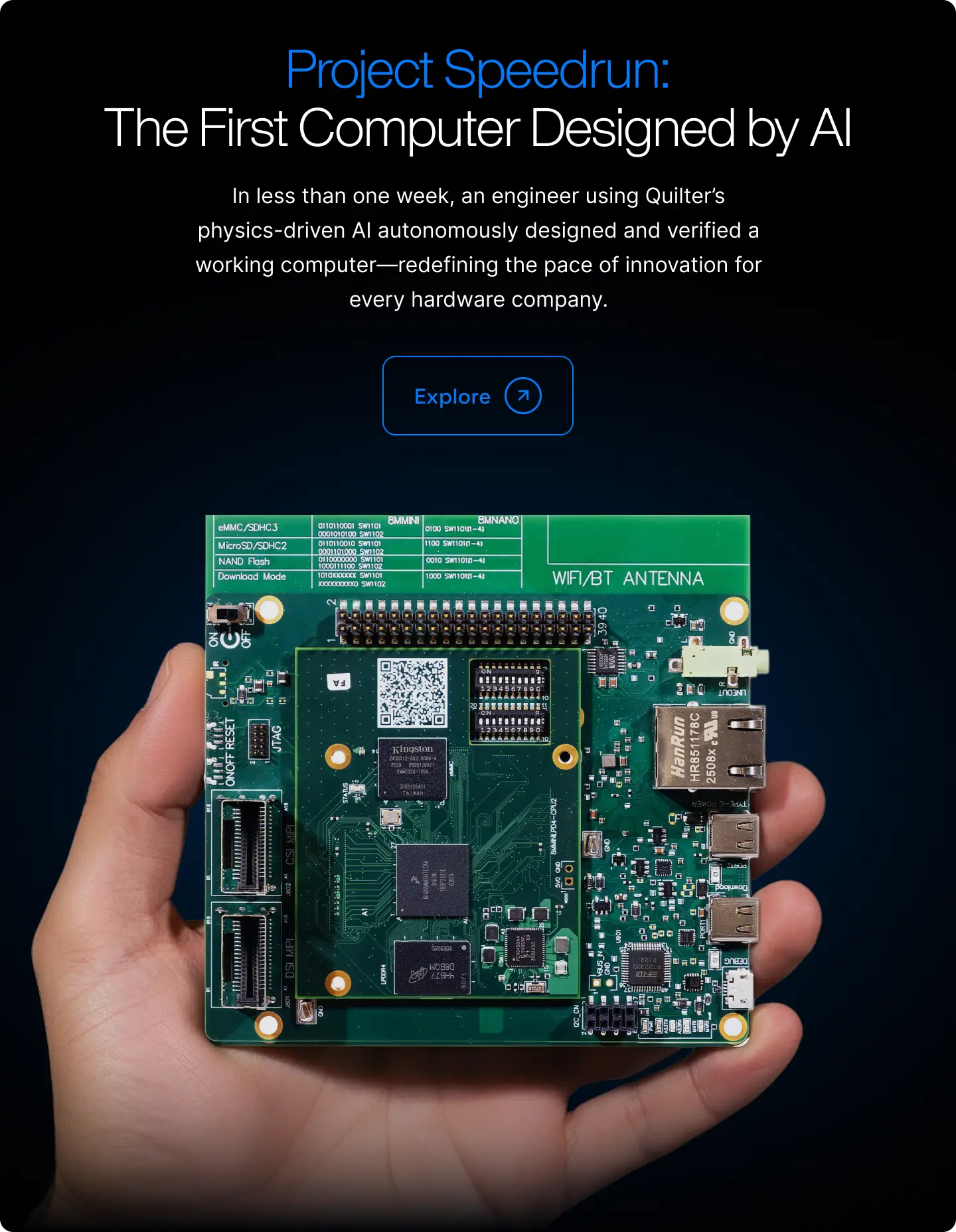








Read the Full Series
This article is one part of a walkthrough detailing how we recreated an NXP i.MX 8M Mini–based computer using Quilter’s physics-driven layout automation.
If you’re building hardware at a startup, choosing between KiCad, Altium, and newer AI tools can feel like gambling with your runway. Licenses are only part of the story. The real cost is the engineer-hours and re-spins between schematic and a board on your desk. This comparison examines KiCad, Altium, and Quilter through a founder’s lens: total cost, speed to working boards, and how far each option can stretch a small team.
One important reframe up front: KiCad and Altium are your source-of-truth CAD environments. That’s where your schematic lives, where the design gets finalized, and where manufacturing outputs are produced. Quilter fits differently. Quilter is a physics-driven layout engine that plugs into your existing workflow, generates multiple candidate boards in hours, and returns files in the same format you submitted so you can review, polish, run DRC, and ship using the CAD you already trust.
For most startups, the “best tool” is not a forever pick. It is a strategy: choose a source-of-truth CAD based on talent and collaboration needs, then add layout capacity when layout becomes the bottleneck.
Let’s define what really matters to hardware startups in 2026
Hardware startups rarely fail because they picked the wrong menu option in a CAD tool. They fail because time runs out first. The constraints are consistent across teams: runway is finite, hiring is slow, and every extra week between schematic and validated board burns cash while increasing the risk of missing a customer deadline, a demo, or a funding milestone.
That’s why the dominant cost driver is not your license fee. It’s throughput. Board complexity quietly multiplies cost in ways founders only feel later: dense BGAs, high-speed nets, power integrity, EMI, and DFM constraints increase routing time, review time, and re-spin risk. Each re-spin is not just “another PCB.” It’s a fab time, assembly time, component lead time risk, bring-up time, debug time, and a fresh cycle of schedule pressure.
The other hidden constraint is talent. Early-stage hardware teams are typically short on experienced PCB layout bandwidth. Even when you hire great EEs, you do not automatically get a surplus of routing time, and pulling senior engineers into weeks of placement and routing is often the most expensive use of their attention. In 2026, layout capacity is a strategic asset. It determines how many iterations you can afford, how quickly you can learn, and how reliably you can hit milestones.
Here’s how KiCad, Altium, and Quilter actually fit into a startup workflow
KiCad is the practical baseline for many startups. It’s flexible, has zero licensing cost, and it’s capable enough for serious work when your library hygiene and review process are disciplined. For cost-sensitive teams, KiCad is often the default starting point because it allows you to allocate budget to prototypes, test equipment, and parts inventory rather than seats.
Altium plays a different role. It’s a powerful ECAD platform with deep ecosystem support, strong constraint workflows, mature data management options, and a hiring pool that many hardware orgs already know. For startups expecting to scale a hardware team, Altium can reduce friction by standardizing collaboration and increasing the chance that new hires can contribute immediately.
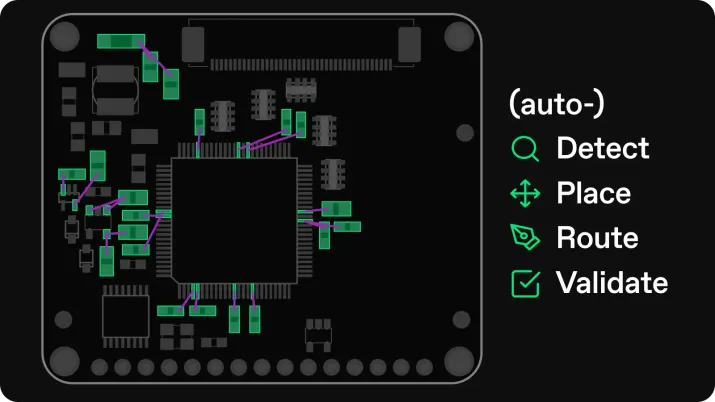
Quilter is not competing with those tools on “where you draw the schematic.” Quilter is competing on the bottleneck that hits almost every hardware startup: manual layout throughput. Quilter sits on top of your existing workflow as an AI PCB design engine focused on layout automation. You upload an existing KiCad or Altium project, define your board outline, floorplan, and constraints, and Quilter generates multiple candidate layouts in hours. Each candidate is evaluated against the provided physical constraints and then returned to you in your native CAD format for review, DRC, and fab outputs.
A typical workflow looks like this:
- Schematic capture in KiCad or Altium
- Define constraints, board outline, and pre-place key components
- Run Quilter to generate multiple candidate boards in parallel
- Review and finalize inside KiCad or Altium
- Run DRC, generate fab files, and hand off to manufacturing
This is why the decision is often “and,” not “or.” KiCad and Altium remain your system of record. Quilter adds layout capacity.
What does total cost of ownership look like for each option?
Startup teams often compare tools using sticker prices and miss the economics that actually matter. Total cost of ownership is licensing, engineering hours, schedule risk, and re-spin risk. In most early hardware programs, engineer-hours and schedule risk dominate.
Think in scenarios, not slogans:
Scenario A: Seed-stage team with 2 EEs
You’re building prototypes, validating assumptions, and iterating toward early customer pilots. You might build 1 to 3 boards per month across prototypes, test fixtures, and validation boards. The question is not “which tool is cheapest?” It’s “how many weeks of progress do we lose to layout work?”
Scenario B: Series A team with 5 EEs
You’re now running multiple boards in flight, with more constraints, more stakeholders, and a higher cost of failure. Your biggest risk becomes bottlenecks that block parallel progress across programs.
Now compare options in terms of real inputs:
KiCad-only
- Cash outlay is low, but you pay in manual layout time.
- Great when you have time, discipline, and lower complexity.
- Risk is that the layout quietly consumes senior engineering bandwidth.
Altium-only
- Higher license and workflow overhead, but strong for collaboration and hiring.
- Still relies on the team for placement and routing effort.
- Great when your priority is standardization and scale, not necessarily raw layout speed.
KiCad or Altium plus Quilter
- CAD remains your source-of-truth. Quilter adds PCB layout automation to reduce layout time and increase iteration capacity.
- Quilter’s model is built around pricing that scales by pin count rather than seats, and paying for approved designs rather than locking access behind per-seat licensing.
- This can make a big difference when you want EEs, PCB designers, and test engineers to iterate without the friction of “who has a license today.”
Here’s a simple numeric example to make the TCO tradeoff concrete.
Assume a 2-engineer team ships 2 boards per month. Without layout automation, a realistic combined time for placement, routing, cleanup, and documentation can range from 60 to 120 engineer-hours per board, depending on complexity and the extent of placement rework required to resolve constraints.
That is 120 to 240 layout hours per month.
Now assume Quilter shifts most of that effort from “manual routing time” to “constraints plus review time.” Instead of weeks of routing, the team spends 10 to 25 hours per board defining constraints, reviewing candidate layouts, polishing critical areas, and finalizing in the CAD tool.
That is 20 to 50 hours per month.
Savings: roughly 100 to 190 engineer-hours per month.
Translate that into runway using a conservative loaded engineering rate of $120 per hour:
- 100 hours saved is $12,000 per month
- 190 hours saved is $22,800 per month
The real value exceeds the cash value. Those hours are reallocated to bring-up, validation, test automation, reliability, and customer feedback loops. In other words, the work that makes your product real.
Here’s why speed-to-market is where the real ROI hides
Most startups do not need “one perfect board.” They need fast learning loops. Layout speed changes the learning loop.
A typical hardware timeline today often looks like: schematic, then weeks of layout, then fab and assembly, then bring-up, then issues, then a second layout cycle. Even if fabrication lead times are outside your control, the weeks spent waiting on layout are often within your control and frequently block everything else.
Quilter’s positioning is about removing that bottleneck. For many board types, candidates can appear within the first hour, and fab-ready designs can be produced in under 4 hours. That does not eliminate engineering review or the need for DRC and final polish. It changes the pacing item in your program from “who can route this” to “how quickly can we validate and learn.”
Call-out highlight: Fab-ready designs in under 4 hours.
Speed also enables parallel exploration. When layout becomes abundant, you can try multiple stack-ups, multiple manufacturers, and even multiple form factors without burning a month of routing time on each attempt. That is how you reduce re-spin probability: not by hoping you got it right, but by comparing candidates and learning faster before you commit.
For startups, the ROI hides in this simple truth: faster layout cycles mean faster bring-up cycles, and faster bring-up cycles are how you reach revenue, demos, pilots, and funding milestones with fewer surprises.
How do different team sizes get the most out of KiCad, Altium, and Quilter?
The “best” tool stack depends on whether you are optimizing for cash, hiring, or cycle time. Here’s how it tends to shake out by team size.
For 1 hardware generalist
Your priority is leverage. You need to protect time for architecture, validation, and shipping. KiCad is often the source of truth for CAD because it minimizes upfront costs and keeps your workflow lightweight. Adding Quilter for startups can turn one person into a virtual layout team by generating candidate boards quickly while you stay in control of constraints and final review.
For 2 to 4 EEs
Your bottleneck is rarely schematic capture. It’s the gap between design intent and fabrication-ready layout. This is where “KiCad or Altium plus Quilter” often delivers the highest ROI, because it offloads production routing work while engineers focus on critical nets, constraints, bring-up, and validation. If you need to reduce PCB layout time without reducing control, this is the sweet spot.
For 5+ EEs
Now the problem is scaling throughput without scaling headcount at the same rate. Hiring experienced PCB layout talent is challenging, and it becomes even harder when competing with larger companies. Quilter increases layout capacity across programs, freeing senior designers for architecture and review work rather than repetitive routing. Seatless pricing also becomes a practical advantage when multiple roles need access to iterate and review.
A founder-friendly way to think about it: KiCad vs Altium is primarily about ecosystem, collaboration, and the hiring pool. Quilter is about throughput, schedule risk, and iteration capacity. Most startups choose the CAD based on the org they plan to become, then add Quilter when layout becomes the limiting factor.
What results can a startup reasonably expect with Quilter in the mix?
The credible promise isn’t “no human work.” The credible promise is that human work will move to higher-value layers.
A startup can reasonably expect Quilter to:
- Compress layout cycles for many board types from weeks to hours, with review and final polish remaining in the CAD tool.
- Increase the number of candidate layouts you can evaluate per week, thereby accelerating learning.
- Reduce the time senior engineers spend on repetitive routing tasks, freeing them to focus on architecture, bring-up, and validation.
The biggest time gains typically show up first in board categories that are both common and schedule-critical:
- Test fixtures and harnesses, where the board exists to accelerate testing and bring up
- IC evaluation boards, where time-to-first-validation matters more than aesthetic perfection
- Design validation boards, where you need to iterate quickly to de-risk before production
- Backplane and interconnect boards, where routing complexity can dominate schedules
Engineers still add irreplaceable value in the areas that determine product success: floorplanning, constraint definition, determining what “done” means for critical nets, and performing final review. That human judgment is not optional. Quilter’s advantage is that it can quickly generate a large number of layout candidates with physics-driven evaluation, so the team spends less time grinding and more time deciding.
A quick mini-case pattern that shows up in startups:
- Before: a validation board consumes 2 to 4 weeks of layout bandwidth, delaying bring-up and pushing a customer pilot.
- With Quilter, candidate layouts arrive the same day, the team reviews and polishes in KiCad or Altium, and bring-up starts earlier, leaving room for another iteration before the pilot window.
Common questions tend to be about reliability, control, and IP. The practical answer is that Quilter is designed to work with your existing workflow: you define constraints, you control pre-placement and floorplan intent, and you decide what gets approved and fabricated. You are not handing off judgment. You are adding capacity.
Here’s a clear, side-by-side comparison for startup decision makers
Here’s the table most founders actually want: time, cost dynamics, and team efficiency. Not a feature checklist.
KiCad vs Altium vs Quilter for startups in 2026
- License cost model
- KiCad: typically $0 licensing
- Altium: higher recurring or subscription costs per seat
- Quilter: scales by pin count and approved designs, not by seats
- Typical layout time per board
- KiCad: often weeks of engineer effort for complex boards
- Altium: often weeks of engineer effort for complex boards, with stronger constraint tooling
- Quilter: candidate layouts in hours, then review and finalize in KiCad or Altium
- Automation level
- KiCad: low automation for full-board routing
- Altium: low to medium automation for full-board routing
- Quilter: high automation for layout generation plus physics-driven evaluation
- Collaboration and hiring pool
- KiCad: strong community, depends on team discipline and conventions
- Altium: strong hiring pool and mature collaboration workflows
- Quilter: adds capacity across teams without increasing seat count
- Ideal startup stage
- KiCad: pre-seed to seed, cost-sensitive, disciplined teams
- Altium: seed to Series B, collaboration-heavy, hiring-driven teams
- Quilter: any stage where schedule risk and layout bandwidth limit iteration
- Core use cases
- KiCad: general-purpose boards, prototypes, production with stroa ng process
- Altium: complex products, constraint-heavy designs, larger teams
- Quilter: rapid iteration on fixtures, eval boards, validation boards, backplanes, and anything where layout speed blocks learning
The most important takeaway is the separation of concerns. KiCad and Altium answer, “Where is the design truth stored and finalized?” Quilter answers, “How do we increase layout throughput and reduce schedule risk?”
What’s the right path for your next 12 months?
Most startups should pick a path based on two variables: hardware complexity and schedule pressure. Then commit, measure, and adjust.
Here are three simple tracks:
Track 1: KiCad-only
Best when cash is tight, complexity is moderate, and you have disciplined library and review processes. This is a strong early path when you can afford the time tradeoff.
Track 2: Altium-only
Best when you are optimizing for hiring, ecosystem, and collaboration, and you expect to scale a larger hardware team. Altium shines when standardization and workflow maturity are worth the cost.
Track 3: KiCad or Altium plus Quilter
Best when the layout bandwidth is limiting iteration speed, and speed-to-market is tied to demos, pilots, revenue, or funding milestones. This is the “add capacity without adding headcount” path.
If this is you, do this next:
- If you are pre-seed with one hardware generalist and layout is eating nights, use KiCad as your source of truth, then try Quilter for startups to offload layout while you stay focused on bring-up and learning loops.
- If you are seeded with 2 to 4 EEs and aggressive milestones: keep KiCad or Altium as your source-of-truth, route through Quilter for candidate layouts in hours, then invest human time in review and validation.
- If you are Series A with multiple boards in flight: standardize CAD based on hiring and collaboration needs, then use Quilter to increase layout capacity across programs and reduce schedule risk.
The founder-level question is simple: is layout currently pacing your roadmap? If yes, you are not really choosing between KiCad vs Altium. You are choosing whether you want layout to remain a bottleneck. Quilter for startups is built for teams racing to product-market fit: offload PCB layout while keeping KiCad or Altium as your source-of-truth CAD.
Get layout-ready boards in hours, not weeks. Start with Quilter for Startups.



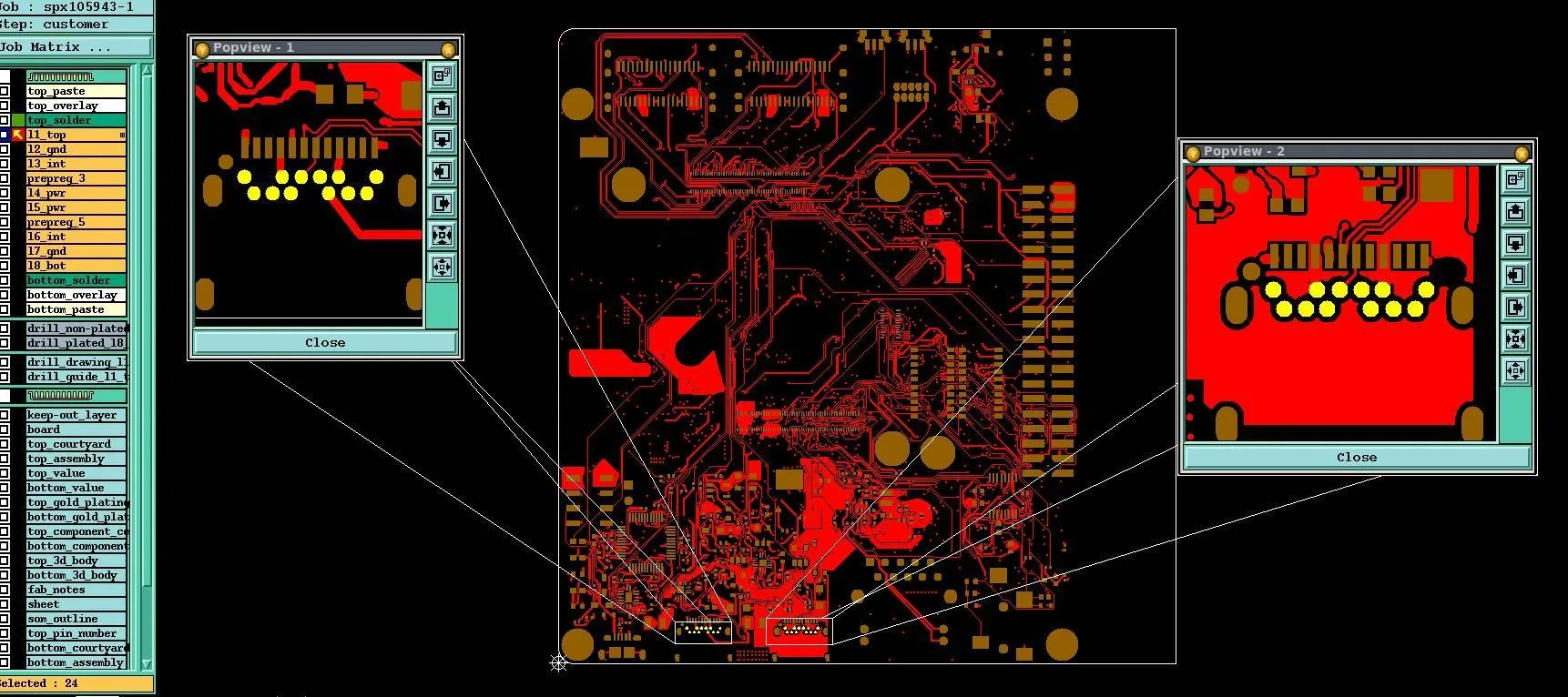
.webp)