



Gen AI

Published

Written by

Workbench

The Next Generation of EDA: A 2026 Guide to AI-Powered PCB Design Tools

Published

January 9, 2026

For decades, electronics engineers have relied on EDA tools to turn ideas into working hardware. But in 2026, a new wave of AI-powered platforms is changing the game, making PCB layout faster, more innovative, and more reliable than ever. This guide breaks down what “EDA tools” really do, how automation has evolved, what makes AI PCB design fundamentally different, and how to evaluate the top electronics design automation tools when your schedule and risk tolerance are both tight. (Siemens Digital Industries Software)

Along the way, we will use Quilter as the primary example of the new category: autonomous, physics-driven PCB design automation that plugs into your existing CAD workflow and generates multiple candidates in hours, not weeks. (quilter.ai)

Let's define what EDA tools actually do today

EDA (electronic design automation) is an umbrella term for the software used to design, simulate, verify, and prepare electronic systems for manufacturing, including ICs and PCBs. In practice, “EDA tools” can mean very different things depending on whether you are building a board, an FPGA design, or an ASIC/SoC. At the highest level, EDA is the digital backbone of electronics design because it turns intent (schematics, constraints, timing goals, mechanical requirements) into artifacts that can be manufactured and tested. (Siemens Digital Industries Software)

A typical PCB-centric workflow looks like this:

  • Schematic capture: define connectivity and electrical intent.
  • PCB layout: place components, route nets, manage stackup, and satisfy constraints.
  • Simulation and analysis: SPICE and other analyses to catch issues earlier.
  • Verification and signoff: design rule checks (DRC), manufacturability checks, and reviews before fab.

Modern platforms blur these steps, but the underlying problem is unchanged: you are mapping a logical circuit into a physical object with geometry, parasitics, manufacturing constraints, and timing risk. (cadence.com)

The EDA ecosystem also spans multiple “levels” of the electronics stack. For IC-focused flows, the dominant vendors are often described as the “big three” of chip design software: Cadence, Synopsys, and Siemens EDA, and they remain central to modern semiconductor development. For example, Reuters has reported that these three vendors collectively control a large share of China’s EDA market, underscoring their scale in the space. (Reuters)

On the PCB side, you will also see widely adopted tools such as Altium Designer (commercial) and KiCad (open-source), as well as enterprise suites such as Siemens Xpedition and Cadence Allegro. (cadence.com)

So when someone searches “top tools for electronics design automation EDA,” they are usually really asking: which tools help my team get from schematic to manufacturable hardware with the least time, the fewest board spins, and the least engineering distraction?

How has automation changed PCB design in the last few years?

PCB layout has always been a mix of craft and constraint management. Historically, “automation” meant rule-based assistance inside traditional CAD: interactive routing, constraint-driven checks, and autorouters that attempt to connect nets while satisfying a subset of rules. These features can be genuinely useful, especially when you have a well-defined constraints strategy. Cadence, for example, positions Allegro X around integrated flows that combine schematic, layout, and in-design analysis, while constraint management is central to how many teams govern complex layouts. (cadence.com)

Altium similarly emphasizes rules and constraints that can be defined and checked throughout the design process, including design rule checking as an automated feature that can run in real time or in batch. (Altium)

KiCad has matured into a full, cross-platform, open-source EDA suite for schematic capture and PCB design, providing individuals and small teams with serious capabilities at no license cost. (kicad.org)

And yet, despite better routing engines and faster compute, the same bottlenecks still show up in most organizations:

  • Layout time remains a schedule driver (especially when a board is tightly constrained or high risk).
  • DRC is necessary but not sufficient. DRC validates rules like spacing and widths, but it does not automatically guarantee “good physics” across the design. (Sierra Circuits)
  • Engineering bandwidth is the hidden cost. Even when a tool can route faster, expert time is still consumed by floorplanning, constraint tuning, iterating with mechanicals, and reviewing every “helpful” automated decision.

Traditional autorouters often fall short for a simple reason: they optimize within a rules framework that you must define up front, and they can struggle when constraints interact in complex, physics-heavy ways. Cadence itself frames autorouting as something you must plan and control carefully, with guidance around making your autorouter “work for you” rather than expecting a push-button result. (Cadence PCB Resources)

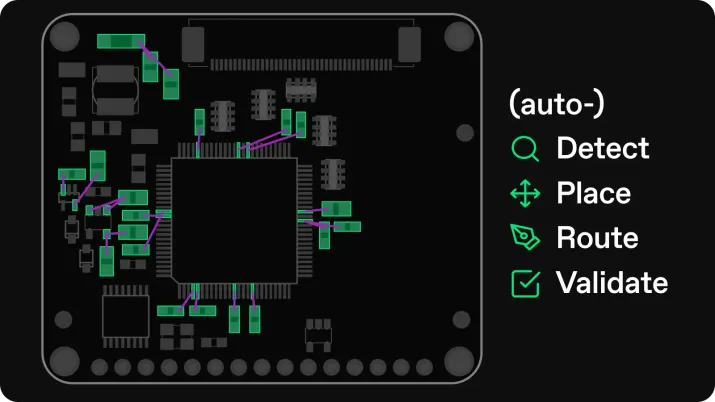
This is why the past few years have seen a shift from “more automation inside the same UI” toward something more structural: AI-driven PCB design automation that generates complete, manufacturable layout candidates and makes the review process more transparent.

What makes an AI-powered EDA tool different?

Featured snippet answer: An AI-powered EDA tool uses machine learning to generate and evaluate design solutions, not just apply fixed routing rules. The key difference is that it can explore many candidate layouts, score them against constraints and physics-aware checks, and return viable options quickly, rather than requiring a human to iterate through placement and routing decisions manually.

That is the headline. But the practical differences matter more than the label.

1) It learns patterns of good layout behavior, not just constraint syntax

Rules-based systems do precisely what you specify. That is both their strength and their limitation. In contrast, modern AI PCB design systems aim to capture “what tends to work” and “what tends to fail” at the layout level, then apply that knowledge across new designs. Quilter positions this as physics-first learning, where layouts are generated using AI trained against real-world physics and manufacturing constraints, rather than being limited to human examples and hand-built heuristics. (quilter.ai)

2) Physics-aware design review becomes part of the workflow

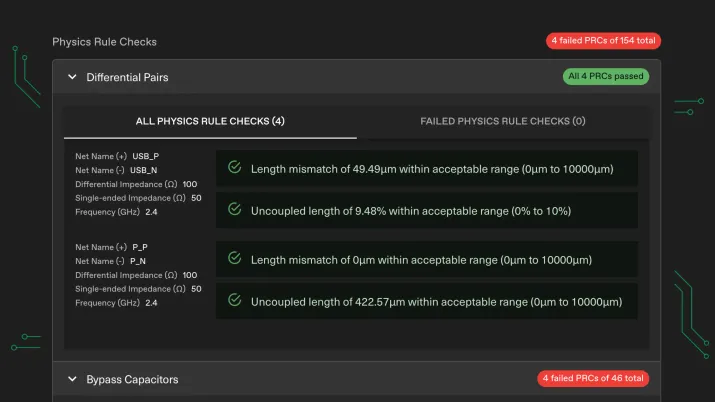
DRC is important, but it is not the same thing as “the board will behave well electrically.” Quilter explicitly calls out “physics-aware design,” including identification of bypass capacitors, impedance-controlled nets, differential pairs, and other critical considerations for review. (quilter.ai)

This idea appears across their materials: Quilter’s docs describe an automated PCB layout combined with physics checks and iterative tooling to reduce the time from concept to production. (docs.quilter.ai)

3) Candidate generation is parallel, not serial

Most teams iterate serially: place, route, check, fix, repeat. AI-powered layout flips that by generating multiple candidates in parallel, each with its own trade-offs. Quilter describes “parallel exploration,” where dozens of layouts are generated simultaneously and ranked for manufacturability and constraint coverage, enabling teams to explore far more variants without waiting weeks between attempts. (quilter.ai)

4) Handoff stays in your native CAD flow

A common fear with new tooling is lock-in and file conversion pain. Quilter emphasizes compatibility with existing workflows, including uploading projects from major CAD tools and returning files in the same format for final polish and fab outputs inside the tools you already use. (quilter.ai)

The simplest way to evaluate whether a platform is truly “AI-powered EDA” in a meaningful sense is to ask: Does it reduce the number of human iteration loops required to reach a board you would confidently send to manufacturing?

Here's how Quilter stacks up against traditional EDA platforms

To make this concrete, it helps to compare what you get from a modern AI PCB design system versus what you get from best-in-class traditional EDA tools. The goal here is not to diminish tools like Altium, Cadence, or KiCad. They are proven, widely adopted environments with strong manual and semi-automated features. The question is whether the workflow model aligns with your team's needs in 2026. (cadence.com)

Comparison table: Quilter vs Altium vs Cadence vs KiCad

Feature

Quilter (AI-powered)

Altium Designer

Cadence Allegro X

KiCad (open source)

Primary automation model

Autonomous candidate generation + physics-aware checks

Rules-driven interactive routing and DRC

Constraint-driven flow + in-design checks + autorouting options

Manual workflow with growing automation features

Typical iteration style

Parallel (dozens of candidates)

Serial (engineer-driven)

Serial (engineer-driven)

Serial (engineer-driven)

Works with existing CAD projects

Upload and return native CAD files across major tools

Native environment

Native environment

Native environment

“Physics-aware” review focus

Explicitly emphasized (physics and manufacturing constraints)

Primarily rules and DRC, with analysis integrations

Deep constraint management + integrated analyses in platform

Primarily rules/DRC with add-ons and external flows

Clear DRC definition and reporting

Complements review, not the only gate

DRC checks logical and physical integrity

Real-time checks and constraint-driven monitoring

DRC and checks available through suite

Real-world example of time compression

Project Speedrun reported 38.5 hours of human support vs ~430 hours estimated for a traditional approach

Depends on team/process

Depends on team/process

Depends on team/process

Sources: Quilter workflow and positioning (quilter.ai); Altium rules and DRC (Altium); Cadence Allegro X and constraint-driven checks (cadence.com); KiCad suite description (kicad.org); Speedrun time example (Tom's Hardware)

What those differences mean for real engineering teams

If you already have strong PCB designers and time is not your constraint, traditional EDA remains excellent. Tools like Cadence and Altium provide deep control over constraints, routing, and collaboration in mature ecosystems. (cadence.com)

If your constraint is iteration speed, AI-powered PCB design becomes compelling because it changes the unit of progress. Instead of “one layout attempt per week,” you can evaluate many candidates quickly and choose the best starting point for final edits and sign-off. Quilter frames this as “hardware-rich development,” where boards become abundant and iterative like software builds. (quilter.ai)

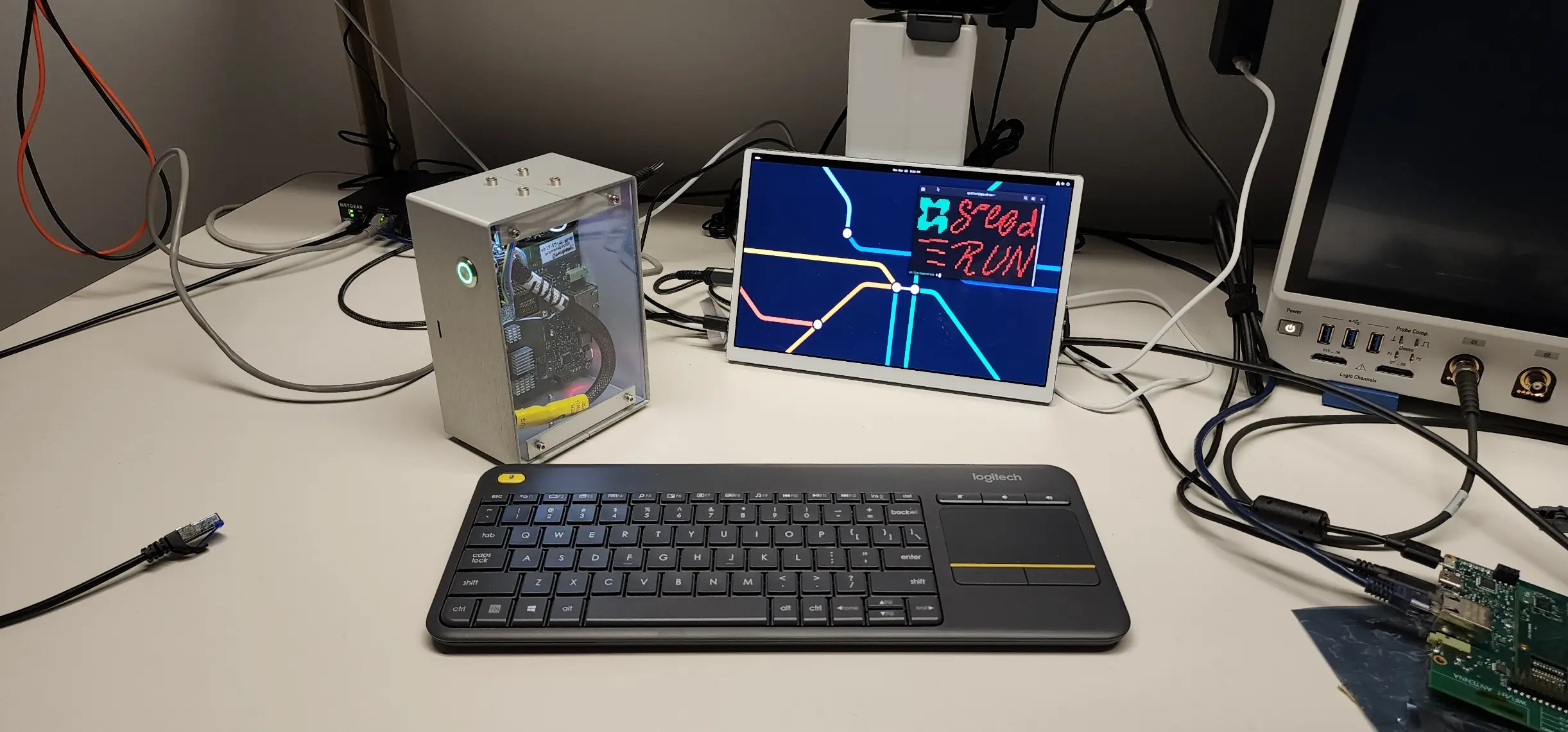
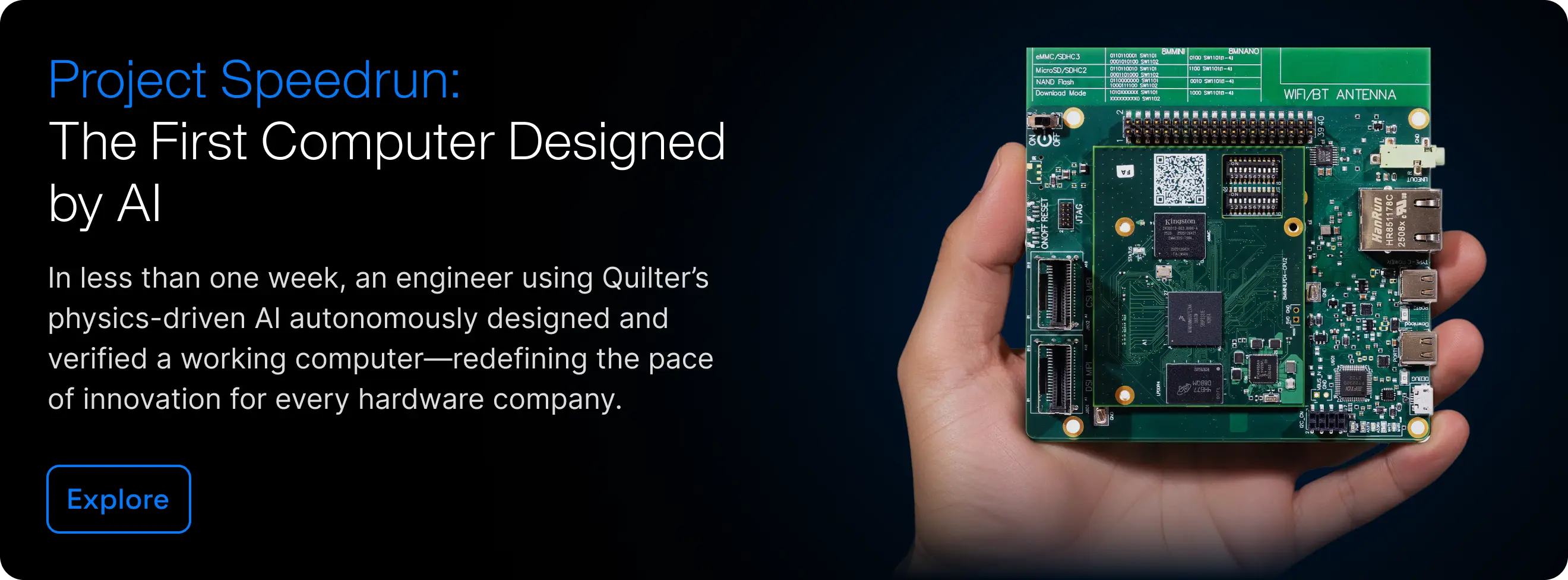
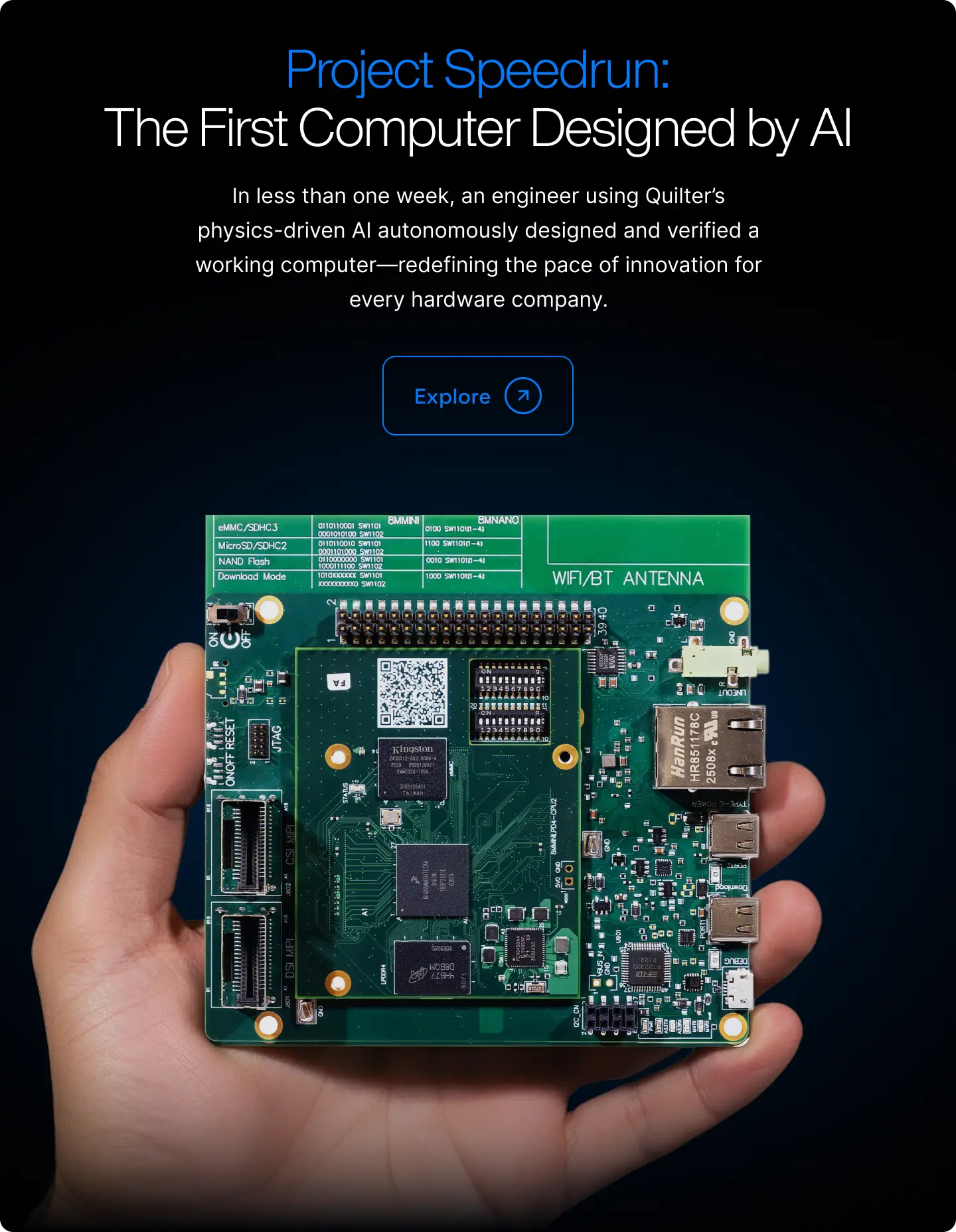
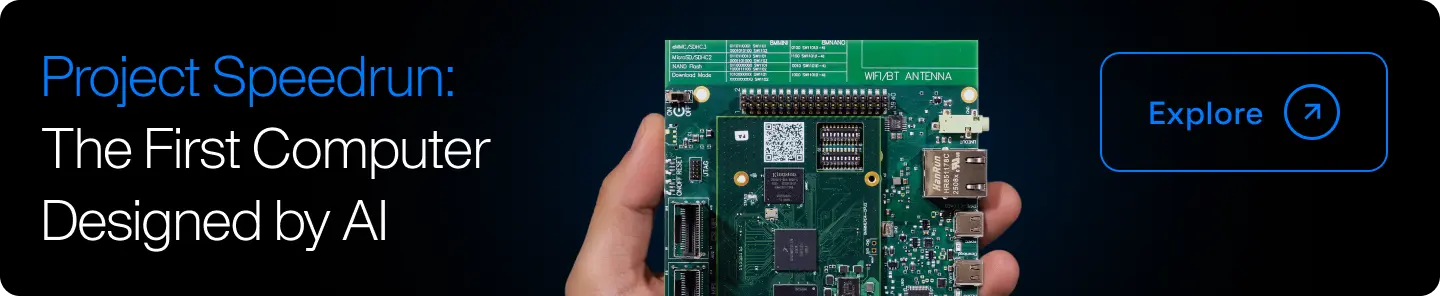
If your constraint is specialized bandwidth, AI-driven automation can offload the most time-consuming execution phases. The Speedrun example is instructive not because every board will match it, but because it demonstrates the ceiling of what becomes possible when layout generation and iteration loops compress dramatically. Tech coverage of Speedrun reports a Linux computer built with 843 components across dual PCBs, completed in about a week, booting on the first attempt, and requiring 38.5 hours of human intervention. (TechRadar)

If your constraint is risk, look for transparency. It is not enough for a system to output a routed board. You want a review model that makes it clear which constraints were met, which trade-offs were made, and where a human should focus. Quilter highlights “transparent design review” and physics-aware checks as first-class parts of the workflow. (quilter.ai)

Also note that “traditional EDA” is not one thing. Siemens Xpedition, for example, positions itself as a scalable PCB design platform for everyone from independent engineers to global enterprises. (Siemens Digital Industries Software) At the IC level, Synopsys and Siemens both explicitly discuss EDA spanning design, simulation, verification, and manufacturing, with growing use of AI methods across their ecosystems. (Synopsys)

What does this mean for your next project? Let’s look at the results engineers see when they switch to an AI-powered PCB layout.

What results can you expect from using AI for PCB layout?

Featured snippet answer: You can expect faster layout iteration, fewer late-stage surprises, and more engineering time shifted from manual routing to high-value review and decision-making. The biggest gains come when AI generates multiple manufacturable candidates quickly, then lets experts focus on selecting and refining the best one.

Here are the outcomes that matter most in practice.

1) Speed: layout cycles compress from weeks to hours

Quilter’s documentation explicitly frames the value as enabling fabrication-ready boards in hours rather than weeks, and the product messaging emphasizes parallel generation and ranking of multiple candidates. (docs.quilter.ai)

A mini-case example you can cite internally: Project Speedrun. Multiple outlets reported that the system booted on the first attempt, with the effort completed in roughly a week and human effort cited as 38.5 hours of expert support, dramatically lower than traditional estimates. (TechRadar)

2) Quality and confidence: fewer board spins by catching issues earlier

No automation can magically remove physics. What it can do is surface risk earlier and force a higher standard of constraint coverage before you commit to fab. DRC remains a baseline because it verifies logical and physical integrity against design rules, but physics-aware checks aim to broaden the scope of evaluation before manufacturing. (Altium)

3) Bandwidth: engineers focus on decisions, not repetitive execution

This is the underrated ROI. When layout stops being the long pole, teams get more shots on goal: more stackups explored, more form factors tried, more manufacturer constraints tested, and more options evaluated in parallel. Quilter’s positioning around “parallel exploration” is effectively an argument for multiplying engineering throughput without hiring a parallel universe of PCB experts. (quilter.ai)

4) Better collaboration: cleaner handoffs and more precise evaluation

In many organizations, the hardest part is not routing; it is aligning across EE, ME, SI/PI, and program leadership. Tools like Cadence emphasize multi-domain integration across electrical, mechanical, and thermal analysis. (cadence.com) AI-powered flows introduce a new collaboration lever: they make “try three options” cheap, shifting conversations from opinions to evidence.

If you want a practical way to forecast impact before adopting anything, pick one board type (evaluation board, test fixture, harness, or a recurring subsystem) and ask: how often do we redo this work, and what would it mean to have 10 viable candidates tomorrow morning?

Ready to try the future of PCB design?

If you are evaluating the top tools for electronics design automation in 2026, the most important question is not which UI you prefer. It is whether your process can produce the next board fast enough to keep the program moving without sacrificing confidence.

Quilter offers a free tier with unlimited iterations and pairs it with paths for teams that need deeper deployment options and support. (quilter.ai) If you are a startup trying to find product-market fit before the runway ends, Quilter also positions a dedicated startup program around faster iteration cycles and “hardware-rich development.” (quilter.ai)

For larger teams and mission-critical environments, Quilter highlights enterprise-grade support and formal support resources through its documentation and help center. (quilter.ai)

Next steps:

  • Explore the Quilter product overview to understand the workflow and output model. (quilter.ai)
  • Try the free AI PCB design entry point if you want a hands-on evaluation quickly. (quilter.ai)
  • If you are choosing a deployment path, review pricing and deployment options, and the solutions pages that match your program type. (quilter.ai)


Try Quilter for Yourself

Project Speedrun demonstrated what autonomous layout looks like in practice and the time compression Quilter enables. Now, see it on your own hardware.

Get Started

Validating the Design

With cleanup complete, the final question is whether the hardware works. Power-on is where most electrical mistakes reveal themselves, and it’s the moment engineers are both nervous and excited about.

Continue to Part 4

Cleaning Up the Design

Autonomous layout produces a complete, DRC'd design; cleanup is a brief precision pass to finalize it for fabrication.

Continue to Part 3

Compiling the Design

Once the design is prepared, the next step is handing it off to Quilter. In traditional workflows, this is where an engineer meets with a layout specialist to clarify intent. Quilter replaces that meeting with circuit comprehension: you upload the project, review how constraints are interpreted, and submit the job.

Continue to Part 2

The Next Generation of EDA: A 2026 Guide to AI-Powered PCB Design Tools

January 9, 2026
by
Darin ten Bruggencate
and

For decades, electronics engineers have relied on EDA tools to turn ideas into working hardware. But in 2026, a new wave of AI-powered platforms is changing the game, making PCB layout faster, more innovative, and more reliable than ever. This guide breaks down what “EDA tools” really do, how automation has evolved, what makes AI PCB design fundamentally different, and how to evaluate the top electronics design automation tools when your schedule and risk tolerance are both tight. (Siemens Digital Industries Software)

Along the way, we will use Quilter as the primary example of the new category: autonomous, physics-driven PCB design automation that plugs into your existing CAD workflow and generates multiple candidates in hours, not weeks. (quilter.ai)

Let's define what EDA tools actually do today

EDA (electronic design automation) is an umbrella term for the software used to design, simulate, verify, and prepare electronic systems for manufacturing, including ICs and PCBs. In practice, “EDA tools” can mean very different things depending on whether you are building a board, an FPGA design, or an ASIC/SoC. At the highest level, EDA is the digital backbone of electronics design because it turns intent (schematics, constraints, timing goals, mechanical requirements) into artifacts that can be manufactured and tested. (Siemens Digital Industries Software)

A typical PCB-centric workflow looks like this:

  • Schematic capture: define connectivity and electrical intent.
  • PCB layout: place components, route nets, manage stackup, and satisfy constraints.
  • Simulation and analysis: SPICE and other analyses to catch issues earlier.
  • Verification and signoff: design rule checks (DRC), manufacturability checks, and reviews before fab.

Modern platforms blur these steps, but the underlying problem is unchanged: you are mapping a logical circuit into a physical object with geometry, parasitics, manufacturing constraints, and timing risk. (cadence.com)

The EDA ecosystem also spans multiple “levels” of the electronics stack. For IC-focused flows, the dominant vendors are often described as the “big three” of chip design software: Cadence, Synopsys, and Siemens EDA, and they remain central to modern semiconductor development. For example, Reuters has reported that these three vendors collectively control a large share of China’s EDA market, underscoring their scale in the space. (Reuters)

On the PCB side, you will also see widely adopted tools such as Altium Designer (commercial) and KiCad (open-source), as well as enterprise suites such as Siemens Xpedition and Cadence Allegro. (cadence.com)

So when someone searches “top tools for electronics design automation EDA,” they are usually really asking: which tools help my team get from schematic to manufacturable hardware with the least time, the fewest board spins, and the least engineering distraction?

How has automation changed PCB design in the last few years?

PCB layout has always been a mix of craft and constraint management. Historically, “automation” meant rule-based assistance inside traditional CAD: interactive routing, constraint-driven checks, and autorouters that attempt to connect nets while satisfying a subset of rules. These features can be genuinely useful, especially when you have a well-defined constraints strategy. Cadence, for example, positions Allegro X around integrated flows that combine schematic, layout, and in-design analysis, while constraint management is central to how many teams govern complex layouts. (cadence.com)

Altium similarly emphasizes rules and constraints that can be defined and checked throughout the design process, including design rule checking as an automated feature that can run in real time or in batch. (Altium)

KiCad has matured into a full, cross-platform, open-source EDA suite for schematic capture and PCB design, providing individuals and small teams with serious capabilities at no license cost. (kicad.org)

And yet, despite better routing engines and faster compute, the same bottlenecks still show up in most organizations:

  • Layout time remains a schedule driver (especially when a board is tightly constrained or high risk).
  • DRC is necessary but not sufficient. DRC validates rules like spacing and widths, but it does not automatically guarantee “good physics” across the design. (Sierra Circuits)
  • Engineering bandwidth is the hidden cost. Even when a tool can route faster, expert time is still consumed by floorplanning, constraint tuning, iterating with mechanicals, and reviewing every “helpful” automated decision.

Traditional autorouters often fall short for a simple reason: they optimize within a rules framework that you must define up front, and they can struggle when constraints interact in complex, physics-heavy ways. Cadence itself frames autorouting as something you must plan and control carefully, with guidance around making your autorouter “work for you” rather than expecting a push-button result. (Cadence PCB Resources)

This is why the past few years have seen a shift from “more automation inside the same UI” toward something more structural: AI-driven PCB design automation that generates complete, manufacturable layout candidates and makes the review process more transparent.

What makes an AI-powered EDA tool different?

Featured snippet answer: An AI-powered EDA tool uses machine learning to generate and evaluate design solutions, not just apply fixed routing rules. The key difference is that it can explore many candidate layouts, score them against constraints and physics-aware checks, and return viable options quickly, rather than requiring a human to iterate through placement and routing decisions manually.

That is the headline. But the practical differences matter more than the label.

1) It learns patterns of good layout behavior, not just constraint syntax

Rules-based systems do precisely what you specify. That is both their strength and their limitation. In contrast, modern AI PCB design systems aim to capture “what tends to work” and “what tends to fail” at the layout level, then apply that knowledge across new designs. Quilter positions this as physics-first learning, where layouts are generated using AI trained against real-world physics and manufacturing constraints, rather than being limited to human examples and hand-built heuristics. (quilter.ai)

2) Physics-aware design review becomes part of the workflow

DRC is important, but it is not the same thing as “the board will behave well electrically.” Quilter explicitly calls out “physics-aware design,” including identification of bypass capacitors, impedance-controlled nets, differential pairs, and other critical considerations for review. (quilter.ai)

This idea appears across their materials: Quilter’s docs describe an automated PCB layout combined with physics checks and iterative tooling to reduce the time from concept to production. (docs.quilter.ai)

3) Candidate generation is parallel, not serial

Most teams iterate serially: place, route, check, fix, repeat. AI-powered layout flips that by generating multiple candidates in parallel, each with its own trade-offs. Quilter describes “parallel exploration,” where dozens of layouts are generated simultaneously and ranked for manufacturability and constraint coverage, enabling teams to explore far more variants without waiting weeks between attempts. (quilter.ai)

4) Handoff stays in your native CAD flow

A common fear with new tooling is lock-in and file conversion pain. Quilter emphasizes compatibility with existing workflows, including uploading projects from major CAD tools and returning files in the same format for final polish and fab outputs inside the tools you already use. (quilter.ai)

The simplest way to evaluate whether a platform is truly “AI-powered EDA” in a meaningful sense is to ask: Does it reduce the number of human iteration loops required to reach a board you would confidently send to manufacturing?

Here's how Quilter stacks up against traditional EDA platforms

To make this concrete, it helps to compare what you get from a modern AI PCB design system versus what you get from best-in-class traditional EDA tools. The goal here is not to diminish tools like Altium, Cadence, or KiCad. They are proven, widely adopted environments with strong manual and semi-automated features. The question is whether the workflow model aligns with your team's needs in 2026. (cadence.com)

Comparison table: Quilter vs Altium vs Cadence vs KiCad

Feature

Quilter (AI-powered)

Altium Designer

Cadence Allegro X

KiCad (open source)

Primary automation model

Autonomous candidate generation + physics-aware checks

Rules-driven interactive routing and DRC

Constraint-driven flow + in-design checks + autorouting options

Manual workflow with growing automation features

Typical iteration style

Parallel (dozens of candidates)

Serial (engineer-driven)

Serial (engineer-driven)

Serial (engineer-driven)

Works with existing CAD projects

Upload and return native CAD files across major tools

Native environment

Native environment

Native environment

“Physics-aware” review focus

Explicitly emphasized (physics and manufacturing constraints)

Primarily rules and DRC, with analysis integrations

Deep constraint management + integrated analyses in platform

Primarily rules/DRC with add-ons and external flows

Clear DRC definition and reporting

Complements review, not the only gate

DRC checks logical and physical integrity

Real-time checks and constraint-driven monitoring

DRC and checks available through suite

Real-world example of time compression

Project Speedrun reported 38.5 hours of human support vs ~430 hours estimated for a traditional approach

Depends on team/process

Depends on team/process

Depends on team/process

Sources: Quilter workflow and positioning (quilter.ai); Altium rules and DRC (Altium); Cadence Allegro X and constraint-driven checks (cadence.com); KiCad suite description (kicad.org); Speedrun time example (Tom's Hardware)

What those differences mean for real engineering teams

If you already have strong PCB designers and time is not your constraint, traditional EDA remains excellent. Tools like Cadence and Altium provide deep control over constraints, routing, and collaboration in mature ecosystems. (cadence.com)

If your constraint is iteration speed, AI-powered PCB design becomes compelling because it changes the unit of progress. Instead of “one layout attempt per week,” you can evaluate many candidates quickly and choose the best starting point for final edits and sign-off. Quilter frames this as “hardware-rich development,” where boards become abundant and iterative like software builds. (quilter.ai)

If your constraint is specialized bandwidth, AI-driven automation can offload the most time-consuming execution phases. The Speedrun example is instructive not because every board will match it, but because it demonstrates the ceiling of what becomes possible when layout generation and iteration loops compress dramatically. Tech coverage of Speedrun reports a Linux computer built with 843 components across dual PCBs, completed in about a week, booting on the first attempt, and requiring 38.5 hours of human intervention. (TechRadar)

If your constraint is risk, look for transparency. It is not enough for a system to output a routed board. You want a review model that makes it clear which constraints were met, which trade-offs were made, and where a human should focus. Quilter highlights “transparent design review” and physics-aware checks as first-class parts of the workflow. (quilter.ai)

Also note that “traditional EDA” is not one thing. Siemens Xpedition, for example, positions itself as a scalable PCB design platform for everyone from independent engineers to global enterprises. (Siemens Digital Industries Software) At the IC level, Synopsys and Siemens both explicitly discuss EDA spanning design, simulation, verification, and manufacturing, with growing use of AI methods across their ecosystems. (Synopsys)

What does this mean for your next project? Let’s look at the results engineers see when they switch to an AI-powered PCB layout.

What results can you expect from using AI for PCB layout?

Featured snippet answer: You can expect faster layout iteration, fewer late-stage surprises, and more engineering time shifted from manual routing to high-value review and decision-making. The biggest gains come when AI generates multiple manufacturable candidates quickly, then lets experts focus on selecting and refining the best one.

Here are the outcomes that matter most in practice.

1) Speed: layout cycles compress from weeks to hours

Quilter’s documentation explicitly frames the value as enabling fabrication-ready boards in hours rather than weeks, and the product messaging emphasizes parallel generation and ranking of multiple candidates. (docs.quilter.ai)

A mini-case example you can cite internally: Project Speedrun. Multiple outlets reported that the system booted on the first attempt, with the effort completed in roughly a week and human effort cited as 38.5 hours of expert support, dramatically lower than traditional estimates. (TechRadar)

2) Quality and confidence: fewer board spins by catching issues earlier

No automation can magically remove physics. What it can do is surface risk earlier and force a higher standard of constraint coverage before you commit to fab. DRC remains a baseline because it verifies logical and physical integrity against design rules, but physics-aware checks aim to broaden the scope of evaluation before manufacturing. (Altium)

3) Bandwidth: engineers focus on decisions, not repetitive execution

This is the underrated ROI. When layout stops being the long pole, teams get more shots on goal: more stackups explored, more form factors tried, more manufacturer constraints tested, and more options evaluated in parallel. Quilter’s positioning around “parallel exploration” is effectively an argument for multiplying engineering throughput without hiring a parallel universe of PCB experts. (quilter.ai)

4) Better collaboration: cleaner handoffs and more precise evaluation

In many organizations, the hardest part is not routing; it is aligning across EE, ME, SI/PI, and program leadership. Tools like Cadence emphasize multi-domain integration across electrical, mechanical, and thermal analysis. (cadence.com) AI-powered flows introduce a new collaboration lever: they make “try three options” cheap, shifting conversations from opinions to evidence.

If you want a practical way to forecast impact before adopting anything, pick one board type (evaluation board, test fixture, harness, or a recurring subsystem) and ask: how often do we redo this work, and what would it mean to have 10 viable candidates tomorrow morning?

Ready to try the future of PCB design?

If you are evaluating the top tools for electronics design automation in 2026, the most important question is not which UI you prefer. It is whether your process can produce the next board fast enough to keep the program moving without sacrificing confidence.

Quilter offers a free tier with unlimited iterations and pairs it with paths for teams that need deeper deployment options and support. (quilter.ai) If you are a startup trying to find product-market fit before the runway ends, Quilter also positions a dedicated startup program around faster iteration cycles and “hardware-rich development.” (quilter.ai)

For larger teams and mission-critical environments, Quilter highlights enterprise-grade support and formal support resources through its documentation and help center. (quilter.ai)

Next steps:

  • Explore the Quilter product overview to understand the workflow and output model. (quilter.ai)
  • Try the free AI PCB design entry point if you want a hands-on evaluation quickly. (quilter.ai)
  • If you are choosing a deployment path, review pricing and deployment options, and the solutions pages that match your program type. (quilter.ai)