




Gen AI

Published

Written by

Workbench

The Modern PCB Design Stack: Top AI-Powered Aids for Engineers in 2026

Published

January 8, 2026

PCB design is changing fast. In 2026, engineers are not just using smarter calculators or faster autorouters. They are using AI to automate entire layout cycles, validate physics, and iterate in hours, not weeks. In this guide, we will break down what belongs in a modern PCB design stack, spotlight the rise of AI-powered design aids, and show how Quilter is redefining what “fast” means for hardware teams. (Quilter)

Let's define what makes a design aid truly essential today

A modern “design aid” is any tool that reduces cycle time or risk between schematic intent and a board that works in the real world.

For years, the essential aids were mostly incremental: better DRCs, better libraries, better impedance calculators, better checklists. They mattered because layout is still where schedules go to die. But the definition of essential shifted as soon as teams started optimizing for iteration speed instead of “one perfect pass.”

Here is the simplest way to think about the 2026 stack:

  • Core CAD is still where you author truth (schematic, PCB, constraints, release artifacts).
  • Analysis tools help you predict behavior (SPICE, SI/PI, thermal, EMI pre-checks).
  • Manufacturing aids help you avoid re-spins (DFM/DFA, assembly constraints, test access checks).
  • Collaboration and data help you scale (libraries, version control, lifecycle, review workflows).
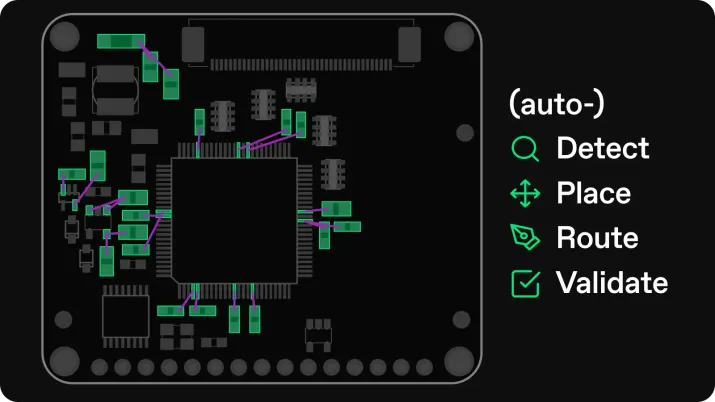
  • AI-powered aids now attack the slowest part of the loop: placement and routing execution, plus the “did we actually follow the constraints?” audit.

What changed in the last couple of years is not that engineers got lazier. It is that programs got tighter and boards got denser, while talent stayed scarce. AI moved from “nice-to-have shortcuts” to a capability that lets small teams behave like large ones: explore more floorplans, try more stackups, and converge faster.

So, in 2026, the best design aids are the ones that do three things at once:

  1. Compress the iteration loop (hours, not weeks).
  2. Make constraints explicit (less tribal knowledge, fewer “gotchas” at review).
  3. Produce artifacts you can trust and hand off (in the CAD tools you already use).

That is the lens for the rest of this post.

How are engineers using AI to automate PCB layout and routing?

Engineers are using AI-powered layout tools to turn placement, routing, and physics checks into a repeatable, parallelizable workflow instead of a manual bottleneck.

The key is that “AI layout” in 2026 is not the old story of autorouters trying to snake traces through a board and calling it done. The new category is constraint-driven, physics-aware automation: you provide the board outline, pre-placement intent, and rules; the system generates candidate layouts and checks them against the physical constraints you care about.

What AI-powered layout actually means in practice

In a modern flow, the AI is not replacing engineering judgment. It is replacing the slowest parts of execution:

  • tedious placement iterations (connector alignment, keepouts, orientation consistency)
  • large-scale routing completion under constraints
  • repeatable rule adherence checks (including “did we really meet the intent everywhere?”)

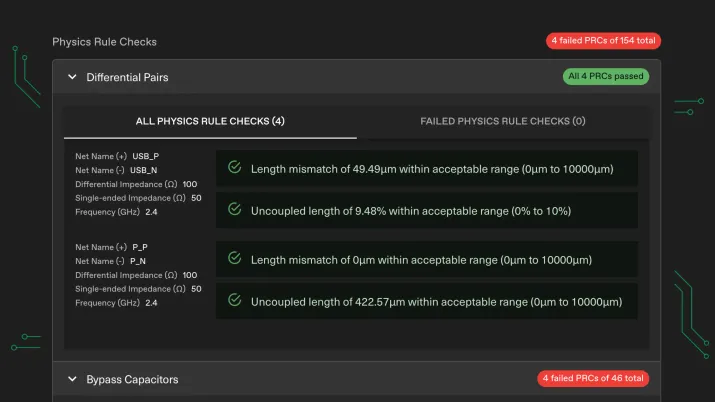
Quilter positions itself as physics-driven AI for electronics design, with an emphasis on generating multiple candidates quickly and validating against physical constraints. (Quilter)

A visually distinct callout: Quilter’s role in the 2026 stack

AI Layout Callout: Where Quilter fits

Input: Native CAD project + your constraints (outline, keepouts, pre-placed critical connectors, routing priorities)
Process: Autonomous placement + routing + physics-driven review across candidates
Output: Files you can hand back to your existing CAD flow for DRC, polish, and fab release

Quilter highlights compatibility with common workflows (for example, uploading projects and defining outline and constraints, then generating candidates for review and handoff).

What changes for the engineer?

The workflow shift is subtle but important:

  • Before: You spend most of your time “doing layout,” then you run checks to see what broke.
  • Now: You spend more time defining intent and constraints up front, then you review candidates and choose trade-offs.

That matters because “reviewing candidates” is higher leverage than “pushing traces.” It lets the same engineer evaluate three floorplans, two stackups, and a different connector strategy in the time that used to disappear into a single route-complete sprint.

Real-world scenario: Project Speedrun style acceleration

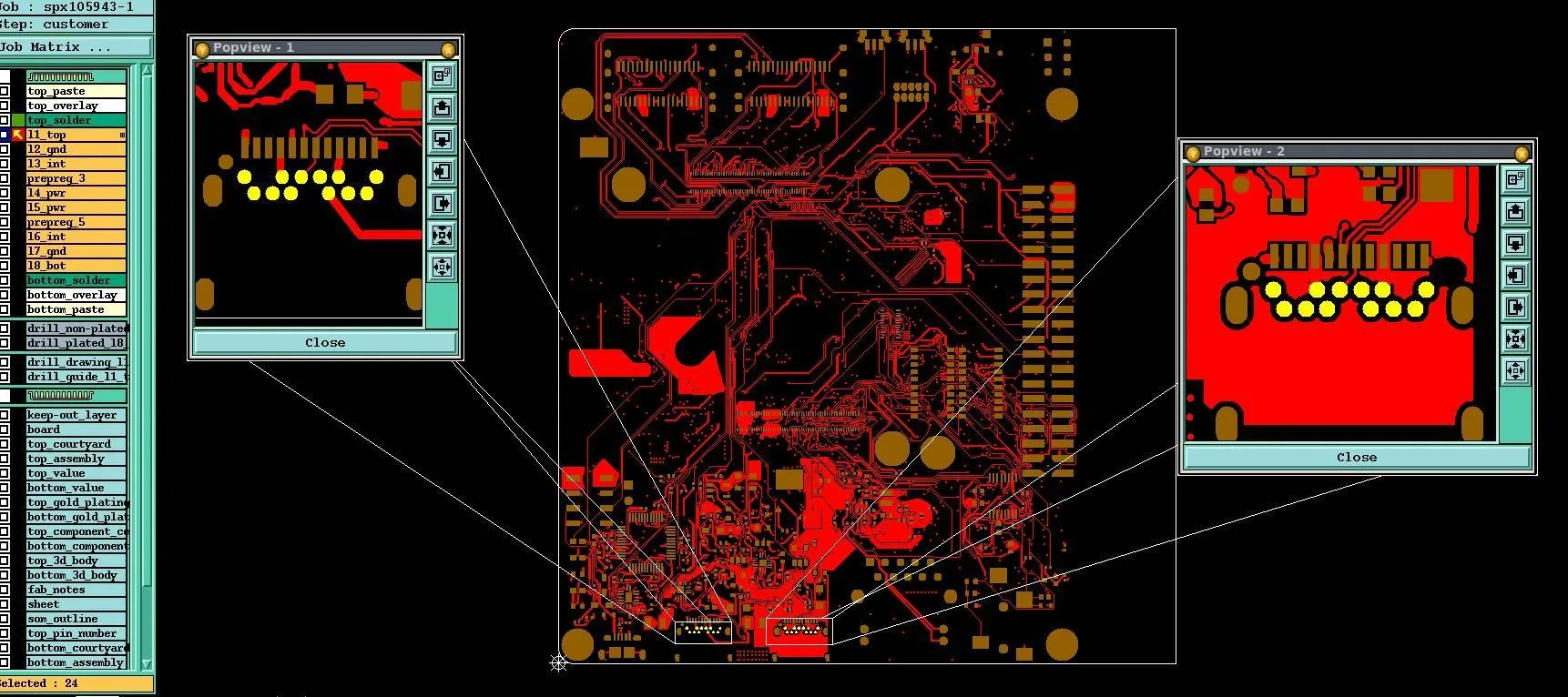
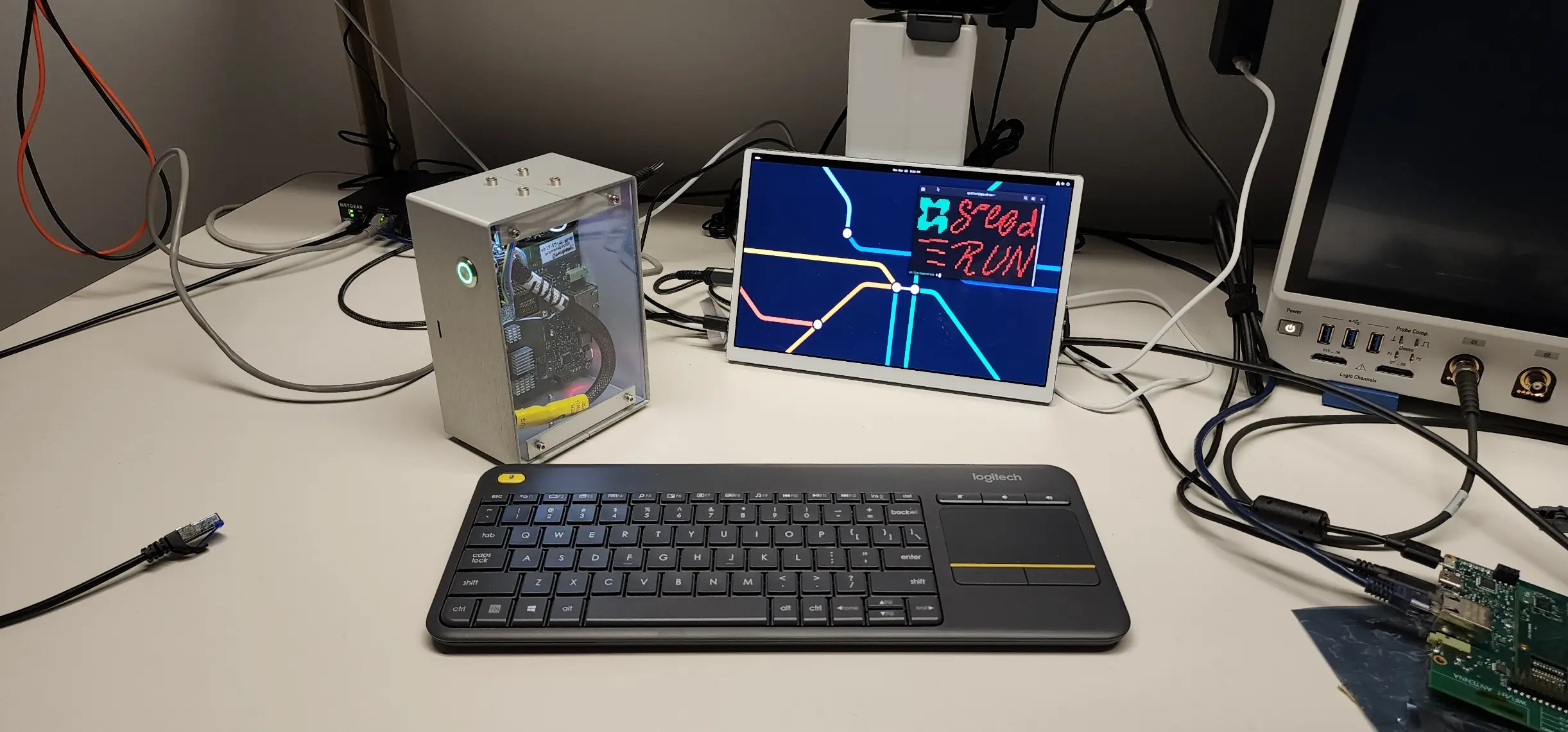
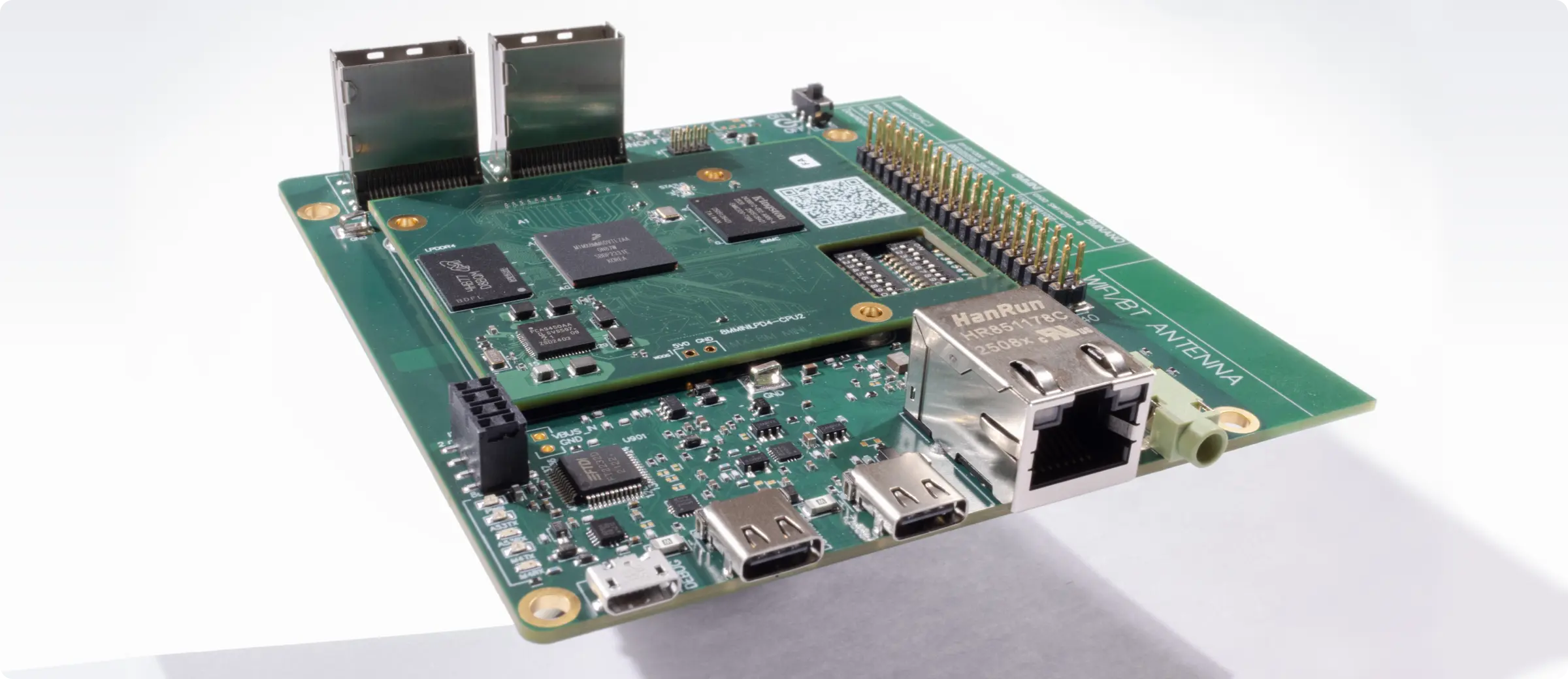
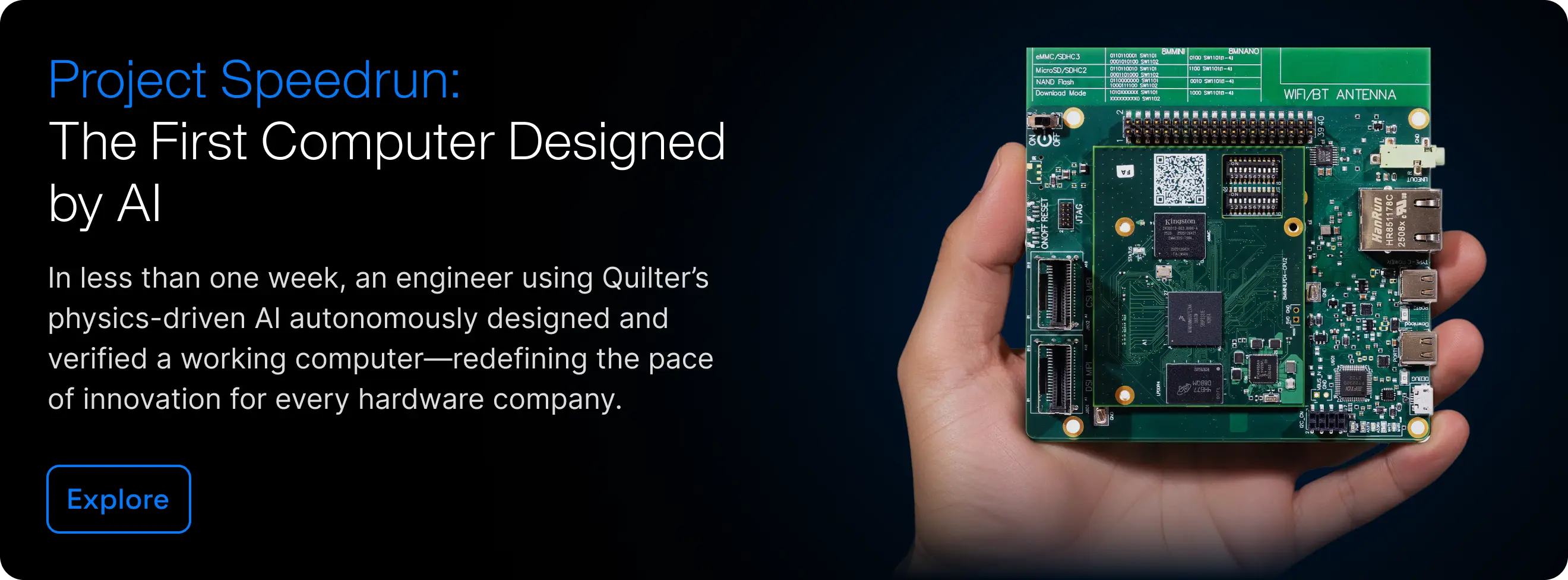
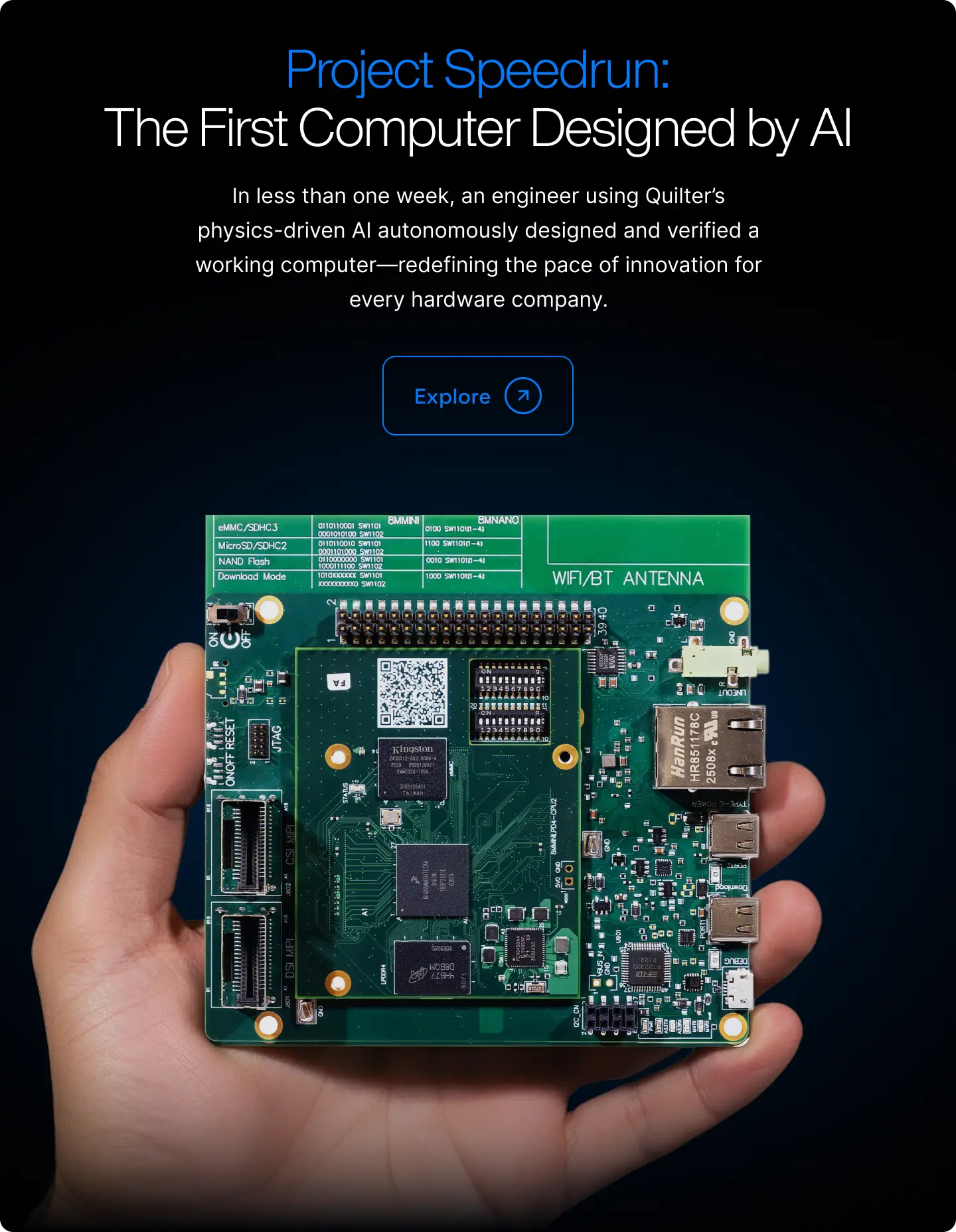
A concrete example of what AI automation looks like at scale is Quilter’s “Project Speedrun,” which publicly frames a large dual-PCB design with hundreds of components and reports major reductions in human hours when AI handles most of placement and routing, plus significant routing completion and a successful bring-up outcome. (Quilter)

Even if your team is not building a Linux computer, the takeaway is portable: when layout execution time collapses, the organization can spend that saved time on the parts that actually differentiate your product: architecture decisions, risk reviews, test strategy, bring-up planning, and supply chain constraints.

The “AI design aid” stack around layout

AI layout is the headline, but in 2026 it connects naturally to other AI-leaning aids:

  • AI-assisted placement guidance and reuse: Some established ecosystems are marketing AI or ML inside design workflows as productivity boosters. (Altium)
  • AI-enhanced EDA directionally across the industry: Major EDA vendors are also messaging AI toolsets aimed at productivity in PCB and system workflows. (Siemens Digital Industries Software)
  • AI placement acceleration inside specific product lines: “AI assisted” placement and related claims are also being positioned around mainstream platforms. (EMA Design Automation)

The point is not that every claim is identical or that every feature is equal. It is that the stack is converging on the same idea: engineers want fewer manual steps between “this is my intent” and “this is a board I can trust.”

Here's what simulation and analysis tools can (and can't) do for your board

Simulation tools are essential for verifying electrical behavior, but they do not solve the execution problem of turning intent into a manufacturable layout under constraints.

Let’s draw the line cleanly, because teams waste time expecting the wrong thing from the wrong tool.

What simulation and analysis tools are great at

Simulation and analysis tools shine when the question is, “Will this circuit behave the way I think it will?”

Common wins include:

  • SPICE validation for analog stability, transient response, and power supply behavior
  • SI/PI workflows for impedance control, return path health, and decoupling strategies
  • early thermal modeling and hot spot prediction
  • constraint definition that feeds into layout (length matching, diff pair rules, spacing, and so on)

These tools reduce risk. They help you catch conceptual errors before copper exists.

Where simulation stops and layout begins

Simulation rarely tells you:

  • the best physical placement for your exact mechanical constraints
  • how to route a dense design to completion while honoring every rule
  • how to trade off multiple competing constraints across the whole board quickly

In other words, simulation predicts behavior, but layout is still the “make it real” phase.

How AI layout complements analysis

This is where AI-powered layout starts to overlap in a useful way:

  • You can bake constraints earlier because you know you can iterate cheaply.
  • You can generate candidates that expose trade-offs clearly (shorter return paths vs connector accessibility, different escape patterns, different decap placement strategies).
  • You can treat physics checks and rule compliance as a repeatable gate, not an artisanal craft.

If you have ever said, “We know the theory, we just need the board routed,” AI layout is aimed squarely at that moment in the schedule.

What results can you expect from combining traditional tools with AI design aids?

You can expect faster iteration, more design options, and fewer late surprises, as long as you integrate AI outputs back into your normal CAD and review discipline.

This is the practical section: what changes if you keep your trusted tools, but add AI where it matters?

A simple comparison table: traditional vs AI-augmented workflow

Step in the workflow

Traditional stack (typical)

2026 stack with AI design aids (typical)

Placement

Manual with incremental reuse

AI-generated candidates + engineer-selected intent

Routing

Interactive routing + autorouter cleanup

Automated routing to high completion, then targeted polish

Physics checks

Run late, fix late

Run continuously across candidate generation and review

Iteration

Expensive, sequential

Cheap, parallel (try multiple constraints/stackups/vendors)

Handoff

Gerbers/ODB++ after one “final” layout

CAD-native handoff for DRC and release, plus candidate selection

This is why the best teams are not “replacing CAD.” They are changing where human time goes.

Speed: weeks to hours is not just marketing, it changes planning

When iteration becomes cheap, teams can:

  • do earlier layout feasibility checks (before schematic is “perfect”)
  • run “what if we change connector X?” experiments without rewriting the schedule
  • converge on a manufacturable floorplan sooner

Quilter’s messaging emphasizes generating multiple candidates quickly and using physics-driven validation, which maps to exactly this “abundant iteration” behavior. (Quilter)

Quality: fewer errors that come from fatigue and manual repetition

Many PCB mistakes are not knowledge failures. They are repetition failures:

  • a keepout violated in one corner case
  • a diff pair rule applied inconsistently
  • a decap placed “close enough” but not truly optimal under the real return path
  • a test point missed because the layout was rushed

AI does not magically solve engineering, but it can reduce the volume of manual repetition where these mistakes hide.

Iteration: try multiple stackups, vendors, and constraint sets in parallel

A practical 2026 pattern looks like this:

  • Create constraint profiles for two fabs (different min drills, annular ring rules).
  • Create two stackups (cost-optimized vs SI-optimized).
  • Run candidates for each in parallel.
  • Review the candidates as a trade-space exercise, not a guess.

When this is possible, “DFM” becomes something you do proactively, not something you learn about via a failed panel.

Team impact: protect engineering bandwidth

The biggest benefit is organizational, not technical. When layout execution stops being the bottleneck, teams can:

  • allocate senior engineers to architecture and risk review
  • onboard new designers faster (less tacit knowledge required)
  • keep schedules stable even when requirements change late

That is why AI design aids increasingly show up in conversations about throughput, not just tooling.

Let's talk about library management, collaboration, and keeping your stack future-proof

A future-proof PCB stack is not just AI layout. It is AI plus boring, reliable infrastructure: libraries, version control, documentation, and review discipline.

If you want AI tools to make your team faster (instead of creating chaos), you need the supporting layer.

Library management that scales

The basics still win:

  • a single source of truth for symbols and footprints
  • clear lifecycle states (preferred, approved, NRND, do-not-use)
  • parametric metadata that makes BOM decisions easier
  • audit trails for footprint changes

This is also where “design aids” can be deceptively valuable. A “free” footprint from the internet can cost weeks if it is wrong. The modern stack treats libraries like code: reviewed, versioned, and owned.

Collaboration and change control

In 2026, PCB teams increasingly borrow patterns from software teams:

  • version control for design artifacts (even if it is a hybrid approach)
  • structured review workflows (checklists, signoffs, tagged comments)
  • issue tracking tied to a specific revision
  • clear release packages (fab, assembly, test documentation)

The biggest risk with any automation is not that it generates a bad result. It is that it generates a result that nobody can explain, diff, or trust. So the future-proof stack makes every output reviewable.

How AI outputs fit into a healthy stack

The ideal AI design aid behaves like a teammate who hands you work in your native language:

  • you can run your normal DRCs
  • you can polish and adjust in your CAD tool
  • you can generate your normal fab and assembly packages
  • you can document decisions for future revisions

Quilter emphasizes seamless handoff back into existing CAD workflows and transparent review of candidate designs, which is exactly the behavior you want if you care about traceability and repeatability.

A short “future-proofing” sidebar you can paste into your internal wiki

Future-proof stack checklist (2026 edition):

  • Keep constraints explicit and versioned (stackup, impedance targets, diff pair rules).
  • Treat footprints like production code (reviewed, owned, change-tracked).
  • Automate the repetitive steps, but never automate accountability.
  • Use AI for candidate generation and execution speed, then apply human review for intent, risk, and signoff.
  • Make every design decision retraceable six months later.

If you do those five things, you can adopt new AI capabilities without breaking your process.

Ready to try AI-powered PCB design? Here's how to get started with Quilter

You can get value from AI-powered layout quickly if you start with a real board and a tight set of constraints.

Here is a practical onboarding path that matches how modern teams evaluate design aids.

Step 1: Pick the right first project

Good “first AI layout” projects usually have:

  • clear mechanical constraints (outline, connectors, mounting holes)
  • a realistic mix of routing complexity (not a toy board)
  • well-defined critical nets (power, clocks, diff pairs)

If you start with something meaningful, you will learn faster.

Step 2: Upload your existing CAD project and define constraints

Quilter positions the flow as “works with your existing workflow,” including uploading common native project formats and giving you control over board outline, floorplan intent, and constraints.

Step 3: Generate multiple candidates, then review like an engineer

Do not treat the first output as “the answer.” Treat it like a design space exploration:

  • Which candidate makes test access easiest?
  • Which candidate keeps sensitive paths shortest?
  • Which candidate leaves margin for future revisions?

This is the hidden superpower of the 2026 stack: the review becomes about trade-offs, not endurance.

Step 4: Hand off back into your normal CAD flow for DRC and release

Quilter’s documentation frames the product around generating fabrication-ready boards faster, supported by onboarding resources. (Quilter)

Step 5: Use the free entry point, then scale when it proves value

Quilter advertises a free AI PCB design option and positions unlimited iteration as part of the model, which is useful for evaluation because you can test the workflow before committing. (Quilter)

If you are modernizing your PCB design stack for 2026, start by adding AI where it eliminates the biggest bottleneck: layout execution. Try Quilter’s AI-powered PCB layout (free tier) or reach out for an enterprise walkthrough to see how automated design can accelerate your next program. (Quilter)


Try Quilter for Yourself

Project Speedrun demonstrated what autonomous layout looks like in practice and the time compression Quilter enables. Now, see it on your own hardware.

Get Started

Validating the Design

With cleanup complete, the final question is whether the hardware works. Power-on is where most electrical mistakes reveal themselves, and it’s the moment engineers are both nervous and excited about.

Continue to Part 4

Cleaning Up the Design

Autonomous layout produces a complete, DRC'd design; cleanup is a brief precision pass to finalize it for fabrication.

Continue to Part 3

Compiling the Design

Once the design is prepared, the next step is handing it off to Quilter. In traditional workflows, this is where an engineer meets with a layout specialist to clarify intent. Quilter replaces that meeting with circuit comprehension: you upload the project, review how constraints are interpreted, and submit the job.

Continue to Part 2

The Modern PCB Design Stack: Top AI-Powered Aids for Engineers in 2026

January 8, 2026
by
Darin ten Bruggencate
and

PCB design is changing fast. In 2026, engineers are not just using smarter calculators or faster autorouters. They are using AI to automate entire layout cycles, validate physics, and iterate in hours, not weeks. In this guide, we will break down what belongs in a modern PCB design stack, spotlight the rise of AI-powered design aids, and show how Quilter is redefining what “fast” means for hardware teams. (Quilter)

Let's define what makes a design aid truly essential today

A modern “design aid” is any tool that reduces cycle time or risk between schematic intent and a board that works in the real world.

For years, the essential aids were mostly incremental: better DRCs, better libraries, better impedance calculators, better checklists. They mattered because layout is still where schedules go to die. But the definition of essential shifted as soon as teams started optimizing for iteration speed instead of “one perfect pass.”

Here is the simplest way to think about the 2026 stack:

  • Core CAD is still where you author truth (schematic, PCB, constraints, release artifacts).
  • Analysis tools help you predict behavior (SPICE, SI/PI, thermal, EMI pre-checks).
  • Manufacturing aids help you avoid re-spins (DFM/DFA, assembly constraints, test access checks).
  • Collaboration and data help you scale (libraries, version control, lifecycle, review workflows).
  • AI-powered aids now attack the slowest part of the loop: placement and routing execution, plus the “did we actually follow the constraints?” audit.

What changed in the last couple of years is not that engineers got lazier. It is that programs got tighter and boards got denser, while talent stayed scarce. AI moved from “nice-to-have shortcuts” to a capability that lets small teams behave like large ones: explore more floorplans, try more stackups, and converge faster.

So, in 2026, the best design aids are the ones that do three things at once:

  1. Compress the iteration loop (hours, not weeks).
  2. Make constraints explicit (less tribal knowledge, fewer “gotchas” at review).
  3. Produce artifacts you can trust and hand off (in the CAD tools you already use).

That is the lens for the rest of this post.

How are engineers using AI to automate PCB layout and routing?

Engineers are using AI-powered layout tools to turn placement, routing, and physics checks into a repeatable, parallelizable workflow instead of a manual bottleneck.

The key is that “AI layout” in 2026 is not the old story of autorouters trying to snake traces through a board and calling it done. The new category is constraint-driven, physics-aware automation: you provide the board outline, pre-placement intent, and rules; the system generates candidate layouts and checks them against the physical constraints you care about.

What AI-powered layout actually means in practice

In a modern flow, the AI is not replacing engineering judgment. It is replacing the slowest parts of execution:

  • tedious placement iterations (connector alignment, keepouts, orientation consistency)
  • large-scale routing completion under constraints
  • repeatable rule adherence checks (including “did we really meet the intent everywhere?”)

Quilter positions itself as physics-driven AI for electronics design, with an emphasis on generating multiple candidates quickly and validating against physical constraints. (Quilter)

A visually distinct callout: Quilter’s role in the 2026 stack

AI Layout Callout: Where Quilter fits

Input: Native CAD project + your constraints (outline, keepouts, pre-placed critical connectors, routing priorities)
Process: Autonomous placement + routing + physics-driven review across candidates
Output: Files you can hand back to your existing CAD flow for DRC, polish, and fab release

Quilter highlights compatibility with common workflows (for example, uploading projects and defining outline and constraints, then generating candidates for review and handoff).

What changes for the engineer?

The workflow shift is subtle but important:

  • Before: You spend most of your time “doing layout,” then you run checks to see what broke.
  • Now: You spend more time defining intent and constraints up front, then you review candidates and choose trade-offs.

That matters because “reviewing candidates” is higher leverage than “pushing traces.” It lets the same engineer evaluate three floorplans, two stackups, and a different connector strategy in the time that used to disappear into a single route-complete sprint.

Real-world scenario: Project Speedrun style acceleration

A concrete example of what AI automation looks like at scale is Quilter’s “Project Speedrun,” which publicly frames a large dual-PCB design with hundreds of components and reports major reductions in human hours when AI handles most of placement and routing, plus significant routing completion and a successful bring-up outcome. (Quilter)

Even if your team is not building a Linux computer, the takeaway is portable: when layout execution time collapses, the organization can spend that saved time on the parts that actually differentiate your product: architecture decisions, risk reviews, test strategy, bring-up planning, and supply chain constraints.

The “AI design aid” stack around layout

AI layout is the headline, but in 2026 it connects naturally to other AI-leaning aids:

  • AI-assisted placement guidance and reuse: Some established ecosystems are marketing AI or ML inside design workflows as productivity boosters. (Altium)
  • AI-enhanced EDA directionally across the industry: Major EDA vendors are also messaging AI toolsets aimed at productivity in PCB and system workflows. (Siemens Digital Industries Software)
  • AI placement acceleration inside specific product lines: “AI assisted” placement and related claims are also being positioned around mainstream platforms. (EMA Design Automation)

The point is not that every claim is identical or that every feature is equal. It is that the stack is converging on the same idea: engineers want fewer manual steps between “this is my intent” and “this is a board I can trust.”

Here's what simulation and analysis tools can (and can't) do for your board

Simulation tools are essential for verifying electrical behavior, but they do not solve the execution problem of turning intent into a manufacturable layout under constraints.

Let’s draw the line cleanly, because teams waste time expecting the wrong thing from the wrong tool.

What simulation and analysis tools are great at

Simulation and analysis tools shine when the question is, “Will this circuit behave the way I think it will?”

Common wins include:

  • SPICE validation for analog stability, transient response, and power supply behavior
  • SI/PI workflows for impedance control, return path health, and decoupling strategies
  • early thermal modeling and hot spot prediction
  • constraint definition that feeds into layout (length matching, diff pair rules, spacing, and so on)

These tools reduce risk. They help you catch conceptual errors before copper exists.

Where simulation stops and layout begins

Simulation rarely tells you:

  • the best physical placement for your exact mechanical constraints
  • how to route a dense design to completion while honoring every rule
  • how to trade off multiple competing constraints across the whole board quickly

In other words, simulation predicts behavior, but layout is still the “make it real” phase.

How AI layout complements analysis

This is where AI-powered layout starts to overlap in a useful way:

  • You can bake constraints earlier because you know you can iterate cheaply.
  • You can generate candidates that expose trade-offs clearly (shorter return paths vs connector accessibility, different escape patterns, different decap placement strategies).
  • You can treat physics checks and rule compliance as a repeatable gate, not an artisanal craft.

If you have ever said, “We know the theory, we just need the board routed,” AI layout is aimed squarely at that moment in the schedule.

What results can you expect from combining traditional tools with AI design aids?

You can expect faster iteration, more design options, and fewer late surprises, as long as you integrate AI outputs back into your normal CAD and review discipline.

This is the practical section: what changes if you keep your trusted tools, but add AI where it matters?

A simple comparison table: traditional vs AI-augmented workflow

Step in the workflow

Traditional stack (typical)

2026 stack with AI design aids (typical)

Placement

Manual with incremental reuse

AI-generated candidates + engineer-selected intent

Routing

Interactive routing + autorouter cleanup

Automated routing to high completion, then targeted polish

Physics checks

Run late, fix late

Run continuously across candidate generation and review

Iteration

Expensive, sequential

Cheap, parallel (try multiple constraints/stackups/vendors)

Handoff

Gerbers/ODB++ after one “final” layout

CAD-native handoff for DRC and release, plus candidate selection

This is why the best teams are not “replacing CAD.” They are changing where human time goes.

Speed: weeks to hours is not just marketing, it changes planning

When iteration becomes cheap, teams can:

  • do earlier layout feasibility checks (before schematic is “perfect”)
  • run “what if we change connector X?” experiments without rewriting the schedule
  • converge on a manufacturable floorplan sooner

Quilter’s messaging emphasizes generating multiple candidates quickly and using physics-driven validation, which maps to exactly this “abundant iteration” behavior. (Quilter)

Quality: fewer errors that come from fatigue and manual repetition

Many PCB mistakes are not knowledge failures. They are repetition failures:

  • a keepout violated in one corner case
  • a diff pair rule applied inconsistently
  • a decap placed “close enough” but not truly optimal under the real return path
  • a test point missed because the layout was rushed

AI does not magically solve engineering, but it can reduce the volume of manual repetition where these mistakes hide.

Iteration: try multiple stackups, vendors, and constraint sets in parallel

A practical 2026 pattern looks like this:

  • Create constraint profiles for two fabs (different min drills, annular ring rules).
  • Create two stackups (cost-optimized vs SI-optimized).
  • Run candidates for each in parallel.
  • Review the candidates as a trade-space exercise, not a guess.

When this is possible, “DFM” becomes something you do proactively, not something you learn about via a failed panel.

Team impact: protect engineering bandwidth

The biggest benefit is organizational, not technical. When layout execution stops being the bottleneck, teams can:

  • allocate senior engineers to architecture and risk review
  • onboard new designers faster (less tacit knowledge required)
  • keep schedules stable even when requirements change late

That is why AI design aids increasingly show up in conversations about throughput, not just tooling.

Let's talk about library management, collaboration, and keeping your stack future-proof

A future-proof PCB stack is not just AI layout. It is AI plus boring, reliable infrastructure: libraries, version control, documentation, and review discipline.

If you want AI tools to make your team faster (instead of creating chaos), you need the supporting layer.

Library management that scales

The basics still win:

  • a single source of truth for symbols and footprints
  • clear lifecycle states (preferred, approved, NRND, do-not-use)
  • parametric metadata that makes BOM decisions easier
  • audit trails for footprint changes

This is also where “design aids” can be deceptively valuable. A “free” footprint from the internet can cost weeks if it is wrong. The modern stack treats libraries like code: reviewed, versioned, and owned.

Collaboration and change control

In 2026, PCB teams increasingly borrow patterns from software teams:

  • version control for design artifacts (even if it is a hybrid approach)
  • structured review workflows (checklists, signoffs, tagged comments)
  • issue tracking tied to a specific revision
  • clear release packages (fab, assembly, test documentation)

The biggest risk with any automation is not that it generates a bad result. It is that it generates a result that nobody can explain, diff, or trust. So the future-proof stack makes every output reviewable.

How AI outputs fit into a healthy stack

The ideal AI design aid behaves like a teammate who hands you work in your native language:

  • you can run your normal DRCs
  • you can polish and adjust in your CAD tool
  • you can generate your normal fab and assembly packages
  • you can document decisions for future revisions

Quilter emphasizes seamless handoff back into existing CAD workflows and transparent review of candidate designs, which is exactly the behavior you want if you care about traceability and repeatability.

A short “future-proofing” sidebar you can paste into your internal wiki

Future-proof stack checklist (2026 edition):

  • Keep constraints explicit and versioned (stackup, impedance targets, diff pair rules).
  • Treat footprints like production code (reviewed, owned, change-tracked).
  • Automate the repetitive steps, but never automate accountability.
  • Use AI for candidate generation and execution speed, then apply human review for intent, risk, and signoff.
  • Make every design decision retraceable six months later.

If you do those five things, you can adopt new AI capabilities without breaking your process.

Ready to try AI-powered PCB design? Here's how to get started with Quilter

You can get value from AI-powered layout quickly if you start with a real board and a tight set of constraints.

Here is a practical onboarding path that matches how modern teams evaluate design aids.

Step 1: Pick the right first project

Good “first AI layout” projects usually have:

  • clear mechanical constraints (outline, connectors, mounting holes)
  • a realistic mix of routing complexity (not a toy board)
  • well-defined critical nets (power, clocks, diff pairs)

If you start with something meaningful, you will learn faster.

Step 2: Upload your existing CAD project and define constraints

Quilter positions the flow as “works with your existing workflow,” including uploading common native project formats and giving you control over board outline, floorplan intent, and constraints.

Step 3: Generate multiple candidates, then review like an engineer

Do not treat the first output as “the answer.” Treat it like a design space exploration:

  • Which candidate makes test access easiest?
  • Which candidate keeps sensitive paths shortest?
  • Which candidate leaves margin for future revisions?

This is the hidden superpower of the 2026 stack: the review becomes about trade-offs, not endurance.

Step 4: Hand off back into your normal CAD flow for DRC and release

Quilter’s documentation frames the product around generating fabrication-ready boards faster, supported by onboarding resources. (Quilter)

Step 5: Use the free entry point, then scale when it proves value

Quilter advertises a free AI PCB design option and positions unlimited iteration as part of the model, which is useful for evaluation because you can test the workflow before committing. (Quilter)

If you are modernizing your PCB design stack for 2026, start by adding AI where it eliminates the biggest bottleneck: layout execution. Try Quilter’s AI-powered PCB layout (free tier) or reach out for an enterprise walkthrough to see how automated design can accelerate your next program. (Quilter)