




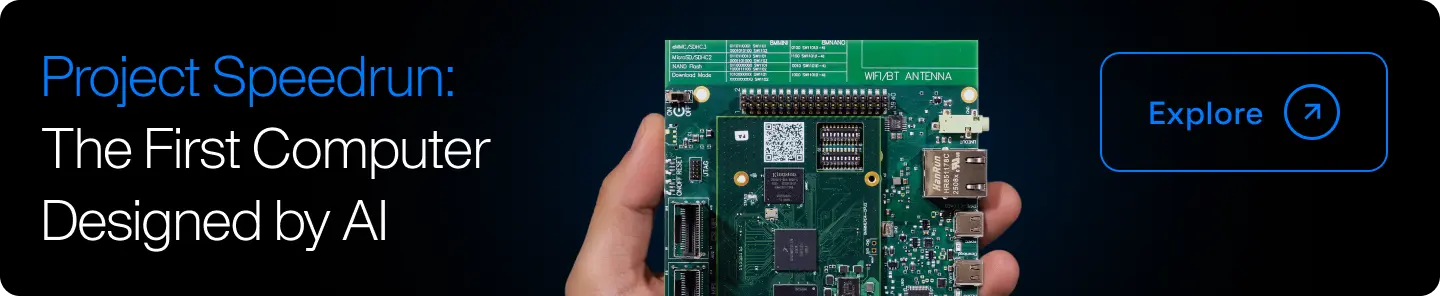


Read the Full Series
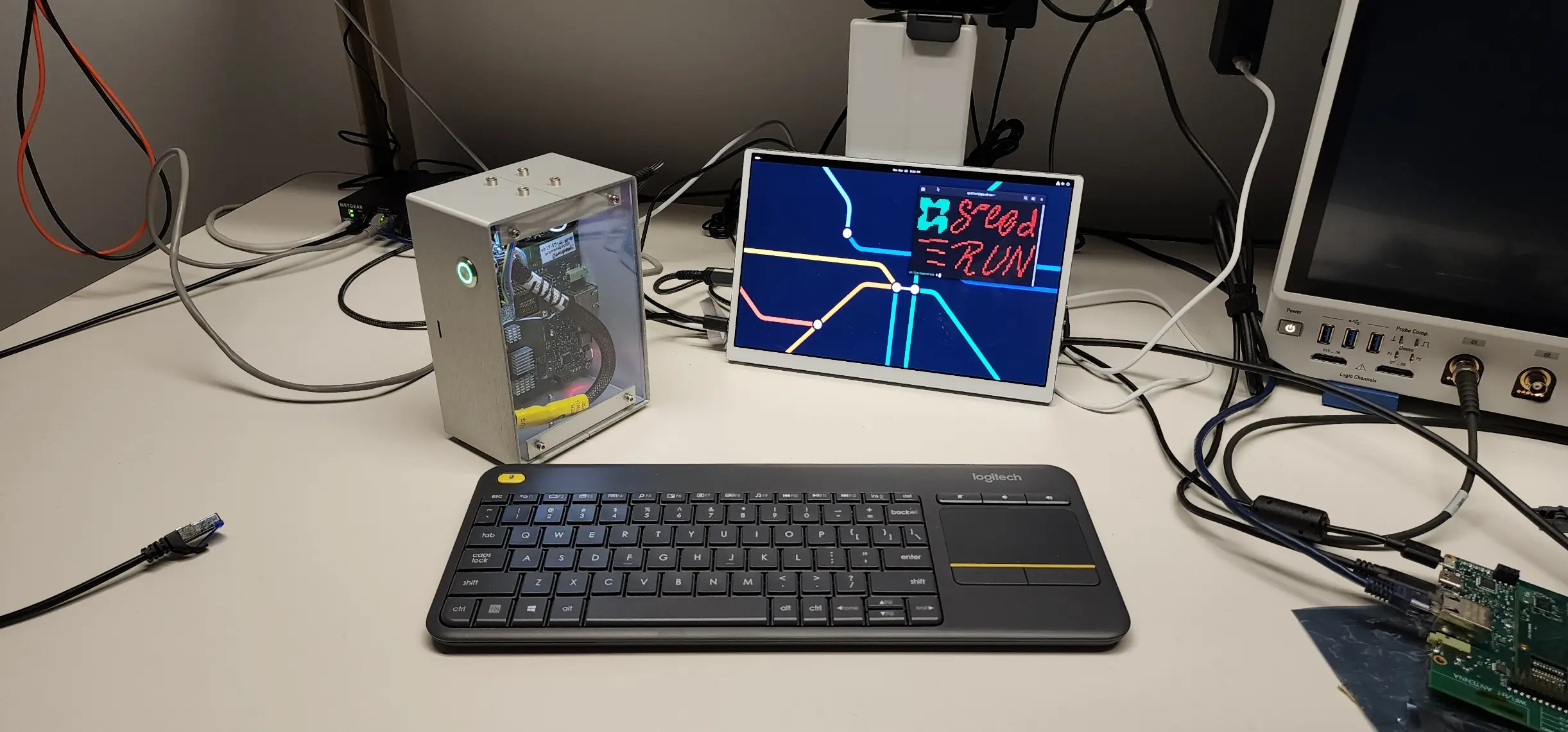
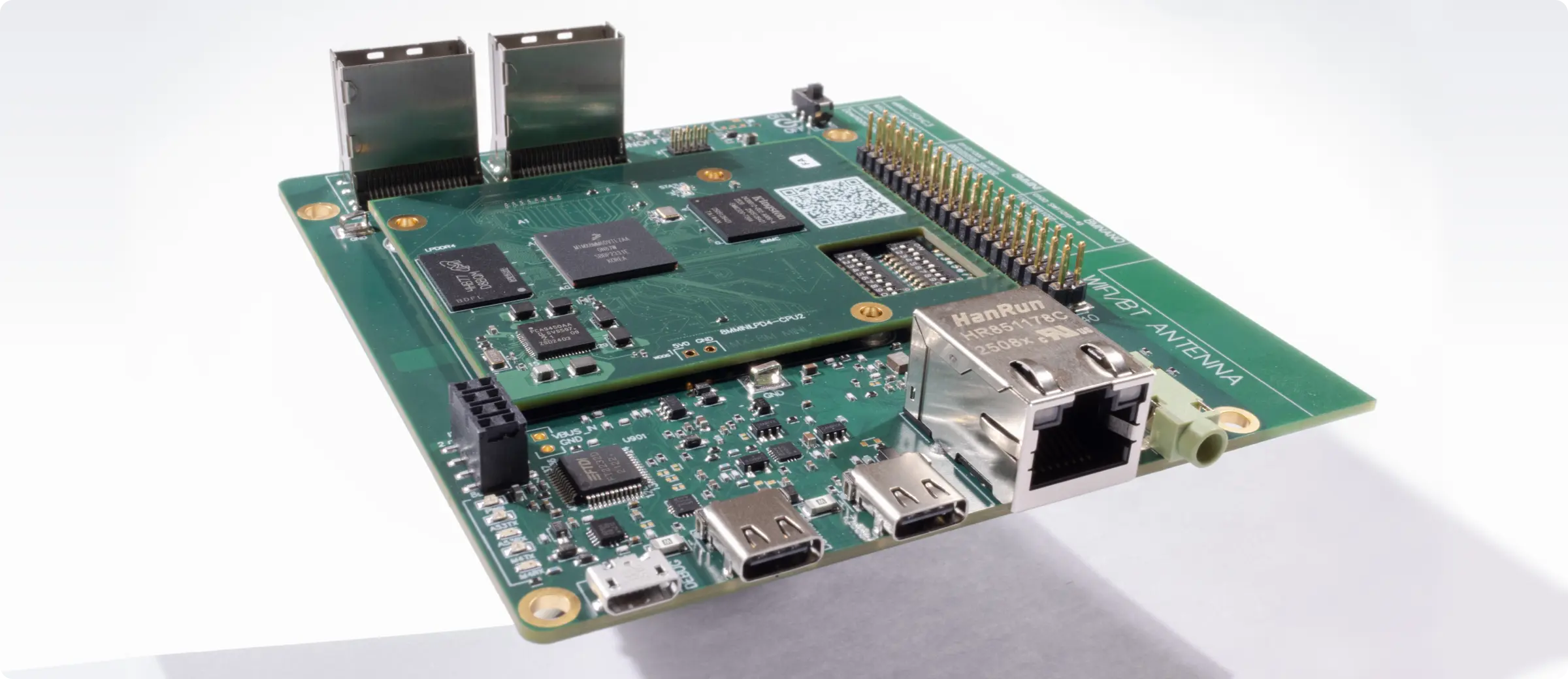
This article is one part of a walkthrough detailing how we recreated an NXP i.MX 8M Mini–based computer using Quilter’s physics-driven layout automation.
In 2026, hardware teams cannot afford to wait weeks for PCB layout. If you are validating a new chip, racing a prototype to a customer demo, or iterating on a power stage that keeps failing EMI, the slow part is rarely fabrication anymore. It is the human bottleneck between a finished schematic and a manufacturable, reviewable board.
That is why the search intent behind “best pcb software for fast turnaround” is shifting. People are not asking for a prettier editor or a slightly better autorouter. They are asking for a workflow that compresses the entire path from idea to fab-ready files, without trading away quality, signal integrity, or manufacturability.
AI PCB design is changing what “fast” means. With physics-driven PCB layout automation, you can generate multiple viable candidates in hours, review them in your existing CAD tool, and send a clean package to a quick-turn fab the same day. Quilter is built specifically for that outcome. (Quilter)
What Does 'Fast Turnaround' Really Mean for PCB Design?
Fast turnaround is not “how quickly an autorouter can draw traces.” In real projects, turnaround time is the total clock time from schematic complete to fab-ready handoff.
A practical definition:
- Fast turnaround PCB design = time to produce a DRC-clean, reviewable layout package plus the manufacturing outputs your fab needs (Gerbers or ODB++, drill, stackup notes, assembly outputs if needed), with minimal back-and-forth and rework.
That definition matters because the slowdowns hide in the seams:
- Intent transfer: translating schematic intent into placement strategy, constraints, and routing priorities.
- Constraint closure: getting high-speed rules, impedance targets, diff pairs, and power delivery decisions to actually converge.
- Manufacturing readiness: generating consistent outputs, validating them, and answering DFM questions quickly.
When you evaluate the best PCB software for fast turnaround, you are really evaluating how well a tool reduces those seams, not how polished the UI feels.
Here's How Traditional PCB Tools Stack Up on Speed
Traditional tools can absolutely produce world-class boards. The challenge is that speed still depends heavily on expert time, and expert time is not parallel.
Altium Designer (plus Altium 365)
Altium is strong for complex boards and high-speed workflows, including differential pair routing and length tuning. (Altium)
On the handoff side, Altium 365 makes it easier to share manufacturing packages with fabricators through a browser-based viewer. (Altium)
Bottleneck: the layout itself still consumes focused human hours, especially when placement and routing interact with SI, PI, and mechanical constraints.
KiCad
KiCad is widely used for professional-grade work and can generate the manufacturing outputs fabs need. (JLCPCB)
Bottleneck: speed is still dominated by manual placement, manual routing decisions, and the iteration cycle after DRC and review.
EasyEDA (with integrated ordering)
EasyEDA is often the fastest “click-to-order” path for prototypes because ordering and BOM workflows are integrated. (EasyEDA Documentation)
Bottleneck: for denser or more constrained boards, layout convergence and review still require time and expertise.
The real issue: the routing and closure loop
Quilter published a data-driven benchmark comparing routing time across Quilter, Altium, and KiCad on multiple designs. In the “complex” design, Quilter’s routing time was 228 minutes, versus 870 minutes in Altium and 972 minutes in KiCad. (Quilter)
That is not a small efficiency win. It changes what teams can attempt in a single day.
Speed comparison table (what actually slows you down)
Tool approach
Where it’s fast
Where it slows down
Typical “turnaround killers”
Manual-first (Altium, KiCad)
Fine-tuning, human judgement, complex constraints
Initial placement, routing, closure loops
Dependency on senior layout time, late-stage rework
Semi-automated (autorouters, scripts)
Simple nets, quick prototypes
High-speed rules, dense BGAs, power integrity
“Almost done” layouts that need heavy cleanup
Physics-driven automation (Quilter)
Rapid candidate generation and constraint coverage
Review and final polish in native CAD
Requires good constraints up front, still needs human sign-off
If you want the best pcb software for fast turnaround, the most important question becomes: Can you generate multiple credible, constraint-aware candidates quickly enough to make iteration cheap?
How Does AI Change the Game for PCB Layout?
AI changes the game when it turns layout from a scarce, sequential activity into a repeatable, parallel process.
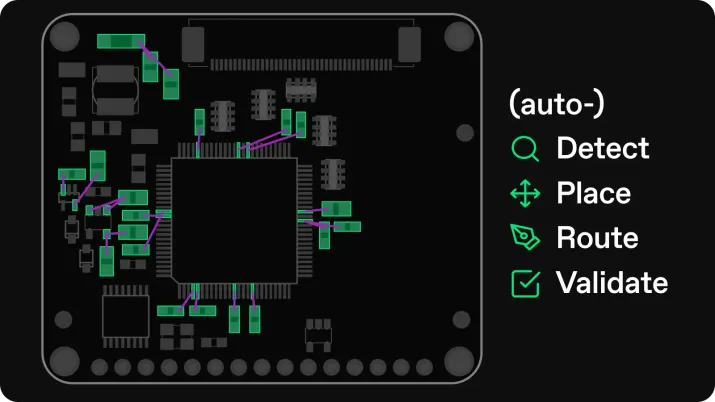
Quilter positions itself differently than a traditional autorouter or an LLM copilot. The core promise is speed plus confidence: generate complete layouts quickly, then validate them with physics-aware checks so you can review what matters instead of fighting the tool. Quilter describes this as “physics-driven AI for electronics design,” emphasizing automation that is trained on real-world physical constraints. (Quilter)
What that looks like in practice:
- Works with your existing workflow. Quilter supports importing native CAD projects (including common industry tools), so you do not have to abandon your established libraries and processes. (Quilter)
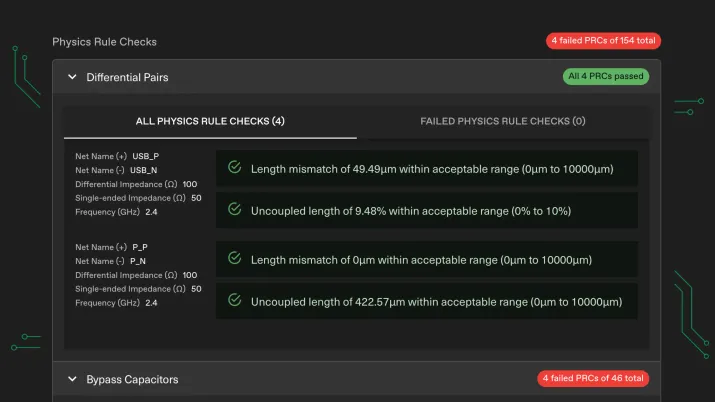
- Physics-aware design decisions. Quilter highlights critical considerations like impedance-controlled nets and differential pairs for review. (Quilter)
- Multiple candidates in hours. Quilter states that you can receive candidates quickly, including within the first hour for some workloads. (Quilter)
- Seamless handoff back to CAD. The workflow centers on generating candidates, then returning to your CAD tool for DRC, polish, and manufacturing outputs. (Quilter)
A simple workflow diagram (idea to fab-ready)
flowchart LR
A[Schematic complete] --> B[Import project into Quilter]
B --> C[Define outline + pre-place connectors + constraints]
C --> D[Generate multiple layout candidates]
D --> E[Review + select best candidate]
E --> F[Export back to native CAD]
F --> G[DRC + final polish + manufacturing outputs]
G --> H[Quick-turn fab order]
Physics-Driven Automation in Practice
It is easy to say “AI PCB design.” The more useful question is: what improves when the AI is built around physics and constraints rather than pattern mimicry?
Two measurable changes show up repeatedly in fast-turnaround workflows:
- Fewer dead ends: You spend less time producing layouts that look complete but fail on constraints late in the process.
- Cheaper iteration: You can compare multiple viable floorplans and routing strategies quickly, which is exactly what rapid PCB prototyping needs.
This matters for engineering managers because it shifts the throughput model. Instead of one layout path per week, you can evaluate several paths in a single day, then spend your expert time on selection and refinement.
What Results Can You Expect When You Use Quilter?
If you care about the fastest PCB turnaround in 2026, you should look for outcomes that are hard to fake: measured routing time reductions, real case study timelines, and “first-spin works” evidence.
1) Benchmark: routing time reductions versus Altium and KiCad
In Quilter’s published benchmark, the complex design showed:
- Quilter: 228 minutes
- Altium: 870 minutes
- KiCad: 972 minutes (Quilter)
That is a large reduction in routing time, and it compounds when you run multiple variants.
2) Dense FPGA BGA case study: DRC-clean in 2.5 hours
In a Quilter case study on an FPGA BGA design, Quilter generated a DRC-clean placement and routing in 2.5 hours. The writeup also notes a 22% reduction in vias compared to a reference layout, and documents a specific routing constraint mismatch (4 mil) that was corrected. (Quilter)
For fast turnaround, that combination matters: time compression plus traceability on what changed and why.
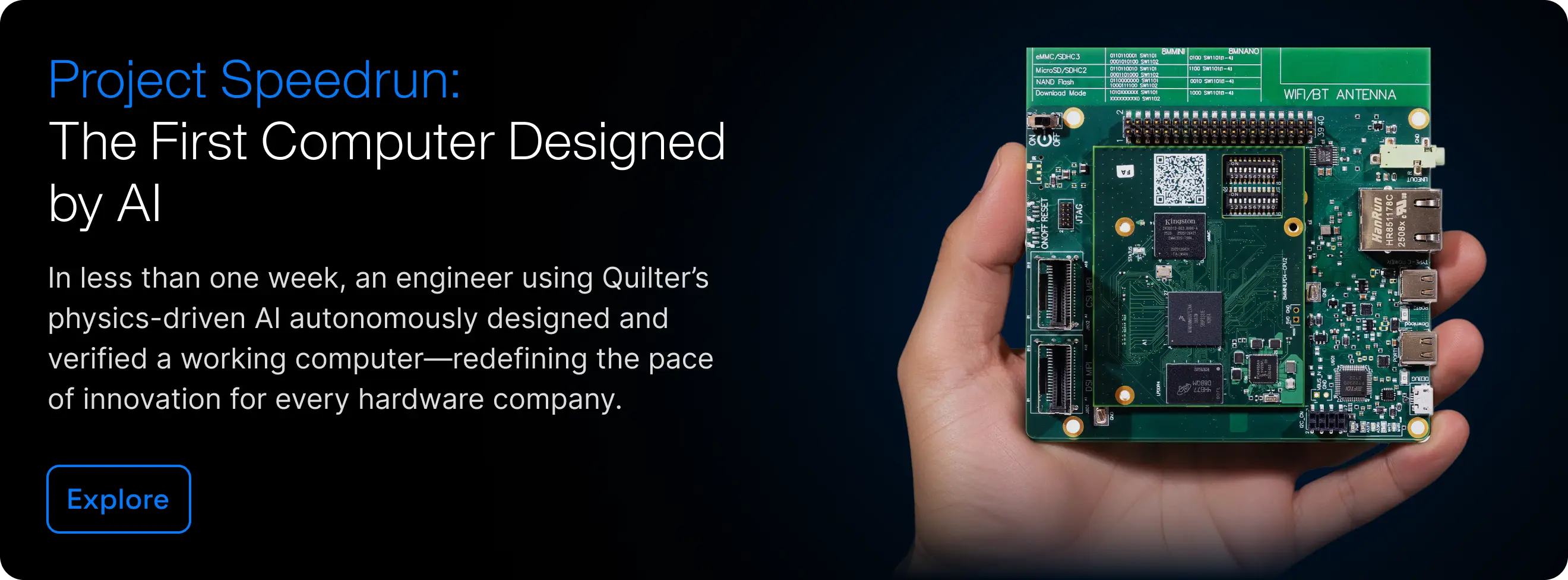
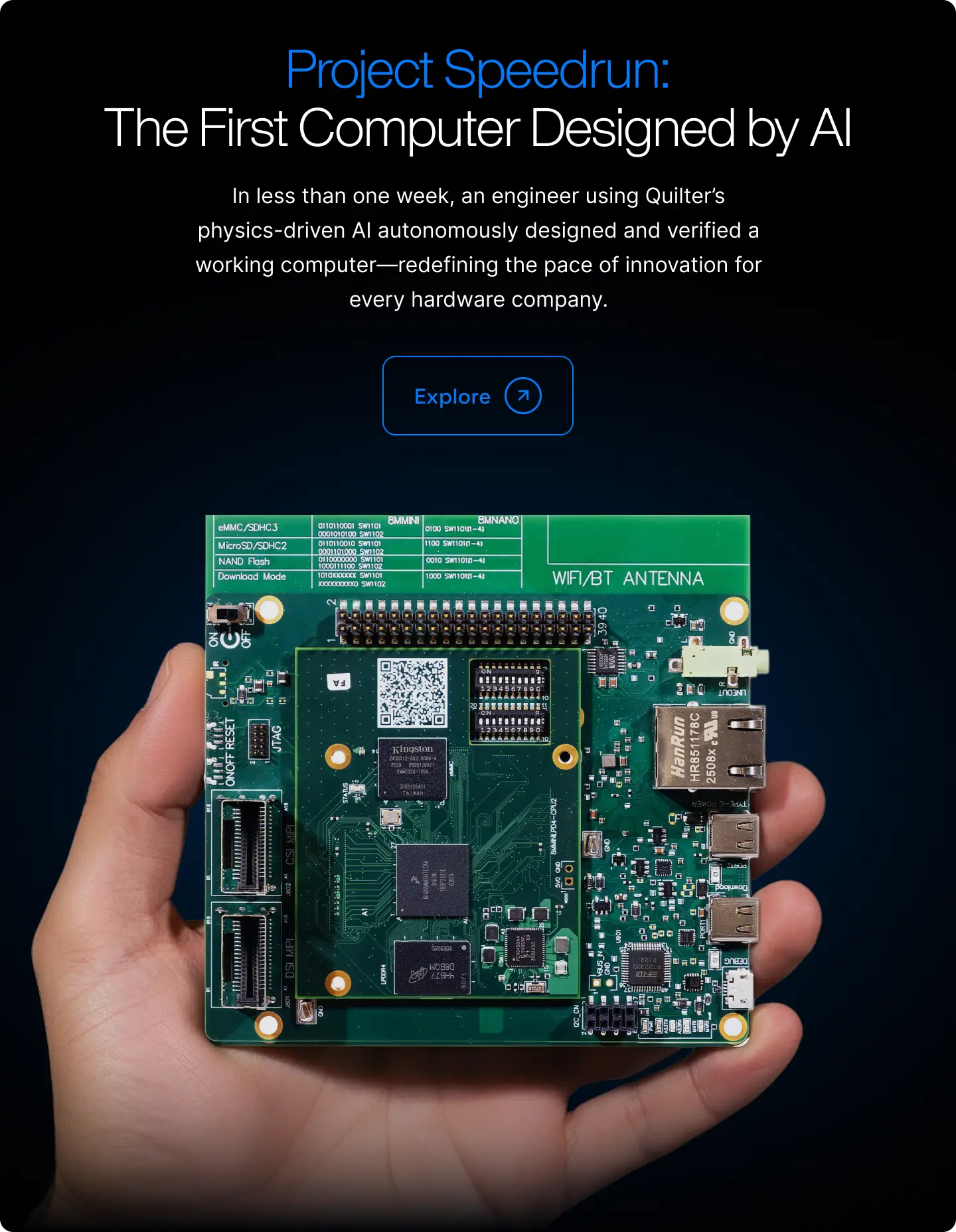
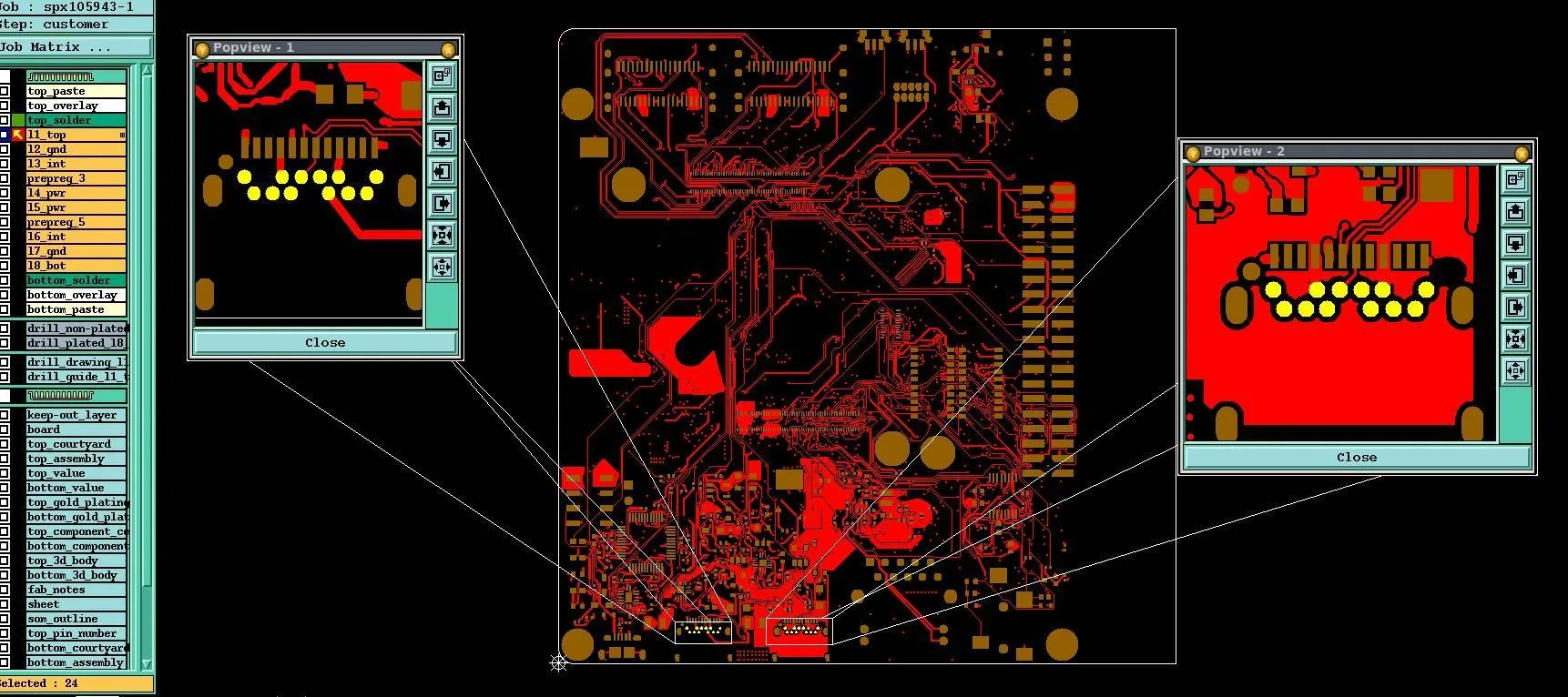
3) Project Speedrun: 428 hours down to 38.5 hours
In “Project Speedrun,” Quilter documented recreating an NXP i.MX 8M Mini-based computer and compared effort:
- Traditional workflow: 428 hours
- With Quilter: 38.5 hours
- Quilter runtime for layout generation: 27 hours, with 98% of placement, routing, and physics validation completed autonomously. (Quilter)
They also report the board powered up successfully and validated, which is the real bar for “fast” because re-spins destroy schedules. (Quilter)
4) A real user story: “I got a layout back in an hour and a half”
In a customer story with Renovelo’s founder Jeff, he describes the practical impact in plain terms:
“I submitted a layout and… I got a layout back in an hour and a half!” (Quilter)
He also emphasizes confidence and first-prototype success:
“Everything absolutely works on it perfectly… I’m not changing anything.” (Quilter)
These are the kinds of testimonials that matter when you are evaluating PCB automation tools for speed, because they speak to both time and rework risk.
Let's Talk About Implementation: How to Go from Schematic to Board in a Day
Below is a practical, repeatable path for going from schematic to fab-ready in a single day using Quilter, while keeping your existing CAD workflow.
Step 1: Start in your native CAD, then import to Quilter
Build your schematic and basic board definition where you already work. Quilter’s workflow is designed around using your existing toolchain and then returning outputs in compatible formats for DRC and manufacturing prep. (Quilter)
Fast-turnaround tip: lock your mechanical constraints early (outline, mounting holes, keepouts). That reduces candidate churn.
Step 2: Define constraints like you mean it
Speed comes from clarity. Before you generate candidates, specify what must be true:
- Differential pairs and high-speed constraints (length matching, topology intent)
- Impedance targets and stackup assumptions
- Keepouts, connector placement, and IO orientation
Traditional tools provide strong high-speed routing tools like differential pair routing and length tuning, but the time cost is in driving them manually. (Altium)
With Quilter, the goal is to push these constraints up front so candidate generation is meaningful. (Quilter)
Step 3: Generate multiple candidates and review tradeoffs
Quilter emphasizes generating multiple design candidates quickly, including within the first hour for some workloads. (Quilter)
Review should focus on the few decisions that truly need human judgement:
- Placement sensibility (critical components, return paths, mechanical fit)
- Power delivery strategy (plane splits, pours, decoupling placement intent)
- High-speed escape routing feasibility
Step 4: Export back to CAD for DRC, polish, and manufacturing outputs
Once you select a candidate, bring it back into your CAD tool to run your normal DRC flow and prepare outputs. This keeps adoption friction low because you are not reinventing release processes. (Quilter)
If you are using Altium 365, sharing manufacturing packages with fabricators can be streamlined via the Manufacturing Package Viewer. (Altium)
Step 5: Pair the layout speed with a real quick-turn fab
To actually get “idea to fab in a day,” your fabrication partner matters.
Examples of documented quick-turn capabilities:
- JLCPCB states 24-hour production time for most orders (with specifics by layer count and size). (JLCPCB)
- PCBWay notes turnaround as short as 24 hours after review and approval. (PCBWay)
- OSH Park’s “Super Swift” service is documented as shipping within 5 business days, which can still be the right tradeoff for certain prototypes. (OSH Park Docs)
Fast-turnaround tip: if assembly is part of your schedule, factor it in early. JLCPCB notes that a large portion of assembly orders can be finished within 24 to 48 hours once fabrication is complete. (JLCPCB)
Put together, the day looks like this:
- Morning: import, set constraints, generate candidates
- Midday: review, select, export back to CAD
- Afternoon: DRC, finalize outputs, submit to quick-turn fab
That is how “rapid PCB prototyping” becomes a process instead of a miracle.
Who Benefits Most from AI-Accelerated PCB Design?
AI PCB design is not only for one niche. The highest impact shows up anywhere iteration is expensive and time is the limiting factor.
Startups and small teams shipping real hardware
If you have two engineers and one PCB designer (or none), fast turnaround is survival. Renovelo’s founder story highlights exactly this: avoiding weeks of outsourced layout cycles and getting working prototypes faster. (Quilter)
Mission-critical programs under schedule pressure
Complex boards in aerospace, defense, and semiconductor validation often face brutal timelines. In these environments, speed is not “nice to have,” it is schedule risk management.
Quilter’s Project Speedrun writeup is a useful proxy for this kind of work because it ties layout acceleration to a complete, functioning system outcome. (Quilter)
Enterprises trying to increase engineering bandwidth
Even with strong CAD infrastructure, teams hit a ceiling when layout expertise becomes the constraint. Physics-driven PCB layout automation is a way to scale throughput by generating more candidates and spending human time on review and decision-making.
Ready to Experience Fastest Turnaround? Here’s What to Do Next
If you are evaluating the best pcb software for fast turnaround, run a simple test: pick a real design that normally takes days or weeks to route, and measure how quickly you can get to a reviewable, DRC-ready candidate set.
Quilter is built for that workflow, with physics-driven PCB layout and rapid candidate generation. (Quilter)
To move forward, take one of these next steps:
- Start with Quilter’s Product Overview to understand workflow and constraints. (Quilter)
- If you want real-user context, read the Renovelo story and how fast layouts came back in practice. (Quilter)
- For deeper proof, review the published benchmark and case studies (routing-time comparisons, dense BGA results, and full-system validation). (Quilter)
In 2026, the competitive risk is not choosing the “wrong” tool. It is letting turnaround time cap your iteration rate while everyone else ships faster.


.webp)