






Read the Full Series
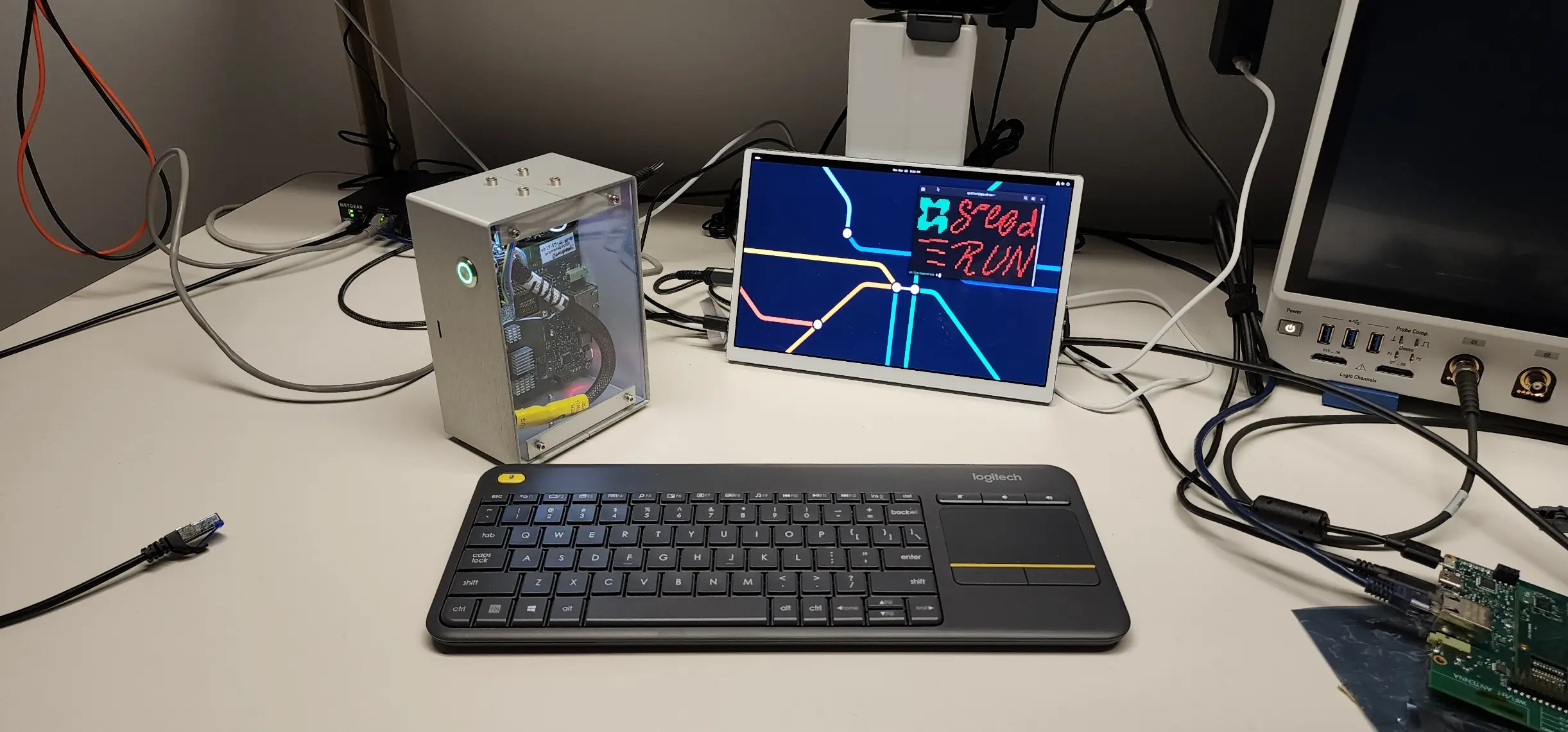
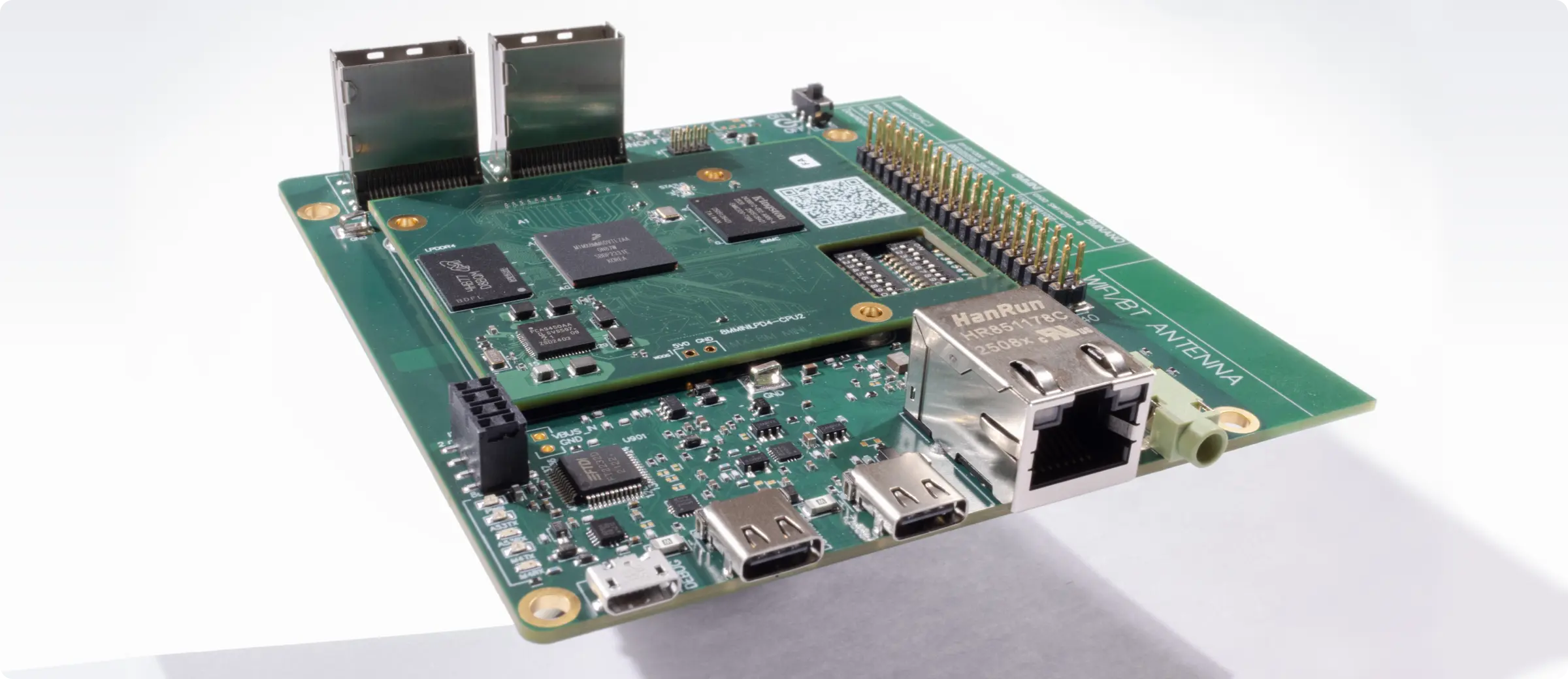
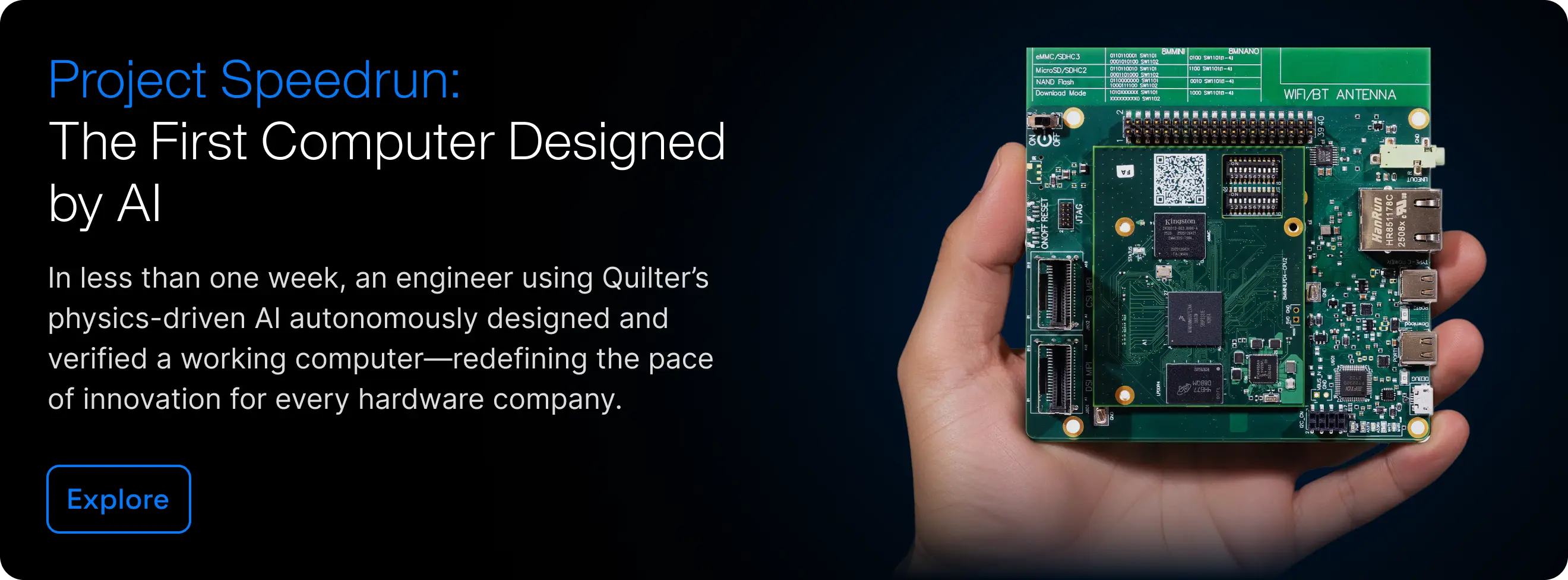
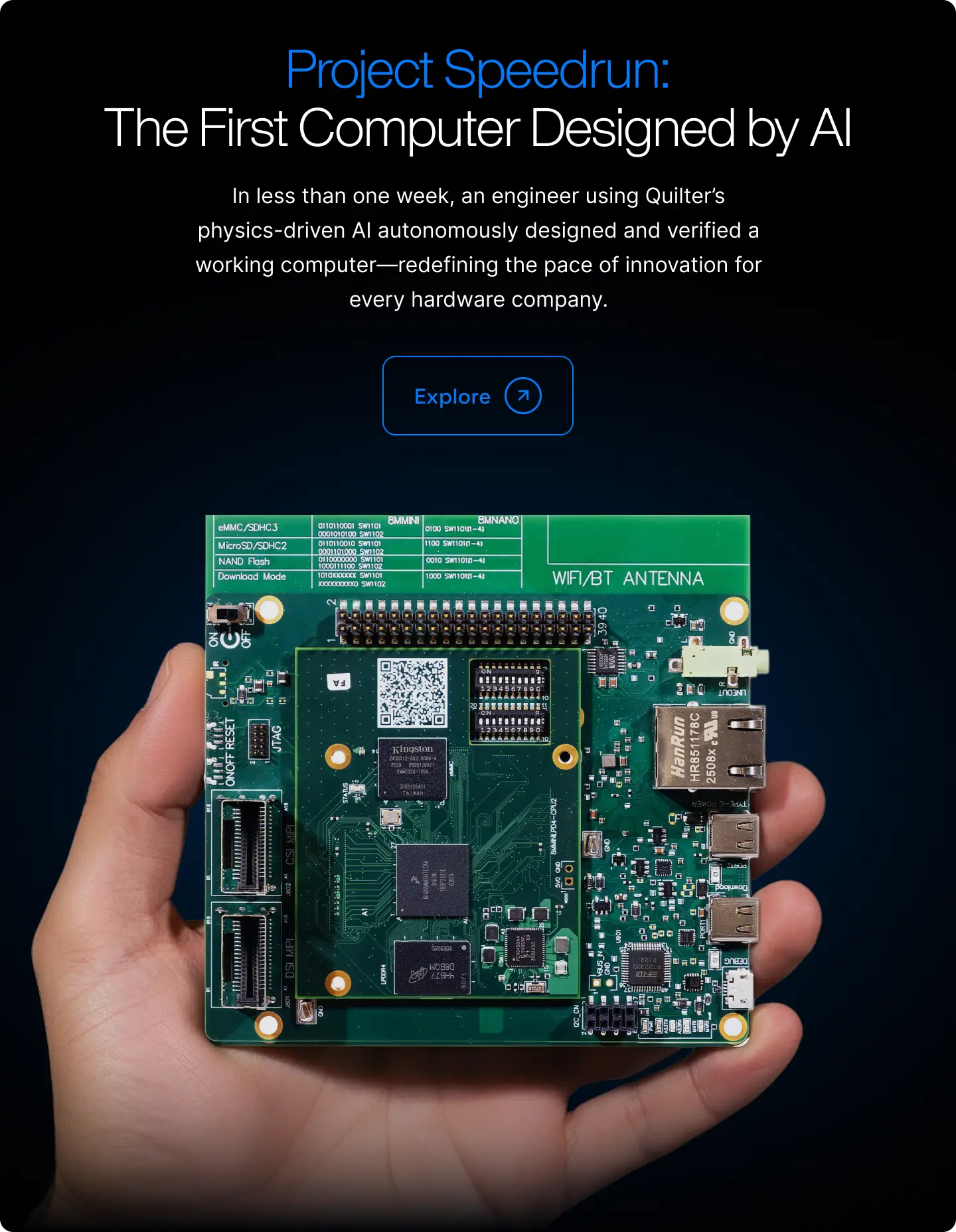
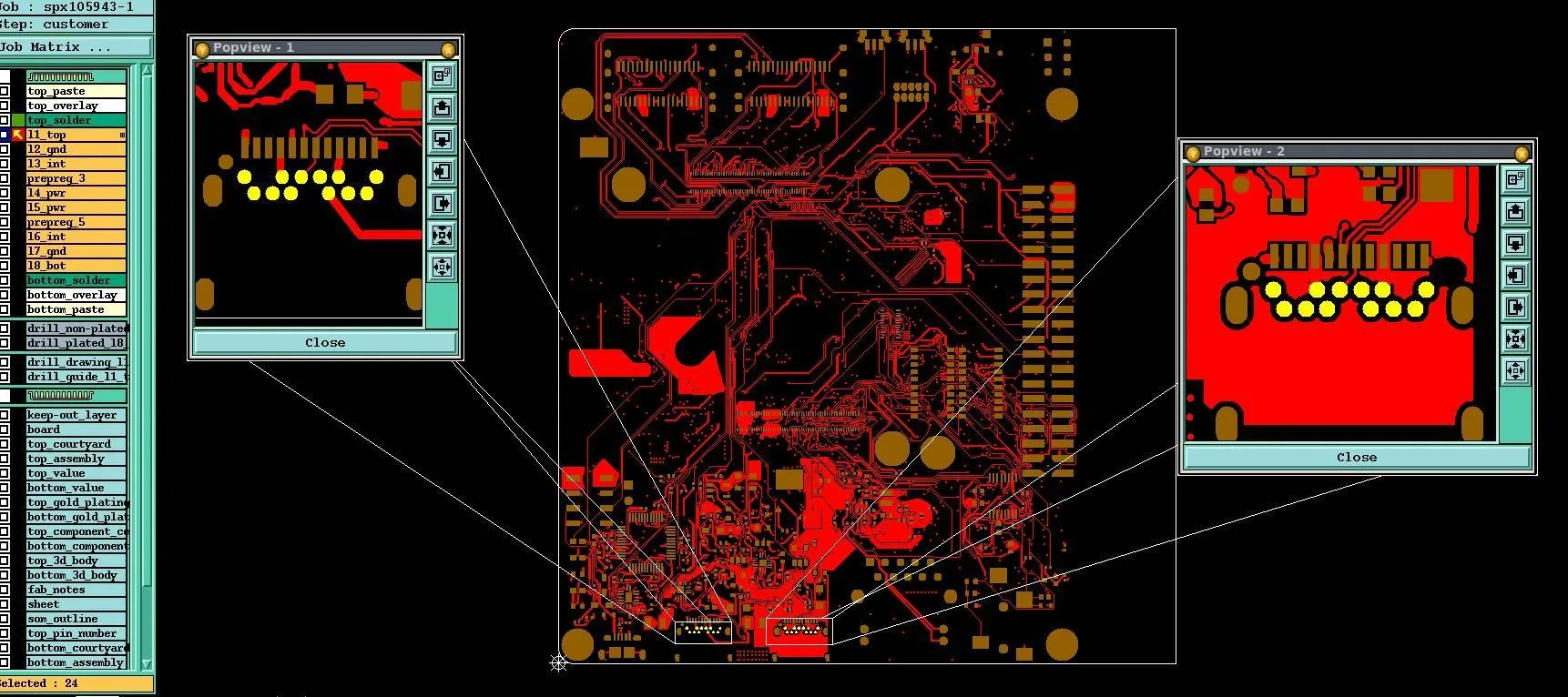
This article is one part of a walkthrough detailing how we recreated an NXP i.MX 8M Mini–based computer using Quilter’s physics-driven layout automation.
For decades, electronic design automation has been defined by a small group of incumbents and by weeks-long PCB layout cycles that every team simply accepted as reality. In 2026, that assumption is finally breaking. AI-native, physics-driven platforms like Quilter are emerging alongside Synopsys, Cadence, and Siemens to turn layout from a critical bottleneck into a fast, abundant resource for hardware teams.
This matters if you care about queries like leading platforms for electronic design automation or if you are living the day-to-day pain of “EDA market 2026” complexity: faster silicon cycles, tighter program timelines, more high-speed constraints, and a shrinking pool of expert layout bandwidth. The big three still run signoff. But the part that drags schedules most often, PCB layout iteration, is becoming a category of its own.
Let’s define the “big three” in EDA and how they came to dominate
When people say “leading platforms for electronic design automation,” they usually mean the vendors who sit closest to chip design, verification, and signoff.
Synopsys, Cadence, and Siemens EDA became the default stack because they built the deepest, stickiest toolchains for digital and mixed-signal flows: RTL-to-GDSII implementation, verification, timing closure, physical verification, and the signoff ecosystem that semiconductor teams trust. That gravity compounds. Libraries, flows, scripts, and skillsets become institutional. Switching costs become real.
Market share data underscores the concentration. TrendForce reporting cited publicly in 2025 pegs 2024 global share at roughly Synopsys 31%, Cadence 30%, Siemens 13%, with the remainder fragmented across smaller players. That concentration is the textbook definition of an oligopoly.
But here is the key nuance: this dominance was not built by fully solving PCB layout speed and automation.
Even in organizations that spend heavily with the big three, board layout remains a human-led craft. Placement is negotiated across mechanical, SI/PI, EMI, accessibility, assembly constraints, and tribal knowledge. Routing is careful, iterative, and review-heavy. “Autorouting” exists, but most serious teams treat it as a limited tool, not a path to first-pass success.
So the modern reality looks like this:
- The big three own signoff trust, system integration, and enterprise workflows.
- PCB layout and bring-up schedules still hinge on human throughput, review cycles, and repeated spins.
- Teams increasingly layer specialized tools around the core stack, not because they want to rip and replace, but because they need the slowest step to stop being serial.
That layering is the opening for AI-native PCB layout, autonomous PCB design, and physics-driven EDA as a new category that sits alongside incumbent platforms rather than trying to become them.
Here’s what recent market reports say about where EDA is headed
The macro trend is not subtle: EDA keeps growing, and complexity keeps rising with it. Multiple market reports project strong expansion through 2032, driven by advanced compute, AI workloads, and increasingly complex electronics.
Market report callout (Astute Analytica)
Astute Analytica projects the global EDA market growing from about $15.8B (2023) to about $35.3B (2032), implying a high single-digit CAGR across the forecast period.
Market report callout (Persistence Market Research)
Persistence Market Research forecasts EDA rising from about $17.59B (2025) to about $32.88B (2032), also reflecting strong demand for automation as complexity increases.
The interesting part is not just revenue growth. It is what these forecasts imply operationally: more designs, tighter schedules, and talent constraints. If the market is expanding while experienced PCB designers remain a scarce resource, the system is forced to change.
That is why the most plausible future is not “AI replaces EDA.” It is AI-native tools emerging on top of conventional stacks, targeting the most bottlenecked parts of the workflow first. In PCB land, that bottleneck is iteration throughput.
What’s broken in today’s PCB layout workflows?
Ask any senior hardware engineer what actually slips schedules, and you will hear the same pattern: it is rarely a single catastrophic mistake. It is the slow grind of iteration.
A typical PCB flow inside Altium, Cadence Allegro, or Siemens Xpedition still looks like this:
- Schematic capture and constraints definition: net classes, diff pairs, impedance, length matching targets, clearance rules, via constraints, stackup assumptions.
- Placement: connectors, BGAs, power stages, sensitive analog, keepouts, mechanical alignment, test access, assembly constraints.
- Routing: critical nets first (DDR, SerDes, clocks), then power distribution and planes, then everything else.
- DRC and review loops: DRC, SI/PI checks, EMI risk review, mechanical review, assembly review, then edits.
- Fabrication handoff: outputs, fab notes, stackup confirmation, manufacturing rule alignment.
- Bring-up reality: fixes discovered in the lab drive revisions, sometimes multiple.
None of this is “bad process.” It is what modern boards require. The problem is that the workflow is mostly serial and mostly human throughput limited.
The delays show up in familiar ways:
- Multi-week layout cycles because placement and routing are not just execution, they are decision-making under constraints.
- Serial review loops where each downstream stakeholder finds issues late, forcing rework.
- Repeated spins because the first version that “routes” is not always the version that behaves well in the real world.
Then capacity issues pile on. One expert PCB designer becomes the bottleneck for multiple programs. In semiconductors, validation hardware must land on time or firmware and test teams sit idle. In aerospace and defense, governance and review overhead amplifies the cycle time. In consumer electronics, slipping a window can kill an entire release.
Legacy features help at the margin: scripts, macros, interactive routing assists, sometimes limited autorouting. But these approaches generally still require heavy human guidance and do not create the one thing teams are desperate for: more viable layout candidates, faster.
Here’s why AI-native platforms are a different category-not just another autorouter
Autorouters are not new. What is new is the architecture of the system doing the work.
Traditional autorouters are primarily prescriptive: you define rules, the router tries to connect nets, and you fight the outcome. They often optimize locally (net by net, region by region) and can struggle with global tradeoffs like via strategy, return paths, congestion management, power integrity interactions, and routing topology under tight constraints.
AI-native PCB layout flips the model:
- The system is built around search and learning, not only deterministic routing heuristics.
- It can generate many candidate solutions, not a single attempt.
- It can evaluate candidates against constraints continuously, not only after the fact.
- It treats layout as an optimization space, not a one-shot routing pass.
That is why AI-native platforms are a category, not a feature. When the product is built around generating and ranking candidates, you naturally get iteration depth. And iteration depth is what breaks the schedule bottleneck.
Quilter’s positioning is explicit here: it is not “an autorouter,” not “a copilot,” and not “an LLM.” It is an autonomous PCB design engine built around physics-first computation.
This category is also inherently complementary to incumbent EDA stacks. Even if an AI-native engine generates layout candidates, teams still want their existing DRC workflows, library governance, SI/PI tooling, mechanical co-design, and signoff habits. The win is not replacing everything. The win is replacing the slowest manual step with abundant high-quality candidates.
How does a physics-driven layout engine actually work in practice?
If you are evaluating physics-driven EDA, the only question that matters is: what does the workflow look like when an engineer is on a deadline.
At a practical level, Quilter is designed to plug into the tools you already use. The typical flow looks like this:
- Upload an existing project
Quilter supports importing projects from common PCB ecosystems so teams can start from real designs and real constraints rather than toy examples. - Define what you control vs what the system controls
You set the board outline, pre-place key components (connectors, BGAs, mechanical anchors), and define floorplanning intent. You can decide what is locked and what is flexible. - Quilter identifies critical design structure
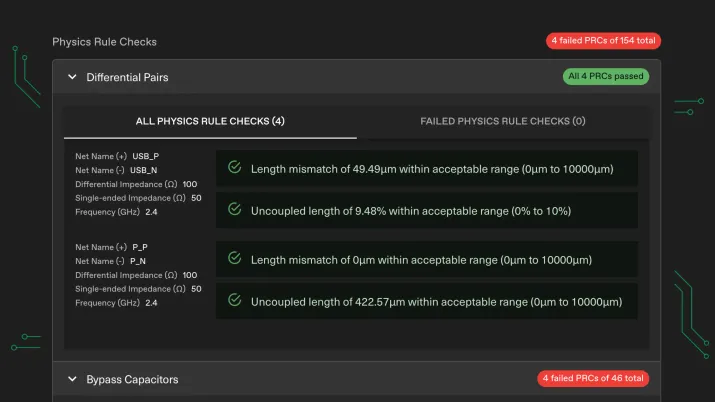
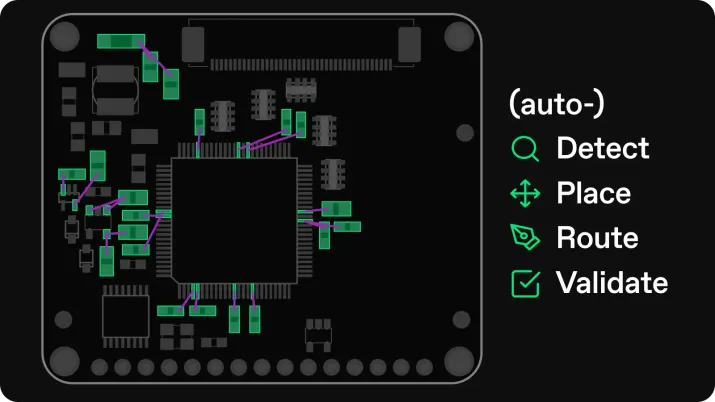
The engine surfaces things like bypass capacitor intent, impedance-controlled nets, and differential pairs so the system and the human reviewer share the same understanding of what matters. - Reinforcement learning plus physics constraints generates candidates
Instead of producing one “best guess,” the system explores the design space. Quilter describes this as reinforcement learning guided by real-world physics and manufacturing constraints, so candidate boards are evaluated continuously for feasibility. - Parallel exploration and continuous verification
Quilter emphasizes generating many layouts in parallel and scoring them for manufacturability and constraint coverage, with built-in physics-aware checks during generation. - Return results in native formats for your final review
Output comes back in the same ecosystem format so teams can run familiar DRC, apply finishing touches, and complete fabrication handoff in their existing CAD environment.
What results can PCB teams realistically expect in 2026?
“AI-native PCB layout” only matters if it changes schedules, not slide decks.
Quilter’s public positioning is centered on turning schematic-to-fab-ready from weeks into hours, with multiple candidates generated in parallel and early candidates appearing quickly.
In practice, the most realistic 2026 outcomes look like this:
1) Time-to-first-candidate collapses
Instead of waiting days for an initial layout direction, teams can review candidates early, while constraints and floorplanning intent are still fresh. That changes the cadence of the whole program. It becomes normal to evaluate options, not just accept the first route that closes.
2) Iteration depth becomes routine
The compounding advantage is not a single faster layout. It is the ability to explore variants: different stackups, different routing strategies, different placement constraints, different manufacturers. Quilter positions this explicitly as parallel exploration to increase design variants without delay.
3) Bring-up and validation timelines pull left
When layout stops being the long pole, downstream teams get unblocked sooner. This is most visible in evaluation boards, test fixtures, design validation boards, and backplanes, where schedule slip is often tied directly to layout throughput. Quilter’s solutions pages emphasize compressing these cycles by reducing layout bottlenecks.
4) Engineering bandwidth increases without adding headcount
Autonomous PCB design does not eliminate the need for expert review. It reduces the time spent on non-core execution so experts can focus on architecture, constraints, and risk review. That aligns with Quilter’s stated goal of freeing teams to iterate faster while maintaining physics-first confidence.
5) The biggest gains show up in high-stakes environments
If you are in semiconductors or aerospace and defense, you are often governed by review overhead, program risk, and schedule criticality. Quilter specifically markets solutions for semiconductors and aerospace-defense where delays are costly and governance matters.
Comparison table: traditional autorouters vs AI-native platforms
Criteria
Traditional autorouters
AI-native PCB layout platforms
Primary approach
Rule-driven routing heuristics
Search plus learning across many candidates
Output style
One routed attempt (often needs heavy cleanup)
Many complete candidates, ranked and reviewable
Iteration depth
Limited, mostly manual
High, parallel exploration is core
Constraint handling
Often local, net-by-net
More global optimization across tradeoffs
Verification cadence
DRC after routing, manual loops
Continuous constraint evaluation during generation
Integration
Lives inside one CAD tool
Designed to sit alongside existing EDA stacks
Best fit
Simple or loosely constrained routing tasks
Complex boards where iteration speed is the bottleneck
Run a focused pilot on a real board
Want to see what AI-native PCB layout looks like on your constraints, not a demo?
Pick one board type that is schedule-critical but low enough risk for a pilot:
- IC evaluation board
- test fixture
- internal validation board
- interconnect or backplane prototype
Then run a side-by-side: your current flow vs candidate generation plus review. Start with “time to first reviewable layout,” “number of viable variants explored,” and “rework avoided” as your success metrics.
For next steps, see Quilter’s Product Overview and Solutions pages to match a pilot to your board category.
Here’s how Quilter fits alongside Synopsys, Cadence, and Siemens today
The cleanest way to think about the post-oligopoly future is not vendor displacement. It is workflow composition.
A realistic 2026 stack often looks like:
- Silicon design, verification, signoff: Synopsys, Cadence, Siemens EDA (still foundational)
- PCB schematic and mechanical collaboration: Allegro, Altium-class tools, Xpedition-class tools
- AI-native layout iteration: Quilter as the autonomous layout engine between schematic and final signoff
- Analysis and signoff checks: your existing SI/PI, DRC, and manufacturing flows
This matters operationally because you do not need to rewrite your organization to get leverage. Quilter describes working with existing workflows by importing and returning projects in the same formats, allowing teams to keep their libraries, stackups, manufacturer rules, and review habits intact.
In other words, you keep the big three where they are strongest: enterprise-grade ecosystems and signoff trust. You add an AI-native PCB layout layer where they are weakest: fast iteration throughput for board layout.
If you want a concrete reference point, Quilter’s Product page and Solutions hub are written to reinforce this “alongside, not instead of” positioning.
What you need to know before piloting an AI-native layout platform
A pilot succeeds when it is engineered like an engineering project, not a software trial.
Start with the right board category
Choose a design where iteration speed is valuable and risk is manageable:
- test fixtures and harness-adjacent boards
- IC evaluation boards
- internal validation hardware
- non-flight prototypes (for aerospace programs)
Quilter explicitly markets strong fit for evaluation and validation categories where layout bottlenecks are frequent.
Evaluate on criteria that matter in production
Use a checklist that maps to real constraints:
- Constraint coverage: impedance nets, diff pairs, length matching targets, keepouts, via rules
- Transparency: can reviewers see what constraints were met and what needs attention
- Integration: can you import and export without breaking libraries, stackups, and manufacturing rules
- Review workflow: can your PCB lead review candidates efficiently and converge
- Manufacturability: does the candidate look like something you would actually send out
- Security and governance: data isolation, deployment model, compliance requirements
Quilter’s enterprise messaging highlights mission-critical support and solutions for regulated environments, while still preserving workflow compatibility.
De-risk with side-by-side comparisons
The fastest way to build trust is empirical:
- Run a human layout in parallel with Quilter candidates.
- Compare time to first reviewable layout, number of variants explored, and the nature of fixes required.
- Document what the system handles well and where human intervention remains essential.
Appoint a pilot champion and define measurable outcomes
Pick a single owner (PCB lead, validation lead, or systems engineer) and a small set of metrics. If the pilot becomes “everyone’s project,” it becomes nobody’s project.
Be explicit about pricing and usage structure early
Quilter describes pricing that scales by pin count rather than seats and emphasizes a usage-based approach. That model can be a major unlock for teams that want more iteration across a wider group without seat friction, but you should align it to expected design volume before rollout.
Next steps if you’re ready to test the post-oligopoly future
If your mental model of “leading platforms for electronic design automation” still stops at the big three, 2026 is the year to update the stack. The incumbents are still foundational for signoff and enterprise flows. The shift is that PCB layout iteration no longer has to be the limiting reagent.
If you are an enterprise team: start with a scoped pilot tied to a schedule-critical board category (IC evaluation, validation, interconnect). Use Quilter’s Product Overview and relevant Solutions pages to define the pilot and integration points.
If you are a startup team racing to product-market fit: look at Quilter’s startup program messaging around unlimited iteration and scaling by pin count, not seats, so the whole team can iterate without artificial constraints.
If you are a hobbyist, student, or very small team: the free tier is the fastest way to experience AI-native PCB layout on a real project, with minimal friction.
Finally, if you want more practical guidance on hardware-rich development and physics-driven EDA, subscribe to Quilter updates and follow the Workbench and blog for real design walk-throughs.
FAQ
Is Quilter a replacement for my current EDA tools?
No. The most practical 2026 workflow is coexistence: keep your existing CAD and signoff flow, and use Quilter to generate and rank layout candidates faster, then finish and sign off in your normal environment.
What board types are best for a first pilot?
Start with evaluation boards, test fixtures, internal validation hardware, or prototypes where iteration speed matters and risk is manageable.
How do we evaluate quality beyond “it routes”?
Use side-by-side comparisons focused on constraint coverage, review time, manufacturability, and the number of rework loops required before fabrication.
Does AI-native PCB layout help in regulated industries?
It can, if the platform supports governance, security, and review transparency. Quilter explicitly targets aerospace-defense and semiconductor environments where confidence and compliance matter.
How does pricing typically work?
Quilter describes usage-based pricing, typically price-per-pin, and highlights scaling by pin count rather than seats.



.webp)