






Read the Full Series
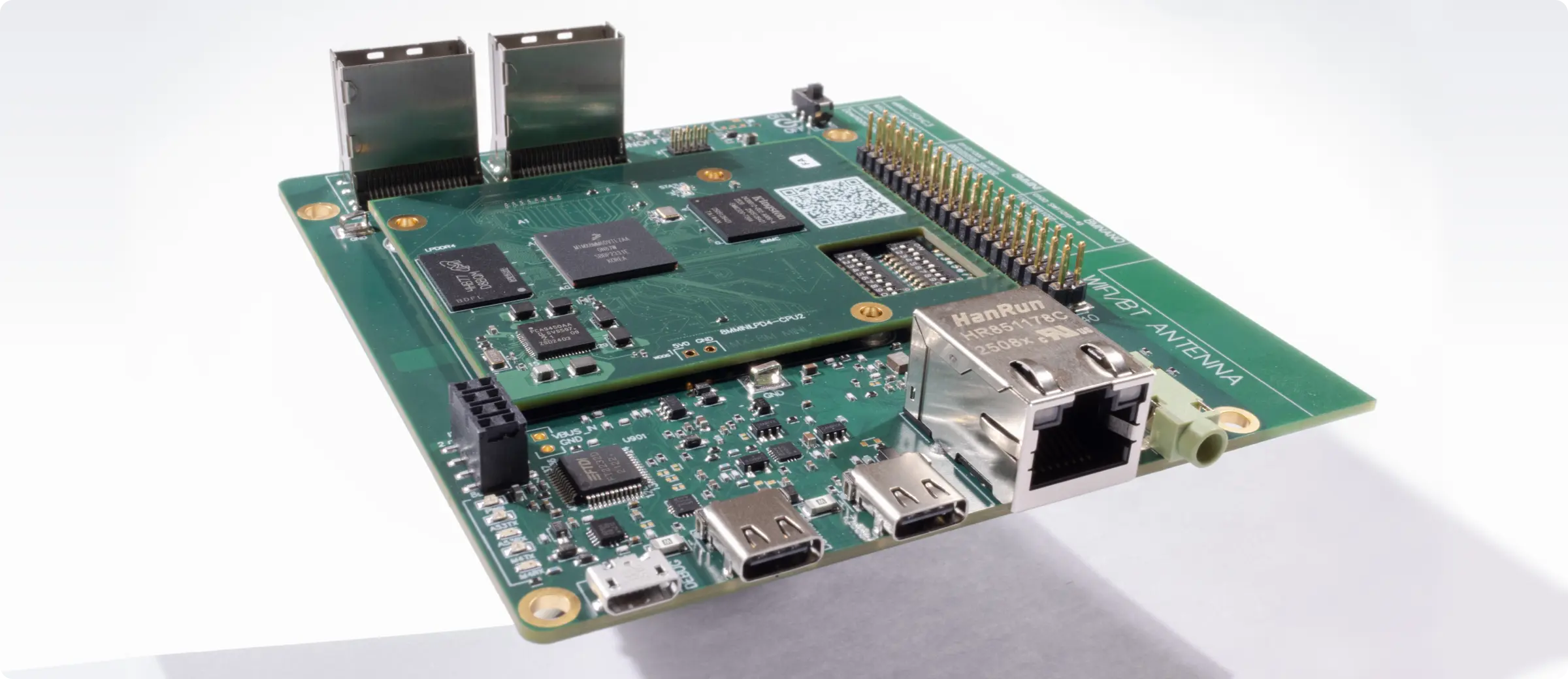
This article is one part of a walkthrough detailing how we recreated an NXP i.MX 8M Mini–based computer using Quilter’s physics-driven layout automation.
Most “agile hardware development” teams still wait weeks between a schematic decision and a board on the bench. The tools are modern, but the layout is still a scarce, manual bottleneck.
That gap is why so many teams searching for the best PCB tools for agile end up disappointed. They upgrade EDA. They add cloud collaboration. They wired up Git. They even automate outputs. And then the critical path stays exactly where it has always been: placement, routing, and the long tail of “just one more fix” before fab.
Quilter is built for that exact constraint. It layers on top of your existing EDA workflow, generates multiple candidates in hours, and evaluates each layout against your physical constraints, so you can iterate faster without compromising quality.
If agile is about compressing learning loops, Quilter is the missing link that turns your PCB toolchain into an agile engine.
Let’s define what “agile” really means for hardware teams
In software, “agile” is usually shorthand for short sprints, a visible backlog, continuous integration, and frequent feedback. In hardware, the spirit is the same, but the bottlenecks are different.
Here is a practical translation that matches how real hardware teams operate:
- Sprint (hardware): a time-boxed loop that ends with a measurable artifact. That might be a prototype board ordered, a bring-up run completed, or a validation test executed in the lab.
- Backlog (hardware): prioritized experiments and risk burn-down. “Try a new sensor,” “reduce EMI risk,” “validate PDN margin,” “swap connector footprint,” “prove thermal headroom.”
- CI (hardware): not just building firmware. Automated checks for constraints, repeatable outputs, and fast feedback reduce the number of surprises after you commit money and time to fabrication.
The hard truth is that hardware agility is limited by one thing more than any other: the time between intent and evidence.
- Intent: schematic decisions, constraints, and system-level tradeoffs.
- Evidence: a board on the bench, powering up, passing key checks, and teaching you what to do next.
PCB layout sits directly between those two. It is essential work, but it is also where programs lose momentum. Even with strong engineers and modern EDA, layout remains a serial, manual resource that forces every experiment to wait its turn.
That is why “agile hardware development” often becomes a slogan instead of a capability. The team has sprint rituals, but the board cadence runs on multi-week spins.
To make agile real in hardware, you need to compress the layout-to-fab loop so the lab can become a weekly learning surface, not a quarterly milestone. Quilter is designed around that premise: generate multiple candidates quickly, validate them against physics-driven constraints, and hand them back to your existing tools for final polish and fabrication outputs.
Here’s why traditional PCB tools hold back fast iteration
Altium, Cadence, Siemens, and KiCad are powerful. They are also optimized for a world where layout is a scarce craft resource that moves in long, careful phases.
A typical “fast” flow without layout automation looks like this:
- Schematic and constraints: nets, diff pairs, impedance targets, placement intents, keepouts.
- Placement iteration: connectors, critical ICs, mechanical constraints, rough floorplan.
- Routing pass: manual routing for critical nets, then the long grind of completion.
- DRC cleanup: fix violations, re-route around congestion, adjust pours, and return paths.
- Late-stage physics work: SI concerns surface; PDN questions arise; EMI risk increases.
- Variant pain: new stack-up, new manufacturer rules, connector swap, footprint change, then rework cascades.
- Handoff and output packaging: fab files, assembly drawings, BOM alignment, documentation.
Even with excellent designers, this typically falls within the familiar range of 2 to 6 weeks for many “non-glamorous but essential” boards, such as fixtures and validation helpers. Quilter explicitly calls out manual fixture design in that range because the queue and the grunt work are real. (Quilter)
The problem is not that EDA suites are “slow.” The problem is structural:
- Routing is serial work. One person can only finish one board at a time.
- Context switching is expensive. Every DRC fix and constraint adjustment interrupts flow.
- Physics issues surface late. The earlier you catch them, the cheaper the change. The later you catch them, the more they ripple.
- Variants compound the delay. If you want to try multiple stack-ups or manufacturers, you often incur the routing cost multiple times.
Cloud collaboration helps teams coordinate. Git-friendly formats help teams track changes. Output automation helps teams repeat builds.
But none of that creates the one thing agile needs most: layout abundance. The ability to explore multiple physically valid layout options in parallel, in hours, without consuming your best designer bandwidth.
That is the gap Quilter is designed to close.
What should a modern agile PCB toolchain include?
If your goal is “best PCB tools for agile hardware development,” the right answer is not one tool. It is a toolchain that enables fast, safe, and repeatable iteration.
A modern agile PCB stack usually needs:
1) Robust core EDA
You still need a serious PCB editor for schematic capture, constraints, libraries, and final sign-off. This is where Altium, Cadence, Siemens, and KiCad remain central.
2) Version control and review
Agile requires that hardware changes are reviewable and recoverable. Whether you use Git directly or a managed system, you need history, diffable decisions, and a clean handoff between engineers and layout.
3) Automated checks and repeatable outputs
DRC/ERC runs, BOM validation, fabrication outputs, and documentation should be consistent and ideally automated. This is the hardware version of CI hygiene.
4) Tight manufacturing integration
The faster you can go from “approved design” to “order placed,” the more your sprint ends with real progress instead of paperwork.
5) Layout abundance (the missing category)
This is what most stacks lack.
Agile hardware is not only about doing the same thing faster. It is about trying more options per unit time:
- multiple stack-ups
- multiple manufacturers
- multiple form factors
- multiple connector placements
- multiple routing approaches for risk management
Quilter’s positioning maps directly onto this missing piece: it generates multiple candidates quickly and evaluates them against physical constraints, turning layout from a scarce resource into an abundant one.
This is why “best PCB tools” in an agile context should be judged less by GUI depth and more by whether they shorten the schematic-to-bench loop without increasing respins.
Here’s how Quilter turns your existing EDA into an agile engine
Quilter is not a replacement for your PCB tool. It is a layout accelerator that sits on top of the tools you already invested in.
At a workflow level, it looks like this:
- You upload an existing project from your current environment and define what matters: board outline, pre-placement, floorplan, and constraints.
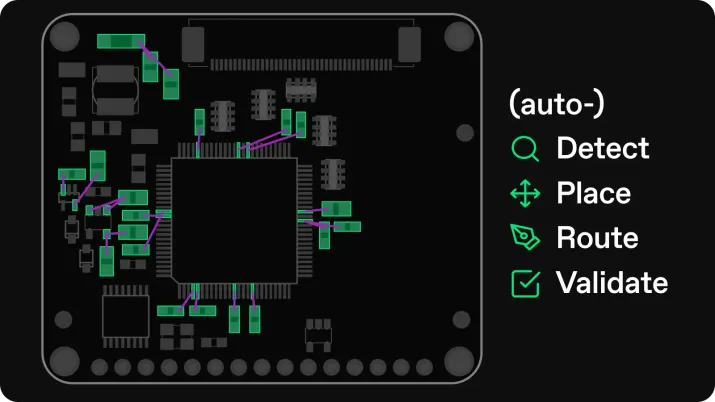
- Quilter’s engine explores the solution space, generating many candidate layouts rather than forcing you into a single path.
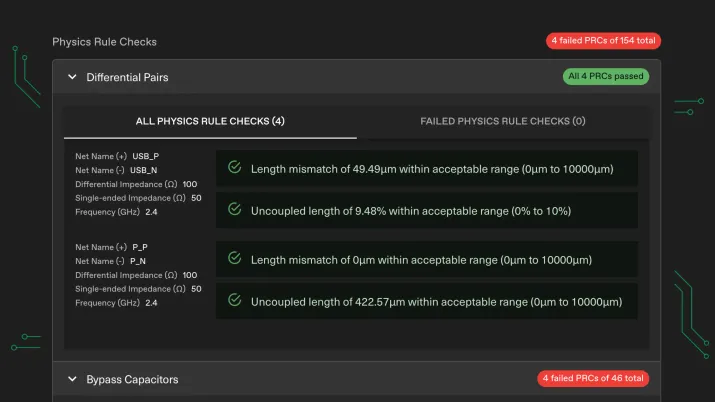
- Each candidate undergoes a physics-driven design review against the constraints you provided, so you can see what has been completed and what needs attention.
- Quilter then returns files in the same format you started with so you can run your usual DRC, make final touches, and generate fab outputs in the CAD tools you already know.
Two details matter for agile teams:
You stay in control of constraints
Agile hardware does not mean “let the machine decide.” It means you make intent explicit and then iterate quickly. Quilter’s model depends on the constraints and pre-placement decisions you provide, which keeps the loop engineer-driven.
Quilter makes parallel exploration practical
Instead of debating a stack-up choice for a week, you can try multiple stack-ups and manufacturers as parallel candidates in the same sprint. Quilter explicitly positions this as “iterate more” by trying multiple stack-ups, manufacturers, and form factors in parallel.
Callout: The agile unlock
Quilter’s core promise is not “faster routing.” It is the ability to generate multiple candidates in hours, with physics validating every trace, so you can iterate as software teams do.
How fast can an agile sprint really move with Quilter?
Below is a simple side-by-side timeline graphic you can drop into the post as-is. It contrasts a 3-day Quilter-driven sprint with a typical multi-week flow.
Sprint timeline graphic: 3 days vs multi-week flow
Quilter-driven sprint (3 days)
Day 1: Schematic + constraints locked for this sprint
- Define outline, pre-place connectors, set floorplan, declare critical nets
- Decide what “done” means for this iteration (constraints, review checklist)
Day 2: AI-generated layout candidates + physics review
- Quilter generates multiple candidates in parallel
- Team reviews ranked options, selects best fit, applies targeted cleanup in EDA
Day 3: Fab handoff + order placed
- Run native DRC in your tool
- Generate fab outputs, order boards
- Sprint review: document learnings and update constraints for next loop
Traditional flow (often 2 to 4+ weeks)
Week 1-2: Manual placement and routing
- Serial routing work, incremental completion, first full-pass DRC cleanup
Week 2-3: Rework and late-stage issues
- Congestion fixes, constraint pressure, SI concerns appear, variants get delayed
Week 3-4: Handoff packaging
- Outputs, assembly docs, last-minute footprint swaps, then order
This is not a hypothetical advantage. Quilter’s own messaging repeatedly anchors outcomes in hours-to-days, across board types, including “full fab-ready designs in under 4 hours” for designers and “schematic to fab-ready in under 4 hours” for electrical engineers.
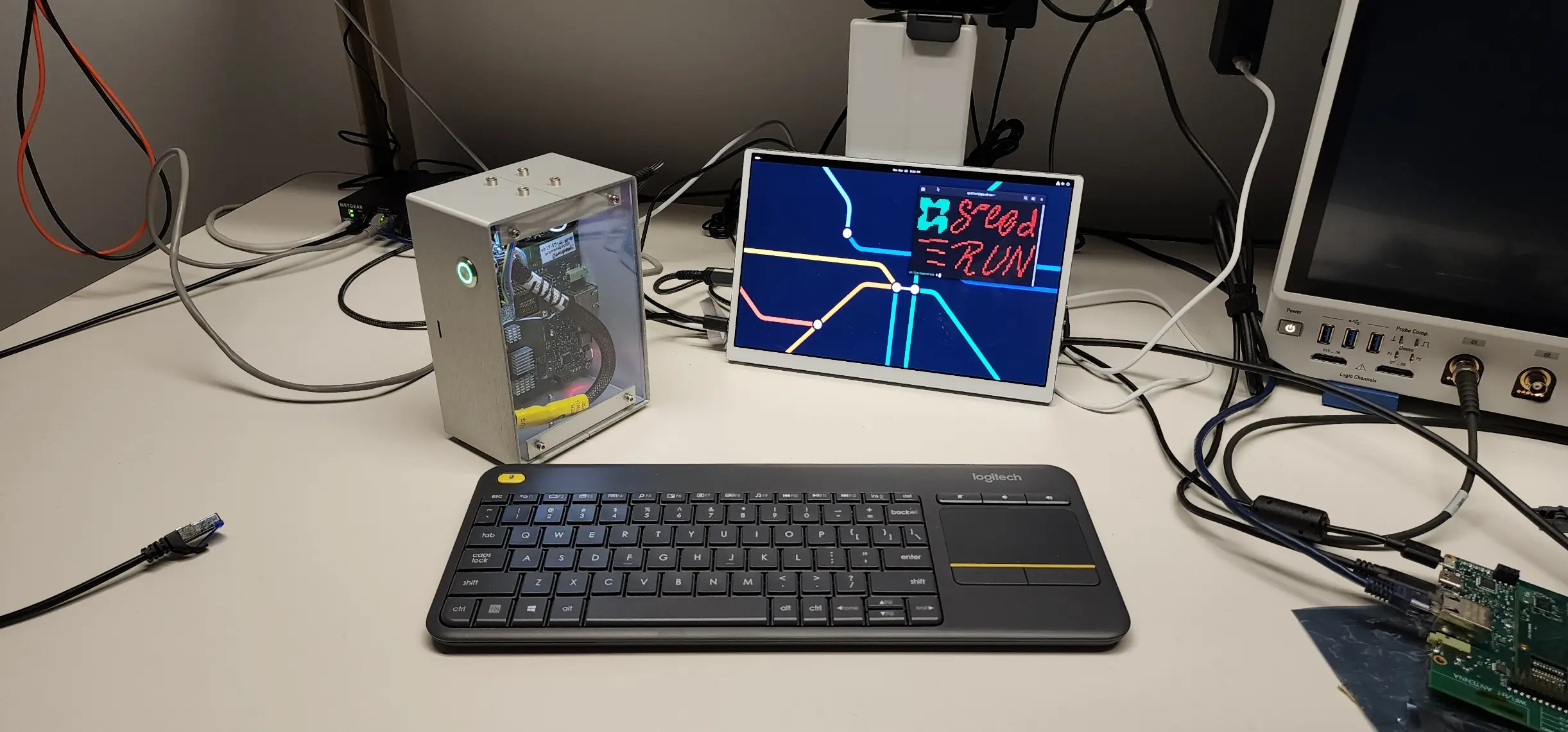
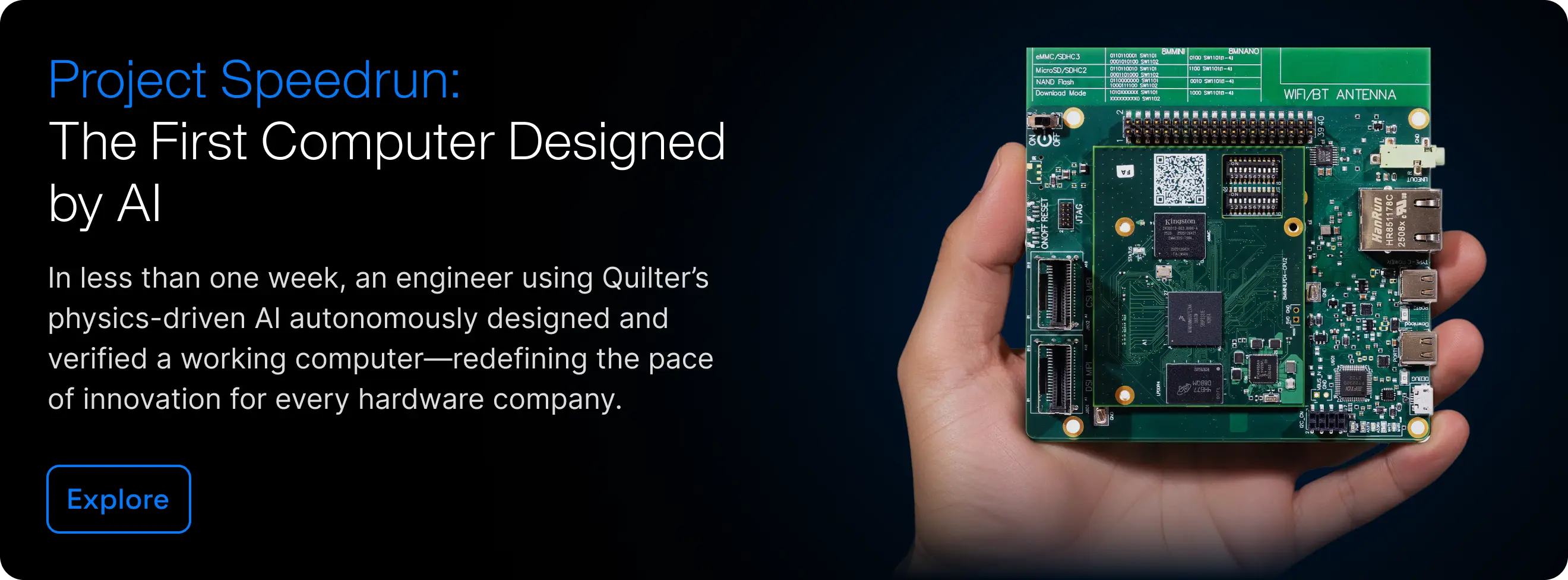
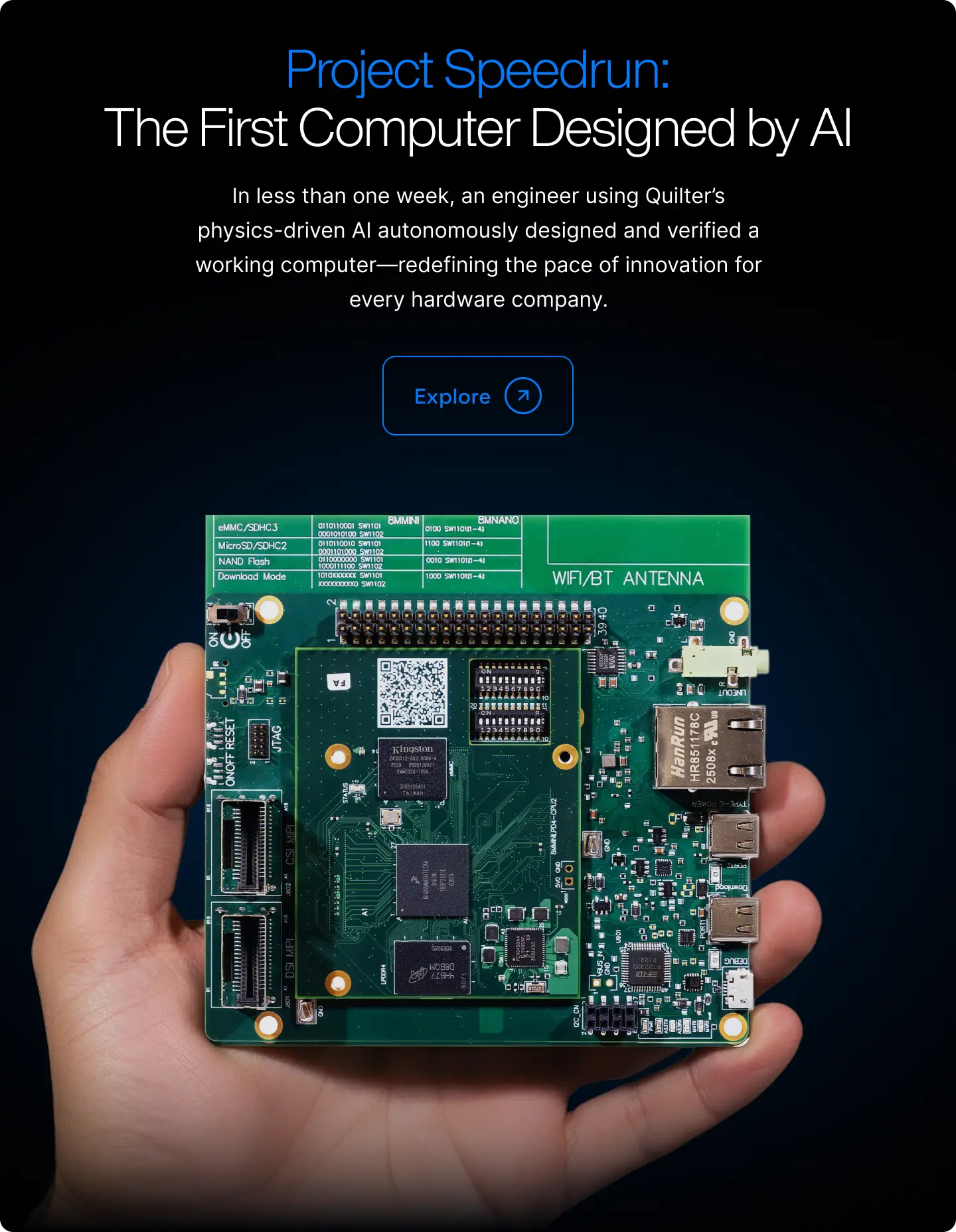
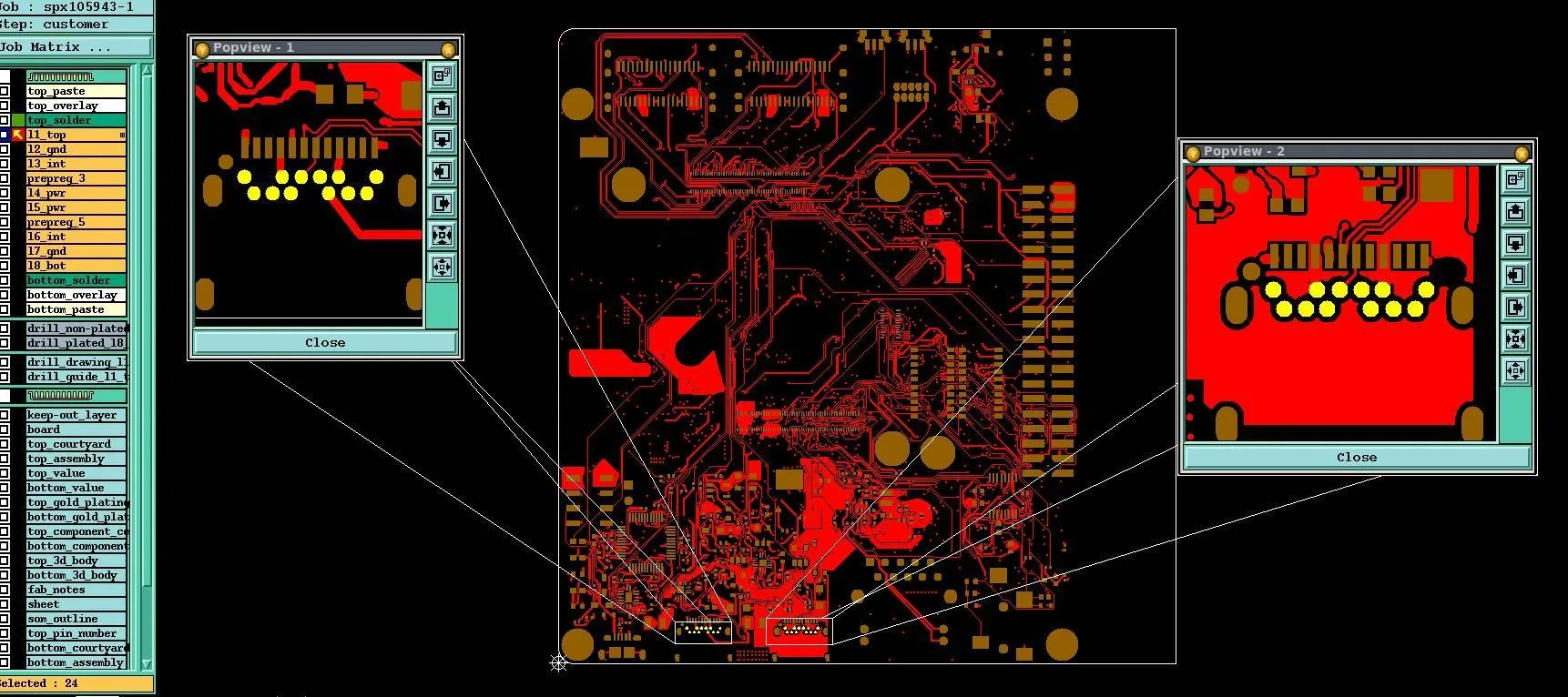
And the “Project Speedrun” story is a concrete demonstration of what happens when layout is no longer the pacing item: Quilter ran placement, routing, and physics validation in 27 hours, and the overall effort dramatically reduced manual design time.
What changes inside your agile rituals?
When a board can move from intent to order in a sprint-sized window, agile ceremonies start producing real hardware progress:
- Sprint planning becomes experiment selection, not guesswork about whether the layout will finish.
- Daily standups should focus on constraint tuning and risk management, not status chasing.
- Sprint reviews become a layout review with tangible candidates, not slides about “progress.”
- Retros become improvements to constraints, libraries, and automation, so the next loop gets even faster.
Let’s talk about cutting rework with physics-driven AI review
Speed without quality is not agile. It is just a faster failure.
The reason PCB iteration cycles stretch is not solely due to routing time. It is the rework loop:
- fixes after DRC
- fixes after SI review
- fixes after power integrity questions
- fixes after “this connector is out of stock”
- fixes after you realize a keepout was misunderstood
Quilter’s approach is “physics-first,” meaning the layout is evaluated against physical constraints during candidate generation, not after you have already invested days of manual effort.
In practical terms, Quilter highlights that it identifies and accounts for things like:
- bypass capacitors
- impedance-controlled nets
- differential pairs
- other critical considerations, with transparency about what it will and will not account for up front
Quilter has published technical depth on impedance-controlled routing and differential pairs, including how it calculates trace widths and spacing to meet target impedance requirements for the stack-up.
Why this matters for agile teams:
- Less churn late in the sprint. Physics-aware issues appear earlier, when changes are inexpensive.
- Fewer blocked sprints. You do not want the lab waiting because the layout rework exploded.
- More predictable delivery. Agile is about predictability as much as speed.
Example: IC evaluation boards and backplanes
An IC evaluation board often mixes tight placement, sensitive power domains, and fast interfaces. A backplane imposes significant constraints and high layer counts, and manual routing can balloon. Quilter positions backplanes as a case where “30+ days” can become “under 24 hours,” precisely because constraint density makes manual work slow.
What results can agile teams expect in different use cases?
Agile teams should measure results the same way they measure sprint health:
- cycle time (schematic decision to order)
- number of viable iterations per quarter
- rework rate (how much cleanup and rerouting)
- respin rate (how often you need another fabrication run)
- engineering bandwidth freed for higher-value work
Quilter’s own solution pages give concrete ranges by board type.
Test fixtures and harnesses: remove the “hidden queue”
Fixtures often sit behind “more important” boards, even though they unblock testing and validation. Quilter frames this as eliminating the test board bottleneck and notes that manual fixture design takes 2 to 6 weeks, while layouts are completed in under 4 hours in their automated flow.
Agile impact: faster bring-up support, fewer blocked validation days, and more predictable lab scheduling.
IC evaluation boards: turn weeks into hours
Quilter positions IC evaluation boards to reduce layout cycles from weeks to hours and enable rapid, fabrication-ready design iteration.
Agile impact: more experiments per silicon milestone, quicker feedback for firmware and characterization, fewer bottlenecks around “simple but urgent” boards.
Design validation boards: compress months of validation drag
Validation boards are where schedule risk piles up: socketed setups, early EMC checks, and bring-up infrastructure. Quilter positions these as shrinking validation cycles from months to days and saving 4 to 6 weeks on board bring-up.
Agile impact: validation becomes a continuous flow of risk retirement rather than a single big reveal.
Backplanes and interconnect boards: make constraint density sprint-sized
Quilter positions backplanes as constraint-compliant in a day and explicitly highlights how weeks of hand-routing can derail projects, especially for high-layer-count designs.
Agile impact: architecture exploration becomes practical. You can try variants without burning months of senior routing time.
Industry mapping: why this translates to real program advantage
Quilter’s industry messaging is consistent: when boards are “bring-up ready in a single workday,” programs move faster because the lab gets more shots on goal.
- Semiconductors: faster test hardware loops support tape-out schedules and characterization cadence.
- Robotics: tighter build-test cycles reduce time-to-behavior improvements.
- Consumer electronics: hitting market windows depends on compressing critical path work.
- Aerospace and defense: schedule confidence is everything, and the cost of delay is high.
The key is that none of these gains require abandoning your existing EDA investment. Quilter’s promise is additive: it returns design files in the format you submitted so your team can keep using the same tools and processes for sign-off and manufacturing outputs.
Here’s how to plug Quilter into your agile workflow today
If you want to evaluate whether Quilter belongs in your agile hardware toolchain, treat it like any other sprint improvement: run a tight pilot with measurable outcomes.
Step 1: Pick the right pilot board
Choose a board that is important enough to matter but bounded enough to complete quickly:
- a test fixture or harness board
- an IC evaluation board
- a validation helper board
These are ideal because they are frequently urgent, often queued, and highly repeatable across programs. Quilter’s solution pages are explicitly designed around these pain points.
Step 2: Define success metrics before you start
Keep it simple:
- cycle time from constraint lock to order placed
- number of viable candidates reviewed
- cleanup hours required inside your EDA
- number of late-stage issues found after candidate selection
Step 3: Run the pilot inside a real sprint cadence
Treat this like a 3-day loop:
- Day 1: lock constraints and pre-placement for this sprint iteration
- Day 2: generate candidates and do a structured review
- Day 3: finalize outputs in your existing toolchain and place the order
Step 4: Use sprint rituals to improve the next loop
The magic of agile is compounding improvement. Your first run is about cycle time. Your second run should be faster because you learned:
- which constraints were under-specified
- where placement intent needs to be clearer
- which checks should be added to your review checklist
Step 5: Decide on the right entry point
Quilter offers a free entry point and positions its Startup and Enterprise programs for teams with different needs.
Callout: The lowest-friction way to start
Run one board through Quilter in a time-boxed sprint, measure cycle time and cleanup effort, then decide whether to expand to fixtures, eval boards, and validation boards across the program.
Comparison table: how common PCB tools support agile goals (and what changes with Quilter)
Agile goal
Traditional EDA alone (Altium, Cadence, Siemens, KiCad)
With Quilter AI layered on top
Fast iteration cycles
Strong editing and constraint features, but layout remains serial and time-consuming
Multiple candidate layouts generated quickly, enabling shorter schematic-to-fab loops
Parallel exploration
Variants often mean repeated manual routing work
Try multiple stack-ups, manufacturers, and form factors in parallel candidates
Predictable quality
DRC is strong, but physics issues can surface late
Physics-driven evaluation during candidate generation reduces late surprises
Team bandwidth
Senior designers become the bottleneck
Designers focus on high-value work while automation handles repetitive layout
Handoff speed
Outputs can be automated, but only after layout completes
Quilter returns native files so final sign-off and fab packaging stay in your existing flow
Mini-FAQ
Does Quilter replace my PCB tool?
No. Quilter is designed to work with your existing workflow and returns files in the same format you submitted, so you can complete sign-off and fabrication outputs in your existing CAD tool.
What boards benefit most from Quilter?
Boards that are urgent, repetitive, or highly constrained are strong starting points: test fixtures and harnesses, IC evaluation boards, design validation boards, and backplanes.
How does Quilter reduce the risk of respin if it moves faster?
By evaluating candidate layouts against the physical constraints you provide and surfacing what is truly done versus what needs review, Quilter reduces late surprises that typically trigger rework.
What should we measure in a pilot?
Cycle time, number of viable candidates reviewed, cleanup hours in your EDA tool, and whether physics-related issues show up earlier in the process.
What is the easiest way to start?
Pick one board in an upcoming sprint and run it through Quilter Free, or run a time-boxed pilot through Startup or Enterprise, depending on your program constraints.
Useful sources
Solutions:
- https://www.quilter.ai/solutions/test-fixtures-harnesses
- https://www.quilter.ai/solutions/ic-evaluation-boards
- https://www.quilter.ai/solutions/design-validation-boards
- https://www.quilter.ai/solutions/backplane-interconnect-boards



.webp)