





Read the Full Series
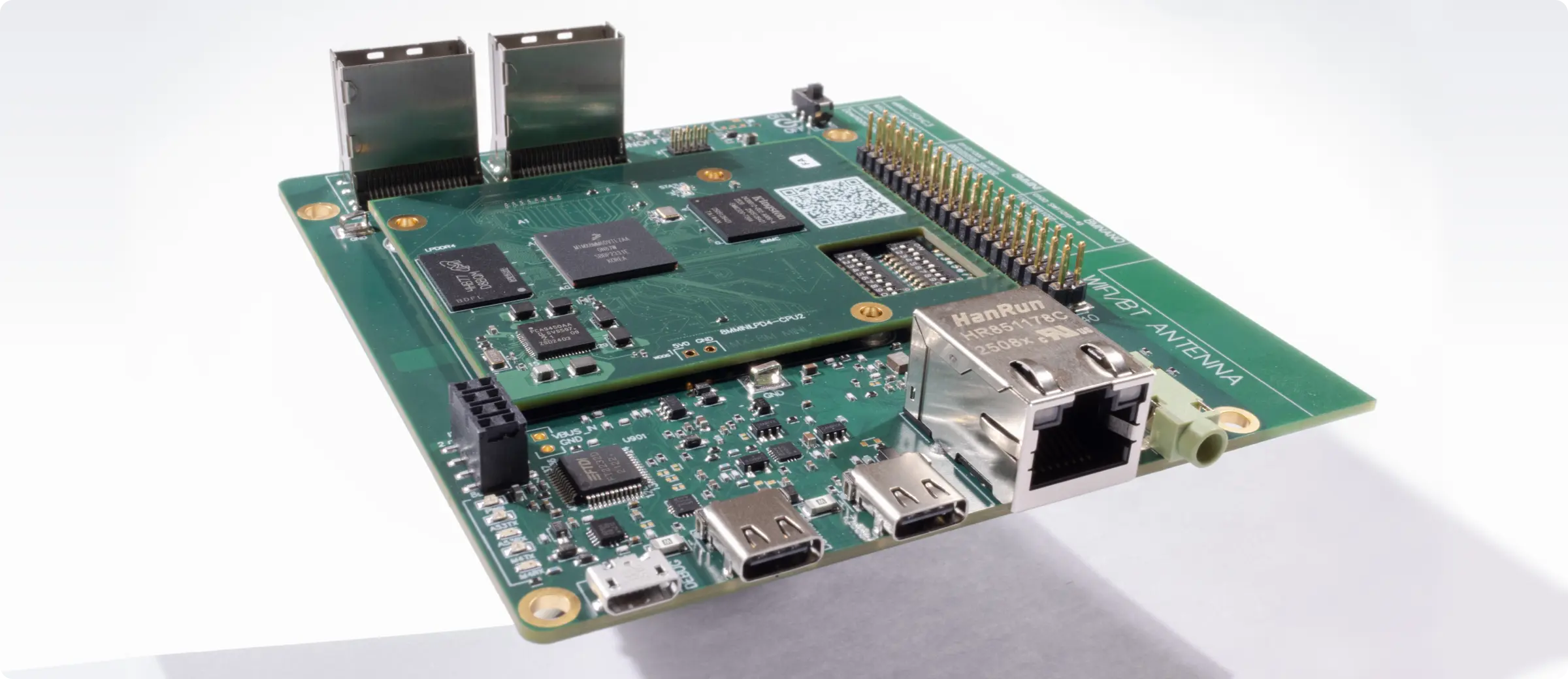
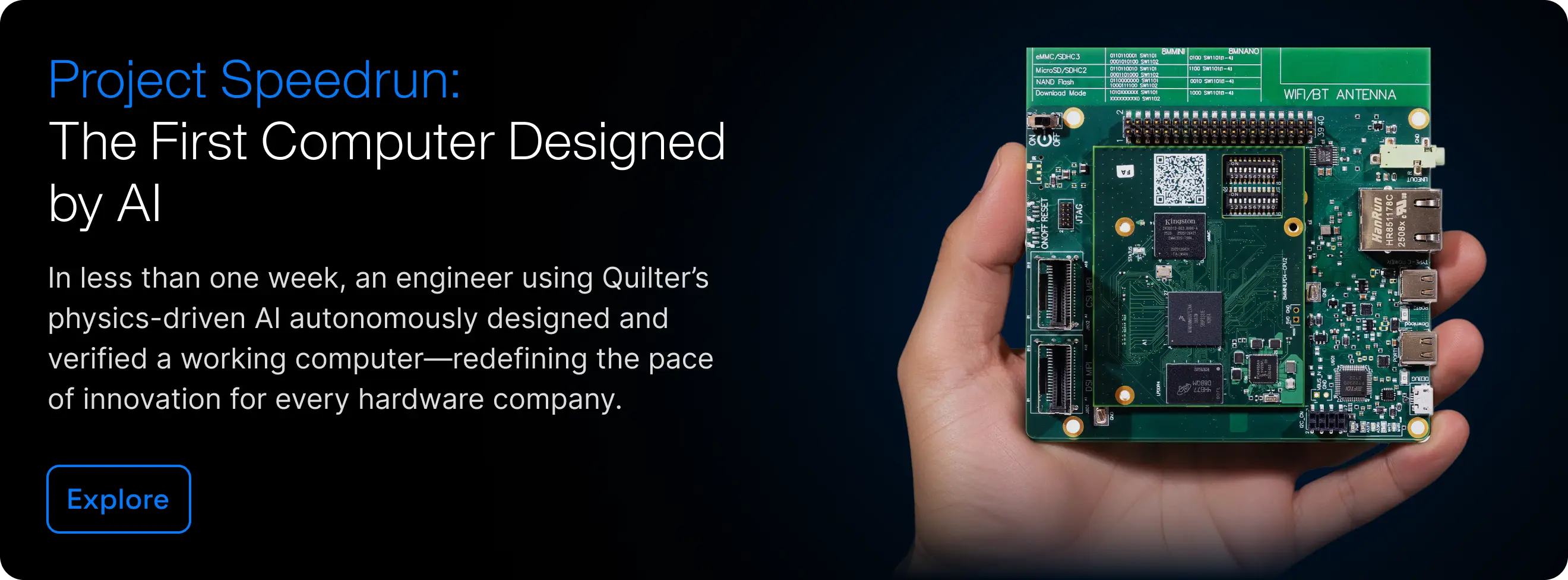
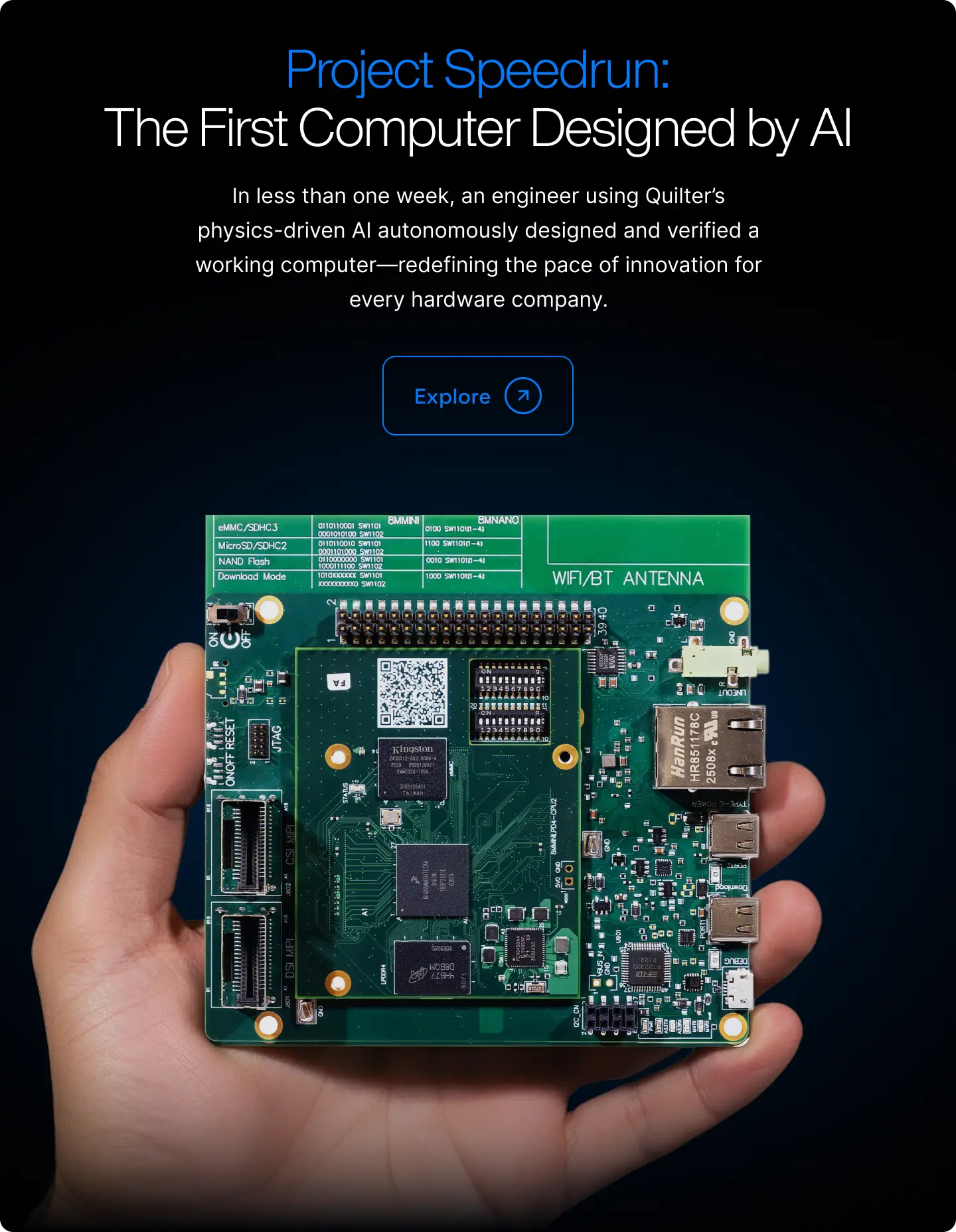
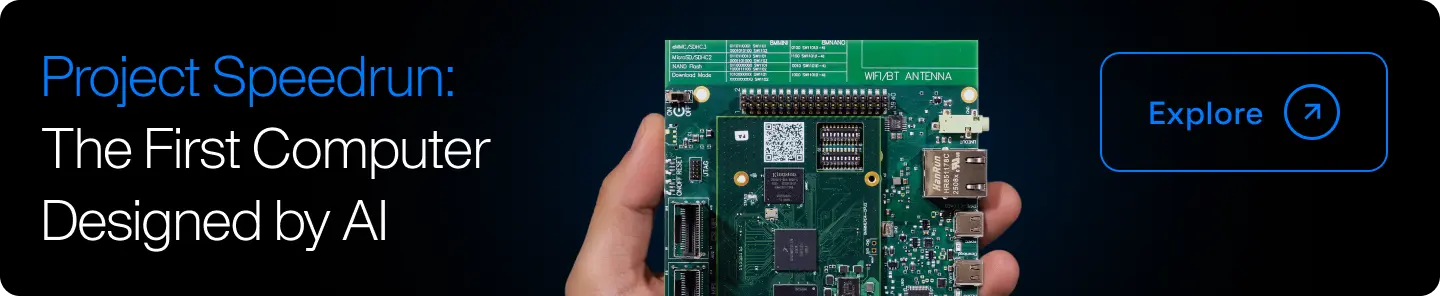
This article is one part of a walkthrough detailing how we recreated an NXP i.MX 8M Mini–based computer using Quilter’s physics-driven layout automation.
EDA is changing fast, but most PCB teams still feel stuck in week-long layout cycles, brittle handoffs, and too few chances to iterate before the schedule hardens. In 2026, three big shifts are finally reaching everyday board work: generative AI copilots, cloud-native collaboration, and true end-to-end PCB automation. Those themes are already visible across the broader EDA market, where major vendors are pushing AI-assisted workflows and cloud-connected design environments, and they now matter just as much to PCB teams as they do to ASIC teams.
For PCB organizations, the real question is not whether AI belongs in the toolchain. It is whether the new tools can handle the physical reality of board design: stack-up choices, return paths, impedance, bypassing, routing density, manufacturability, and the thousand small interactions that separate a pretty layout from a board that actually works.
That is where Quilter belongs in the story. Quilter positions itself as a new class of EDA system: a physics-driven AI platform that autonomously generates complete PCB layouts, explores thousands of candidate layouts through reinforcement learning, and returns them in the same CAD formats teams already use. In other words, not just another autorouter, and not just a chatbot bolted onto an old workflow.
In this post, we will break down the three innovations redefining PCB design in 2026 and show how Quilter turns those trends into a practical workflow for serious hardware teams.
Let’s define what’s really new in PCB design right now
For years, PCB design software has improved mostly incrementally. Better rule handling. Better 3D views. Better libraries. Better collaboration around the edges. Useful changes, yes, but not the kind that fundamentally altered how fast teams could move.
What feels different now is the jump from feature upgrades to workflow compression.
Across the broader EDA market, AI is no longer confined to narrow optimization experiments. Synopsys is expanding generative AI and workflow assistants across its portfolio, while Cadence is pushing agentic AI systems that automate increasingly complex design work. At the same time, cloud-connected environments such as Altium 365 are making distributed review and shared design context much more practical.
PCB teams are now seeing the same shift in their own version.
The three innovations that matter most right now are:
- generative AI copilots that do more than answer questions
- cloud-native EDA workflows that reduce handoff friction
- end-to-end PCB automation that makes full-board layout abundant
That last point matters. The newest innovations in EDA software are not just about making existing experts slightly faster. They are about changing the number of viable design attempts a team can produce in the same calendar window. Quilter is a strong example of this shift because it combines AI for PCB design, cloud-native execution, and full-layout automation into a single workflow.
What makes generative AI copilots actually useful for PCB layout?
“AI copilot” has become one of those phrases that sounds impressive until you ask what the tool actually does.
In EDA, many copilots today focus on assistance around the flow. They help engineers search documentation, write scripts, understand tool settings, or move faster through repetitive commands. That is valuable. Synopsys, for example, has publicly positioned its AI copilot around knowledge assistance, workflow support, and faster scripting, while Cadence continues to frame AI as a means to automate complex implementation tasks.
But PCB layout raises a harder standard.
A useful generative AI PCB layout system cannot stop at “helpful suggestions.” It has to deal with board outlines, connector locations, floorplanning, differential pairs, controlled impedance, decoupling strategy, spacing, manufacturability, and signal and power integrity concerns that interact across the whole design. A copilot that simply proposes a placement hint or writes a setup script is not enough.
That is why physics awareness is the dividing line.
PCB is full of coupled constraints. You are not optimizing a single trace in isolation. You are navigating a physical system where one local change can ripple into routing congestion, return path quality, EMI risk, or assembly pain. So the real promise of AI for PCB design is not conversational convenience. It is the ability to generate complete, constraint-respecting board candidates that engineers can review, compare, and refine.
That is the pivot Quilter makes. Instead of treating AI as a side assistant, it treats generative AI PCB layout as a layout engine grounded in physical rules and reinforcement learning. The result is closer to a physics-first layout partner than a classic copilot.
Here’s how Quilter turns AI into a physics-first layout partner
Quilter’s workflow starts where real teams already work. Users can upload existing Altium, Cadence, Siemens, or KiCad projects, define the board outline, pre-place connectors, and determine the floorplan. That matters because adoption rises when the tool respects the existing stack rather than demanding a new one.
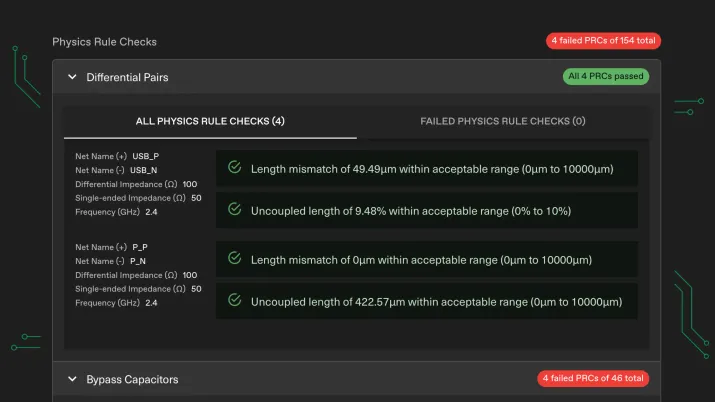
From there, Quilter analyzes the design and identifies critical electrical and physical requirements such as bypass capacitors, impedance-controlled nets, differential pairs, and other layout-sensitive structures. It also makes clear what it will and will not account for up front, which is important for trust. Engineers do not need a black box. They need bounded automation that they can reason about.
Under the hood, Quilter uses reinforcement learning for PCB layout. Its published positioning states that the system actively explores thousands of candidate boards generated by the system rather than following a single deterministic routing path. Each candidate is evaluated with physics-based checks, and the system iterates toward stronger solutions. Quilter also says it is not trained on human-designed boards, which it frames as a way to keep designs original and secure.
That loop is the heart of the product:
- Import the existing CAD project
- Define constraints, floorplan, and fixed elements
- Generate many full-board candidates in parallel
- Score each candidate against physical constraints
- Review which aspects pass, which need attention, and which option is best for handoff
The transparency is a major part of the value. Quilter states that designers receive clear feedback on which design aspects are complete and which still require review. That is a much better operating model than blindly trusting automation or rejecting it outright.
The business impact is straightforward. Quilter claims to deliver full fab-ready designs in under 4 hours for relevant use cases and positions speed as a way to free PCB designers and electrical engineers to focus on architecture, integration, and edge cases rather than routine layout churn.
How is cloud-native collaboration changing day-to-day PCB work?
Ask almost any hardware team where delay creeps in, and you hear a familiar pattern: file handoffs over email, shared-drive confusion, unclear design status, scattered review comments, and stakeholders looking at different versions of the truth.
Cloud-native EDA is changing that.
Platforms like Altium 365 have pushed the market toward shared design context, secure-anywhere access, and more connected review throughout the PCB development process. That does not eliminate the need for desktop CAD, but it does reduce the overhead around collaboration, visibility, and decision-making.
This matters even more to fast-moving, security-conscious teams. Semiconductor validation teams, robotics teams, and aerospace and defense organizations often need multiple people reviewing the same board through different lenses: electrical correctness, layout quality, manufacturability, testability, vendor compatibility, and compliance. Cloud-native EDA makes parallel review and controlled access much easier than manually shipping files around.
It also makes iteration more realistic. When computing happens in the cloud, teams are no longer limited to one or two precious attempts because a workstation or a specialist is overloaded. The broader EDA market has already embraced cloud and elastic compute as a serious operating model, and PCB workflows are following suit.
Cloud-native EDA, in practice, means less time coordinating layout work and more time evaluating actual design options.
Here’s how Quilter fits into your existing PCB stack without friction
One reason teams hesitate to adopt new EDA infrastructure is simple: they do not want to rip out what already works.
Quilter’s positioning directly addresses that concern. The workflow is built around uploading existing projects, configuring the board constraints and floorplan, then generating candidates in the cloud. After that, the outputs are returned in the same file formats users submitted, so teams can continue DRC, final polish, and fabrication prep within the CAD tools they already trust.
That “works with your existing workflow” message is not incidental. It is central to why cloud-native EDA becomes practical instead of disruptive.
For collaboration, Quilter provides teams with a shared space to review multiple generated layouts and their associated physics checks. That is useful not only for PCB designers, but also for R&D managers, validation engineers, and manufacturing stakeholders who need visibility into design maturity without waiting for a perfect final file.
For security-sensitive environments, Quilter also speaks directly to controlled, in-house innovation and compliance-heavy programs. On its site, it specifically references aerospace and defense use cases, MIL-STD alignment, and ITAR-oriented positioning for mission-critical work. Those claims should still be validated against any specific procurement or compliance requirements, but they show that the product is being designed for high-stakes environments, not just lightweight prototyping.
Cloud-native, in this context, does not mean “throw away your CAD.” It means adding design capacity, shared visibility, and faster iteration without changing the formats and downstream processes your team already depends on.
IC evaluation boards: weeks to hours
Quilter positions IC evaluation boards as a use case where layout cycles can shrink from weeks to hours, helping teams keep pace with silicon validation.
What does true end-to-end PCB automation look like in 2026?
True end-to-end PCB automation is not autorouting with better marketing.
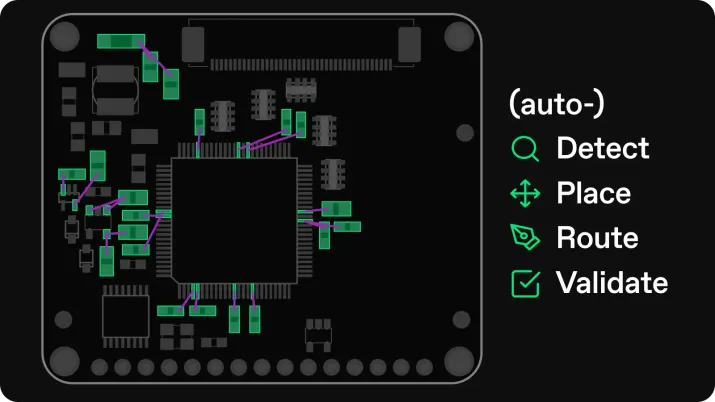
In 2026, it should mean a system that spans the meaningful arc of layout work: schematic handoff, floorplanning, placement, routing, physics and manufacturability checks, candidate comparison, and iteration. It should reason across the whole board, not just solve isolated local problems.
Legacy autorouters were rarely trusted for this because they often assumed fixed placement, handled constraints poorly, or optimized traces in ways that ignored broader board behavior. They could be useful in narrow situations, but they did not make the layout abundant.
Modern AI-EDA changes the frame. Instead of relying on local heuristics for a single pass, systems like Quilter describe a search process over thousands of full-board candidates, with scoring grounded in physical constraints. That is a fundamentally different model.
The outcome is not “replace PCB designers.” It is “give expert teams many more viable attempts per project.” That changes the hardware strategy. More layout attempts in the same time window means more chances to test alternate stack-ups, mechanical tradeoffs, vendor assumptions, or bring-up strategies before a board ever ships.
For R&D leaders, end-to-end PCB automation matters because it compresses one of the slowest loops in the hardware program. Faster layout means faster board bring-up, more design-space coverage, and fewer weeks lost to avoidable bottlenecks.
Here’s how teams are using Quilter to automate the entire layout loop
The clearest way to understand end-to-end PCB automation is through actual board categories.
For test fixtures and harnesses, Quilter says teams can shave 4 to 6 weeks off board bring-up. That is a strong fit for automation because these boards often matter urgently, but do not justify starving the rest of the team for layout bandwidth. A cloud-native AI system can take the schematic, generate multiple candidates quickly, and let engineers choose the strongest path without holding up validation work.
For IC evaluation boards, the value is schedule alignment. Silicon programs move on unforgiving timelines. If the evaluation board lags, the validation effort lags with it. Quilter positions this use case as cutting layout cycles from weeks to hours, which is exactly the kind of compression that helps teams hit post-tape-out milestones.
For design validation boards, the upside is iteration density. Quilter says validation cycles can shrink from months to days by enabling more rapid, fabrication-ready design iteration. That matters because validation is rarely about one perfect board. It is about learning quickly, finding edge cases, and testing variants without waiting through long layout queues.
For backplane and interconnect boards, the company claims a shift from 30-plus days to under 24 hours. These designs can be routing-heavy and schedule-sensitive, making them a powerful example of what full-board automation can unlock when physics validation is built into the loop rather than an afterthought.
Across industries, Quilter ties those outcomes to semiconductor, robotics, consumer electronics, and aerospace and defense teams that need more throughput without compromising rigor. In each case, the operating model is the same: upload the existing project, generate multiple candidates, review the physics-driven results, then take one forward through the normal CAD and fabrication workflow.
See what AI-assisted EDA looks like on a real board
Upload an existing Altium, Cadence, Siemens, or KiCad project to Quilter and generate multiple physics-validated layout candidates in under four hours.
Start with Quilter for Free
Request an enterprise demo
What results can serious hardware teams expect from these innovations?
When generative AI copilots, cloud-native EDA, and end-to-end PCB automation come together, the gains compound.
The first gain is speed. Quilter repeatedly frames its value around going from schematic to a fab-ready layout in hours rather than weeks, and around producing multiple candidates in parallel rather than waiting on a single serial layout path.
The second gain is the iteration count. More design attempts within the same calendar window increase the odds of finding a stronger solution before fabrication. That can translate into fewer late-stage surprises, more informed tradeoffs, and a better shot at staying on schedule.
The third gain is engineering focus. Major EDA vendors are openly arguing that AI should move engineers away from repetitive implementation work and toward higher-value decisions. Quilter makes the same case for PCB: let automation handle routine layout generation so engineers can stay focused on architecture, integration, and board-level judgment.
For leadership, that shows up in metrics that matter: faster bring-up, less schedule risk, and the ability to support more active hardware programs without linear headcount growth.
That is why the newest innovations in EDA software matter. They are not interesting because they are new. They matter because they let serious hardware teams learn faster.
Here’s how to pilot these innovations on your next board
The best pilot is not your hardest board. It is a meaningful one with clear schedule pressure and a contained scope.
A test fixture, validation board, or IC eval board is often the right place to start. Those programs reveal whether AI for PCB design is truly saving time, whether cloud-native review reduces friction, and whether physics-driven automation produces candidates your team actually wants to take forward.
A simple three-step pilot looks like this:
- Upload an existing Altium, Cadence, Siemens, or KiCad project
- Review multiple AI-generated candidates and their physics checks
- Select one layout for final polish, fab, and bring-up
For lower-friction evaluation, Quilter offers both a free tier and a startup program. For enterprise teams working in mission-critical environments, the more appropriate path is usually a scoped conversation around compliance, access control, support, and rollout requirements.
If your team is evaluating cloud-native EDA, generative AI PCB layout, or end-to-end PCB automation this year, the most useful next step is not another abstract debate. It is running a real design through a real system.
Upload your next board to Quilter and see how physics-driven AI can compress your layout cycle into hours. Or schedule a demo with the Quilter team to scope an enterprise rollout around your existing PCB stack, security requirements, and program goals.
FAQ
Does Quilter replace our existing PCB CAD tools?
No. Quilter is designed to work with existing Altium, Cadence, Siemens, and KiCad projects and returns layouts in the same formats, so teams can continue review, DRC, and fab preparation in their usual tools.
Is Quilter just an autorouter with AI branding?
That is not how Quilter positions the product. It describes the system as a full-board, physics-driven automation using reinforcement learning to explore thousands of candidates across placement, routing, and validation.
Can cloud-native EDA work for security-sensitive teams?
It can, but requirements vary by organization. Quilter explicitly markets to aerospace and defense use cases and references controlled, compliance-oriented workflows, though any team with strict requirements should validate details directly during evaluation.
What is the practical value of AI-assisted PCB layout?
More viable design attempts, faster layout turnaround, and better use of engineering time. The value is not novelty. It compresses the layout loop, so teams can learn faster and de-risk programs earlier.


.webp)