






Read the Full Series
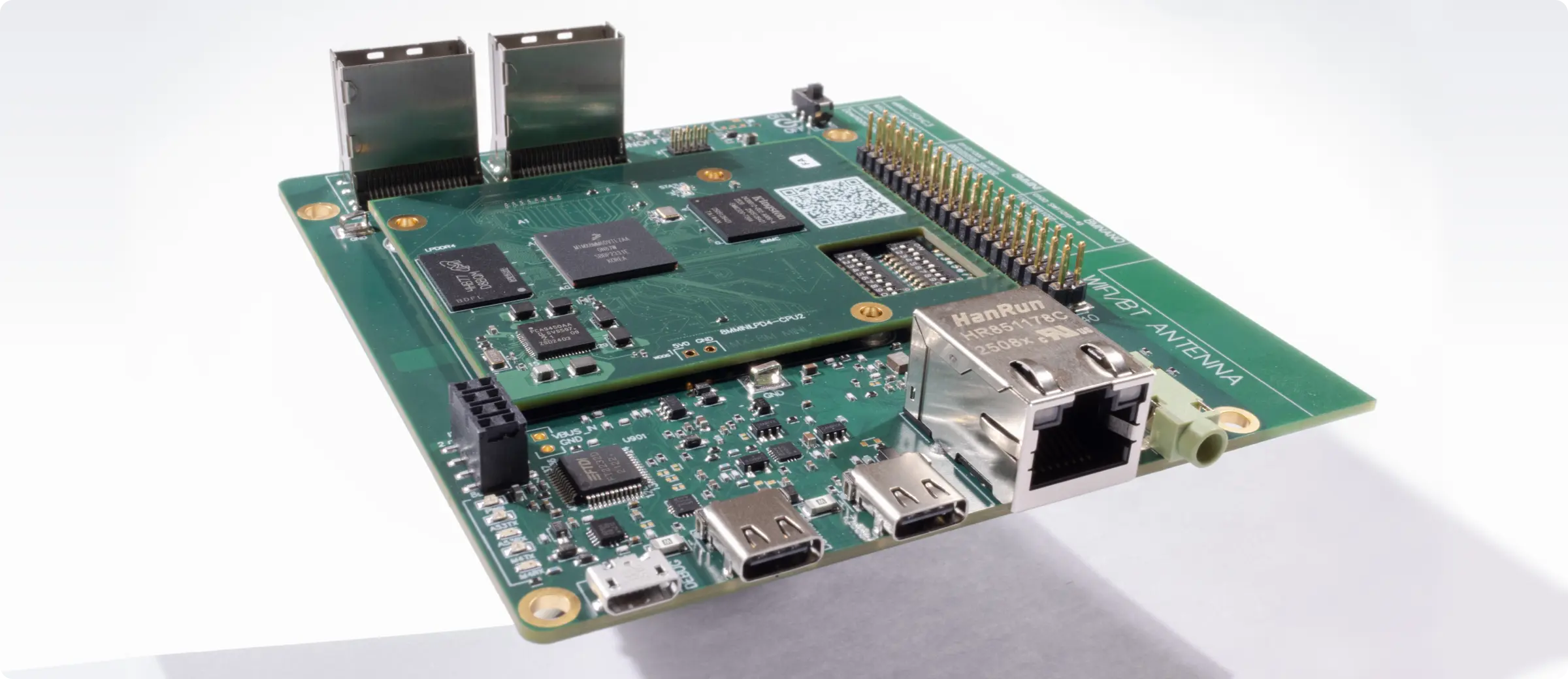
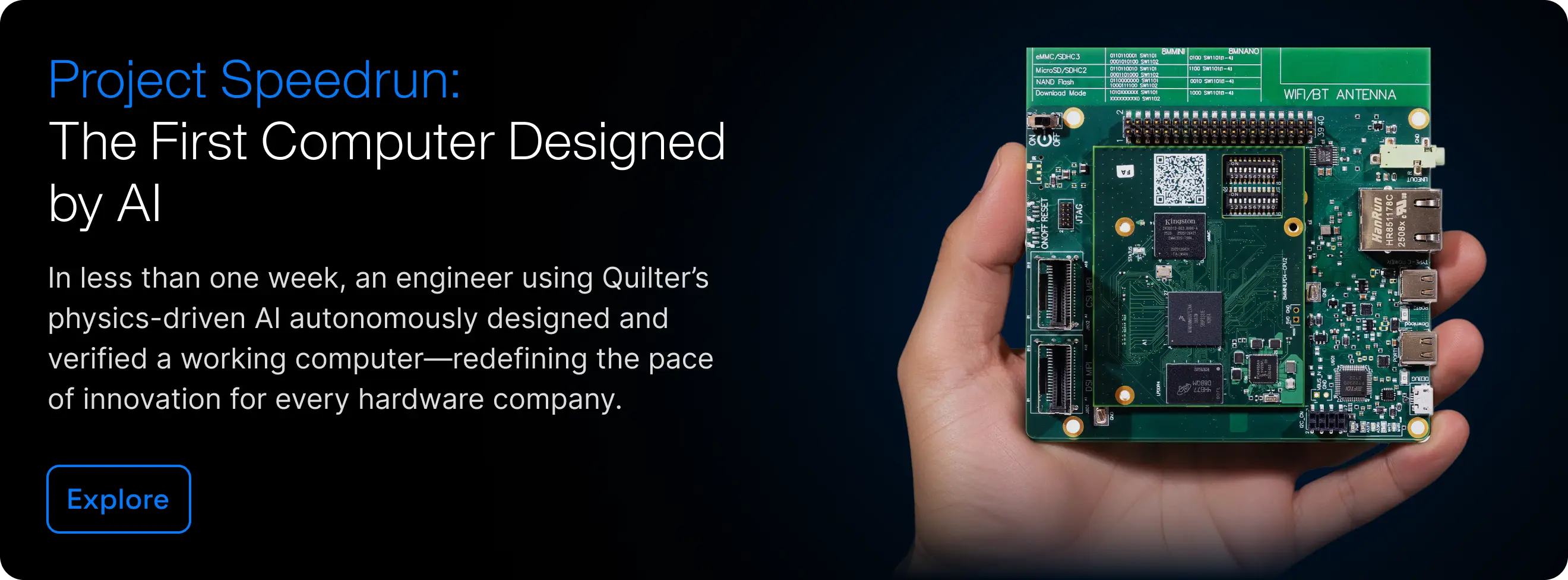
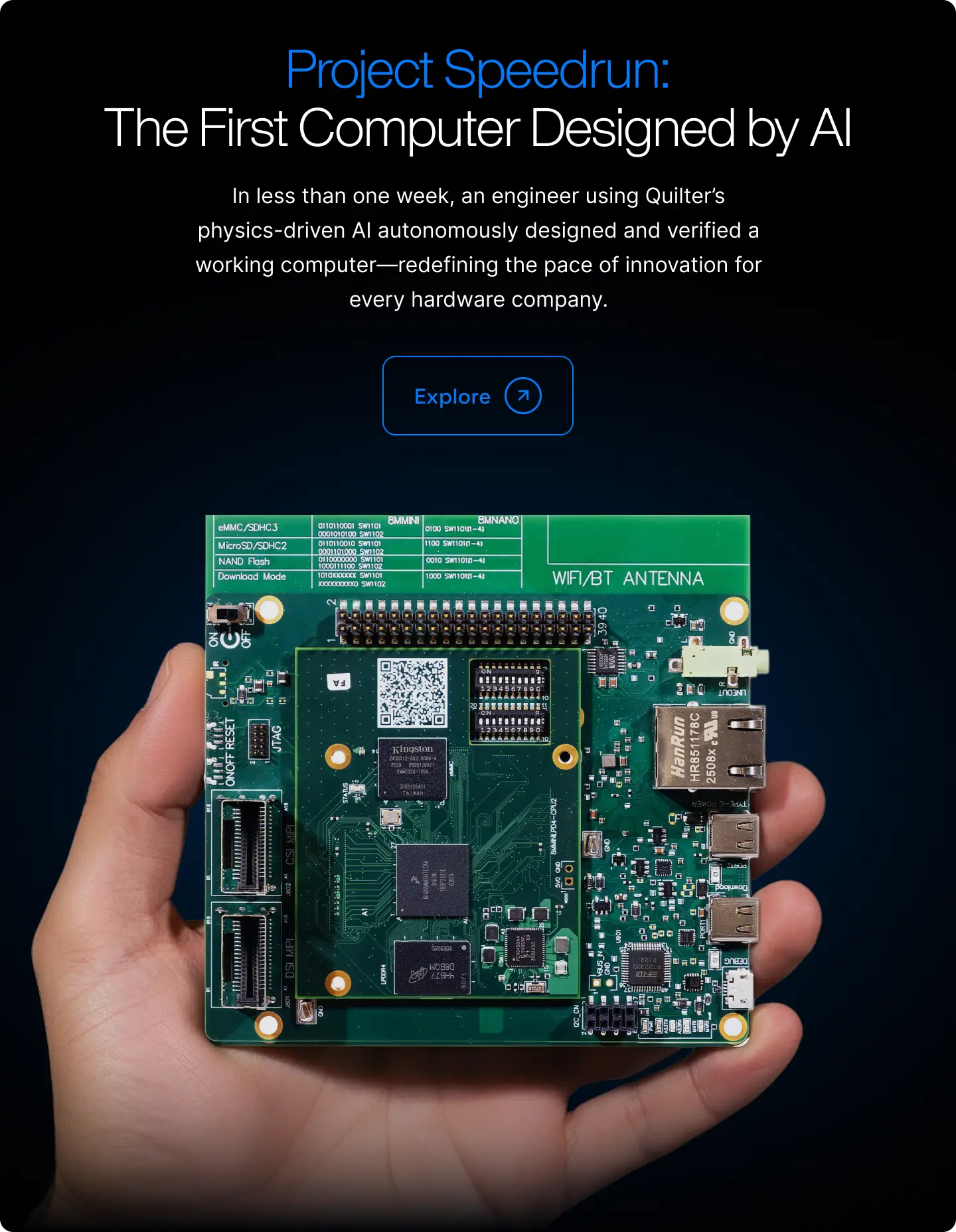
This article is one part of a walkthrough detailing how we recreated an NXP i.MX 8M Mini–based computer using Quilter’s physics-driven layout automation.
Cloud-based PCB layout tools have come a long way in just a few years. In 2026, engineers expect more than “I can open it in a browser.” They want PCB collaboration that feels like modern software, faster iteration, and fewer late-stage surprises when constraints collide. Increasingly, they also wish to real AI-powered automation that reduces the time spent pushing copper and babysitting rules.
This guide breaks down how Quilter, Altium 365, Upverter, and EasyEDA compare, and why generative routing is reshaping what’s practical for electronics teams who need to ship hardware faster.
Let's define what makes a PCB layout tool truly cloud-based
A “truly cloud-based” PCB tool is one where the cloud is the primary working surface, not just a place to store files or review screenshots. In practice, teams lump many very different products into the same category, which leads to misaligned expectations during evaluations.
In 2026, it helps to separate tools into three buckets:
- Browser-native: You can edit schematics and layout in a web app. Collaboration is usually real-time or near real-time, and onboarding is often as simple as “send a link.” Upverter and EasyEDA fit this model. (Upverter)
- Hybrid desktop plus cloud: The cloud handles sharing, review, tasks, release workflows, or data management, but the core editing experience still lives in a desktop CAD. Altium 365 is the flagship example, with a powerful browser viewer layered on top of an Altium Designer workflow. (Altium)
- Cloud-first automation alongside your CAD: The cloud is where heavy automation runs, and your existing CAD remains the place you validate, polish, and manufacture. Quilter sits here: you upload native projects, define constraints, generate multiple candidates, and then hand results back to your CAD for final DRC and release. (Quilter)
Why does the category matter? Because it changes three things that drive engineering throughput: accessibility (who can participate), workflow speed (how quickly you can iterate), and risk (how reliably constraints and intent survive handoffs). If a tool is “cloud-connected” but still requires a heavy desktop install for the core work, it can be amazing for controlled enterprise processes. Still, it will not feel like a browser-native tool for a distributed team that wants instant collaboration.
How do Quilter, Altium 365, Upverter, and EasyEDA actually compare?
They compare cleanly once you evaluate them against what a hardware team actually needs day-to-day: deployment model, collaboration style, AI and automation depth, and best-fit use cases.
Mobile-friendly comparison table
Tool
Deployment model
Collaboration style
AI and automation
Best fit
Quilter
Cloud-first automation; works alongside your existing CAD
Share projects, review candidates, iterate quickly in a cloud workflow; handoff back to native files
Physics-driven generative routing that automates placement and trace layout, evaluates candidates against constraints, and supports multiple candidate generation in hours
Teams bottlenecked on layout time who want more design cycles without adding headcount
Altium 365
Hybrid: Altium Designer for editing plus cloud workspace and web viewer
Strong stakeholder collaboration through browser viewing, commenting, and tasks tied to workspace projects
Automation is primarily traditional CAD features and rules; cloud layer focuses on review, release, and collaboration
Enterprise and pro teams standardized on Altium who need governance and manufacturing handoff workflows
Upverter
Browser-native design environment
Web-based collaboration for distributed teams; quick sharing and onboarding
Web tool includes features like automated routing, but workflows remain more designer-driven
Small teams, education, and web-first collaboration that want a lightweight toolchain
EasyEDA
Browser-based editor with cloud project management
Team collaboration and cloud project/data management; strong ecosystem and manufacturing links
Productivity features and libraries; automation is more conventional than generative AI
Fast prototypes, makers, and cost-sensitive teams that value speed to fabrication
Sources: Quilter workflow and file compatibility (Quilter), Altium 365 platform and web viewer (Altium), Upverter as web-based PCB design (Upverter), EasyEDA browser-based tool and team collaboration (EasyEDA).
What the table means in real life
Altium 365 is “cloud for stakeholders,” not “browser-native editing.” Its web viewer is legitimately strong for design review: you can view schematics and PCBs in a browser with interactive navigation, and Altium’s documentation frames it as an interface for reviewing design documents. (Altium) Comments and tasks are designed to support collaboration without directly modifying the underlying design documents, integrating with Altium Designer’s commenting workflows. (Altium)
That is precisely what many professional orgs want: controlled edits in the desktop tool, broad visibility, and accountability in the cloud.
Upverter and EasyEDA win on “open a tab and build.” Both emphasize running in the browser and reducing friction when getting started. EasyEDA describes itself as a PCB design tool that runs in your web browser, emphasizing team collaboration and cloud-based project management. (EasyEDA) Upverter positions itself as a modular, web-based PCB design tool with schematic, PCB, and 3D preview in a browser-first workflow. (Upverter)
For distributed teams, education, or quick prototypes, this model is often “good enough” and dramatically easier to adopt.
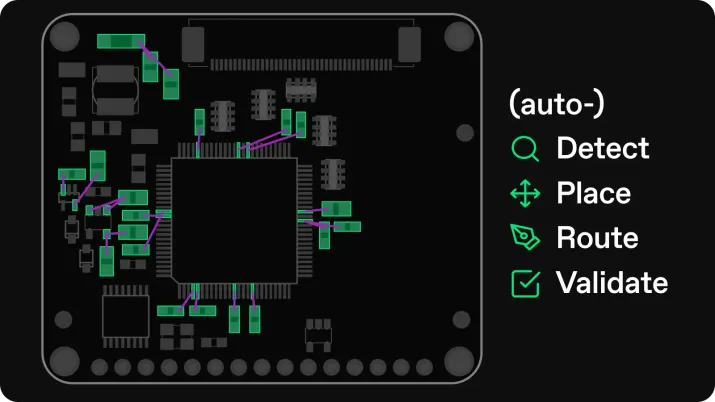
Quilter is the outlier because the cloud is doing the heavy lifting, not just hosting files. Quilter’s positioning is explicit: physics-driven AI for electronics design that generates multiple layout candidates and validates them against physical constraints. (Quilter) Instead of “route it manually, then share,” the pattern is “define constraints, generate candidates, then review.” That difference matters most when the layout is the schedule-critical path.
A simple diagram: Quilter generative workflow vs. manual-first routing
Below is a practical mental model you can reuse when comparing cloud based pcb layout tools. It is not about which UI is nicer. It is about where the time goes.
Quilter (generative routing, cloud-first) Traditional manual-first (example: CAD + cloud review)
1) Upload native project + constraints 1) Create / edit layout in desktop CAD
- board outline, keepouts, stackup - place parts, plan channels, set rules
- critical nets (diff pairs, impedance) 2) Interactive route and tune
2) Generate multiple candidates 3) Run DRC, iterate, fix violations
- placement + routing done automatically 4) Export snapshots / packages for review
3) Physics-aware review per candidate 5) Stakeholders comment in web viewer
- see what passed and what needs attention 6) Back to desktop CAD for changes
4) Export back to native files for polish 7) Repeat until release
5) Final DRC + fab release in your CAD
Quilter’s site and materials explicitly describe the “upload native files, define constraints, generate candidates, return native files” loop. (Quilter) Altium’s docs describe the browser layer as review-focused, with a web viewer for reviewing source documents and a broader cloud platform connecting stakeholders. (Altium)
What sets Quilter’s AI-assisted approach apart from the rest?
Quilter’s differentiator is simple to state and surprisingly impactful in practice: generative routing means the tool produces complete placement and routing candidates for you, rather than helping you route faster within a mostly manual workflow.
Here is generative routing in plain English: you tell the system what “done” means, and it generates layout options that satisfy those constraints, the way a compiler generates machine code from rules. Quilter’s messaging emphasizes physics-aware checks and candidate evaluation against constraints, with rapid iteration and multiple candidate generation. (Quilter)
Why “physics-driven” matters more than “AI” in PCB layout
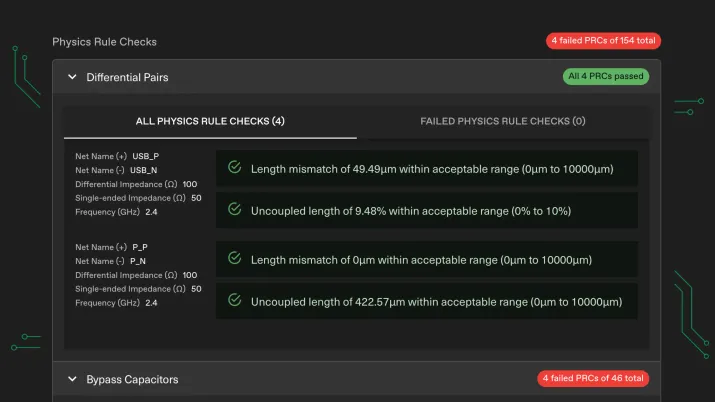
PCB layout is not just geometry. The board has electrical intent, manufacturing intent, and usually at least a few “do not mess this up” nets. Quilter frames the workflow around identifying and accounting for items like bypass capacitors, impedance-controlled nets, and differential pairs, and then evaluating candidates against physical constraints. (Quilter)
This is important because many teams have been burned by automation that “routes everything,” creating a board that is technically connected but practically unusable.
Altium 365, Upverter, and EasyEDA all support rules and DRC-type validation to varying degrees, but their default workflow is still designer-driven: the engineer pushes the board forward, using automation as an assist. Quilter’s default motion is system-driven: the engineer selects, reviews, and refines candidates.
Real-world outcomes that matter in a schedule
When layout is the bottleneck, teams do two things that look rational and often backfire:
- They freeze requirements early because each change is expensive in routing effort.
- They accept “good enough” placement and routing because exploring options takes too long.
A generative approach changes both. If generating multiple candidates is cheap, you can explore different floor plans, stackups, and constraints earlier, then converge with more confidence. Quilter explicitly highlights iterating across stackups, manufacturers, and form factors in parallel. (Quilter)
A brief example scenario (illustrative, not a published case study)
Consider a five-person hardware startup building a sensor hub. Their first rev is a 6-layer board with a radio section, a high-speed interface, and a tight mechanical envelope. In a manual-first workflow, they might spend two calendar weeks on layout, then compress validation and review.
In a generative workflow, they could generate several candidates early, then spend their time on higher-value review: checking placement intent, verifying constraint coverage, and focusing on the few nets and regions that truly need human judgment. If that reduces the layout cycle by 50-80 percent, the downstream impact is significant: more spins per quarter, improved risk reduction, and less “late-night routing debt.”
If you want a concrete sanity check, translate “80 percent faster” into engineering time: 80 hours becomes 16 hours. That is not a marketing metric. That is a planning lever.
Which cloud PCB tool is right for your next project?
The right choice depends on whether your main pain is collaboration friction or layout throughput. Most buyers focus on “can people comment in a browser?” and miss that the expensive part of a PCB program is often the time between “schematic is ready” and “board is manufacturable.”
Here is a practical decision framework you can use.
If you need enterprise collaboration, governance, and a single source of truth
Choose Altium 365 if your organization already uses Altium Designer and you want a cloud platform that connects stakeholders with strong browser-based review and commenting. Altium describes Altium 365 as a cloud-based infrastructure platform that connects key stakeholders, and its web and standalone viewers are built around interactive access via a browser. (Altium)
This is a strong fit when:
- You have multiple reviewers across EE, ME, procurement, and manufacturing.
- You care about controlled edits, release workflows, and traceability.
- Your most significant issue is coordination and handoff, not raw routing hours.
If you want a browser-native design for a distributed team or a classroom
Choose Upverter when you want a web-based PCB tool that prioritizes accessibility and collaboration, and when your boards fall within a simpler complexity band. Upverter positions itself as a modular, web-based tool that covers PCB design, schematics, and 3D preview. (Upverter) Upverter also offers account structures that distinguish private work and open-source collaboration, which can matter for small teams choosing a workflow. (Upverter)
This is a strong fit when:
- You want “open a link and collaborate” as the default.
- You are optimizing for onboarding speed and lightweight workflow.
- You do not need the deepest high-speed constraint stack.
If you want the fastest path from idea to fabrication
Choose EasyEDA for a browser-based tool with cloud project management and a large ecosystem that helps you move quickly. EasyEDA describes itself as running in a web browser and highlights team collaboration with cloud-based design data management. (EasyEDA)
This is a strong fit when:
- You iterate on prototypes quickly and value low friction.
- Your team benefits from strong libraries and quick manufacturing handoff.
- You want a tool that is approachable for mixed-experience teams.
If you are bottlenecked on layout and want more design cycles, not just better sharing
Choose Quilter when your constraint is “we cannot route fast enough,” or when you want to explore more options per rev without burning the team out. Quilter’s workflow is built around uploading native projects, defining constraints, generating multiple candidates quickly, and returning native files for final polish and fab release. (Quilter)
This is a strong fit when:
- The layout is delaying bring-up, tape-out support hardware, or product milestones.
- You need to try multiple floor plans, stackups, or manufacturers in parallel.
- You want AI PCB design that changes the cost of iteration, not just the UI.
How can you get started with Quilter today?
You can get started by using Quilter’s free tier and running a real project through the “upload, constrain, generate candidates, review, export” loop. Quilter highlights free access to its autonomous layout approach in the free version, and it positions the workflow as compatible with existing CAD formats, including Altium, Cadence, Siemens, and KiCad. (Quilter)
A practical first trial looks like this: pick a board that is painful but bounded (a dense carrier, a test fixture, a compute module), define the non-negotiables (connectors, keepouts, impedance nets, diff pairs), then compare how many viable candidates you can produce in a day versus your baseline. That will tell you quickly whether generative routing changes your schedule math.
Call to action: Try Quilter’s free version today and experience AI-powered PCB layout in your browser. (Quilter)


.webp)