



Gen AI

Published

Written by

Workbench

Redefining Value: A TCO Analysis of AI PCB Design vs. KiCad, Altium, Fusion, and DipTrace for Small Teams in 2026

Published

January 7, 2026

Most “PCB tool comparisons” quietly assume the license is the main cost. In real hardware teams, the license is rarely the limiting factor. The bottleneck is layout labor, iteration churn, and the calendar time lost while you wait for the board to be routable, reviewable, and fab-ready.

In 2026, the conversation changes because AI PCB design is no longer just “auto-router plus luck.” The best systems are starting to behave like an always-on layout teammate: generating candidate layouts quickly, checking physics-driven constraints continuously, and allowing engineers to focus on architecture and critical trade-offs rather than repetitive placement and routing. Quilter positions itself in that camp as physics-driven PCB automation that aims to compress weeks of layout into hours. (Quilter)

This post breaks down the total cost of ownership (TCO) across four common tool paths for small teams, then shows a real-world ROI scenario for a 3-person hardware group making multiple boards per year. You’ll also get a downloadable spreadsheet you can drop into Google Sheets and customize with your own volumes and quotes.

What is TCO in PCB design, and why does it matter more than license fees?

TCO in PCB design is the full annual cost of getting boards from schematic to fab-ready outputs, including labor, iteration overhead, rework, and tool-related friction, not just what you pay for the CAD seat.

License fees are visible, easy to budget for, and easy to dispute. But for a small team, the dominant cost is often engineering time: placement, routing, review cycles, SI/PI cleanup, and “why did the connector flip” moments that cause rework. Even if you use a free tool like KiCad, the “free” part usually stops at checkout. The expensive part is the calendar time you cannot get back.

A second reason TCO matters more in 2026 is the risk of tools and transitions. For example, Autodesk has stated it will stop selling and supporting EAGLE effective June 7, 2026, which could create migration work and process disruptions for teams that still rely on EAGLE-era workflows. (Autodesk)

What are the “hidden costs” small hardware teams underestimate?

Small teams underestimate hidden costs because they measure “layout hours” but not the drag created by iteration loops, context switching, and manual coordination between constraints, reviews, and manufacturability.

Three big buckets tend to show up:

  1. Iteration tax
    Every constraint you discover late becomes rework: clearance fixes, impedance surprises, return-path issues, “oh, that keepout was wrong,” or changes from the mechanical team. Even if the tool is capable, the process is often serial: place, route, DRC, review, rework, repeat.
  2. Fully loaded labor cost
    Teams often budget based on base salary, then are surprised when the actual cost per engineering hour is much higher. BLS and compensation reporting regularly show that benefits are a meaningful share of total employer compensation costs. One SHRM summary of BLS Employer Costs for Employee Compensation notes that benefits are roughly 38% of employer compensation costs in that dataset, which implies a meaningful lift over wages alone. (SHRM)
  3. Tool-driven workflow friction
    This includes library maintenance, onboarding, collaboration overhead, and review bottlenecks. Even “good” tools can be expensive if they slow down decision-making, or if only one person can effectively drive layout under deadline pressure.

How do you calculate the real cost of PCB layout time per board?

You calculate the real cost of PCB layout time per board by converting fully loaded compensation into an hourly rate, then multiplying by the total layout hours per board, including iteration overhead.

A practical formula looks like this:

Fully loaded hourly rate
(Base salary × Fully loaded multiplier) ÷ Work hours per year

Layout cost per board
Hourly rate × (Layout hours + Iteration overhead hours)

Here are benchmarks you can use to sanity-check the salary side. BLS lists median annual wages for electrical engineers and electronics engineers (except computer), as well as for computer hardware engineers, which may be a closer match for high-end board and system roles. (Bureau of Labor Statistics)

If you want a fast starting point, the downloadable calculator includes:

  • a salary and a fully loaded multiplier input
  • per-board manual layout hours
  • an iteration overhead percentage (because rework is real)
  • AI-assisted “human cleanup” hours if you’re using Quilter or a similar workflow

How does AI PCB design change the cost equation?

AI PCB design changes the cost equation by turning “layout time” from a scarce, serial resource into a faster, more parallel workflow where engineers spend fewer hours pushing traces and more hours making high-leverage decisions.

The most significant shift is not that routing becomes magically perfect. It’s that you get more viable candidate layouts sooner, and you can evaluate them against constraints earlier. Quilter explicitly markets “multiple candidates in hours” and parallel iteration “in hours instead of weeks,” which is the lever that attacks both labor hours and calendar risk. (Quilter)

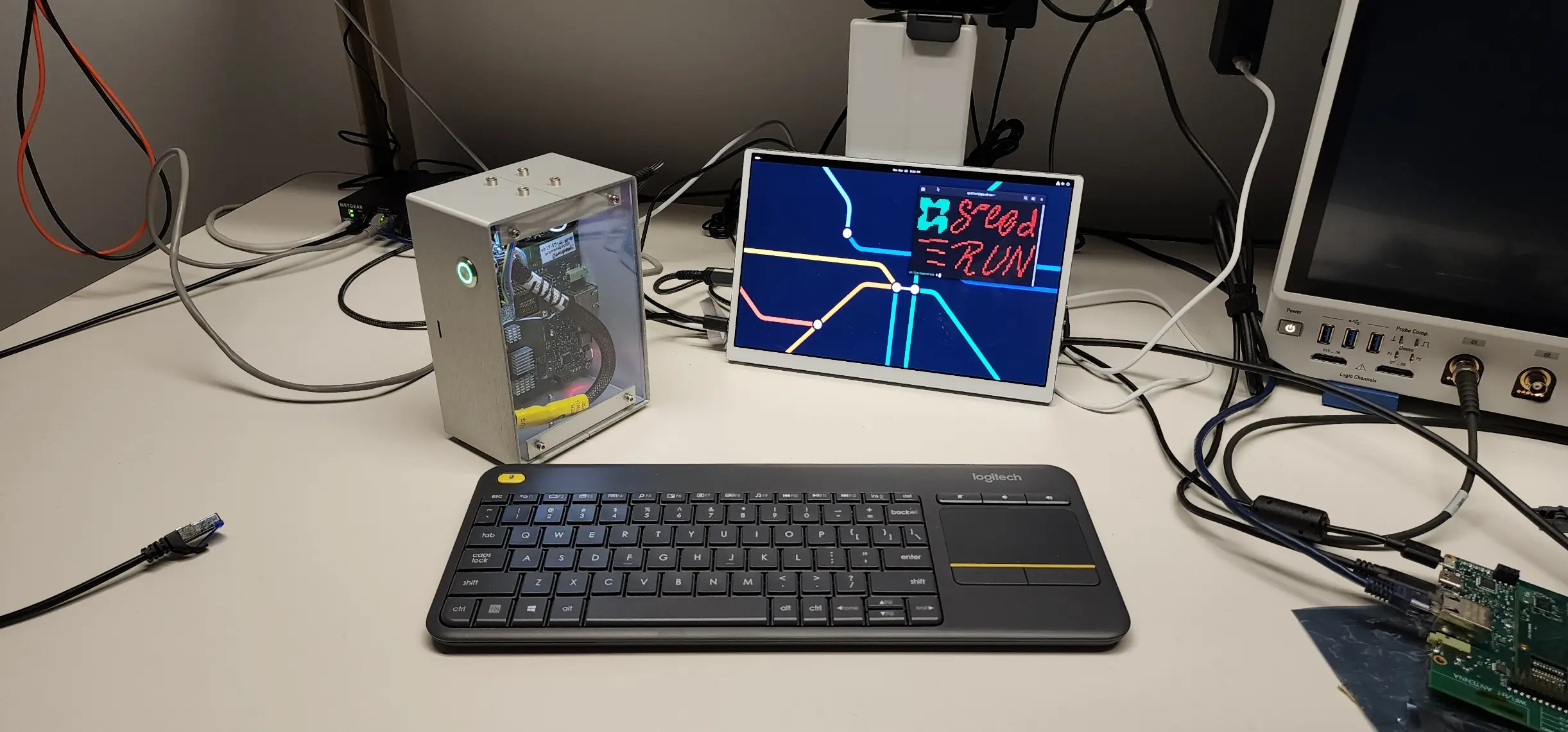
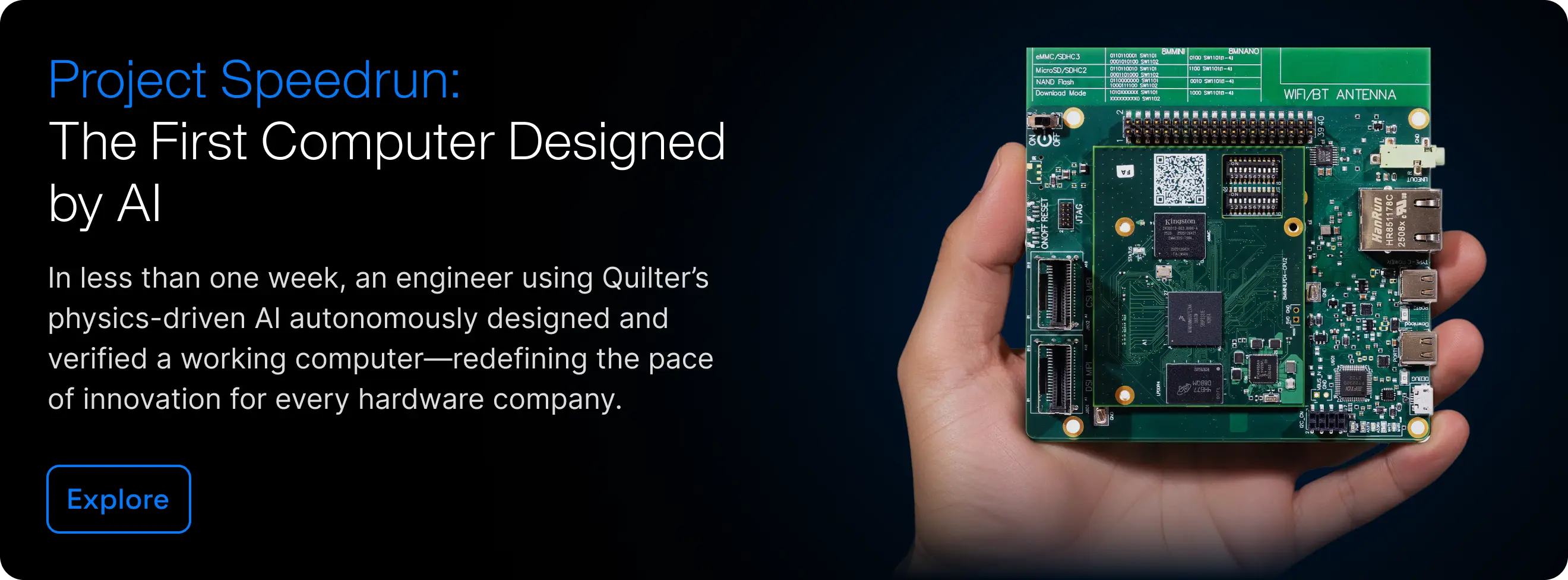
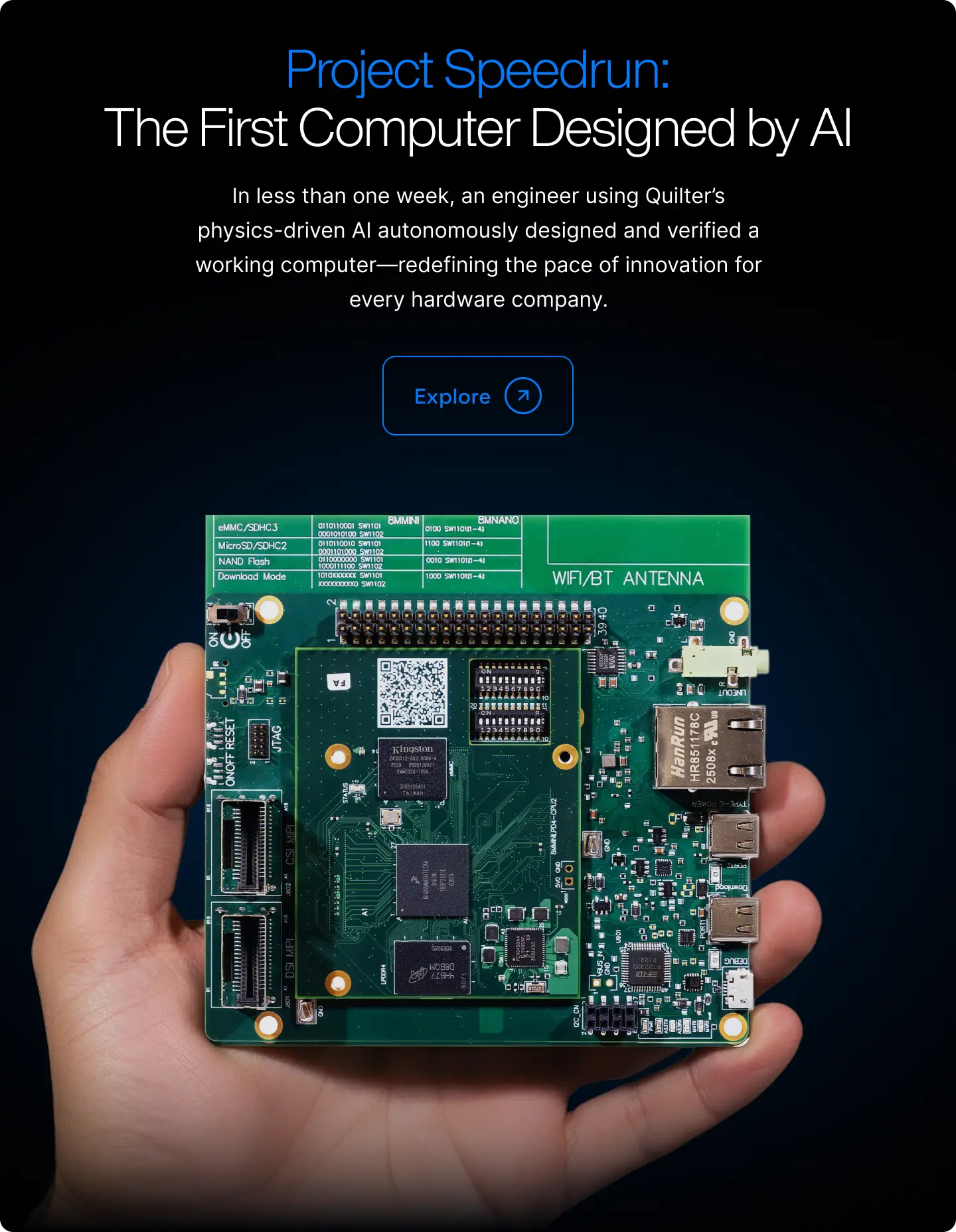
To make this concrete, Quilter’s “Project Speedrun” case study describes a two-board system in which the estimated manual effort was 428 hours, while the actual human cleanup time with Quilter was 38.5 hours. That’s about an 11x reduction in human layout time for that example, which lands right in the “5x to 10x (and sometimes more)” range teams care about when they do ROI math. (Quilter)

KiCad vs. Altium vs. Fusion vs. DipTrace vs. Quilter: what’s the competitive landscape snapshot?

The competitive landscape in 2026 is best understood as two layers: (1) the CAD environment where you capture schematics and manage libraries, and (2) the automation layer that compresses placement, routing, and constraint validation.

KiCad is the default “serious and free” option, with licensing that enables commercial use. (KiCad)
Fusion is a subscription platform that includes PCB capabilities alongside mechanical workflows, priced (at least publicly) at a few hundred dollars per year for the base subscription tier shown on Autodesk’s pricing pages. (Autodesk)
DipTrace is a perpetual-license alternative that many teams prefer for cost predictability and lower seat friction, with pricing published on its site. (diptrace.com)
Altium remains a heavyweight in pro workflows (often with quote-based enterprise pricing), and it has also been pushing cloud collaboration packaging with Altium Develop, offering public pricing for workspace and “author” seats. (Altium)
Quilter sits in the PCB automation layer, positioning itself as a physics-driven AI that outputs layouts fast and supports rapid iteration and design review. (Quilter)

The point: your CAD seat might be KiCad, Fusion, DipTrace, or Altium. Your throughput advantage in 2026 increasingly comes from whether you add a credible AI PCB automation layer and how well it fits your workflow.

What’s a realistic 2026 TCO scenario for a 3-person hardware team?

A realistic 2026 TCO scenario for a 3-person team is that engineering time dominates, and even a five-figure annual automation subscription can pay for itself if it saves a few dozen hours per quarter.

Let’s model a small team:

  • 3 engineers
  • $150,000 base salary each
  • fully loaded multiplier: 1.5 (salary plus benefits, taxes, overhead)
  • 6 boards per year
  • manual layout effort: 120 hours per board
  • manual iteration overhead: +20%
  • Quilter workflow: 12 hours of human cleanup per board
  • Quilter iteration overhead: +10%
  • Quilter subscription: $12,000 per year (illustrative input you can replace)

That produces:

  • Fully loaded hourly rate ≈ $108.17/hr
  • Manual hours/year = 864 hours
  • Manual engineering cost/year ≈ $93,462
  • Quilter cleanup hours/year = 79.2 hours
  • Quilter engineering cost/year ≈ $8,567
  • Quilter total (engineering + subscription) ≈ $20,567
  • Annual savings ≈ $72,894
  • ROI on the subscription ≈ 6.07x

Even if your exact hours differ, the break-even is surprisingly low: at ~$108/hr, a $12k subscription breaks even at about 111 hours saved per year, which is often less than one medium-complexity board’s layout cycle.

How much do tool licenses really cost, and when do they matter?

Tool licenses matter most when they block collaboration, slow onboarding, or lock you into workflows that increase iteration, not when they are simply “expensive.”

Public pricing examples you can actually cite are practical as reference points:

  • Autodesk lists Fusion pricing on its own pages, with annual pricing shown for the core Fusion subscription. (Autodesk)
  • Altium Develop shows public pricing for workspace and author seats on its site. (Altium)
  • DipTrace publishes perpetual license pricing. (diptrace.com)
  • KiCad is free software under GPL terms, so license cost is not the driver. (KiCad)

But for small teams, license costs usually matter less than one of these:

  • How many hours does your team spend per board
  • How many loops does it take to get to “fab-ready with confidence”
  • How often does layout become a bottleneck for the entire product schedule

What does “5x to 10x” productivity actually look like in dollars?

“5x to 10x” productivity in dollars looks like replacing hundreds of hours of manual layout labor with tens of hours of human cleanup and review, then compounding the savings over multiple boards per year.

The cleanest way to think about it is human-hours displaced:

  • If a board takes typically 200 hours and you reduce it to 40 hours, you save 160 hours.
  • At $100 to $150 per fully loaded engineering hour, that’s $16,000 to $24,000 saved on that single board.
  • Multiply by 4 to 10 boards per year, and you are quickly in “automation pays for itself” territory.

Quilter’s Project Speedrun example provides a concrete data point: 38.5 hours of human input vs. 428 hours of estimated manual effort across two boards. That is roughly 11x fewer human hours in that case study. (Quilter)

This does not mean every board gets 11x. It does mean there is credible precedent for significant reductions in human layout time when the workflow is designed around automation plus engineer control.

Which teams should choose Quilter over a traditional PCB tool?

Choose Quilter (or a similar AI PCB automation workflow) when layout throughput and iteration speed are limiting revenue, validation speed, or hiring plans.

Quilter is most compelling when:

  • You ship multiple boards per year, not one board every two years
  • You are schedule-constrained (silicon validation, customer pilots, hardware demos)
  • Your team repeatedly fights the same “layout bottleneck” pattern
  • You want to explore alternatives (stackups, manufacturers, form factors) in parallel rather than serially (Quilter)

Sticking with a traditional tool path (KiCad, Fusion, DipTrace, Altium) can be rational when:

  • You have low board volume and a high tolerance for longer cycles
  • The layout complexity is low and stable
  • You have a strong in-house layout specialist, and the bottleneck is elsewhere

And one more 2026-specific consideration: if your electronics workflow still depends on EAGLE-era licensing, Autodesk’s published EAGLE sunset dates can create forced migration work, which is a real TCO event even if your tool bill is small. (Autodesk)

FAQ: TCO, AI routing, and adoption risk in 2026

Does AI PCB design replace engineers?
No. The practical value is that it reduces repetitive placement and routing tasks, allowing engineers to focus on architecture, constraints, reviews, and validation.

Is KiCad “free” for commercial work?
KiCad is free software under the GPL terms; the license cost is $0. Your costs come from labor, libraries, and process. (KiCad)

What salary should I use in the calculator?
Use your actual compensation bands if available. If you need a benchmark, BLS wage data for electrical, electronics, and computer hardware engineers can help you sanity-check. (Bureau of Labor Statistics)

What is a reasonable “fully loaded” multiplier?
It varies by company. A multiplier in the 1.25-1.6 range is typical in planning models, depending on the benefits and overhead. BLS compensation cost reporting, summarized by SHRM, shows that benefits can account for a large share of employer compensation costs across aggregate datasets. (SHRM)

How do I use the calculator in Google Sheets?
Upload the XLSX directly to Google Drive and open it in Google Sheets, or import the provided CSV to enter the inputs quickly, then replicate the formulas if you want a pure Sheets-native version.

Is Fusion a safe long-term electronics bet?
Fusion is actively maintained, but Autodesk has published that EAGLE will no longer be sold or supported after June 7, 2026, which can affect teams that rely on EAGLE-specific paths. (Autodesk)

Schema Markup (JSON-LD)

{

  "@context": "https://schema.org",

  "@type": "HowTo",

  "name": "How to calculate PCB design TCO for a small hardware team in 2026",

  "description": "A step-by-step method to calculate total cost of ownership (TCO) for PCB layout by converting fully loaded compensation into an hourly rate and multiplying by layout and iteration hours, then comparing traditional workflows vs AI-assisted workflows.",

  "step": [

    {

      "@type": "HowToStep",

      "name": "Estimate your fully loaded hourly engineering cost",

      "text": "Calculate fully loaded hourly rate = (base salary × fully loaded multiplier) ÷ work hours per year."

    },

    {

      "@type": "HowToStep",

      "name": "Estimate manual layout hours per board",

      "text": "Enter your typical placement + routing hours per board and add an iteration overhead percentage to reflect rework and review cycles."

    },

    {

      "@type": "HowToStep",

      "name": "Estimate AI-assisted human cleanup hours per board",

      "text": "If using AI PCB design, enter the human cleanup and review hours per board, plus a smaller iteration overhead percentage."

    },

    {

      "@type": "HowToStep",

      "name": "Add annual tool and support costs",

      "text": "Add your CAD license costs and any recurring costs for support, plugins, libraries, and collaboration infrastructure."

    },

    {

      "@type": "HowToStep",

      "name": "Compute annual TCO and ROI",

      "text": "Annual TCO = engineering cost/year + license cost/year + other costs. ROI = (traditional TCO − AI-assisted TCO) ÷ AI tool cost."

    }

  ]

}

{

  "@context": "https://schema.org",

  "@type": "FAQPage",

  "mainEntity": [

    {

      "@type": "Question",

      "name": "What is TCO in PCB design?",

      "acceptedAnswer": {

        "@type": "Answer",

        "text": "TCO is the full annual cost of getting boards to fab-ready outputs, including labor, iteration overhead, and tool-driven friction, not just license fees."

      }

    },

    {

      "@type": "Question",

      "name": "How do I calculate PCB layout cost per board?",

      "acceptedAnswer": {

        "@type": "Answer",

        "text": "Compute a fully loaded hourly rate from compensation, then multiply by (layout hours + iteration overhead hours) per board."

      }

    },

    {

      "@type": "Question",

      "name": "Is KiCad free for commercial use?",

      "acceptedAnswer": {

        "@type": "Answer",

        "text": "KiCad is free software under GPL terms, and its license cost is $0; most costs come from engineering time, libraries, and process."

      }

    },

    {

      "@type": "Question",

      "name": "What does 5x to 10x productivity mean in AI PCB design?",

      "acceptedAnswer": {

        "@type": "Answer",

        "text": "It means substantially fewer human layout hours per board, often replacing hundreds of manual hours with tens of hours of cleanup and review, which translates directly into labor savings."

      }

    },

    {

      "@type": "Question",

      "name": "How should small teams use this TCO calculator?",

      "acceptedAnswer": {

        "@type": "Answer",

        "text": "Edit the Inputs tab with your team size, fully loaded rate, boards per year, and hours per board, then review the Scenario tab for annual cost and ROI."

      }

    }

  ]

}

Try Quilter for Yourself

Project Speedrun demonstrated what autonomous layout looks like in practice and the time compression Quilter enables. Now, see it on your own hardware.

Get Started

Validating the Design

With cleanup complete, the final question is whether the hardware works. Power-on is where most electrical mistakes reveal themselves, and it’s the moment engineers are both nervous and excited about.

Continue to Part 4

Cleaning Up the Design

Autonomous layout produces a complete, DRC'd design; cleanup is a brief precision pass to finalize it for fabrication.

Continue to Part 3

Compiling the Design

Once the design is prepared, the next step is handing it off to Quilter. In traditional workflows, this is where an engineer meets with a layout specialist to clarify intent. Quilter replaces that meeting with circuit comprehension: you upload the project, review how constraints are interpreted, and submit the job.

Continue to Part 2

Redefining Value: A TCO Analysis of AI PCB Design vs. KiCad, Altium, Fusion, and DipTrace for Small Teams in 2026

January 7, 2026
by
Darin ten Bruggencate
and

Most “PCB tool comparisons” quietly assume the license is the main cost. In real hardware teams, the license is rarely the limiting factor. The bottleneck is layout labor, iteration churn, and the calendar time lost while you wait for the board to be routable, reviewable, and fab-ready.

In 2026, the conversation changes because AI PCB design is no longer just “auto-router plus luck.” The best systems are starting to behave like an always-on layout teammate: generating candidate layouts quickly, checking physics-driven constraints continuously, and allowing engineers to focus on architecture and critical trade-offs rather than repetitive placement and routing. Quilter positions itself in that camp as physics-driven PCB automation that aims to compress weeks of layout into hours. (Quilter)

This post breaks down the total cost of ownership (TCO) across four common tool paths for small teams, then shows a real-world ROI scenario for a 3-person hardware group making multiple boards per year. You’ll also get a downloadable spreadsheet you can drop into Google Sheets and customize with your own volumes and quotes.

What is TCO in PCB design, and why does it matter more than license fees?

TCO in PCB design is the full annual cost of getting boards from schematic to fab-ready outputs, including labor, iteration overhead, rework, and tool-related friction, not just what you pay for the CAD seat.

License fees are visible, easy to budget for, and easy to dispute. But for a small team, the dominant cost is often engineering time: placement, routing, review cycles, SI/PI cleanup, and “why did the connector flip” moments that cause rework. Even if you use a free tool like KiCad, the “free” part usually stops at checkout. The expensive part is the calendar time you cannot get back.

A second reason TCO matters more in 2026 is the risk of tools and transitions. For example, Autodesk has stated it will stop selling and supporting EAGLE effective June 7, 2026, which could create migration work and process disruptions for teams that still rely on EAGLE-era workflows. (Autodesk)

What are the “hidden costs” small hardware teams underestimate?

Small teams underestimate hidden costs because they measure “layout hours” but not the drag created by iteration loops, context switching, and manual coordination between constraints, reviews, and manufacturability.

Three big buckets tend to show up:

  1. Iteration tax
    Every constraint you discover late becomes rework: clearance fixes, impedance surprises, return-path issues, “oh, that keepout was wrong,” or changes from the mechanical team. Even if the tool is capable, the process is often serial: place, route, DRC, review, rework, repeat.
  2. Fully loaded labor cost
    Teams often budget based on base salary, then are surprised when the actual cost per engineering hour is much higher. BLS and compensation reporting regularly show that benefits are a meaningful share of total employer compensation costs. One SHRM summary of BLS Employer Costs for Employee Compensation notes that benefits are roughly 38% of employer compensation costs in that dataset, which implies a meaningful lift over wages alone. (SHRM)
  3. Tool-driven workflow friction
    This includes library maintenance, onboarding, collaboration overhead, and review bottlenecks. Even “good” tools can be expensive if they slow down decision-making, or if only one person can effectively drive layout under deadline pressure.

How do you calculate the real cost of PCB layout time per board?

You calculate the real cost of PCB layout time per board by converting fully loaded compensation into an hourly rate, then multiplying by the total layout hours per board, including iteration overhead.

A practical formula looks like this:

Fully loaded hourly rate
(Base salary × Fully loaded multiplier) ÷ Work hours per year

Layout cost per board
Hourly rate × (Layout hours + Iteration overhead hours)

Here are benchmarks you can use to sanity-check the salary side. BLS lists median annual wages for electrical engineers and electronics engineers (except computer), as well as for computer hardware engineers, which may be a closer match for high-end board and system roles. (Bureau of Labor Statistics)

If you want a fast starting point, the downloadable calculator includes:

  • a salary and a fully loaded multiplier input
  • per-board manual layout hours
  • an iteration overhead percentage (because rework is real)
  • AI-assisted “human cleanup” hours if you’re using Quilter or a similar workflow

How does AI PCB design change the cost equation?

AI PCB design changes the cost equation by turning “layout time” from a scarce, serial resource into a faster, more parallel workflow where engineers spend fewer hours pushing traces and more hours making high-leverage decisions.

The most significant shift is not that routing becomes magically perfect. It’s that you get more viable candidate layouts sooner, and you can evaluate them against constraints earlier. Quilter explicitly markets “multiple candidates in hours” and parallel iteration “in hours instead of weeks,” which is the lever that attacks both labor hours and calendar risk. (Quilter)

To make this concrete, Quilter’s “Project Speedrun” case study describes a two-board system in which the estimated manual effort was 428 hours, while the actual human cleanup time with Quilter was 38.5 hours. That’s about an 11x reduction in human layout time for that example, which lands right in the “5x to 10x (and sometimes more)” range teams care about when they do ROI math. (Quilter)

KiCad vs. Altium vs. Fusion vs. DipTrace vs. Quilter: what’s the competitive landscape snapshot?

The competitive landscape in 2026 is best understood as two layers: (1) the CAD environment where you capture schematics and manage libraries, and (2) the automation layer that compresses placement, routing, and constraint validation.

KiCad is the default “serious and free” option, with licensing that enables commercial use. (KiCad)
Fusion is a subscription platform that includes PCB capabilities alongside mechanical workflows, priced (at least publicly) at a few hundred dollars per year for the base subscription tier shown on Autodesk’s pricing pages. (Autodesk)
DipTrace is a perpetual-license alternative that many teams prefer for cost predictability and lower seat friction, with pricing published on its site. (diptrace.com)
Altium remains a heavyweight in pro workflows (often with quote-based enterprise pricing), and it has also been pushing cloud collaboration packaging with Altium Develop, offering public pricing for workspace and “author” seats. (Altium)
Quilter sits in the PCB automation layer, positioning itself as a physics-driven AI that outputs layouts fast and supports rapid iteration and design review. (Quilter)

The point: your CAD seat might be KiCad, Fusion, DipTrace, or Altium. Your throughput advantage in 2026 increasingly comes from whether you add a credible AI PCB automation layer and how well it fits your workflow.

What’s a realistic 2026 TCO scenario for a 3-person hardware team?

A realistic 2026 TCO scenario for a 3-person team is that engineering time dominates, and even a five-figure annual automation subscription can pay for itself if it saves a few dozen hours per quarter.

Let’s model a small team:

  • 3 engineers
  • $150,000 base salary each
  • fully loaded multiplier: 1.5 (salary plus benefits, taxes, overhead)
  • 6 boards per year
  • manual layout effort: 120 hours per board
  • manual iteration overhead: +20%
  • Quilter workflow: 12 hours of human cleanup per board
  • Quilter iteration overhead: +10%
  • Quilter subscription: $12,000 per year (illustrative input you can replace)

That produces:

  • Fully loaded hourly rate ≈ $108.17/hr
  • Manual hours/year = 864 hours
  • Manual engineering cost/year ≈ $93,462
  • Quilter cleanup hours/year = 79.2 hours
  • Quilter engineering cost/year ≈ $8,567
  • Quilter total (engineering + subscription) ≈ $20,567
  • Annual savings ≈ $72,894
  • ROI on the subscription ≈ 6.07x

Even if your exact hours differ, the break-even is surprisingly low: at ~$108/hr, a $12k subscription breaks even at about 111 hours saved per year, which is often less than one medium-complexity board’s layout cycle.

How much do tool licenses really cost, and when do they matter?

Tool licenses matter most when they block collaboration, slow onboarding, or lock you into workflows that increase iteration, not when they are simply “expensive.”

Public pricing examples you can actually cite are practical as reference points:

  • Autodesk lists Fusion pricing on its own pages, with annual pricing shown for the core Fusion subscription. (Autodesk)
  • Altium Develop shows public pricing for workspace and author seats on its site. (Altium)
  • DipTrace publishes perpetual license pricing. (diptrace.com)
  • KiCad is free software under GPL terms, so license cost is not the driver. (KiCad)

But for small teams, license costs usually matter less than one of these:

  • How many hours does your team spend per board
  • How many loops does it take to get to “fab-ready with confidence”
  • How often does layout become a bottleneck for the entire product schedule

What does “5x to 10x” productivity actually look like in dollars?

“5x to 10x” productivity in dollars looks like replacing hundreds of hours of manual layout labor with tens of hours of human cleanup and review, then compounding the savings over multiple boards per year.

The cleanest way to think about it is human-hours displaced:

  • If a board takes typically 200 hours and you reduce it to 40 hours, you save 160 hours.
  • At $100 to $150 per fully loaded engineering hour, that’s $16,000 to $24,000 saved on that single board.
  • Multiply by 4 to 10 boards per year, and you are quickly in “automation pays for itself” territory.

Quilter’s Project Speedrun example provides a concrete data point: 38.5 hours of human input vs. 428 hours of estimated manual effort across two boards. That is roughly 11x fewer human hours in that case study. (Quilter)

This does not mean every board gets 11x. It does mean there is credible precedent for significant reductions in human layout time when the workflow is designed around automation plus engineer control.

Which teams should choose Quilter over a traditional PCB tool?

Choose Quilter (or a similar AI PCB automation workflow) when layout throughput and iteration speed are limiting revenue, validation speed, or hiring plans.

Quilter is most compelling when:

  • You ship multiple boards per year, not one board every two years
  • You are schedule-constrained (silicon validation, customer pilots, hardware demos)
  • Your team repeatedly fights the same “layout bottleneck” pattern
  • You want to explore alternatives (stackups, manufacturers, form factors) in parallel rather than serially (Quilter)

Sticking with a traditional tool path (KiCad, Fusion, DipTrace, Altium) can be rational when:

  • You have low board volume and a high tolerance for longer cycles
  • The layout complexity is low and stable
  • You have a strong in-house layout specialist, and the bottleneck is elsewhere

And one more 2026-specific consideration: if your electronics workflow still depends on EAGLE-era licensing, Autodesk’s published EAGLE sunset dates can create forced migration work, which is a real TCO event even if your tool bill is small. (Autodesk)

FAQ: TCO, AI routing, and adoption risk in 2026

Does AI PCB design replace engineers?
No. The practical value is that it reduces repetitive placement and routing tasks, allowing engineers to focus on architecture, constraints, reviews, and validation.

Is KiCad “free” for commercial work?
KiCad is free software under the GPL terms; the license cost is $0. Your costs come from labor, libraries, and process. (KiCad)

What salary should I use in the calculator?
Use your actual compensation bands if available. If you need a benchmark, BLS wage data for electrical, electronics, and computer hardware engineers can help you sanity-check. (Bureau of Labor Statistics)

What is a reasonable “fully loaded” multiplier?
It varies by company. A multiplier in the 1.25-1.6 range is typical in planning models, depending on the benefits and overhead. BLS compensation cost reporting, summarized by SHRM, shows that benefits can account for a large share of employer compensation costs across aggregate datasets. (SHRM)

How do I use the calculator in Google Sheets?
Upload the XLSX directly to Google Drive and open it in Google Sheets, or import the provided CSV to enter the inputs quickly, then replicate the formulas if you want a pure Sheets-native version.

Is Fusion a safe long-term electronics bet?
Fusion is actively maintained, but Autodesk has published that EAGLE will no longer be sold or supported after June 7, 2026, which can affect teams that rely on EAGLE-specific paths. (Autodesk)

Schema Markup (JSON-LD)

{

  "@context": "https://schema.org",

  "@type": "HowTo",

  "name": "How to calculate PCB design TCO for a small hardware team in 2026",

  "description": "A step-by-step method to calculate total cost of ownership (TCO) for PCB layout by converting fully loaded compensation into an hourly rate and multiplying by layout and iteration hours, then comparing traditional workflows vs AI-assisted workflows.",

  "step": [

    {

      "@type": "HowToStep",

      "name": "Estimate your fully loaded hourly engineering cost",

      "text": "Calculate fully loaded hourly rate = (base salary × fully loaded multiplier) ÷ work hours per year."

    },

    {

      "@type": "HowToStep",

      "name": "Estimate manual layout hours per board",

      "text": "Enter your typical placement + routing hours per board and add an iteration overhead percentage to reflect rework and review cycles."

    },

    {

      "@type": "HowToStep",

      "name": "Estimate AI-assisted human cleanup hours per board",

      "text": "If using AI PCB design, enter the human cleanup and review hours per board, plus a smaller iteration overhead percentage."

    },

    {

      "@type": "HowToStep",

      "name": "Add annual tool and support costs",

      "text": "Add your CAD license costs and any recurring costs for support, plugins, libraries, and collaboration infrastructure."

    },

    {

      "@type": "HowToStep",

      "name": "Compute annual TCO and ROI",

      "text": "Annual TCO = engineering cost/year + license cost/year + other costs. ROI = (traditional TCO − AI-assisted TCO) ÷ AI tool cost."

    }

  ]

}

{

  "@context": "https://schema.org",

  "@type": "FAQPage",

  "mainEntity": [

    {

      "@type": "Question",

      "name": "What is TCO in PCB design?",

      "acceptedAnswer": {

        "@type": "Answer",

        "text": "TCO is the full annual cost of getting boards to fab-ready outputs, including labor, iteration overhead, and tool-driven friction, not just license fees."

      }

    },

    {

      "@type": "Question",

      "name": "How do I calculate PCB layout cost per board?",

      "acceptedAnswer": {

        "@type": "Answer",

        "text": "Compute a fully loaded hourly rate from compensation, then multiply by (layout hours + iteration overhead hours) per board."

      }

    },

    {

      "@type": "Question",

      "name": "Is KiCad free for commercial use?",

      "acceptedAnswer": {

        "@type": "Answer",

        "text": "KiCad is free software under GPL terms, and its license cost is $0; most costs come from engineering time, libraries, and process."

      }

    },

    {

      "@type": "Question",

      "name": "What does 5x to 10x productivity mean in AI PCB design?",

      "acceptedAnswer": {

        "@type": "Answer",

        "text": "It means substantially fewer human layout hours per board, often replacing hundreds of manual hours with tens of hours of cleanup and review, which translates directly into labor savings."

      }

    },

    {

      "@type": "Question",

      "name": "How should small teams use this TCO calculator?",

      "acceptedAnswer": {

        "@type": "Answer",

        "text": "Edit the Inputs tab with your team size, fully loaded rate, boards per year, and hours per board, then review the Scenario tab for annual cost and ROI."

      }

    }

  ]

}