






Read the Full Series
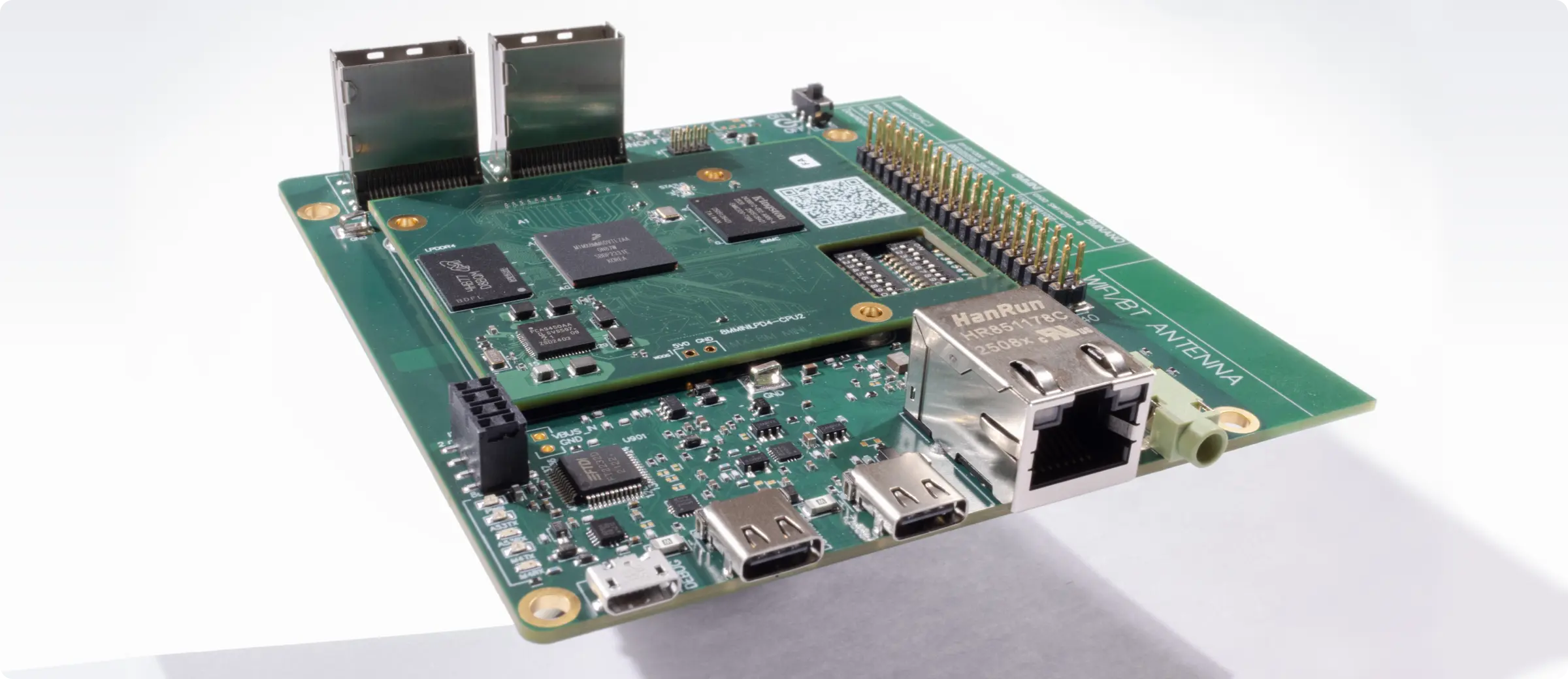
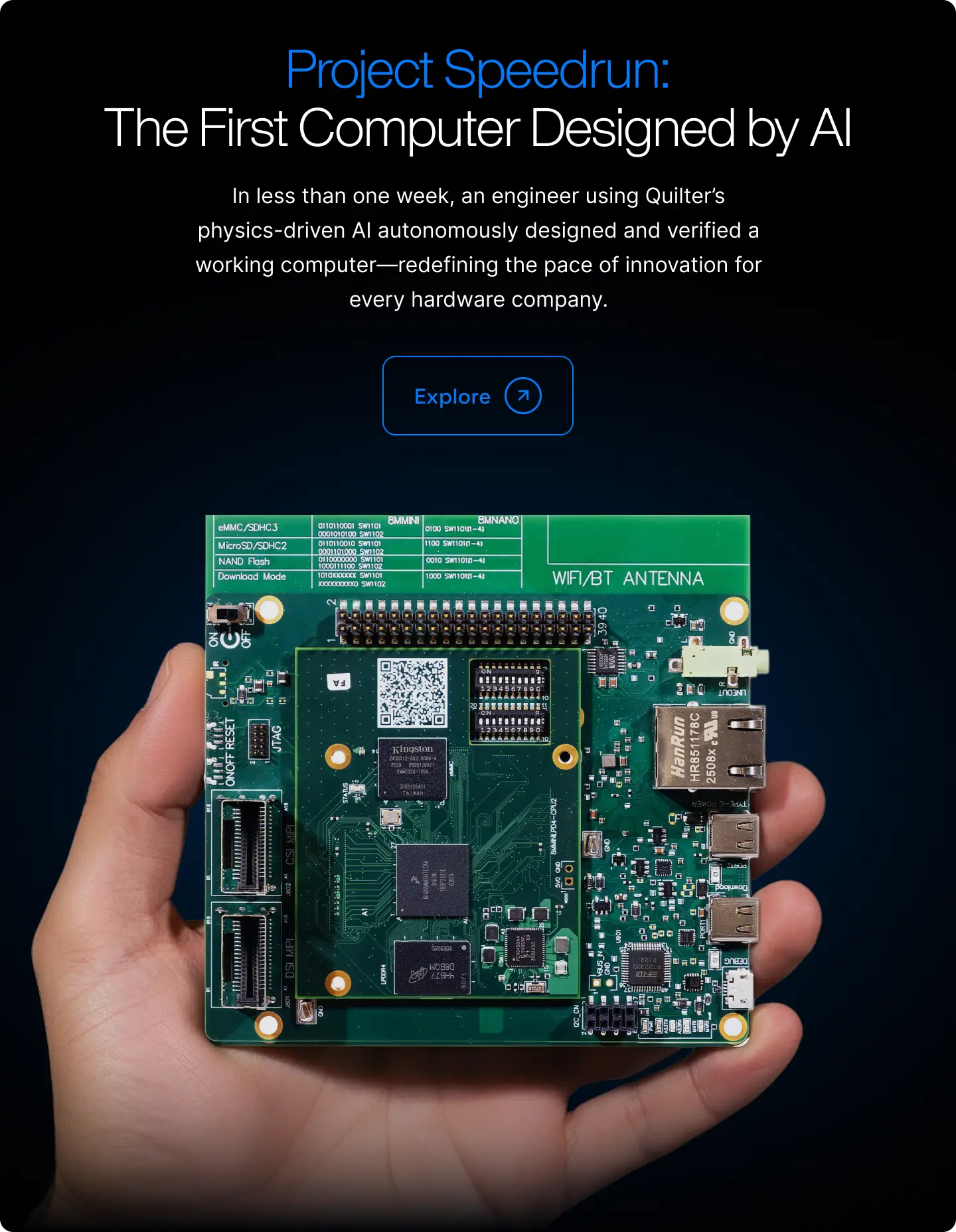
This article is one part of a walkthrough detailing how we recreated an NXP i.MX 8M Mini–based computer using Quilter’s physics-driven layout automation.
Enterprise PCB design software cost is easy to underestimate because license line items are the smallest, cleanest numbers in the spreadsheet. The real spend shows up in places procurement rarely owns: the weeks you lose waiting for layout capacity, the re-spins you pay for in fab and assembly, the onboarding time when only two people understand your stack, and the opportunity cost of shipping hardware late.
That’s why a PCB tool total cost of ownership (TCO) analysis matters more in 2026 than it did even two years ago. Boards are denser, schedules are tighter, supply chains are less forgiving, and “we’ll just iterate once more” can mean slipping an entire program.
This post breaks down what TCO actually means for PCB tools, how Altium vs Cadence pricing and Siemens Xpedition licensing typically show up in real budgets, and how AI PCB layout automation platforms like Quilter change the economics by shifting you from seat-based scarcity to usage-based throughput. (Source request: filecite:turn0file0)
What Does Total Cost of Ownership Really Mean for PCB Tools?
TCO is the full, annualized cost of designing, reviewing, releasing, and manufacturing boards with acceptable risk. It includes what you pay the vendor, as well as what you pay due to the vendor and the workflow you chose.
A practical TCO model for EDA software for hardware teams usually includes:
1) Direct software costs
- Seat subscriptions or perpetual licenses
- Maintenance, support plans, and upgrade fees
- Add-ons: SI/PI, rigid-flex, DFM, library tooling, PLM connectors, cloud collaboration, BOM risk tools
Altium, for example, often expands from “a design seat” into a platform bundle of collaboration and workflow modules, with published add-on pricing like Secure Collaboration and other services priced per year or per user. (Altium) Cadence and Siemens tend to quote bundles based on required capability tiers, token packs, and enterprise support.
2) Infrastructure and IT overhead
- License servers, VPN access, storage, backups, and access controls
- Cloud workspace governance (or on-prem equivalents)
- Security reviews and compliance overhead for regulated orgs
Even when the vendor provides modern cloud options, enterprise realities often require additional internal effort for user provisioning, permissions, audit trails, and data retention.
3) Onboarding and ramp time
This is the cost of turning a new hire into a productive designer in your specific environment:
- Tool learning curve
- Internal constraints, templates, libraries, and release processes
- Review cycles and “tribal knowledge” handoffs
If only a few people can unblock libraries or resolve CI rule conflicts, your ramp time becomes a throughput tax.
4) Productivity and rework
This is the biggest line item for most teams, even if it’s rarely labeled as “tool cost.”
- Layout hours per board
- Rework hours from late constraint discovery
- Re-spins (fab, assembly, test, debug, re-qualification)
Quilter’s own TCO framing (fully loaded engineering time plus revision cycles) reflects the reality that labor dominates cost once your program has more than a handful of boards per year. (Quilter)
5) Opportunity cost
The most expensive PCB is the one that makes you late:
- Missed revenue windows
- Competitive lag
- Extended burn on headcount and lab time
If your PCB toolchain creates a layout bottleneck, it behaves like a tax on every roadmap decision you make.
Here’s How Traditional Enterprise Pricing Stacks Up in 2026
If you’re trying to benchmark enterprise PCB design software cost, you’ll notice a frustrating pattern: vendors publish some prices, partners publish others, and enterprise quotes vary wildly based on modules, contract terms, and discount bands.
Here’s the most helpful way to think about it: traditional suites price scarcity. You pay to allocate access to the tool, and then you manage the downstream bottleneck.
Altium: “platform expansion” costs as you scale collaboration
Public pricing signals for Altium frequently show up as:
- Benchmarking sites that estimate what buyers pay annually (useful for reality checks, not perfect for enterprise forecasting). Vendr, for example, reports a median annual spend figure based on a set of purchases. (Vendr)
- Published platform module pricing for collaboration and workflow add-ons. Altium lists items like Secure Collaboration (priced “from” a yearly amount for a small user count) and other modules priced per user per year. (Altium)
In practice, Altium spend grows when:
- More stakeholders need access to design context (manufacturing, sourcing, QA, compliance)
- You adopt more managed workflows (requirements, process workflows, BOM risk, PLM connectors)
- You need higher security standards (GovCloud and similar offerings are typically “contact sales”) (Altium)
Cadence: tiered capability, often starting “reasonable” then growing fast
Cadence pricing is commonly encountered in two ways:
- Reseller storefront pricing for entry and mid-tier bundles (useful for small teams or as an anchor point). EMA’s store, for example, lists OrCAD X Standard and related products, along with their published ranges. (EMA Design Automation)
- Practical buyer guides that state starting points for annual leases and then note that advanced workflows and perpetual licensing change the math. GoEngineer’s guide cites starting prices for OrCAD X and Allegro X leases and references higher perpetual costs for Allegro. (GoEngineer)
Cadence typically becomes “enterprise-priced” when you add:
- High-speed constraints plus SI/PI analysis tooling
- Advanced routing and multi-board flows
- Enterprise support and integration into broader verification stacks
Siemens: Xpedition Standard is published, Xpedition Enterprise is quote-driven
Siemens is obvious about one key anchor:
- Xpedition Standard is advertised at an annual cost of US$2,999. (Siemens Digital Industries Software)
That’s a real, usable number for TCO modeling. The important part is what happens when your needs exceed “Standard”:
- Xpedition Enterprise is positioned as the enterprise-grade flow and is typically contact sales/quote. (Siemens Digital Industries Software)
- Siemens also sells token packs for on-demand access to enterprise-grade capabilities within an enterprise cloud account, which can add a usage layer on top of seats. (Xcelerator)
For buyers trying to map Siemens Xpedition licensing into a budget, the key is to separate:
- Base seats (Standard is a clear benchmark)
- Incremental spend for advanced capabilities, analysis, and enterprise governance
The takeaway on “traditional pricing”
Altium, Cadence, and Siemens all work at the enterprise level, but their commercial models are still rooted in seats, tiers, and add-ons. That makes budgeting feel straightforward at first, but it can hide the real bottleneck cost: you still have to buy enough “access” to create throughput.
How Are AI-Native Platforms Like Quilter Changing the Equation?
AI-native EDA platforms are not just “faster autorouters.” The meaningful shift is economic:
Traditional tools sell access to a workflow.
AI-native platforms sell throughput and iteration.
Quilter’s model is a clean example of this shift:
- No seat licenses for enterprise: pricing is not tied to the number of users. (Quilter)
- Unlimited iterations are free: you can explore designs without paying for every attempt. (Quilter)
- Charges apply when you download fab-ready designs, and pricing scales by pin count, not seats. (Quilter)
- You can set a predictable monthly cap so finance can bound maximum spend. (Quilter)
That matters because it eliminates a familiar enterprise tradeoff: “Do we buy more seats, or do we accept slower iteration?” If AI PCB layout automation increases layout throughput, the lever you pull is no longer “hire more designers” or “buy more seats.” It becomes “approve more designs” when the program actually needs them.
This is also where PCB design tool ROI becomes less abstract. Instead of arguing whether a tool is 10% faster at routing, you can ask:
- How many boards per quarter can we complete without adding headcount?
- How many re-spins can we prevent by catching constraints earlier?
- How many variants can we explore before committing to a risky architecture?
If you want to see the model described directly, Quilter’s pricing page outlines the “pins, not seats” and “usage-based, seat-free” approach. (Quilter) If your team wants to test the workflow without procurement friction, Quilter also offers a free tier with autonomous layout access. (Quilter)
What’s the Real TCO for a 10-Person Team?
Let’s model a realistic scenario and include the costs that usually get ignored. This is not a quote. It’s a decision-grade template you can adjust.
Scenario assumptions
- Team: 10 people touching PCB work (mix of EEs, PCB designers, manufacturing, and reviewers)
- Output: 20 boards/year (mix of eval boards, test fixtures, early prototypes, and a few production boards)
- Fully loaded engineering cost: $140/hour (salary, benefits, overhead)
- Baseline layout effort: 160 hours/board average (including constraint work, reviews, release admin)
- Rework tax in traditional flows: +20% time (late constraint fixes, library churn, review loops)
That yields:
- Baseline annual layout labor = 20 × 160 = 3,200 hours
- With rework tax = 3,200 × 1.20 = 3,840 hours
- Labor cost = 3,840 × $140 = $537,600/year
Now compare tools on top of that. Here’s a sample TCO table.
Sample annual TCO comparison table (10-person team, 20 boards/year)
Cost Category
Altium (traditional)
Cadence (traditional)
Siemens Xpedition (traditional)
Quilter (AI-native)
Core licenses / subscriptions
$25k to $60k (varies by seats and bundles; buyer benchmarks exist) (Vendr)
$20k to $80k (depends on OrCAD vs Allegro tiers, lease vs perpetual, options) (GoEngineer)
$9k baseline for 3 Standard seats (3 × $2,999), plus add-ons (Siemens Digital Industries Software)
Seat-free; pay when downloading fab-ready designs, metered by pin count (Quilter)
Collaboration / governance add-ons
$5k to $30k (Secure Collaboration and other modules can add up) (Altium)
$5k to $40k (varies by enterprise support, integrations)
$5k to $40k (Enterprise is quote-driven; tokens and enterprise workflows add cost) (Xcelerator)
Included in usage model concepts like unlimited teammates and predictable cap (Quilter)
IT overhead (license servers, admin, security review)
$8k to $20k
$10k to $25k
$10k to $25k
$5k to $15k (still requires security work, but fewer seat mechanics)
Training and onboarding time
$10k to $25k
$15k to $35k
$15k to $35k
$8k to $20k (workflow change, but less “tool piloting” per iteration)
Library and process maintenance
$15k to $40k
$20k to $60k
$20k to $60k
$10k to $30k (still need libraries, but iteration reduces “perfect upfront” pressure)
Layout labor and rework
~$538k baseline
~$538k baseline
~$538k baseline
Lower if automation reduces manual layout and rework loops (see below) (Quilter)
Illustrative total
$601k to $713k
$608k to $778k
$597k to $773k
Depends on downloads + labor savings
Interpreting the table: the “real” TCO is mostly labor
Even if you doubled your license spend, it would still be small relative to $500k-plus in labor for a team shipping 20 boards/year. That’s why TCO decisions should be made on throughput, iteration speed, and rework prevention, not on whether one vendor’s seat price is 15% lower.
So how much does Quilter cost for a 10-person team?
Quilter does not price by seats, so the question translates to: How many fab-ready designs will you download, and how complex are they (pin count)? Quilter’s pricing page is explicit that costs apply when you download fab-ready designs and pricing scales by pin count, with a predictable monthly cap available. (Quilter)
Here’s a decision-grade way to estimate:
- If your team downloads 20 approved designs/year, set your Quilter budget as a capped “design throughput” line item.
- Compare that budget to the value of labor saved. If AI-native automation cuts even 15% of the 3,840 hours modeled above, that’s:
- 576 hours saved
- 576 × $140 = $80,640/year in labor capacity
If the labor savings are 25%, the value is:
- 960 hours saved
- $134,400/year
That’s why AI PCB layout automation can deliver better ROI on PCB design tools, even when the “software spend” looks unfamiliar. You are buying back schedule and engineering focus.
If you want a concrete starting point, many teams set an initial Quilter cap in the same range they would have spent adding “just one more seat,” then expand once they see how many boards they can push through the pipeline. The difference is that you are paying for released output, not idle access.
Two Quilter pages worth reviewing as you build your internal model:
- Quilter pricing and enterprise model (“pins, not seats,” usage-based, cap). (Quilter)
- Quilter free tier overview (useful for initial evaluation without procurement drag). (Quilter)
What Should You Ask Before Choosing an Enterprise PCB Solution?
Use this checklist to make your TCO comparison apples-to-apples across Altium, Cadence, Siemens, and AI-native options.
- Where will our bottleneck be in 12 months: seats, skilled layout labor, or iteration time?
- What is our true “boards per quarter” capacity today, and what does it need to be next year?
- What is included vs add-on priced? (SI/PI, rigid-flex, DFM, BOM risk, PLM, collaboration security) (Altium)
- Do we need quote-only enterprise tiers to meet our actual requirements? (Example: Xpedition Enterprise is positioned as a contact-sales offering.) (Siemens Digital Industries Software)
- How will we onboard a new designer in 30 days, not 90?
- How many people can safely review and collaborate without buying more “design seats”? (This is where seat-free models change workflow math.) (Quilter)
- What does security look like in practice? (Data isolation, encryption, cloud vs private cloud vs on-prem) (Quilter)
- What is our plan for governance: permissions, auditability, retention, and supplier sharing?
- What is our re-spin rate today, and what are the root causes?
- Which toolchain helps us catch constraints earlier, before layout is “done”?
If you can answer those questions with numbers, you will naturally end up with a stronger PCB tool total cost of ownership model than any vendor quote can provide.
Ready to See How Quilter Can Accelerate Your Hardware Development?
If you’re evaluating enterprise options in 2026, the smartest next step is not “pick a vendor.” It’s model your throughput:
- How many boards do you need to ship per quarter?
- Where is layout capacity constraining your roadmap?
- What would it be worth to remove the iteration bottleneck?
If you want, start with Quilter’s published pricing model overview (usage-based, seat-free, metered by pin count, predictable cap). (Quilter) From there, you can request a personalized TCO analysis tied to your actual board mix, pin counts, and release volume so you can compare Altium vs Cadence pricing, Siemens Xpedition licensing, and Quilter’s approach on the same throughput basis. (Quilter)


.webp)