






Read the Full Series
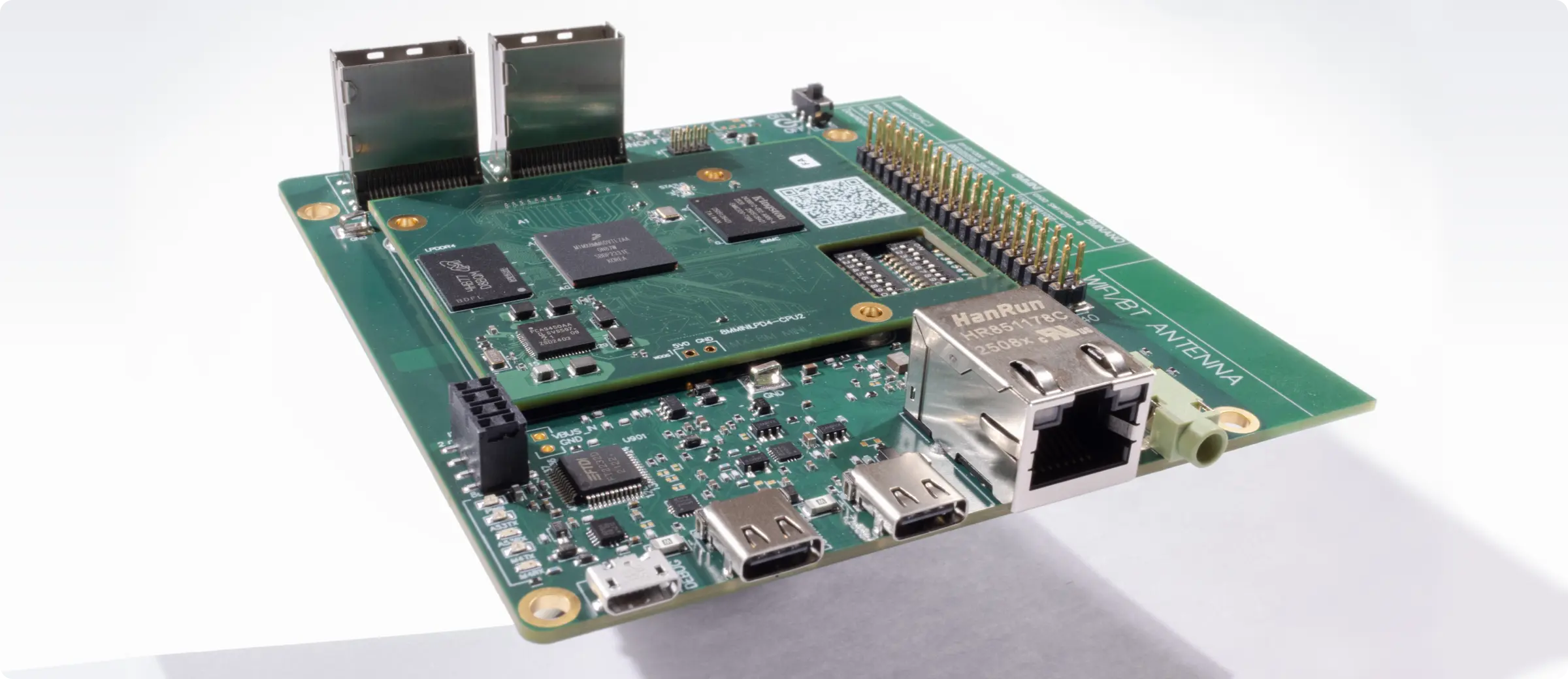
This article is one part of a walkthrough detailing how we recreated an NXP i.MX 8M Mini–based computer using Quilter’s physics-driven layout automation.
If your last board review involved a 40-page PDF, a pile of screenshots in Slack, and three people arguing about which “final” file set was actually current, you are not alone. A surprising number of hardware teams are still trying to run modern programs on top of review habits built for a slower era.
That breaks down fast once schedules tighten, stakeholders multiply, and layout complexity climbs. Today’s teams need more than a prettier way to share screenshots. They need software for collaborative PCB review that preserves context, tracks decisions, and helps experts focus on what actually matters.
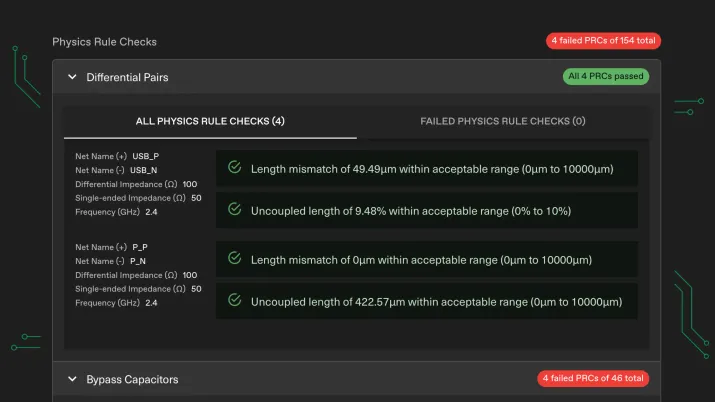
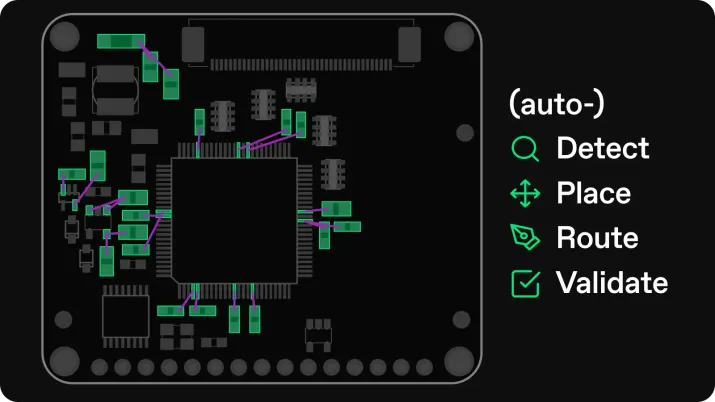
This article walks through four modern workflows for collaborative PCB review, explains where cloud and AI fit, and shows how Quilter turns the layout itself into a live review surface instead of just another artifact. Quilter supports existing Altium, Cadence, Siemens, and KiCad projects, identifies critical considerations such as bypass capacitors, impedance-controlled nets, and differential pairs, and evaluates each layout against provided physical constraints, providing transparent review feedback.
Review approach
What reviewers actually see
Version traceability
Non-CAD stakeholder access
Typical failure mode
PDFs
Static pages and callouts
Weak
Easy to open, hard to interpret
Context disappears
Screenshots in chat
Cropped images
None
Easy
Comments get lost and drift from design intent
Cloud PCB review workspace
Live schematic and board views
Strong
Browser-based
Better, but still depends on manual review quality
Git-style hardware collaboration platform
Design revisions, diffs, annotations
Very strong
Good for technical teams
Excellent for process, limited if issue discovery is still mostly manual
AI-assisted review with Quilter
Multiple layout candidates plus physics-aware review signals
Strong
Strong, because the system surfaces what needs attention
Best when teams want faster decisions, not just better file sharing
Let’s define what “good” looks like in a modern PCB review
A good PCB review workflow is not just a sign-off meeting. It is a decision system. The goal is to catch functional risk early, validate that real constraints were respected, and align the people who own the downstream consequences before the board goes to fab.
That means the review room has expanded. It is still led by PCB designers and electrical engineers, of course, but high-stakes boards also bring in SI and PI specialists, test engineers, manufacturing and mechanical teams, firmware leads, and program managers. Each of them is looking for something different. The designer wants the routing intent preserved. The EE wants electrical correctness. Test cares about access. Manufacturing cares about avoiding pain later. Program management cares about risk and schedule.
So what does success look like?
It looks like fewer spins, more predictable bring-up, and faster convergence on decisions that are actually documented. It looks like comments are tied to exact geometry, nets, and revisions instead of floating around in email. It looks like clear ownership of open issues, and just as important, clear agreement on which concerns are already closed.
Modern hardware teams do not need more review theater. They need a shared system that helps people reason about the same design, at the same revision, with the same constraints in view.
Here’s why old review habits (screenshots, PDFs, email chains) are holding hardware teams back
Static artifacts are comfortable because everybody knows how to send them. They are also the fastest way to strip away the very context reviewers need.
A screenshot can show a routing region, but it cannot let someone inspect a net relationship, cross-probe into the schematic, or understand how that problem interacts with adjacent layers and constraints. A PDF is slightly better for documentation and much worse for active collaboration. You can circle something, sure, but the moment a revision changes, the markup starts to drift from reality.
Then the version chaos begins.
One engineer commented in an email. Another drops notes in chat. Someone else marks up a PDF. A manufacturing concern arises in a meeting and never makes it into the official record. By the time the layout is polished, nobody is fully sure which comments were resolved, which were deferred, and which were quietly forgotten.
The cost is not abstract. It shows up as late-stage rework, surprise ECOs, missed pull-ups, last-minute connector reroutes, and schedule slips that look small in isolation but compound across a program. Quilter’s own IC evaluation board positioning is built around exactly this bottleneck: layout delays hold back bring-up, downstream teams sit idle, and seemingly minor misses can trigger full re-spins. Quilter says its IC evaluation workflow can cut 4-6 weeks from IC bring-up and produce board-ready layouts in under 4 hours.
Legacy review also creates brittle tribal knowledge. Too much of the design rationale lives in the heads of the two or three people who can still reconstruct what happened from memory. That is not a review system. That is a liability.
What do today’s leading teams use for collaborative PCB review?
Most serious teams do not replace their primary CAD environment overnight. They add layers above it.
The first category is the vendor-integrated cloud workspace. Altium 365 is the obvious example for Altium teams. Once a project is shared, stakeholders can view and comment from either Altium Designer or a browser, even without installing the desktop tool, and comments remain in the design context across both interfaces. Siemens positions Xpedition as a scalable PCB environment with collaboration and analysis, and its cloud-connected ecosystem has been used to streamline collaboration with suppliers and surface issues earlier.
The second category is the vendor-neutral hardware collaboration platform. AllSpice positions itself around AI-powered design reviews for schematics and PCB layouts, with large volumes of reviews and comments already processed on the platform. CADLAB is built around Git-style version control for hardware, with browser-based revision viewing, visual diffs, and interactive annotations that make schematic and layout history easier to follow.
The third category is fully web-based EDA. Those tools have a place, especially for lightweight collaboration and greenfield teams, but most demanding programs still center on Altium, Cadence, Siemens, or KiCad because that is where the existing libraries, constraints, release processes, and engineering muscle memory already live.
The important point is this: these categories are complementary. CAD remains the authoring layer. Cloud workspaces improve visibility and markup. Git-style platforms improve change control and review structure. AI layers improve issue discovery, tradeoff evaluation, and review speed.
That is where the market is moving. Not away from CAD, but toward a better review stack around it.
Here’s how a cloud-first review flow works with your existing EDA stack
Imagine a validation board. The EE and layout engineer finish a first-pass board in Altium, Cadence, Siemens, or KiCad. Instead of exporting screenshots and assembling a slide deck, they push the current revision into a shared review workspace.
Now the review opens up.
The SI engineer can inspect critical nets in context. Mechanical can review connector placement and keep-outs from a browser. Tests can verify access points without needing a full CAD seat. Comments are placed exactly where they belong: on routes, nets, board regions, or interface areas. And because the design remains live, people can review the board that actually exists, not a frozen version.
This is where cloud PCB review becomes more than convenience. It changes the quality of interaction. Altium’s browser workflow is a clean example of that, since comments sync between the web viewer and the desktop environment and remain attached to the design context. CADLAB extends the pattern by showing revision history and visual diffs online, which is especially useful when a review comment leads to a layout change, and the team wants to verify what really moved.
A modern flow also makes traceability the norm rather than the exception. You can see which revision a comment belongs to, whether it is open or resolved, and how the next spin differs from the last. That matters for auditability, for design reuse, and for avoiding the same debate on the next board six months later.
This is what teams usually mean when they start looking for software for collaborative PCB review. They are not asking for prettier exports. They are asking for a real operating model.
How does AI change the PCB review room?
AI changes the room by doing the routine pre-work before humans even sit down.
In a purely manual review, senior experts spend too much time searching for obvious or moderately obvious issues. Missing or poorly placed bypass capacitors. Differential pairs with suspicious mismatch. Congestion around critical routing zones. Regions that look electrically legal but are practically fragile. The list goes on.
A basic DRC can catch some of that, but DRC is not the same thing as understanding design behavior. It checks rule compliance. It does not necessarily help the team reason about the physical consequences of a routing choice in the broader system context.
That is where ai pcb design review gets more interesting. AI can pre-screen layouts against electrical, geometric, and manufacturing constraints, then surface the areas most likely to deserve human attention. Instead of experts burning time on the first pass of inspection, they can spend the meeting on edge cases, tradeoffs, and system-level judgment.
The key distinction is between naive automation and physics-aware review. Quilter describes its approach as reinforcement learning for designing electronic hardware that works, with physics-aware design signals for bypass capacitors, impedance-controlled nets, and differential pairs, plus transparent design review feedback showing what has been done and what still needs review.
That does not remove human judgment. It makes human judgment more valuable. AI becomes the second pair of eyes that never gets tired, never forgets to check the same class of issues on the next candidate, and can help a team compare alternatives much faster than a manual workflow usually allows.
Here’s how Quilter turns layout exploration into a collaborative review surface
This is the part most tools still miss.
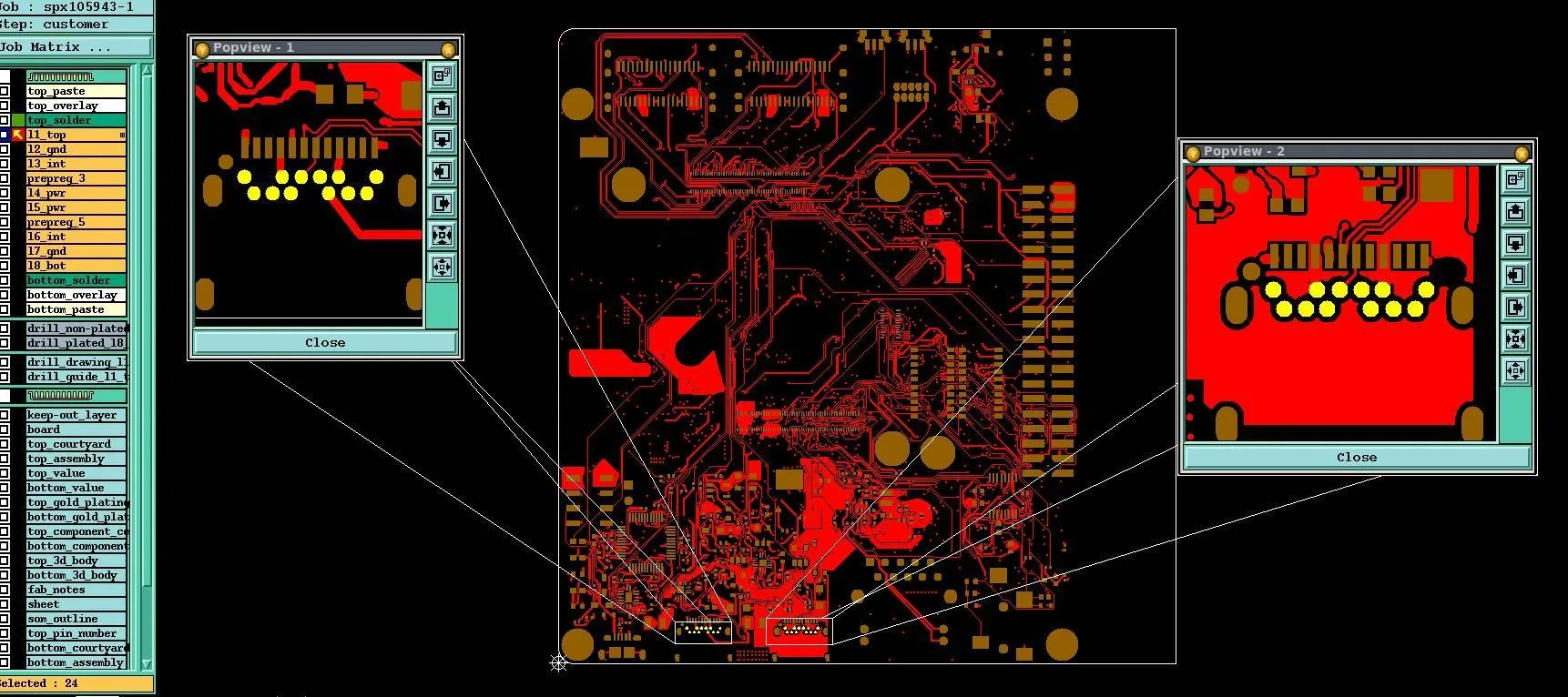
Many platforms help people discuss a board. Quilter changes the board review itself by generating multiple candidate layouts and scoring them against transparent, physics-based checks. Instead of reviewing a single artifact and arguing over whether it is acceptable, teams can review a set of options and discuss trade-offs concretely.
The workflow starts with the tools teams already use. Quilter accepts projects from Altium, Cadence, Siemens, and KiCad, lets teams define board outline, connectors, floorplan, and constraints, and returns files in the same format they submitted. That matters because it keeps the existing EDA stack intact.
From there, Quilter’s reinforcement learning system generates multiple layout candidates in parallel, in hours rather than weeks, and evaluates them against the provided physical constraints. The review output is not a black box score. Quilter explicitly frames this as a transparent design review, where users can see which aspects are truly done and which still need further review and improvement.
That changes collaboration in a practical way.
Now the SI specialist can compare candidates on critical nets. Test can weigh in on access and raise practical concerns. Firmware and program leadership can understand which risks are material without reading native layout files all afternoon. Even non-layout specialists can participate because the system is surfacing the right questions for them.
This is especially compelling for pilot board types like IC evaluation boards and design validation boards, where the cost of a review miss is immediate, and the speed pressure is very real. Quilter says its IC evaluation workflow can deliver board-ready layouts in under 4 hours, while its broader solutions messaging says validation cycles can shrink from months to days, and first candidates often appear within the first hour.
So the review surface is no longer a screenshot, a PDF, or even just a browser viewer. It is a set of physics-driven layout alternatives with shared evidence around what is working and what needs attention.
Run a collaborative review on your next board
Upload an existing Altium, Cadence, Siemens, or KiCad project into Quilter and compare multiple physics-validated layout candidates in a single afternoon.
Get started: https://www.quilter.ai/
Best fit for: validation boards, IC eval boards, bring-up hardware, and schedule-critical prototypes.
What results can you expect when reviews move from artifacts to live systems?
The hard gains show up first.
Cycle time comes down because the first-pass review starts sooner. Defect risk drops because more issues are surfaced before fabrication. Alignment improves because the team reacts to a single shared system rather than five disconnected artifacts.
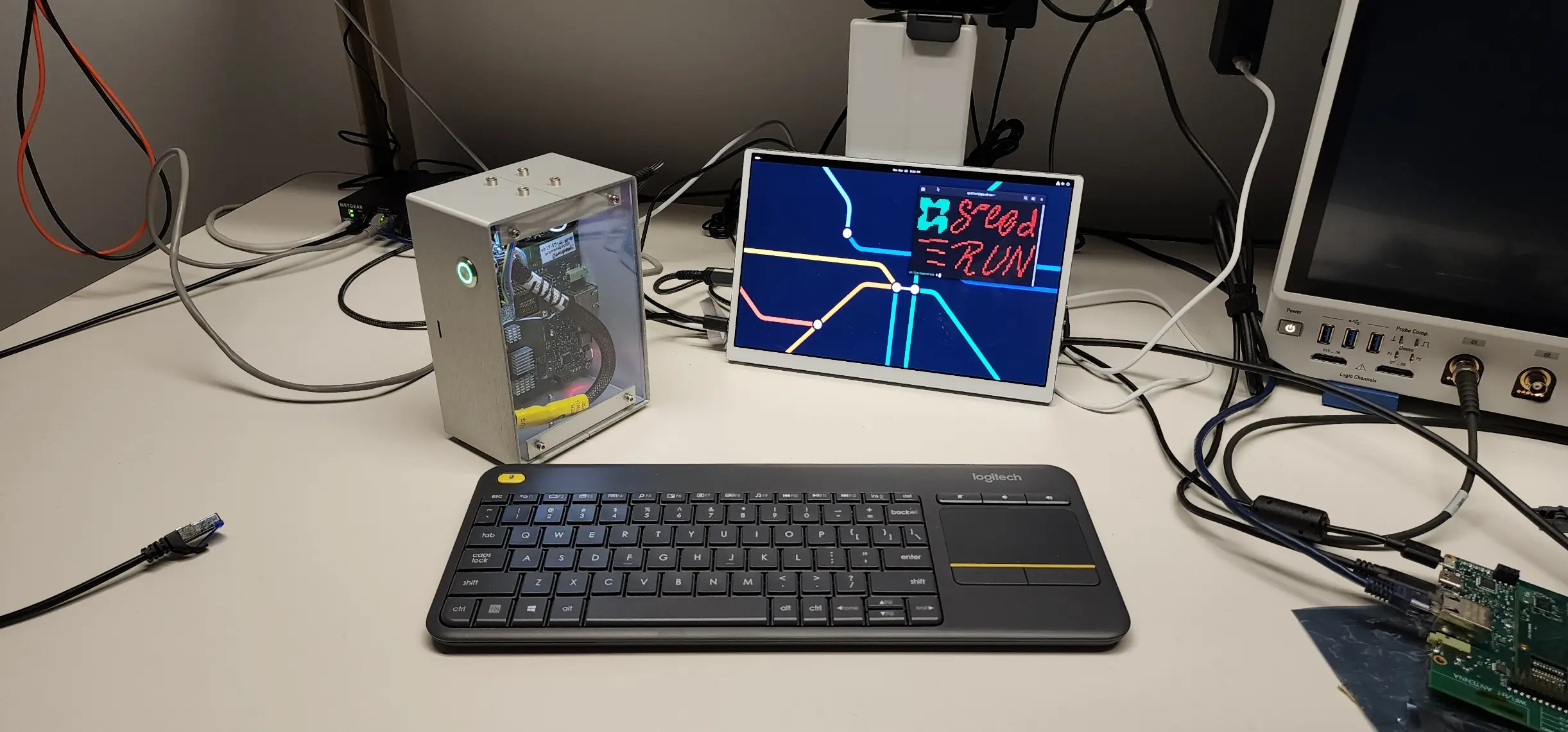
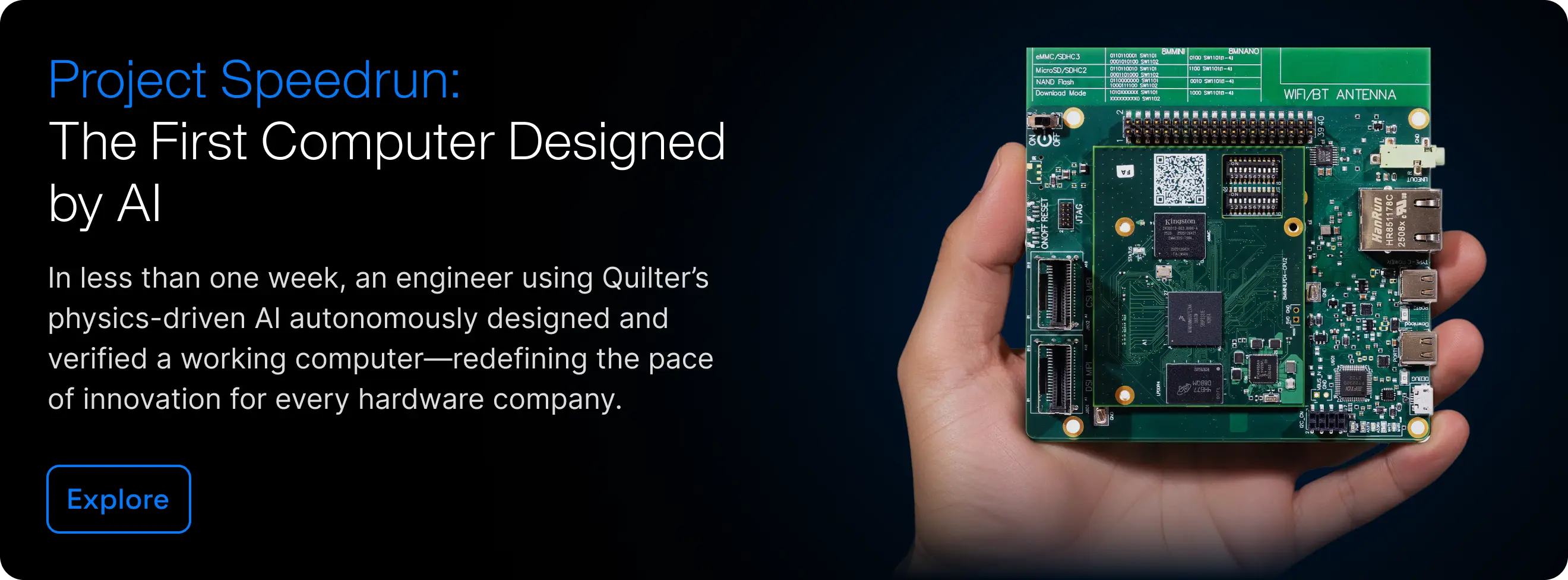
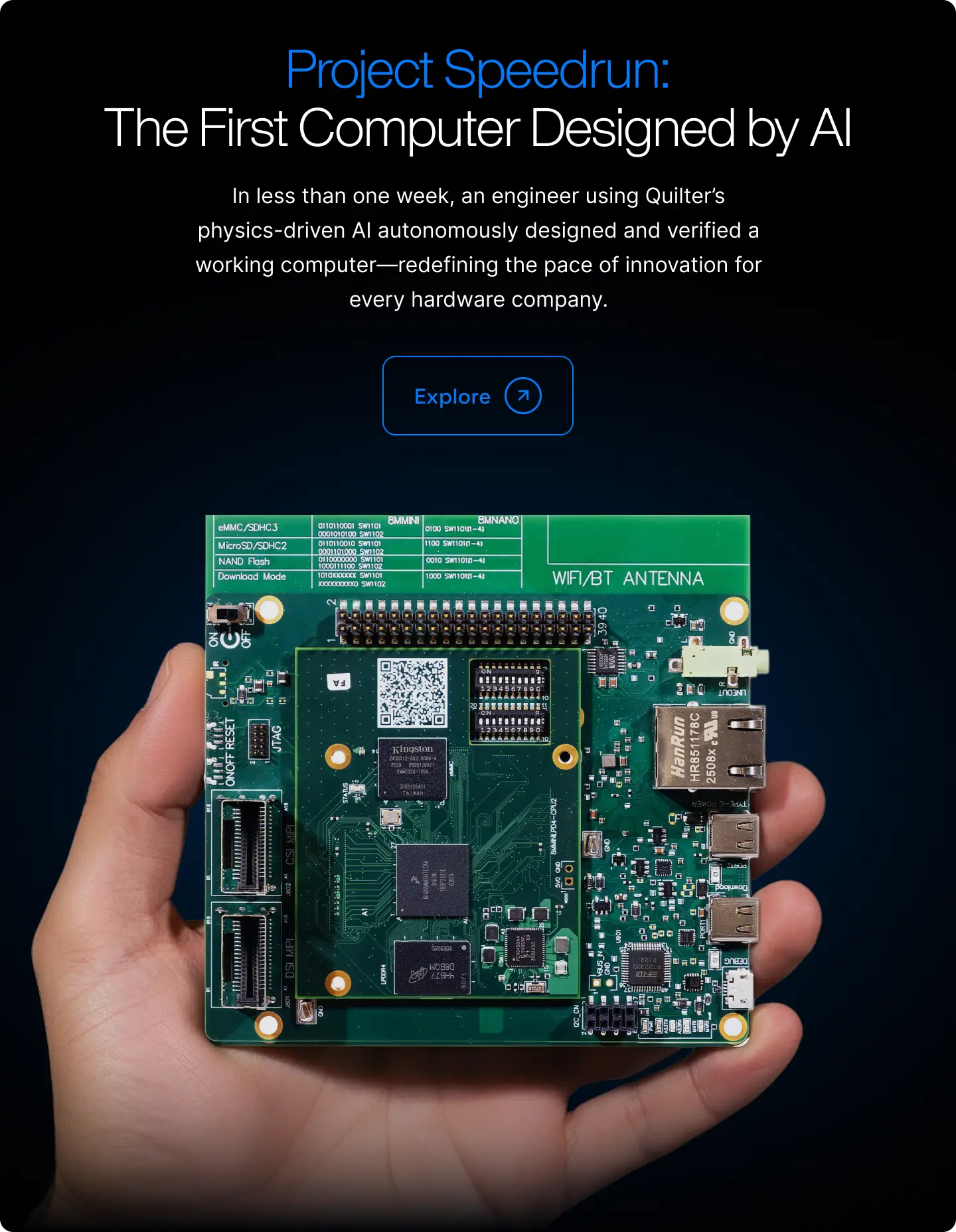
Quilter’s published proof points are aggressive but relevant here. Across its solution pages, the company positions test and evaluation workflows in hours rather than weeks, and for Project Speedrun, it reported 38.5 hours of human polish versus 428 hours quoted for a fully manual layout, with fabricated boards that powered on and ran workloads on the first spin.
The softer gains matter too. Less meeting theater. Fewer circular debates over whether a comment is still current. Clearer ownership of design risk. Better reuse of review history on the next board.
That is what happens when reviews move from artifacts to live systems.
How do you phase in a modern review workflow without disrupting current programs?
Start small and stay boring.
Do not try to transform the entire organization on a mission-critical flagship board. Pick one pilot board type with fast cycles and visible pain. Test fixtures, harnesses, IC eval boards, and design validation boards are good candidates because they have clear review bottlenecks and concrete downstream consequences. Quilter explicitly positions those board classes around time savings and faster bring-up.
Keep your primary CAD flow. Add a modern review layer on top of one or two design cycles. Set practical checkpoints:
- First candidate review within hours, not after the week is gone
- One cross-functional session focused on AI-flagged items and unresolved tradeoffs
- A short post-mortem comparing review speed, issue quality, and spins avoided
Address security and deployment concerns early. Quilter’s public positioning includes public cloud, private cloud, and on-prem options, which is important for teams dealing with internal security requirements or regulated environments. For aerospace and defense buyers, Quilter also markets around compliant, secure, in-house innovation for high-stakes programs.
The goal is not disruption. The goal is to prove that a better PCB review workflow can coexist with the current stack, reduce risk immediately, and achieve broader adoption with real results.
Let’s talk about next steps for teams evaluating collaborative PCB review software
If your team is under schedule pressure, reviewing complex constraints, and already working in Altium, Cadence, Siemens, or KiCad, Quilter is worth evaluating as more than just another hardware collaboration platform. It is a review acceleration layer tied directly to layout generation and physics-aware assessment.
Use a simple checklist:
- How quickly can the system generate meaningful review candidates?
- How transparent are the physics checks and unresolved risk areas?
- How easy is it to involve non-EDA stakeholders?
- Does the security and deployment posture fit your environment?
If those are your real questions, bring a real design. That is the right first test.
Start with Quilter’s free or startup paths if you want a low-friction trial, or book an enterprise conversation if your team needs a workflow review tied to current programs, security constraints, or internal signoff requirements. Quilter’s pricing and deployment messaging emphasize broad access, startup options, and enterprise support, with public, private, and on-prem paths available.
The old review stack was built to circulate files. The modern one is built to accelerate decisions.
If you are evaluating software for collaborative PCB review, that is the difference that matters.



.webp)