






Read the Full Series
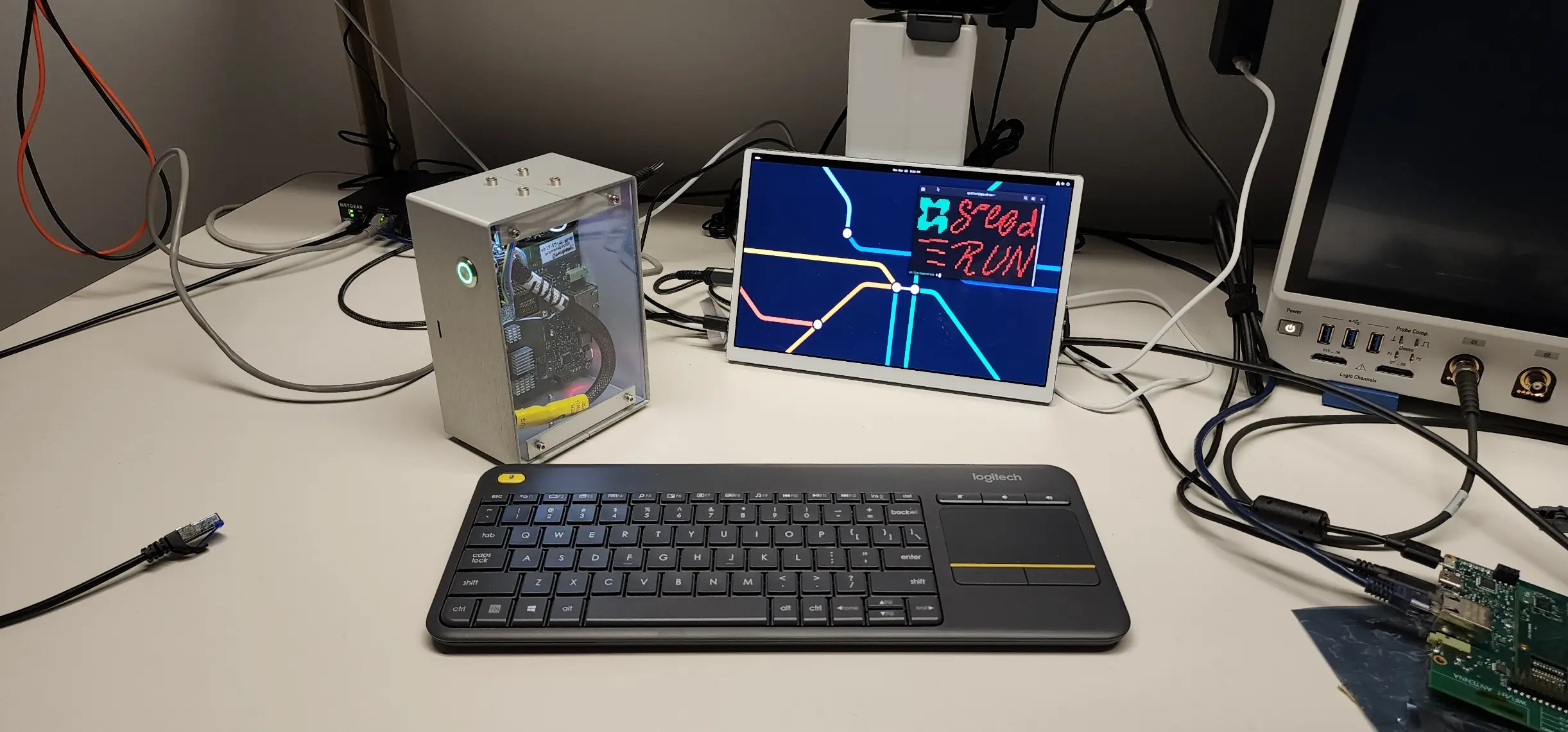
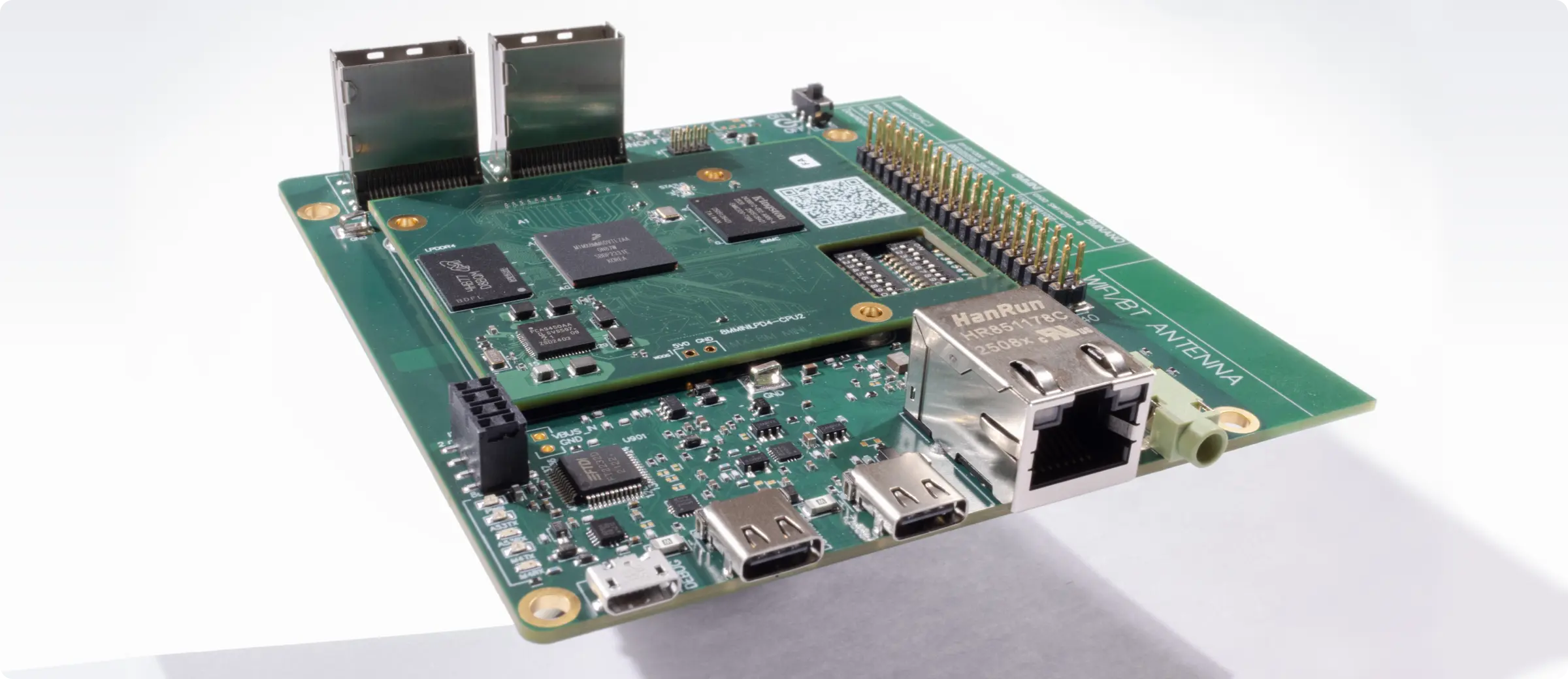
This article is one part of a walkthrough detailing how we recreated an NXP i.MX 8M Mini–based computer using Quilter’s physics-driven layout automation.
Most cloud PCB tools moved your files into a browser and called it progress. That helped with review, access, and collaboration. It did not remove the real bottleneck. The hard part in board development is still turning a complex schematic into a manufacturable, physics-sound layout fast enough to keep the program moving.
That is the gap Intelligent Cloud EDA is built to close.
If you are evaluating the best cloud platforms for hardware engineering, it is worth separating collaboration infrastructure from actual design throughput. Shared viewers matter. Version history matters. Browser access matters. But the next leap comes when the cloud is not just where the files live, it is where real PCB layout work gets done through AI PCB layout, automated routing, and DFM, and physics-driven validation at scale.
Let’s define what engineers mean by “cloud” for hardware work
When hardware teams say “cloud,” they are usually referring to three distinct categories of tools.
First, there are general cloud platforms like AWS, Azure, and Google Cloud. These provide storage, compute, CI infrastructure, security controls, and backend services. They are essential, but they are not PCB design tools by themselves.
Second, there are hosted EDA environments from major vendors. These move traditional workflows onto managed infrastructure, enabling teams to scale compute, centralize access, and avoid building everything on-prem. For chip and verification teams, that matters a lot. For PCB teams, though, that still often means the same human layout workflow running in a different place.
Third, there are cloud-native CAD and collaboration platforms. Think browser viewers, design sharing, supply chain visibility, and easier reviews across sourcing, manufacturing, firmware, and mechanical stakeholders. These tools made PCB collaboration easier, and that was an important step.
But most lists of the best cloud platforms for hardware engineering stop there. They focus on storage, collaboration, browser access, and sometimes CI. Do they not ask a more important question: what if the cloud became the actual design engine?
That is where Quilter changes the conversation. Quilter uses reinforcement learning to explore thousands of candidate boards and runs physics-aware checks during the layout process. In that model, cloud computing is not a background infrastructure. It is what creates design capacity.
Here’s why current cloud PCB tools stop at storage and sharing
Today’s cloud PCB tools do a lot well. They create a single source of truth. They make it easier to share work with manufacturers and outside partners. They give non-layout stakeholders browser-based visibility into a design without needing a full CAD seat. They improve BOM visibility, comments, review cycles, and organizational hygiene.
That is useful. It is also not enough.
Most collaboration-first cloud PCB platforms are still built around the assumption that a human will do the layout work, trace by trace, decision by decision, bottleneck by bottleneck. The cloud improves access to the board. It does not generate multiple physics-validated layouts from the schematic in hours.
That distinction matters. A browser viewer does not support automated routing and DFM. Shared storage is not an AI PCB layout. Version control is not reinforcement learning for PCB design.
So when people say “cloud PCB design,” they often mean cloud access to conventional design work. What they do not mean, at least not yet, is a cloud system spinning up serious compute to plan, place, route, and evaluate candidate boards at scale.
That is why the next wave will not be better comments in the browser. It will offload non-core layout work to intelligent systems running in the cloud, while engineers retain control over constraints, architecture, review, and sign-off.
The winning cloud PCB design platform is no longer just the one that stores your project cleanly. It is the one that increases layout throughput.
Let’s define Intelligent Cloud EDA
Intelligent Cloud EDA is cloud-hosted design automation that uses AI and physics to propose, evaluate, and iterate hardware layouts at scale.
That definition is worth sitting with for a second, because it marks a real category break.
Traditional Cloud EDA usually means taking existing tools and hosting them in a managed environment, a virtual machine, or a SaaS wrapper. The location changes. The workflow mostly does not.
Intelligent Cloud EDA changes the workflow itself.
It has three defining pillars:
- Physics-aware AI models that understand board-level realities such as clearances, bypass capacitor placement, impedance-controlled nets, differential pairs, and manufacturability constraints.
- Massively parallel candidate exploration so the system can generate and compare many possible layouts instead of forcing a single manual path through the design space.
- Continuous improvement of the design engine so the cloud becomes an active system of layout generation and evaluation, not a passive file infrastructure.
In Intelligent Cloud EDA, the cloud is the design engine, not just the place where your files sit.
Quilter is a clear example of this category. Its public product positioning centers on reinforcement learning, thousands of generated candidate boards, native support for common PCB toolchains, and transparent physics-aware design review. That is not just cloud hosting. That is a new operating model for PCB layout.
Intelligent Cloud EDA = physics-driven AI for hardware that uses cloud compute to generate, validate, and iterate PCB layouts at scale.
How does Intelligent Cloud EDA actually work in practice?
The practical workflow is much simpler than people expect.
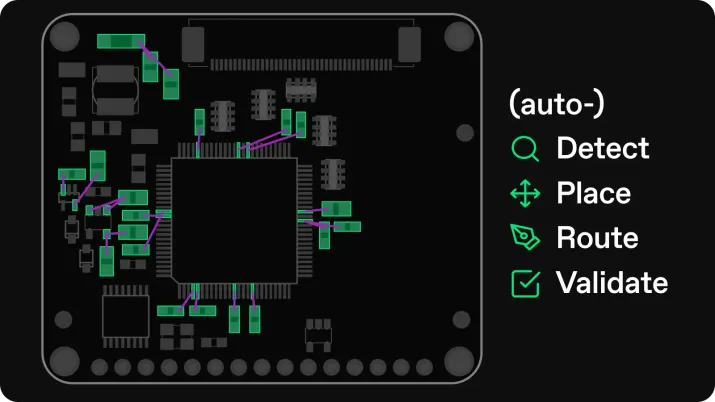
An engineer starts in the tools they already use. Quilter accepts projects from Altium, Cadence, Siemens, and KiCad. The team defines the board outline, floorplan intent, connector locations, key constraints, preferred stack-ups, and manufacturer options. Then the non-core layout work is handed to the AI system.
From there, Quilter spins up cloud compute and starts exploring the design space. Reinforcement learning drives the search. The system generates many candidate boards and evaluates them against embedded physical constraints and layout requirements. That means the loop is not just “route quickly.” It is “route, check, compare, improve, repeat.”
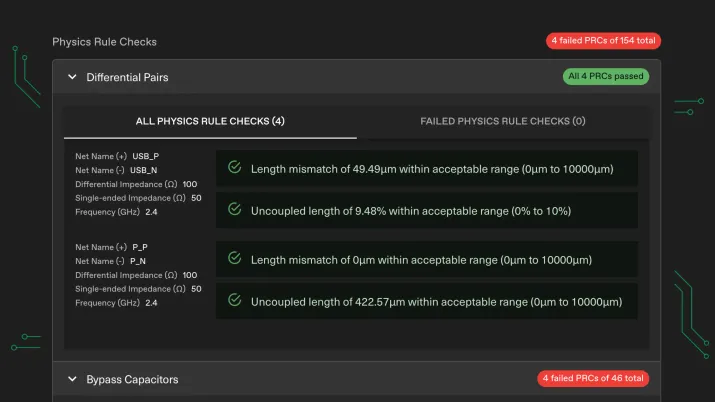
Physics validation is part of the process, not something bolted on after the fact. Quilter publicly highlights checks and considerations around bypass capacitors, impedance-controlled nets, differential pairs, and broader physical constraints, along with a transparent review of what the system has and has not accounted for.
The engineer still owns the parts that matter most. Schematic quality still matters. Critical placement decisions still matter. Final polish, deeper review, DRC, fab output, and sign-off still happen in the existing CAD environment. Quilter returns files in the same format teams submitted, which means adoption does not require ripping up a trusted toolchain.
That is the right model. Let the cloud handle the repetitive, compute-heavy layout search. Let the engineer direct intent, make high-value decisions, and approve what ships.
Architecture diagram: where Intelligent Cloud EDA fits
[ AWS / Azure / GCP ]
Compute, security, storage, enterprise controls
|
v
+-----------------------+
| Quilter |
| Intelligent Cloud EDA |
| AI layout + physics |
| candidate generation |
+-----------------------+
^ ^
| |
project upload/download | results, review
| |
+------------------+----+ +---+------------------+
| Altium / Cadence / | | Altium 365 / PLM / |
| Siemens / KiCad | | collaboration layers |
| Existing CAD tools | | sharing and review |
+-----------------------+ +----------------------+
What problems does this solve that traditional cloud CAD can’t?
The first problem is schedule risk. In many hardware programs, layout is where calendars go to die. A board is ready in principle, but there is not enough experienced layout capacity to move it quickly. Quilter’s published messaging repeatedly frames the gain in terms of hours rather than weeks, including solution pages that claim 4 to 6 weeks of bring-up for certain workflows and backplane timelines reduced from 30+ days to under 24 hours.
The second problem is engineering bandwidth. Senior PCB designers should spend time on architecture, signal-integrity trade-offs, and high-consequence reviews. EE generalists should not lose days to repetitive routing work when they need to be learning from hardware and moving the system forward.
The third problem is learning speed. When layout capacity is scarce, teams batch changes. They wait. They compromise. They avoid exploring alternatives because every extra turn costs too much time. Intelligent Cloud EDA changes that dynamic by making more candidate boards available faster, enabling more learning before tape-out, before fab, and before lab time gets expensive.
This is especially valuable in programs where board speed directly gates larger milestones:
- Semiconductors: faster validation and evaluation boards help teams reach silicon test sooner.
- Robotics and consumer electronics: compressed board cycles help protect launch windows and bring-up schedules.
- Aerospace and defense: faster iteration matters, but so do controlled workflows, in-house innovation, and enterprise-grade guardrails. Quilter explicitly positions for demanding environments, including ITAR-aligned workflows and mission-critical programs.
Here’s how Intelligent Cloud EDA changes your PCB development stack
The important thing to understand is that Intelligent Cloud EDA does not replace your whole stack. It upgrades the slowest part.
A modern hardware team might still use Altium or Cadence as the primary desktop design environment. It may still use Altium 365, PLM infrastructure, or internal versioning systems as the collaboration and data layer. It may still run CI, simulation, security controls, and enterprise infrastructure on AWS or Azure.
Quilter fits between schematic completion and final CAD polish as the Intelligent Cloud EDA layer.
That means:
- your preferred CAD stays in place
- your collaboration stack stays in place
- your cloud infrastructure strategy stays in place
What changes is that layout generation becomes elastic. You upload in native formats, encode your constraints, let Quilter generate candidate boards in the cloud, then bring the result back into the same downstream workflow for DRC, documentation, and fabrication prep. Quilter’s pricing and packaging language also reinforces this capacity model: pay for approved designs, with scaling tied to pin count rather than seat count.
Comparison table: Cloud Collaboration Tools vs Intelligent Cloud EDA
Capability
Cloud Collaboration Tools
Intelligent Cloud EDA
Primary job
Store, share, review, track
Generate, validate, iterate layouts
Storage and access
Strong
Strong
Browser visibility
Strong
Helpful but secondary
Routing automation
Limited or assistive
Core capability
Physics checks
Often downstream or manual
Embedded in generation loop
Candidate exploration
Usually one design path
Many designs explored in parallel
Time-to-layout
Days to weeks, still human-limited
Hours to under a day for target use cases
Best use
Collaboration and governance
Throughput, schedule compression, design capacity
What results can hardware teams expect from AI in the cloud?
The practical answer is more hardware turns per calendar month.
That is the real ROI. Not “AI adoption.” Not flashy demos. More boards moving through validation, more options before committing, more chances to catch bad assumptions before they become respins.
Quilter’s public claims point to the kinds of outcomes teams should benchmark against: schematic-to-fab-ready in hours instead of weeks, validation cycles shrinking from months to days in certain board classes, and faster board bring-up across semiconductor, robotics, consumer electronics, and aerospace-oriented programs.
Quality matters too. Physics-first validation does not mean perfection is automatic. It means more of the obvious layout risks are surfaced and addressed earlier, with transparent feedback on what has been evaluated and what still needs engineering judgment. That is a better foundation for predictable bring-up.
A few realistic examples:
- A semiconductor team uses Intelligent Cloud EDA for IC evaluation boards and reaches lab-worthy layouts fast enough to pull silicon learning earlier.
- A robotics team uses it on control and validation boards, reducing the wait between electrical change and physical test.
- A consumer electronics team explores multiple form factors or stack-ups in parallel instead of serially.
- A defense-oriented team uses it to increase in-house iteration speed while keeping existing compliance-minded workflows intact.
When people ask for the best cloud platforms for hardware engineering, this is the standard they should care about. Not just who can host files, but who can increase engineering throughput.
How to get started with Intelligent Cloud EDA today
The best first project is usually not your most politically sensitive board. It is a board where cycle time matters, the constraints are real, and the organization can learn fast with low external risk.
A good starting point is an internal validation board, a test fixture, a harness-related board, or an IC evaluation board. Those are high-value proving grounds for Intelligent Cloud EDA because the time savings are visible quickly, and the workflow lessons transfer well.
Preparation is straightforward. Start with a clean schematic. Define the board outline and any non-negotiable placement intent. Specify the stack-up, manufacturer preferences, and critical constraints you want respected. Then let Quilter do what cloud-native AI is actually good at: exploring layout possibilities faster than a constrained human workflow can.
This is also why Quilter’s pricing model matters. Publicly, the company emphasizes paying for approved designs and scaling by pin count rather than by seats, which lowers the barrier to testing the workflow without forcing a broad tool-replacement conversation on day one.
If you want to evaluate whether AI PCB layout is real for your team, do not start with an abstract debate. Upload a real project. Pick a low-risk board. Measure time-to-layout, number of candidate boards, review burden, and downstream polish time. That is how you will see what Intelligent Cloud EDA can actually do.
FAQ
What is Intelligent Cloud EDA?
It is cloud-hosted design automation that uses AI and physics to generate, evaluate, and iterate PCB layouts at scale.
Does Intelligent Cloud EDA replace my PCB CAD tool?
No. It complements existing CAD tools by accelerating the layout phase and returning work in native formats for review, polish, and sign-off.
Is this just cloud collaboration for PCB files?
No. Collaboration tools improve storage, access, and review. Intelligent Cloud EDA uses cloud compute to do actual layout generation and validation work.
What is a good first project for Quilter?
A test fixture, IC evaluation board, or internal validation board is often the best place to start because the cycle-time gains are easy to measure.
What to do next
See Intelligent Cloud EDA on a real board
Upload a test fixture, IC evaluation board, or internal validation project and see how Quilter turns hours of cloud compute into real layout capacity.
Get Started
Book a Technical Walkthrough



.webp)