



Gen AI

Published

Written by

Workbench

Beyond a “Pro” Plan: Why the Real PCB Upgrade Is AI Layout Automation

Published

January 17, 2026

If you have ever felt the urge to upgrade to a pro PCB design plan status because your tool feels “too limited,” you are not alone. But here is the uncomfortable truth: most teams do not miss deadlines because they lack another menu option or a slightly better DRC panel. They miss because PCB layout is still the long pole, even inside the best “Pro” software.

A pro plan can make you more capable. It can make you more compliant. It can make you more collaborative.

It does not automatically make you faster.

The real upgrade is not another tier. It is removing the layout as the bottleneck. That is where AI PCB design has begun to shift from “interesting” to “obvious,” and why Quilter is appearing in conversations that used to be about which CAD seat to buy.

What does upgrading to a pro PCB design plan actually change?

When people say “upgrade to pro PCB design plan,” they usually mean one of two things:

  1. Move from a free or hobby tier into a paid electronics suite (for example, Autodesk Fusion’s paid subscription). Autodesk lists Fusion at $680/year for one user on its pricing pages. (Autodesk)
  2. Move from a lightweight PCB editor into a professional workflow stack (for example, adding managed collaboration, review workflows, part data integrations, and formal release processes).

That second bucket matters more than most engineers admit, especially as soon as you have more than one person touching a board. Altium, for instance, offers a paid collaboration workspace under Altium Develop, priced at $995/year and listed on its pricing page. (Altium)

Then there is the “Pro” category, which is essentially “staying on a supported product.” Autodesk has made it clear that EAGLE will no longer be available or supported after June 7, 2026, with electronics work continuing in Fusion. (Autodesk) That single date forces many upgrades, migrations, and tool decisions, even before you get to feature checklists. (Autodesk)

Meanwhile, some tools that look “free vs Pro” on the surface are actually “same editor, paid services.” EasyEDA states that it charges for service and does not limit editor features by payment tier, and that Standard and Professional editions can be used at the same time. (EasyEDA) Their documentation still highlights meaningful differences in capabilities (imports, project controls, workflow features) between the Standard and Professional editions. (prodocs.easyeda.com)

And of course, the baseline option remains: KiCad is free and open source, licensed primarily under GPLv3+ and available on Windows, macOS, and Linux. (KiCad)

Upgrading to a pro PCB design plan can make a difference. It can change governance, collaboration, and compliance. It can reduce friction around libraries, reviews, and releases.

But the core unit of work is still the same: a human places parts, routes nets, fixes violations, and iterates.

Why do Pro Tools still leave layout as the bottleneck?

A pro plan strengthens the software. It does not change the physics of the task.

PCB layout is complex because it is a multi-constraint optimization problem that you solve under time pressure:

  • placement tradeoffs (signal integrity, return paths, mechanical constraints)
  • routing density and escape strategy (especially around BGAs)
  • impedance control, length matching, differential pairs
  • power integrity concerns (planes, pours, decoupling strategy)
  • manufacturability constraints and fab-specific rules

A “Pro” license can help you express these constraints more cleanly. It can help you validate them faster. It can help you collaborate more effectively as you do it.

It still expects you to do the bulk of the layout labor manually.

That is why teams can spend real money on premium CAD seats and still feel stuck. The plan upgrade increases the quality ceiling, but it does not change throughput unless you also change how the layout gets done.

Visual workflow infographic: where the time goes

TRADITIONAL "PRO" WORKFLOW (manual layout stays on the critical path)

Schematic complete

   ↓

Library + footprints + constraints

   ↓

Placement (human)

   ↓

Routing (human)

   ↓

DRC + SI/PI checks

   ↓

Fix violations (human)

   ↓

Design review

   ↓

ECOs → back to placement/routing

   ↓

Release + fab package

AI-AUTOMATED WORKFLOW (layout work is parallelized and compressed)

Schematic + outline + constraints

   ↓

Generate many candidate layouts in parallel (AI)

   ↓

Engineer reviews, selects, and refines

   ↓

Download fab-ready native outputs

   ↓

Release + fab package

If you read that and thought, “Sure, but AI can’t do my constraints,” that is exactly where the conversation gets interesting, because not all “AI PCB design” is the same thing.

What is AI PCB design, and why is Quilter different from an autorouter?

A lot of the market still uses “AI PCB design” as a loose label for:

  • smarter autorouting
  • placement assistants
  • rule suggestion and DRC helpers
  • copilots that speed up common UI tasks

Useful, but those tools rarely eliminate the layout bottleneck. They reduce keystrokes.

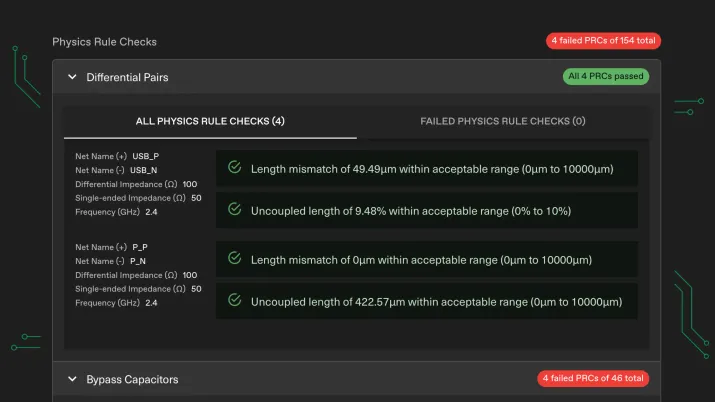
Quilter’s pitch is different and stated plainly on its site: Quilter positions itself as a physics-driven AI for complete PCB layout, generating multiple candidates in hours, with physics validated on every trace. (Quilter) On the Quilter pricing page, the company also draws a sharp boundary: it is “not an autorouter, a co-pilot, or an LLM,” and it describes a “physics-first” approach that learns from natural law rather than human examples. (Quilter)

That framing matters because the “upgrade” you actually want is not “route this one net faster.” The upgrade you want is to provide multiple complete, constraint-aware layouts so I can choose the best one and move on.

In other words, instead of asking a tool to help you do a layout, you want a tool that produces layouts you can evaluate.

That is the difference between a “Pro” plan and a layout automation engine.

How does Quilter fit into your existing CAD workflow?

If adopting AI PCB design requires ripping up your workflow, it is dead on arrival for most teams. Quilter leans hard into the opposite: keep your flow, compress the slow part.

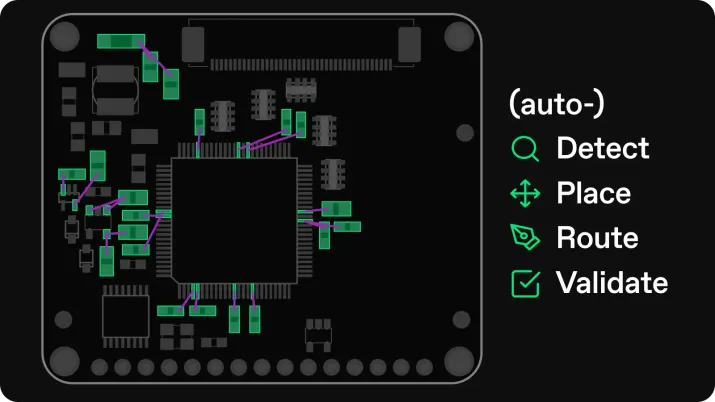
On Quilter’s workflow page, the process is described as a simple four-step loop:

  1. Upload your design (schematic and board file), while still being able to pre-place connectors or critical components
  2. Quilter generates dozens of layouts in parallel
  3. Review and select, including evaluating multiple stackups and fab rules
  4. Download fab-ready files, including native CAD outputs and fabrication deliverables (Quilter)

Quilter also states on its homepage that it integrates with existing workflows by allowing you to upload Altium, Cadence, Siemens, or KiCad projects directly. (Quilter)

That last part is what makes it feel less like “switching tools” and more like “adding capacity.” For teams who are already debating whether to upgrade to pro PCB design plan tiers, the real decision becomes:

Do we want to purchase additional seats and maintain the same throughput, or do we want to adjust throughput?

What does Quilter cost compared with traditional pro plans?

Most PCB “Pro” plans are priced by seat. That is intuitive, but it also means your cost scales with headcount, even if your real bottleneck is calendar time.

Quilter describes a different model: pins, not seats, where unlimited iterations are free, and charges apply only when you download fab-ready designs. (Quilter) Quilter also highlights “no vendor lock-in” by keeping downloaded designs in your native CAD format. (Quilter)

Quilter’s pricing page also describes a free tier for hobbyists, students, and eligible professionals under certain size and revenue thresholds. (Quilter)

Pricing snapshot (real-world reference points)

Tool / plan category

Typical pricing model

Public pricing example (USD)

What you mostly buy

Autodesk Fusion (includes electronics)

Per user subscription

$680/year (1 user) (Autodesk)

Integrated CAD + electronics + collaboration

Altium Develop (workspace + authors)

Workspace + author seats

$995/year (workspace / author seats shown) (Altium)

Managed collaboration, reviews, shared workspace

EasyEDA (editor)

Editor features not paywalled, services paid

“Charges only for the service” (EasyEDA)

Accessible design environment, fabrication services

KiCad

Free, open source

Free (GPLv3+) (KiCad)

Full EDA suite without license cost

Quilter

Usage-based, seat-free

Pins, not seats; pay on download (Quilter)

Layout automation capacity and iteration speed

Important note on Altium Designer seat pricing: Altium Designer pricing is often quote-based and can vary by tier, region, and terms. A recent user-reported quote cited $5,495/year for a “Pro” seat, but treat that as anecdotal rather than an official list price. (Reddit)

The comparison table most teams actually need

Question you care about

Traditional “Pro” plan upgrade

Quilter AI layout automation

Does it reduce manual placement and routing hours?

Not materially

Yes, that is the point (Quilter)

Do you get multiple complete layout options fast?

Not typically

Yes, “dozens” in parallel (Quilter)

Do you keep your CAD tools?

Yes

Yes, native outputs and existing tool support (Quilter)

Does cost scale with headcount?

Usually

Not by seats, scales by downloaded design complexity (Quilter)

If you are trying to upgrade to pro PCB design plan tiers to “go faster,” that last row is the quiet trap. A seat-based upgrade can increase spending without increasing throughput.

What’s the real ROI when you upgrade to an AI layout instead of a Pro plan?

Most ROI discussions in EDA get fuzzy because “speed” is hard to price. Here is a cleaner way to think about it:

What is the cost of one board spin being late, or one iteration not happening at all?

If your current process yields one layout candidate every one to two weeks, you naturally run fewer experiments. You choose “safe” placements. You accept compromises. You postpone exploration.

Quilter’s promise is not that it makes a single layout perfect. It changes the unit of progress from “one board per cycle” to “many candidates per cycle,” enabling you to achieve better outcomes faster. (Quilter)

Featured snippet: ROI in one glance

  • Upgrading to a pro PCB design plan improves tooling, but layout remains manual and time-bound.
  • AI-powered PCB design automation increases throughput by generating multiple complete layouts quickly, enabling teams to review, select, and iterate faster. (Quilter)
  • The ROI shows up as more design turns per month, fewer schedule surprises, and less engineering time spent on non-core routing work.

A quick hypothetical case (the kind your boss will actually recognize)

A small hardware team is building a mixed-signal sensor hub board with a radio module, a few connectors, and a moderate-density MCU. They “upgrade to pro PCB design plan,” thinking that the better DRC and nicer collaboration will cut the cycle time.

It helps, but only marginally.

Then the team tries AI PCB design automation for the layout portion. Instead of waiting for a single best-effort layout to finish, they evaluate multiple candidates, select the one that aligns with their priorities, and proceed to review and fabrication earlier.

Even if the board still needs human polish, the calendar is no longer dominated by first-pass routing. The team spends its scarce senior attention on what matters: architecture, constraints, review, and risk reduction.

That is the hidden ROI: your best people stop doing layout “labor” and start doing layout “judgment.”

What results should you expect, and how do you start?

A realistic expectation is not “push a button and ship a flawless board.” A realistic expectation is:

  • Faster first-pass candidates
  • More options to compare
  • Better iteration loops, because running again is cheap

Quilter’s workflow language is built around exactly that loop: upload, generate many candidates, review, download fab-ready outputs, re-run if requirements change. (Quilter)

Quilter also emphasizes security and enterprise readiness on its pricing page, including job isolation, AES-256 encryption, and options to run on AWS, in a private cloud, or on-premises. (Quilter) If support maturity is part of your “Pro plan” mental model, Quilter’s support page covers everything from a self-service help center and community forums to enterprise SLAs, escalation, and technical account management. (Quilter)

Featured snippet: what to do next

  • If you are upgrading to a pro PCB design plan primarily for speed, evaluate AI PCB design automation first, as it directly addresses the bottleneck. (Quilter)
  • Start by uploading a routine board type (fixtures, eval boards, harnesses, validation boards) to measure the impact on cycle time quickly. (Quilter)
  • Keep your existing CAD approvals, and treat AI output as layout candidates for your engineers to review and sign off on.

A simple starting checklist

  1. Pick a board class that is layout-heavy but not your most sensitive flagship design (test fixture, eval board, validation board). (Quilter)
  2. Define what “better” means for your team: fewer days to first layout, fewer DRC iterations, better routing density, less manual routing.
  3. Run one full cycle using your current pro tool workflow, then run the same input through AI PCB design automation and compare the outcomes. (Quilter)
  4. If you like the results, standardize your review and candidate selection process so it becomes a repeatable workflow, not a one-off demo.

And if you still want to upgrade to pro PCB design plan tiers after that, you will do so with sharper intent: you will invest in pro tooling for governance and collaboration, while using AI automation to regain time.

That combination is where the “real upgrade” starts to look less like a license decision and more like a throughput strategy.


Try Quilter for Yourself

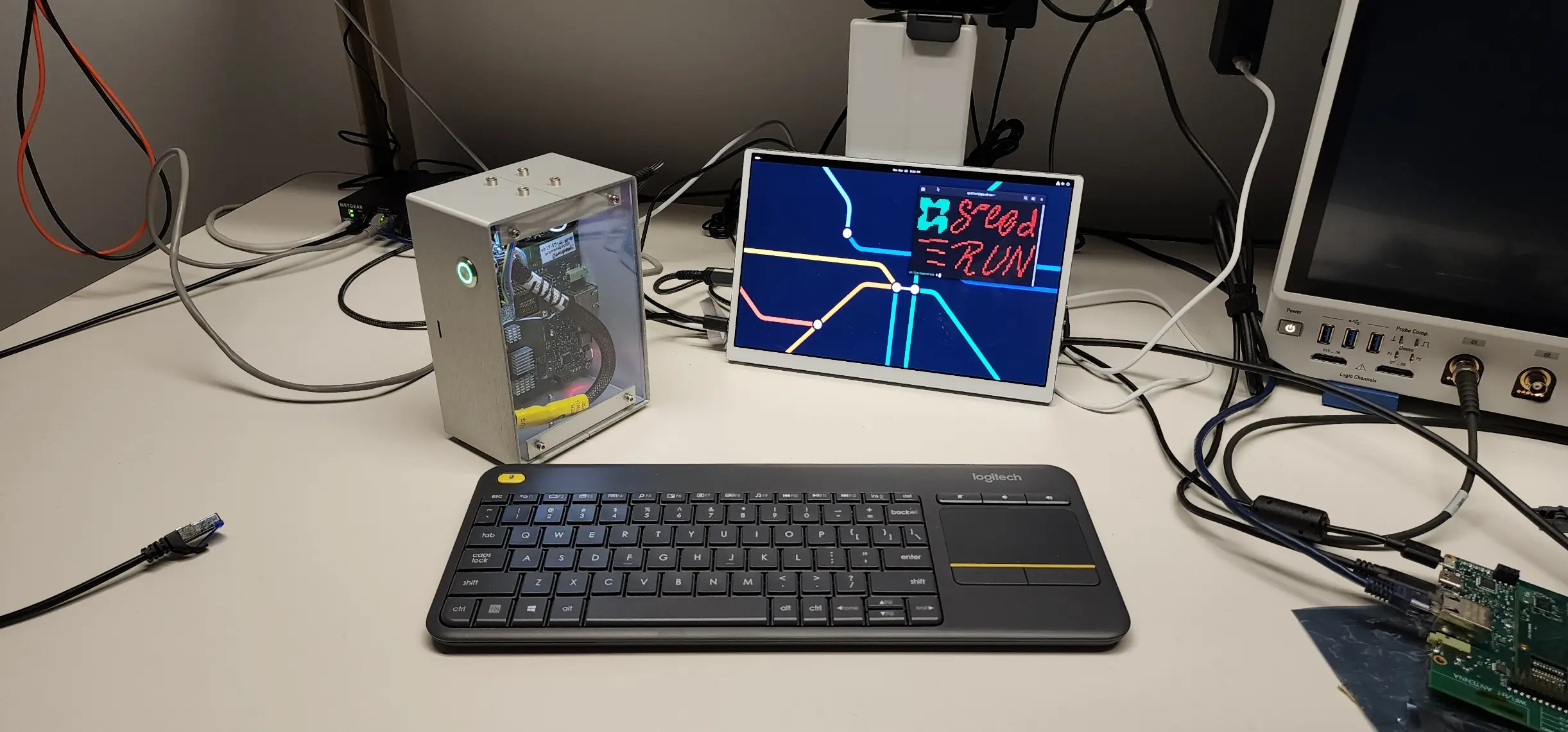
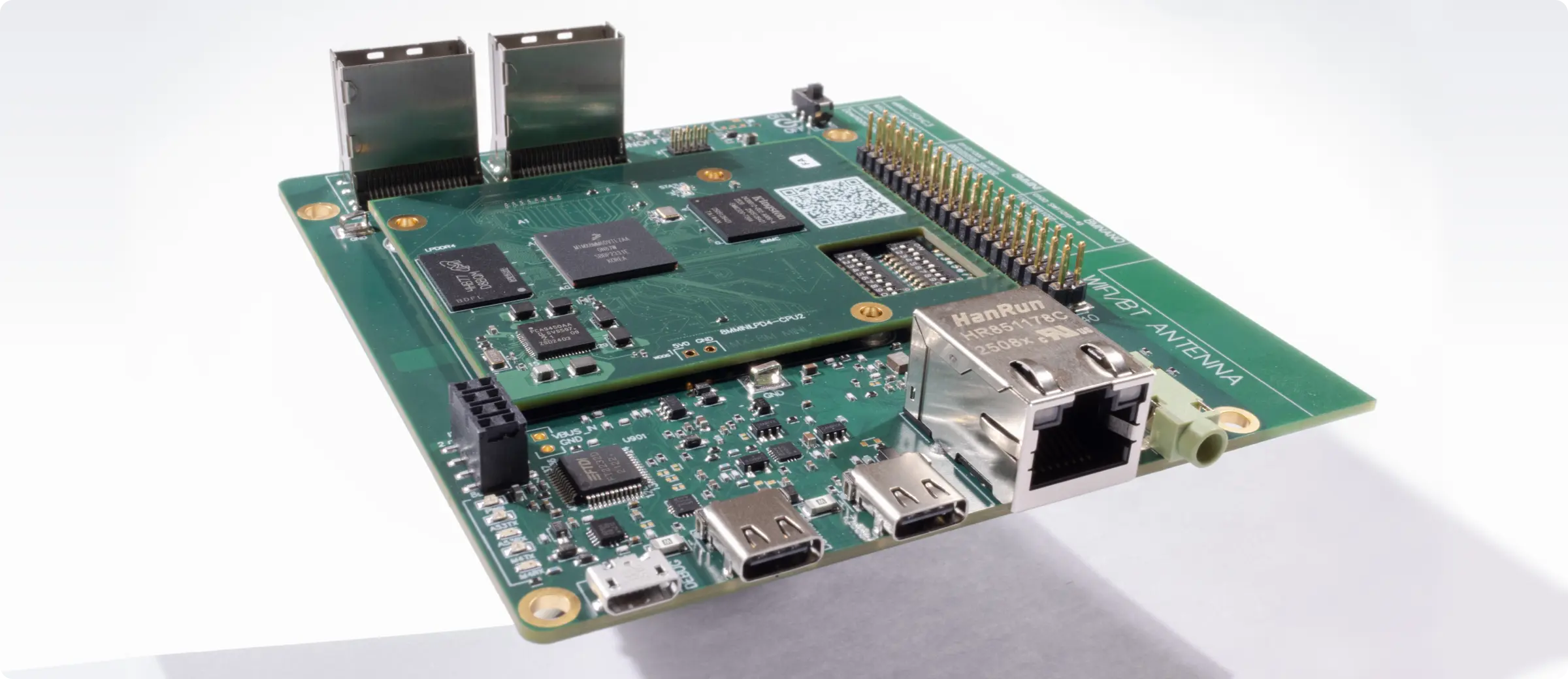
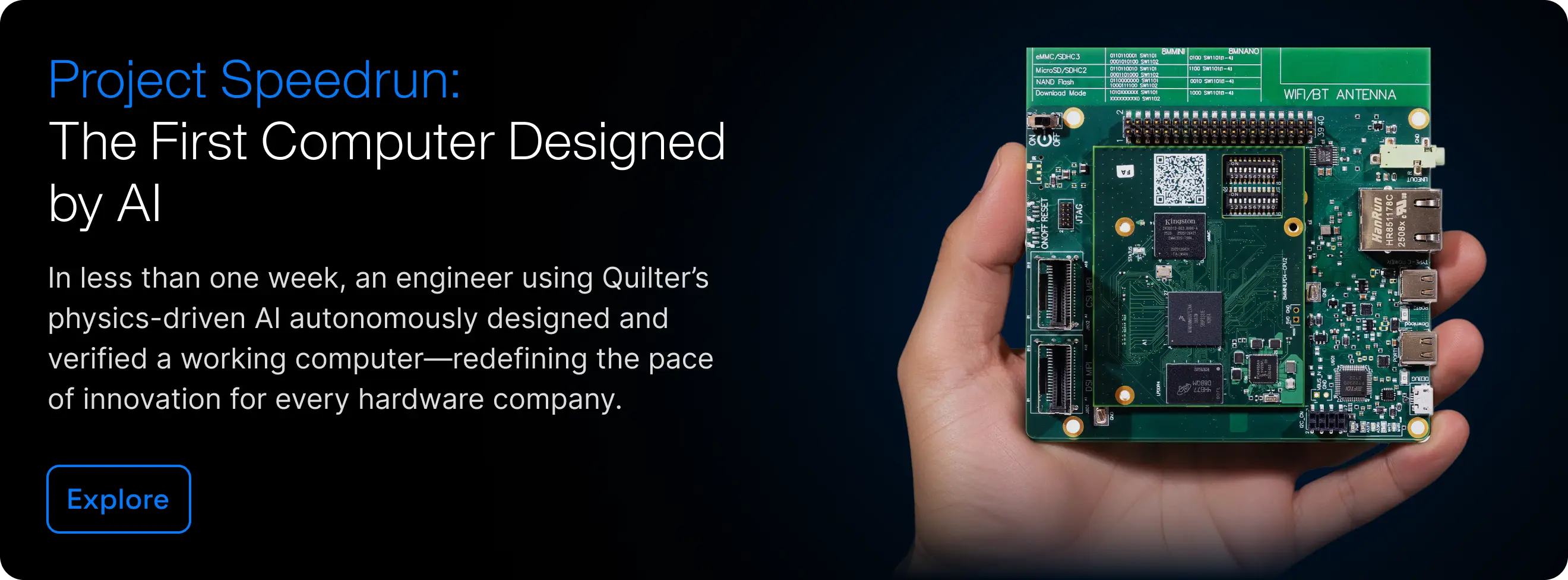
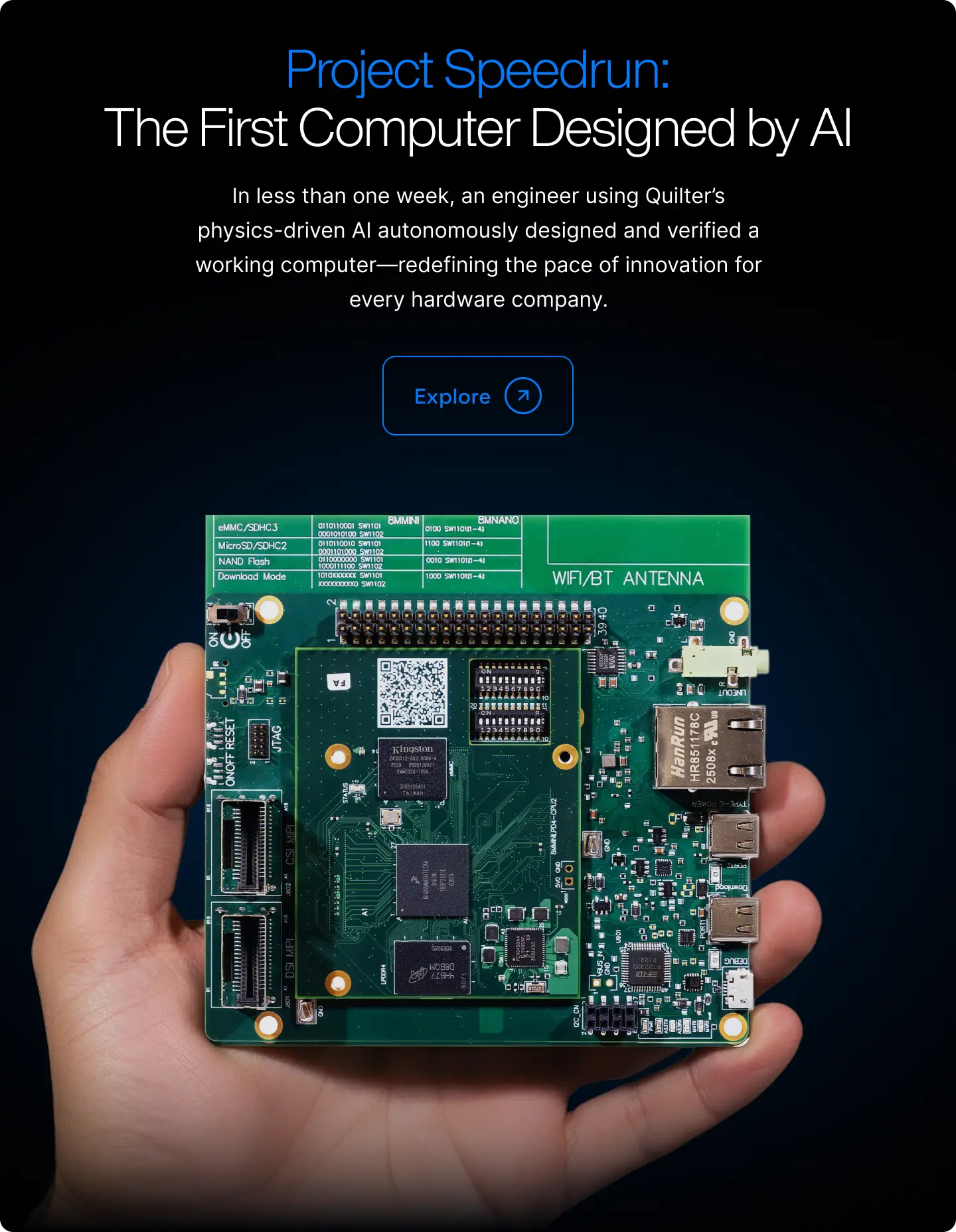
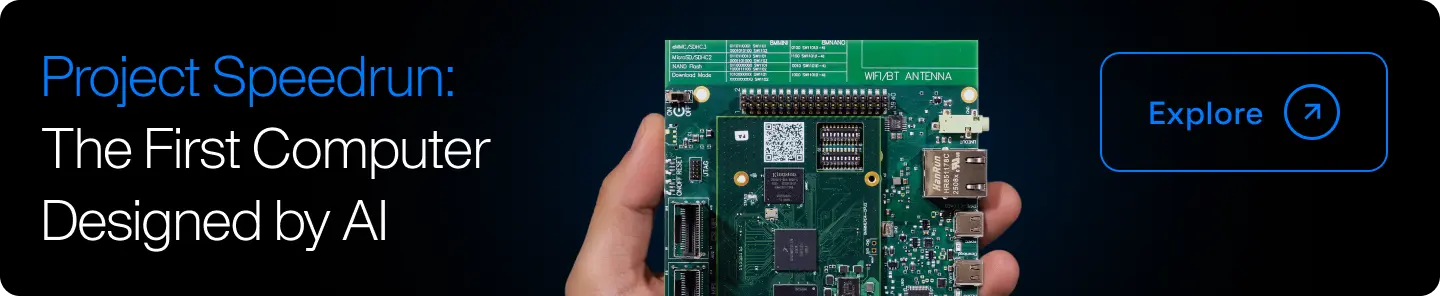
Project Speedrun demonstrated what autonomous layout looks like in practice and the time compression Quilter enables. Now, see it on your own hardware.

Get Started

Validating the Design

With cleanup complete, the final question is whether the hardware works. Power-on is where most electrical mistakes reveal themselves, and it’s the moment engineers are both nervous and excited about.

Continue to Part 4

Cleaning Up the Design

Autonomous layout produces a complete, DRC'd design; cleanup is a brief precision pass to finalize it for fabrication.

Continue to Part 3

Compiling the Design

Once the design is prepared, the next step is handing it off to Quilter. In traditional workflows, this is where an engineer meets with a layout specialist to clarify intent. Quilter replaces that meeting with circuit comprehension: you upload the project, review how constraints are interpreted, and submit the job.

Continue to Part 2

Beyond a “Pro” Plan: Why the Real PCB Upgrade Is AI Layout Automation

January 17, 2026
by
Darin ten Bruggencate
and

If you have ever felt the urge to upgrade to a pro PCB design plan status because your tool feels “too limited,” you are not alone. But here is the uncomfortable truth: most teams do not miss deadlines because they lack another menu option or a slightly better DRC panel. They miss because PCB layout is still the long pole, even inside the best “Pro” software.

A pro plan can make you more capable. It can make you more compliant. It can make you more collaborative.

It does not automatically make you faster.

The real upgrade is not another tier. It is removing the layout as the bottleneck. That is where AI PCB design has begun to shift from “interesting” to “obvious,” and why Quilter is appearing in conversations that used to be about which CAD seat to buy.

What does upgrading to a pro PCB design plan actually change?

When people say “upgrade to pro PCB design plan,” they usually mean one of two things:

  1. Move from a free or hobby tier into a paid electronics suite (for example, Autodesk Fusion’s paid subscription). Autodesk lists Fusion at $680/year for one user on its pricing pages. (Autodesk)
  2. Move from a lightweight PCB editor into a professional workflow stack (for example, adding managed collaboration, review workflows, part data integrations, and formal release processes).

That second bucket matters more than most engineers admit, especially as soon as you have more than one person touching a board. Altium, for instance, offers a paid collaboration workspace under Altium Develop, priced at $995/year and listed on its pricing page. (Altium)

Then there is the “Pro” category, which is essentially “staying on a supported product.” Autodesk has made it clear that EAGLE will no longer be available or supported after June 7, 2026, with electronics work continuing in Fusion. (Autodesk) That single date forces many upgrades, migrations, and tool decisions, even before you get to feature checklists. (Autodesk)

Meanwhile, some tools that look “free vs Pro” on the surface are actually “same editor, paid services.” EasyEDA states that it charges for service and does not limit editor features by payment tier, and that Standard and Professional editions can be used at the same time. (EasyEDA) Their documentation still highlights meaningful differences in capabilities (imports, project controls, workflow features) between the Standard and Professional editions. (prodocs.easyeda.com)

And of course, the baseline option remains: KiCad is free and open source, licensed primarily under GPLv3+ and available on Windows, macOS, and Linux. (KiCad)

Upgrading to a pro PCB design plan can make a difference. It can change governance, collaboration, and compliance. It can reduce friction around libraries, reviews, and releases.

But the core unit of work is still the same: a human places parts, routes nets, fixes violations, and iterates.

Why do Pro Tools still leave layout as the bottleneck?

A pro plan strengthens the software. It does not change the physics of the task.

PCB layout is complex because it is a multi-constraint optimization problem that you solve under time pressure:

  • placement tradeoffs (signal integrity, return paths, mechanical constraints)
  • routing density and escape strategy (especially around BGAs)
  • impedance control, length matching, differential pairs
  • power integrity concerns (planes, pours, decoupling strategy)
  • manufacturability constraints and fab-specific rules

A “Pro” license can help you express these constraints more cleanly. It can help you validate them faster. It can help you collaborate more effectively as you do it.

It still expects you to do the bulk of the layout labor manually.

That is why teams can spend real money on premium CAD seats and still feel stuck. The plan upgrade increases the quality ceiling, but it does not change throughput unless you also change how the layout gets done.

Visual workflow infographic: where the time goes

TRADITIONAL "PRO" WORKFLOW (manual layout stays on the critical path)

Schematic complete

   ↓

Library + footprints + constraints

   ↓

Placement (human)

   ↓

Routing (human)

   ↓

DRC + SI/PI checks

   ↓

Fix violations (human)

   ↓

Design review

   ↓

ECOs → back to placement/routing

   ↓

Release + fab package

AI-AUTOMATED WORKFLOW (layout work is parallelized and compressed)

Schematic + outline + constraints

   ↓

Generate many candidate layouts in parallel (AI)

   ↓

Engineer reviews, selects, and refines

   ↓

Download fab-ready native outputs

   ↓

Release + fab package

If you read that and thought, “Sure, but AI can’t do my constraints,” that is exactly where the conversation gets interesting, because not all “AI PCB design” is the same thing.

What is AI PCB design, and why is Quilter different from an autorouter?

A lot of the market still uses “AI PCB design” as a loose label for:

  • smarter autorouting
  • placement assistants
  • rule suggestion and DRC helpers
  • copilots that speed up common UI tasks

Useful, but those tools rarely eliminate the layout bottleneck. They reduce keystrokes.

Quilter’s pitch is different and stated plainly on its site: Quilter positions itself as a physics-driven AI for complete PCB layout, generating multiple candidates in hours, with physics validated on every trace. (Quilter) On the Quilter pricing page, the company also draws a sharp boundary: it is “not an autorouter, a co-pilot, or an LLM,” and it describes a “physics-first” approach that learns from natural law rather than human examples. (Quilter)

That framing matters because the “upgrade” you actually want is not “route this one net faster.” The upgrade you want is to provide multiple complete, constraint-aware layouts so I can choose the best one and move on.

In other words, instead of asking a tool to help you do a layout, you want a tool that produces layouts you can evaluate.

That is the difference between a “Pro” plan and a layout automation engine.

How does Quilter fit into your existing CAD workflow?

If adopting AI PCB design requires ripping up your workflow, it is dead on arrival for most teams. Quilter leans hard into the opposite: keep your flow, compress the slow part.

On Quilter’s workflow page, the process is described as a simple four-step loop:

  1. Upload your design (schematic and board file), while still being able to pre-place connectors or critical components
  2. Quilter generates dozens of layouts in parallel
  3. Review and select, including evaluating multiple stackups and fab rules
  4. Download fab-ready files, including native CAD outputs and fabrication deliverables (Quilter)

Quilter also states on its homepage that it integrates with existing workflows by allowing you to upload Altium, Cadence, Siemens, or KiCad projects directly. (Quilter)

That last part is what makes it feel less like “switching tools” and more like “adding capacity.” For teams who are already debating whether to upgrade to pro PCB design plan tiers, the real decision becomes:

Do we want to purchase additional seats and maintain the same throughput, or do we want to adjust throughput?

What does Quilter cost compared with traditional pro plans?

Most PCB “Pro” plans are priced by seat. That is intuitive, but it also means your cost scales with headcount, even if your real bottleneck is calendar time.

Quilter describes a different model: pins, not seats, where unlimited iterations are free, and charges apply only when you download fab-ready designs. (Quilter) Quilter also highlights “no vendor lock-in” by keeping downloaded designs in your native CAD format. (Quilter)

Quilter’s pricing page also describes a free tier for hobbyists, students, and eligible professionals under certain size and revenue thresholds. (Quilter)

Pricing snapshot (real-world reference points)

Tool / plan category

Typical pricing model

Public pricing example (USD)

What you mostly buy

Autodesk Fusion (includes electronics)

Per user subscription

$680/year (1 user) (Autodesk)

Integrated CAD + electronics + collaboration

Altium Develop (workspace + authors)

Workspace + author seats

$995/year (workspace / author seats shown) (Altium)

Managed collaboration, reviews, shared workspace

EasyEDA (editor)

Editor features not paywalled, services paid

“Charges only for the service” (EasyEDA)

Accessible design environment, fabrication services

KiCad

Free, open source

Free (GPLv3+) (KiCad)

Full EDA suite without license cost

Quilter

Usage-based, seat-free

Pins, not seats; pay on download (Quilter)

Layout automation capacity and iteration speed

Important note on Altium Designer seat pricing: Altium Designer pricing is often quote-based and can vary by tier, region, and terms. A recent user-reported quote cited $5,495/year for a “Pro” seat, but treat that as anecdotal rather than an official list price. (Reddit)

The comparison table most teams actually need

Question you care about

Traditional “Pro” plan upgrade

Quilter AI layout automation

Does it reduce manual placement and routing hours?

Not materially

Yes, that is the point (Quilter)

Do you get multiple complete layout options fast?

Not typically

Yes, “dozens” in parallel (Quilter)

Do you keep your CAD tools?

Yes

Yes, native outputs and existing tool support (Quilter)

Does cost scale with headcount?

Usually

Not by seats, scales by downloaded design complexity (Quilter)

If you are trying to upgrade to pro PCB design plan tiers to “go faster,” that last row is the quiet trap. A seat-based upgrade can increase spending without increasing throughput.

What’s the real ROI when you upgrade to an AI layout instead of a Pro plan?

Most ROI discussions in EDA get fuzzy because “speed” is hard to price. Here is a cleaner way to think about it:

What is the cost of one board spin being late, or one iteration not happening at all?

If your current process yields one layout candidate every one to two weeks, you naturally run fewer experiments. You choose “safe” placements. You accept compromises. You postpone exploration.

Quilter’s promise is not that it makes a single layout perfect. It changes the unit of progress from “one board per cycle” to “many candidates per cycle,” enabling you to achieve better outcomes faster. (Quilter)

Featured snippet: ROI in one glance

  • Upgrading to a pro PCB design plan improves tooling, but layout remains manual and time-bound.
  • AI-powered PCB design automation increases throughput by generating multiple complete layouts quickly, enabling teams to review, select, and iterate faster. (Quilter)
  • The ROI shows up as more design turns per month, fewer schedule surprises, and less engineering time spent on non-core routing work.

A quick hypothetical case (the kind your boss will actually recognize)

A small hardware team is building a mixed-signal sensor hub board with a radio module, a few connectors, and a moderate-density MCU. They “upgrade to pro PCB design plan,” thinking that the better DRC and nicer collaboration will cut the cycle time.

It helps, but only marginally.

Then the team tries AI PCB design automation for the layout portion. Instead of waiting for a single best-effort layout to finish, they evaluate multiple candidates, select the one that aligns with their priorities, and proceed to review and fabrication earlier.

Even if the board still needs human polish, the calendar is no longer dominated by first-pass routing. The team spends its scarce senior attention on what matters: architecture, constraints, review, and risk reduction.

That is the hidden ROI: your best people stop doing layout “labor” and start doing layout “judgment.”

What results should you expect, and how do you start?

A realistic expectation is not “push a button and ship a flawless board.” A realistic expectation is:

  • Faster first-pass candidates
  • More options to compare
  • Better iteration loops, because running again is cheap

Quilter’s workflow language is built around exactly that loop: upload, generate many candidates, review, download fab-ready outputs, re-run if requirements change. (Quilter)

Quilter also emphasizes security and enterprise readiness on its pricing page, including job isolation, AES-256 encryption, and options to run on AWS, in a private cloud, or on-premises. (Quilter) If support maturity is part of your “Pro plan” mental model, Quilter’s support page covers everything from a self-service help center and community forums to enterprise SLAs, escalation, and technical account management. (Quilter)

Featured snippet: what to do next

  • If you are upgrading to a pro PCB design plan primarily for speed, evaluate AI PCB design automation first, as it directly addresses the bottleneck. (Quilter)
  • Start by uploading a routine board type (fixtures, eval boards, harnesses, validation boards) to measure the impact on cycle time quickly. (Quilter)
  • Keep your existing CAD approvals, and treat AI output as layout candidates for your engineers to review and sign off on.

A simple starting checklist

  1. Pick a board class that is layout-heavy but not your most sensitive flagship design (test fixture, eval board, validation board). (Quilter)
  2. Define what “better” means for your team: fewer days to first layout, fewer DRC iterations, better routing density, less manual routing.
  3. Run one full cycle using your current pro tool workflow, then run the same input through AI PCB design automation and compare the outcomes. (Quilter)
  4. If you like the results, standardize your review and candidate selection process so it becomes a repeatable workflow, not a one-off demo.

And if you still want to upgrade to pro PCB design plan tiers after that, you will do so with sharper intent: you will invest in pro tooling for governance and collaboration, while using AI automation to regain time.

That combination is where the “real upgrade” starts to look less like a license decision and more like a throughput strategy.