






Read the Full Series
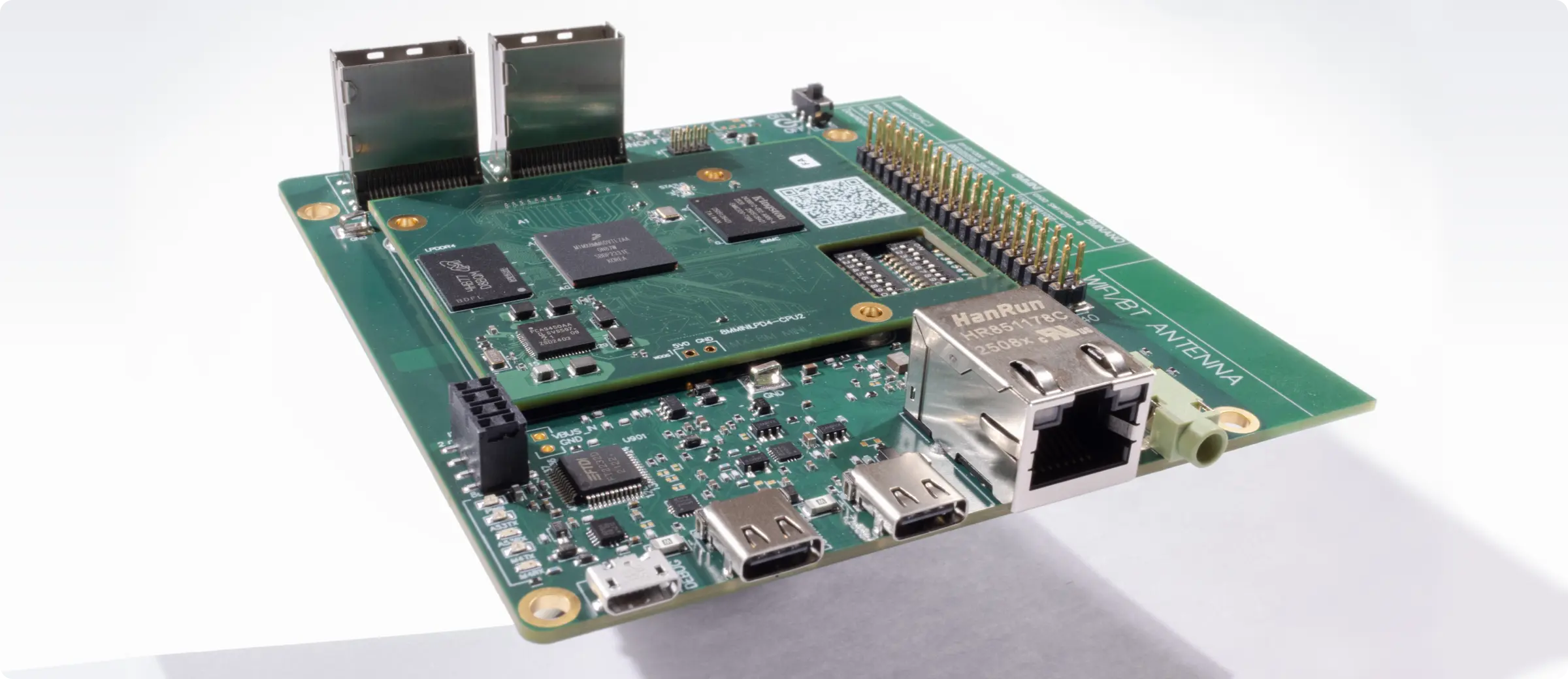
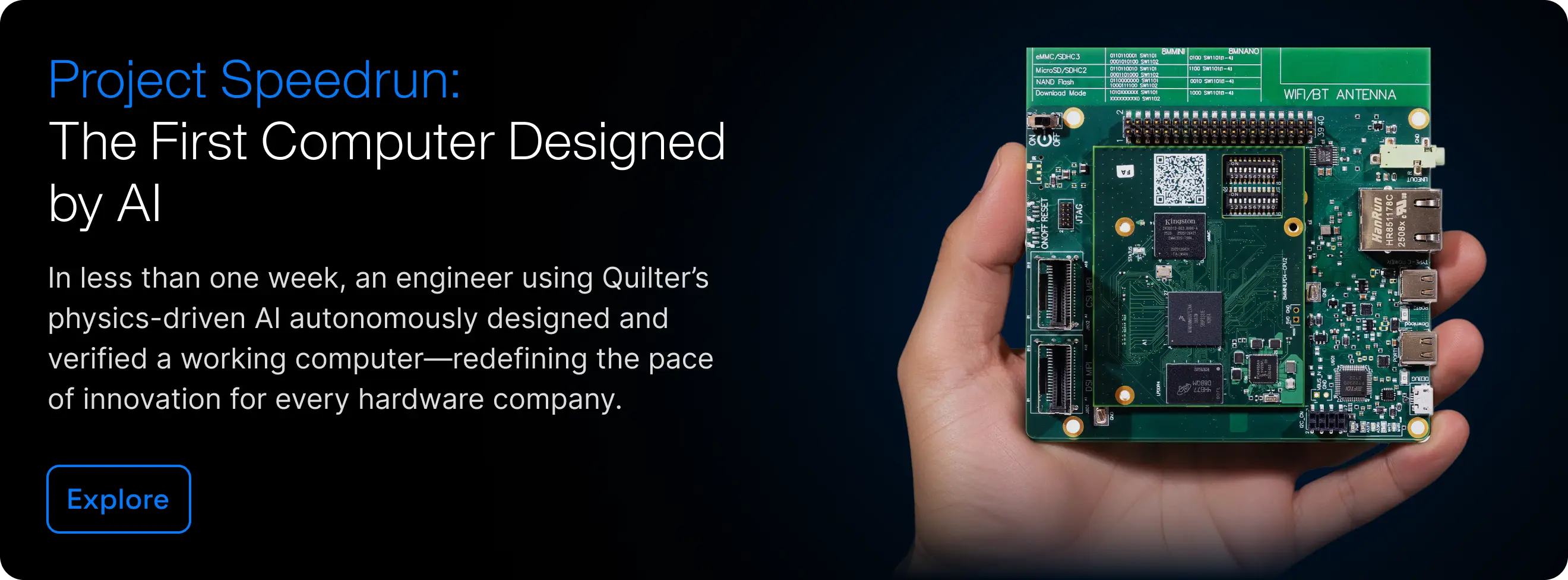
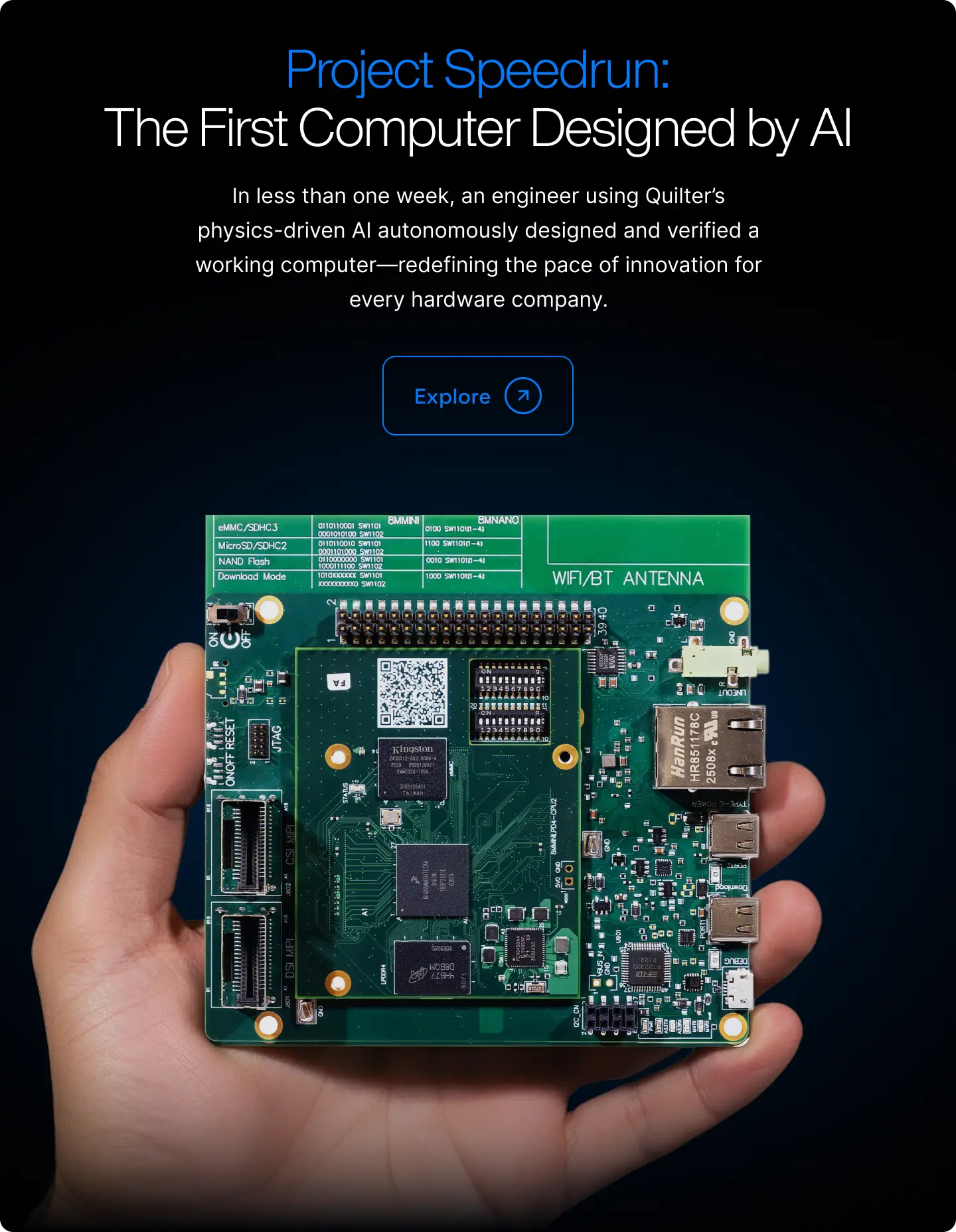
This article is one part of a walkthrough detailing how we recreated an NXP i.MX 8M Mini–based computer using Quilter’s physics-driven layout automation.
AI-powered PCB design tools are changing how engineers approach layout, collaboration, and iteration. But not all platforms are created equal, especially when your project demands more than just speed. In this honest, up-to-date comparison, we break down how Quilter AI and Flux AI really perform for professional teams tackling complex, high-speed, or regulated board designs.
If you are researching “flux ai vs other pcb tools,” the key is to separate two very different ideas:
- Flux is a full, browser-based ECAD platform built for collaboration and AI-assisted workflows.
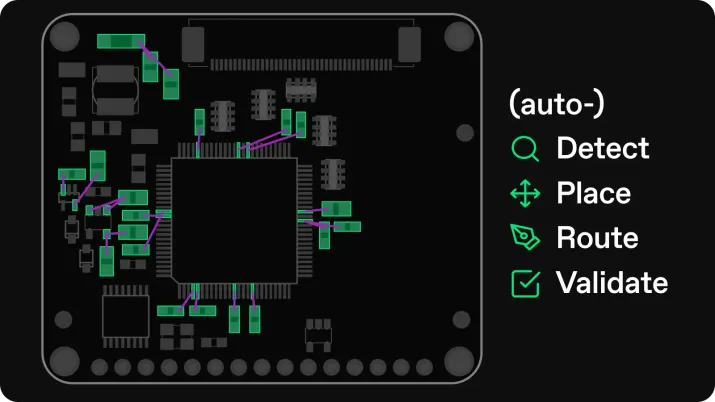
- Quilter is an autonomous layout engine that plugs into your existing CAD flow, generates multiple layout candidates, and evaluates them against manufacturability and physics constraints before handing files back to your native toolchain.
Let’s get specific.
Let's define what sets Quilter and Flux AI apart
The short version: Quilter is optimized for constraint-heavy, mission-critical layout generation inside your existing professional workflow. Flux is optimized for end-to-end design in the browser, with real-time collaboration and an integrated AI assistant.
Quilter’s core philosophy is “physics-driven automation.” You upload native projects from tools like Altium, Cadence, Siemens, or KiCad, define the board outline and constraints, and Quilter generates multiple candidates in parallel, then returns native files for DRC, polish, and fab outputs in the tools you already trust. This matters if your organization already has established libraries, signoff habits, manufacturing checklists, and compliance gates that are not negotiable.
Flux’s philosophy is “full ECAD rebuilt for the AI era.” It is browser-based, collaboration-first, connected to live parts data, and guided by its AI assistant. Flux wants to be the place where your schematic, PCB, BOM thinking, and team reviews happen together, in one shared workspace.
So who are they designed for? Flux tends to shine when speed-to-start, sharing, and tight iteration loops are the priority, especially for small-to-mid complexity boards where browser-first workflows are a feature, not a risk. Quilter tends to shine when the board is complex enough that constraints, physics checks, and native-CAD handoff quality decide whether you ship on time.
How does each platform use AI and automation?
The short version: Quilter uses automation to generate and evaluate complete layouts against manufacturability and physics rule checks. Flux uses AI to assist engineers inside the editor, answer design questions, and execute AI workflows metered by credits.
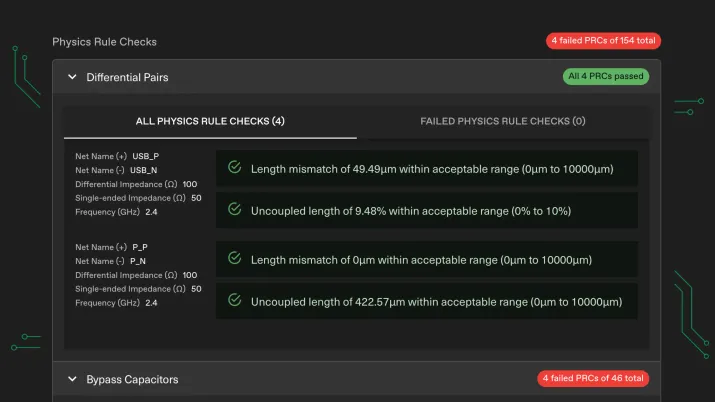
Quilter’s automation is layout-centric. The workflow (as Quilter describes it) is: integrate with your existing CAD files, avoid third-party conversions, generate candidate layouts, and evaluate outcomes against manufacturability and “Physics Rule Checks” tied to the sensitive signals and constraints you specified. In practice, this is the difference between “AI that helps you work” and “AI that does the work, then shows you what it did and why it thinks it passes.”
A key nuance for professional teams is transparency during review. Quilter positions “transparent design review” as a first-class step, meaning candidates are evaluated against the constraint set you provided, with clear feedback on what is truly done vs what still needs engineering attention. That model maps well to how real teams operate: generate options, select the best candidate, then run final signoff in the CAD environment that owns the release process.
Flux’s AI is editor-centric. Flux Copilot is described as a custom-trained LLM integrated into Flux that understands your schematics, components, connections, and BOM, and can help with part selection, alternatives, and design feedback, including making schematic changes with your approval. Flux also publishes AI workflow capabilities that frame AI as a “job-based” assistant that plans, explains, and executes workflows inside the browser-based ECAD.
The tradeoff is depth vs scope. Flux’s AI can be excellent at accelerating research, documentation, and design iteration inside the tool, especially when live parts data and BOM context are part of your daily work. Quilter’s automation is designed to reduce the time sink of placement plus routing plus constraint coverage, particularly when the board’s success depends on physics-aware implementation, not just connectivity.
Where the “AI” label can mislead
If your biggest bottleneck is “getting to a routed board that respects constraints,” Quilter’s automation is aimed directly at that output. If your biggest bottleneck is “collaborating, iterating, and keeping decisions and BOM context aligned,” Flux’s AI-plus-collaboration approach can be the faster daily driver.
What should you know about collaboration and version control?
The short version: Flux was built for real-time collaboration with integrated sharing, permissions, and change history. Quilter supports distributed teams through secure sharing, documentation, and enterprise support practices, while keeping the system of record in your existing CAD workflow.
Flux’s collaboration model looks and feels like modern cloud software. Projects can be shared via a URL with permissions that can be set to view, comment, or edit. Flux also has integrated version control: it automatically saves changes into change history, and you can browse versions and restore earlier states. For distributed teams, that reduces the friction of “who has the latest file” and “what changed since yesterday.”
Flux also publishes guidance on data security and IP protection, emphasizing reliability and security measures, plus the value of built-in version history. For many teams, especially smaller ones, this can be a pragmatic alternative to stitching together Git, file shares, and review screenshots.
Quilter approaches collaboration differently because it is not trying to replace your CAD environment. Quilter integrates with your current tools and reads and writes design files directly, which is meant to let teams keep existing DRC, documentation, fab outputs, and release processes unchanged.On the enterprise side, Quilter emphasizes secure, confidential support interactions and custom SLAs designed around your environment and risk profile.
So what is the practical takeaway?
- If your team wants “one shared browser workspace” for design and review, Flux is built for that.
- If your team wants “AI-generated layout candidates without changing the system of record,” Quilter’s CAD-adjacent workflow aligns with that reality.
Here's why feature depth matters for complex PCB projects
The short version: Complex boards fail in the gaps: stackups, impedance, return paths, constraints, and manufacturability details that are easy to miss when speed is the only goal. Quilter is built to generate layouts and evaluate them against manufacturability and physics constraints. Flux can handle a wide range of designs, but user expectations should be calibrated for highly complex, regulated, or safety-critical programs.
Professional PCB work is not “connect the nets.” It is “connect the nets while preserving the physics and the fab plan.” That is why Quilter emphasizes physics-aware design elements like bypass capacitors, impedance-controlled nets, and differential pairs, with explicit visibility into what the system will and will not account for. Quilter’s documentation also frames evaluation around manufacturability (including 0 DRC violations as an objective) and physics rule checks tied to the constraints specified during circuit comprehension.
If you are doing high-speed digital, mixed-signal, RF-adjacent layouts, or boards with tight power integrity constraints, “feature depth” often means:
- Can you iterate stackups and manufacturing constraints without reworking everything late? Quilter explicitly positions multi-stackup and multi-manufacturer iteration as a core benefit.
- Can you keep native CAD signoff flows intact? Quilter emphasizes ingesting and returning native files so teams can keep DRC and fab workflows unchanged.
Flux, by contrast, is a full browser ECAD with a PCB editor that supports layout rules and complex design management inside its environment. That is valuable, and for many designs it will be “enough” while being far easier to collaborate in than traditional desktop tools. But “enough” depends on what your program can tolerate: offline requirements, regulated processes, ecosystem maturity, and the tolerance for workflow gaps when stakes are high.
This is where real user expectations matter. Community feedback about Flux often includes strong opinions and warnings, especially around billing and perceived reliability. Those reports are not a substitute for a formal evaluation, but they are a useful signal to treat adoption like a pilot, not a leap.
A simple heuristic for complex programs
If a late-stage layout surprise costs you weeks (or a missed milestone), prioritize tools that are built around constraint coverage, physics checks, and native handoff. If the cost is “a few extra hours,” prioritize collaboration speed and iteration convenience.
How do pricing and billing compare?
The short version: Quilter emphasizes predictable pricing tied to design capacity (for example, scaling by pin count and not by seats). Flux uses subscription tiers with AI credits, and user reports have raised concerns about billing clarity and subscription handling, so teams should evaluate controls and limits carefully before rolling out broadly.
Quilter’s pricing page emphasizes organizational flexibility: pay for approved designs and scale capacity without charging by seats. For professional teams, “not by seats” pricing can remove a common adoption blocker: you do not need to ration access to the tool when multiple engineers need to review candidates, run comparisons, or participate in selection.
Flux’s pricing (as published) includes plan tiers and AI usage metered via credits (often described as Copilot Credits). The site also explains that credits replenish monthly per plan and that additional credits can be purchased once you exceed the included allotment.
Now the important part for “professional PCB tools” buyers: billing predictability is a feature. In public forums, multiple users have reported unexpected charges, confusion around trials vs subscriptions, and difficulty managing or removing payment methods. These are user allegations, not verified facts, but they show up repeatedly enough that teams should treat billing settings as part of the technical evaluation checklist.
Practical safeguards if you are piloting Flux in a team
- Assign one owner to monitor plan status, credit usage, and renewal settings weekly during the pilot.
- Use a controlled payment method and document cancellation steps internally, the same way you would for any usage-based SaaS tool.
What results can you expect from each tool?
Quilter is the better fit when your goal is to generate layout candidates quickly while preserving constraint coverage, physics checks, and native toolchain signoff. Flux is the better fit when your goal is fast, collaborative design iteration in a browser-based ECAD with AI assistance and live parts context.
When Quilter is the right choice
Choose Quilter when the board is complex enough that layout is the schedule risk. Quilter is designed to accept native CAD projects, generate candidates, and evaluate them against manufacturability and physics rule checks, then return native files for final polish and release.
This is especially relevant for teams that must keep existing CAD standards, DRC practices, and release documentation intact.
Quilter also emphasizes enterprise-grade support built for high-stakes environments, which is often a requirement when the tool becomes part of a mission-critical pipeline.
When Flux AI fits
Choose Flux when collaboration speed and low-friction iteration are the main value drivers. Flux is browser-based, supports sharing and permissions, has integrated version control, and includes an AI assistant that understands schematic and BOM context and can help execute design-related workflows. This can be a strong daily workflow for small teams moving quickly on prototypes, internal tools, or educational and early product development where shared visibility matters more than deep enterprise integration.
Quick comparison table
Category
Quilter AI
Flux AI
Primary value
Autonomous layout generation plus physics and manufacturability evaluation
Browser-based ECAD with real-time collaboration and AI assistance
Workflow fit
Works alongside existing CAD, returns native files
All-in-one design workspace in the browser
AI emphasis
Layout candidates plus constraint coverage and physics rule checks
Copilot assistant, workflow execution, and design help inside editor
Collaboration
Distributed support and secure enterprise practices while keeping CAD as system of record
Sharing, permissions, and built-in change history
Pricing model
Emphasizes predictable capacity scaling, not by seats
Subscription tiers with AI credits and add-on credits
Best for
Complex, high-speed, regulated, or mission-critical boards where layout is a bottleneck
Rapid prototyping and collaborative teams that want a modern cloud ECAD workflow
Sources: Quilter workflow and evaluation approach, Quilter pricing positioning, Flux collaboration and version control Flux Copilot and credits.
Two realistic outcome statements you can share internally
- With Quilter, the “result” you are buying is more layout shots on goal, faster, with physics-aware evaluation and native CAD handoff so your signoff stays familiar.
- With Flux, the “result” you are buying is a faster collaborative loop: fewer file handoffs, clearer history, and AI support inside a shared workspace that stays aligned with BOM context.
Ready to accelerate your next PCB project?
If you are designing complex boards where constraints and physics decide the schedule, start your free trial of Quilter or contact the Quilter team to discuss your project’s requirements, especially if you need enterprise-grade support and a workflow that preserves your existing CAD signoff.
Next steps (fast, practical)
- Review Quilter’s product overview and documentation to confirm native CAD compatibility and evaluation workflow.
- If you are considering Flux, run a time-boxed pilot with clear billing and credit controls, and validate collaboration, version history, and AI usefulness on one representative project before scaling.



.webp)