





Read the Full Series
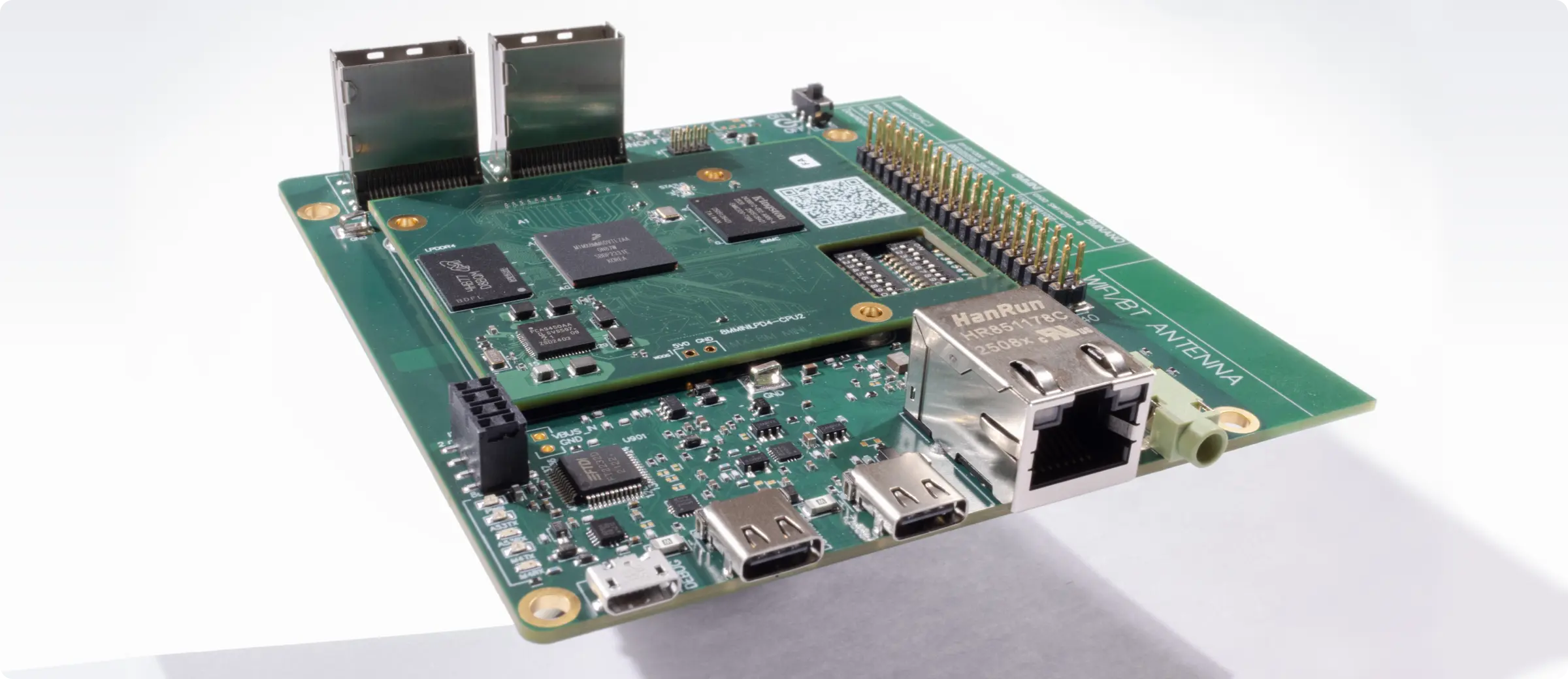
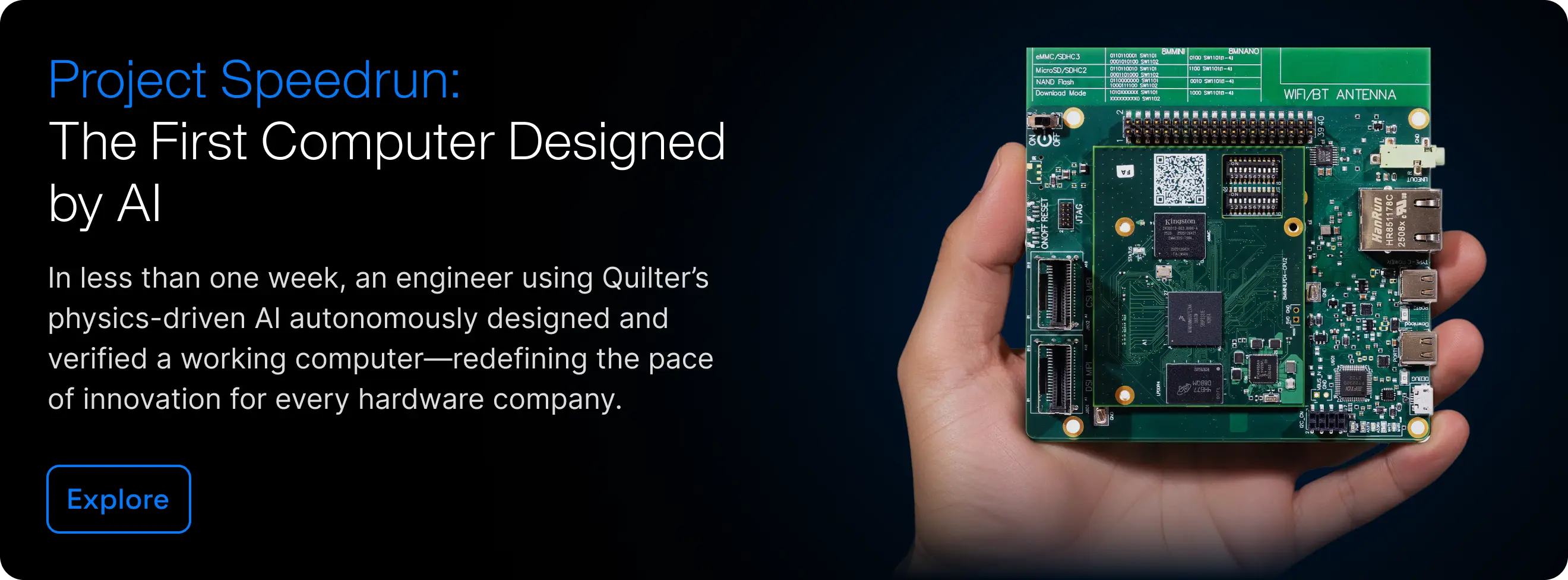
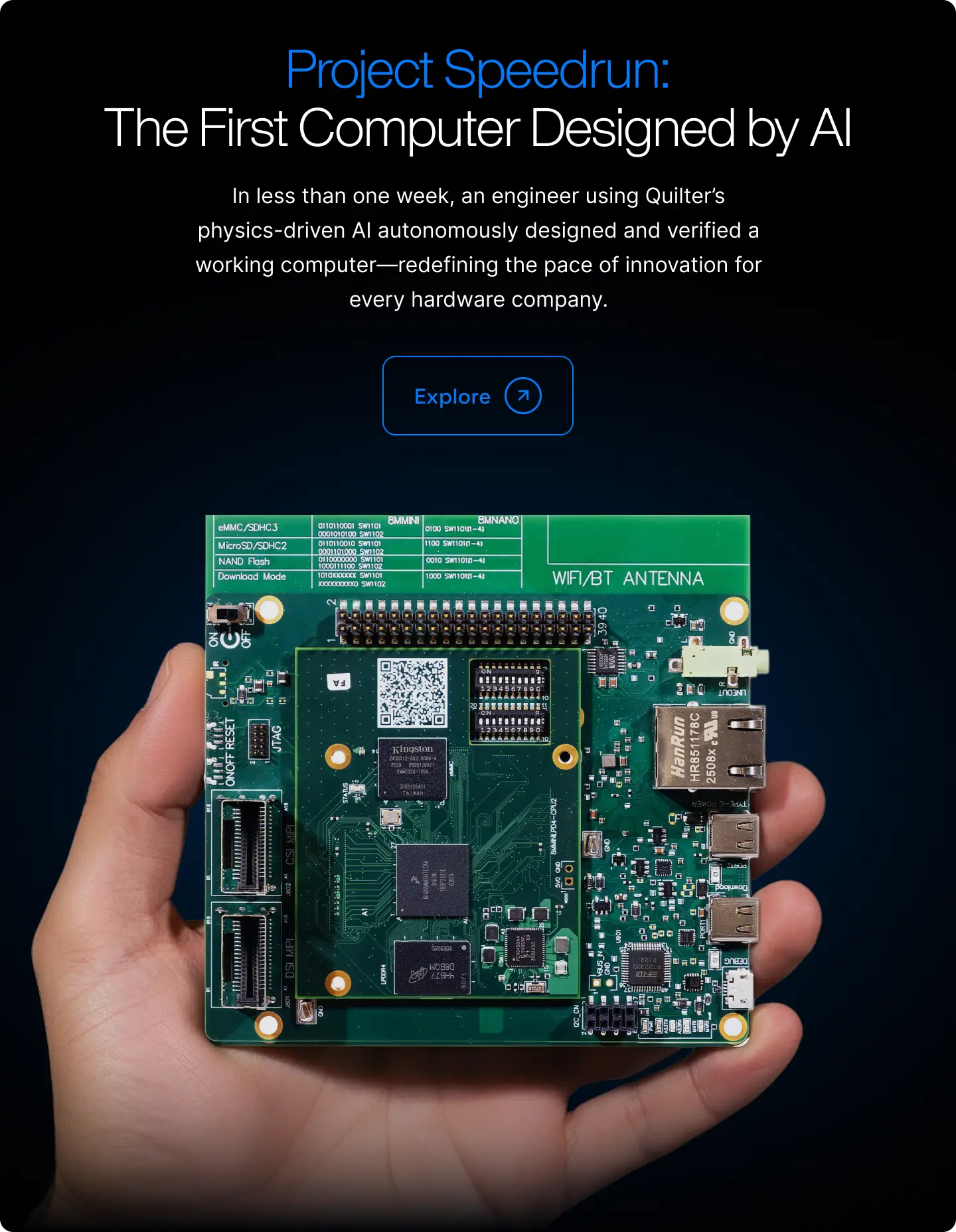
This article is one part of a walkthrough detailing how we recreated an NXP i.MX 8M Mini–based computer using Quilter’s physics-driven layout automation.
Legacy PCB tools have powered enterprise hardware for decades, but in 2026, the real cost of design is changing fast. This article breaks down the total cost of ownership (TCO) for leading enterprise solutions: Cadence Allegro, Siemens Xpedition, and Quilter’s AI-powered platform so you can see exactly where your team stands, and how much you could save by switching to a physics-first approach.
Download the free TCO calculator (Excel) and plug in your team’s real numbers.
Let’s define what total cost really means for PCB teams
When enterprise buyers search “enterprise pcb solutions” or run a pcb tool comparison, they often start with license quotes. That is understandable, but it is not how the money actually disappears inside a hardware org.
Total cost of ownership (total cost of ownership pcb) is the full annual cost to produce a fabrication-ready board that passes review, hits a schedule gate, and survives bring-up. In practice, enterprise PCB TCO has five buckets:
- Tooling and platform spend
This is the obvious part: license subscriptions, maintenance, add-on modules (SI/PI, rigid-flex, constraint management), and data management integration. - Enablement and adoption costs
Training, onboarding, workflow changes, and the cost of getting new hires productive in your standard toolchain. Even when training is “only a few thousand dollars,” the bigger cost is the time you pulled off projects to learn. Cadence’s published course list provides a useful benchmark for what formal enablement can look like in real dollars. (Cadence) - Compute and IT overhead
Workstations, license servers, VPN access, remote graphics, security reviews, and the admin work of managing floating seats, feature bundles, and renewals. Even when each line item is small, the sum becomes meaningful at scale. - Engineering labor as the dominant cost
This is the part most spreadsheets fail to model. If a board needs weeks of layout and iteration, the labor cost compounds quickly, and it compounds across every parallel program competing for the same designers. - Opportunity cost and schedule risk
If your team misses a build window, you often pay twice: once in rework, and again in delayed revenue, customer penalties, or lost market timing. Quilter makes this point bluntly: product delays can materially hit projected revenue, which is exactly why cycle time matters in the first place. (Quilter AI)
The key mindset shift for enterprise hardware leaders: stop benchmarking “cost per seat.” Start benchmarking cost per successful design cycle (per board, per spin, per program milestone). That is where AI PCB design changes the math.
What’s changed in enterprise PCB design since 2024?
Three shifts since 2024 are forcing new TCO models.
1) Iteration has become the core competitive advantage
Boards are not getting simpler. Teams are asked to deliver more variants, more compliance evidence, and more design exploration with the same headcount. The “one layout, one best guess, one long cycle” model is being replaced by “many candidates, evaluated fast.”
Quilter positions this as Hardware-Rich Development: more boards, more variants, faster learning loops. (Quilter AI)
2) Legacy pricing models still assume scarcity
Traditional enterprise EDA economics were built around seat scarcity and specialization: a small number of high-cost experts, a small number of high-cost seats, and long cycle times justified as “the way it is.”
Quilter’s pricing model is a direct response. Instead of charging by seat, Quilter states that pricing scales by pin count, not seats, enabling broad organizational access without multiplying license spend every time a new engineer wants to iterate. (Quilter AI)
3) AI has moved from “assist” to “produce”
Many teams tried small automation improvements. The bigger shift is tooling that can produce complete candidate layouts quickly, with verification baked into the generation loop.
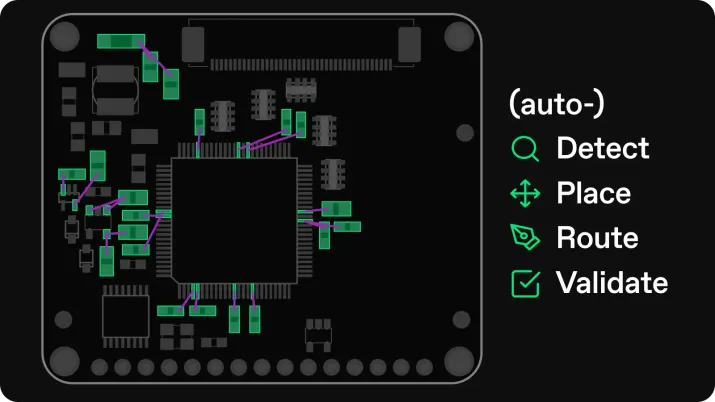
Quilter’s claim is not “copilot routing.” It is autonomous layout generation with physics-aware checks and transparent review, then handoff back into the CAD tools you already use. (Quilter AI)
That last point is critical for enterprise adoption: you do not have to rip out Cadence or Siemens to benefit from AI. You can use AI to compress the layout bottleneck, then finish, sign off, and archive in your existing flow. (Quilter AI)
How do Quilter, Cadence, and Siemens stack up on real costs?
Let’s do this the enterprise way: line-by-line costs, then a scenario that makes the numbers tangible.
First, a reality check on “pricing”
Cadence and Siemens enterprise pricing is highly configurable and usually quote-based. That said, we can ground assumptions using public references:
- Cadence Allegro X: published guidance from a reseller indicates Allegro X pricing starting around $4,000/year for a yearly lease, with perpetual starting around $12,000 plus optional maintenance. (goengineer.com)
- Cadence training costs: Cadence Education Services lists course pricing, for example Allegro X PCB Editor Basic Techniques at $2,800. (Cadence)
- Siemens Xpedition Standard: publicly listed at $2,999 per seat per year. (Siemens Blog Network)
- Xpedition enterprise-scale systems: third-party commentary (from an Altium-authored migration article) notes typical Xpedition system cost “north of $70,000” and that fully loaded systems can reach six figures. This is not a Siemens price sheet, but it does reflect how enterprise bundles can price out once add-ons and portfolio tools are included. (Altium)
- Siemens Xpedition training: third-party training providers list multi-day Xpedition layout training (example: 4 days for EUR 2,600). (InnoFour)
- Quilter pricing model: Quilter explicitly states “pay only for approved designs” and that pricing scales by pin count, not seats, enabling unrestricted iteration across the org. (Quilter AI)
The cost drivers that typically dominate enterprise TCO
Here are the recurring line items that most enterprises end up paying, whether they put them in the budget or not:
- Licensing and add-ons (layout, constraint management, SI/PI, rigid-flex, DFM, collaboration)
- Training and ramp (formal training plus internal enablement time)
- Hardware and IT (workstations, remote access, license servers, support time)
- Throughput cost (engineering hours spent on layout, iteration, and rework)
- Schedule risk (late spins, missed gates, delayed market windows)
Cadence even publishes recommended system requirements for Allegro and OrCAD tools, which helps explain why “just buy a laptop” is rarely the full story in larger orgs. (Cadence Community)
Visual TCO table with real numbers (example scenario, 2026)
Below is an example scenario you can map to your own environment using the calculator:
Scenario A: Global 50-person team, 20 boards/projects per year
- 25 active layout seats in legacy tools
- Fully loaded engineering cost: $125/hour
- Average manual layout + iteration time per board: 80 hours
- Average rework due to late discovery: 12 hours per board
- Schedule value proxy: $50,000 per week saved per board (you can change this)
These are not universal truths. They are defensible defaults designed to make the spreadsheet actionable. Replace them with your actuals.
Cost bucket (annual)
Legacy enterprise CAD flow (Cadence Allegro or Siemens Xpedition style)
Quilter AI workflow
Notes
Licensing / platform fees
$300,000
$200,000
Legacy assumes $12k per active seat including typical enterprise bundles; Quilter shown as usage + platform overhead budgeted annually. Cadence public starting points are lower for base packages, but enterprise configs commonly expand with add-ons and support. (goengineer.com)
Training / onboarding
$50,000
$25,000
Cadence course pricing provides a benchmark for formal training costs. Xpedition training also commonly runs multi-day programs. (Cadence)
Admin / IT overhead
$75,000
$20,000
License management, workstation support, internal tooling, process overhead
Engineering time: layout + iteration
$200,000
$40,000
Example assumes 80 hours per board legacy vs 16 hours with Quilter-assisted workflow
Engineering time: rework
$30,000
$12,000
Example assumes 60% rework reduction with earlier constraint coverage and faster iteration
Schedule value (opportunity cost avoided)
$2,000,000
$500,000
Uses $50k/week * 2 weeks saved * 20 boards, assumes 25% of value realized as “captured” impact (adjust freely). Quilter’s own messaging emphasizes how costly delays can be. (Quilter AI)
TOTAL annual TCO
$2,655,000
$797,000
Estimated annual savings: $1,858,000
This table tends to surprise people because the biggest bar is not licensing. It is the combined effect of labor and schedule economics.
If you are an R&D manager or program manager comparing enterprise pcb solutions, here is the blunt takeaway:
- Legacy tools are optimized for correctness and control inside a manual layout process.
- Quilter is optimized for throughput and iteration density without forcing you to abandon your existing CAD sign-off workflow. (Quilter AI)
Scenario-based example: how scaling changes the answer
Scenario B: Local 10-person team, 6 projects per year
- 5 active layout seats
- $125/hour loaded cost
- Manual layout + iteration: 60 hours per board
- Quilter-assisted: 14 hours per board
- Smaller schedule value proxy: $15,000 per week, 1 week saved
In smaller teams, license deltas matter more as a percentage of total spend, but the same pattern often holds: if you can compress layout and reduce rework, labor dominates. This is why “pay per seat” often punishes growth: every new engineer that wants to iterate increases fixed costs, even if the bottleneck is not licenses but time.
Quilter’s “pins, not seats” model is designed to remove that organizational friction so iteration scales with need, not procurement. (Quilter AI)
Where each platform typically wins (and what that means for TCO)
Cadence Allegro (legacy enterprise flow)
- Wins when your org is deeply invested in Cadence’s constraint-driven ecosystem and needs mature integrations across analysis, libraries, and long-lived processes.
- TCO risk: seat-based growth, training burden, and the cost of keeping highly specialized layout throughput high. Public pricing anchors exist, but real enterprise TCO is usually driven by add-ons and labor. (goengineer.com)
Siemens Xpedition (legacy enterprise flow)
- Wins when you need deep enterprise process integration and multi-domain design capabilities, and you are standardized on Siemens EDA workflows.
- TCO risk: portfolio pricing can scale sharply with enterprise bundles, and training plus process overhead can be non-trivial. Xpedition Standard is a clear price anchor, while enterprise configurations often expand significantly in practice. (Siemens Blog Network)
Quilter (AI PCB design platform)
- Wins when your primary bottleneck is layout cycle time, iteration capacity, and getting to fabrication-ready candidates quickly.
- TCO advantage: usage-based economics aligned to output (approved designs), org-wide iteration without multiplying seats, and native handoff back to existing CAD tools for final DRC, polish, and fab outputs. (Quilter AI)
What results can you expect if you switch to AI-powered PCB design?
Enterprise buyers do not switch for novelty. They switch when outcomes are measurable.
Here are the results teams typically target when they adopt AI PCB design into an enterprise workflow.
1) Cycle time compression from weeks to hours (for layout)
Quilter’s positioning is explicit: generate multiple candidates in hours, with early candidates often appearing quickly, then validate through a physics-aware review and transparent constraint coverage. (Quilter AI)
That changes what “done” means. Instead of waiting for a single board to finish routing, teams can evaluate multiple valid options and choose trade-offs deliberately.
2) More design cycles before freeze
Most enterprise schedule failures are not caused by one catastrophic mistake. They are caused by not getting enough cycles early enough.
Quilter’s workflow emphasizes parallel exploration (more candidates) and continuous verification (constraints checked during generation). That tends to reduce late-stage panic because issues are surfaced sooner and with clearer traceability. (Quilter AI)
3) Higher engineering leverage
If your best PCB designers spend most of their week pushing traces, you are under-utilizing their judgment. One of Quilter’s strongest claims is not just speed, but bandwidth: freeing experts to spend time on the hard, high-value decisions.
Even Quilter’s public customer quote frames it in human terms: turn weeks into days, iterate faster, and out-innovate competitors. (Quilter AI)
4) Lower risk of expensive rework
Rework is the silent killer of enterprise TCO. A small issue discovered late can ripple into SI/PI re-analysis, mechanical adjustments, BOM changes, re-routing, and additional spins.
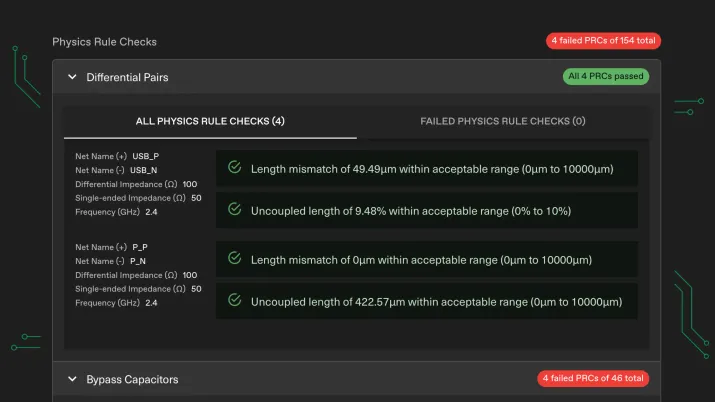
Quilter emphasizes transparent design review: showing what it did, what constraints were satisfied, and what still needs human sign-off. That is the kind of output enterprise teams need if they are going to trust acceleration. (Quilter AI)
5) No forced migration
Enterprise teams hate tool migrations for good reasons: retraining, library disruption, and compliance risk.
Quilter’s “works with your existing workflow” claim is central: upload native Cadence or Siemens projects, and download in the same format to run DRC, polish, and generate fab files inside the tools you already standardize on. (Quilter AI)
That architecture is why the TCO conversation is credible: you are not betting the company on a brand-new CAD stack. You are removing the layout bottleneck inside the stack you already trust.
Here’s how to calculate your own savings (with our free TCO calculator)
The fastest way to make this real is to stop debating averages and model your own environment.
Step 1: Enter the inputs your finance partner will ask for
In the Inputs tab, fill in:
- Team size and boards per year
- Loaded labor cost per hour
- Active layout seats and annual cost per seat (use your vendor quote)
- Annual training and IT/admin overhead
If you only have rough numbers, that is fine. TCO models become useful once they are directionally correct, then refined.
Step 2: Model your current cycle economics
Set:
- Average layout + iteration hours per board today
- Typical rework hours per board
- A simple schedule value proxy (value per week saved)
This is where many teams discover that their “license cost problem” is actually a “cycle time problem.”
Step 3: Compare outcomes, not just costs
In Summary, you will see:
- Total annual TCO (legacy vs Quilter workflow)
- Estimated annual savings
- Savings per board
Use this to run sensitivity checks:
- What happens if Quilter only saves 1 week instead of 2?
- What happens if you double your board count next year?
- What happens if you broaden access from 25 seats to 80 engineers who need iteration capacity?
Step 4: Bring Quilter into the model the enterprise way
If you want a personalized analysis, the most productive next step is simple:
- Export the filled calculator
- Add any internal constraints (security, compliance, ITAR, supplier rules)
- Ask Quilter for a tailored program-based estimate aligned to your actual pin counts and project volume
Quilter’s pricing page reinforces the core model you are validating in this spreadsheet: explore freely, pay only for approved designs, pricing by pin count rather than seats. (Quilter AI)
Also useful for deeper context and internal alignment: Quilter’s related TCO asset, “The True Cost of Enterprise PCB Tools in 2025,” which frames the same conversation through an enterprise lens. (Quilter AI)
What’s the next step for enterprise hardware teams?
If you are evaluating Cadence Allegro vs Siemens Xpedition vs Quilter, the most important conclusion is not “which tool is best.” It is this:
In 2026, enterprise PCB TCO is increasingly dominated by iteration capacity, engineering leverage, and schedule economics, not just license line items.
Legacy tools remain essential for sign-off and established flows. The opportunity is to remove the slowest part of the pipeline: manual layout cycles that block learning and delay programs.
Quilter is built to do that while fitting into your current workflow, returning native files so your team can keep using the CAD environment you trust. (Quilter AI)
Next step options:
- Download the free TCO calculator and model your real numbers
- Start a Quilter trial or schedule a consultation (aligned to your pin counts and program roadmap) (Quilter AI)
- Share the results internally and challenge the default assumption that “layout time is fixed”
If your organization is serious about Hardware-Rich Development, the question is no longer “can we afford AI PCB design?” The question is “can we afford to keep paying for slow cycles?”


.webp)