






Read the Full Series
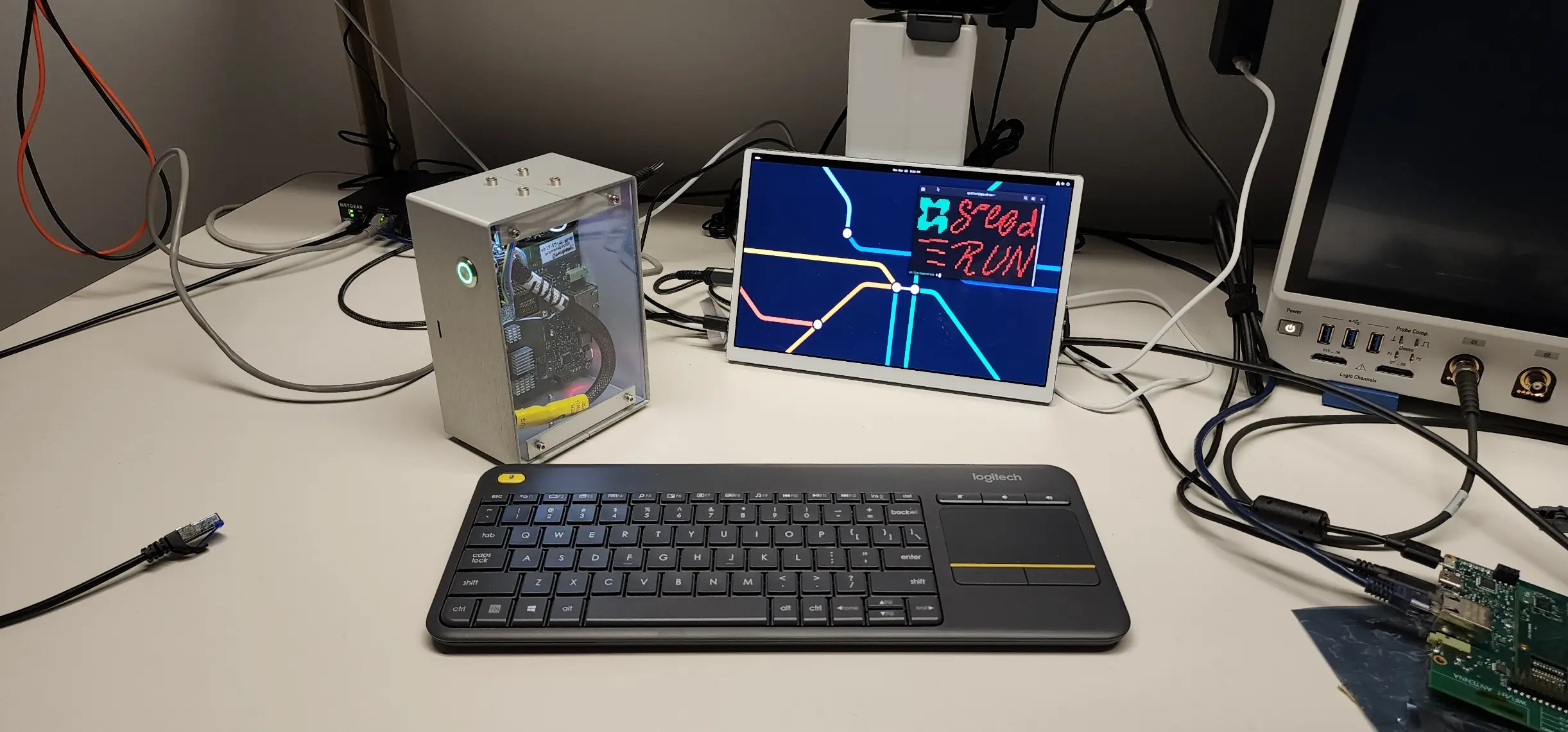
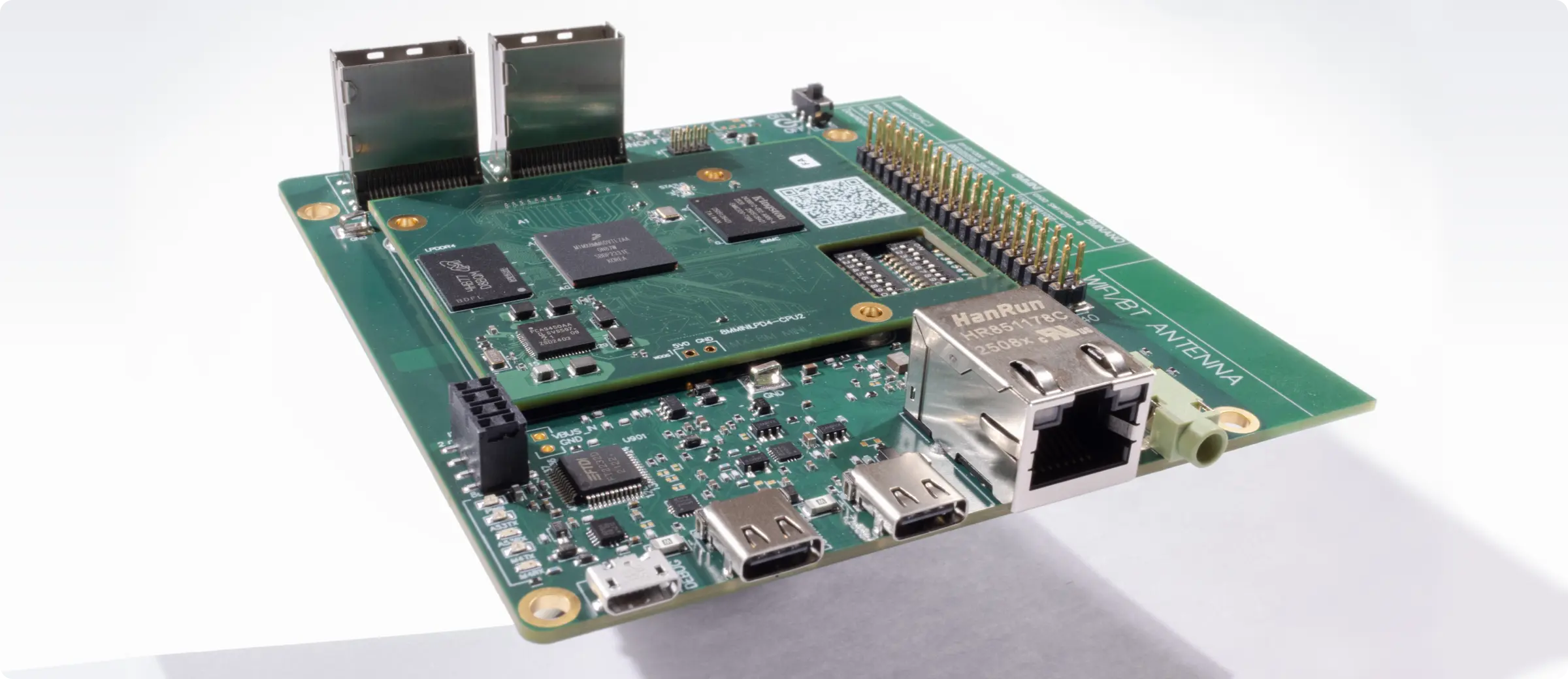
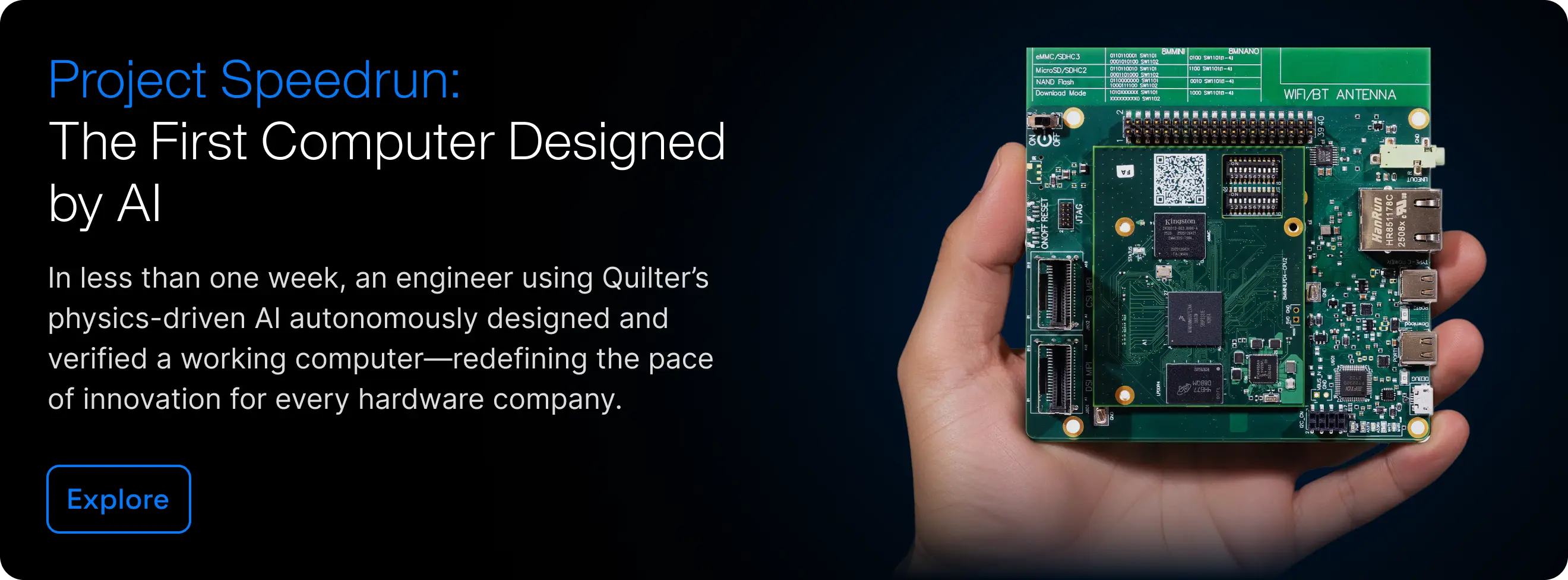
This article is one part of a walkthrough detailing how we recreated an NXP i.MX 8M Mini–based computer using Quilter’s physics-driven layout automation.
If you search for automated PCB design services in 2026, you will find a mess of categories pretending to be the same thing. Traditional autorouters are mentioned alongside AI co-pilots. Layout services get lumped in with design platforms. Early-stage architecture tools get described as if they are already replacing full PCB layout flows. That is not useful if you are trying to ship a real board on a real schedule. This article is a practical ranking of the current landscape, organized by what these tools actually do today, how close they are to production work, and how much engineering burden they remove versus simply relocating. The goal is not hype. The goal is to help senior hardware teams decide what is genuinely worth piloting.
Let’s define what “automated PCB design” really means in 2026
In practice, automated PCB design now spans three distinct capability levels.
First, there is rules-based automation inside traditional EDA. Think interactive routers, guided multi-net routing, DRC, tuning, and cleanup tools. Altium ActiveRoute, KiCad’s interactive push-and-shove router, and Siemens routing automation all belong here. These features matter, but they still assume a human designer owns architecture, floor planning, critical net strategy, and final judgment.
Second, there are AI-assisted copilots. These help with design review, documentation, component research, schematic suggestions, and some early routing assistance. Flux is a clear example of a cloud-native environment pushing this category forward with AI assistance throughout the workflow, not just a single isolated command.
Third, there are end-to-end or near-end-to-end automation platforms. These systems try to start from requirements, architecture, or an engineer-owned schematic and produce validated outputs farther downstream, sometimes all the way to layout and Gerbers. Trace, Circuit Mind, and Quilter each sit in this broader category, but they enter the workflow at different points and should not be treated as interchangeable. Trace emphasizes full workflow automation, Circuit Mind emphasizes architecture-to-schematic and BoM optimization, and Quilter focuses on physics-driven layout from native CAD projects.
There is also an important distinction between tools and services. A self-serve browser platform, a manufacturing-tied layout flow, and a done-for-you outsourced service may all look “automated” from the outside, but they create very different control, review, and compliance outcomes. This article focuses on commercially usable platforms for professional teams, not research demos or speculative future workflows. Quilter belongs on the advanced end of production-focused layout automation because it works from native Altium, Cadence, Siemens, and KiCad projects, supports explicit constraint control, generates multiple candidates, and returns files in the same format for downstream review and handoff.
Here’s how we evaluated and ranked the current tools
This ranking uses five criteria.
Automation depth. How much of the workflow does the platform actually remove from manual effort? There is a meaningful difference between “suggests a route” and “generates multiple constraint-checked board candidates.”
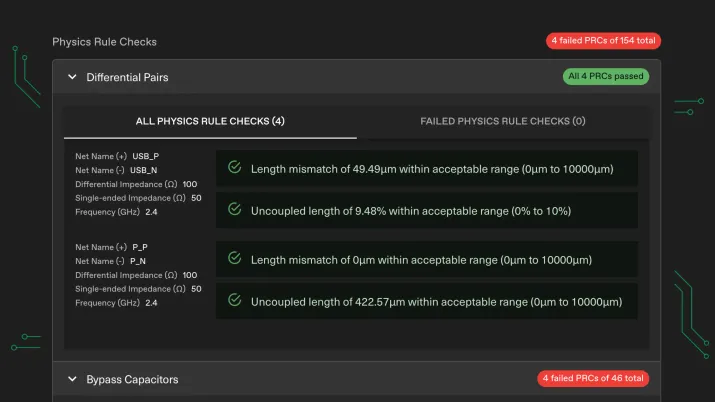
Physics awareness. Does the system account for impedance-controlled nets, differential pairs, power integrity, enclosure constraints, thermal concerns, and other physical realities of board performance, or is it mostly a geometric assistant? Quilter explicitly highlights critical considerations such as bypass capacitors, differential pairs, and impedance-controlled nets. Trace explicitly describes support for enclosure, impedance, thermal, and EMI constraints. Circuit Mind is strongest earlier in the flow, around architecture, BoM, and schematic generation.
Integration with existing EDA. Hardware teams care whether a tool fits their current stack. Quilter returns files in the same format as submitted. Circuit Mind exports to Altium in its case studies. Trace describes itself as built on KiCad. EasyEDA is tightly coupled to ordering. Those are very different operational models.
Production maturity. A platform can be impressive and still not be ready for boards where compliance, signal integrity, or schedule risk matter. Maturity here means repeatability, workflow fit, and evidence that the tool is more than a demo.
Turnaround time in realistic programs. Not toy examples. Think validation boards, test fixtures, IC eval boards, and dense digital designs where saved days or weeks actually matter. Quilter’s published solution pages are especially clear on this point, with claims tied to board classes rather than vague speed language.
Because these categories serve different needs, the ranking below is done within categories first, then interpreted across the market. That is the fairest way to compare an AI copilot, a browser-based prototype flow, and an end-to-end PCB AI platform without lumping them into a single bucket.
What you need to know about AI copilots inside traditional EDA tools
The first category is the least disruptive and, for many teams, the easiest to adopt.
Ranked practical impact for incumbent EDA teams:
- Siemens routing automation/enterprise automation flows
- Altium routing automation plus ML-adjacent assistance
- KiCad and KiCad-adjacent assistance layers
Siemens and Altium remain strongest where deterministic, rules-based assistance matters inside established workflows. Altium’s ActiveRoute is explicitly built for automated multi-net routing along user-defined paths, while Siemens continues to position routing automation as a professional capability inside its broader PCB toolchain. KiCad’s interactive router is very capable for an open-source tool, with push-and-shove behavior, differential pair routing, and length or skew tuning, but it remains a designer-first environment rather than a true AI system.
These tools are good at repetitive but still meaningful work: route assistance, collision handling, differential pair tuning, DRC-backed cleanup, and structured documentation support. They improve throughput for teams already committed to a specific CAD environment. They do not fundamentally change program cadence. A human still owns intent, stack-up logic, power strategy, placement priorities, escape planning, and risk tradeoffs.
That distinction matters. If your problem is “our designers waste time on repetitive routing passes,” copilots and advanced routing automation may be enough. If your problem is “layout has become the pacing item for bring-up, validation, and tape-out support,” this category usually helps around the edges rather than removing the bottleneck.
Which layout automation services are actually ready for production work?
The second category is where the market gets noisy. These are the tools and flows that promise schematic-to-layout acceleration without necessarily rethinking the whole electronics development stack.
Practical ranking by use case:
- Flux for collaborative cloud-native prototyping and AI-assisted auto-layout on lower to medium complexity boards
- EasyEDA + JLCPCB for low-cost design-to-fab convenience and very fast ordering loops
- Service-style layout automation offerings for teams willing to trade control for speed on simpler boards
Flux has pushed furthest in this group on AI-native workflow assistance. Its recent updates emphasize end-to-end AI help, improved auto-layout, sourcing awareness, and collaboration. That makes it more ambitious than a simple browser PCB editor. But the strongest evidence on public pages still points to collaboration, assistance, and rapid, low-to-medium-complexity workflows, not the same physics-first production posture demanded by high-reliability programs. (Flux)
EasyEDA is less about frontier AI and more about practical throughput. The value is tight coupling between design and ordering, especially for cost-sensitive prototype loops. The one-click PCB order flow is real and very convenient. For startups, hobby-adjacent teams, or simple internal boards, that convenience matters. For regulated, high-speed, or mission-critical work, it is not enough on its own.
So which layout automation services are actually ready for production work? For simple prototypes and rapid low-cost iterations, Flux and EasyEDA-style flows are attractive. For regulated, dense digital, high-speed, or compliance-sensitive programs, most of this category still requires substantial human validation and usually stops short of the confidence level serious teams want before fab release. That is where end-to-end platforms with explicit constraint handling and stronger physics review start to feel qualitatively different.
Here’s why end-to-end AI platforms feel different from point tools
Point tools save time inside an existing sequence. End-to-end platforms try to change the sequence itself.
In a traditional flow, architecture decisions happen first, then schematic capture, then placement, then routing, and finally review, often along a largely single-threaded path. In a stronger end-to-end PCB AI platform, you can begin exploring multiple design candidates, manufacturers, constraints, and form factors in parallel. That changes the schedule math. You are no longer asking only “how do we finish this layout?” You are asking, “Which of several viable layouts should we advance?”
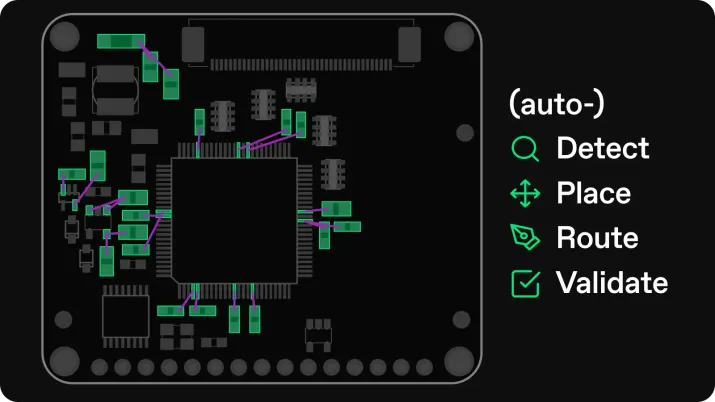
This is also where physics awareness becomes a dividing line. If a system automates only drawing and connectivity, it may speed up labor while shifting risk downstream. If it incorporates constraint and physics review as part of candidate generation and evaluation, it can reduce both effort and uncertainty. Trace explicitly frames its product around the full workflow from concept through layout and Gerber export, including enclosure and engineering constraints. Circuit Mind is structured around requirements capture, design intent, candidate architecture exploration, and validated schematic and BOM generation. Quilter frames itself around reinforcement-learning-driven PCB layout, multiple candidate boards in hours, transparent design review, and seamless CAD handoff from native project files.
That is why these platforms feel different from classic PCB layout automation. They are not just helping you route faster. They are changing the amount of design space you can explore before schedule pressure forces convergence.
How do Trace, Circuit Mind, and Quilter really compare?
Below is the cleanest way to compare Trace, Circuit Mind, and Quilter without pretending they are the same product.
Platform
Typical Input
Typical Output
Physics awareness
Best fit
Published turnaround signal
Trace
Idea, requirements, enclosure, constraints
Schematic, layout, routing, DRC, Gerbers/ODB++
Claims enclosure, impedance, thermal, EMI-aware flow
Fast-moving startups that want broad automation from concept forward
Markets full workflow automation, not just routing
Circuit Mind
Requirements, architecture diagram, design intent
Validated schematic, optimized BoM, exported design artifacts
Strong on rule-driven component and architecture optimization, earlier than layout
Teams optimizing concept, feasibility, and BoM before PCB layout
Architecture to schematic and BoM in 60 seconds; case studies cite days saved
Quilter
Native Altium, Cadence, Siemens, or KiCad project plus constraints
Multiple board candidates, physics review, same-format CAD handoff
Explicit on bypass caps, impedance-controlled nets, differential pairs, full constraint review
Teams bottlenecked on real layout for validation, eval, backplane, and production-adjacent work
First candidates often within the first hour; multiple board classes measured in hours or under 24 hours
Trace’s strength is scope. It is the most visibly ambitious of the three in public positioning, in handling the concept through manufactured-board outputs, and in describing a full AI-agent workflow. That breadth is compelling, especially for startups that want a single environment to collapse early hardware development time. The trade-off is that broad automation still requires serious engineering review when the board class is high-consequence.
Circuit Mind’s strength is upstream leverage. It shines where teams burn time in concept definition, BoM tradeoffs, feasibility checks, and schematic generation. Its public proof points repeatedly emphasize architecture-to-schematic acceleration, optimized design options, and significant time savings before board layout is even complete. It is not best understood as a full layout replacement. It is better understood as a front-end automation engine for electronics design decisions.
Quilter’s strength is narrower, and that is exactly why it is compelling. It does not try to be everything from idea generation onward. It starts from an engineer-owned design context and attacks the layout bottleneck directly with physics-driven PCB layout, multiple candidates in hours, transparent review of what the system did and did not account for, and native handoff back into the CAD format the team already uses. For demanding programs, that combination is unusually practical. Its pricing is also positioned by pin count rather than seats, which matters for organizations that want broad internal access without licensing every reviewer like a full-time layout designer.
Run one real board through Quilter
Use a current Altium, Cadence, Siemens, or KiCad project. Define your real constraints. Generate multiple candidates. Then compare those outputs against your in-house baseline for layout time, review burden, and likely respin risk. Quilter’s free and startup options make that a low-friction experiment rather than a major platform migration.
What results can you expect from deploying Quilter on real programs?
This is where Quilter becomes easier to evaluate because its claims are tied to board classes. Test Fixtures & Harnesses are scheduled 4 to 6 weeks earlier. IC Evaluation Boards are positioned along a layout cycle that moves from weeks to hours. Design Validation Boards are positioned from months to days. Backplane & Interconnect Boards are available from 30+ days to under 24 hours, with claims of 80 percent fewer respins and 100 percent connector accuracy on that solution page.
For R&D managers, that changes the schedule risk. Layout stops being the quiet queue that delays bring-up. For PCB designers, it changes the job from grinding through first-pass placement and routing to reviewing multiple candidates, polishing edge cases, and concentrating on the highest-value design decisions.
For electrical engineers, it changes how quickly a schematic becomes something testable on the bench. Quilter explicitly positions first candidates within the first hour for some solutions and full fab-ready designs in under four hours by role pages and product messaging.
A few concrete scenarios make this more tangible.
An IC eval board team heading toward tape-out can use automation to get layout candidates back in hours instead of waiting through a traditional queue.
A robotics controller team trying to hit a revision deadline can explore multiple form factors or stack-ups without serializing every option through manual layout.
A consumer device team facing a launch window can move faster without sacrificing visibility into which constraints were addressed and which still need engineering review. Those scenarios line up with Quilter’s published industry and board-type positioning, though the exact gains will still depend on board complexity and the cleanliness of your input constraints.
The important point is not that every board becomes instant. It is that physics-first automation can compress the longest, most schedule-sensitive part of the flow while keeping review transparent enough for real engineering use.
Let’s talk about where this ecosystem is heading next
The next phase of this market is not just “better routing.” It is a deeper capture of design intent, tighter loops between simulation and layout, and broader exploration of design space before teams commit to one path. Trace is pushing toward wider workflow coverage. Circuit Mind is pushing harder into requirement-aware electronics design automation. Quilter is pushing toward faster, more physics-driven board realization inside the toolchains engineers already trust.
The teams that will benefit most are the ones preparing now. Clean up libraries. Standardize constraints. Make floorplanning intent explicit. Pilot automation on lower-risk boards first, then move toward eval, validation, and denser digital programs once your review process is tight. That is the practical migration path from point tools to a real end-to-end PCB AI platform.
For most organizations, the decision point is simple. If you only need modest productivity gains inside a stable manual flow, copilots may be enough. If layout is now the pace-setting bottleneck, it is time to test a platform built to remove it. Start with one current board. Upload the native project into Quilter. Define the real constraints. Generate multiple physics-validated layout candidates and measure how much schedule time you can recover before your next board review.



.webp)