






Read the Full Series
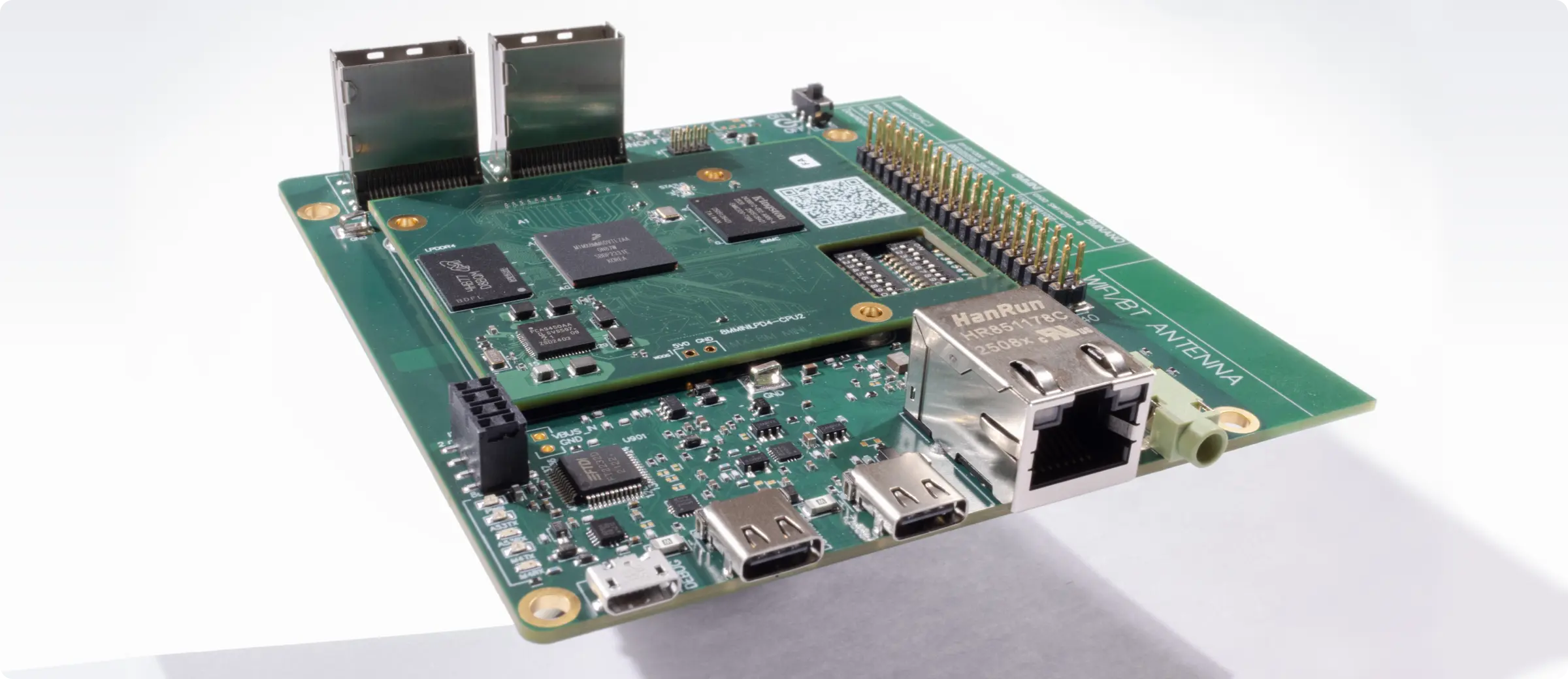
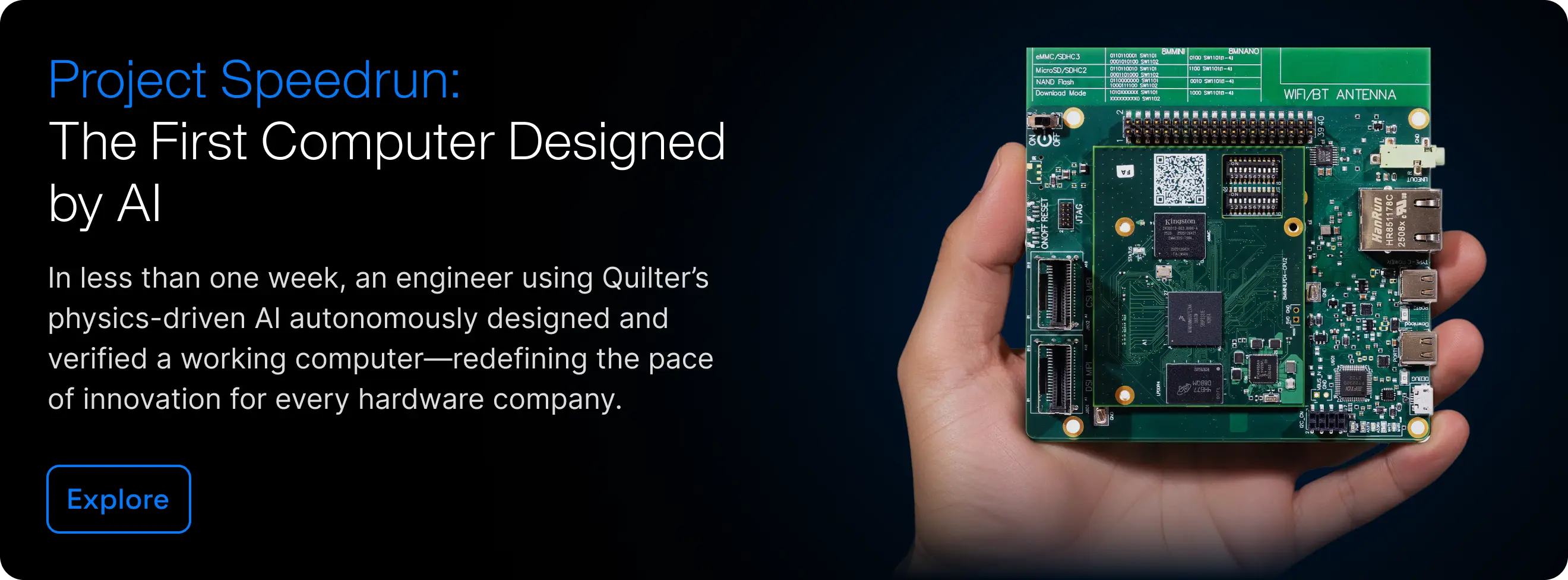
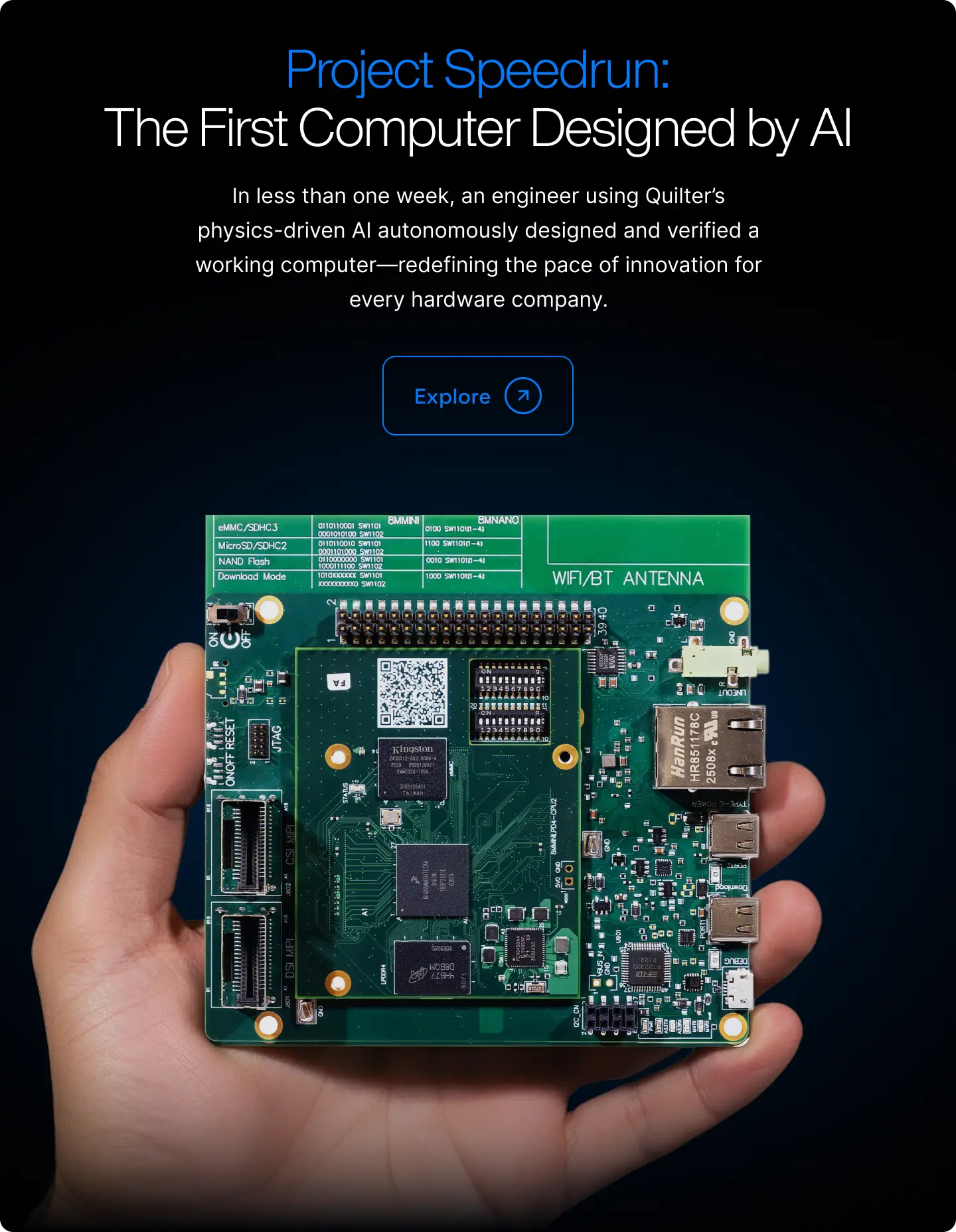
This article is one part of a walkthrough detailing how we recreated an NXP i.MX 8M Mini–based computer using Quilter’s physics-driven layout automation.
PCB design has never moved faster or been more complex. In 2026, the best tools do not just draw traces. They automate, validate, and accelerate the entire journey from schematic to board. Whether you are building IoT devices, dense HDI assemblies, or mission-critical hardware, modern teams are being forced to answer the same question: how do we ship boards faster without lowering first-pass confidence?
That shift is why “modern” PCB tools now include more than CAD. Modern workflows blend constraint management, physics-aware checks, manufacturing handoff, collaboration, and increasingly, AI-powered automation. Traditional suites still matter. Open-source tools are stronger than ever. But the significant change is this: the definition of productivity is moving from “how fast can one designer route a board” to “how quickly can the team explore many valid layout candidates, validate them, and pick the best one.”
This guide breaks down the landscape of PCB layout and automation tools in 2026 and explains the changes when tools like Quilter bring physics-driven PCB automation into the loop.
Let’s define what makes a PCB tool “modern” today
A modern PCB tool in 2026 is not defined by the number of menu options it offers. It is determined by how reliably it moves you through a complete workflow with fewer bottlenecks and fewer surprises. “Modern” means the tool helps you get to a manufacturable, reviewable board faster, while preserving engineering intent.
Here are the criteria that actually separate modern platforms from legacy-only workflows:
1) Automation beyond routing
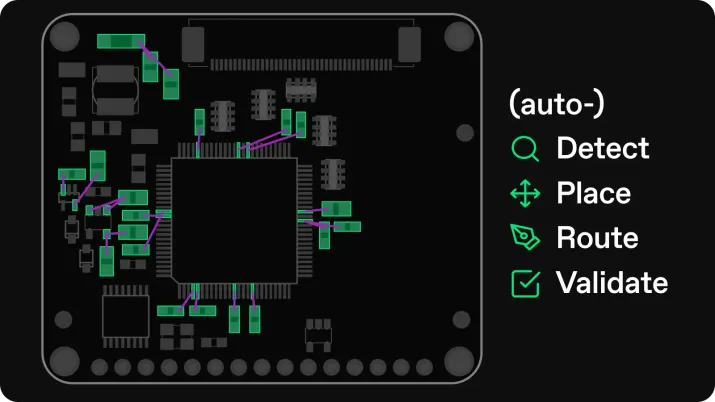
Traditional CAD has offered autorouters for years, but routing alone is not the hard part. The hard part is the messy middle: placement trade-offs, return-path integrity, power-distribution constraints, differential-pair management, connector keepouts, and all the design-specific rules that live in an engineer’s head. Modern platforms treat layout as an end-to-end problem. They help with placement decisions, constraint satisfaction, and review readiness, not only drawing copper.
2) Physics-aware validation as a first-class feature
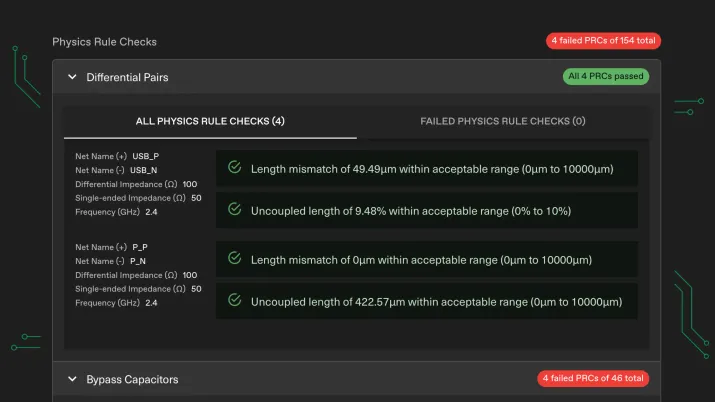
In high-speed and mixed-signal designs, “DRC clean” is not the same as “works.” Modern tools increasingly incorporate physics-aware checks or make it easier to connect to analysis workflows. You want earlier detection of issues such as poor decoupling placement, impedance control errors, differential pair inconsistencies, and routing that violates intent, even if it passes a basic rules check.
3) Integration across the toolchain
A board does not live in isolation. Modern tools integrate tightly with:
- MCAD for enclosure fit, connector alignment, and mechanical constraints
- Simulation tools for SI, PI, and thermal checks were needed
- Manufacturing outputs and DFM expectations so that handoff is clean and repeatable
4) Collaboration and traceability
Teams need review workflows that do not require everyone to install a full ECAD suite. Modern ecosystems prioritize shareable review artifacts, commenting, and a clear trail of constraints, decisions, and changes.
5) Faster iteration loops
The most critical modern metric is iteration speed. If the tool helps you quickly try multiple stackups, manufacturers, or floor plans, your team learns faster. That is the foundation of “hardware-rich development,” where learning velocity matters as much as single-board perfection.
How do traditional suites like Altium and Cadence fit into today’s workflows?
Traditional suites remain the backbone of professional PCB development for a reason. Tools like Altium and Cadence offer deep feature sets, robust constraints, and production-grade outputs. If you design complex boards with strict requirements, these suites often set the standard for what “complete” means.
Where they excel:
- Constraint-driven design at scale: Fine-grained rules, net classes, impedance targets, length matching, differential pairs, and manufacturing outputs.
- Enterprise-ready library management: Component control, variants, revisioning, and organizational governance.
- Complex-board capability: High layer counts, mixed-signal density, and demanding reliability requirements.
But the same strengths create predictable friction when teams need speed.
Manual layout remains the norm
Even in 2026, most high-end workflows still assume a human is doing the core layout work. You place parts, route critical nets, negotiate constraints, run checks, rework, and repeat. This creates a throughput ceiling. It is not only about the designer's skill. It concerns how many hours are in a week.
Steep learning curves slow adoption
When startups hire their first hardware engineer, they often discover the hidden cost of traditional suites: it is not just licensing. It is onboarding time, internal process creation, and the tacit knowledge required to use the tool well.
Bottlenecks become program risk
In fast-paced development, layout becomes the gating item. Schematics can change daily, firmware and mechanical teams iterate in parallel, and purchasing introduces last-minute substitutions. Traditional suites do not “fail” here, but they can become places where time disappears, because layout remains a scarce human resource.
This is why modern teams increasingly treat traditional suites as the “system of record” for final polish, DRC signoff, and manufacturing handoff, while seeking ways to reduce the time spent reaching a viable candidate layout in the first place.
Here’s what mid-tier and cloud-based tools offer for startups and hobbyists
The mid-tier, accessible tool landscape is stronger than ever. For many teams, the best starting point is not a top-tier enterprise suite. It is an easy-to-adopt, affordable tool that is “good enough” to get boards built and shipped.
What these tools do well
Accessibility and cost
Open-source and lower-cost tools reduce friction for early teams. That matters because you want the entire organization to move closer to the hardware workflow, not just the person holding the expensive license.
Community-driven innovation
Tools with strong communities evolve quickly. Plugin ecosystems, tutorials, and shared libraries create leverage. For many designs, especially early prototypes, this is a real advantage.
Cloud review and collaboration
Browser-based viewers and cloud collaboration features reduce the “ECAD wall” between electrical, mechanical, firmware, and manufacturing design. Even when editing still happens in a desktop tool, review workflows increasingly occur elsewhere.
Where limits show up
HDI and high-speed complexity
As density increases, the manual workload grows quickly. If you are doing fine-pitch BGAs, tight impedance control, or complex return-path constraints, mid-tier tools can still be used, but the burden shifts to expert process and careful discipline.
Production handoff maturity
Manufacturing outputs can be strong, but enterprise-level workflows often require more structured library governance, signoff processes, and compliance-related documentation. Those are usually built on top of the tool rather than provided by default.
Time-to-layout still dominates
Even when the tool is “easy,” the physics is not. A lower-cost tool can reduce license friction, but it does not automatically eliminate layout labor.
That is why the following category matters. Not because it replaces everything, but because it changes the throughput bottleneck.
What changes when AI-powered automation enters PCB design?
This is the inflection point for PCB design automation in 2026. AI-powered tools are moving beyond “autorouting” and into full-board layout workflows. The core promise is not that AI draws traces faster. The promise is that the tool can generate complete candidates that respect constraints, and then make review and iteration the primary human tasks.
AI layout is not the same as autorouting
Autorouters traditionally focus on routing. They can be helpful in certain net classes or simpler designs, but they often struggle with:
- Placement tradeoffs that determine routability and signal integrity
- Dense constraint sets where priorities conflict
- Real-world engineering intent that is hard to encode as simple routing rules
AI-assisted systems aim to treat layout as a constrained optimization problem. In Quilter’s positioning, this includes physics-aware considerations and a workflow that enables the generation of multiple candidate layouts in hours, not days or weeks.
Parallel candidate generation changes team behavior
Once you can quickly generate multiple candidates, teams stop treating the first viable layout as “the layout.” Instead, they treat layout as a search space:
- Try different component placements and floor plans
- Compare alternative stackups
- Compare manufacturer constraints and DFM preferences
- Explore form factor variations earlier
This unlocks a more modern development style. The goal is to learn faster and reduce late-stage surprises.
It also changes what engineers spend time on
When automation handles the repetitive parts of layout, the highest leverage human work shifts to:
- System architecture and partitioning
- Constraint definition and verification planning
- Critical design review and tradeoff decisions
- Power integrity strategy, return path planning, and noise control
- Manufacturing risk reduction and test strategy
In other words, engineers spend more time on decisions and less time on mouse miles.
How does Quilter’s automated layout compare to manual and autorouter workflows?
This is where it becomes practical. Most teams considering automated PCB layout are not asking for a philosophical shift. They are asking: “What changes in my workflow next week, and what do I still need my CAD tool for?”
Quilter’s core positioning is that it can take native projects from major CAD ecosystems, apply constraints you control, generate full-board candidates quickly, and return designs in the same format for final polish and manufacturing outputs. That means it is designed to fit into existing toolchains, not force a rip-and-replace.
A simple workflow view
Below is a high-level diagram of how “manual-first” and “automation-first” workflows differ.
Manual-first workflow (typical today):
- Schematic complete (or mostly complete)
- Define constraints and stackup
- Place parts (iterative)
- Route critical nets
- Route the rest
- DRC and cleanup
- Review, rework, repeat
- Generate fab outputs
Automation-first workflow (with AI candidate generation):
- Upload the project and define constraints
- Pre-place key connectors and set floorplan intent
- Generate multiple candidate layouts
- Review candidates against constraints and physics checks
- Select the best candidate and polish in your CAD tool
- DRC signoff and fab outputs
And here is a lightweight visual you can reuse internally:
Manual-first (one primary candidate)
[Constraints] -> [Placement] -> [Routing] -> [Cleanup] -> [Review] -> [Fab]
Automation-first (many candidates, faster review loop)
[Constraints + Floorplan] -> [Generate N candidates] -> [Compare/Review] -> [Polish] -> [Fab]
The key difference lies in where iteration occurs. Manual-first iterates inside placement and routing. Automation-first iterates across candidate layouts, with humans focusing on selection and refinement.
Side-by-side comparison table
Here is a decision-ready comparison of the three approaches.
Capability
Manual layout in traditional CAD
Traditional autorouter workflows
Quilter automated layout (AI-powered)
Primary role
Human builds the layout
Tool routes subsets of nets
Tool generates complete candidates
Placement support
Manual, designer-driven
Limited or none
Candidate generation includes placement and routing workflow framing
Constraint satisfaction
Strong if designer is disciplined
Often partial, requires cleanup
Constraint-driven generation with review emphasis
Physics-aware considerations
Depends on designer and external checks
Typically not physics-aware
Positioned as physics-driven review and validation focus
Handling dense constraints
Possible but time-intensive
Often struggles, cleanup-heavy
Designed for faster iteration across candidates
Iteration speed
Slowest (days to weeks)
Mixed (routing faster, cleanup slow)
Faster (candidates in hours, then select and polish)
Output for manufacturing
Strong
Strong after cleanup
Returns designs to your CAD format for DRC, polish, and fab outputs
Best use case
Maximum control, highest complexity, expert teams
Limited routing acceleration on simpler patterns
Faster layout throughput, more design cycles, reduced bottlenecks
This table does not indicate that one approach “wins” for every design. It is saying the work moves around. Manual maximizes control but costs time. Autorouters can help in pockets, but often create downstream cleanup work. AI-assisted candidate generation aims to reduce total time-to-viable-board by making “good candidates” more abundant, then allowing experts to apply judgment and final polish.
Concrete examples of what changes in practice
Example 1: IoT gateway board with mixed-signal constraints
- Manual-first: a designer spends significant time on placement tradeoffs (connectors, RF keepouts, power sections) before routing is even comfortable.
- Autorouter: may route easier nets but often fails on sensitive areas, pushing the designer back into manual work.
- AI candidate generation: the team can compare multiple placement and routing strategies early on, then select the one that best fits power integrity and mechanical constraints.
Example 2: Dense compute module carrier
- Manual-first: throughput is constrained by a few high-skill designers.
- Automation-first: teams can produce multiple candidates, then apply expert review to identify the candidate with the cleanest escape routing, shortest critical paths, and best decoupling strategy.
These are illustrative, not guarantees. Real results depend on constraint quality, stackup choices, and the quality of the workflow setup. The point is that the “search” happens faster.
Where traditional CAD still stays central
Even in automation-first teams, traditional CAD still matters:
- Final DRC signoff
- Minor mechanical adjustments and part swaps
- Manufacturing outputs and documentation
- Library governance and organizational standards
- Specialized routing or tweaks in critical nets
That is why “works with your existing workflow” is important. If your automation tool can return outputs in the same CAD format you started with, you can keep your existing signoff pipeline and still gain speed.
What results can you expect from next-generation PCB tools?
When teams adopt next-generation PCB platforms, they usually care about three outcomes:
1) Faster time-to-prototype
The most common impact is a meaningful reduction in layout cycle time. The practical result is not only speed. It is the ability to bring earlier hardware to market, identify issues sooner, and reduce late-stage program risk.
A helpful way to think about it:
- If the layout becomes faster, your prototype happens sooner
- If you can generate alternatives, your second prototype becomes smarter
- If you can iterate more, your third prototype is closer to production
2) More design cycles, not just one “best effort”
Traditional workflows often force teams to make a single layout, “the” layout, because time is scarce. Next-generation tools aim to make iteration cheap. That enables:
- Comparing different floor plans
- Trying multiple manufacturers earlier
- Testing different stackups and impedance assumptions
- Running more meaningful design reviews because you have options
3) Increased engineering bandwidth
This is the compounding effect. When repetitive layout work is reduced, engineers can spend more time on the work that actually differentiates products:
- power integrity and noise control
- EMI risk reduction strategies
- test and bring-up planning
- design for assembly and yield
- firmware-hardware co-design decisions that prevent re-spins
A practical checklist to measure results
If you want a grounded way to evaluate whether “modern tools” are helping, measure these before and after:
- Time from schematic freeze to first candidate layout
- Number of layout candidates reviewed per design
- Number of days between iterations
- Rework hours caused by placement mistakes
- DFM issues found before fab vs after fab
- Number of boards spun before first-pass success
If your tool choice increases the number of valid options you can review without increasing effort, you will usually see better decisions and fewer late surprises, even when the board itself is complex.
Ready to try a new approach to PCB design?
If you are evaluating the best PCB tools for modern electronics, the most critical question is not “which CAD suite is most powerful.” It is “which workflow helps my team ship reliable boards faster, with fewer bottlenecks.”
A practical next step is to trial an automation-first workflow on a real project. Select a board that reflects your typical constraints (connectors, sensitive nets, power rails, mechanical keepouts). Define constraints carefully. Generate candidate layouts. Then compare the human effort required to reach a manufacturable, review-ready result.
If you want to explore Quilter’s approach, the cleanest path is to start with a free trial or request a workflow assessment so you can map AI candidate generation onto your existing CAD and sign-off process.
- Product
- Contact


.webp)