






Read the Full Series
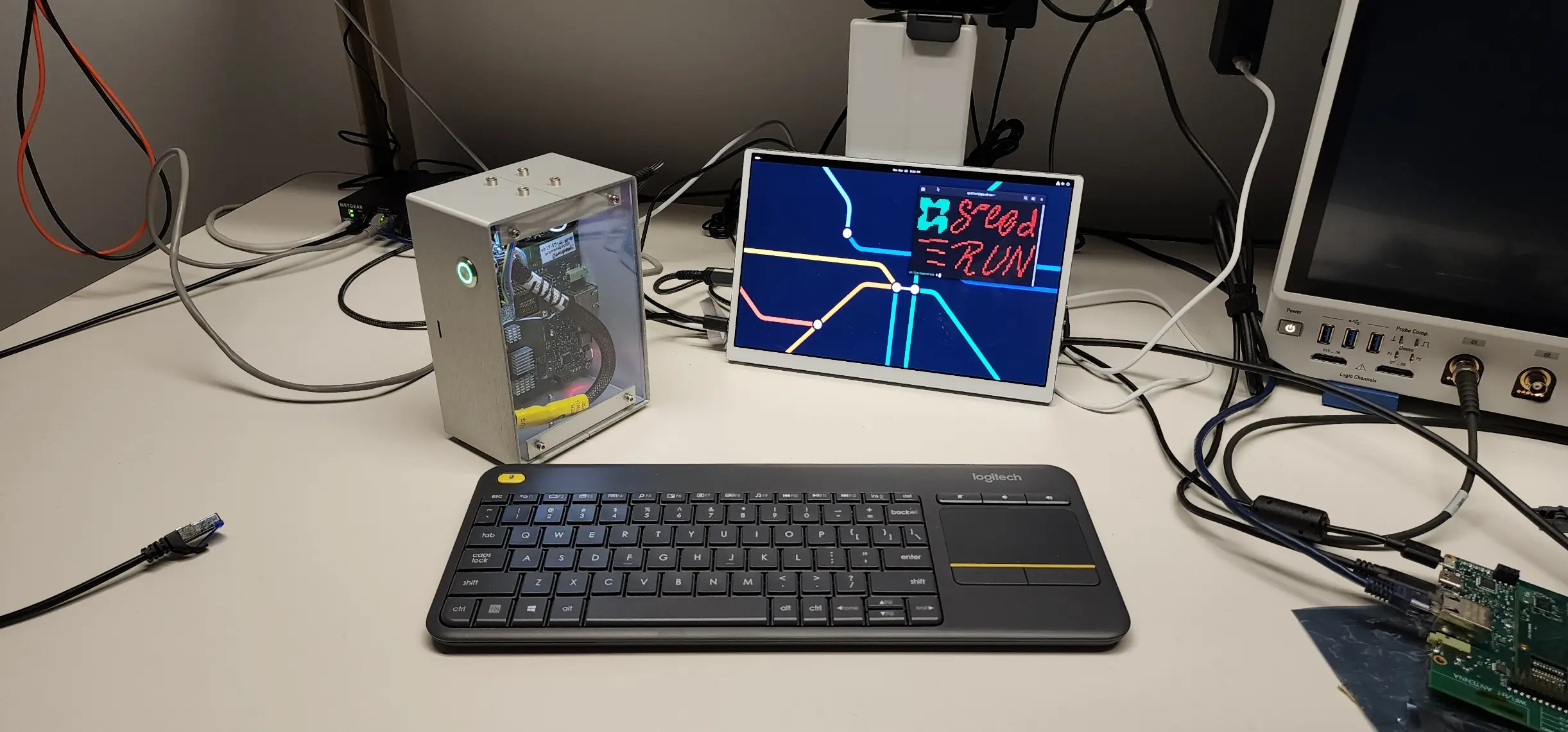
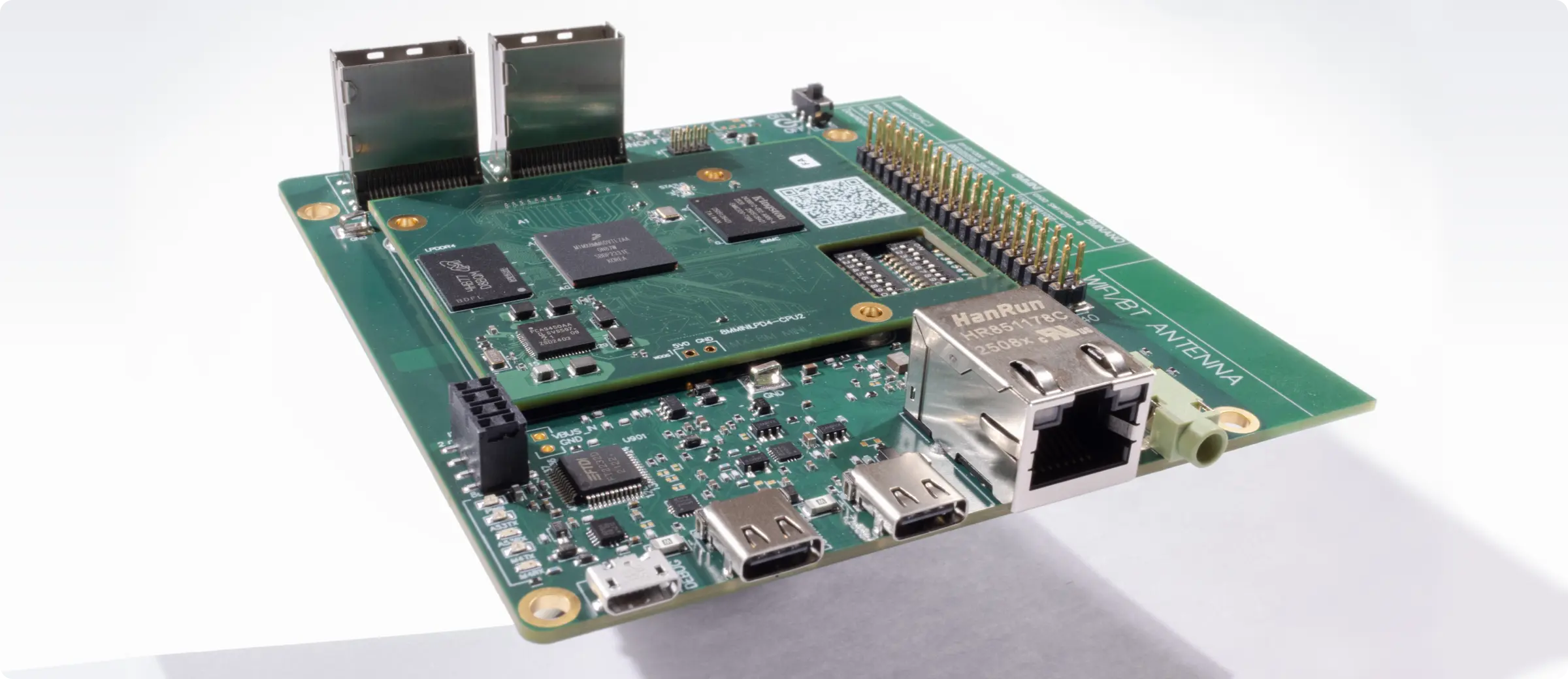
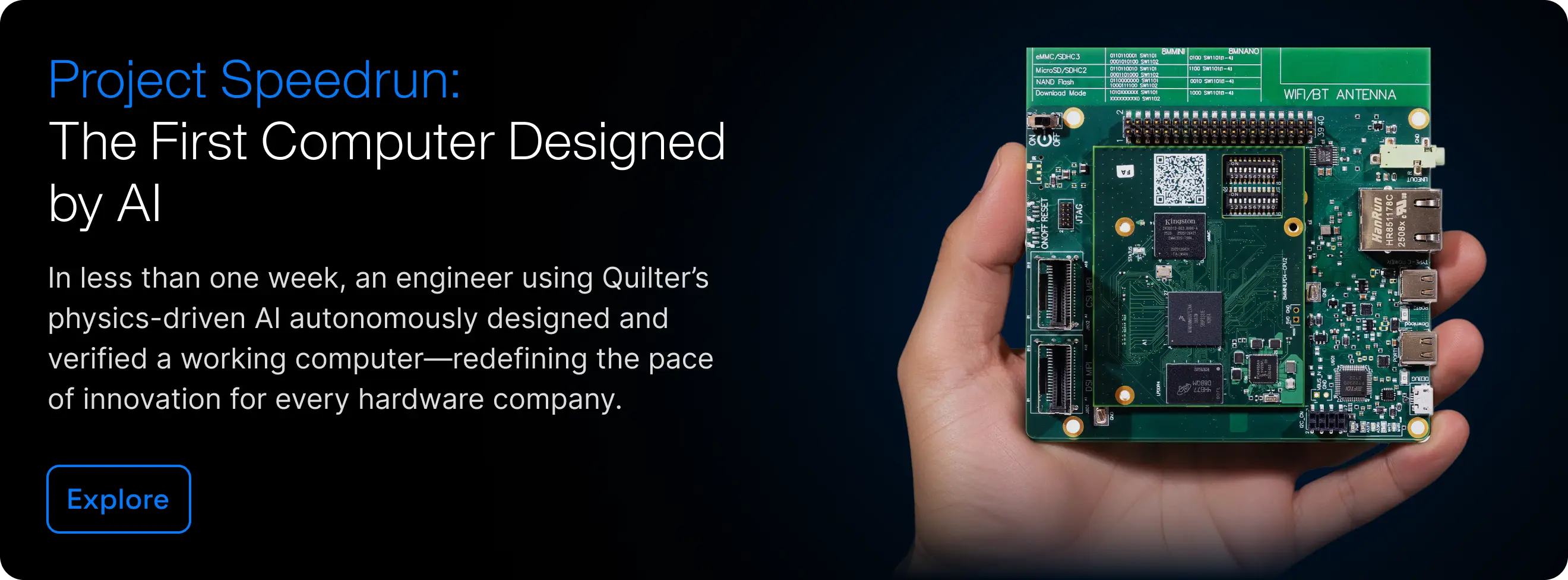
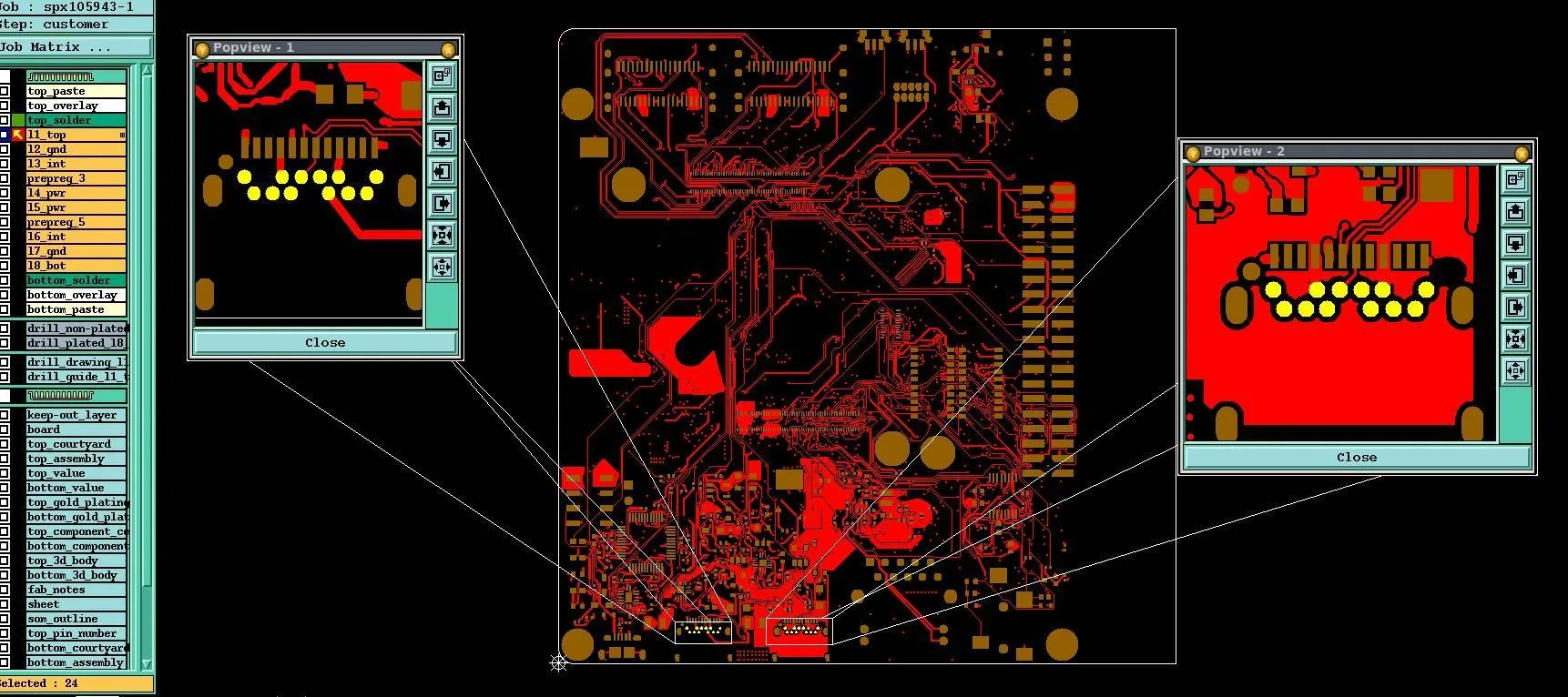
This article is one part of a walkthrough detailing how we recreated an NXP i.MX 8M Mini–based computer using Quilter’s physics-driven layout automation.
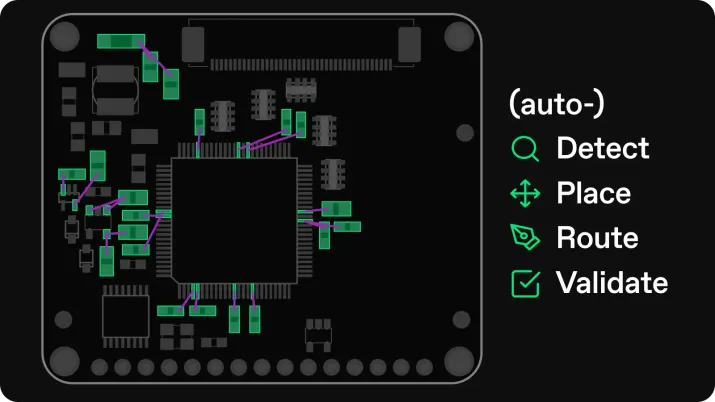
Most “automated layout” tools promise faster PCB design, but they address only part of the problem. Classic autorouters help you finish traces. Newer AI engines can improve routing quality and, in some cases, assist with placement. A smaller class of tools now goes further, treating automated circuit board layout as a full-board optimization problem, where placement, routing, and physics checks are part of a single loop. Quilter belongs in that last category, with a product built around autonomous placement, routing, and physics validation rather than just routing assistance.
If you are evaluating the top tools for automated circuit board layout, that distinction matters. A simple two-layer utility board does not need the same level of automation as a dense validation board, a high-speed interconnect, or a mission-critical aerospace program. The point of this guide is to separate marketing language from actual capability, then show where traditional PCB autorouter workflows end, where AI-powered routing starts, and where physics-driven PCB design changes the speed and quality equation.
Let’s define what “automated layout” really means today
“Automated layout” has become a catch-all phrase, and that is why so many tool comparisons feel muddy. In practice, there are at least four different levels of automation in PCB design.
At the lightest end, you have interactive routing aids. These are the features many engineers already use every day: push-and-shove routing, walkaround modes, collision highlighting, differential pair routing, and length tuning. KiCad, for example, includes an interactive router with push-and-shove, walkaround, differential pair support, and length and skew tuning. Those are useful productivity features, but they do not make placement decisions for you or autonomously generate complete board candidates.
Next come batch autorouters. These tools are meant to complete portions of the routing job after the engineer has already handled floorplanning, component placement, critical nets, and key constraints. After that, you now see AI-powered routing tools, often cloud-based, that use machine learning or reinforcement learning to produce cleaner routes faster than classic autorouters. DeepPCB is one example. Its official materials describe a plug-and-play flow where you export files from your existing EDA environment, upload them for placement and or routing, and get results back in a few hours, depending on complexity.
The final category is full AI placement plus routing, where the system is not just polishing traces on top of a human-owned floorplan. It is exploring complete board layouts as candidate solutions. That is the category this article is most interested in, because it maps more closely to what hardware teams actually mean when they ask for AI PCB layout: fewer manual iterations, more layout options, faster handoff, and better engineering bandwidth. Quilter is specifically positioned around that problem, describing its product as autonomous placement, routing, and physics validation, with multiple candidates generated in hours.
Here’s how traditional autorouters help and where they fall short
Traditional autorouters are not useless. In the right context, they are still practical. For simpler boards, or for teams with a strong manual layout process already in place, they can reduce repetitive routing work and help finish the board faster. KiCad is a good example of how modern “autorouter-like” workflows are often really a combination of interactive routing intelligence rather than one-button magic. Its router supports push-and-shove behavior, walkaround routing, differential pairs, and length or skew tuning, which is why many engineers use it as a semi-automatic assistant instead of relying on old-school full-batch routing.
That workflow usually looks the same across tools. The engineer completes the schematic, places components by hand, locks down the floorplan, handles the sensitive nets first, and then uses automation to help with the remaining connections. On a modest board, that can be enough. It preserves the engineer's judgment where it matters most and uses tooling to speed up the busywork.
The problem is that classic PCB autorouter logic tends to break down where the schedule pain is highest. Dense BGAs, constrained escape routing, via-heavy areas, impedance-sensitive nets, return path concerns, and board-level manufacturability are not routing-only problems. There are placement and architectural problems that occur during routing. Once the board has been “committed” by a mediocre floorplan, even a good router is left trying to salvage the situation.
That is why so many teams say they “used the autorouter” but still spent days or weeks in cleanup. The router may connect the nets, but not in a way that minimizes vias, preserves physical intent, keeps bypass capacitors where they should be, protects critical structures, or leaves the board easy to manufacture, assemble, inspect, and test. At that point, automation has only reduced a slice of the work.
What should you expect from AI-powered routing tools?
AI-powered routing tools are a meaningful step up from traditional autorouters, especially if your team already has a stable placement process and wants faster route completion. They are typically designed to work alongside mainstream EDA rather than replace it. DeepPCB describes itself as a plug-and-play PCB design tool that accepts exports from your favorite EDA tool for placement and or routing, with standard jobs typically completed in a few hours. Its public help pages also describe usage-based pricing and support for boards up to eight layers and 1,200 connections in the standard version.
That matters because it makes AI-powered routing more approachable. A team does not need to rip out its existing toolchain to try it. They can keep their familiar design environment, export the board, run the AI engine, and then compare the result against their usual method.
Still, AI-powered routing tools should be understood for what they are. Even when they include placement capability, they generally operate within a narrower problem definition than holistic full-board AI. The engineer is still responsible for the larger architectural choices: board outline, floor plan, key constraints, what “good” means, what must be fixed, and often the core placement strategy. DeepPCB’s own positioning is strongest in accelerating place-and-route workflows within that exported design context, rather than exploring thousands of full-program-level alternatives across board assumptions.
For many teams, that is enough. If your workflow is mature and your main pain is route completion time, AI-powered routing may be a very good fit. But it is still different from a system built to search the space of complete layouts, physics outcomes, and candidate tradeoffs from the beginning.
Here’s why placement matters more than routing for real boards
This is the part many software comparisons gloss over. On real boards, placement usually determines most of the outcome before routing begins.
Take bypass capacitors. If they are too far from the pins they support, or if the current path and return path are poor, the routing engine cannot “fix” that later with prettier traces. The same goes for differential pairs that start with awkward geometry because the parts were oriented badly, or power sections that are clustered in ways that worsen thermal behavior and current density. In other words, routing quality is heavily downstream of placement quality.
Placement also drives routability more than most people admit. Component clustering, orientation, pin escape strategy, layer planning, and the distance between subsystems all influence via count, congestion, route length, and whether the board feels clean or forced. You can think of routing as revealing whether the placement was honest. A smart router on top of a poor floor plan is still boxed in.
Manufacturability brings another layer. Test access, assembly spacing, inspection visibility, stencil behavior, panelization constraints, and connector usability are all placement-sensitive. Once traces are in, you can spend a lot of time rearranging local details, but if the early placement decisions were wrong, those late changes are expensive and frustrating.
That is why the most important question in AI PCB layout is not “How good is the router?” It is “Who owns placement optimization, and how many candidate layouts can this system explore before I have to commit engineering time?” That is where the real leverage starts.
Why placement comes first
Before: The board is placed for convenience, but routing exposes long return paths, awkward bypass-capacitor locations, congested escapes, and more vias than expected.
After: The placement is optimized around electrical relationships first, so routing becomes shorter, cleaner, and more manufacturable.
See how Quilter approaches physics-aware layout, where critical structures such as bypass capacitors, controlled-impedance nets, and differential pairs are identified up front and evaluated during generation.
How does holistic AI layout and placement actually work?
At a high level, holistic AI layout works more like a guided search than a traditional autorouter. The system proposes a candidate layout, evaluates it against the rules and physical constraints that matter, learns from the result, and iterates. Instead of trying to optimize one fixed floor plan, it explores many complete board candidates.
That is where reinforcement learning becomes useful. DeepPCB explicitly notes that reinforcement learning is well-suited to PCB routing as a decision-making problem. Quilter extends the idea further at the whole-board level, positioning its product around autonomous placement, routing, and physics validation rather than routing alone.
The engineer is still in control of the design intent. The board outline, pre-placed components, keep-outs, stack-up assumptions, manufacturers, critical nets, and other constraints define the search space. The AI is not improvising without structure. It is exploring within the boundaries that matter to the program.
The difference is that holistic AI can search far more alternatives than a human team can reasonably attempt by hand. One fixed placement plus route is a single answer. A system that can generate many complete candidates and evaluate them with physics-aware checks is solving a different class of problem. It is not just helping you finish the layout. It is helping you discover better layouts.
Explainer diagram: Quilter’s reinforcement-learning loop
[Engineer constraints + project files]
↓
Propose board candidate
↓
Physics review and constraint scoring
↓
Reward stronger electrical outcomes
↓
Iterate across more candidates
↓
Return fabrication-ready layout options
Inside Quilter’s physics-driven approach to board design
Quilter’s workflow is built for teams that want automation without abandoning the CAD stack they already use. According to Quilter’s product and site materials, you can upload Altium, Cadence, Siemens, or KiCad projects directly, define the board outline, pre-place connectors, set the floorplan and constraints you care about, then let the system generate candidates. Quilter also states that it returns files in the same format you submitted, so the handoff back into the native design environment remains straightforward.
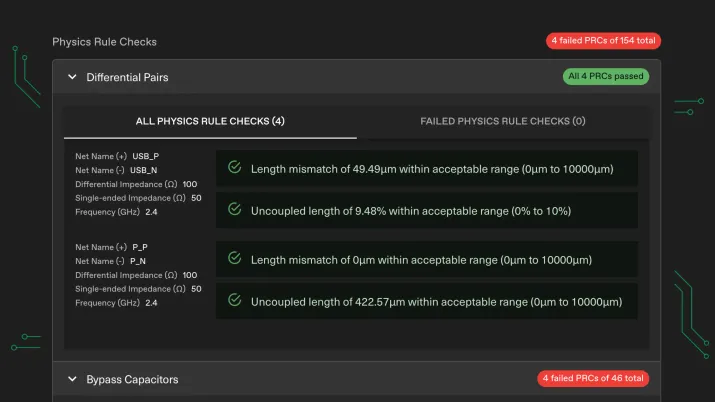
The physics-aware part is what makes that more than a cloud autorouter. Quilter says it identifies bypass capacitors, impedance-controlled nets, differential pairs, and other critical considerations for review up front. It also evaluates layouts against the provided physical constraints so you can see which parts of the design are actually done and which require more attention. That is a different promise from “we routed the remaining traces.” It is a promise about design intent, transparency, and reviewability.
The company’s positioning is also explicit about candidate generation. Quilter describes itself as generating multiple candidates in hours, with physics validating every trace, and as the first physics-driven AI to fully automate complete PCB layout. On the product page, it states that PCB designers can focus on the complex boards that define products, while engineers focus on system integration, with autonomous enforcement of differential pairs, DDR timing, and clearances during generation.
That makes Quilter especially relevant when your pain is not simply “routing takes too long.” It is when layout bottlenecks are holding up bring-up, validation, or form-factor exploration. For those teams, the value comes from more options, earlier physical feedback, and less engineering time lost to routine layout churn.
Case-style sidebar: Validation board from weeks to hours
The hardware team needs a design-validation board to test a new subsystem before the next review gate. In a conventional flow, they finish the schematic, queue layout, wait for placement refinement, spend more time on cleanup, then lose another round to late DRC or manufacturability issues.
In a physics-driven workflow, they upload the project, define the board outline and hard constraints, generate multiple candidates, and compare them inside the same workday. That changes the calendar math. It also changes the number of options the team can realistically evaluate before fabrication.
Run this same test in Quilter today using a small validation board or test fixture, then compare the results with your current manual process.
What results can you expect when you add Quilter to your tool stack?
Quilter’s published positioning is aggressive because the use cases are schedule-driven. Across its site, the company claims full fab-ready designs in under four hours for PCB designers and schematic-to-fab-ready in under four hours for electrical engineers. It also cites results such as backplane and interconnect boards moving from 30-plus days to under 24 hours, test fixtures and harnesses shaving four to six weeks off bring-up, and IC evaluation boards cutting layout cycles from weeks to hours.
For an R&D manager, that means layout stops being a long pole in the eye as often. Instead of treating every board as a serial process that ties up scarce layout capacity, the team can generate candidates faster, review earlier, and reserve human expertise for the boards and design decisions that actually need it. For a PCB designer, it means less time spent on repetitive route completion and more time on constraints, review, and the genuinely hard parts of the job.
The impact shows up differently by board type. An IC evaluation board benefits from speed because it is often a bring-up vehicle rather than the final product.
A design validation board benefits from rapid iteration because the point is learning quickly, not polishing for weeks. A consumer electronics revision benefits because form-factor changes ripple through placement and routing at once, and the faster you can test alternatives, the less schedule risk you carry into launch planning. Quilter’s site makes similar claims across semiconductors, robotics, consumer electronics, and aerospace and defense use cases.
That does not mean every board should move to a full AI layout. It means the return is strongest where schedule pressure, placement complexity, and iteration value are all high.
Here’s how to choose the right level of automation for your next board
The right automation level depends on the type of board you are building, the maturity of your existing workflow, and where the real bottleneck lies.
If the board is relatively simple, your placement strategy is obvious, and your team mainly wants help routing faster, KiCad-style interactive routing may be enough. KiCad remains a strong option for engineers who want cost-effective tooling with modern routing assistance, especially when they are comfortable owning placement and critical-net work themselves.
If your team already has a stable floorplanning process and wants AI-powered routing without changing core tools, DeepPCB-style workflows can add value. They fit best when you want to export from your usual EDA tool, run an AI place-and-route job, and compare outcomes with a usage-based model.
If the board is dense, time-sensitive, placement-sensitive, or program-critical, Quilter is where the leverage grows. It is strongest when the problem is not just about routing productivity but also about overall board exploration, physics-aware placement, and time-to-candidate. That is the difference between “help me finish layout” and “help me compress the design cycle.”
Visual comparison table
Approach
Placement automation
Routing automation
Physics-aware checks during generation
Best fit
Time to first useful candidate
KiCad / interactive routing
Low
Moderate
Limited to rules and router assistance
Simple to moderate boards, cost-sensitive teams
Fast for manual users, but it depends heavily on the engineer-owned placement
DeepPCB-style AI-powered routing
Moderate, depending on flow
High
Improves routing outcomes within the exported design context
Teams are keeping the current EDA flow and accelerating route completion
Typically, a few hours, depending on complexity
Quilter
High, full-board candidate generation
High
Yes, with physics-driven evaluation of critical considerations
Dense, schedule-sensitive, validation-heavy, or mission-critical boards
Multiple candidates in hours; fab-ready claims in under 4 hours for some roles and use cases
Let’s talk about getting started with Quilter alongside your existing EDA
The easiest way to evaluate Quilter is not with a theoretical debate. It is with a pilot. Pick a board that is important enough to matter but contained enough to compare cleanly. A test fixture, IC evaluation board, or validation board is usually the right starting point.
Upload the existing Altium, Cadence, Siemens, or KiCad project. Define the board outline, keep-outs, pre-placed elements, and critical constraints. Let Quilter generate candidate layouts, then compare them against the manual flow you would normally use. Because Quilter returns files in the same format you submitted, the comparison can take place within your familiar CAD environment rather than in a disconnected workflow.
From there, the next step is practical. Review the candidates, examine where placement choices improved routability, quantify how much cleanup was avoided, and ask whether your team gained more design options without burning more engineering hours. That is the real measure of AI PCB layout value.
To explore further, see these sources: Product Overview, IC Evaluation Boards, Test Fixtures & Harnesses, and Pricing. Quilter also offers a Free Tier for teams that want to evaluate the workflow before broader adoption.
Upload a current Altium, Cadence, Siemens, or KiCad project to Quilter and generate your first AI-designed layout candidate in hours. Then compare it to your current workflow, not just on routing completion, but on placement quality, iteration speed, and time to a board you can actually build.
FAQ
What is the difference between a PCB autorouter and AI PCB layout?
A PCB autorouter mainly helps complete routing after the engineer has already handled placement, floorplanning, and critical design choices. AI PCB layout can go further by optimizing placement and routing together, sometimes across many candidate boards rather than one fixed floorplan.
Is AI-powered routing enough for complex boards?
Sometimes, yes. If your team already does strong placement work and mainly needs help with route completion, AI-powered routing can be valuable. But for placement-sensitive boards where electrical, thermal, and manufacturability outcomes are tightly coupled, routing-only automation is often not enough.
Can Quilter work with my current CAD tool?
Quilter states that it supports Altium, Cadence, Siemens, and KiCad projects and returns files in the same format submitted, making it easier to evaluate without replacing your existing stack.
What kind of board is best for a first pilot?
A test fixture, IC evaluation board, or design validation board is usually a strong pilot because the schedule matters, the board is contained enough for a clean comparison, and the value of faster iteration is obvious. Quilter’s site specifically highlights those kinds of use cases as good fits.



.webp)