







Read the Full Series
This article is one part of a walkthrough detailing how we recreated an NXP i.MX 8M Mini–based computer using Quilter’s physics-driven layout automation.
If you’ve ever spent weeks wrestling with PCB layout, you know how much time and bandwidth gets lost to manual routing, late DRC cleanup, and slow review cycles. But what if you could go from schematic to a manufacturable board candidate in hours, not weeks?
In this post, we put Quilter’s physics-driven AI PCB layout head-to-head with a traditional manual layout workflow, using published benchmark data and repeatable efficiency metrics. The goal is simple: give you a set of numbers you can cite when someone asks for the “top rated PCB design software for efficiency,” and help you evaluate PCB automation tools with more rigor than “it feels faster.”
If you want the product context up front, Quilter positions itself as a physics-driven system that generates multiple candidates in parallel and returns native CAD files for final checks.
Let's define what 'efficiency' really means in PCB layout
“Efficiency” in PCB layout is often treated like a stopwatch problem: whoever routes faster wins. In real hardware programs, that definition is incomplete.
PCB design efficiency is total cycle time. It includes the time it takes to move from a constrained schematic to a candidate you would actually send through your normal release flow, plus the effort required to get that candidate across the finish line without surprises.
Here are the efficiency metrics that matter most in 2026, and the ones we will measure (or explicitly proxy) in the benchmarks:
- Time to first manufacturable candidate
Not “time to start routing,” and not “time to a screenshot.” Time to a routed layout that is plausible to manufacture, export, and validate in your normal CAD toolchain. - Manual cleanup work after routing
Interactive routing, length tuning, via edits, keepout rework, return path fixes, stitching changes, and all the “last 20%” tasks that consume a disproportionate amount of calendar time. - Topology quality proxies (via count and constraint coverage)
Via count is not the only indicator of quality, but it is a useful proxy for routing efficiency and risk, especially on dense multilayer designs. Constraint coverage matters because boards fail when constraints are missed, not when they are discussed. - Iteration speed
This is the quiet multiplier. If one workflow gives you one candidate and another gives you several viable candidates quickly, you are not just saving hours. You are changing the number of decisions you can validate before you freeze a design.
Quilter explicitly frames “efficiency” using metrics like time to first manufacturable candidate, manual adjustments post-route, via count, and physics-aware checks passed, which aligns with how engineering teams actually experience layout bottlenecks.
How does manual PCB design stack up today?
Manual PCB layout has improved dramatically. Interactive routing is better. Constraint systems are more expressive. Collaboration tooling is more mature. Yet the bottleneck persists because even with excellent PCB CAD tools, the process is still constrained by human throughput, sequential iteration, and manual cleanup.
The baseline reality: manual layout is still measured in days to weeks
Across many teams, “manual layout” often means a modern CAD tool plus skilled designers doing high-attention placement and routing work. Even then, schedules commonly look like this:
- Simple designs can still consume multiple days when you include placement decisions, routing, cleanup, reviews, and documentation handoff.
- Moderate complexity boards frequently land in the multi-week range once you include review cycles, constraint conflicts, and iterative fixes.
Quilter’s own solutions content summarizes the pattern bluntly: manual layout often spans 1–3 weeks for simpler boards and 3–6 weeks for moderate complexity depending on constraints and review overhead.
That is a vendor source, so treat it as directional, but it matches what many design services and practitioners cite as typical calendar time ranges.
Where time is lost in manual workflows
Even “efficient” teams tend to leak time in the same places:
- Routing and constraint reconciliation
You are not only pushing traces. You are reconciling length budgets, impedance requirements, keepouts, return paths, and mechanical realities across a design that evolves mid-stream. - Post-route cleanup
This is where schedules go to die. The router gets you “mostly there,” then the designer becomes the constraint solver. - Waiting for reviews and feedback loops
Design reviews, SI/PI checks, and manufacturing feedback often occur after a lot of routing effort is already invested. If a constraint is wrong, the rework is expensive. - One-candidate-at-a-time iteration
A manual workflow tends to produce one primary candidate, then improvements are layered onto that same candidate. That is not the same as exploring multiple topologies in parallel.
Traditional tools like Altium, Cadence Allegro, and KiCad can absolutely ship world-class boards. The question is not capability. The question is whether the layout step is consuming a share of program time that is out of proportion to the value you get from doing it manually.
What happens when you use Quilter instead?
Quilter’s core pitch is not “a faster autorouter.” It is an AI PCB layout workflow designed to compress the entire layout bottleneck by generating complete candidates and validating them with physics-aware checks during generation, then handing you native CAD output for final polish.
At a workflow level, the pattern looks like this:
- Upload native CAD projects and define constraints
Quilter is built to work alongside existing toolchains. Their product pages emphasize native file ingest and handoff so you keep your DRC, release, and documentation workflows intact. - Generate multiple candidates in parallel
Instead of producing a single routed result, Quilter’s model is to generate many candidates, evaluate them, and let you choose based on constraint coverage and physics validation. - Physics-aware checks are integrated, not bolted on later
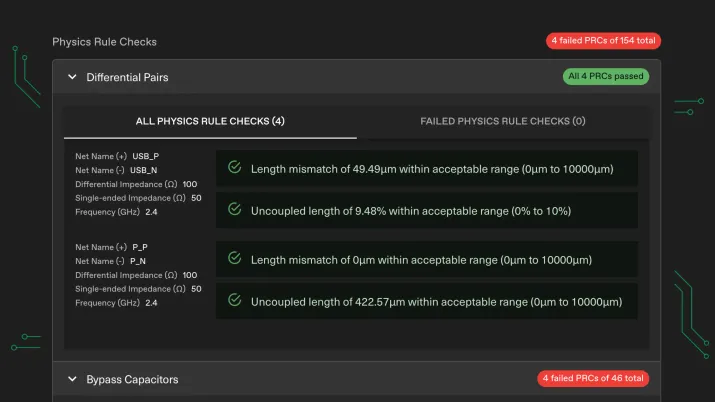
Quilter positions its approach as reinforcement learning trained on physics and manufacturing constraints, with checks like length matching and impedance control enforced during generation rather than as late-stage cleanup. - Export back to native CAD for final checks and release
The “last mile” still lives in your CAD environment. The difference is how much time you spend getting to a viable candidate, and how much cleanup is required after the candidate exists.
This is the practical way to think about it:
- Manual flow: skilled human produces one main candidate, then iterates through fixes and reviews.
- Quilter flow: AI generates multiple candidates quickly, physics checks run during generation, and a human picks and polishes the best option.
That parallelism is not cosmetic. It changes how many viable options you can evaluate before a program commits.
What results can you expect? (With real benchmarks)
Below is benchmark data published by Quilter that compares routing time across three representative board classes using consistent constraints. In the original dataset, Quilter is compared against common manual-tool workflows; for the “manual” column here, we use the traditional CAD routing baseline from the same benchmark (Altium Designer) as a representative manual flow.
The three sample boards
To make the table relatable, here’s what each board class represents:
- 2-layer MCU board: a small microcontroller design with USB full-speed signals and standard passives. Think “control board” or “simple embedded board.”
- 4-layer mixed-signal with RF keepouts: a board mixing switching power, analog, and an RF module where keepouts and placement decisions matter.
- 8-layer high-speed + RF: the kind of board where controlled impedance, memory interfaces, and RF coexist and routing becomes a real constraint puzzle.
Benchmark table: Quilter vs. manual routing time (converted to hours)
Board Type
Manual Time (Altium)
Quilter Time
Hours Saved
Efficiency Gain (%)
2-layer MCU board
1.08 hrs
0.30 hrs
0.78
72%
4-layer mixed-signal with RF keepouts
3.50 hrs
0.90 hrs
2.60
74%
8-layer DDR + PCIe + 2.4 GHz RF
14.50 hrs
3.80 hrs
10.70
74%
Where the savings come from (not just “faster routing”)
In the same benchmark set, Quilter also reported materially fewer manual cleanup actions and fewer vias (as a proxy for topology efficiency) across the tests, which matters because time-to-route is rarely the only time sink.
What about “time to first manufacturable candidate” in real programs?
Routing time is a clean benchmark target because it is measurable and repeatable. But program teams care about when a manufacturable candidate exists.
In Quilter’s comparison framing across tools, they report time to the first manufacturable candidate in the ~1–4 hour range (by board class) for Quilter, versus ~1–3 days for traditional workflows in several common tools.
That should not be read as a universal promise for every project, but it is a useful directional indicator for how much calendar compression is possible when generation and validation move earlier.
A large-scale example: “Project Speedrun”
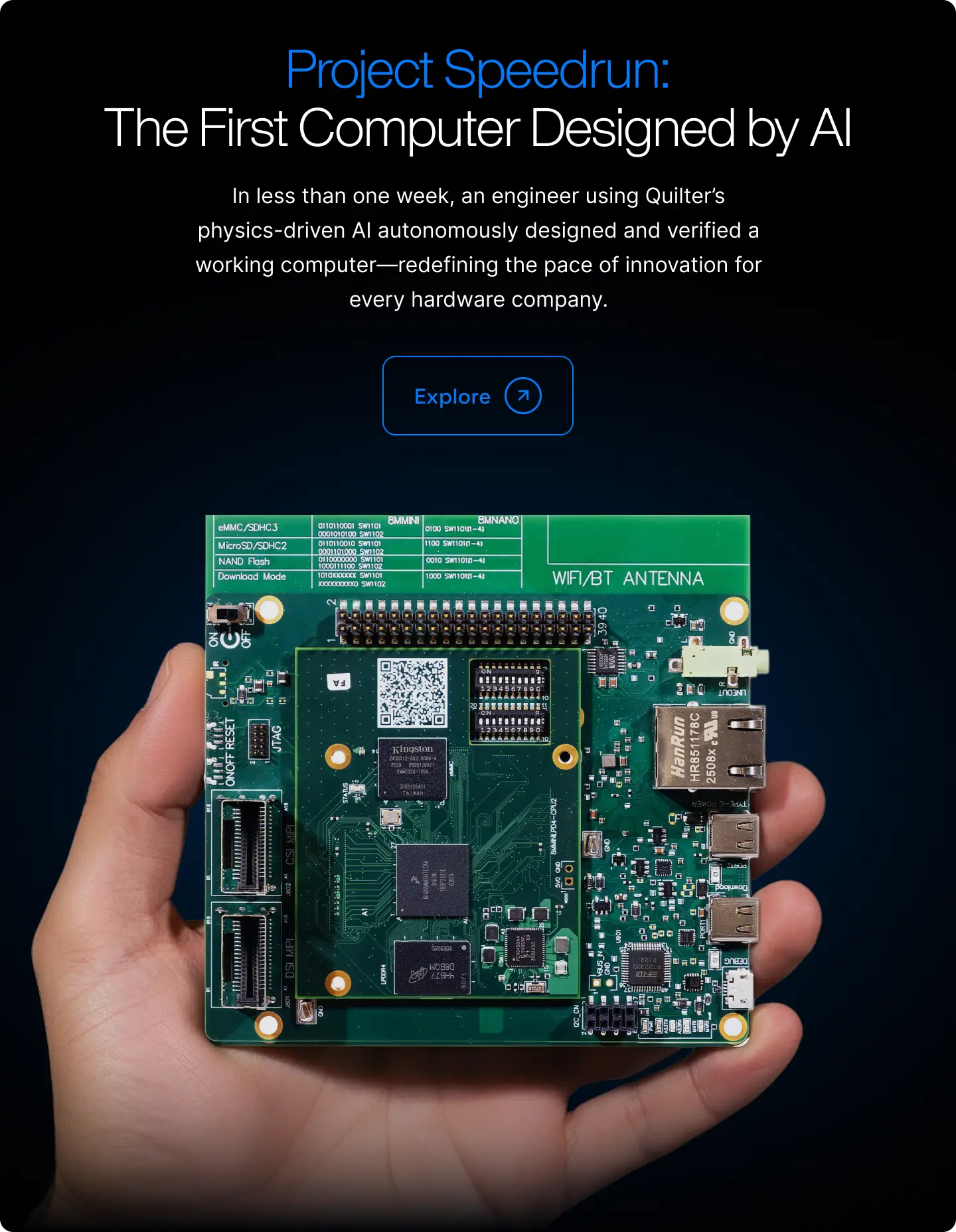
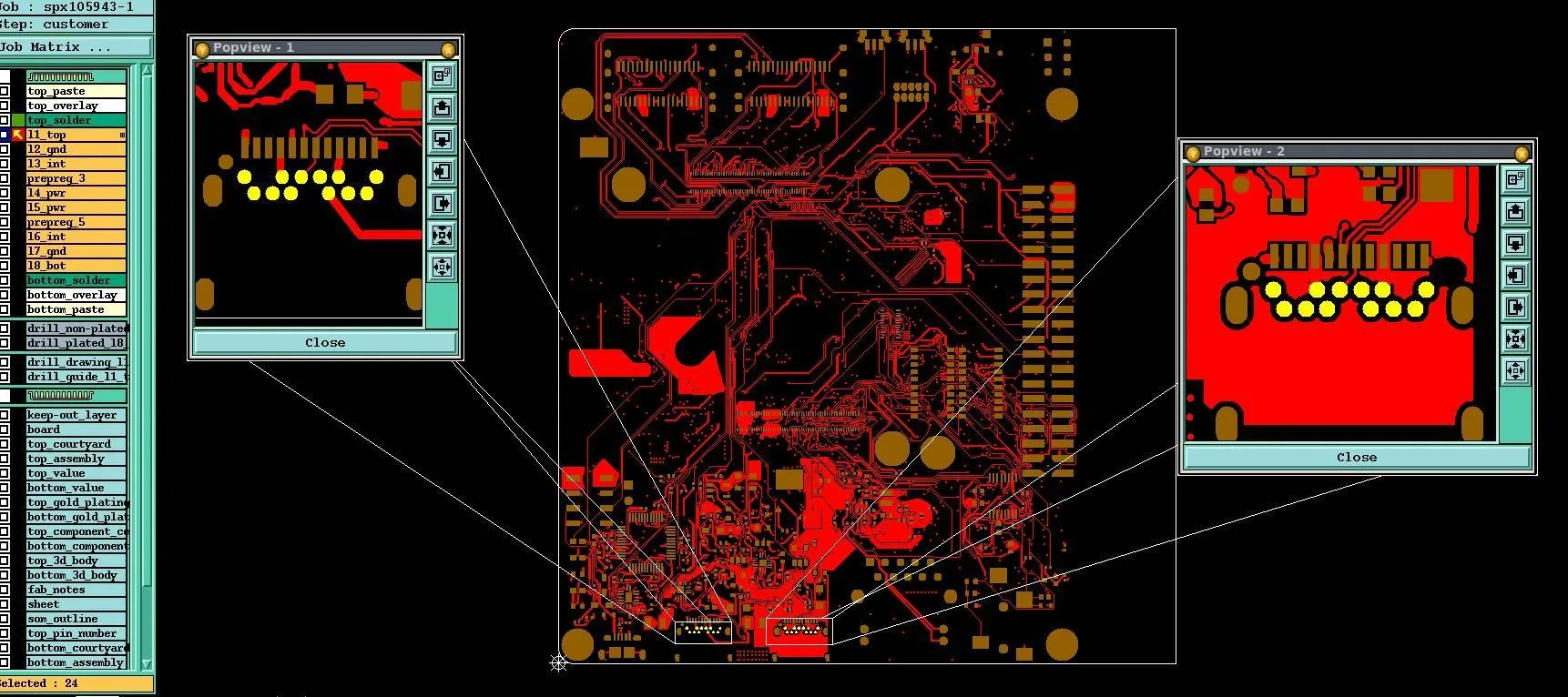
Quilter’s Project Speedrun write-up provides a different kind of datapoint: it cites 428 hours of manual PCB design work versus 38.5 hours of human engineering time in their AI-assisted process on the project.
That is a specific project context, not a generic board class benchmark, but it helps anchor the idea that gains can be measured at program scale, not only in routing micro-benchmarks.
Here's why these efficiency gains matter for your team
The obvious benefit is speed. The bigger benefit is what speed unlocks.
1) More iteration cycles before you freeze
If you can generate viable layout candidates faster, you can run more experiments before EVT, DVT, or tape-out gates. This aligns with Quilter’s “Hardware-Rich Development” framing, where fast iteration is the strategic advantage.
2) Engineering bandwidth moves to higher-value work
When layout is no longer a multi-week drain, engineers can spend more time on:
- signal and power integrity tradeoffs
- system architecture and integration
- firmware and test bring-up
- manufacturing readiness and risk reduction
This is especially relevant in teams where the PCB designer is also the electrical engineer. In that scenario, “layout time” is not just a layout cost. It is the cost of delaying everything else.
3) Less rework and fewer late surprises
Benchmarks that show fewer manual adjustments and better topology proxies (like lower via count) matter because late changes are where risk compounds.
The best case is not only “we routed faster.” It is “we discovered the routing and placement choices earlier, while changes were still cheap.”
How can you try Quilter’s efficiency for yourself?
If your team is evaluating PCB automation tools or trying to answer “what is the most efficient PCB layout software,” the fastest way to decide is to run your own benchmark with your constraints.
Start here:
- Explore Quilter’s product workflow and how it returns native CAD files.
- Use the Get Started path to request a consultation or upload a project for evaluation.
A practical way to benchmark:
- pick one board that is currently on your critical path
- define constraints cleanly (stackup, impedance, diff pairs, keepouts)
- compare time to a candidate you would actually export, review, and release
- track cleanup effort, not just “routing finished”



.webp)