







Read the Full Series
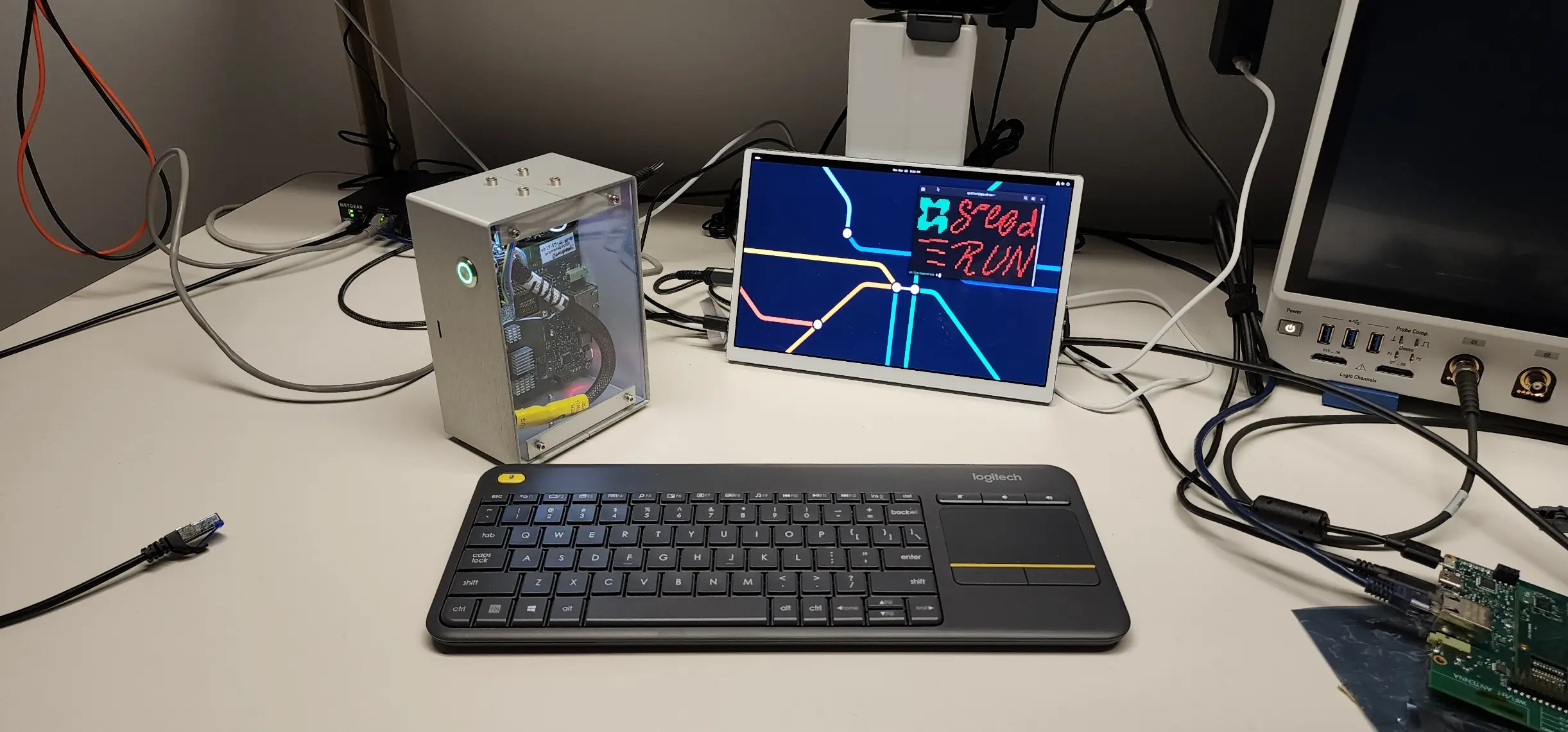
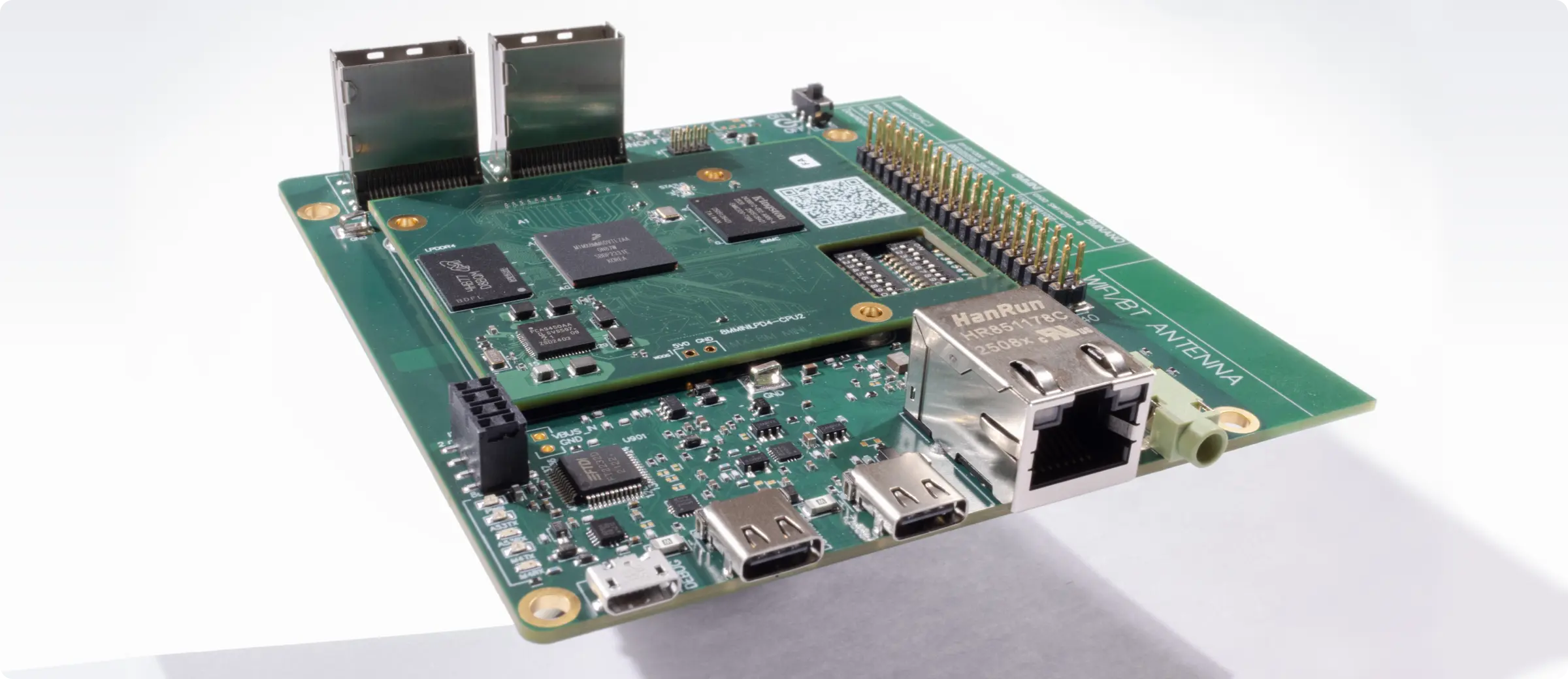
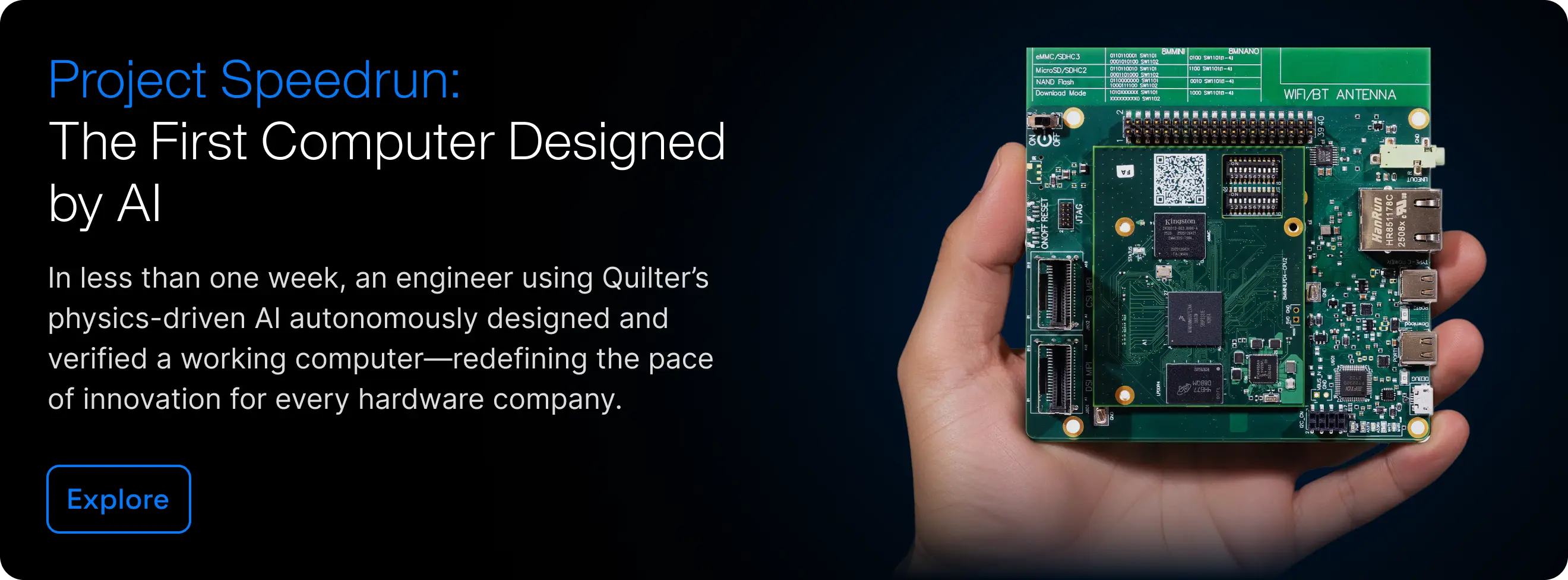
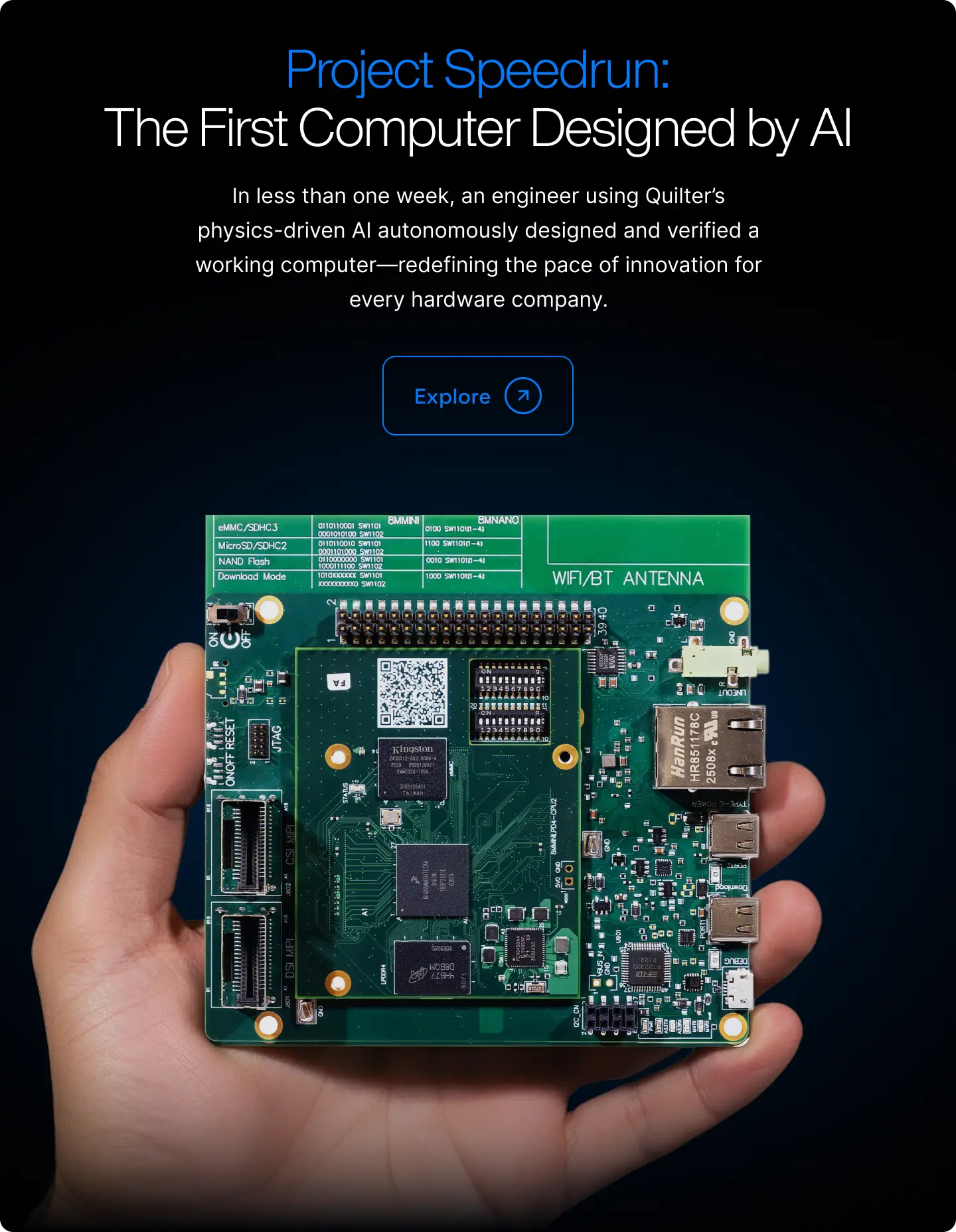
This article is one part of a walkthrough detailing how we recreated an NXP i.MX 8M Mini–based computer using Quilter’s physics-driven layout automation.
Manual PCB layout is still one of the slowest steps in hardware development in 2026. Schematic capture can move quickly, parts can be sourced faster, and fabrication lead times keep improving, but the physical design phase still tends to bottleneck teams when requirements shift, schedules compress, or board complexity climbs.
That mismatch is why AI-first PCB design platforms are getting real attention. Not “autorouting with a new label,” but tools that attempt to automate meaningful chunks of the workflow: turning requirements into a usable schematic, placing critical components intelligently, routing with fewer iterations, and preserving intent when you need to change something late.
This post ranks three of the most discussed AI-first approaches: Quilter, JITX, and Celus, using transparent criteria tied to what engineers actually mean when they say “automated circuit board layout.” You will get (1) a fast comparison table, (2) a deeper look at how each workflow really works, and (3) a practical decision guide based on team type and project goals.
What Makes a PCB Design Platform Truly Automated?
When someone searches for “ranking of automated circuit board design platforms,” the hardest part is that “automation” can mean four very different things. A fair ranking has to separate them.
Here are the four core automation features used in this comparison:
- Schematic generation
The system can translate requirements, functional blocks, or code into a schematic-level design (or an equivalent netlist representation) with correct connectivity and reusable structure. - AI-powered component placement
The platform meaningfully automates placement decisions, especially around constraints and board-level intent (connectors, bypassing strategy, high-speed topology, keep-outs, mechanical constraints). - Automated routing
The system can route the board to completion (or near-completion) with constraint awareness, not just “some traces connected,” and ideally with fewer manual clean-up cycles. - Design as code
The platform supports programmable, parameterized design where intent is expressed in a higher-level form, enabling reuse and fast change propagation.
These criteria map to the real tradeoffs teams face. Some organizations want to automate early design definition and reuse (schematic and architecture). Others desperately need to remove the physical layout bottleneck so boards hit the bench faster. The “best” platform depends on which stage is slowing you down.
How Do Quilter, JITX, and Celus Stack Up on Key Automation Features?
Below is the summary table. The scoring is 1 to 5 stars based on how completely each platform addresses the feature as part of its core product offering, using publicly described capabilities from each vendor.
Feature
Quilter
JITX
Celus
Schematic Generation
★★★★☆
★★★★☆
★★★★★
AI-Powered Component Placement
★★★★★
★★★☆☆
★★★★☆
Automated Routing
★★★★★
★★☆☆☆
★★★☆☆
Design as Code
★★☆☆☆
★★★★★
★★★☆☆
Overall 2026 ranking for “automated circuit board layout” (layout-first interpretation):
- Quilter
- Celus
- JITX
Why this ordering? Because if your search intent is truly “automated circuit board layout,” the deciding factor is how far the platform goes on placement plus routing to a completed PCB. Quilter positions itself around physics-driven automation that generates complete PCB layouts and multiple candidates quickly. Celus is strongest earlier in the flow with automated component search and schematic generation and then integrates downstream. JITX is the most mature “design as code” approach, but it often hands off to traditional CAD for final placement and routing depending on workflow.
Important nuance: This is not a “winner takes all” story. JITX can be the best choice for teams optimizing for reuse, parameterization, and systematic change propagation. Celus can be the best choice for front-end design acceleration and block-based architecture-to-schematic workflows. Quilter can be the best choice when the constraint-heavy physical layout phase is the limiting factor.
Schema markup for the comparison table (JSON-LD)
<script type="application/ld+json">
{
"@context": "https://schema.org",
"@type": "ItemList",
"name": "2026 Ranking of AI-First PCB Design Platforms",
"description": "A criteria-driven comparison of Quilter, JITX, and Celus across schematic generation, AI placement, automated routing, and design-as-code.",
"itemListOrder": "https://schema.org/ItemListOrderDescending",
"itemListElement": [
{
"@type": "ListItem",
"position": 1,
"name": "Quilter",
"item": {
"@type": "SoftwareApplication",
"name": "Quilter",
"applicationCategory": "PCB Design",
"operatingSystem": "Web",
"review": {
"@type": "Review",
"name": "2026 automation feature score",
"reviewRating": { "@type": "Rating", "ratingValue": "4.0", "bestRating": "5", "worstRating": "1" },
"author": { "@type": "Organization", "name": "Independent criteria-based review" }
},
"additionalProperty": [
{ "@type": "PropertyValue", "name": "Schematic generation", "value": "4/5" },
{ "@type": "PropertyValue", "name": "AI placement", "value": "5/5" },
{ "@type": "PropertyValue", "name": "Automated routing", "value": "5/5" },
{ "@type": "PropertyValue", "name": "Design as code", "value": "2/5" }
]
}
},
{
"@type": "ListItem",
"position": 2,
"name": "Celus",
"item": {
"@type": "SoftwareApplication",
"name": "CELUS Design Platform",
"applicationCategory": "Electronic design automation",
"operatingSystem": "Web",
"review": {
"@type": "Review",
"name": "2026 automation feature score",
"reviewRating": { "@type": "Rating", "ratingValue": "3.8", "bestRating": "5", "worstRating": "1" },
"author": { "@type": "Organization", "name": "Independent criteria-based review" }
},
"additionalProperty": [
{ "@type": "PropertyValue", "name": "Schematic generation", "value": "5/5" },
{ "@type": "PropertyValue", "name": "AI placement", "value": "4/5" },
{ "@type": "PropertyValue", "name": "Automated routing", "value": "3/5" },
{ "@type": "PropertyValue", "name": "Design as code", "value": "3/5" }
]
}
},
{
"@type": "ListItem",
"position": 3,
"name": "JITX",
"item": {
"@type": "SoftwareApplication",
"name": "JITX",
"applicationCategory": "Software-defined electronics",
"operatingSystem": "Windows, macOS, Linux",
"review": {
"@type": "Review",
"name": "2026 automation feature score",
"reviewRating": { "@type": "Rating", "ratingValue": "3.5", "bestRating": "5", "worstRating": "1" },
"author": { "@type": "Organization", "name": "Independent criteria-based review" }
},
"additionalProperty": [
{ "@type": "PropertyValue", "name": "Schematic generation", "value": "4/5" },
{ "@type": "PropertyValue", "name": "AI placement", "value": "3/5" },
{ "@type": "PropertyValue", "name": "Automated routing", "value": "2/5" },
{ "@type": "PropertyValue", "name": "Design as code", "value": "5/5" }
]
}
}
]
}
</script>
Here's How Each Platform Approaches Schematic Generation and Beyond
The table is useful, but it hides the most important truth: these platforms automate different parts of the workflow on purpose. Understanding the “shape” of each workflow is how you avoid buying the right tool for the wrong bottleneck.
Quilter: physics-driven automated layout that fits existing CAD workflows
Quilter’s core promise is straightforward: generate complete PCB layouts quickly, and do it in a way that is physics-aware rather than just rule-aware. Quilter describes itself as physics-driven AI for electronics design and emphasizes generating multiple layout candidates in parallel, then evaluating them against constraints.
The practical implication for teams is that Quilter is oriented around automating the physical design step: placement, routing, and layout completion, while still letting engineers stay in their existing toolchain. Quilter highlights importing projects from major EDA ecosystems and returning files in the same format for handoff and final checks inside the CAD you already use.
Where does schematic generation fit? Quilter is less about inventing your circuit from scratch and more about accelerating the path from an existing design (or at least an existing netlist and constraints) to a finished board. For teams that already have schematics and are hitting layout capacity limits, this is often exactly the point.
JITX: design as code, with schematics and layout generated from intent
JITX is the most explicit “design as code” platform in this comparison. Their positioning centers on expressing requirements as code and generating schematics, layouts, and libraries, with changes propagating quickly through the design. That is a fundamentally different automation philosophy than “start from a schematic and speed up layout.”
In practice, JITX shines when you care about reuse, parameterization, and systematic change. If you build families of boards, variants across programs, or designs that evolve constantly, being able to encode intent and regenerate outputs can be a massive advantage.
However, JITX also acknowledges a common real-world pattern: export to mainstream CAD environments for downstream steps. In their FAQ, JITX states it exports to CAD (including KiCad and Altium) and describes workflows where users rely on existing CAD tools to finalize placement, routing, and fabrication output. That does not make JITX “less automated.” It simply means its automation is concentrated earlier and higher in the abstraction stack.
Celus: block-based requirements to schematic and BOM, integrated into EDA flows
Celus positions itself around accelerating front-end circuit design: automating component search and schematic generation while capturing requirements. The Celus approach is typically described as block-based or functional-block driven, where you structure the design at the architecture level, generate outputs (including BOM and EDA files), and then move into downstream implementation.
Two sources make the intent clear. Celus documentation describes an interactive “Design Canvas” for planning and connecting functional blocks and producing EDA output files. Siemens’ announcement about integrating with Celus also frames Celus as automating routine tasks like schematic generation and component selection while integrating with Siemens EDA tools.
So where does Celus sit in the ranking? If your definition of “automated circuit board design” includes automated component selection and schematic creation as the primary win, Celus can be a top pick. If your definition is “complete automated routing and layout,” Celus is typically part of a broader toolchain rather than the last-mile layout engine.
What Results Can You Expect from Each Platform?
Most comparisons stop at features. Engineers need outcomes: speed, quality confidence, learning curve, and how the tool behaves under real constraints.
Quilter: faster layout cycles and more design candidates, with a layout-first learning curve
If your current pain is that layout takes weeks and blocks bring-up, Quilter’s value proposition is direct: generate many candidate layouts in hours and use physics-driven evaluation to increase confidence before you commit. In addition, Quilter publicly emphasizes compatibility with existing CAD workflows, which matters because most teams cannot afford a rip-and-replace transition.
A useful mental model: Quilter is trying to turn layout into a high-throughput step where engineers spend time selecting, constraining, and reviewing rather than manually routing everything.
JITX: fewer “reinvention cycles,” higher reuse, and strong change propagation, with a code-first investment
JITX’s outcomes are best when you treat hardware as a programmable system. You should expect benefits like: reuse across projects, faster iteration under requirements churn, and an easier time generating consistent outputs across variants.
The tradeoff is obvious and acceptable for the right team: you are investing in a code-centric workflow and likely still interacting with traditional EDA tools for final implementation steps depending on your process. That can still be a huge win, especially in organizations where schematic drafting and repeated design reuse are the biggest time sinks.
Celus: accelerated front-end design and part selection, with downstream implementation depending on your EDA stack
Celus is strongest when the cost of design is dominated by “figuring out what to build” and “finding the right parts,” then converting that into structured design artifacts. Celus explicitly highlights automating component search and schematic generation. Their canvas workflow also emphasizes structured architecture and EDA output generation.
With the Siemens integration narrative, you should expect Celus to fit naturally into flows where Siemens EDA tools are already present or under evaluation, though Celus can still be valuable as a front-end accelerator more broadly.
Let's Talk About Choosing the Right Platform for Your Workflow
If you only remember one thing from this ranking, make it this: choose the platform that automates your bottleneck, not the one with the most impressive demo.
Here is a practical decision checklist you can use in a 30-minute evaluation meeting:
- Is your bottleneck physical layout and routing, not the schematic?
If yes, prioritize a layout-first platform. Quilter is built around physics-driven automated layout and fast generation of multiple candidates, while still fitting existing CAD workflows. Start with Quilter’s Product Overview and Workflow to evaluate how it would fit your constraint and review process. - Do you need systematic reuse and variant generation across many designs?
If yes, a design-as-code approach can pay off quickly. JITX is designed for expressing requirements as code and generating outputs with rapid change propagation. - Are you spending too much time on early design definition, component selection, and schematic creation?
If yes, Celus is often a strong fit. It focuses on automating component search and schematic generation and supports block-based architecture workflows that produce EDA outputs.
A simple “best fit” mapping
- “I need fast, reliable layout for complex boards and I cannot add weeks to the schedule.”
Quilter, because the platform is explicitly centered on fully automated PCB layout with physics-driven evaluation, plus compatibility with existing CAD handoff. - “I want hardware to behave more like software: reusable, parameterized, and easy to update across variants.”
JITX, because design as code is the center of gravity. - “I want to go from requirements to schematic and BOM faster, with less manual component hunting.”
Celus, because that is its core promise and product framing.
Where Quilter is the practical choice in 2026
In many teams, the schematic is not the slow part. The slow part is getting a board that routes cleanly, respects constraints, and is ready for manufacturing review without burning weeks of layout labor. Quilter’s positioning is directly aligned to that reality: automate the layout phase, generate candidates quickly, and keep engineers in control of constraints and review while staying compatible with existing CAD workflows.
Ready to see how Quilter can automate your next board layout? Request a demo or start with the free option here: Quilter Free AI PCB Design.



.webp)