






Read the Full Series
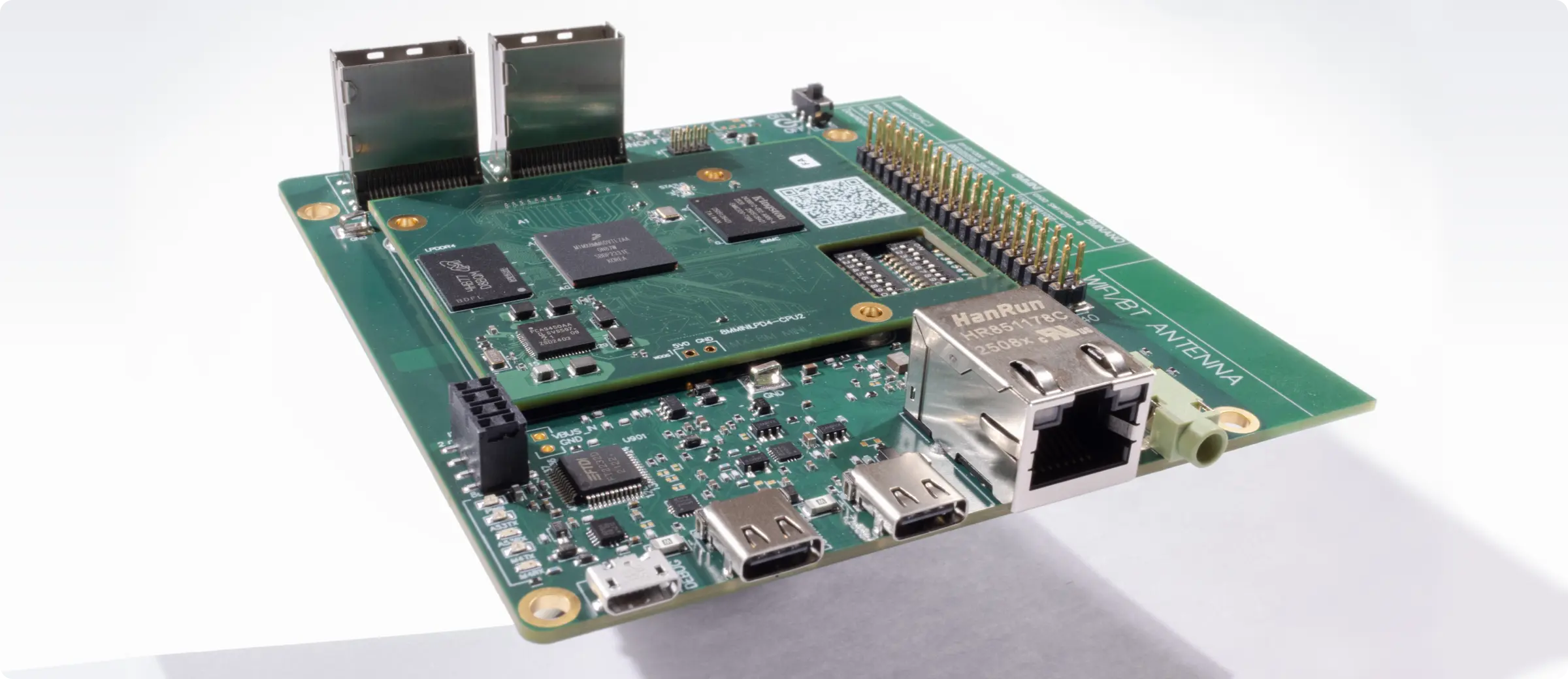
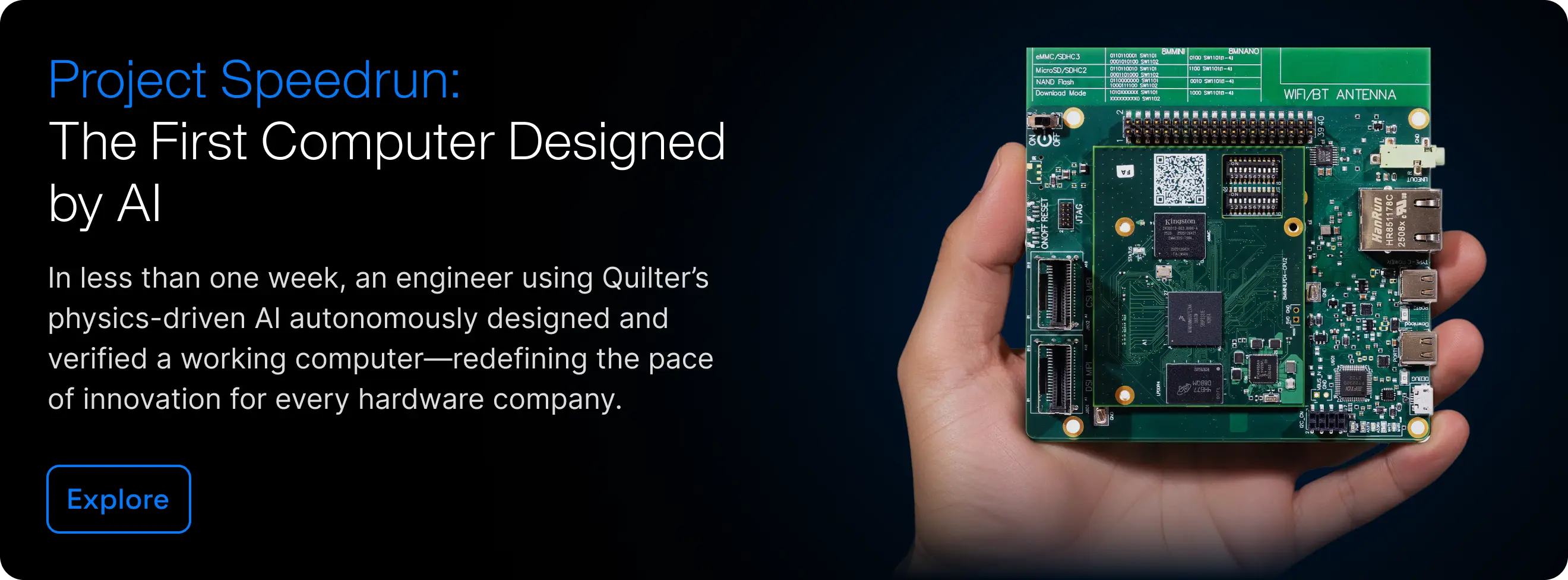
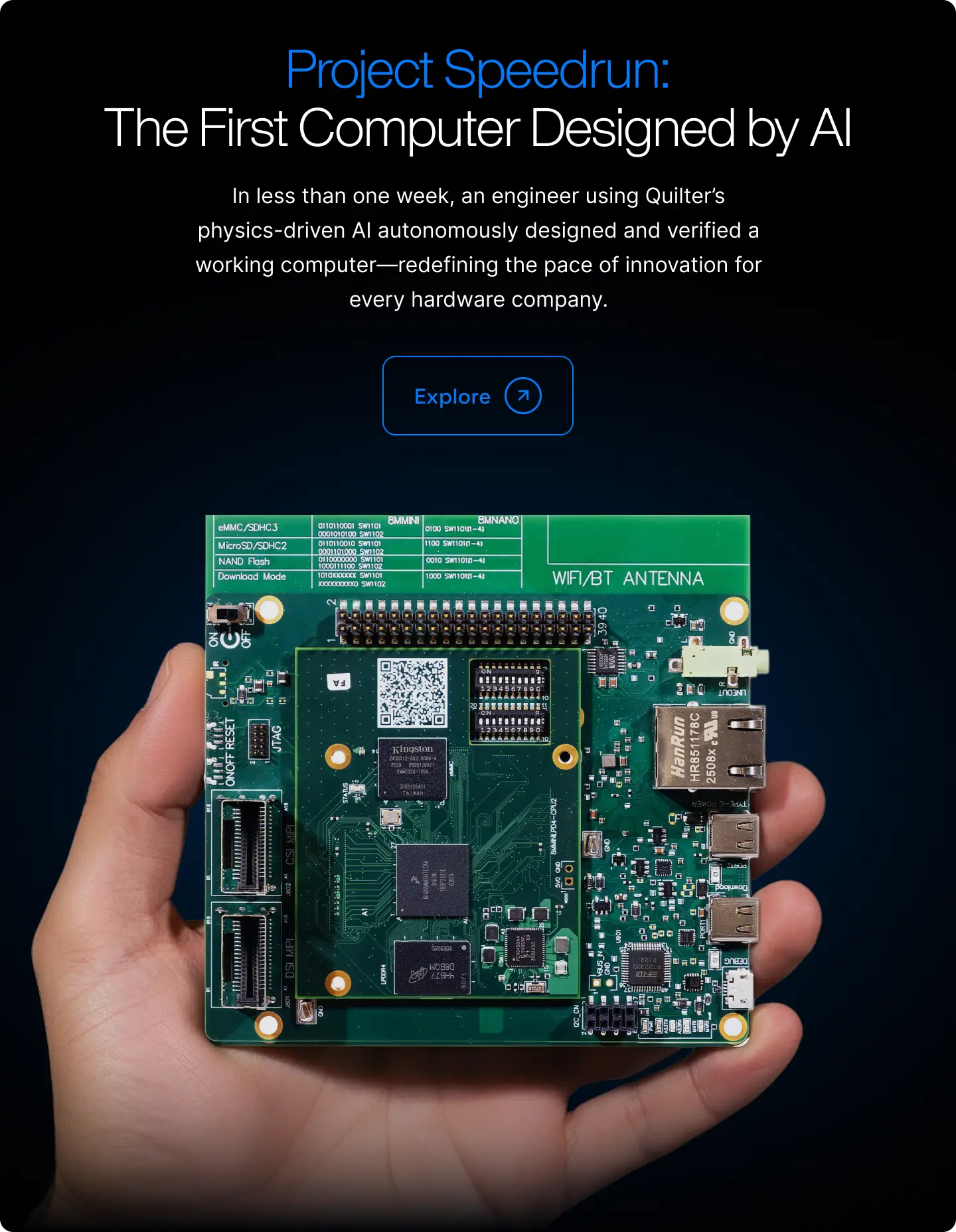
This article is one part of a walkthrough detailing how we recreated an NXP i.MX 8M Mini–based computer using Quilter’s physics-driven layout automation.
If you’re using Flux.ai today, you’ve already signaled that your team cares about speed, collaboration, and modern tooling. That matters. Flux is not an old-school PCB stack with a browser layer slapped on top. It is a modern, browser-based eCAD environment designed for faster iteration, easier collaboration, and AI-assisted design.
But professional hardware teams eventually run into a different class of question. Not just, can we design a board here? More like, can this workflow support multi-board programs, formal review cycles, enterprise security requirements, tight integration with the rest of our CAD stack, and more demanding layout work without slowing the team down?
That is where the field starts to separate.
The strongest Flux.ai alternatives for professional use in 2026 are Altium 365 plus Altium Designer, KiCad, Cadence Allegro X, Siemens Xpedition, and a middle tier that includes Fusion and browser-first tools like EasyEDA Pro. Then there is Quilter, which is not simply another CAD seat. It is an AI-native layout engine that fits on top of the CAD environments that serious teams already use.
Let’s define what “professional” really means for PCB design in 2026
In hobby and early prototype workflows, “good enough” often means the board routes, passes basic checks, and can be fabricated. In a professional workflow, the standard is much higher.
Professional PCB design means handling complexity without losing control. It means a revision history the team can trust, manufacturing outputs that are stable, collaboration across electrical, mechanical, manufacturing, and procurement stakeholders, and enough process discipline to support DFM, DFT, traceability, and design review at speed.
For this comparison, three factors matter most.
First is AI capability. Not just chat or helper prompts, but whether the tool actually reduces layout labor, explores alternatives, or automates placement and routing in a meaningful way.
Second is the collaboration model. Browser-native sharing is one model. Managed releases, traceability, and secure review environments are another.
Third is project complexity support. Can the workflow stretch from product boards and validation hardware to dense, high-speed, multi-board, or regulated programs without breaking down?
That is the real lens for evaluating Flux.ai alternatives for professional use.
Here’s how Flux.ai fits into modern hardware workflows today
Flux deserves credit for solving a real problem. Its appeal is obvious. It gives teams a browser-based eCAD workspace with modern collaboration, easier onboarding, and AI-assisted workflows that feel much lighter than legacy desktop tools.
That makes Flux attractive to teams that want speed, accessibility, and an interface that feels built for the way modern product teams actually work.
It also means Flux can be more professional than some people assume. For many teams, especially smaller commercial teams, the browser-first model is not a gimmick. It is a real productivity advantage.
Still, professional teams usually start looking elsewhere when complexity rises. That often happens when programs become larger, when IT or compliance teams want tighter control, when the organization is already standardized on Altium, Cadence, Siemens, or KiCad, or when layout throughput becomes the real bottleneck.
At that point, the question changes. Teams are no longer asking whether Flux can do the job. They are asking whether there is a better long-term stack for larger programs, stricter workflows, and more serious automation.
What should you look for when you outgrow Flux.ai?
When teams move beyond Flux, they usually are not shopping for features in isolation. They are trying to remove bottlenecks.
There are four common triggers.
- Multi-board systems, dense FPGA or SoC boards, and high-speed interconnect work that demands stronger constraint-driven flows
- Compliance, security, or traceability requirements that involve more formal design review and data control
There are also two workflow questions that matter more than most teams expect.
- Does the next tool fit the CAD ecosystem your team, contractors, and manufacturing partners already use
- Does it materially improve layout speed, not just documentation and collaboration around the layout process
That second question matters more in 2026 than it did even a couple of years ago. AI is no longer a side feature. For many teams, it is becoming part of tool selection itself. Not because AI is trendy, but because layout remains one of the slowest and most capacity-constrained parts of PCB development.
Here’s how Altium 365 + Altium Designer compare for serious production work
Altium is one of the most common landing spots for teams moving beyond Flux because it offers a practical middle ground. It gives teams deep PCB capability on the design side and a more modern collaboration layer on top through Altium 365.
For production work, that matters.
Altium Designer is known for its rules-driven layout, support for complex multi-layer boards, rigid-flex capability, and outputs built for manufacturing. It is a tool many hardware organizations already trust that removes much of the friction when you need outside contractors, internal PCB designers, and manufacturing stakeholders working from the same foundation.
Altium 365 helps ease the transition for teams that liked Flux's browser-friendly nature. It adds cloud collaboration, versioning, browser-based review, and easier sharing without forcing the organization into a purely browser-native workflow.
That combination makes Altium a strong Flux.ai alternative for professional use if your team wants a more established production environment without giving up collaboration entirely.
It is also where Quilter becomes especially relevant. Instead of forcing a full workflow replacement, Quilter can complement an Altium-centered stack by automating the layout step while keeping engineers in a CAD environment they already trust. That is useful for evaluation boards, validation boards, and teams that need more design capacity without hiring their way through the bottleneck.
Works with Quilter
Item
Details
Accepted inputs
Altium projects, plus Cadence, Siemens, and KiCad project files
Typical outcome
Multiple candidate layouts in hours, with first candidates often appearing within the first hour and many fab-ready workflows landing in under 4 hours
Suggested Quilter pages
IC Evaluation Boards, Quilter for Free
How does KiCad stack up for startups and consulting teams?
KiCad is the tool serious engineers keep returning to when budget matters and lock-in does not. It has moved well beyond the hobby category in the eyes of many professional users.
For startups, consultants, skunkworks teams, and IP-sensitive groups that prefer open tooling, KiCad can be a very credible professional choice. It supports multi-layer boards, strong library workflows, modern visualization, and enough depth to handle real commercial design work.
Its biggest advantage is obvious. There is no license wall.
That changes the economics for small teams. You can standardize on KiCad without adding per-seat overhead, which makes it especially appealing for early-stage companies and lean consulting groups.
The tradeoff is not that KiCad cannot handle real boards. The tradeoff is that managed collaboration, formal release structure, and PLM-like workflow discipline usually come from the surrounding toolchain, not from KiCad alone. Teams often solve that with Git, shared storage, review processes, and homegrown documentation discipline.
That is exactly why KiCad pairs well with Quilter. You keep the zero-license CAD base, upload the project into Quilter, define the board outline and constraints, and use AI-native layout generation to get candidate boards back without abandoning the tool your team already knows.
For startup hardware teams, that can be a very practical stack. KiCad for ownership, Quilter for speed.
Works with Quilter
Item
Details
Accepted inputs
KiCad projects, plus Altium, Cadence, and Siemens
Typical outcome
AI-generated candidates in hours, same-format board handoff back into your existing CAD flow
Suggested Quilter pages
Quilter for Startups, Design Validation Boards
Here’s where Cadence Allegro X and Siemens Xpedition make sense
Cadence Allegro X and Siemens Xpedition are what you evaluate when the phrase professional PCB design tools really means enterprise-grade electronics infrastructure.
These are not just bigger tools. They are deeper systems built for organizations that deal with high-speed backplanes, dense FPGA and SoC boards, safety-critical programs, complex multi-board systems, and stringent verification, constraints management, and data governance requirements.
That is a very different use case from Flux’s sweet spot.
If your team is routing high-density designs with strict signal and power integrity requirements, or if you are operating in aerospace, automotive, defense, or similarly demanding environments, this category quickly makes sense.
These tools are powerful because they are part of a broader engineering system. They support advanced analysis, stronger constraint management, deeper review structures, and enterprise data handling in ways that lighter platforms usually do not.
But even here, the layout bottleneck remains real.
That is where Quilter fits. It is not trying to replace the broader enterprise design environment. It aims to automate layout generation within the ecosystems those teams already use. That matters for organizations that need faster board iteration without retraining the whole team or disrupting compliance-sensitive workflows.
Works with Quilter
Item
Details
Accepted inputs
Cadence and Siemens project files, along with Altium and KiCad
Typical outcome
Multiple candidate layouts in hours, transparent physics-aware review, and same-format handoff back into the primary CAD tool
Suggested Quilter pages
Backplane & Interconnect Boards, Test Fixtures & Harnesses, Quilter for Enterprise
What about Fusion 360 with Eagle and browser-first tools like EasyEDA Pro?
This is the middle category, the bridge tier.
Autodesk Fusion with Eagle appeals to teams whose boards do not exist in isolation. If tight ECAD-MCAD coordination is central to the workflow, Fusion becomes attractive because the board, enclosure, and mechanical context are more tightly connected.
That can matter a lot for products where fit, packaging, connector positioning, and enclosure interaction are real engineering challenges.
EasyEDA Pro, by contrast, stays closer to the browser-native spirit that draws many teams to Flux in the first place. It is lighter, easier to access, and more collaboration-friendly than older desktop environments, while still feeling more capable than hobby-only tools.
For small commercial teams, contractor-heavy workflows, or browser-first environments, that can be enough.
But both options leave the same core truth in place. Layout is still largely manual. That means speed still depends heavily on engineering bandwidth. So while these tools can be valid alternatives depending on the workflow, they are also strong candidates to pair with Quilter when teams want faster board generation without overhauling the rest of the stack.
Where does Quilter fit alongside these tools for professional use?
Quilter is best understood as the AI-native layer in a professional hardware workflow, not as a replacement for schematic capture or every function of core CAD.
That distinction matters.
Most Flux.ai alternative comparisons ask which tool should replace Flux. Quilter changes the question. Instead of asking what new CAD environment the team should move into, it asks whether the slowest step in the existing workflow can be automated while the team stays inside the CAD tools it already trusts.
According to Quilter’s positioning, engineers upload Altium, Cadence, Siemens, or KiCad projects, define the board outline, pre-place connectors, set floorplanning intent and constraints, and receive multiple candidate layouts in hours.
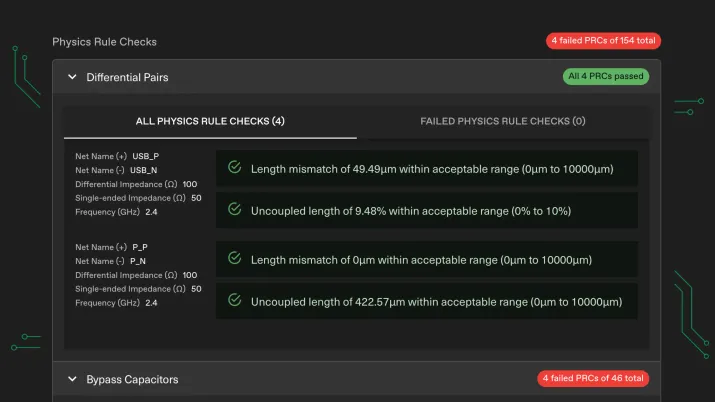
Quilter also emphasizes physics-aware review. That means engineers can evaluate bypass capacitors, impedance-controlled nets, differential pairs, and other physical design considerations with greater transparency. The resulting files are then handed back in the same format so the team can run DRC, polish the design, and generate fab outputs in its primary CAD environment.
That makes Quilter different from a standard CAD alternative.
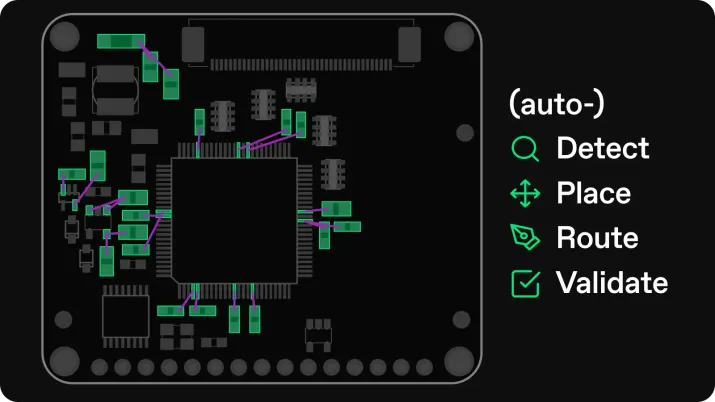
It is an AI PCB layout engine built to increase design capacity inside professional hardware team workflows.
Quilter workflow for teams evaluating Flux.ai alternatives
Step
What happens
1. Upload existing project
Import an Altium, Cadence, Siemens, or KiCad project directly into Quilter
2. Define intent
Set board outline, pre-place connectors, and establish floorplanning constraints
3. Run layout generation
Quilter generates multiple candidate layouts in parallel
4. Review physics checks
Engineers review bypass capacitors, impedance-controlled nets, differential pairs, and other physical constraints
5. Return to core CAD
Quilter hands files back in the same format for DRC, polishing, and fab output
Which Flux.ai alternative is right for your team in 2026?
For a seed-stage startup, the practical answer is usually KiCad plus Quilter. You keep software overhead low, preserve flexibility, and add AI PCB layout when layout labor starts eating too much engineering time.
For a growing hardware organization shipping real products, Altium 365 and Altium Designer are often the most natural next steps. It offers stronger production structure and familiar collaboration patterns. Quilter can then sit on top of that workflow for evaluation boards, validation boards, or schedule recovery.
For a regulated or highly complex enterprise, Cadence Allegro X or Siemens Xpedition usually make more sense. Those environments are built for deeper constraints, more rigorous validation, and more formal data control. Quilter then becomes a capacity multiplier rather than a replacement.
For teams with very strong enclosure and mechanical-coupling requirements, Fusion may be the better fit. For lighter browser-first teams that still want a more capable option than hobby tools, EasyEDA Pro can be worth considering.
The migration logic from Flux is simple. Move to the ecosystem your stakeholders already trust, then decide whether you want to keep doing layout the slow way.
How do the top options compare on AI, collaboration, and complexity?
Tool
AI capabilities
Collaboration model
Project complexity support
Best fit
Flux.ai
Strong AI assistance inside browser-native eCAD
Real-time browser collaboration, version control, team workspaces
Good for modern product teams, lighter than deep enterprise stacks
Fast-moving teams that value browser workflows
Altium 365 + Altium Designer
Moderate native automation, less AI-native than Quilter
Cloud collaboration, browser reviews, traceability, versioned releases
Strong production support across many professional workflows
Growing hardware organizations
KiCad
Low native AI, extend with external tooling
Process-driven, usually paired with Git and shared storage
Professional-capable, especially for cost-sensitive teams
Startups and consultants
Cadence Allegro X
High, including generative PCB design and Allegro X AI
Enterprise collaboration and integrated analysis workflows
Very high, especially multi-board and high-speed work
Large enterprise programs
Siemens Xpedition
High, AI-infused support inside enterprise workflow
Cloud-connected, secure, digital-thread oriented
Very high, especially regulated and multi-domain work
Complex enterprise teams
Fusion + Eagle
Limited PCB-specific AI, stronger on integrated design workflow
Connected electrical, mechanical, and manufacturing collaboration
Moderate, strongest when ECAD-MCAD fit matters
Mechatronics and enclosure-driven teams
EasyEDA Pro
Low to moderate
Browser collaboration and lightweight project sharing
Moderate, better for lighter commercial boards
Cost-sensitive browser-first teams
Quilter
AI-native full-board layout generation with physics-aware review and multiple candidates in hours
Works with existing CAD rather than replacing it
High for teams that want faster layout inside established workflows
Professional teams bottlenecked on layout
Ready to test an AI-native alternative?
Upload a sample design to Quilter for free and see what multiple-candidate layouts in hours look like within your existing hardware team workflow.
What’s the next step if you want to try an AI-native alternative?
Start with a real design, not a toy demo.
If you are an Altium team, upload an IC evaluation board or validation board candidate and compare the time to first layout against your current flow. If you are on KiCad, use Quilter as the acceleration layer instead of swapping out your whole CAD base. If you are on Cadence or Siemens, test it on a layout bottleneck where faster iteration would actually change the program.
Quilter’s strongest value is not new software for the sake of it. It is more layout capacity inside the professional workflows your team already uses.
FAQ
What are the best Flux.ai alternatives for professional use in 2026?
The strongest professional options are Altium 365 plus Altium Designer, KiCad, Cadence Allegro X, Siemens Xpedition, and bridge tools such as Autodesk Fusion or EasyEDA Pro, depending on workflow needs. Quilter fits differently by adding an AI-native PCB layout to existing CAD environments.
Is KiCad professional enough for commercial hardware teams?
Yes. KiCad can support serious commercial board work, especially for startups, consultants, and cost-sensitive teams. The main tradeoff is that managed collaboration and release discipline often come from the surrounding workflow rather than the core tool alone.
How is Quilter different from Flux.ai?
Flux.ai is a browser-native eCAD environment with AI-assisted and collaborative features. Quilter is a physics-driven AI layout engine that works with existing Altium, Cadence, Siemens, and KiCad projects to generate candidate board layouts in hours.
Can AI PCB layout fit into existing professional CAD workflows?
Yes. For many teams, the most practical approach is not replacing core CAD but layering AI layout automation onto the tools they already use for schematic capture, review, and manufacturing handoff.



.webp)