






Read the Full Series
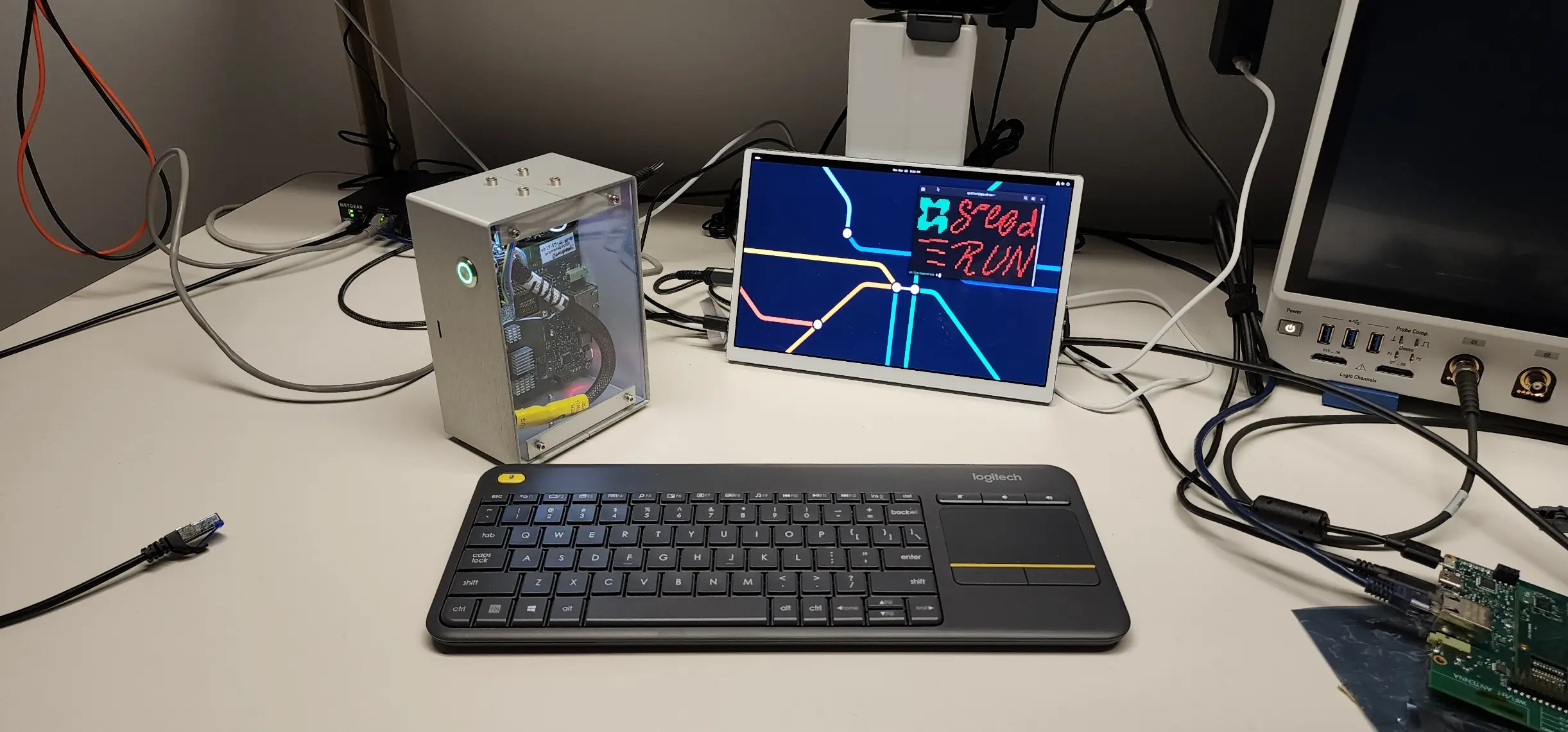
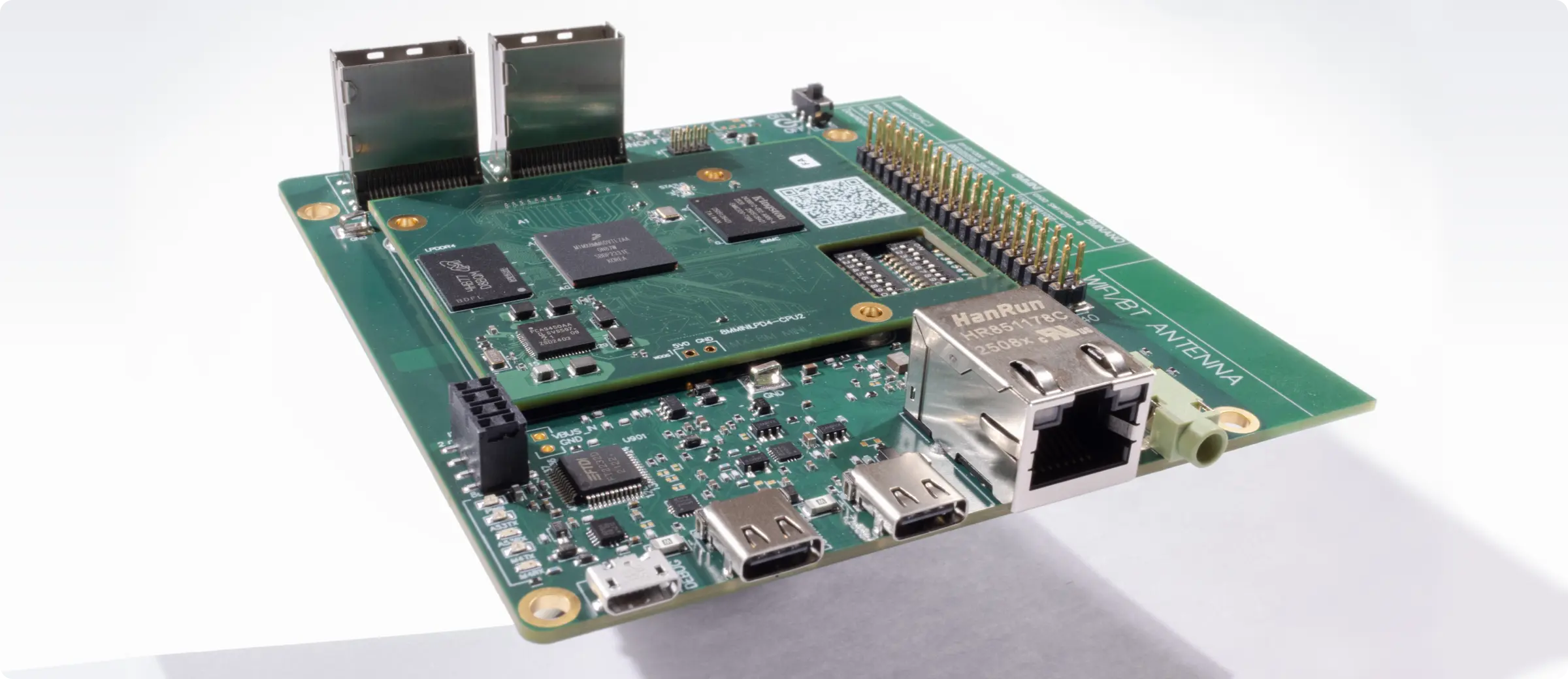
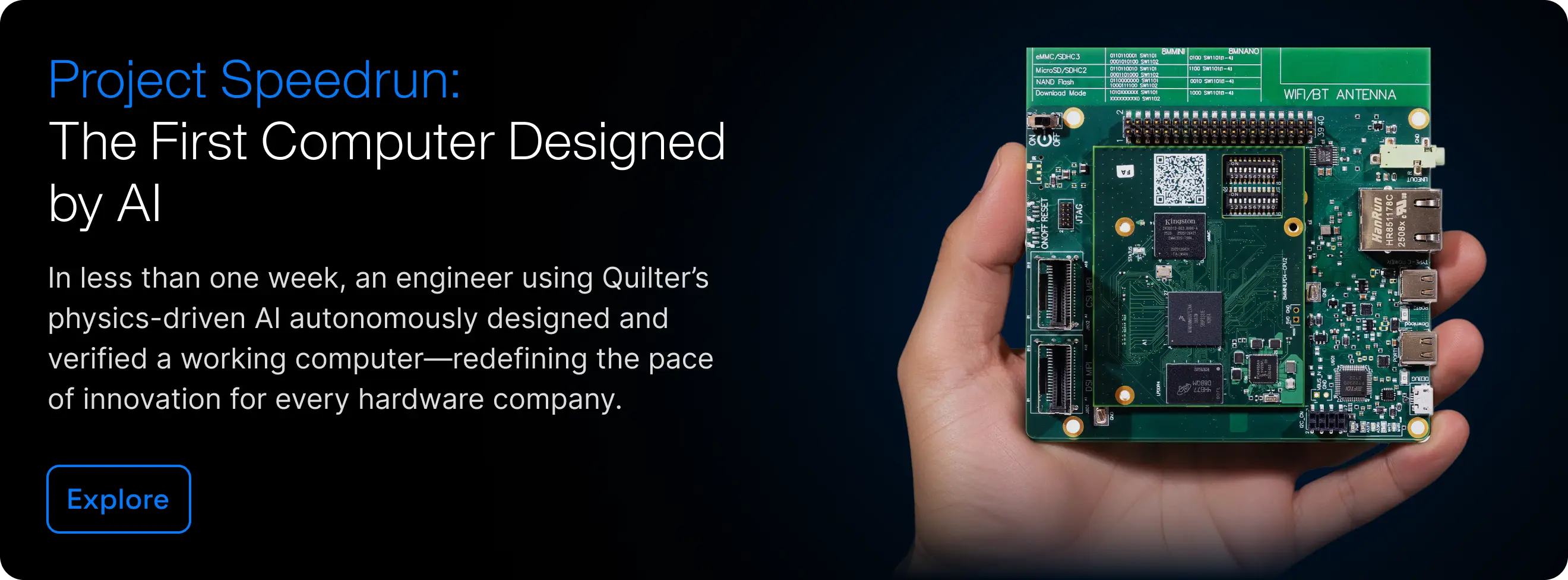
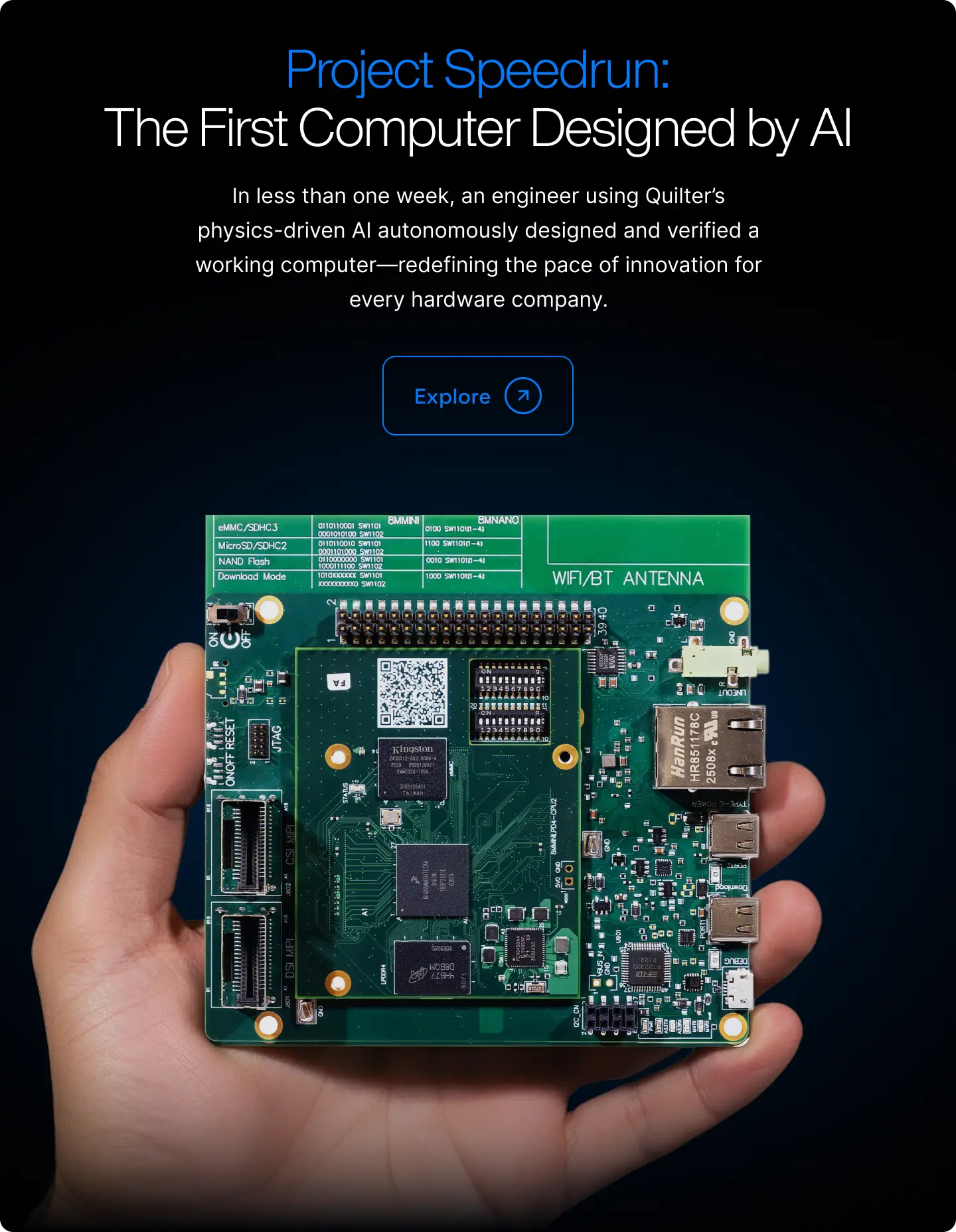
This article is one part of a walkthrough detailing how we recreated an NXP i.MX 8M Mini–based computer using Quilter’s physics-driven layout automation.
PCB errors are expensive, and catching them late can derail even the best hardware projects. For decades, SPICE simulation has been the safety net engineers rely on to validate circuit behavior before committing to fabrication. In 2026, that is still true. But it is no longer the whole story.
Boards have gotten denser, faster, and more constraint-heavy. A “working schematic” is not the same as a “buildable board,” especially once you factor in placement, return paths, impedance constraints, decoupling strategy, via transitions, and physical layout realities. That gap has created space for a new category: AI-powered design validation.
In this post, we’ll compare traditional SPICE-based simulation with AI-first validation, explain where each fits, and give you a practical framework for choosing the right PCB simulation tools for your next design. Along the way, we’ll highlight why physics-driven AI platforms like Quilter are being used to catch board-level issues earlier, without turning validation into a week-long manual setup exercise. (Quilter.ai)
Let's define what makes a great PCB simulation tool in 2026
In 2026, “PCB simulation tools” is an overloaded phrase. Some teams mean circuit simulation (SPICE). Others mean signal integrity analysis, power integrity, or full-board constraints and layout checks. The best tool depends on the failure mode you are trying to avoid.
That said, most teams evaluate tools using a similar set of criteria:
- Accuracy you can trust: Not just “the solver runs,” but confidence that results match real-world behavior for the questions you are asking.
- Speed to insight: Time to go from “I have a design” to “I know what is wrong” matters as much as raw runtime.
- Setup burden: If validation requires a specialist and a half-day of netlist cleanup, most projects will do it too late, or not at all.
- Workflow integration: Tools that live outside your schematic and PCB flow often get skipped when schedules tighten.
- Proactive prevention, not just reactive analysis: The new expectation is that tools should help prevent common board failures before you ever order hardware, instead of only diagnosing them after something breaks.
SPICE shines on deep circuit behavior. AI-powered design validation shines on earlier detection of board-level and constraint-driven issues that SPICE was never designed to “see” by default.
How do traditional SPICE simulators actually work?
A SPICE simulator models circuit behavior by solving mathematical representations of components and interconnections. In practice, you supply a netlist (plus device models and stimulus), the simulator runs analyses (DC operating point, transient, AC, noise, etc.), and you interpret waveforms and metrics to validate performance. SPICE remains a cornerstone because it is rigorous and extensible, and it helps you answer questions like: Will my regulator be stable? Will this amplifier oscillate? What does my transient response look like under load? (Cadence)
Why SPICE is still one of the best PCB circuit simulation approaches
SPICE is excellent when your main risks are circuit-level:
- Analog stability and compensation
- Power conversion behavior
- Timing margins and mixed-signal interactions
- Device-level sensitivity to temperature, corners, or model variation
That is why tools like LTspice (fast and free, widely used), Cadence PSpice (broad model ecosystem and mixed-signal flows), and Synopsys PrimeSim HSPICE (often treated as a gold standard for accuracy in many contexts) remain common in professional workflows. (Analog Devices)
Where SPICE becomes slow and reactive in real workflows
SPICE is powerful, but it has practical constraints:
- Manual setup is real work. You often need to curate models, simplify the circuit, define sources, tune convergence, and select the right analyses.
- It typically validates behavior after you already made key architectural choices. If the real issue is placement, return path discontinuity, or a decoupling mistake, SPICE may not flag it directly.
- It is often used late. Many teams run SPICE once the schematic is “mostly done,” which means it can catch problems, but sometimes too late to avoid schedule impact.
In short: SPICE is a high-precision microscope. It is not a full-board early warning system.
What’s different about AI-powered design validation?
AI-powered design validation is a different category from SPICE simulation. Instead of asking “How does this circuit behave under stimulus X?” it asks “Does this full design satisfy the physical and electrical constraints needed to work as a real board?”
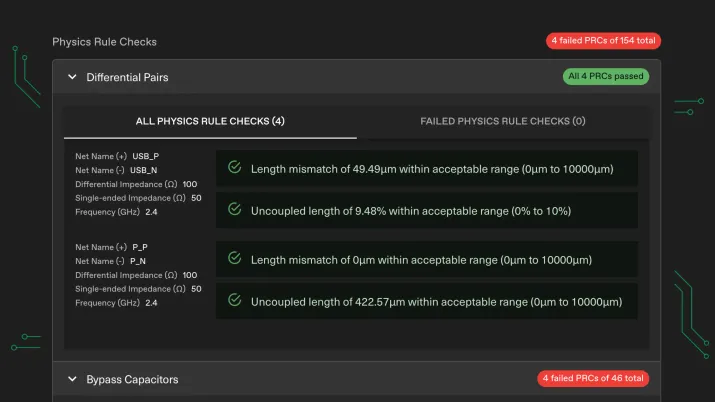
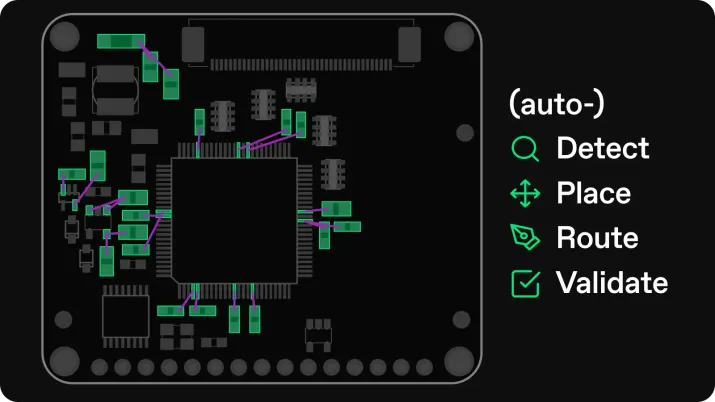
In practical terms, AI validation tools can analyze design intent across schematic and layout context, then surface risk areas early: missing or misplaced bypass caps, constraint conflicts, risky routing patterns, insufficient spacing, and other issues that lead to board spins.
How does AI validation work?
AI validation combines three ingredients:
- Design data ingestion: Import from your existing CAD workflow (schematic + PCB + constraints).
- Constraint-aware analysis: Evaluate critical nets, high-speed interfaces, power distribution, decoupling intent, differential pairs, impedance targets, and manufacturability constraints.
- Physics-driven scoring and review: Identify where the design is likely to violate real-world electrical behavior or board-level best practices, then produce actionable feedback.
Quilter positions itself in this category as “physics-driven AI for electronics design,” emphasizing fast iteration and a physics-based design review of candidate layouts. (Quilter.ai)
Why “physics-driven” matters
A lot of tools call themselves “AI.” The meaningful distinction is whether the system is grounded in physical constraints that map to real hardware outcomes, rather than just pattern-matching.
One reason Quilter has drawn attention is that it has publicly demonstrated rapid, high-component-count design work where the emphasis is speed plus first-pass functionality, including reports of an AI-designed Linux computer booting on first power-up in a short timeframe. Regardless of how you interpret the hype cycle, the direction is clear: AI is moving from “assist” to “validate and prevent.” (Tom's Hardware)
Which approach finds errors faster—and why does that matter?
If you care about schedule, the key question is not “Which tool is more advanced?” It is “Which tool finds the next error faster, at the moment when fixing it is cheapest?”
Which PCB simulation tool is fastest?
For circuit behavior questions on a focused block, SPICE can be fast once set up. For full-board error detection and constraint conflicts, AI-first validation is typically faster because it reduces manual setup and evaluates the whole design context earlier.
Here’s the practical comparison engineers actually feel during a program:
Feature | Traditional SPICE | Quilter AI-Powered Validation |
Setup Time | 30-90 minutes per design (often more, depending on models and convergence) | Under 5 minutes (auto-import workflow) |
Simulation Speed | Minutes to hours (depends on complexity and analyses) | Seconds to minutes (full-board validation and review) |
Error Detection Method | Manual, reactive behavior analysis | Proactive, physics-driven AI validation |
Integration | Typically schematic and netlist-centric | Schematic + PCB + constraints context |
Learning Curve | Steep, analysis expertise required | Guided and workflow-oriented |
Why speed changes outcomes, not just convenience
Faster error detection compounds:
- Earlier fixes prevent board spins. A mistake caught before placement and routing harden is dramatically cheaper than a mistake caught after fab.
- More iterations become feasible. If validation is quick, you can test alternative stackups, footprints, placements, or constraint sets without turning your team into full-time tool operators.
- Engineering bandwidth increases. When senior engineers are not stuck doing repetitive setup, they spend more time on architecture and performance decisions.
So, what does this shift mean for real engineering teams? Let’s look at the outcomes you can expect when you move from reactive simulation to AI-first validation.
What results can you expect from switching to AI-first validation?
AI-first validation changes the shape of the workflow. Instead of waiting for a problem to appear in a waveform or in the lab, teams aim to remove entire categories of preventable errors earlier.
Here are the outcomes teams typically target:
Reduced time from schematic to a working board
AI validation is designed to compress the “unknown unknowns” phase: the period where the schematic looks correct, but the board fails due to layout and constraint issues. Quilter’s messaging focuses on accelerating iteration cycles and producing multiple candidates quickly, with a physics-based review layer intended to boost confidence before fabrication. (Quilter.ai)
Fewer costly re-spins and late-stage surprises
Board spins rarely happen because someone forgot Ohm’s law. They happen because reality is messy: return paths, coupling, decoupling placement, impedance discontinuities, manufacturability constraints, or subtle integration issues. AI validation is built to catch these earlier, when changing placement or routing is still cheap.
Engineers spend time on high-value decisions
SPICE will always require expertise for deep analysis, and that is a good thing. The goal is not to replace that expertise. The goal is to stop spending expert time on avoidable scavenger hunts for “why did this board fail?” when the root cause was a preventable constraint or layout issue.
The net effect is a workflow where AI-first validation becomes the fast front line, and SPICE becomes the precision instrument you pull out when you need deep circuit answers.
Here’s how to choose the right tool for your next project
Most teams do not need to choose “SPICE or AI” as a permanent identity. The best workflows in 2026 are layered.
Use AI-first validation when:
- You are building digital, mixed-signal, or high-speed boards where layout constraints drive success or failure.
- You need to iterate quickly on placement, routing, and constraints.
- You want to reduce board spins caused by physical implementation issues, not just schematic logic.
If you are evaluating Quilter specifically, review their Product Overview and Solutions materials to see how they describe imports, constraints, candidate generation, and physics-based review in your target domain (semiconductor validation, consumer electronics, aerospace, and more). (Quilter.ai)
Use SPICE when:
- Your core risk is analog behavior: stability, noise, transient response, loop compensation.
- You are doing power electronics where switching behavior and component models matter.
- You need deep what-if analysis and corner sweeps that require circuit-level rigor.
If you need a quick mental shortlist of widely used SPICE options:
- LTspice for fast analog simulation and accessibility (plus strong community adoption). (Analog Devices)
- PSpice when you want a commercial mixed-signal environment and strong model libraries. (Cadence)
- PrimeSim HSPICE when accuracy and foundry-grade modeling workflows matter. (Synopsys)
The hybrid workflow most teams should adopt
A practical 2026 workflow often looks like this:
- Run AI validation early to catch constraint issues, placement risks, and common board-level failure modes.
- Iterate layout candidates quickly while changes are cheap.
- Use SPICE on critical blocks for deep circuit confidence (power, analog front ends, timing-sensitive paths).
- Finalize with both lenses: AI for board-level correctness, SPICE for circuit-level performance.
This hybrid approach is how you move faster without gambling on first-pass hardware.
Closing thought
SPICE remains essential because it answers questions physics demands you answer. AI-powered design validation is becoming essential because it answers questions schedules demand you answer. The winners in 2026 will not be the teams with the most simulations. They will be the teams that catch the right errors at the right time.
Ready to see how Quilter’s AI-first validation can transform your workflow? Try Quilter for free or book a demo today.


.webp)